Last Updated: June 2026
Steel toe boots get chosen for the wrong reasons all the time. Workers pick them because their site mandates “safety toe” without specifying the standard. Supervisors recommend whatever the last guy was wearing. Buyers grab the cheapest option at the tool store and wonder why their feet are destroyed by noon.
This is the updated 2026 version of our original 2019 roundup. Every pick has been re-evaluated against current ASTM ratings, verified buyer feedback, and real-world jobsite performance. If it’s on this list, it earned its spot.
10 Best Steel Toe Boots – Quick Overview
| Rank | Boot | Best For | Link |
|---|---|---|---|
| 1 | Timberland PRO Pit Boss ST | Best overall value steel toe | Check Price on Amazon |
| 2 | Thorogood American Heritage 6″ ST | Best for all-day indoor wear | Check Price on Amazon |
| 3 | KEEN Utility Milwaukee 6″ ST | Best for wide feet | Check Price on Amazon |
| 4 | Danner Quarry USA 8″ ST | Best premium heavy-duty build | Check Price on Amazon |
| 5 | Timberland PRO Boondock HD | Best for wet and outdoor sites | Check Price on Amazon |
| 6 | CAT Excavator Superlite WP ST | Best lightweight steel toe | Check Price on Amazon |
| 7 | Danner Steel Yard 6″ ST | Best mid-range construction | Check Price on Amazon |
| 8 | Carhartt Rugged Flex 6″ ST | Best for flex and mobility | Check Price on Amazon |
| 9 | KEEN Utility San Jose 6″ ST | Best for warehouse walking | Check Price on Amazon |
| 10 | Iron Age Groundbreaker IA5016 6″ | Best budget steel toe under $100 | Check Price on Amazon |
If you already know your trade and surface, jump straight to your pick. If you’re buying your first pair or replacing a boot that let you down, read the buying guide below the reviews first — it will save you from the most common mistakes.
1. Timberland PRO Pit Boss Steel Toe — Best Overall Value
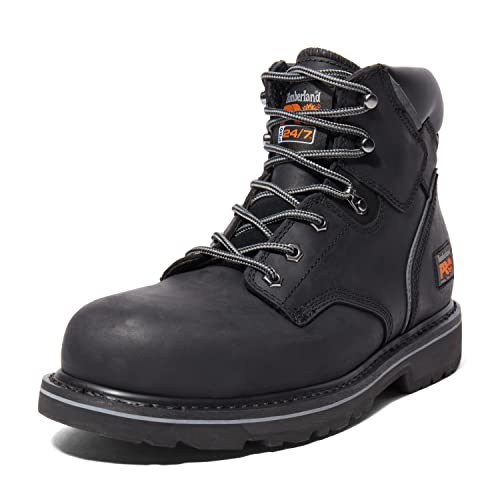
The Pit Boss is the most widely-purchased steel toe boot on this list for a reason: it delivers genuine ASTM F2413 protection at a price point that doesn’t require budget gymnastics. If you’re a worker who needs a dependable, certified steel toe for general jobsite use without spending premium money, this is where to start.

The fit is traditional — standard D-width with a slightly roomy toe box that works well for most foot shapes. The slip-resistant outsole handles dry and lightly wet concrete surfaces competently. It won’t outlast a Danner or a Thorogood, but it will survive a hard working year without complaint at a fraction of the price.

Who it’s for: Workers who need ASTM-certified protection on a controlled budget — apprentices, workers rotating through multiple sites, anyone who needs a reliable backup pair.
Who it’s not for: Workers logging 10-plus hour shifts on their feet continuously; the cushioning will compress faster than a premium boot.
Main flaw: Medium durability — plan for replacement in 12–18 months of hard daily use rather than the 2–3 years a welted boot can deliver.
2. Thorogood American Heritage 6″ Steel Toe — Best for All-Day Indoor Wear

If your job keeps you on concrete, tile, or hard indoor flooring for most of the shift, the Thorogood American Heritage with a steel toe is the most rational choice on this list. The Vibram wedge sole spreads load across the whole foot, eliminating the heel-strike fatigue that heeled work boots cause by hour five or six on a flat surface.

The Goodyear welt construction means it’s resoleable — buy it once and resole it when the sole wears down rather than replacing the entire boot. The steel toe version meets ASTM F2413 and the EH electrical hazard rating, which makes it a strong choice for electricians and industrial workers. Break-in is faster than most heritage leather boots, and the leather softens into a comfortable fit without losing structural support.

Who it’s for: Electricians, mechanics, warehouse supervisors, plant workers — anyone spending long shifts on hard flat surfaces who wants a steel toe they can resole.
Who it’s not for: Outdoor workers on mud, loose soil, or slopes — the flat wedge sole loses grip and stability on rough terrain.
Main flaw: Not the right call outdoors. A wedge sole on an uneven surface gives up the ankle security that a heeled logger-profile boot provides.
For a deeper look, see our full guide to the best steel toe work boots across all categories.
3. KEEN Utility Milwaukee 6″ Steel Toe — Best for Wide Feet

KEEN’s asymmetric steel toe cap is one of the most practically useful features in work boot design. It follows the natural shape of the foot rather than forcing toes into a narrowed, symmetrical shell — which is why KEEN consistently draws strong reviews from workers who’ve given up on regular steel toe boots because of toe box pain.

The Milwaukee meets ASTM F2413 and comes with a waterproof lining that holds up to wet ground, puddles, and rain. Cushioning is above average for the price bracket. KEEN tends to run slightly large — check sizing notes before ordering, as many buyers find a half size down is correct. If toe cramping has ever derailed your shift, try this boot before dismissing steel toe entirely.

Who it’s for: Workers with wide feet, bunions, or anyone who’s experienced numbness or cramping in a standard steel toe cap — particularly in warehouse, light construction, and utility roles.
Who it’s not for: Workers who prefer a slim, traditional profile or who need maximum ankle height for rough outdoor terrain.
Main flaw: The bulkier toe profile can feel cumbersome if you’re not used to it. For narrow feet, the extra room may feel sloppy.
If fit is your primary challenge, see our guide to best work boots for wide feet.
4. Danner Quarry USA 8″ Steel Toe — Best Premium Build
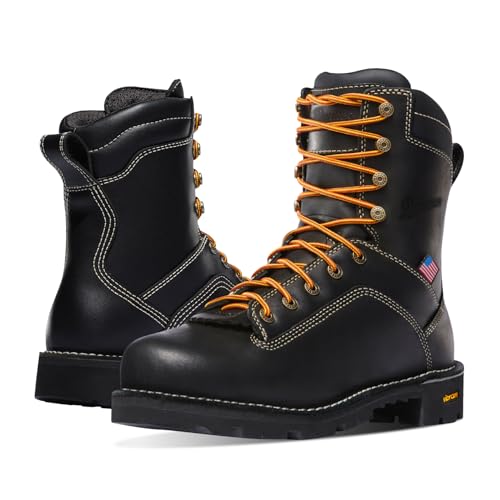
The Quarry USA is not a boot you buy to save money. You buy it because you want a steel toe boot that absorbs multi-year hard use and keeps performing — and because you’ve done the math and understand that a $300 boot that lasts four years on a tough jobsite is cheaper per month than cycling through $120 boots every year.

Danner’s stitch-down construction and Vibram outsole give it a durability profile that most cemented-sole competitors simply cannot match. The full-grain leather upper handles daily abrasion without cracking or delaminating, and the waterproof membrane keeps moisture out without making the boot feel like a sealed bag. It’s heavier than lighter-build alternatives, but on a hard construction or heavy industrial site, that weight translates into structural protection.

Who it’s for: Heavy construction workers, ironworkers, workers on sites that genuinely punish footwear, and buyers who want to buy once and not think about boots again for three or four years.
Who it’s not for: Budget-constrained buyers, light-duty workers, or anyone who prefers a soft cushioned modern feel over a structured traditional build.
Main flaw: The break-in period is real. Plan for two to three weeks of gradual wear before it fully conforms to your foot.
5. Timberland PRO Boondock HD Steel Toe — Best for Wet and Outdoor Sites
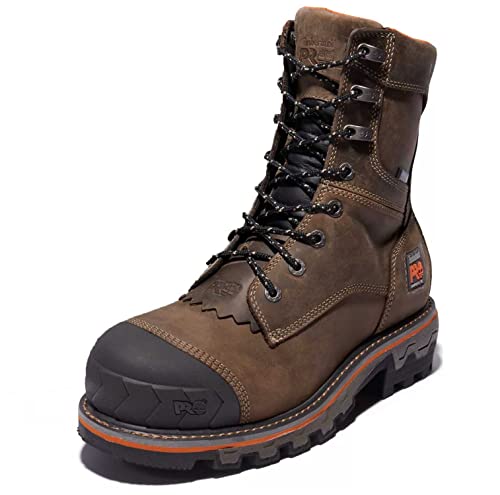
The Boondock HD is the Timberland PRO that takes outdoor conditions seriously. Where the Pit Boss is a dependable general boot, the Boondock HD is designed for workers on sites where moisture, mud, and rough terrain are part of the day — not an occasional inconvenience.

The waterproofing is robust, the outsole lug pattern bites into soft ground effectively, and the heel counter gives meaningful ankle support on uneven surfaces. It’s heavier than the Pit Boss and priced higher — but if your job regularly takes you off hard flat ground, the Boondock earns the upgrade. The steel toe meets ASTM F2413 requirements.

Who it’s for: Outdoor contractors, site workers in rain or mud, anyone whose jobsite regularly mixes indoor and outdoor terrain in the same shift.
Who it’s not for: Purely indoor workers on flat hard surfaces — the weight and lug sole will work against you, not for you, on concrete all day.
Main flaw: The waterproofing reduces breathability. In hot weather, feet will run warmer than in a non-waterproof boot.
6. CAT Excavator Superlite WP Steel Toe — Best Lightweight Steel Toe
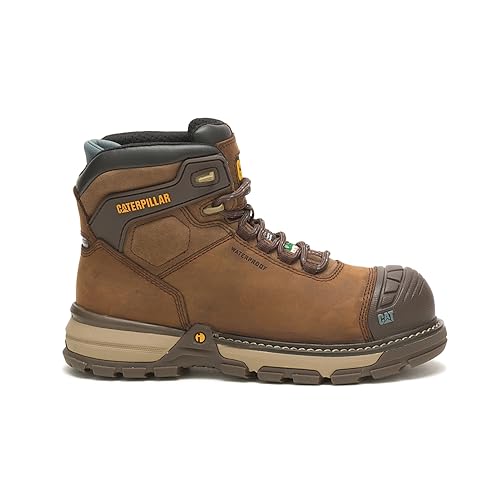
The weight of a traditional steel toe boot is one of the most common complaints from workers who walk heavy mileage during a shift. The Excavator Superlite is CAT’s answer to that complaint — a steel toe boot engineered to shed weight without shedding the ASTM protection rating.

The result is a boot that feels meaningfully lighter underfoot than most steel toe options at this price point. The waterproof membrane adds wet-weather versatility. The trade-off is durability — the lightweight construction is not as long-lasting under heavy industrial abuse as a heavier full-grain leather boot. But for workers whose primary complaint is foot fatigue from carrying the weight of their boots all day, this is a significant practical upgrade.

Who it’s for: Delivery workers, site managers, general contractors, and anyone who walks high daily mileage and feels the weight of heavier boots as fatigue by end of shift.
Who it’s not for: Workers who need maximum durability under sustained heavy industrial abuse — the lighter build will not outlast a Danner or Thorogood on the toughest sites.
Main flaw: Upper durability is average at best under rough conditions. Not a heavy construction boot.
7. Danner Steel Yard 6″ Steel Toe — Best Mid-Range Construction Boot
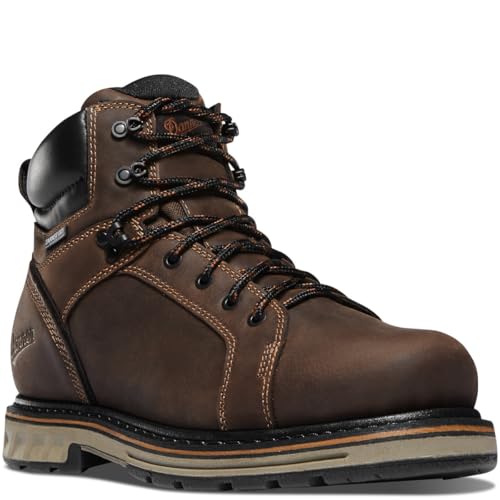
The Steel Yard fills the gap between the budget Pit Boss and the premium Quarry USA. It’s a proper Danner build — durable, structured, and reliable — at a price that doesn’t require the full Quarry commitment. For workers who want genuine Danner quality without the full premium spend, the Steel Yard is the most practical entry point into the brand.

The 6-inch height gives good ankle support without the bulk of an 8-inch boot. The steel toe cap meets ASTM F2413. The outsole provides solid slip resistance on the concrete and hard surfaces most construction workers encounter daily. It’s a clean, focused work boot with no wasted features — which is exactly what a mid-range boot should be.

Who it’s for: Construction workers, general tradespeople, and buyers who want a reliable steel toe with better long-term durability than a budget boot but don’t need the full premium Quarry build.
Who it’s not for: Workers who need specialized features — deep-mud traction, logger height, or metatarsal guard protection.
Main flaw: The midsole cushioning is firm. If you’re sensitive to underfoot impact, add a quality insole from day one.
8. Carhartt Rugged Flex 6″ Steel Toe — Best for Flex and Mobility
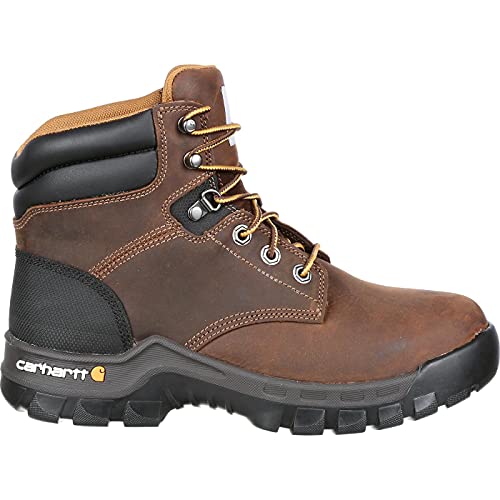
Most steel toe boots feel stiff and unforgiving when you’re climbing, squatting, or kneeling on the job. Carhartt’s Rugged Flex construction is specifically designed to address that. The flex zones in the upper allow a more natural range of motion without sacrificing the structural protection the boot needs to maintain its safety ratings.

Workers in trades that require constant movement — roofing, electrical, HVAC, light framing — consistently rate this boot highly for the freedom it allows compared to stiffer traditional work boots. The steel toe meets ASTM F2413. Waterproof versions are available for wet-condition work. It breaks in faster than most leather boots because the flex design means the upper adapts to your foot more quickly.

Who it’s for: Tradespeople who spend time climbing ladders, kneeling, squatting, or working in positions where a stiff boot becomes a genuine obstacle — electricians, HVAC techs, roofers, framers.
Who it’s not for: Workers who prioritize maximum durability over flexibility — the flex construction trades some long-term structural rigidity for mobility.
Main flaw: The flex zones are the first areas to show wear under heavy repeated stress. High-mileage daily use will age this boot faster than a stiffer build.
Also relevant: our guide to best boots for electricians goes deeper into EH-rated options with similar flex profiles.
9. KEEN Utility San Jose 6″ Steel Toe — Best for Warehouse Walking
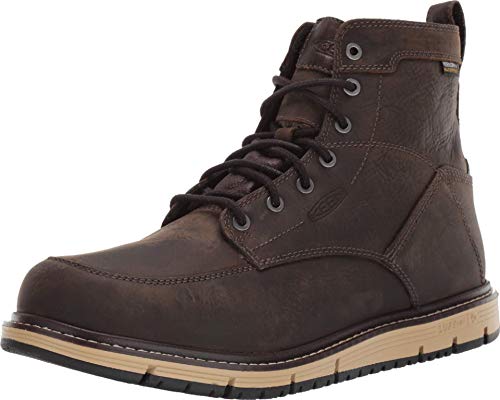
Warehouse workers put their boots through a specific kind of punishment: high daily step counts on hard concrete floors, frequent stops and starts, and hours of standing in place at workstations. The San Jose is built for exactly this — a steel toe boot that prioritizes underfoot cushioning and daily wearability over specialist outdoor or heavy construction features.

KEEN’s signature wide toe box gives toes room to spread naturally, which reduces the forefoot fatigue that narrow steel toe caps cause over long shifts. The waterproof version handles spill-prone warehouse floors. It’s not the most durable boot on this list under heavy industrial abuse, but for the specific punishment of warehouse work — volume and standing time rather than raw impact — it performs well above its price.

Who it’s for: Warehouse pickers, floor workers, distribution center employees, and anyone whose shift involves high step counts on hard flat surfaces.
Who it’s not for: Outdoor, construction, or heavy industrial workers who need a more structurally robust boot under sustained heavy abuse.
Main flaw: KEEN runs large for many buyers — size down half a size and check the width guides before purchasing.
10. Iron Age Groundbreaker IA5016 6″ — Best Budget Steel Toe Under $100

There is a legitimate place on every list for a boot that proves safety toe protection doesn’t have to cost a lot. The Iron Age Groundbreaker meets ASTM F2413 at a sub-$100 price point that most budget-conscious buyers can justify without stretching. For workers who need a compliant safety toe boot for occasional use, site visits, or as a backup pair, it does the job.

Be realistic about what you’re buying. This is not a boot for workers logging hard daily use in demanding conditions — the outsole and upper will fatigue faster than any premium option on this list. But as an entry-level pair or an occasional-use safety boot, it delivers the core promise: certified steel toe protection at an accessible price.

Who it’s for: Infrequent jobsite visitors, workers who need a compliant boot occasionally rather than daily, and buyers who need a temporary pair while a better boot is on order.
Who it’s not for: Anyone wearing it every day in demanding conditions — the build quality reflects the price and will show it quickly under hard daily use.
Main flaw: Low long-term durability. Treat it as a short-service boot, not a multi-year investment.
What to Know Before You Buy Steel Toe Boots
astm f2413 safety ratings explained 202606040812
Most buyers choose steel toe boots based on brand recognition or price alone. That’s how workers end up with boots that technically meet the safety requirement on paper but fail them on the actual job.
ASTM F2413 — What It Actually Means
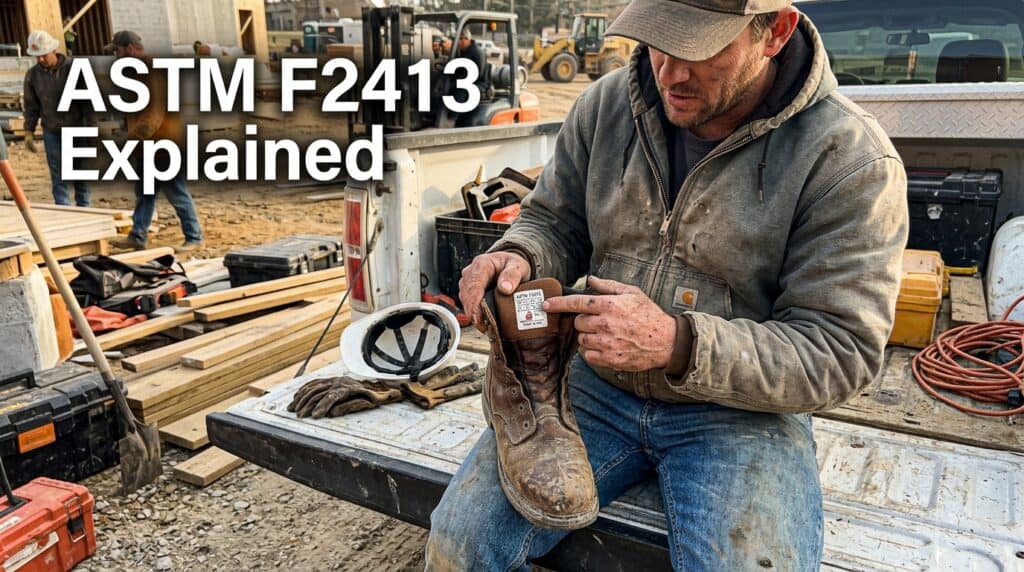
ASTM F2413 is the US standard for protective footwear. The markings on the boot tell you exactly what was tested and to what level. A boot marked ASTM F2413-18 I/75 C/75 means it passed impact resistance (I) and compression resistance (C) at 75 ft-lb each. Additional designations include:
- EH — Electrical Hazard: secondary protection against open electrical circuits up to 18,000V. Not primary protection — it reduces shock risk if you accidentally contact a live circuit. Mandatory for electricians and utility workers.
- SR — Slip Resistant: tested against ASTM F2913 on wet and oily surfaces. A boot marketed as “slip resistant” without this mark is just marketing.
- PR — Puncture Resistant: the midsole resists nail and sharp object penetration. Critical for roofing, demolition, and construction sites with nail exposure.
- Mt — Metatarsal Guard: protection for the top of the foot against falling objects. Required in foundries and heavy industrial environments.
Steel Toe vs Composite Toe — The Honest Answer
Both meet the same ASTM F2413 impact and compression ratings. The real differences:
- Steel toe is stronger against crushing forces and generally cheaper at the same quality tier
- Composite toe is lighter (reduces fatigue on walking-heavy shifts), does not conduct temperature (warmer in cold, not scalding in heat), and does not trigger metal detectors
- For workers who walk 10,000+ steps daily, the weight reduction of composite toe is a practical benefit — not a safety compromise
If your jobsite mandates steel specifically, that settles it. If they require “safety toe,” composite is a legitimate choice. Read our full breakdown on steel toe vs composite toe boots for the complete comparison.
Sole Type Matters More Than Most Buyers Realize
Wedge sole (flat bottom, wide contact): designed for flat indoor surfaces — concrete, tile, warehouse floors. Reduces heel fatigue significantly on flat ground. Wrong choice for outdoor terrain.
Heeled outsole with lug tread: designed for outdoor, uneven, or sloped terrain. The heel provides a braking point on slopes. Lug patterns clear mud and grip loose surfaces. Poor choice for flat-surface daily wear — the concentrated heel pressure accelerates fatigue on concrete.
Waterproofing — Buy It or Skip It?
Waterproof membranes add cost and reduce breathability. They’re worth it if you work outdoors regularly in wet conditions or on sites where water and spills are part of the day. If you work dry indoor environments most of the time, skip it — you’ll just have warmer feet with no practical benefit from the waterproofing you paid for.
Best Steel Toe Boot by Trade in 2026
| Trade | Best Pick | Why |
|---|---|---|
| Electricians | Thorogood American Heritage ST | EH-rated, wedge sole for flat indoor surfaces, resoleable |
| Construction | Danner Quarry USA (premium) / Timberland PRO Pit Boss (value) | Multi-year durability vs proven budget protection |
| Warehouse workers | KEEN Utility San Jose ST | Cushioning and wide toe box for high step counts |
| Outdoor / mixed sites | Timberland PRO Boondock HD | Waterproofing plus outdoor lug traction |
| Electricians / HVAC / Roofers | Carhartt Rugged Flex ST | Flex zones for climbing and mobile trade work |
| Wide feet | KEEN Utility Milwaukee ST | Asymmetric wide toe cap, best fit for wide feet |
| High step count / walking | CAT Excavator Superlite WP | Lightest steel toe on the list |
For more trade-specific guidance, see our full articles on best boots for mechanics and best boots for standing on concrete all day.
Cost-Per-Month — The Smarter Way to Think About Boot Prices
| Boot | Price | Est. Lifespan | Cost/Month |
|---|---|---|---|
| Iron Age Groundbreaker | ~$80 | 8–12 months | ~$7–10 |
| Timberland PRO Pit Boss | ~$130 | 12–18 months | ~$7–11 |
| CAT Excavator Superlite | ~$130 | 12–18 months | ~$7–11 |
| Carhartt Rugged Flex 6″ | ~$140 | 18–24 months | ~$6–8 |
| Danner Steel Yard 6″ | ~$185 | 24–30 months | ~$6–8 |
| Danner Quarry USA 8″ (resoleable) | ~$295 | 36–48+ months | ~$6–8 |
| Thorogood American Heritage ST (resoleable) | ~$200 | 36–48+ months | ~$4–6 |
The math is consistent: premium resoleable boots like Thorogood and Danner Quarry often cost the same or less per month than budget boots replaced every year. The upfront cost is higher; the total cost of ownership is usually lower.
FAQ
What are the best steel toe boots for men in 2026?
For most workers, the Timberland PRO Pit Boss is the best starting point — dependable ASTM protection at a reasonable price. For all-day indoor wear, the Thorogood American Heritage steel toe is the superior choice. For premium durability on hard jobsites, the Danner Quarry USA 8″ earns its price. For wide feet, the KEEN Utility Milwaukee is the most practical fit-first recommendation.
Is steel toe or composite toe better?
Both meet the same ASTM F2413 impact and compression ratings. Steel toe offers stronger crush resistance at a lower price per tier. Composite toe is lighter, does not conduct temperature, and will not set off metal detectors. For most workers who walk significant daily mileage, the weight advantage of composite toe is worth serious consideration. See our full steel toe vs composite toe comparison.
How long should steel toe boots last?
A cemented-sole budget boot used daily on a demanding site typically lasts 8–18 months. A Goodyear-welted or stitch-down boot like Thorogood or Danner Quarry can last 3–4 years and be resoled for additional service life. Construction type is the biggest variable in boot longevity — not brand alone.
Do steel toe boots cause foot problems?
A steel toe cap that is correctly sized for your foot should not cause problems. Most complaints — numbness, cramping, bruised toes — come from buying a boot that is too narrow, or one where the steel cap sits too close to the toes in the wrong size. If you experience persistent discomfort, the size or width is wrong, not the steel toe concept. KEEN’s asymmetric cap design solves this for many workers with wider feet.
What safety standards should work boots meet?
For US jobsites, look for ASTM F2413 on the boot label. The I/75 C/75 rating covers standard impact and compression. Additional ratings to check: EH (electrical hazard) for electrical trades, SR (slip resistant) for kitchen or wet-floor environments, PR (puncture resistant) for sites with nail exposure, and Mt (metatarsal guard) for foundry or heavy industrial work.
How do I break in steel toe boots faster?
Wear them for two to three hours at a time before committing to a full shift. Flex the boot manually before first wear. Apply a leather conditioner to help the upper soften faster. Thorogood and Carhartt Rugged Flex typically break in within one to two weeks of normal use. Never wear brand-new steel toe boots for a 12-hour shift on day one — that’s how blisters happen.
All Products — Check Current Prices on Amazon
- Timberland PRO Pit Boss Steel Toe — Best Overall Value
- Thorogood American Heritage 6″ Steel Toe — Best Indoor Wear
- KEEN Utility Milwaukee 6″ Steel Toe — Best Wide Feet
- Danner Quarry USA 8″ Steel Toe — Best Premium Build
- Timberland PRO Boondock HD — Best Wet/Outdoor Sites
- CAT Excavator Superlite WP — Best Lightweight
- Danner Steel Yard 6″ — Best Mid-Range Build
- Carhartt Rugged Flex 6″ — Best Flex and Mobility
- KEEN Utility San Jose 6″ — Best for Warehouse Walking
- Iron Age Groundbreaker IA5016 — Best Budget Under $100