
Last Updated: August 2026 | Tested By: The BootsGuru Team
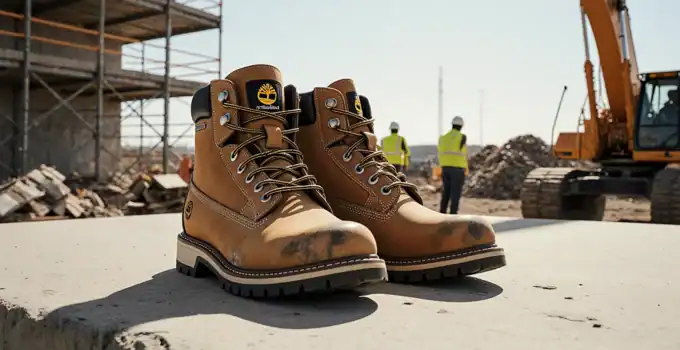
A 10-hour shift on a chaotic job site is a battle. You're walking on rebar, kicking concrete, climbing ladders, and dodging machinery. Your $30 sneakers are a liability. Your boots aren't just footwear — they are your most important piece of PPE.
A boot that isn't safe (no ASTM-rated toe, no EH rating) or durable (a cheap, glued sole) is a waste of money and a direct risk to your career. The wrong boot doesn't just hurt your feet — it hurts your knees, your hips, and your back over months of cumulative strain.
As boot experts, we're cutting through the marketing. This guide breaks down the only features that matter for a construction site, explains the real difference between a $90 "value" boot and a $250 "investment," and reviews the 10 best, most durable construction boots for every trade on site.
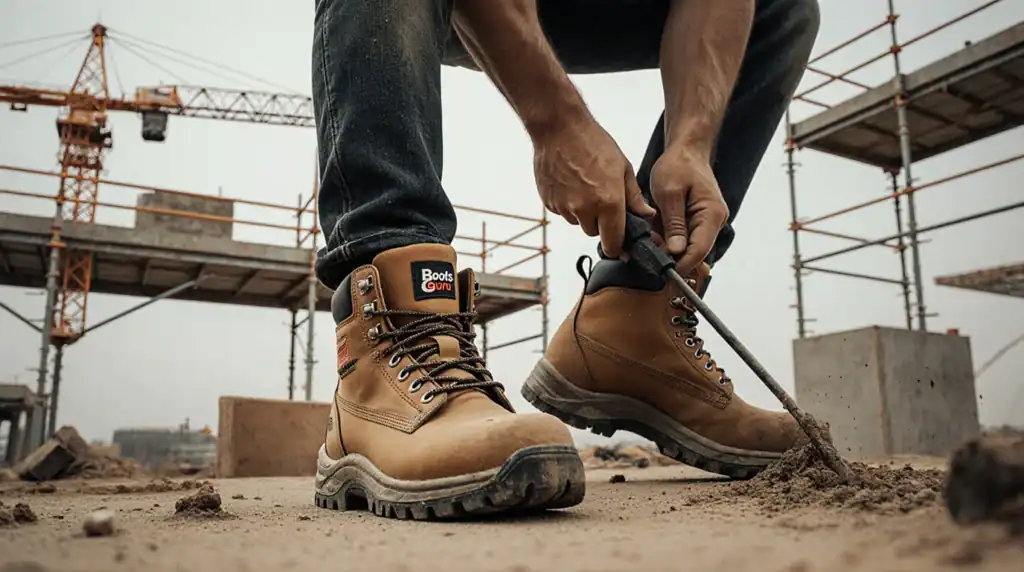
Quick Picks: Top 10 Best Construction Boots for 2026
| Award | Boot Model | Best For | Key Feature | Price |
|---|---|---|---|---|
| 🏆 Best Overall (Wedge) | Thorogood American Heritage 6" Moc Toe [Amazon] | Concrete, Carpenters, Ironworkers | Out-of-the-Box Comfort, Wedge Sole | $$$ |
| 💪 Best Overall (Heeled) | Timberland PRO Pit Boss Steel Toe [Amazon] | The "Do-it-All" Workhorse | Durability, Comfort & Value | $$ |
| 🛡️ Best Premium (Heavy-Duty) | Danner Quarry USA 8" [Amazon] | Operators, All-Weather, Durability | GORE-TEX, USA-Made, Stitchdown | $$$$$ |
| 🔧 Best for Kneeling/Trades | KEEN Utility Cincinnati 6" [Amazon] | Plumbers, Mechanics, Kneeling | KEEN.ReGEN, Massive Toe Bumper | $$$$ |
| 🧗 Best for Climbing | Carolina Linesman Boot 10" [Amazon] | Linemen, Tower/Rebar Climbers | Heavy-Duty Steel Shank, Logger Heel | $$$$ |
| 💧 Best for Wet & Mud | Muck Boot Chore Classic [Amazon] | Concrete Pourers, Wet Sites | 100% Waterproof, Chemical-Resistant | $$ |
| 💥 Best Met Guard | Timberland PRO Endurance 6" Met Guard [Amazon] | Demo, Heavy Equipment, Welders | External Met Guard, Anti-Fatigue | $$$ |
| 👟 Best Lightweight | Cat Excavator Superlite WP [Amazon] | Finishing, Light-Duty, Warehouse | Nano-Toe, "Sneaker" Feel, Flexible | $$$ |
| 🌲 Best Classic Logger | Chippewa Apache Logger 8" [Amazon] | Landscapers, Forestry, Tradies | Classic Logger, Vibram Sole, Value | $$$ |
| 💰 Best Budget (Welted) | EVER BOOTS Tank [Amazon] | General Work on a Budget | Goodyear Welt, Waterproof, Low Price | $ |
The Construction Boot Buyer's Guide: What Actually Matters
What makes a boot a "construction boot"? It's not the color or the brand name — it's the certified technology. Here's the complete framework professionals use to choose the right boot for the right job.
Safety Toes: Steel vs. Composite vs. Alloy vs. Carbon Fiber
All ASTM F2413-rated safety toes (I/75, C/75) pass the same 75 lb impact and 2,500 lb compression tests. The difference is weight, bulk, and material properties — not protection level.
- Steel Toe: The classic choice. Thinnest profile and lowest cost. Con: conducts cold and heat, heavier than alternatives. Best for: general construction on a budget.
- Composite Toe: Non-metallic (fiberglass, carbon fiber, Kevlar). Lightweight and won't conduct electricity — the best choice for electricians and EH-rated work. Con: bulkier profile than steel.
- Alloy Toe (Aluminum/Titanium): 30–50% lighter than steel with a similarly thin profile. Con: more expensive. Best for: workers who need low-profile protection without the weight penalty.
- Carbon Fiber Toe: The newest standard — incredibly strong, featherlight, and non-conductive. Increasingly common in premium boots like the KEEN Utility Camden. Typically the most expensive option but represents the current state of the art.
Construction: Goodyear Welt vs. Stitchdown vs. Cement
This is the single most important decision for long-term value. It determines whether your boot is a 2-year purchase or a 10-year investment.
- Goodyear Welt: The upper is stitched to a welt strip, then the welt is stitched to the outsole. Incredibly durable, fully resolable, and stable under load. Requires a break-in period. This is what most professionals should buy.
- Stitchdown: The upper is stitched directly to the midsole — even more durable than a welt and easier for cobblers to rebuild (see: Danner Quarry). The most durable construction available in work boots.
- Cement (Glued): The sole is bonded with adhesive, like a sneaker. Lightweight and flexible out of the box, but not resolable. When the sole fails, the boot is dead. Best reserved for light-duty use where weight and flexibility outweigh longevity.
Decoding the ASTM F2413 Safety Tag
Always check the tongue tag before buying a "safety" boot. If it doesn't list ASTM F2413, it has no certified protection. Here's what the codes mean:
- I/75: Impact resistance (75 ft-lbs). Standard safety toe protection.
- C/75: Compression resistance (2,500 lbs). Standard safety toe protection.
- EH (Electrical Hazard): Non-conductive sole that provides secondary protection against incidental contact with live circuits up to 18,000 volts under dry conditions. Non-negotiable for electricians, plumbers, and anyone working near live circuits.
- PR (Puncture Resistant): A protective plate inside the sole. Critical for demolition sites, roofing, and any work environment with nails, wire, or rebar on the ground.
- MT (Metatarsal Guard): A guard that protects the metatarsal bones on top of the foot from crushing impacts. Essential for heavy equipment operators, welders, and demolition crews. See our Best Met Guard Boots guide.
- SD/CD (Static Dissipative/Conductive): Controls static electricity buildup — critical in environments with flammable materials or sensitive electronics. Less common but important in refineries, chip fab plants, and some chemical facilities.
Sole Type: Wedge vs. Defined Heel
- Wedge Sole: Full ground contact — no gap between heel and forefoot. Best for standing and walking on flat hard surfaces like concrete (carpenters, ironworkers, finishers). The full contact distributes weight evenly and is the most effective anti-fatigue configuration for slab work. See our Best Boots for Concrete guide.
- Defined Heel (90-degree): A raised, squared-off heel. Best for climbing ladders and rung work, as the heel locks securely onto rungs. Also superior on uneven and soft terrain (operators, laborers, landscapers) where it prevents sinking and heel rollover.
Insole & Midsole: The Hidden Comfort Killer
Most boot reviews skip this entirely — but your midsole is what determines whether your feet hurt after 6 months, not the leather.
- PU (Polyurethane) Midsole: Dense, durable, long-lasting cushioning. The industry standard for premium work boots. Doesn't "pack out" (flatten) quickly. Look for this in any boot you're spending $150+ on.
- EVA Foam Midsole: Lightweight and initially comfortable, but typically packs out within 3–6 months under heavy use. Common in budget and cement-construction boots. Fine for light-duty use, but not for full-time tradesmen.
- Anti-Fatigue Technology: Found in Timberland PRO boots — a geometric cone insert in the heel that absorbs and returns energy. Particularly effective for workers who stand on hard floors all day.
How to Size Work Boots Correctly
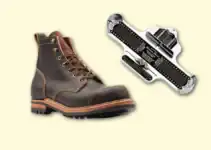
One tip that's consistently overlooked: try boots on at the end of the day, not first thing in the morning. Your feet swell, widen, and flatten over a full workday. A boot that fits perfectly at 9am may be painfully tight by 3pm. Most professional boot fitters recommend sizing at the end of the day wearing your actual work socks.
Other sizing rules for work boots:
- Aim for about a thumb's width of space between your longest toe and the end of the toe box
- The heel should feel snug but not locked — a small amount of heel lift when walking is normal in new leather boots
- If you use custom orthotics, bring them when trying on boots — they change the fit significantly
- Wide feet? Look for EE width options — several boots on this list offer them (Thorogood, KEEN, Timberland PRO)
Boot Height: 6-Inch vs. 8-Inch vs. 10-Inch
- 6-Inch: The most common work boot height. Balances ankle support with mobility. Ideal for most trades on flat or moderately uneven ground.
- 8-Inch: Significantly more ankle protection and support — the right choice for heavy-duty outdoor work, rough terrain, all-day hiking on site, or jobs with ankle-twist risk.
- 10-Inch: Maximum ankle and lower-leg protection. Standard for linemen, arborists, and specialized climbing work. Heavy and rigid — not suited for all-day walking.
When to Replace Your Work Boots
Most workers wear their boots well past their safe life. Here are the signs it's time for a new pair (or a resole on a welted boot):
- The midsole has flattened — press a thumb into the heel and if it gives easily, the cushioning is gone
- The safety toe is visibly deformed from an impact — a compressed toe box no longer provides rated protection
- The outsole lug depth is worn smooth — traction is compromised on wet and slippery surfaces
- The upper leather is cracking or delaminating from the midsole — structural integrity is compromised
- You're experiencing new foot, knee, or lower back pain — the support is gone even if the boot looks okay
For welted boots, a sole replacement at a cobbler ($80–$120) resets the clock on most of these issues and extends boot life by years.
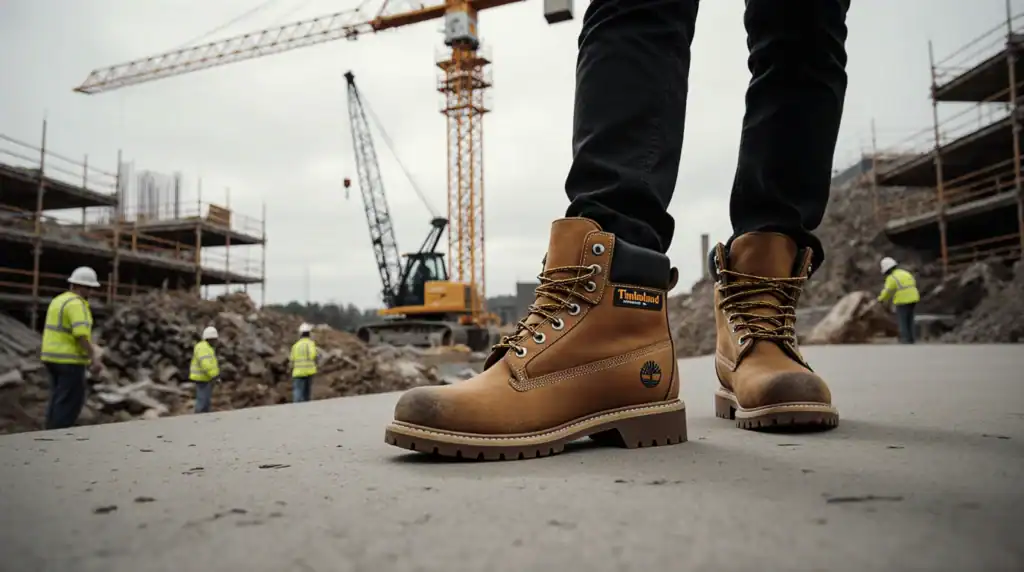
The right construction boot depends entirely on your trade, your surface, and your hazards.
Detailed Reviews: The 10 Best Construction Work Boots of 2026
1. Thorogood American Heritage 6" Moc Toe — Best Overall (Wedge)

The Honest Take: This is the king of comfort for anyone on concrete. The MAXWear wedge sole acts like a built-in anti-fatigue mat — full ground contact that distributes your weight evenly across the entire foot, eliminating the pressure-point pain that destroys your heels and forefeet after 8 hours on slab. It's USA-made, Goodyear Storm Welted, and built from shockingly supple leather that requires almost no break-in.

The roomy moc toe box is a significant benefit for workers with wide feet or those who find standard safety toe caps cramping. The Goodyear Storm Welt is more water-resistant than a standard welt (the welt is folded back against the upper rather than projecting outward), giving better performance in wet conditions. Ironworkers and carpenters have made this boot a job-site standard for decades — not because it's trendy, but because it genuinely works.

One limitation to know: the wedge sole is optimized for flat surfaces. On soft ground, mud, or ladder rungs, a defined heel boot will outperform it. If your day involves a lot of ladder work or uneven terrain, consider the Danner Quarry or Carolina Linesman instead.

Pros & Cons
| Pros | Cons |
|
|
Best For: Carpenters, ironworkers, factory workers, concrete finishers — anyone spending most of their day on flat hard surfaces.
2. Timberland PRO Pit Boss Steel Toe — Best Overall (Heeled)
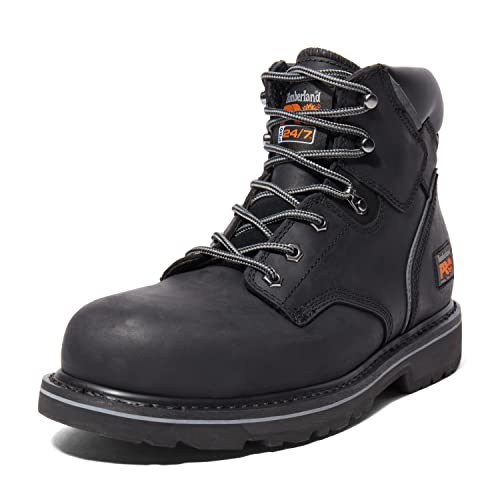
The Honest Take: This is the "ol' reliable" of the job site — one of the best-selling work boots on the market for good reason. It's not the lightest or the most sophisticated, but it's a durable, no-nonsense Goodyear Welted boot that checks every safety box and delivers genuine all-day comfort at a price point that's hard to argue with.

The roomy steel toe box won't crush your toes, the Anti-Fatigue comfort system absorbs and returns energy with every step, and the oil-and-slip-resistant outsole handles most job site surfaces reliably. Crucially, this boot is also PR-rated (puncture resistant) — a feature the Thorogood lacks — making it the better choice for demolition sites, roofing, or anywhere with nails on the ground. Requires a 1–2 week break-in, but once broken in, it's a trustworthy long-term companion.

Pros & Cons
| Pros | Cons |
|
|
Best For: General construction, mixed trades, warehouse, demolition — the best all-rounder for workers who need a tough boot at a fair price.
3. Danner Quarry USA 8" — Best Premium / Buy-It-for-Life
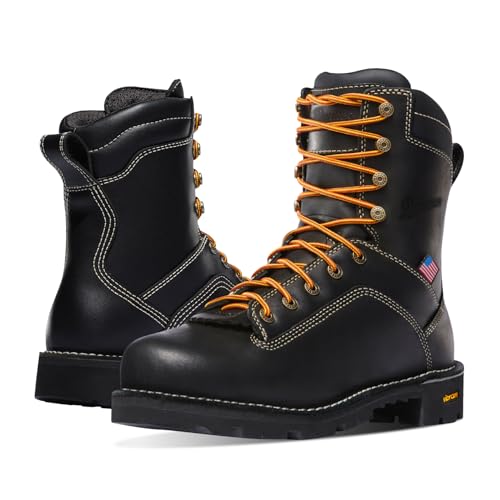
The Honest Take: The Danner Quarry is in a different category from every other boot on this list. It's a premium "buy-it-for-life" investment built in Portland, Oregon — GORE-TEX waterproofing throughout, stitchdown construction that Danner can fully rebuild (not just resole), and a Vibram Kletterlift outsole with traction that genuinely performs on wet rock, mud, and uneven terrain.

The 8-inch height provides ankle support that you simply don't get from a 6-inch boot, which matters on rough terrain and for workers on their feet for 10+ hours. The defined heel locks securely on ladder rungs. The break-in is real — plan for 2–3 weeks — but after that, this boot molds to your foot and becomes something you don't think about anymore. At its price point, this is a professional investment rather than a disposable work tool. Factor in recrafting ($100–$150 at Danner) and this boot can realistically last 15–20 years.

Pros & Cons
| Pros | Cons |
|
|
Best For: Heavy equipment operators, all-weather outdoor trades, serious professionals who view boots as a long-term investment.
4. KEEN Utility Cincinnati 6" — Best for Kneeling Trades
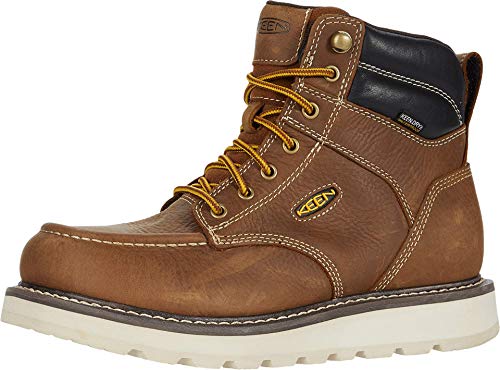
The Honest Take: KEEN designed this boot specifically for tradesmen who spend significant time kneeling — plumbers, mechanics, tile setters, HVAC technicians. The standout feature is the massive molded rubber toe cap that covers the entire front of the boot, protecting both the safety toe and the leather from abrasion on concrete and tile. This is a feature most boots simply don't have, and it dramatically extends the life of the toe area for kneeling workers.

KEEN's asymmetrical safety toe box is genuinely roomier than a standard safety toe — no toe pinch, which matters enormously after 8 hours. The KEEN.ReGEN PU midsole is one of the bounciest, most responsive midsoles in the work boot category. Wide and flat-footed workers in particular will find the toe box accommodation a revelation compared to standard boots. The Goodyear welt construction means this boot can be resoled when the outsole wears.

Pros & Cons
| Pros | Cons |
|
|
Best For: Plumbers, mechanics, electricians, tile setters, HVAC techs — anyone kneeling on hard surfaces regularly, or workers with wide or flat feet.
5. Carolina Linesman Boot 10" — Best for Climbing

The Honest Take: This is a specialized tool, not an everyday walking boot — and it's important to understand that before buying. The Carolina Linesman is designed for workers who climb: linemen, arborists, ironworkers on rebar, and tower climbers. The 10-inch height provides maximum lower-leg support, and the heavy-duty steel shank creates the rigid, unyielding platform required for standing on gaffs, rebar, and narrow rungs for hours without foot fatigue.

The defined logger heel is a safety feature, not just a style choice — it provides a positive lock onto ladder rungs and prevents your foot from sliding through. This boot is stiff, heavy, and demands a long break-in. If you're using it as a general walking boot, it will be miserable. But for its intended purpose — climbing and elevated work — nothing on this list comes close to its combination of shank stiffness, ankle height, and heel security.

Pros & Cons
| Pros | Cons |
|
|
Best For: Linemen, arborists, rebar ironworkers, tower climbers — anyone spending significant time climbing poles, structures, or ladders.
6. Muck Boot Chore Classic — Best for Wet & Mud
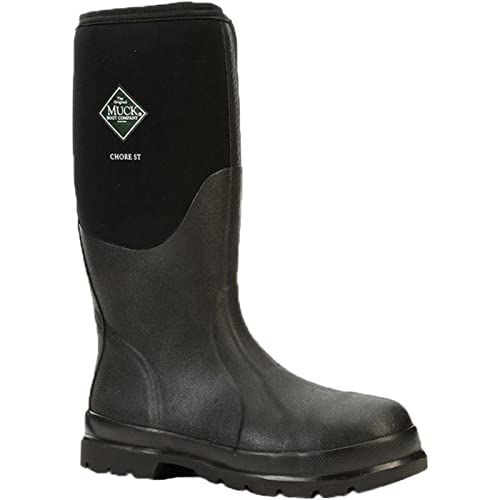
The Honest Take: When your job site is genuinely wet — concrete pours, pipe laying in trenches, storm drain work, or any site where leather boots would be saturated within an hour — leather is the wrong material entirely. The Muck Chore is the right answer for these conditions. 100% waterproof rubber exterior, chemical-resistant construction, neoprene lining for comfort, and a self-cleaning lugged outsole that handles deep mud without packing.

The cleanup routine is what sets it apart for truly messy work: hose it off at the end of the day, done. No leather conditioning, no drying protocol, no worrying about salt damage. The steel toe version provides full ASTM protection. The one trade-off is breathability — rubber doesn't breathe, so feet get warm in summer conditions. For those applications, light cotton or moisture-wicking socks help significantly. This is not a boot for climbing or extended walking — it's a purpose tool for wet and chemical environments where nothing else performs as well.

Pros & Cons
| Pros | Cons |
|
|
Best For: Concrete work, pipe laying, farming, storm drain work, chemical environments, any job site that's consistently wet or muddy.
7. Timberland PRO Endurance 6" Met Guard — Best for Heavy Equipment & Demo

The Honest Take: A standard steel toe only protects your toes. The metatarsal bones — the long bones on top of your foot between your toes and ankle — are completely exposed on most work boots, and a dropped beam, pipe, or heavy tool can shatter them permanently. The Timberland PRO Endurance addresses this with an external, hinged metatarsal guard that protects the full top of the foot while remaining flexible enough for normal walking.

This is non-negotiable PPE for heavy equipment operators, ironworkers handling structural steel, welders, and demolition crews. The hinged design means the guard moves with your foot rather than restricting movement. The Anti-Fatigue technology in the midsole partially offsets the extra weight. This boot is heavy and bulky — there's no way around that — but that's the cost of maximum foot protection on high-risk sites. Check your employer's PPE requirements: many heavy industrial sites mandate met guard protection regardless of personal preference.

Pros & Cons
| Pros | Cons |
|
|
Best For: Heavy equipment operators, structural ironworkers, welders, demolition crews, scrap yards — any job with crushing hazards to the top of the foot.
8. Cat Excavator Superlite WP — Best Lightweight Boot

The Honest Take: Not every job site demands a 4-lb logger boot. For finishing carpenters, warehouse pickers, inspectors, and trades workers who cover significant distances on site rather than standing in one place, the weight penalty of a heavy welted boot creates real fatigue that accumulates over a long shift. The Cat Excavator Superlite addresses this with a nano-composite toe (lighter than steel) and a flexible cemented sole that genuinely feels like an athletic shoe.
The waterproof construction and EH rating cover the core safety requirements. What you trade away is longevity — cemented construction means when the sole wears out, the boot is done. For workers who average 10+ miles per day on site, the weight savings are worth this trade-off. For workers in one place who need durability above all, choose a welted boot instead. This is a conscious tool choice, not a compromise.

Pros & Cons
| Pros | Cons |
|
|
Best For: Warehouse pickers, site inspectors, finishing carpenters, light-duty tradespeople — workers who prioritize agility and walking comfort over maximum longevity.
9. Chippewa Apache Logger 8" — Best Classic Logger
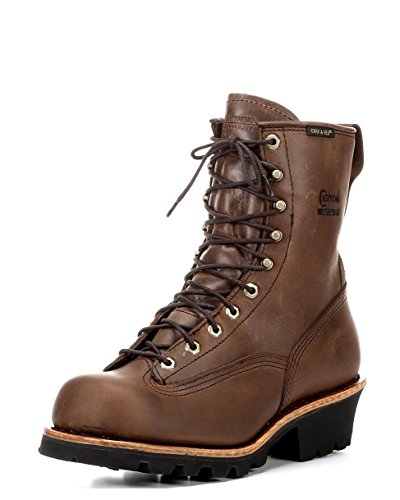
The Honest Take: This is the traditionalist's choice — a no-frills, honest American logger boot that does exactly what it says. The 8-inch Goodyear welted construction is bombproof, the aggressive Vibram logger sole with its deep lugs handles soft ground, loose dirt, and terrain that would defeat a wedge sole, and the defined heel is effective for ladder work. It lacks the modern comfort tech of the KEEN or Thorogood, and it demands a genuine break-in period — this is a boot that earns its comfort rather than giving it away.

For landscapers, forestry workers, and outdoor tradespeople who want a resolable boot at a price point below the Danner Quarry, the Apache Logger delivers real long-term value. With periodic resoling, this boot can last a decade or more.
Pros & Cons
| Pros | Cons |
|
|
Best For: Landscapers, forestry workers, outdoor tradespeople, budget-conscious buyers who want a resolable welted boot under $200.
10. EVER BOOTS Tank — Best Budget (Welted)
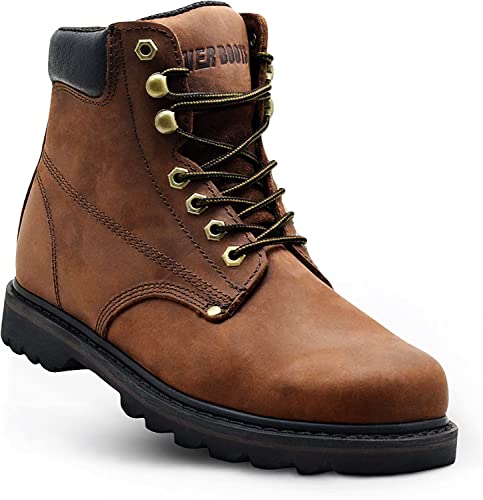
The Honest Take: The EVER BOOTS Tank earns its spot on this list through one remarkable fact: it's a Goodyear Welted, waterproof boot for under $100. Often well under. Most boots at this price point are cemented — disposable when the sole wears out. The Tank can be resoled, which changes its long-term economics entirely. The materials and comfort aren't at the level of a $200 Thorogood — the leather is softer and less durable, the insole is basic — but for an apprentice, a DIYer, a homeowner who uses boots occasionally, or a tradesman who needs a backup pair, the construction you get for the price is genuinely unbeatable.

Important note: Most Tank models are soft-toe — check the specific listing carefully if you need ASTM-certified safety toe protection. The Ultra Dry variant adds waterproofing as a priority feature.

Pros & Cons
| Pros | Cons |
|
|
Best For: Budget-conscious workers, apprentices, homeowners, DIYers, or anyone needing a reliable backup pair of work boots without breaking the bank.
How to Make Your Construction Boots Last Longer
Most workers cut their boot life in half by skipping basic maintenance. Here's the routine that extends the life of leather work boots significantly:
- Clean after every shift: Remove dirt and mud before it dries and starts abrading the leather. A stiff brush and a damp cloth is enough for daily cleaning.
- Condition regularly: Every 4–6 weeks, apply a quality leather conditioner (mink oil, neatsfoot oil, or Leather Honey). This prevents the leather from drying out and cracking, which is the primary cause of upper failure.
- Waterproof twice a year: Apply a beeswax-based product (Sno-Seal, Obenauf's Heavy Duty LP) or a spray-on waterproofing treatment. Pay attention to seams and the welt area.
- Rotate your boots: Wearing the same pair every day doesn't give the midsole time to recover its shape. Two pairs in rotation can nearly double the life of both.
- Dry properly: Never dry near direct heat (radiators, fires, direct sunlight). Stuff wet boots with newspaper and air-dry at room temperature. Heat destroys the adhesive bonds and dries out leather rapidly.
- Resole before failure: A welted or stitchdown boot can be resoled by any competent cobbler when the outsole wears through. Budget $80–$120 and you've extended the boot's life by years.
Best Construction Boot by Trade
Matching your boot to your specific trade hazards is more important than any brand name. Here's the quick reference:
| Trade | Top Pick | Why |
|---|---|---|
| Carpenter (on concrete) | Thorogood American Heritage Moc Toe | Wedge sole, anti-fatigue, USA-made |
| Electrician | KEEN Utility Cincinnati | EH rated, composite toe, wide toe box |
| Plumber / Pipefitter | KEEN Utility Cincinnati | Rubber toe cap for kneeling, EH rated |
| Ironworker (rebar) | Thorogood Moc Toe or Carolina Linesman | Wedge for flat work; linesman for climbing |
| Heavy Equipment Operator | Timberland PRO Endurance Met Guard | Met guard for crush protection, defined heel |
| Welder | Timberland PRO Endurance Met Guard | Met guard, no exposed laces in some models |
| Lineman / Tower Climber | Carolina Linesman 10" | Steel shank, logger heel, 10" ankle support |
| Concrete / Wet Sites | Muck Boot Chore Classic | 100% waterproof, chemical resistant, easy clean |
| General Laborer | Timberland PRO Pit Boss | EH + PR rated, welted, affordable |
| Landscaper / Forestry | Chippewa Apache Logger 8" | Vibram logger sole, 8" ankle support |
| Warehouse / Light-Duty | Cat Excavator Superlite WP | Lightweight, flexible, low fatigue |
| Budget / Apprentice | EVER BOOTS Tank | Goodyear welt under $100 — best value |
Frequently Asked Questions
What's the best work boot for standing on concrete all day?
For standing on flat, hard concrete, a wedge sole is the clear choice. The Thorogood American Heritage Moc Toe with its MAXWear wedge sole provides full ground contact that distributes your weight evenly and eliminates the heel and forefoot pressure points that cause pain after hours of standing. Pair it with a quality PU midsole and you have the most effective anti-fatigue setup available in a work boot.
Are expensive work boots really worth it?
Yes — but the reason is construction, not brand name. A $250 welted or stitchdown boot can be resoled twice over its life, effectively lasting 5–10 years. A $90 cemented boot is done when the sole wears out, usually in 1–2 years of heavy use. In a 5-year window, replacing a cheap boot every year costs more than one quality boot resoled once. You're paying for longevity, not prestige.
How do I choose the right construction boot for my specific job?
Start with your hazards, not your preferences:
- Electrician? → EH-rated composite toe
- Demo / roofer? → Puncture-resistant (PR) plate in the sole
- Heavy equipment operator? → Met guard (MT) + defined heel
- Carpenter on concrete? → Wedge sole
- Wet / chemical environments? → Full rubber boot (Muck) or GORE-TEX leather (Danner)
- Ladder / climbing work? → Defined heel + steel shank + 8–10" height
Always verify your job site's specific PPE requirements first — many sites mandate specific ASTM ratings regardless of personal preference.
What's the difference between EH and waterproof ratings?
These are completely different protections that are often confused. EH (Electrical Hazard) is a sole insulation rating — it means the sole material won't conduct electricity, protecting you from incidental contact with live circuits. It says nothing about water resistance. Waterproof means the boot keeps water out — either through a membrane (GORE-TEX) or rubber construction. A boot can be EH-rated without being waterproof, and vice versa. Check the tongue tag for both ratings separately if you need both.
How long should construction work boots last?
It depends heavily on construction type and use intensity. A cemented boot under daily heavy use typically lasts 1–2 years before the sole or upper fails. A Goodyear welted boot maintained properly and resoled when needed can last 5–10 years. A stitchdown boot like the Danner Quarry, which can be fully rebuilt, can last 15–20 years in the hands of a careful owner. The single biggest factor: whether the boot can be resoled.
Should I size up in work boots?
Not necessarily — it depends on the boot. Most work boots are true to size or require sizing down by a half size (check individual brand sizing guides). The key rule is to try boots on at the end of the day when your feet are at their largest, and to wear your actual work socks. A thumb's width of space at the toe is the target. Sizing up to accommodate a thick insole is common and generally fine.
Can I add my own orthotics or insoles to construction boots?
Yes — and for many workers with existing foot conditions (plantar fasciitis, flat feet, high arches), this is strongly recommended. Remove the stock insole first, then insert your custom orthotic or premium aftermarket insole (Superfeet Green, Powerstep Pinnacle, and Currex WorkPro are well-regarded options). A quality aftermarket insole also partially compensates for the lack of a shank in boots like the Origin Lincoln or Cat Excavator. This single change can transform the comfort of a mediocre-insole boot.
Conclusion: Your Boots Are an Investment, Not an Expense
A construction site is no place to save $50. The right boot is a non-negotiable tool that protects your feet, supports your back, and fights fatigue from the first hour to the last. Stop buying disposable cemented boots that destroy your feet in 6 months and cost more in the long run.
The formula is simple: match the boot to your trade and your primary hazard. On concrete all day? Get a wedge sole — the Thorogood is the standard. Climbing and on rough terrain? Get a defined heel and ankle height — the Danner or Carolina are the benchmarks. Around heavy equipment? Don't go without a met guard — the Timberland Endurance is the call.
For the best all-around boot that balances comfort, safety, and durability, the Timberland PRO Pit Boss is the safe choice for most trades. For the boot that will genuinely give you the most comfort on flat hard surfaces, the Thorogood American Heritage Moc Toe is our top pick. And if you want to buy once and buy right for a decade or more, the Danner Quarry USA is worth every dollar.
Invest in your feet. They're the only pair you've got — and they determine how you feel from your ankles to your lower back every single day on the job.