
Last Updated: October 28, 2025 | Tested By: The BootsGuru Team | Insights from Ironworkers Local feedback.
Walking beams hundreds of feet up, climbing rebar cages, wrestling tons of steel into place – your job leaves zero room for error. A slip isn't just a fall; it's a potential catastrophe. More than any other trade, your boots aren't just footwear; they are critical safety equipment. Your life literally depends on them.
Forget generic boot advice. Standard work boots, especially trendy wedge soles or low-cut hikers, are dangerously inadequate for connecting steel or busting rod. They lack the specific features designed to lock you onto narrow surfaces and support your ankles against the immense strain of working at height.
This guide is built specifically for ironworkers, by people who understand the demands. We're diving deep into the non-negotiable features you need – the defined heel, the ankle support, the right sole compound, and bombproof construction. We'll review the toughest, most reliable boots trusted by connectors, rod busters, and fabricators in 2025, from legendary brands like Thorogood, Red Wing, and Danner.
Quick Picks Table: Top 5 Boots Built for the Iron
Need the answer fast? Here are the boots trusted by pros on the steel:
| Award | Boot Model | Best For | Key Feature | Heel Type | Price |
|---|---|---|---|---|---|
| Best Overall (Classic) | Thorogood Logger Series (9" ST) | Structural Steel & All-Around | Defined Logger Heel, Vibram Sole | 90° Logger | $$$ |
| Most Durable/Rebuildable | Red Wing LoggerMax (9" ST) | Heavy-Duty Use & Longevity | Defined Logger Heel, Vibram Sole, Resolable | 90° Logger | $$$$ |
| Best Climbing Comfort | Danner Quarry USA (8" ST) | Rebar Work & Mixed Terrain | Defined 90° Heel, Comfort Platform | 90° Block | $$$ |
| Best EH Rated Option | Carolina Linesman Boot (10" ST EH) | Added Electrical Protection & Height | Defined Logger Heel, EH Rated | 90° Logger | $$$ |
| Best Value (w/ Heel) | Chippewa Apache Logger (8" ST) | Budget-Conscious Durability | Defined Logger Heel, Vibram Sole | 90° Logger | $$ |
The Ironworker's Boot Bible: Non-Negotiable Features Explained
When you're buying boots for walking steel, forget fashion. Safety and function are everything. Here’s what separates a life-saving tool from a dangerous liability:
3.1. The Defined Heel (90-Degree): Your Lifeline
This is the #1 MOST IMPORTANT FEATURE, period. That sharp, 90-degree angle where the heel meets the sole isn't for looks; it's a critical safety device designed to lock onto steel beams, ladder rungs, and rebar. It provides a secure stopping point and a stable platform when climbing or positioning yourself hundreds of feet up.
Why Wedge Soles Are DANGEROUS for Ironworkers: Wedge soles are fantastic for concrete comfort, but they lack this crucial locking edge. Trying to balance on a narrow beam or hook a ladder rung with a wedge sole is incredibly unstable and significantly increases your risk of a slip or fall.
3.2. Ankle Support & Boot Height (Stability at Altitude)
Walking narrow, uneven surfaces, often while carrying heavy tools or materials, demands maximum ankle stability. A rolled ankle on the ground is painful; at height, it's potentially fatal. You need:
- Minimum 8-Inch Height: Anything shorter simply doesn't provide enough support to prevent your ankle from rolling inward or outward under load.
- 9 to 10 Inches Preferred: Many ironworkers prefer taller boots for maximum stability and leg protection, especially rod busters who spend hours tied off to rebar cages or connectors maneuvering heavy steel members.
- Stiff Leather Uppers: Thick, high-quality leather provides the structural support needed to keep your ankle locked in place.
3.3. Outsole Grip & Material (Steel, Concrete, Oil)
You need a sole that can handle a variety of slick and rough surfaces:
- Durable Rubber Compound (like Vibram): Look for compounds specifically designed for high-traction and durability. Vibram outsoles are the industry standard for a reason.
- Defined Lug Pattern: You need deep, multi-directional lugs that can bite into various surfaces (steel, concrete, wood forms, occasional mud/gravel) and provide stable footing, but not so aggressive that they easily catch on edges.
- Oil & Slip Resistance: Job sites are full of potential slip hazards. Look for soles explicitly rated for oil and slip resistance (SRC or SR rating).
3.4. Shank Support (Climbing & Standing Power)
Think of the shank as the boot's backbone – a rigid plate (usually steel or strong composite/fiberglass) embedded in the midsole. It's vital for ironworkers:
- Climbing Support: When you're standing on a narrow beam edge, ladder rung, or piece of rebar, the shank prevents your arch from collapsing under your weight. This dramatically reduces foot fatigue and prevents painful arch strain (feeling like your foot is trying to wrap around the bar).
- Overall Stability: Adds torsional rigidity, preventing the boot from twisting unnaturally on uneven surfaces.
3.5. Bombproof Construction (Durability & Resoling)
Ironworking destroys boots faster than almost any other trade. Cemented (glued) construction found on cheaper boots simply won't hold up to the abrasion, torsion, and stress. You need:
- Goodyear Welt or Stitchdown Construction: These methods involve stitching the sole components together (often through a leather welt). This creates an incredibly durable, stable platform that can withstand extreme abuse.
- Resolability: The biggest benefit of welted/stitchdown construction is that the boot can be resoled. When the tread wears down (which happens fast on steel and concrete), a cobbler can replace the entire outsole unit, giving your expensive boots a second (or third, or fourth) life. This massively lowers the long-term cost.
- Thick, Full-Grain Leather: Look for heavy-duty (6oz+) oil-tanned leather uppers that can resist abrasion from rebar, concrete, and steel edges, as well as occasional sparks.
3.6. Safety Toe (Mandatory Protection)
A safety toe (meeting ASTM F2413 standards) is almost always required. Your options:
- Steel Toe: The traditional choice, offering maximum impact and compression resistance. Can feel heavy and conduct cold/heat.
- Composite Toe: Made from non-metallic materials (carbon fiber, Kevlar, plastic). Lighter than steel, doesn't conduct temperature, and meets the same ASTM safety standards. Often preferred for comfort.
Best *Types* of Boots for Ironworkers (Logger vs. Lineman vs. Quarry)
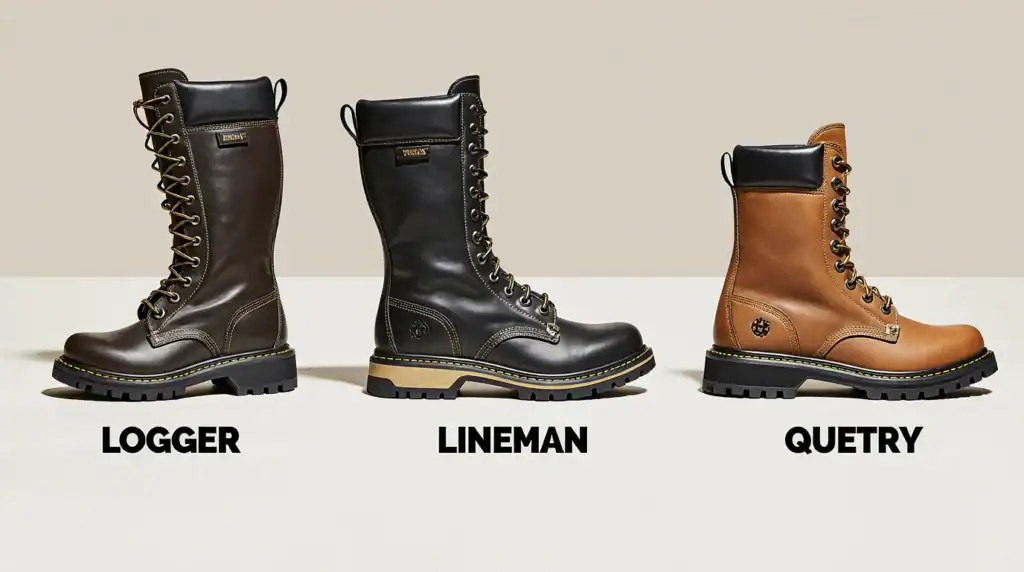
While no boot is labeled specifically "Ironworker Boot," several heavy-duty categories are perfectly suited because they share those non-negotiable features: a defined heel and robust ankle support. Understanding the nuances helps you choose:
Logger Boots (The Classic Climber)
Examples: Thorogood Logger, Red Wing LoggerMax, Chippewa Apache
These are the quintessential high-heel, high-shaft boots. Originally designed for climbing trees with spurs, the aggressive logger heel provides maximum locking power onto steel beams and rebar. They typically offer excellent ankle support (8" or 9" standard) and feature rugged Vibram lug soles good for mixed job site terrain. This is the go-to style for many connectors and structural ironworkers due to that secure heel lock.
Lineman Boots (Max Stability & Support)
Example: Carolina Linesman
Very similar to loggers, but often dialed up for stability. Lineman boots frequently feature extra heavy-duty steel shanks (designed for standing on narrow pole spurs or rebar for hours) and sometimes even taller shafts (10"+) for maximum leg protection and ankle stability. They are also often EH (Electrical Hazard) rated, crucial if working near energized sources. This style is ideal for rod busters spending long hours tied off while working on rebar cages.
Heavy-Duty Quarry/Construction Boots (Comfortable All-Rounders)
Example: Danner Quarry USA
While sometimes having slightly less aggressive heels than true loggers (often a 90-degree *block* heel vs. a curved logger heel), boots in this category prioritize durability, support, and often better *walking* comfort on mixed job sites (concrete, gravel, steel). They still provide the necessary defined heel for safety and adequate ankle height (usually 8"). Boots like the Danner Quarry are a fantastic, often more comfortable, alternative for ironworkers performing a variety of tasks beyond just climbing steel.
Top 5 Best Work Boots for Ironworkers: Detailed Reviews
🏆 Best Overall (Classic): Thorogood Logger Series (9" ST)
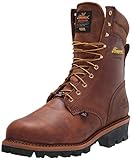
The Honest Take: Thorogood loggers are a staple on structural steel jobs for a reason. They offer that critical, deep logger heel that locks onto beams with confidence. The 9-inch height provides fantastic ankle support without feeling overly restrictive. Built with a Goodyear Storm Welt and featuring a Vibram outsole, they're durable, resolable, and offer reliable traction. While maybe not as "cushy" out of the box as some modern boots, they break in reasonably well and provide the rugged, dependable performance ironworkers trust. Many models are Made in the USA.
| Pros | Cons |
|
|
Best For: Structural ironworkers, connectors, anyone prioritizing heel lock and ankle support for climbing.
💪 Most Durable/Rebuildable: Red Wing LoggerMax (9" ST)
The Honest Take: If you view your boots as a career-long investment, the Red Wing LoggerMax is built like a tank and designed to be rebuilt. Using premium Red Wing leather, a robust Goodyear Welt, and a heavy-duty Vibram logger outsole, this boot is made to endure extreme abuse. Like many Red Wings, expect a significant break-in period, but once molded to your foot, the support and durability are legendary. The high logger heel offers maximum security on steel. It's an expensive upfront cost, but potentially the last pair of boot *uppers* you'll buy for a decade with proper resoling.
| Pros | Cons |
|
|
Best For: Professionals demanding maximum longevity, willing to invest time in break-in and money upfront for a rebuildable boot.
🧗 Best Climbing Comfort: Danner Quarry USA (8" ST)

The Honest Take: The Danner Quarry offers a fantastic balance between rugged ironworker needs and all-day walking comfort. It features a solid 90-degree block heel (slightly less aggressive than a logger heel but still very effective for locking on), durable stitchdown construction (resolable), and Danner's renowned comfort platform with an Ortholite footbed. It breaks in much faster than heavy loggers, making it a great choice for rod busters or ironworkers who spend significant time walking on concrete decks or mixed terrain between climbs. Made in the USA quality.
| Pros | Cons |
|
|
Best For: Rod busters, ironworkers on mixed job sites, those prioritizing comfort during long shifts with moderate climbing.
⚡ Best EH Rated Option: Carolina Linesman Boot (10" ST EH)

The Honest Take: When you need maximum stability and certified electrical hazard protection, the Carolina Linesman steps up. The 10-inch height offers unparalleled ankle and leg support, crucial for stability when tied off or working in awkward positions. It features a heavy-duty steel shank for standing on narrow surfaces and a defined logger heel for climbing grip. The EH rating provides peace of mind when working around potential electrical hazards. It's a heavy, stiff boot focused purely on protection and stability.
| Pros | Cons |
|
|
Best For: Rod busters, ironworkers needing EH rating, maximum ankle support, or those frequently standing on narrow surfaces.
💰 Best Value (w/ Heel): Chippewa Apache Logger (8" ST)

The Honest Take: If you need the critical defined heel and ankle support for ironwork but are watching your budget, the Chippewa Apache Logger delivers solid performance without the premium price tag of Red Wing or Danner. It features a Goodyear Welt construction (so it's resolable), a Vibram outsole for reliable grip, and the necessary 90-degree logger heel. While the leather quality and finishing might not match the top-tier brands, it's a durable, capable boot that gets the core safety features right at a more accessible price point.
| Pros | Cons |
|
|
Best For: Apprentices, budget-conscious ironworkers, or those needing a reliable backup pair.
Essential Maintenance for Ironworker Boots: Keep Your Lifeline Intact
These boots take more abuse than almost any other. Treat them right, and they'll keep you safe.
- Leather Care is Non-Negotiable: Clean off concrete slurry, mud, and grime DAILY with a brush. Condition the thick leather every few weeks with a heavy-duty boot grease or oil (like Obenauf's LP or mink oil) to combat abrasion from steel and prevent cracking. Pay special attention to seams.
- Inspect Heel & Sole Wear Critically: That defined heel edge is your safety lock. If it gets rounded or worn down significantly from kicking into steel or concrete forms, the boot is unsafe for climbing and needs resoling or replacement immediately. Check for sole separation (delamination).
- Check Laces & Hardware Religiously: Replace frayed or damaged laces *before* they break mid-climb. Ensure all eyelets and hooks are secure and not bent, as a snag can be dangerous.
- Use a Boot Dryer Daily: Even if they don't feel soaked, sweat builds up. Using a boot dryer (on a low/no heat setting) prevents leather rot, odor, and keeps the internal components in good shape.
Frequently Asked Questions (FAQ)
Can I wear wedge sole boots for ironwork?
Absolutely not. It is dangerously unsafe. Wedge soles lack the defined 90-degree heel required to securely lock onto steel beams, ladder rungs, and rebar during climbs. They significantly increase your risk of slipping and falling from height.
What's the best height for ironworker boots (8", 9", 10")?
8 inches is the functional minimum for adequate ankle support. Many experienced ironworkers prefer 9 or 10 inches for maximum stability, especially when carrying heavy loads or working on highly uneven surfaces like rebar mats. It often comes down to personal preference balancing mobility vs. maximum support.
Are logger boots the same as ironworker boots?
They share the most critical features (defined heel, tall shaft, durable construction), and logger boots are very commonly and effectively used by ironworkers. Lineman boots are also extremely similar and suitable. The core requirements overlap significantly, making these categories largely interchangeable for the trade.
How long should ironworker boots last?
The job is brutal on boots. Even high-quality, welted boots might only last 1-2 years before needing a resole due to abrasion wearing down the sole and heel edge. Because they *are* resolable, the expensive leather upper can potentially last 5+ years with multiple resoles and diligent leather care.
Conclusion: The Right Boots Keep You Tied Off to Safety
For ironworkers, boots are not optional gear; they are your primary point of contact and safety when working at dangerous heights. The non-negotiables are crystal clear: a sharp, defined 90-degree heel for secure climbing, robust ankle support (8"+ height), and durable, resolable construction capable of withstanding extreme abuse.
Don't compromise on your foundation. Investing in a purpose-built boot with the right heel and support isn't just about comfort; it's about coming home safely at the end of every shift. Whether you choose a classic Thorogood Logger for its reliability, invest in a lifetime Red Wing LoggerMax, or opt for the comfort of a Danner Quarry, ensure it meets these critical safety standards.
Choose the boot that gives you the most confidence on the steel. Stay safe out there.