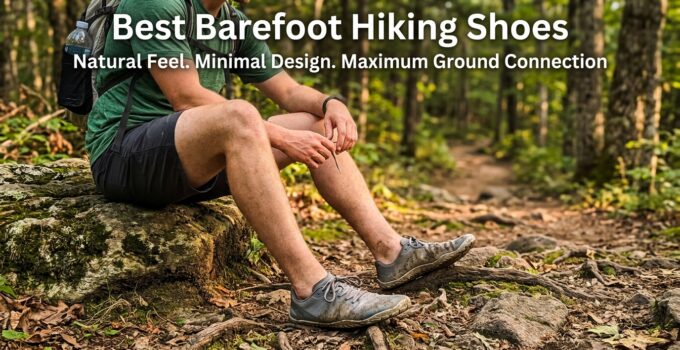
Barefoot hiking shoes promise a lot: stronger feet, better proprioception, eliminated toe compression, and a more natural gait on the trail. Most of those promises are real. There is one catch that most barefoot shoe guides skip over: switch too fast and you will injure yourself. Achilles tendinopathy, plantar fasciitis, and metatarsal stress fractures are the most common results of jumping from cushioned hiking boots to a 4mm sole on the same weekend.
This guide covers both parts of the equation — the best barefoot and minimalist hiking shoes for every experience level, organized from most beginner-friendly to most purist, plus a specific 4-week transition plan that lets you make the switch safely. We also include an honest section on who should not buy barefoot hiking shoes — because this category gets oversold by enthusiast sites and under-warned by everyone else.
The eight picks below include both men’s and women’s options across a stack height spectrum from 25mm (Altra Lone Peak — forgiving enough for beginners) down to 6mm (Vivobarefoot Primus Trail — for experienced minimalist hikers ready for maximum ground feel).
Quick Comparison: Best Barefoot Hiking Shoes 2026
| # | Shoe | Stack Height | Drop | Toe Box | Experience Level | Price |
|---|---|---|---|---|---|---|
| 1 | Altra Lone Peak 9 (Women’s) | 25mm | 0mm | FootShape — very wide | Beginner | ~$140 |
| 2 | Altra Lone Peak 9 (Men’s) | 25mm | 0mm | FootShape — very wide | Beginner | ~$140 |
| 3 | Xero Shoes Mesa Trail II | ~14mm | 0mm | Wide, natural shape | Beginner / Intermediate | ~$120 |
| 4 | Merrell Trail Glove 7 | ~10mm | 0mm | Medium | Intermediate | ~$110 |
| 5 | Merrell Vapor Glove 6 | ~5.5mm | 0mm | Medium-narrow | Advanced / Purist | ~$100 |
| 6 | Whitin Trail Runner | ~10mm | 0mm | Wide | Beginner (budget) | ~$45–55 |
| 7 | Vivobarefoot Primus Lite 3.5 | ~6mm | 0mm | Fan-shaped, very wide at toe | Intermediate / Advanced | ~$150 |
| 8 | Vivobarefoot Primus Trail III AW | ~6mm | 0mm | Fan-shaped, very wide at toe | Advanced | ~$150–170 |
Which shoe is right for your experience level?
| Your starting point | Best first pick | Why |
|---|---|---|
| Complete beginner — coming from cushioned hiking boots | Altra Lone Peak 9 | 25mm stack bridges the gap — zero-drop without extreme ground feel shock |
| Some zero-drop experience — want more ground feel | Xero Shoes Mesa Trail II | 14mm Goldilocks stack — real ground feel without punishing beginners |
| Regular minimalist runner going onto trail | Merrell Trail Glove 7 | Vibram outsole, 10mm stack, best performance trail barefoot shoe |
| Experienced barefoot hiker wanting more protection | Vivobarefoot Primus Trail III AW | All-weather construction + thin 6mm sole + trail-ready outsole |
| Experienced barefoot runner wanting maximum ground feel | Merrell Vapor Glove 6 | 5.5mm — the most minimal trail shoe on this list |
Barefoot, Zero-Drop, Minimalist: What These Terms Actually Mean
hiker comparing barefoot shoes 202606041010
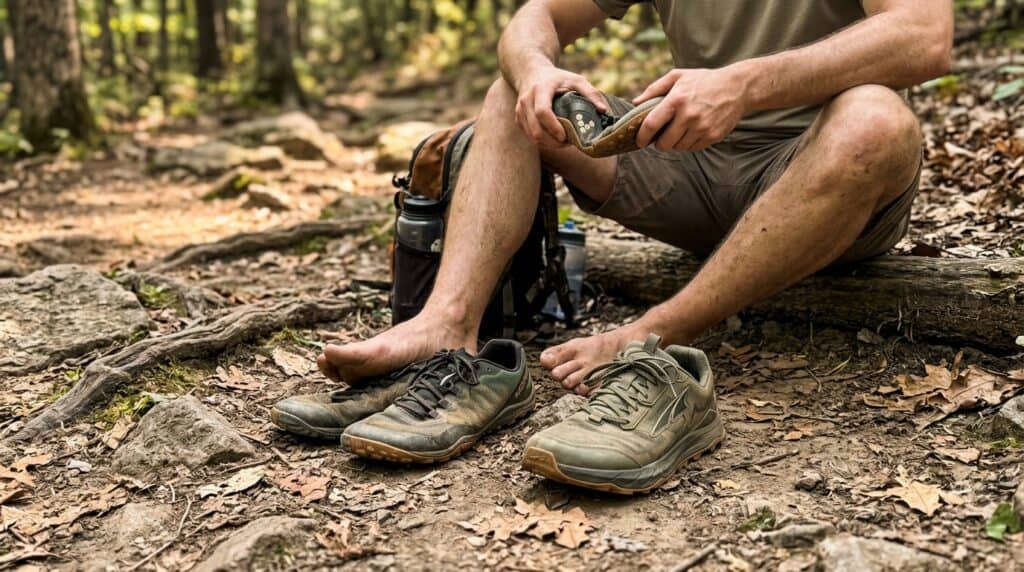
These three terms are used interchangeably by most buyers and most brands — but they mean different things, and buying the wrong one for your experience level is the most common mistake in this category.
True barefoot shoe: zero-drop + flexible in all directions + wide anatomical toe box + thin sole (typically under 10mm total stack). The Vivobarefoot Primus Trail and Merrell Vapor Glove are true barefoot shoes. Maximum ground feel, maximum proprioception, maximum demand on foot strength.
Zero-drop shoe: the heel and forefoot sit at exactly the same height — but the shoe may have significant stack height above that. The Altra Lone Peak 9 is zero-drop at 25mm of stack. It feels dramatically different from a traditional 10mm-drop hiking boot — but it is not a “barefoot” shoe in the purist sense. It’s a forgiving, cushioned, zero-drop shoe that functions as an excellent entry point.
Minimalist shoe: a sliding scale with no fixed definition. A shoe with 10mm stack (Merrell Trail Glove) is far more minimalist than a shoe with 25mm stack (Altra), which is far more minimalist than a traditional hiking boot with 35mm stack and 10mm drop. The minimalist spectrum ranges from zero to fully cushioned — where you fall on it depends on your experience and goals.
The practical takeaway: if you’re a beginner, you want a zero-drop shoe with meaningful stack height (20–25mm) — not a true barefoot shoe. The Altra Lone Peak is the right choice. If you’re an experienced minimalist looking for trail-specific performance, the Merrell Trail Glove or Vivobarefoot Primus Trail are the appropriate targets.
The 5 Specs That Define a Barefoot Hiking Shoe

hiker comparing barefoot hiking … 202606041013
Stack height — the single most important number for beginners
Stack height is the total thickness of shoe material between your foot and the ground. In standard hiking boots this is 30–40mm; in true barefoot shoes it’s 4–10mm. The lower the stack, the more ground feel — and the more foot strength and adaptation required. The spectrum across our picks: Altra Lone Peak (25mm) → Xero Mesa Trail (14mm) → Merrell Trail Glove (10mm) / Whitin (10mm) → Vivobarefoot Primus (6mm) → Merrell Vapor Glove (5.5mm). Beginners should start at the 20–25mm end and work down gradually over months.
Drop — why zero matters and why it needs adaptation
Drop is the height difference between heel and forefoot. Most traditional hiking boots run 8–12mm of drop. Every shoe on this list is zero-drop — the heel and forefoot are level. This changes your gait mechanics: without a heel lift, you naturally land more toward midfoot and forefoot. Your calf muscles and Achilles tendon handle more load. Moving from 10mm drop to 0mm without adaptation is the primary cause of Achilles tendinopathy in new barefoot shoe buyers. The transition plan below addresses this directly.
Flexibility — the barefoot shoe’s distinguishing characteristic
A true barefoot shoe flexes and twists in every direction — it moves with your foot rather than supporting it. This allows the 33 muscles, 26 bones, and 100+ ligaments in your foot to activate fully with every step, which is what produces the strengthening effect over time. A rigid-soled hiking boot prevents most of this movement. The degree of flexibility varies across our picks: Vivobarefoot and Merrell Vapor Glove are maximally flexible; the Altra Lone Peak is more structured due to its thicker midsole.
Toe box width — the feature that converts the most buyers
The widest part of most conventional shoes is at the ball of the foot — then they taper toward a narrow or pointed toe. This compresses the toes, contributing to bunions, hammer toes, and the general discomfort of wearing tight shoes for 8 hours. Barefoot shoes use a “foot-shaped” or “anatomical” toe box that widens at the toes, allowing them to splay naturally. Altra’s FootShape toe box and Vivobarefoot’s fan-shaped last are the two widest in this guide. The Merrell shoes are narrower — average foot width at best.
Rock protection — more than you might expect from a thin sole
Thin soles feel every sharp rock underfoot until your feet adapt — and on rocky technical terrain, even experienced barefoot hikers value some protection. The Altra Lone Peak uses a StoneGuard insert. The Merrell Trail Glove has a TrailProtect pad. The Vivobarefoot models rely on thicker puncture-resistant rubber at key zones. The Merrell Vapor Glove has essentially no rock plate — for experienced feet on mixed terrain only.
The 8 Best Barefoot Hiking Shoes of 2026
1 & 2. Altra Lone Peak 9 (Women’s + Men’s) — Best for Beginners / Best Zero-Drop Entry Point
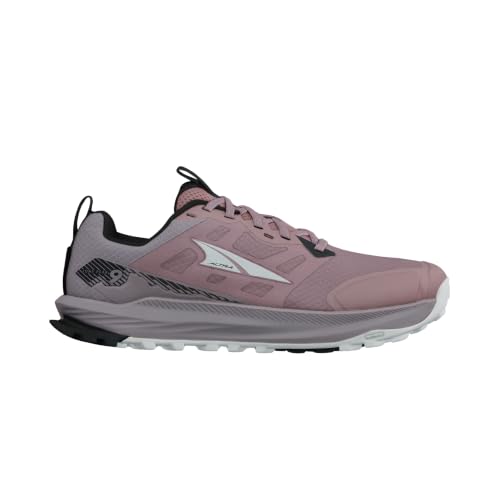
Stack height: 25mm | Drop: 0mm | Outsole: MaxTrac rubber | Toe box: FootShape — very wide | Experience level: Beginner to intermediate | Best for: First-time zero-drop users, wide feet, long-distance hiking
Why it’s the best starting point for beginners: The Altra Lone Peak 9 is annually Altra’s best-selling trail shoe for both runners and hikers, and it consistently appears in iRunFar’s Best Trail Running Shoes guide year after year. The reason is simple: it resolves the biggest tension in the barefoot shoe market — you want zero-drop and a wide toe box, but you’re not yet ready for a 6mm sole on a rocky mountain trail. The Lone Peak’s 25mm stack gives you meaningful cushioning and rock protection while the zero-drop geometry begins retraining your gait mechanics and calf loading. With a 25mm stack height, the Lone Peak 9 provides enough protection from rocks and roots while maintaining excellent trail feedback — you can feel the terrain underfoot without the jarring impact of true zero-drop minimalist shoes. This balanced approach makes it accessible for those transitioning.

The FootShape toe box is Altra’s signature feature — wider across the toes than virtually any other trail shoe at this price point, allowing natural toe splay from the first wear. Despite subtle and nuanced changes from iteration to iteration, the Altra Lone Peak 9 remains reliable, durable, and firmly comfortable — an outdoor workhorse. The updated midsole and durable ripstop mesh upper make the v9 the most refined Lone Peak yet. Real-world testing at ultra distances — including a first-place women’s finish at the 2025 Auburn Trail Half Marathon across 2,500 feet of steep granite elevation — confirms the shoe’s capability well beyond beginner use.
Men’s version: identical specs and construction on a men’s-specific last.

Best for: Complete beginners transitioning from traditional hiking boots, wide-footed hikers, thru-hikers who want zero-drop without punishing ground feel, ultrarunners looking for a trail workhorse.
Sizing note: Altra runs true to size in length. The FootShape toe box runs wide — if you have a narrow foot, you may find the toe box sloppy. The wide version is available for very wide feet.
→ Women’s Altra Lone Peak 9 on Amazon
→ Men’s Altra Lone Peak 9 on Amazon
3. Xero Shoes Mesa Trail II — Best for Beginners Ready for Real Ground Feel

Stack height: ~14mm | Drop: 0mm | Outsole: BareFoam + rubber | Toe box: Wide, natural shape | Experience level: Beginner / Intermediate | Best for: First real barefoot trail experience, Goldilocks stack height
Why it’s the Goldilocks pick: If the Altra Lone Peak is the most forgiving entry point, the Xero Mesa Trail II is what you reach for when you’re ready for genuine barefoot sensation without abandoning all protection. At 14mm of stack, it sits exactly between the cushioned world of the Altra and the true barefoot territory of the Vivobarefoot. Outdoor Life confirmed the Xero Mesa Trail as “the perfect Goldilocks for beginner barefooters — enough cushion to avoid feeling the worst of the rocks, but not so much as to truly inhibit ground feel.”

Xero Shoes uses a straighter last than Vivobarefoot — meaning more width and volume in the midfoot and heel area, which suits a wider range of foot shapes than the fan-shaped Vivo last. The BareFoam midsole is responsive rather than cushioned — it returns energy with each stride rather than absorbing and dampening it. The outsole provides good trail grip across mixed surfaces. The shoe flexes naturally in all directions, promoting active foot muscle engagement throughout the hike. For someone who has finished the 4-week transition plan below and is ready for their first proper barefoot trail day — this is the shoe.
Best for: Beginners who’ve completed the transition programme and want genuine minimalist trail performance. Hikers who found the Altra too cushioned but aren’t ready for a 6mm Vivobarefoot.
Sizing note: True to size. Wide toe box accommodates average to wide feet. If you have high-volume feet, check the Q&A for current fit feedback.
→ Check current price on Amazon
4. Merrell Trail Glove 7 — Best Intermediate Barefoot Hiking Shoe / Best Outsole
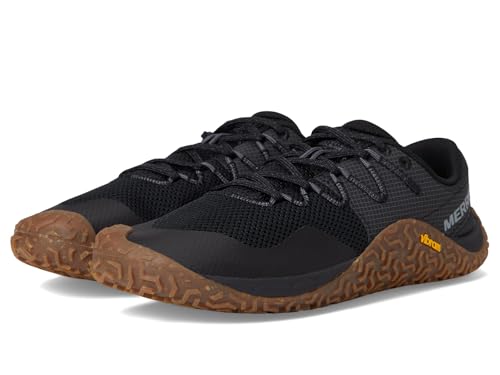
Stack height: ~10mm | Drop: 0mm | Outsole: Vibram EvolventD | Toe box: Medium | Experience level: Intermediate | Best for: Performance trail use, best outsole durability
Why it’s the performance pick: The Merrell Trail Glove 7 is the most performance-oriented barefoot hiking shoe on this list, built around the Vibram EvolventD outsole — the same high-friction rubber used on premium trail runners. OutdoorGearLab rated it among their top barefoot trail picks specifically for its “dexterity and stable feel,” and it’s the shoe that converts serious trail runners to the barefoot category more than any other. At 10mm of stack with a TrailProtect pad for rock protection, it delivers genuine ground feel without being punishing on moderate rocky terrain.

The Vibram outsole also means exceptional durability — independent testing places the Trail Glove at 500–700 miles before significant tread wear, significantly outlasting the Xero and budget alternatives. The mesh upper breathes well and the overall construction is clean and trail-ready. The one honest limitation: the toe box is noticeably narrower than the Altra or Vivobarefoot options — this is a medium-width shoe that suits average to narrow feet. Wide-footed hikers should look at the Altra or Vivobarefoot instead. The Trail Glove 7 is also the only shoe on this list where the narrow fit is specifically flagged by Outdoor Life’s tester as restricting toe splay for wide feet.
Best for: Intermediate barefoot hikers with average or narrow feet who prioritise outsole performance and durability over maximum toe box width. Trail runners transitioning to barefoot hiking.
Sizing note: Runs slightly narrow — if you have wide feet, size up or choose a different model. Most buyers find true to size in length.
→ Check current price on Amazon
5. Merrell Vapor Glove 6 — Best for Experienced Barefoot Hikers / Maximum Ground Feel
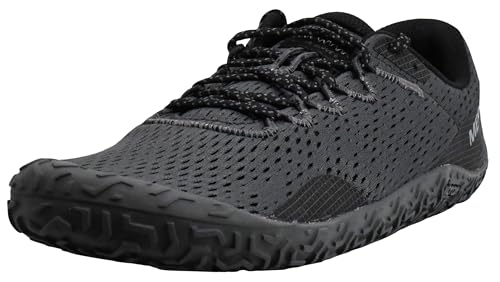
Stack height: ~5.5mm | Drop: 0mm | Outsole: Vibram EvolventD | Toe box: Medium-narrow | Experience level: Advanced / Purist | Best for: Maximum proprioception, experienced minimalist runners transitioning to trail
Why it exists and who it’s actually for: The Vapor Glove 6 is the most minimal shoe on this list — 5.5mm of total stack including the Vibram outsole means you feel essentially every pebble, root, and surface texture underfoot. This is not a flaw; it is the entire point. For experienced barefoot runners who have logged hundreds of miles in minimalist shoes and want to bring that same sensory experience to trail hiking, the Vapor Glove delivers it with Vibram grip and Merrell’s proven upper construction.

Outdoor Life’s tester — a narrow-footed experienced barefoot runner — specifically came back a fan after extended trail use, noting the Vibram outsole’s superiority on wet and technical surfaces and the ultralight weight that makes long days feel effortless. The caveat for everyone else: if you have not been wearing barefoot or minimalist shoes regularly for at least 6 months, this shoe will hurt your feet on a trail hike. The foot muscles simply are not adapted to absorb the impacts that a 5.5mm sole transmits. This shoe rewards patience and progression — it’s the destination, not the starting point.
Best for: Experienced barefoot runners going onto trail. Hikers who’ve worked through the progression and want maximum ground sensation. Narrow-to-average feet only.
Sizing note: Narrow fit — unsuitable for wide feet. True to size in length.
→ Check current price on Amazon
6. Whitin Trail Runner — Best Budget Barefoot Hiking Shoe

Stack height: ~10mm | Drop: 0mm | Outsole: Rubber lug | Toe box: Wide | Experience level: Beginner / Budget | Best for: Testing the category, first barefoot shoe on a tight budget
Why it earns a place on this list: The Whitin is an Amazon bestseller in the barefoot shoe category with thousands of verified reviews, and it represents the most accessible entry point to the entire category. At under $55, it allows a budget-conscious hiker to experience zero-drop, a wide toe box, and the sensation of minimal cushioning before committing to a $120–150 premium option. The zero-drop construction is genuine, the toe box is meaningfully wide, and the rubber outsole provides adequate grip on mixed trail surfaces.

The honest limitations are real and worth stating clearly: the outsole wears faster than Vibram alternatives — expect 150–300 miles on mixed terrain before meaningful tread degradation. The upper construction is less refined than Merrell or Vivobarefoot, and the fit is less precise. For occasional trail use and the first exploration of the barefoot category, these are acceptable trade-offs at this price point. For a daily trail hiker covering serious mileage, one of the premium options will serve better over a full season.
Best for: First-time barefoot shoe buyers who want to test the category before investing in premium options. Occasional trail hikers on a budget. A pair to wear during the early stages of the transition plan while saving for a premium option.
Sizing note: Most buyers find true to size. The wide toe box accommodates average to wide feet comfortably.
→ Check current price on Amazon
7. Vivobarefoot Primus Lite 3.5 — Best Lightweight Vivobarefoot / Best Casual Trail

Stack height: ~6mm | Drop: 0mm | Outsole: Thin rubber | Toe box: Fan-shaped — narrow heel, very wide at toes | Experience level: Intermediate / Advanced | Best for: Lightweight everyday trail use, the most flexible Vivobarefoot model
Why Vivobarefoot occupies a category of its own: Vivobarefoot is the most philosophically committed barefoot footwear brand in the world — every shoe they make is zero-drop, flexible in all directions, and built on their distinctive fan-shaped last that widens dramatically at the toes. The Primus Lite 3.5 is their lightest, most flexible model — a trail-capable shoe that prioritises sensory feedback and natural movement above all else.

The fan-shaped last is distinctly different from every other brand’s approach. Where Altra, Xero, and Merrell have broadly consistent width from midfoot to toe, Vivobarefoot narrows sharply through the heel and midfoot and then fans very wide at the forefoot — mimicking the natural spread of an unshod foot. This suits some feet perfectly and others not at all. If you’ve previously found that wide-toe-box shoes are still loose through the midfoot, Vivobarefoot may be the answer — the narrow midfoot holds the foot precisely while allowing maximum splay at the front. If you have a high-volume foot or a wide heel, the Vivo last will not fit correctly.
At 6mm of stack, the Primus Lite 3.5 delivers genuine barefoot sensation on trail — every surface texture is communicated clearly. The outsole provides adequate grip on firm ground and light mixed trail but is not the shoe for sustained wet rock or very technical terrain, where the Primus Trail III All Weather (below) is a better choice.
Best for: Experienced minimalist hikers who want Vivobarefoot’s distinctive fan-shaped fit in a lightweight, flexible model. Casual trail use in good weather conditions.
Sizing note: Vivobarefoot sizing runs about one size smaller than standard shoe sizes — most buyers go up one full size. The narrow heel is non-negotiable — if you have a wide heel, try before buying.
→ Check current price on Amazon
8. Vivobarefoot Primus Trail III All Weather — Best Advanced Barefoot Hiking Shoe

Stack height: ~6mm | Drop: 0mm | Outsole: Trail lug rubber | Construction: All-weather waterproof | Toe box: Fan-shaped — narrow heel, very wide at toes | Experience level: Advanced | Best for: Technical trail use in variable conditions, the most capable barefoot hiking shoe
Why this is the destination shoe for serious barefoot hikers: If you’ve worked through the progression — started with the Altra, moved to the Xero Mesa Trail, logged hundreds of trail miles building foot strength — the Vivobarefoot Primus Trail III All Weather is where the barefoot hiking journey ends up. It’s the most trail-specific barefoot shoe on this list: the All Weather waterproof construction handles variable mountain conditions, the trail lug outsole provides genuine grip on wet roots and technical surfaces, and the 6mm sole delivers the sensory richness that experienced barefoot hikers specifically seek.

Multiple experienced testers across diverse terrain — from snowy Rocky Mountains to sandy desert bikepacking — have confirmed the Primus Trail as their go-to barefoot hiking shoe when conditions demand more than a lightweight trainer. The all-weather construction means the shoe handles rain, stream crossings, and wet trail surfaces without the foot becoming cold and wet, which is the primary limitation of thin-soled trail shoes in mountain conditions. The fan-shaped Vivobarefoot last remains — all the same fit notes from the Primus Lite 3.5 apply here.
This is not a beginner shoe. The 6mm sole transmits ground forces directly. On a rocky technical descent, the impact on unprepared feet can be painful and potentially injurious. The foot strength and adaptation required for comfortable all-day use of this shoe takes months of progressive barefoot training to develop. But for the hiker who has done that work — this shoe is revelatory.
Best for: Experienced barefoot hikers in variable weather conditions. Technical trail use in mountain environments. The most capable all-weather barefoot hiking shoe currently available on Amazon.
Sizing note: Size up one full size from your regular shoe size, consistent with all Vivobarefoot models. Same narrow heel consideration as Primus Lite 3.5.
→ Check current price on Amazon
Vivobarefoot vs Xero Shoes vs Merrell vs Altra: Which Brand Is Right for You?
| Brand | Last shape | Stack range | Best for | Not ideal for |
|---|---|---|---|---|
| Altra | FootShape — wide everywhere | 20–25mm | Beginners, wide feet, thru-hikers wanting zero-drop comfort | Purist barefoot experience, narrow feet |
| Xero Shoes | Straight, wide midfoot and heel | 12–18mm | Beginners ready for real ground feel, average to wide feet | Very high volume feet (check Q&A), purist thin sole |
| Merrell | Medium — narrower than Altra/Xero | 5.5–10mm | Performance trail use, average/narrow feet, best Vibram outsole | Wide feet, beginners (toe box restricts splay) |
| Vivobarefoot | Fan-shaped — narrow heel, wide toe | 6–8mm | Experienced barefoot hikers, foot that widens significantly at toes | Beginners, wide heels, high-volume feet |
The 4-Week Barefoot Hiking Transition Plan
This is the section that separates informed barefoot shoe guides from the rest. Every barefoot shoe seller tells you to “listen to your body.” Nobody tells you specifically what a safe progression looks like. Here it is.
Before you start: two important checks
Active plantar fasciitis: Do not transition to barefoot shoes while managing an acute PF flare. Zero-drop increases tension on the plantar fascia — it will make active inflammation significantly worse. Resolve the acute phase first (typically 6–8 weeks with appropriate treatment), then transition very gradually.
Significant ankle instability: If you roll your ankles regularly on uneven terrain, barefoot shoes provide no lateral support. Strengthen your ankles for 4–6 weeks before trail use — single-leg balance exercises, calf raises on an uneven surface, and resistance band ankle work. Then start on easy terrain.
Week 1: Introduction (1–2 miles daily, flat surface only)
Wear your barefoot shoes for 1–2 mile walks on flat, even surfaces — pavement, a park path, or a flat dirt trail. Wear in the afternoon only, not all day. You will likely feel calf tightness and arch fatigue — this is normal and expected. Your foot muscles are activating properly for the first time in shoes. Do not run. Do not hike. Stretch your calves and plantar fascia gently each evening.
Week 2: Light uneven terrain (2–4 miles, gentle trail)
Increase to 2–4 mile sessions. Introduce light uneven surfaces — a gravel path, a gentle forest trail, a beach. Continue the calf and foot stretching routine daily. You should notice the initial calf fatigue beginning to ease by mid-week. If foot pain persists or worsens, return to Week 1 for another week before progressing.
Week 3: Real trail with light elevation (4–6 miles)
Your first proper trail hike — 4–6 miles with some gentle elevation change. This is the test of your rock protection choice: if you’re finding the ground feel through your stack height uncomfortably harsh on rocky terrain, this week tells you whether to move to a thinner sole or stay at your current stack for longer. Normal: occasional sharp sensation over rocks that you naturally navigate around. Concerning: persistent foot soreness after every hike that doesn’t resolve within 24 hours.
Week 4: Full day hike on moderate terrain
A full-day hike on moderate terrain — 8–12 miles with meaningful elevation. If you complete this comfortably and wake up the next day without significant foot, ankle, or calf pain, you have successfully transitioned. You are now a barefoot hiker.
Warning signs to stop and rest: Sharp arch pain (plantar fascia strain), shin pain or tenderness along the tibia (tibial stress response), numbness or tingling in the toes (fit problem — shoe may be too tight). These indicate too-fast progression. Retreat one full week in the plan and rebuild more gradually.
Who Should NOT Buy Barefoot Hiking Shoes (Honest Advice)
This is the section that every barefoot shoe enthusiast site avoids writing. Read it before you buy.
Active plantar fasciitis sufferers: In the long term, barefoot shoes can strengthen the foot musculature enough to eliminate PF entirely. In the short term, zero-drop acutely increases plantar fascia tension and will make an inflamed fascia significantly worse. Resolve the condition first.
People with severe ankle hypermobility: If your ankles roll regularly under normal conditions, a thin flexible zero-drop shoe provides no lateral support and actively removes the stability that conventional hiking shoes provide. Work with a physio on ankle strengthening before transitioning.
Technical backpackers with heavy loads: Carrying 30+ lb over technical rocky terrain changes the stability equation significantly. The reduced sole protection and absence of ankle collar that makes barefoot shoes excellent for light hiking creates genuine risk under heavy load on exposed terrain. Traditional trail runners or light hiking boots are safer for fully-loaded technical routes.
Complete beginners to hiking generally: Learn trail movement in a supportive shoe first. Understand how to read terrain, how to descend safely, and how to manage energy over long days before adding the additional variable of foot muscle adaptation. Doing both simultaneously creates compounding risk.
Runners with significant overpronation who haven’t done any foot strengthening: Zero-drop barefoot shoes require the intrinsic foot muscles to perform the stabilisation work that motion control shoes previously handled. This is achievable for most people — but requires progressive adaptation. Jumping straight in without preparation leads to knee and hip pain as the kinetic chain compensates for undertrained foot musculature.
Frequently Asked Questions
Are barefoot hiking shoes good for beginners?
Yes — with the right shoe and the right approach. Start with the Altra Lone Peak (25mm zero-drop) or Xero Mesa Trail (14mm), not a 6mm Vivobarefoot. Follow the 4-week transition plan above. Do not attempt a full-day mountain hike in brand-new barefoot shoes on day one. The foot adaptation required is real and takes weeks, not days.
Can barefoot shoes cause injury?
Yes, if the transition is too fast. Achilles tendinopathy, plantar fasciitis flares, and metatarsal stress fractures are the most common injuries from rushing the zero-drop transition. The foot muscles need the same progressive overload as any other muscle group. The 4-week plan above is specifically designed to avoid these injuries.
Are barefoot shoes good for plantar fasciitis?
It’s complicated. Long-term, many PF sufferers find barefoot shoes genuinely curative — stronger intrinsic foot muscles reduce the plantar fascia’s workload and resolve the underlying cause. Short-term, zero-drop increases plantar fascia tension and can significantly worsen an acute flare. The consensus among podiatrists who recommend barefoot shoes: resolve the acute phase conventionally, then transition very gradually using the plan above.
What is the difference between zero-drop and barefoot shoes?
Zero-drop means the heel and forefoot are at the same height — but the shoe may still have 20–25mm of cushioning above that (like the Altra Lone Peak). A barefoot shoe is typically zero-drop AND thin (under 10mm stack) AND flexible AND wide toe box. The Altra is zero-drop. The Vivobarefoot Primus Trail is genuinely barefoot. Both are valuable — they suit different experience levels.
How long do barefoot hiking shoes last?
Merrell Trail Glove and Vapor Glove with Vibram outsole: 500–700 miles. Xero Shoes Mesa Trail: 300–500 miles. Vivobarefoot Primus: 300–500 miles with moderate use. Whitin budget option: 150–300 miles. Thinner soles wear faster on abrasive rock terrain. The premium shoes justify their price partly through superior outsole longevity.
Are Vivobarefoot shoes worth the money?
For experienced barefoot hikers who will actually use them — yes. The fan-shaped last, ultra-thin sole, and all-weather construction deliver a barefoot experience that no other brand fully replicates. For beginners who haven’t yet built the foot strength to use them comfortably — not yet. Start with the Altra or Xero, earn the Vivobarefoot.
Final Verdict: Which Barefoot Hiking Shoe Should You Buy?
- Complete beginner (women’s): Altra Lone Peak 9 Women’s — 25mm zero-drop, wide FootShape toe box, forgiving entry point.
- Complete beginner (men’s): Altra Lone Peak 9 Men’s — same construction, men’s last.
- Beginner ready for real ground feel: Xero Shoes Mesa Trail II — 14mm Goldilocks stack, wide natural shape.
- Intermediate / best performance outsole: Merrell Trail Glove 7 — Vibram EvolventD, 10mm, most durable.
- Advanced purist / maximum ground feel: Merrell Vapor Glove 6 — 5.5mm, Vibram, experienced feet only.
- Budget / testing the category: Whitin Trail Runner — under $55, wide toe box, zero-drop, honest limitations.
- Lightweight Vivobarefoot / casual trail: Vivobarefoot Primus Lite 3.5 — 6mm, fan-shaped, most flexible Vivo model.
- Best advanced all-weather barefoot hiking shoe: Vivobarefoot Primus Trail III All Weather — 6mm, trail lug, waterproof, technical terrain.
The barefoot hiking journey takes time — months, not days. But done progressively, it genuinely delivers what it promises: stronger feet, better trail feel, eliminated toe compression, and a more natural connection to the terrain beneath you. The 4-week plan above is your starting point. The shoes above, matched to your experience level, are your tools.