
If you've got wide feet and have ever stuffed them into a standard hiking boot, you already know the drill — black toenails on the descent, blister hotspots by mile three, and that nagging instep pressure that makes you want to unlace halfway up the mountain. Most trail boots are built on a D-width last, and wide-footed men have been making do for decades. In 2026, that's finally changing.
The best hiking boots for wide feet men in 2026 span a genuinely expanded market — brands like KEEN, Merrell, HOKA, and New Balance have all deepened their wide-width programs, and naturally roomy designs from Altra and Oboz have made the category more competitive than it's ever been. Whether you need a dedicated 2E or 4E width, or simply a boot built on a wider last without a width label, there are more quality options now than at any point in the history of the category.
This guide covers 10 tested picks across every trail type and budget — day hiking, backpacking, waterproof, max cushioning, and budget — along with a full buyer's guide covering width sizing, toe box geometry, waterproofing considerations, and the most common fit mistakes wide-footed hikers make. If you're not sure of your measurements yet, start by measuring your feet at home.
Best Hiking Boots for Wide Feet Men — 2026 Quick Picks
| Category | Boot | Width Options | Waterproof | Price Range |
|---|---|---|---|---|
| Best Overall | Merrell Moab 3 Mid Wide | 2E | ✅ Yes | $$ |
| Best Extra Toe Room | KEEN Targhee IV Wide | 2E 4E | ✅ Yes | $$ |
| Best Performance | Salomon X Ultra 4 GTX Wide | 2E | ✅ Gore-Tex | $$$ |
| Best Backpacking | Oboz Bridger Mid Wide | 2E | ✅ Yes | $$$ |
| Best Wide Toe Box | Altra Lone Peak Mid | Naturally Wide | Optional | $$ |
| Best Max Cushioning | HOKA Anacapa Mid GTX Wide | 2E | ✅ Gore-Tex | $$$ |
| Best Budget | Timberland White Ledge Wide | 2E | ✅ Yes | $ |
| Best Lightweight Budget | Columbia Newton Ridge Wide | 2E | ✅ Yes | $ |
| Best Value 4E | KEEN Circadia Mid WP Wide | 2E 4E | ✅ Yes | $$ |
| Best Trail Crossover | New Balance Hierro v8 Wide | 2E 4E | Optional | $$ |
Why Most Hiking Boots Don't Work for Wide Feet
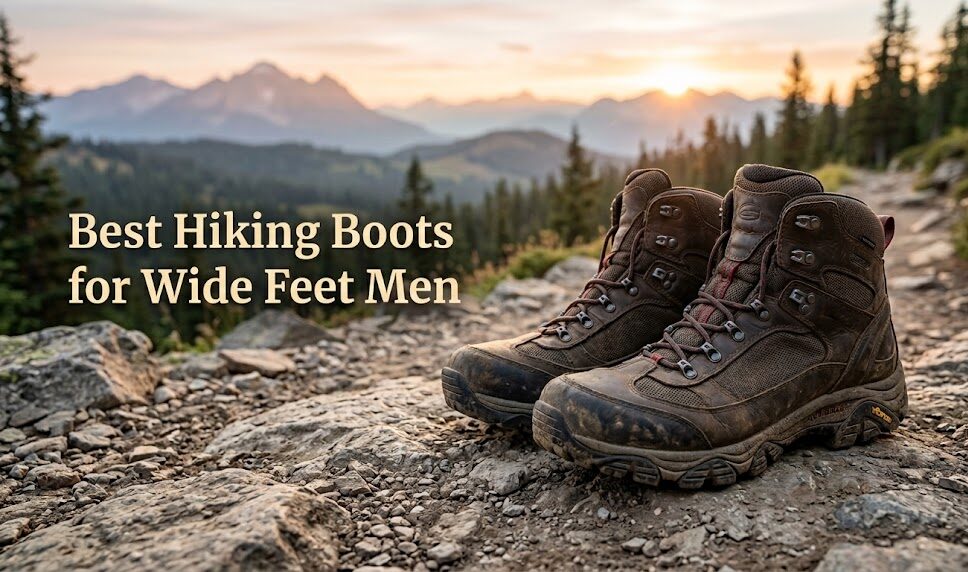
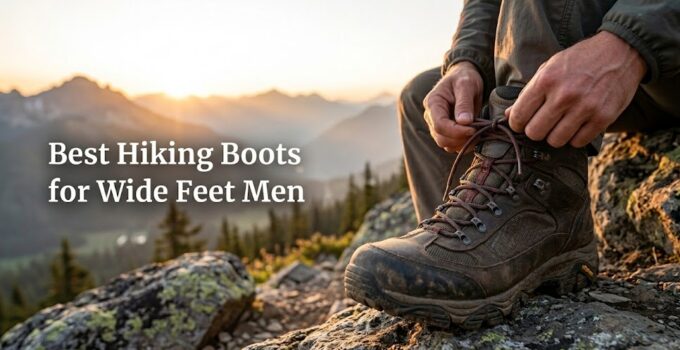
Explore the best hiking boots for wide feet men in 2026, featuring durable, comfortable footwear ideal for outdoor enthusiasts seeking support and stability on challenging trails.
Understanding the problem is the first step to solving it — and it goes deeper than "my boots feel tight."
The standard last problem: Most trail boots are built on a D (medium) width last — despite the fact that a significant portion of the male population has feet that are measurably wider, particularly across the forefoot and toe box. Performance hiking boots compound this by tapering aggressively toward the toe to save weight and improve ground feel. For wide feet, this is the wrong tradeoff entirely.
Here are the five specific ways standard boots fail wide-footed hikers:
| Problem | What Causes It | The Real Fix |
|---|---|---|
| Toe box compression / black toenails | Tapered toe box on standard D last | Switch to KEEN or Altra wide toe box design |
| Bunion pain | Lateral toe box pressure pushes big toe inward | True 2E or 4E sizing with round toe box — see our guide to boots for bunions |
| Instep numbness | Standard boot too narrow through midfoot | Window lacing technique + 2E/4E sizing |
| Heel slipping | Sizing up in length to get width — wrong approach | Correct wide sizing, not going up in length |
| Blister hotspots | Boot moving on foot from volume mismatch | Proper wide width + heel-lock lacing — see how to stop boots rubbing |
How to Choose Hiking Boots for Wide Feet — What Actually Matters
Width Sizing — 2E vs 4E vs Wide Toe Box
This is the distinction almost every competing guide gets wrong — and it matters enormously for getting the right boot. For the full breakdown of every width letter code, see our detailed reference: Boot Width Letters Explained. Wondering about the difference between EE and H width specifically? We cover that here.
| Width Code | Common Name | Best For |
|---|---|---|
| D | Standard / Medium | Average foot width |
| 2E (EE) | Wide | Wider forefoot, standard to moderate instep |
| 4E (EEEE) | Extra Wide | Wide forefoot and wide instep volume |
| 6E | Extra Extra Wide | Very wide feet, orthotic users |
| Natural Wide Last | No width label | Wide forefoot, toe box relief without full width designation |
Critical distinction: a wide toe box provides forefoot freedom, but a boot can have a roomy toe box on a standard-width last. A wide width designation (2E/4E) addresses the full foot profile — forefoot, midfoot, and instep volume. If your issue is purely toe compression, a naturally wide toe box design may be enough. If your foot is wide through the midfoot and instep as well, you need a true wide size.
Width codes are not standardized across manufacturers. A KEEN 2E and a Salomon 2E fit differently. Always check brand-specific sizing charts — never assume equivalence across brands. KEEN, Merrell, and New Balance have the most consistent and widely available wide-width programs in hiking footwear.
Toe Box Shape and Volume
Round, foot-shaped toe boxes reduce forefoot pressure and allow natural toe splay on descents — critical for preventing black toenails and forefoot blisters on longer hikes. High-volume toe boxes also accommodate foot swelling during long hikes and the extra volume from mid-weight hiking socks. KEEN and Altra are the industry benchmarks for wide toe box geometry. Most other brands — even in their wide widths — still maintain a somewhat tapered toe box shape.
Waterproofing and Interior Volume
Gore-Tex and proprietary waterproof membranes (KEEN.DRY, Merrell M-Select, Salomon Climasalomon) add a liner layer inside the boot that slightly reduces interior volume. Wide-footed hikers should be aware that a waterproof version of a boot may fit measurably tighter than the non-waterproof version of the same model. If you're borderline between sizes in a non-waterproof boot, go up a half size in the waterproof version before committing. Once you have your boots, see our guide on how to waterproof boots with wax vs spray to keep them performing season after season.
Midsole Support and Pronation
Wide feet tend to pronate more than narrow feet — look for boots with structured midsoles and medial post support rather than pure EVA foam, which compresses and spreads under wide foot load over long miles. Aftermarket insoles like Superfeet Green or Sole Softec significantly improve midfoot support in wide boots, most of which ship with flat, low-profile stock footbeds that don't serve wider feet well. Our roundup of the best insoles for boots covers the top options for both arch support and wide-foot volume.
Ankle Height and Use Case
Low cut is lightweight with maximum freedom of movement — best for well-maintained day trails where ankle support is less critical. Mid cut offers the best balance of ankle support and weight, and is the most versatile choice for wide-footed hikers across trail types. High cut provides maximum ankle support and is best for off-trail hiking, heavy pack backpacking, and technical or rocky terrain.
Break-In Period
Full-grain leather uppers require significant break-in — wide feet in stiff new leather is a genuinely painful combination on the first few outings. Synthetic and mesh uppers are typically trail-ready much sooner and are better for wide-footed hikers doing shorter trips or those who can't afford a long break-in period before a planned hike. When storing boots between seasons, see our tips on how to store boots to prevent cracks and sole failure.
The Best Hiking Boots for Wide Feet Men in 2026 — Full Reviews
Merrell Moab 3 Mid Waterproof Wide
⭐ Best Overall

Mid Cut
Waterproof
Vibram TC5+ Outsole
Bellows Tongue
The Merrell Moab 3 is the most trusted wide hiking boot on the market for good reason — Merrell builds the Moab line on a dedicated wide last, not a stretched standard last, and the difference is immediately noticeable through the forefoot and midfoot. The wide version opens up the toe box meaningfully without sacrificing the structured heel cup that keeps the foot secure on technical terrain. The Vibram TC5+ outsole delivers reliable grip on wet rock and packed dirt, and the waterproof membrane keeps feet dry without adding excessive weight. For day hikers and weekend trail hikers with wide feet, this is the starting point — the boot that sets the benchmark everything else is measured against.

- Dedicated wide last — not a stretched D
- Vibram outsole for reliable wet-surface grip
- Lighter than most mid-cut competitors
- Not ideal for very heavy backpacking loads
- 2E only — no 4E option

KEEN Targhee IV Mid WP Wide
⭐ Best for Extra Toe Room

Mid Cut
KEEN.DRY WP
KEEN.ALL-TERRAIN Outsole
Metatomical Footbed
KEEN's signature wide toe box is the industry gold standard for wide-footed hikers, and the Targhee IV is the brand's flagship trail boot that showcases it best. The toe box is genuinely roomy — wide and high — allowing full natural toe splay on descents without lateral compression. What sets the Targhee IV apart from every other boot on this list is 4E availability: this is one of very few legitimate trail boots on the market that comes in genuine extra-wide sizing. KEEN.DRY waterproofing keeps feet dry without sacrificing breathability, and the outsole provides reliable multi-surface grip. The Targhee IV is the top recommendation for hikers with genuinely wide feet through the forefoot and instep — 4E availability alone makes it irreplaceable in this category.

- Widest toe box geometry in the category
- Available in both 2E and 4E — rare for trail boots
- Durable and trail-proven platform
- Slightly heavier than synthetic competitors
- Break-in period on stiffer upper versions

Salomon X Ultra 4 Mid GTX Wide
⭐ Best Performance Hiking
Mid Cut
Gore-Tex
Contagrip MA Outsole
Advanced Chassis
The Salomon X Ultra 4 is the performance choice for wide-footed hikers who want technical trail capability without sacrificing wide-fit comfort. The wide version opens up the forefoot meaningfully over the standard D model, and Gore-Tex waterproofing combined with the Advanced Chassis midsole delivers the kind of torsional stability that matters on technical, rocky terrain. The Contagrip MA outsole is one of the best in the category for wet rock and loose scree. One important note for wide-footed buyers: Salomon's wide sizing runs narrower than KEEN or Merrell's wide — this boot is best for moderately wide feet rather than genuinely very wide feet. If you're a true 4E, look at the Targhee IV instead. For the performance hiker with a 2E foot who demands technical terrain capability, this is the pick.
No products found.- Exceptional technical terrain stability
- Gore-Tex for reliable waterproofing
- Lightweight for a waterproof mid-cut
- Wide version runs narrower than KEEN/Merrell wide
- Premium price point
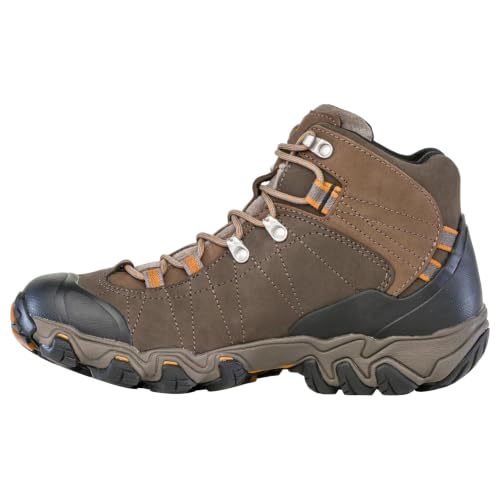
Oboz Bridger Mid Waterproof Wide
⭐ Best for Backpacking
Mid Cut
BDry WP
Nubuck Leather Upper
O FIT Insole
Oboz builds on a naturally wider last than most of its competitors — and the Bridger Mid is the brand's backpacking workhorse, combining that inherently roomy construction with stiff midsole support and excellent arch geometry for carrying heavy loads over long miles. The BDry waterproofing membrane performs reliably, and the nubuck leather upper provides durability that synthetic competitors struggle to match over a full season of use. The Bridger requires a break-in period, so debut it on short local walks before committing it to a multi-day trip. For wide-footed backpackers carrying 30–50 lb packs across varied terrain, the combination of genuine wide fit, structural support, and durability makes the Bridger the strongest backpacking option in this category.

- Naturally wider last — roomy even in standard sizing
- Excellent arch support for heavy pack loads
- Superior durability from nubuck leather upper
- Break-in period required before long hikes
- Heavier than synthetic options

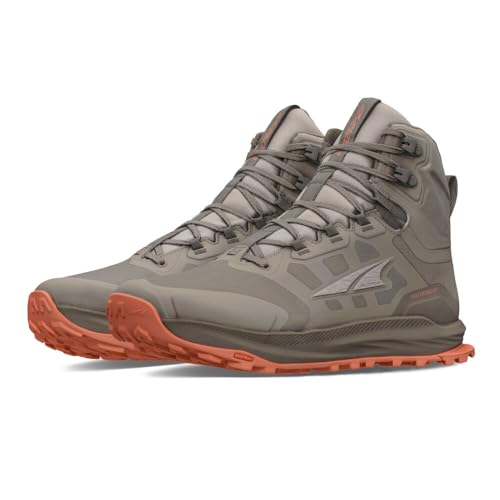
Altra Lone Peak Mid
⭐ Best Wide Toe Box Design
Mid Cut
Zero Drop
MaxTrac Outsole
FootShape Toe Box
The Altra Lone Peak occupies a unique position on this list: it comes in standard sizing, yet its FootShape toe box is among the widest available in any hiking boot at any width designation. Altra's philosophy is foot-shaped geometry — the toe box is wide and high enough to allow complete natural toe splay on every step and descent. The zero-drop platform places heel and forefoot at the same height, which many wide-footed hikers find reduces forefoot pressure and improves overall comfort on long days. The MaxTrac outsole performs well on technical trail surfaces. This is the pick for wide-footed hikers who find standard 2E boots still too structured or tapered in the toe — and for those transitioning to a more natural foot position on trail.

- Widest toe box available in standard sizing
- Zero-drop reduces forefoot pressure on long days
- No break-in required
- Zero-drop requires adjustment period for some hikers
- Less ankle support than traditional hiking boots

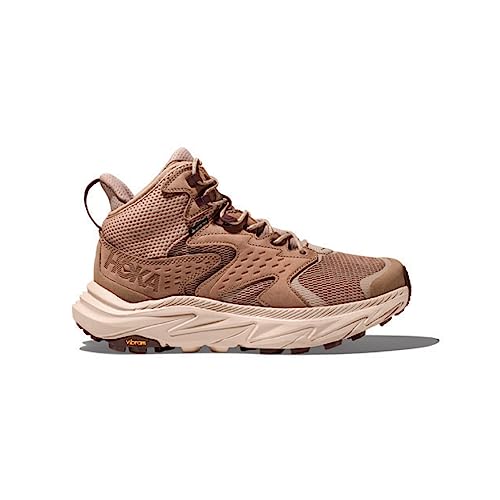
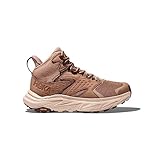
HOKA Anacapa Mid GTX Wide
⭐ Best Max Cushioning
Mid Cut
Gore-Tex
Vibram Megagrip
Maximal Cushioning
HOKA's maximal cushioning platform translates exceptionally well to wide-footed hikers, particularly those with joint concerns, flat feet, or anyone tackling high daily mileage on hard surfaces. The Anacapa Mid GTX Wide opens up the forefoot significantly, and the oversized midsole geometry naturally accommodates foot spread under load — a benefit that compounds over the course of a long day or a multi-day trip. Gore-Tex waterproofing and Vibram Megagrip outsole give the Anacapa legitimate all-weather, all-terrain capability despite its cushioned character. The wide version is one of the most genuinely accommodating fits in HOKA's hiking lineup. For wide-footed hikers who prioritize comfort over long distances — or who need maximum impact protection for knees and joints — the Anacapa is the clear choice. If flat feet are part of the picture alongside width, also see our guide on best boots for flat feet.
- Maximum cushioning reduces joint fatigue on long days
- Gore-Tex + Vibram Megagrip for all-weather performance
- Wide version genuinely accommodates wide feet
- Premium price point
- Platform height reduces proprioceptive ground feel
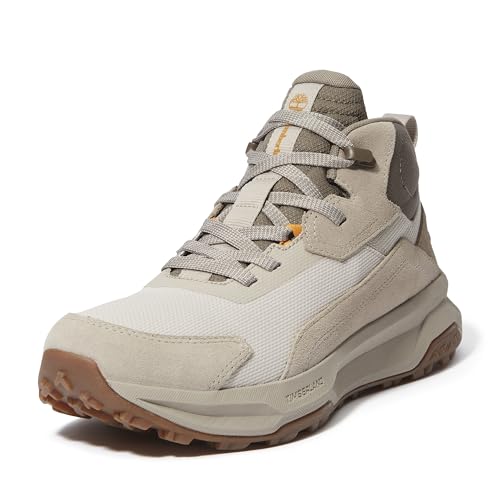
Timberland White Ledge Mid Wide
⭐ Best Budget Pick
Mid Cut
Waterproof Leather
EVA Midsole
Rubber Lug Outsole
For wide-footed hikers who need reliable waterproof protection and genuine wide sizing without spending $150+, the Timberland White Ledge is the most practical entry-level option available. The waterproof full-grain leather upper provides durable protection across seasons, and the wide sizing opens up the forefoot in a way that most budget boots don't bother with. The EVA midsole provides adequate cushioning for day hiking and casual trail use — it's not going to replace a structured backpacking boot for heavy loads, but for the hiker who needs a dependable wide-width boot for moderate trails without a premium price tag, this is where to start. Less breathable than synthetic options, so best suited for cooler conditions or wet environments where waterproofing is the priority.

- Most affordable wide-width waterproof option on this list
- Durable waterproof leather upper
- Reliable wide sizing available
- Less breathable than synthetic alternatives
- Not suited for technical terrain or heavy packs

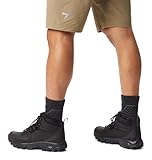
Columbia Newton Ridge Plus II Wide
⭐ Best Lightweight Budget

Mid Cut
Seam-Sealed WP
Omni-Grip Outsole
Lightweight Build
The Columbia Newton Ridge combines a budget-friendly price with a lighter build than the Timberland White Ledge, making it the better value pick for wide-footed hikers who prioritize weight reduction on easier trails. Omni-Grip traction handles packed dirt, gravel, and moderate wet surfaces well, and seam-sealed waterproofing keeps feet dry on typical trail conditions. The wide sizing provides meaningful forefoot relief for wider feet, though the toe box is not as generously shaped as KEEN or Altra designs. Best suited to casual day hikers and weekend trail walkers — not recommended for technical terrain, sustained heavy rain, or heavy backpacking loads where more robust construction is warranted.
- Lightweight for a mid-cut waterproof boot
- Budget-friendly price
- Wide sizing available
- Not ideal for technical or demanding terrain
- Toe box less roomy than KEEN or Altra alternatives

KEEN Circadia Mid WP Wide
⭐ Best Value 4E Option

Mid Cut
KEEN.DRY WP
KEEN.ALL-TERRAIN Outsole
Wide Toe Box
The KEEN Circadia delivers KEEN's signature wide toe box and genuine 4E extra-wide sizing at a lower price point than the flagship Targhee IV — making it the best value option for wide-footed hikers who need extra-wide sizing without paying top dollar. KEEN.DRY waterproofing keeps feet dry across typical trail conditions, and the wide toe box geometry is the same generous footprint KEEN deploys across its trail lineup. For day hikers and light trail users with genuinely wide feet — particularly those who need 4E sizing but can't justify the Targhee IV price — the Circadia is the practical answer. It doesn't have the Targhee's premium build quality, but the fit geometry is similarly accommodating.

- 4E available at a lower price than Targhee IV
- KEEN's wide toe box geometry — same as flagship models
- KEEN.DRY waterproofing standard
- Not as durable as the Targhee IV for heavy use
- Better for day hiking than extended backpacking

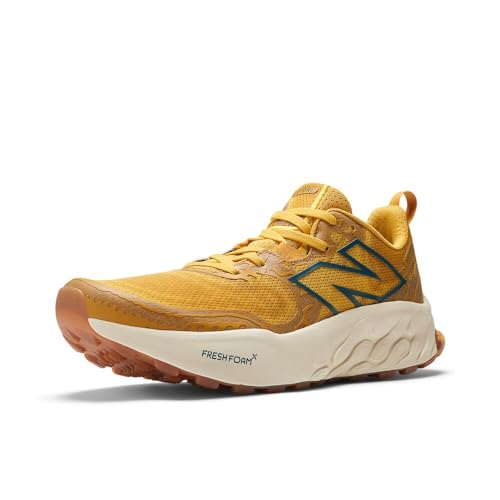
New Balance Hierro v8 Wide
⭐ Best Trail Crossover
Low/Mid Cut
Vibram Outsole
Fresh Foam Midsole
NB Wide Last
New Balance has one of the most respected wide-width programs in all of footwear, and the Hierro v8 brings that expertise to a legitimate trail platform. Available in both 2E and 4E, with a Vibram outsole for genuine traction and Fresh Foam midsole for responsive cushioning, the Hierro sits between a trail runner and a hiking boot — lighter and more flexible than traditional hiking boots, with more wide-width accessibility than most trail runners offer. It's the right pick for wide-footed hikers who prioritize speed and comfort on well-maintained trails, those transitioning from road running, or anyone who finds traditional hiking boots too stiff and heavy for their trail use. Not the choice for heavy pack carrying or technical off-trail terrain, but for fast, comfortable movement on trail with proper wide fit, it's hard to beat. Add microspikes for icy winter trail conditions.

- 2E and 4E available — strong wide program
- Lighter and more flexible than traditional hiking boots
- Vibram outsole for reliable trail traction
- Less ankle support than traditional mid-cut hiking boots
- Not suited for heavy pack backpacking

Wide Toe Box Hiking Boots That Don't Need a Width Label
Not every wide-footed hiker needs a dedicated 2E or 4E designation. If your foot is wide primarily through the toe box — but not necessarily wide through the midfoot and instep — a naturally wide-lasts boot in standard sizing may solve the problem without going up to a labeled wide size. Here are the strongest options:
- Altra Lone Peak (all versions): the widest standard-width hiking boot on the market; foot-shaped last, zero-drop, full natural toe splay
- Topo Athletic Trailventure 2: wide toe box geometry is standard across the entire line; excellent for moderately wide feet
- KEEN general lineup: most KEEN trail boots run wider than competitors even in D width — the brand's standard last is already generous
- Lowa Renegade GTX: European last that many wide-footed US hikers find comfortably roomy at standard width
- Scarpa Zodiac: wider Italian last, often accommodates wide feet in standard sizing on technical terrain
Best Hiking Boot Brands for Wide Feet — Quick Reference
| Brand | Wide Program Strength | Max Width Available | Best For |
|---|---|---|---|
| KEEN | Industry-leading wide toe box geometry; 2E and 4E across multiple trail models | 4E | Very wide feet, toe box priority |
| Merrell | Dedicated wide last across Moab line; consistent 2E sizing | 2E | Day hiking, value-conscious buyers |
| New Balance | Strongest wide-width program in footwear; genuine 2E and 4E in trail models | 4E | Trail crossover, fast hiking |
| Oboz | Naturally wider last construction than most; wide versions available | 2E | Backpacking, stability priority |
| HOKA | Wide versions in Anacapa and Kaha; maximal cushioning platform | 2E | Long distance, joint concerns |
| Altra | FootShape toe box is standard — no width label needed | Standard (wide by design) | Natural movement, maximum toe room |
| Timberland | Affordable wide sizing in select models | 2E | Budget hiking, casual trail use |
Wide Hiking Boots vs Wide Trail Runners — Which Should You Choose?
Many wide-footed men are genuinely deciding between a dedicated hiking boot and a wider trail runner. Here's the honest comparison:
| Feature | Wide Hiking Boots | Wide Trail Runners |
|---|---|---|
| Ankle support | High | Low to medium |
| Weight | Heavier | Lighter |
| Durability | Better for rough terrain | Moderate |
| Wide options | Good — KEEN, Merrell, Oboz | Limited — Brooks, New Balance |
| Waterproofing | Widely available | Less common |
| Break-in required | Often (leather) | Rarely |
| Best for | Backpacking, technical terrain, off-trail | Fast hiking, well-maintained trails |
Choose hiking boots if you're carrying more than 20 lbs, hiking off-trail, on technical rocky terrain, or need reliable waterproofing for multi-day use.Choose trail runners if you prioritize speed and weight on well-maintained trails and don't need heavy ankle support. The New Balance Hierro v8 Wide is the strongest wide-fit trail runner option if going this route.
Common Problems Wide-Foot Hikers Face — And How to Fix Them
| Problem | Root Cause | Fix |
|---|---|---|
| Toe compression / black toenails | Tapered toe box on standard last | Switch to KEEN or Altra wide toe box; ensure proper length fit |
| Bunion pain | Lateral pressure pushing big toe inward | True 2E or 4E with round toe box — see boots for bunions guide |
| Heel slipping | Sized up in length to get width | Use proper wide size in correct length — never trade length for width |
| Blister hotspots | Boot moving on foot from volume mismatch | Correct wide width + heel-lock lacing — see how to stop boot rubbing |
| Instep numbness | Standard boot too narrow through midfoot | Window lacing at instep + genuine 2E/4E sizing |
| Foot fatigue on long days | Flat stock insoles in wide boots | Replace with aftermarket insoles — Superfeet Green or Sole Softec |
| Cold/wet feet in wide boots | Poor seam coverage at wider widths | Choose GTX or KEEN.DRY certified models specifically |
6 Practical Tips for Wide-Footed Hikers Before You Hit the Trail
These are the tips competing guides don't cover — and the ones that actually make a difference on trail:
- Try boots on in the afternoon. Feet swell throughout the day, reaching their widest point in the afternoon. Fitting in the morning gives you an artificially narrow reference point — afternoon fitting reflects the size you'll actually be hiking on by mile 8. Not sure of your exact measurements? Our guide to measuring your feet at home walks through it step by step.
- Bring your own insoles. The stock footbeds in most wide boots are flat and low-profile. Aftermarket insoles like Superfeet Green or Sole Softec significantly improve midfoot support and arch structure — particularly important for wide feet that tend to pronate.
- Use window lacing at the instep. Skip one eyelet at the widest part of your instep, then continue lacing above it normally. This relieves instep pressure on wide feet without compromising ankle security above the skip.
- Test on a downhill slope before buying. Toe box crush only reveals itself on descents. If the store has any incline — a ramp, a staircase, an angled surface — walk down it before committing to a boot.
- Size with your actual trail socks. A mid-weight merino wool hiking sock adds 1–2mm of volume per side. Never size a hiking boot while wearing thin dress socks — always fit with what you'll actually wear on trail. See our roundup of the best hiking socks for top options.
- Break leather boots in before long hikes. Full-grain leather uppers are stiff when new. Do 4–6 short local walks before any multi-day trip. Wide feet in stiff new leather on a long hike is a reliable recipe for severe blisters. Proper off-season storage also matters — see how to store boots to prevent cracks and mold.
Looking for the best boot in every category? See our best hiking boots guide.
Frequently Asked Questions — Wide Hiking Boots for Men
What is the widest hiking boot for men?
The KEEN Targhee IV Wide is the widest hiking boot for men in 2026, available in both 2E and 4E (extra-wide) sizing. KEEN's FootShape toe box geometry is the widest in the category, and the 4E designation makes it one of very few trail boots that truly accommodates extra-wide feet through the forefoot and instep. For a naturally wide toe box without a width label, the Altra Lone Peak is the widest standard-sizing option.
Are KEEN hiking boots good for wide feet?
Yes — KEEN is widely considered the best brand for wide-footed hikers. KEEN's signature wide toe box geometry is broader than almost any competitor even in standard D width, and the brand offers 2E and 4E sizing across multiple trail models including the Targhee IV and Circadia. If you have wide feet, KEEN should be the first brand you try.
What is the difference between 2E and 4E hiking boots?
2E (also called EE or "wide") is the standard wide designation — it accommodates a wider forefoot with moderate instep volume. 4E (also called EEEE or "extra wide") provides additional width through both the forefoot and the instep, and is the right choice for feet that are wide through the full foot profile. Most wide hiking boots are only available in 2E; only a few brands like KEEN and New Balance offer 4E trail options. See our full boot width letters guide for a complete breakdown, and our explainer on what EE vs H width means.
Should I size up for wide feet in hiking boots?
No — sizing up in length to get more width is one of the most common mistakes wide-footed hikers make. Going a half or full size longer creates heel slip, reduces ankle support, and increases blister risk from boot movement without actually solving the width problem. Always buy your correct length in a true wide sizing (2E or 4E) rather than going up in length.
Do waterproof membranes make hiking boots tighter for wide feet?
Yes, slightly. Gore-Tex and proprietary waterproof membranes add a liner layer inside the boot that reduces interior volume by a small but measurable amount. For wide-footed hikers who are borderline between sizes in a non-waterproof boot, the waterproof version of the same model may feel noticeably tighter. Try both if possible, or size up a half size in the waterproof version.
Are trail runners better for wide feet than hiking boots?
It depends on your use case. Trail runners are lighter and often come in wide sizes (Brooks Cascadia, New Balance Hierro), making them a good choice for fast hiking on well-maintained trails. Hiking boots provide more ankle support, better durability, and more waterproof options — better for backpacking, heavy packs, and technical terrain. Wide hiking boot options have expanded significantly in 2026, making the boot vs. trail runner decision more about use case than fit.
Are Merrell hiking boots wide enough for wide feet?
Merrell's wide versions — particularly the Moab 3 Wide — are built on a dedicated wide last and are a strong choice for 2E-wide feet. Merrell wide sizing is available up to 2E, so those needing 4E should look at KEEN or New Balance instead. Merrell's standard D width runs slightly narrower than KEEN's standard, so wide-footed hikers should stick to the explicitly wide-labeled versions.
Are hiking boots available in extra wide (4E) sizes?
Yes, but options are limited. The most reliable 4E hiking boot options in 2026 are the KEEN Targhee IV Wide (4E), KEEN Circadia Mid WP Wide (4E), and New Balance Hierro v8 Wide (4E). Most other trail boot brands top out at 2E. If you need 4E sizing, KEEN is the most consistent and widely available brand for extra-wide trail boots.
The Right Wide Hiking Boot Makes Every Trail Better
Wide-footed men have more quality hiking boot options in 2026 than at any point in the history of the category. The days of stuffing a wide foot into a standard-last boot — or giving up on ankle support entirely for a trail runner — are behind us. The market has caught up.
The core principle holds: fit for your foot shape first, features second. The best-reviewed boot in any category is the wrong boot if it's built on the wrong last for your foot. Get the width right, then optimize for terrain, waterproofing, and weight.
For most wide-footed hikers, the Merrell Moab 3 Mid Wide is where to start — proven, well-priced, and genuinely wide. For extra-wide needs, the KEEN Targhee IV 4E is the definitive answer. For backpacking, the Oboz Bridger. For max cushioning, the HOKA Anacapa GTX Wide. For trail crossover on a budget, the New Balance Hierro v8 Wide.
Measure your feet before you buy, check the fit on a downhill slope before you commit, and pair them with the right hiking socks. Your feet will thank you by mile 10.
All Boots in This Guide — Quick Links
| # | Boot | Category | Width | Link |
|---|---|---|---|---|
| 1 | Merrell Moab 3 Mid Wide |
Best Overall | 2E | Check Price → |
| 2 | KEEN Targhee IV Wide |
Best Extra Toe Room | 2E / 4E | Check Price → |
| 3 | No products found. Salomon X Ultra 4 GTX Wide | Best Performance | 2E | Check Price → |
| 4 | Oboz Bridger Mid Wide |
Best Backpacking | 2E | Check Price → |
| 5 | Altra Lone Peak Mid |
Best Wide Toe Box | Natural | Check Price → |
| 6 | HOKA Anacapa Mid GTX Wide |
Best Cushioning | 2E | Check Price → |
| 7 | Timberland White Ledge Wide |
Best Budget | 2E | Check Price → |
| 8 | Columbia Newton Ridge Wide |
Best Lightweight Budget | 2E | Check Price → |
| 9 | KEEN Circadia Mid WP Wide |
Best Value 4E | 2E / 4E | Check Price → |
| 10 | New Balance Hierro v8 Wide |
Best Trail Crossover | 2E / 4E | Check Price → |
More Guides From Bootsguru
- 🥾 Best Waterproof Hiking Boots (2025)
- 📐 Boot Width Letters Explained — D, EE, 4E and More (2026)
- 📏 How to Measure Your Feet at Home (2026)
- 🦶 What Is Wide EE vs Wide H? (2025)
- 🩹 Best Work Boots for Bunions (2026)
- 🦶 Best Work Boots for Flat Feet (2026)
- 🧦 Best Hiking Socks (2026)
- 🧦 Best Wool Socks for Hiking and Work (2026)
- 👟 Best Insoles for Boots (2026)
- ❄️ Best Microspikes for Hiking Boots (2026)
- 💧 How to Waterproof Boots — Wax vs Spray (2026)
- 📦 How to Store Boots to Prevent Cracking and Mold (2026)