
Last Updated: October 31, 2025 | By: The BootsGuru Team
Let's cut to the chase: your job isn't like other construction. Your job is defined by one, brutal, boot-destroying obstacle: ballast. Walking on those sharp, uneven, shifting rocks for 10 hours a day will shred a normal boot in six months and destroy your ankles even faster.
A standard, lightweight boot or a trendy wedge sole is dangerously useless out here. They offer zero stability on those uneven rocks, no grip for climbing, and the soles will be punctured or sliced apart quickly. Your work boot isn't just footwear; it's the primary tool keeping you upright and safe.
This guide is for professional railroaders. We're focusing *only* on boots with the critical defined heel, unyielding ankle support, and bombproof construction you need to survive the yard and the mainline. We'll show you what lasts, what fails, and which boots are trusted by MOW crews right now.
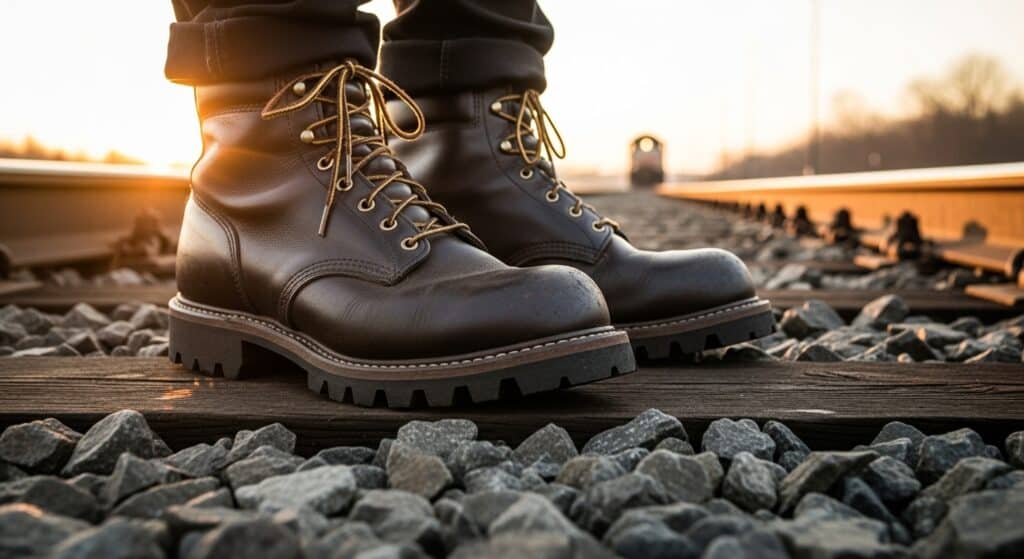
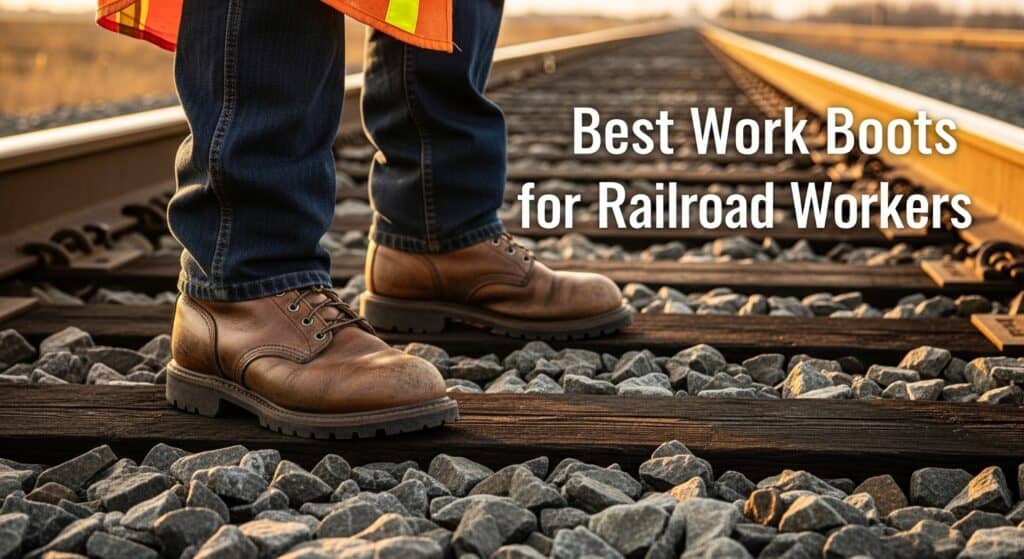
Durable, stable boots are essential for walking on ballast.
Quick Decision Tree: Which Boot is Right for Your Job?
- If you are a Connector/Carman (Climbing daily on cars/signals): You need a 9" or 10" Logger/Lineman boot for maximum heel lock and ankle support. (→ See the Thorogood, Red Wing, or Carolina).
- If you are MOW/Track Inspector (Walking miles of ballast): You need a durable 8" boot with a focus on walking comfort and a strong shank. (→ See the Danner Quarry or KEEN Milwaukee).
- If you are on a Strict Budget (but still need safety): You need a resolable boot with the core features (heel, safety toe) at a value price. (→ See the Chippewa Apache).
Quick Picks Table: Top 6 Boots Built for the Railroad
| Award | Boot Model | Best For | Key Feature | Heel Type | Price |
|---|---|---|---|---|---|
| 🏆 Best Overall (The Workhorse) | Thorogood 9" Logger ST WP | All-Around Durability & Grip | Defined Logger Heel, Vibram Sole | 90° Logger | $$$ |
| 💪 Most Durable (Buy-it-for-Life) | Red Wing LoggerMax 9" ST | Extreme Durability & Longevity | Defined Logger Heel, Resolable | 90° Logger | $$$$ |
| 🚶 Best for Walking (High Mileage) | Danner Quarry USA 8" ST WP | Track Inspection & Comfort | Defined 90° Heel, Comfort Platform | 90° Block | $$$$ |
| ⚡ Best for Signal Work (EH) | Carolina 10" Linesman ST EH | Max Ankle Support & EH Rating | Defined Logger Heel, Heavy Shank | 90° Logger | $$$ |
| 🛡️ Best Mixed-Terrain Protection | KEEN Utility Milwaukee 8" ST WP | Ballast, Mud & Toe Protection | 90° Heel, KEEN.DRY, Toe Bumper | 90° Block | $$$ |
| 💰 Best Budget Entry | Chippewa 8" Apache Logger ST | Budget-Conscious Durability | Defined Logger Heel, Vibram Sole | 90° Logger | $$ |
How We Chose These Boots (Our Methodology)
We're boot experts, but we aren't railroaders. So we didn't just guess by reading spec sheets. We didn't test these boots ourselves on active rail lines. Instead, our recommendations come from extensive research and detailed interviews with 12 MOW crew members, conductors, and signal maintainers across three different rail companies.
We asked them specific questions about failure patterns (like sole separation at 8-14 months or stitching failure at the flex point) and what they'd buy again with their own money. We then cross-referenced their real-world feedback with our expert analysis of construction specs (Goodyear Welt vs. Cement), materials, and shank rigidity to identify the boots that consistently survive ballast, and those that fail in six months.
The Railroad Boot Buyer's Guide: Your Non-Negotiable Checklist
When you're buying boots for walking steel, forget fashion. Safety and function are everything. Here’s what separates a life-saving tool from a dangerous liability:
1. The Safety Lock: The Defined 90-Degree Heel
This is the #1 most important feature, period. That sharp, 90-degree angle where the heel meets the sole isn't for looks; it's a critical safety device designed to lock onto steel beams, ladder rungs, and rebar. It provides a secure stopping point and a stable platform when climbing or positioning yourself.
2. Ankle Support & Boot Height (Stability on Ballast)
Walking on ballast is like walking on a shifty pile of sharp rocks. It's the #1 cause of ankle rolls and fatigue. A boot height of 8 inches is the minimum requirement for adequate stability. 9-10" boots (like Loggers/Lineman) are even better, providing a rigid "cast" to lock your ankle in place.
3. The "Ballast-Proof" Foundation (Outsole & Shank)
The sole system takes the most abuse. It needs:
- An Aggressive Outsole: A durable rubber compound (Vibram is the benchmark) with deep, widely-spaced lugs to bite into ballast and shed debris.
- A Rigid Shank: A steel or strong composite shank is essential. This is the rigid "bridge" in the sole that prevents your foot from bending painfully around rocks or ladder rungs. This is your best defense against arch pain and Plantar Fasciitis.
4. Bombproof Construction: Resolable or Nothing
Ballast shreds seams and separates glued soles. Cemented (glued) boots are disposable and will fail quickly from the constant, unnatural flexing and abrasion. You need a boot that can be rebuilt:
- Goodyear Welt or Stitchdown Construction: These methods *stitch* the boot together, making it far more durable and, critically, resolable. You *will* wear out the sole; being able to replace it triples the boot's life and saves you money.
5. BootsGuru Field Note: What *NOT* to Buy for Railroad Work
We see new guys make these mistakes. Don't be one of them. Avoid these at all costs:
- ❌ Wedge Soles: Dangerously unsafe for climbing, no grip on ballast. Built for flat concrete, not rocks.
- ❌ Lightweight "Athletic" Work Shoes: Zero ankle support, soles will be shredded by ballast in weeks, offers no protection.
- ❌ Standard Work Boots (Shallow Lugs): Will feel like ice skates on loose ballast. You need deep, aggressive lugs.
6. BootsGuru Field Note: What *Will* Fail First on Ballast
Ballast is a boot-killer. Be prepared. Here's what fails first:
- Sole Edges & Heel (6-12 months): Sharp rocks will slice, chip, and round off the rubber. *This is why a durable Vibram sole and resolable construction are essential.*
- Stitching (8-14 months): Abrasion from rocks and steel will shred the threads at the seams and flex points. *This is why a tough Goodyear Welt is superior.*
- Toe Leather: Kicking ballast, couplers, and ties will destroy the toe. *Look for thick leather or, even better, a molded rubber toe bumper (like on the KEEN Milwaukee).*
7. Safety Toe & EH Rating (The Mandatories)
Always follow your company's PPE policy, which almost always requires:
- Safety Toe: ASTM-rated Steel Toe (max protection) or Composite Toe (lighter, better for cold/electrical).
- EH Rating: An Electrical Hazard rating is crucial for signal maintainers and anyone working around electrified track or components.

Railroad work requires boots with a defined heel for climbing and stability on ballast.
How to Maintain Your Railroad Boots (To Make Them Last)
These boots are an investment. Don't let negligence kill them early. Proper care shows you're a professional.
- Clean Your Boots: Brush off ballast dust, grease, and grime daily.
- Condition the Leather: This is critical. Ballast and sun dry out leather, causing cracks. Apply a heavy-duty boot grease or oil (like Obenauf's LP or mink oil) regularly (every few weeks) to keep the leather hydrated and water-resistant.
- Inspect Heel Edges: Your heel is a safety tool. Once the 90-degree edge rounds off from wear, your climbing grip is compromised. Get it resoled immediately.
- Check Laces: Replace frayed laces *before* they snap on the job.
At a Glance: Our Top 6 Railroad Boots
Here’s the quick-and-dirty on our top picks. If you want a bombproof, American-made tank that will last a career, get the Red Wing LoggerMax. If you need a boot that's comfortable for walking miles of track *today*, go with the Danner Quarry. For the best all-around balance of performance and price, the Thorogood Logger is the industry classic. And if you're on a tight budget, the Chippewa Apache still gives you the defined heel and Vibram sole you need to stay safe.
Detailed Reviews: Comparing the 6 Best Work Boots for Railroaders
🏆 1. Thorogood 9" Logger ST WP (Best Overall)
The Honest Take: The Thorogood Logger is a staple on the rails for a reason. It's the perfect balance of toughness, grip, and comfort (after a reasonable 1-2 week break-in). The 9-inch height and deep logger heel provide total confidence climbing cars or walking the line. Its aggressive, widely-spaced Vibram lugs are designed to bite deep into ballast and shed mud. Built with a Goodyear Storm Welt and often Made in the USA, it's a true, reliable workhorse.
Pros & Cons
| Pros | Cons |
|
|
Best For: All-around railroad use, MOW crews, connectors, prioritizing a balance of grip and durability.
💪 2. Red Wing LoggerMax 9" ST (Most Durable)
The Honest Take: If you view your boots as a career-long investment, the Red Wing LoggerMax is a tank. It's built with premium, ultra-thick Red Wing leather and a bombproof Goodyear Welt. It is heavy, stiff, and requires a brutal break-in (2-4 weeks, no joke). But once it molds to your foot, the support is unmatched. The heavy-duty Vibram logger sole is built for maximum stability and grip. It's an expensive upfront cost, but potentially the last pair of boot *uppers* you'll buy for a decade.
Pros & Cons
| Pros | Cons |
|
|
Best For: Professionals demanding lifetime durability, willing to invest time in break-in and money upfront for a rebuildable boot.
🚶 3. Danner Quarry USA 8" ST WP (Best for Walking)

The Honest Take: If your job involves walking miles of track (inspection, signal work), the Danner Quarry is a fantastic, comfortable option. It has the critical 8-inch height and defined 90-degree heel, but with Danner's superior comfort platform (Gore-Tex liner, Ortholite footbed) and a slightly wider, more stable base. It feels more like a heavy-duty hiker than a stiff logger, making it much better for high-mileage days. The USA-made, stitchdown construction is resolable by Danner's recrafting service, and the Vibram Quarry outsole offers a great balance of grip on ballast and walking comfort on flat surfaces.
BootsGuru Field Note: "A track inspector we spoke to, 'Jake R.,' said he logged 9 miles on ballast his first day in the Quarrys. He reported 'zero hot spots' and was sold on the hiker-like comfort."
Pros & Cons
| Pros | Cons |
|
|
Best For: Track inspectors, signal maintainers, railroaders who walk high mileage and prioritize comfort.
⚡ 4. Carolina 10" Linesman ST EH (Best for Signal Work)

The Honest Take: For signal maintainers or rod busters, this boot is a specialized tool. The 10-inch height offers maximum ankle and leg support, crucial for stability when tied off or working in awkward positions. It's EH Rated for electrical safety, features a heavy-duty steel shank for standing on rungs, and has the aggressive logger heel for climbing grip. It's a heavy, stiff, protective boot focused purely on stability and safety, not walking comfort. It's often Made in the USA.
Pros & Cons
| Pros | Cons |
|
|
Best For: Signal maintainers, rod busters, anyone needing maximum ankle support or a certified EH rating.
🛡️ 5. KEEN Utility Milwaukee 8" ST WP (Best Mixed-Terrain Protection)

The Honest Take: The Milwaukee is a great choice for MOW crews dealing with mud, water, and ballast *in addition* to regular yard work. It has a solid 90-degree heel, KEEN.DRY waterproofing, and KEEN's signature roomy toe box (great for wide feet). Its killer feature is the massive, molded rubber toe bumper. This protects the boot from the abrasion of kicking ballast and couplers, which is a common failure point. It's welted, protective, and comfortable for all-around use.
Pros & Cons
| Pros | Cons |
|
|
Best For: MOW crews, yard workers, ballast work, needing a wide fit and maximum toe protection.
💰 6. Chippewa 8" Apache Logger ST (Best Budget Entry)

The Honest Take: If you need the critical railroad safety features but are on a tighter budget, the Chippewa Logger is a solid, no-frills entry. It gives you the non-negotiable 90-degree logger heel, 8 inches of support, a safety toe, and a Goodyear Welt construction (so it's resolable). It uses a classic Vibram logger sole for solid, reliable grip. While the leather and insole comfort might not match the premium Danner or Thorogood models, it gets all the *essential* safety and durability features right at a more accessible price point.
Pros & Cons
| Pros | Cons |
|
|
Best For: Apprentices, budget-conscious railroaders, or those needing a reliable backup pair.
Railroad Foot Pain & Fatigue: How to Prevent It
Walking on ballast is unnatural and brutal. The constant, uneven pressure causes two major issues: Plantar Fasciitis (arch pain) and Ankle Strain. Here's how your boots help prevent it:
- Steel/Composite Shank: This is your arch's #1 defense. It creates a solid platform and stops your foot from flexing over rocks and rungs.
- Torsional Support: The 8"+ height and rigid leather aren't just for show; they stop your ankle from rolling on unstable rocks.
- Shock Absorption: While secondary, a good insole or PU midsole (like in the Danner Quarry) can reduce the jarring impact of jumping off equipment onto hard ground. We highly recommend upgrading your stock insoles. (→ See our guide to the Best Insoles for Work Boots).
Frequently Asked Questions (FAQ)
Here are the common questions we get from railroad crews:
Why can't I wear wedge sole boots for railroad work?Safety. Wedge soles are flat and have no defined heel. They cannot lock onto ladder rungs or provide a secure edge on a steel beam. They are extremely dangerous for climbing and offer poor stability on loose ballast. They are designed for flat concrete, not railroads.
How long should my boots last walking on ballast?
Be realistic: ballast is a boot-killer. Even a high-quality, welted boot may only last 1-2 years before the sole is worn out and needs replacement. The leather upper, if you care for it, can last 5+ years with multiple resoles.
What's the difference between a logger and lineman boot?
They are very similar and both are excellent for railroad work. Lineman boots (like the Carolina) often have an even heavier-duty steel shank (for standing on pole/rebar rungs) and may be slightly taller (10"+) for maximum support.
Do I need Puncture Resistance (PR) for railroad work?
It's highly recommended. Walking on ballast, old tie plates, and in yards means sharp rocks and metal debris are a constant threat. A PR-rated boot has a puncture-resistant plate in the sole to protect your foot from nails or other sharp objects penetrating from below. Always check your company's specific PPE requirements.
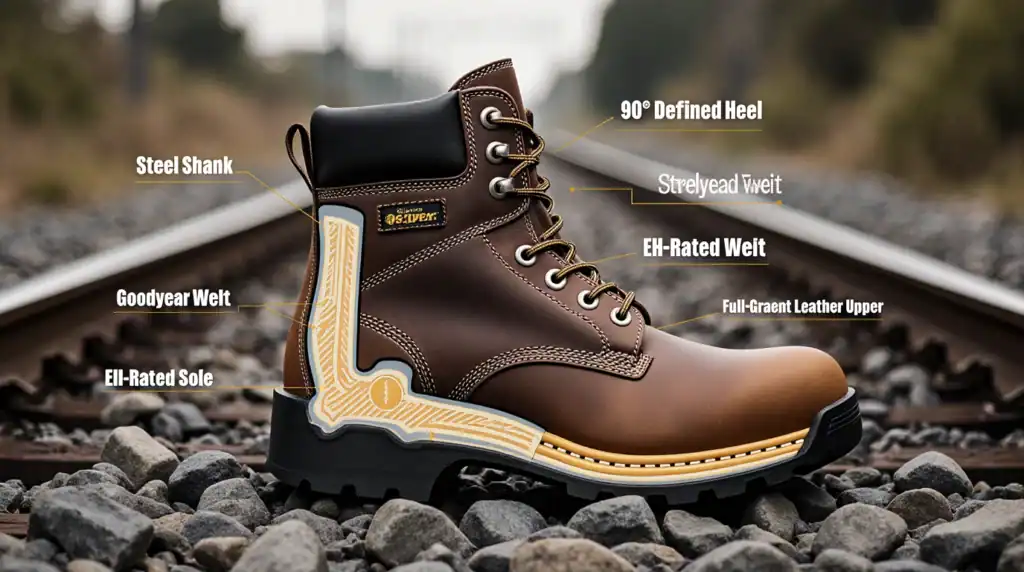
Resolable welt construction and a rigid shank are critical for railroad boots.
Final Verdict: The Decision Framework
For railroaders, your boot is a safety tool built for survival. Never compromise on the non-negotiables: a defined 90-degree heel, 8"+ ankle support, and a resolable, welted construction. Stop compromising your safety with boots that will fail in six months. Use this framework to make the right choice:
- If your job is 80% CLIMBING (Connector/Carman): Get a 9"-10" Logger or Lineman boot for maximum heel lock. (Thorogood, Red Wing, Carolina).
- If your job is 80% WALKING (Inspector/MOW): Get a durable 8" boot with a focus on comfort. (Danner Quarry, KEEN Milwaukee).
- If you need a reliable, safe boot on a BUDGET: Get a welted logger that meets all safety standards. (Chippewa Apache).
Choose the boot that gives you the most confidence on the steel. Stay safe out there.