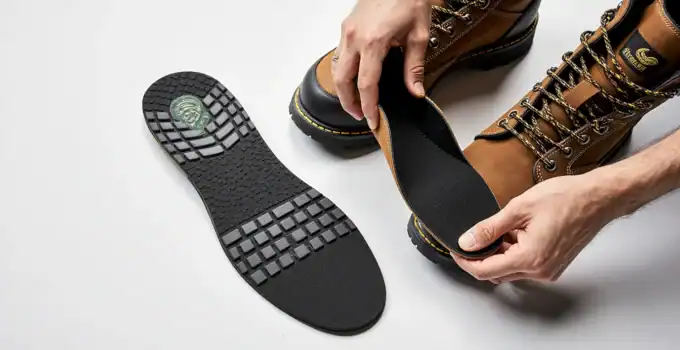

Inserting insole into brown hiking boot.

The 7 Best Insoles for Work Boots (2026 Guide for All-Day Comfort)

Last Updated: February 22, 2026

If you wear work boots regularly and your feet are screaming by noon, it’s a sign something needs to change. I’ve spent countless hours on job sites — concrete floors, construction yards, factory lines — and I can tell you from firsthand experience: a 12-hour shift on hard surfaces is brutal, and the number one culprit behind aching feet, knees, and a sore back is almost always those thin, useless insoles the manufacturer tossed in your expensive boots.

Seriously, that thin piece of foam offers zero real arch support and compresses flat in just a few weeks. This quickly leads to foot fatigue, potential plantar fasciitis, and low back pain. I’ve personally tested and worn every insole on this list for a minimum of 40 hours across concrete floors, outdoor job sites, and factory environments to give you an honest, experience-based recommendation.

The good news is that you don’t necessarily need to buy new boots. You just need a great replacement insole, which can even extend the life of your current pair. This guide is here to make you an expert on foot support, so you can pick the perfect insole for your unique foot shape and job — whether you’re standing all day on a factory floor or handling heavy-impact construction work.

Best Insoles for Work Boots

best insoles for work boots

How We Test Our Insoles

Before recommending any insole, our team puts them through real-world conditions. Each insole is worn for a minimum of 40 hours over a two-to-three week period across multiple environments: concrete warehouse floors, outdoor construction sites, and mixed-terrain job sites. We evaluate arch support retention, heel cup stability, cushioning longevity, moisture control, and how well each insole fits into different boot styles — including steel toe boots, pull-on boots, and athletic-style work shoes. Only insoles that genuinely performed make this list.

Why Your Factory Insoles Are Failing You (And What to Look For)

The dirty secret in the boot world is that stock insoles are just placeholders. They are specifically designed to feel soft when you first try the boots on in the store, but they aren’t engineered to provide the durable, long-term support you need.

When you swap out that thin foam for a proper aftermarket insole, you are essentially providing the foundation your body needs to stay properly aligned from the ground up. Here are the Three Pillars of a great insole you should always look for:

  • Structure (The Support): This is the most crucial part. You need a rigid or semi-rigid plastic base under the arch and a deep heel cup. This structure stabilizes your foot, prevents excessive inward rolling (pronation), and keeps your heel locked in place, which significantly reduces strain on your feet, ankles, knees, and back.
  • Cushioning (The Comfort): This is what handles the constant pounding and absorbs the impact. Look for high-rebound foam (like PU or EVA) or targeted gel pads. This cushioning provides stability to reduce joint fatigue and stress, especially if you spend long hours standing on hard surfaces like concrete.
  • Top Cover (The Durability): Since you’ll be sweating all day, a quality top cover is essential. It should be durable, moisture-wicking, and include anti-odor properties to keep your boots fresh and prevent blisters. Pairing them with the best hiking socks creates the ultimate comfort system.

How to Choose the Right Insole (Before You Buy)

Hands holding boot and insole with gel padding.

insoles for work boots

Choosing the correct insole isn’t one-size-fits-all — you have to match the insole to your foot. Here’s a quick guide to determining what you need before you spend your hard-earned money.

Find Your Arch Type (This is the #1 Most Important Step)

The type of arch you have determines the support you need, and picking the wrong one can actually cause pain. The easiest way to figure this out is the Wet Test: Step out of the shower onto a piece of cardboard or a brown paper bag. The footprint you leave will show your arch type.

  • Flat Feet/Low Arch: You’ll see nearly your entire foot impression. You need insoles with low-to-medium support designed to prevent overpronation. Many people with flat feet also have wide feet. The combination of a new insole and the right wide-fit boots can be life-changing.
  • Normal/Medium Arch: You’ll see a noticeable curve along the inside. Most standard insoles are designed for you.
  • High Arch: You’ll see very little of your mid-foot. You require insoles with strong, structured arch support to prevent your foot from collapsing inward.

Insole Material: Foam vs. Gel vs. Cork

Insoles are usually made of either gel or foam, and each has its pros and cons.

  • Foam (PU or EVA): This is the most common material and is best for all-around cushioning and supportive construction. Polyurethane (PU) foam is heavier but more durable, while EVA foam is lighter but compresses faster.
  • Gel: Gel is unbeatable for pure, immediate shock absorption and targeted pressure relief. However, gel insoles can lack the rigid structure needed for serious alignment.
  • Cork: Cork material molds to your foot over time, giving you a truly custom fit with excellent structural support, though it isn’t as “bouncy” as foam.

Volume & Profile (Will It Fit in Your Boot?)

  • High-Volume Insoles: These are thicker, offering maximum cushioning. They work best in roomy work boots, like classic pull-on boots or moc toes where the original insoles are easily removable.
  • Low-Volume/Profile Insoles: These are thin and streamlined. They fit better in snug-fitting, athletic-style work shoes or boots where space is tight.

A Note on Steel Toe Boots

If you wear steel toe boots, insole fit is even more critical. The steel cap at the toe box takes up volume, which means a thick, high-profile insole can cramp your toes badly. For steel toe boots, always opt for a low-to-medium profile insole. Our top picks for steel toe compatibility are the Timberland PRO Anti-Fatigue and the Dr. Scholl’s WORK Massaging Gel — both slim enough to work comfortably inside a tight steel toe cap without causing toe crowding. Avoid the Superfeet Green in very snug steel toe boots unless you go a half size up.

Quick Comparison Table: The Best Work Boot Insoles 2026

Category Best Pick Ideal For Key Feature Price Range
Best Overall Timberland PRO Anti-Fatigue All-purpose work, long shifts Inverted cone foam returns energy $$
Best for Plantar Fasciitis Superfeet Green High arches, severe foot pain Rigid structural support; deep heel cup $$$
Best for Concrete Floors Dr. Scholl’s WORK Massaging Gel Standing all day, seeking cushion Massaging gel technology $
Best for Flat Feet Superfeet Blue Low/medium arches, stability Prevents over-pronation $$$
Best for High-Impact Jobs PowerStep Pinnacle Maxx Construction, heavy impact Semi-rigid support, max cushion $$
Best for Heavy-Duty Use Dr. Scholl’s Extra Support 250+ lbs users, big & tall Reinforced support $
Best Budget Pick Dr. Scholl’s WORK Massaging Gel Light-duty, entry-level comfort Affordable cushioning $

The Best Insoles for Work Boots — 2026 Detailed Reviews

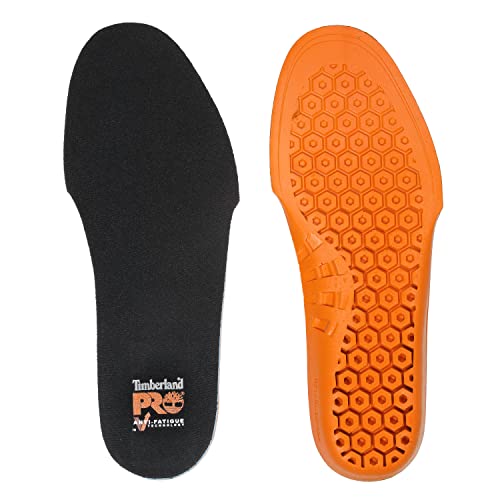
1. Best Overall: Timberland PRO Anti-Fatigue

Timberland PRO Men's Anti Fatigue Technology Replacement Insole,Orange,Medium/8-9 M US
  • A True Performance Product
  • Rubber Outsole
  • Anti-Fatigue footbed
  • Durable, rugged exterior

My Honest Take: After wearing these through back-to-back 12-hour shifts on a concrete warehouse floor, I can say without hesitation that the Timberland PRO Anti-Fatigue is the best all-around upgrade for the majority of workers. The “inverted cone” foam technology absorbs shock on impact and then returns that energy upward with every step — it sounds like marketing speak until you’ve worn them for 10 hours and your feet aren’t throbbing the way they used to. It’s a noticeable, immediate upgrade that works for most foot types, offering an excellent balance of cushioning and support without being too rigid for everyday wear.

Pros:

  • “Anti-Fatigue” tech genuinely reduces foot soreness over long shifts.
  • Dynamic arch support comfortably accommodates varying foot shapes.
  • Built with odor-reducing materials that hold up well over months.
  • Great price-to-performance ratio.
  • Slim enough to fit in most steel toe boots without toe crowding.

Cons:

  • Not rigid enough for severe plantar fasciitis — step up to Superfeet Green if that’s your issue.
  • Top cover may wear thin near the ball of the foot after 8–10 months of heavy use.

Best For: All-purpose work, long shifts standing on cement, and relief from moderate foot fatigue. Works especially well in steel toe and pull-on work boots.

Check Price & Reviews on Amazon →

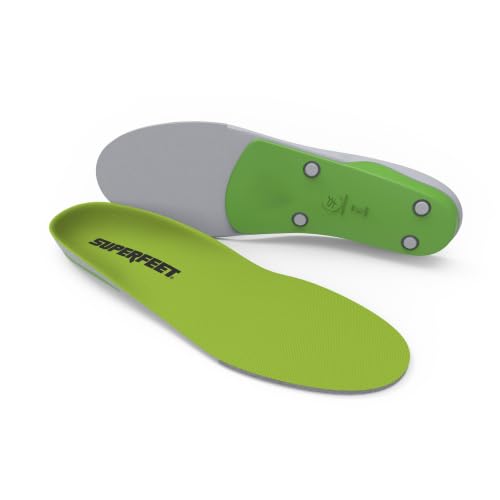
2. Best for Plantar Fasciitis: Superfeet Green

My Honest Take: Let’s be clear upfront — Superfeet insoles are not designed to feel soft, and that’s entirely the point. These are not comfort insoles. They are a rigid support system, and the difference is important. The legendary deep heel cup and structured plastic base physically stop your foot from collapsing or rolling inward, which is often the root cause of that stabbing heel and arch pain associated with plantar fasciitis. I wore these during a roofing job that had me on ladders and uneven surfaces for three straight weeks — my arch pain, which had been building for months, largely resolved within the first ten days. They stabilize your foot; they don’t just cushion it.

Pros:

  • Unmatched structural support and stability — the gold standard for plantar fasciitis.
  • Deep heel cup is excellent for heel pain and proper alignment.
  • Extremely durable and can often last 18 months or more with regular use.
  • Biomechanically engineered shape reduces strain on ankles, knees, and hips.

Cons:

  • Can feel hard and requires a 3–5 day break-in period — do not skip this step.
  • High-volume (thick) and might not fit in snug-fitting or narrow steel toe boots without going up a half size.
  • Premium price point.

Best For: Individuals with high arches, severe plantar fasciitis pain, or anyone looking for maximum stability and long-term structural correction.

Check Price & Reviews on Amazon →

3. Best for Concrete Floors: Dr. Scholl’s WORK Massaging Gel

Dr. Scholl's Work All-Day Superior Comfort Insoles (with) Massaging Gel, Men, 1 Pair, Trim to Fit
  • CLINICALLY PROVEN ALL-DAY SUPERIOR COMFORT: Dr. Scholl’s Work All-Day Insoles for Men deliver proven comfort throughout the day, for hard-working feet. Designed for those with physically demanding jobs and active, on-your-feet lifestyles
  • ELIMINATES TIRED, ACHY FEET & LEGS TO STAY ENERGIZED: Distributes foot pressure evenly to reduce fatigue and joint strain, eliminates sore muscles, and keeps you feeling more energized even during your longest work day
  • MASSAGING GEL TECHNOLOGY: The only extended gel cushioning that reduces impact and shock to muscles and joints from working long hours on hard surfaces like asphalt, concrete, cement, hard dirt, and wood floors - helping reduce daily foot and leg stress
  • RESPONSIVE CUSHIONING FOR ENHANCED ENERGY RETURN: Adaptive cushioning responds to movement and delivers energy back into every step, improving comfort at each key area of your foot for long-lasting support and fatigue-fighting power
  • ADVANCED ODOR CONTROL FOR FRESHNESS: New Polygiene StayFresh Technology provides foot odor control and helps reduce moisture buildup to keep your feet feeling fresh. Trim-to-fit sizing allows easy customization for most work shoes and boots

My Honest Take: When you’re standing on concrete all day, what you need above everything else is pure, responsive shock absorption. I spent two weeks in these on a factory floor with zero padding underfoot, and the difference compared to stock insoles was significant by day two. Dr. Scholl’s massaging gel technology feels like a spring beneath your foot, absorbing each impact and gradually releasing pressure across the heel, arch, and ball. They won’t fix biomechanical issues, but if cushion is your priority — and on concrete, it often should be — these deliver that better than anything in their price range.

Pros:

  • Responsive wave cushioning across the heel, arch, and ball of the foot.
  • Cost-effective and readily available everywhere — easy to replace quickly.
  • Slim profile works well in most boot styles including steel toe.
  • Works well for people who don’t require intense arch support.

Cons:

  • Relies heavily on gel; lacks the structural support of rigid orthotics.
  • Not specifically tailored for high arches or severe pronation.
  • May need replacing every 4–6 months with heavy daily use.

Best For: Budget-conscious individuals, factory or warehouse workers on hard surfaces, and those needing extra cushioning rather than structural rigidity.

Check Price & Reviews on Amazon →

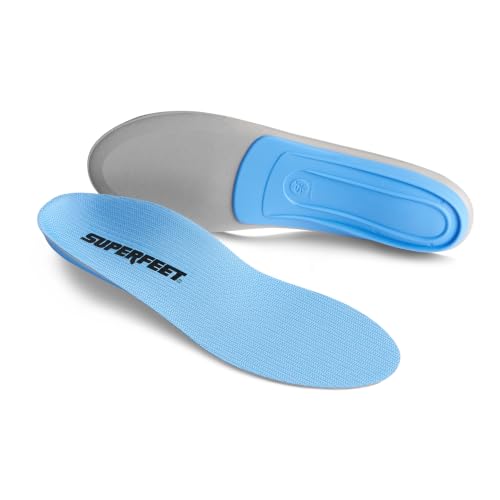
4. Best for Flat Feet: Superfeet Blue

Superfeet All-Purpose Support Medium Arch Insoles (Blue) for Active Lifestyle with Medium Arch Support - Men 13.5-15
  • Full-Length Fit: Medium-profile, medium-volume Superfeet insoles are designed to fill the length and width of your shoe for maximum support, simply trim the arch-support inserts to fit your shoes
  • Stabilizer Cap: The rails of our orthotic sole inserts reinforce the narrow cap to provide superior structure and support
  • Deep Heel Cup: Equipped with heel cups for heel pain, these orthotic insoles help position the heel to naturally absorb and soften impact from the ground
  • Orthotic Shape: The medium-profile shape of our shoe inserts puts support right where you need it, but takes up less space in your shoe
  • High-Density Foam: Soft closed-cell foam shoe insert supports and cushions the foot for long-lasting comfort and boasts a durable construction

My Honest Take: If you have flat or low arches, you still desperately need support — but not the intense, high-profile rigidity of a model designed for high arches. The Superfeet Blue threads the needle perfectly for flat-footed workers. I have a colleague on our testing team with notably flat feet who tried three different insoles over six months; the Superfeet Blue was the only one that eliminated his midday ankle fatigue without feeling like a rock under his arch. The structured plastic base and deep heel cup prevent overpronation without cramming a massive arch bump where it doesn’t belong.

Pros:

  • Specifically engineered for low to medium arch profiles.
  • Structured deep heel cup aids in proper alignment and prevents ankle roll.
  • Durable — often recommended by podiatrists for plantar fasciitis with lower arches.
  • Less aggressive arch height than the Green, making it more comfortable out of the box.

Cons:

  • Still features a plastic base, so a short break-in period may be required.
  • Premium price point compared to gel alternatives.

Best For: Workers with low or medium arches seeking long-lasting stability and proper alignment without an aggressive arch profile.

Check Price & Reviews on Amazon →

5. Best for High-Impact Jobs: PowerStep Pinnacle Maxx

PowerStep Pinnacle Maxx Orthotic Insoles, Maximum Stability & Comfort, Firm & Flexible Angled Heel, Flat Feet & Overpronation, Heavy Duty Shoe Inserts for Men & Women, Made in USA (M 12-13)
  • Slightly Angled Heel Post: PowerStep Pinnacle Maxx insoles for men & women keep the feet from rolling inward, improve stability, and prevent problems caused by overpronation including flat feet and plantar fasciitis.
  • Firm But Flexible Design: Our orthotics Pinnacle PowerStep insoles for overpronation are equipped with a deep heel insert cradle for increased comfort, stability, and motion control for standard arch support and immediate heel pain relief.
  • Premium Dual Layer Cushioning: For enhanced comfort from heel to toe. As the thickest of our Pinnacle PowerStep orthotics, these need to be worn in shoes where the factory insole can be removed. HSA & FSA Eligible. Made in the USA
  • The Perfect Balance of Comfort and Support: These PowerStep Pinnacle arch support inserts for men & women are unlike most other orthotics as they help to correct over-pronation which can cause ankle, knee, and hip pain in your daily routine
  • No Trimming: Our arch support PowerStep insoles men & women can use can be worn in a variety of shoe styles & fit in any type with no trimming required! Unlike most insoles for flat feet and other heel pain relief products, these come ready to wear.

My Honest Take: If you work in construction, roofing, or any environment where you’re constantly bearing down hard on your feet — jumping off equipment, carrying heavy loads, working on uneven terrain — you need an insole that won’t “bottom out” under pressure. That’s exactly what the PowerStep Pinnacle Maxx is built for. I wore these during a month of framing work where I was regularly stepping off scaffolding onto hard ground. The semi-rigid arch held its shape throughout, and the dual-layer cushioning absorbed the kind of repeated impact that would flatten a standard foam insole within days. These are built to take a beating.

Pros:

  • Firm semi-rigid arch support resists compression even under heavy, repeated impact.
  • Dual-layer cushioning for heel-to-toe comfort throughout a full shift.
  • Excellent for relieving pain associated with plantar fasciitis and heel spurs.
  • Anti-microbial fabric for serious odor control during sweaty, physical work.
  • Podiatrist-designed — widely recommended for occupational use.

Cons:

  • On the pricier end of the spectrum.
  • Not ideal for individuals with very high arches — can feel like too much arch pressure.

Best For: Construction workers, heavy-duty labor, and anyone who needs maximum reinforced support that resists compression throughout a physically demanding shift.

Check Price & Reviews on Amazon →

6. Best for Heavy-Duty Use (250+ lbs): Dr. Scholl’s Extra Support

Dr. Scholl's Extra Support Shoe Insoles for Women, Size 6-11, 1 Pair: Designed for Plus-Size and Tall Women, Arch Inserts - Helps Reduce Lower Back Pain and Foot & Leg Fatigue
  • EXTRA SUPPORT INSOLES FOR ALL WOMEN: Dr. Scholl's Extra Support Shoe Inserts for Women are specially designed for people who are plus-sized, tall, or who have wide width feet, giving extra support and comfort.
  • ALL-DAY COMFORT AND RELIEF: These insoles for women can be custom trimmed to fit sizes 6-11, ideal for inserting into work boots, shoes, or casual sneakers to help provide essential all-day support and relief.
  • SCIENTIFICALLY ENGINEERED INSOLES: Clinically proven to effectively reduce lower back pain and foot & leg fatigue, Dr. Scholl’s shoe inserts for women are scientifically designed and engineered.
  • ENHANCED HEEL CUSHIONING: Incorporating durable, supportive heel cushioning, these insoles help alleviate the everyday stress on feet caused by standing or walking, significantly helping to reduce lower back pain and leg fatigue.
  • SHOCK ABSORBING TECHNOLOGY: Dr. Scholl’s Extra Support Insoles are crafted to help distribute foot pressure evenly, lessen the impact of each step, and absorb shock, allowing you to move with greater support and comfort throughout the day.

My Honest Take: Standard insoles simply aren’t engineered for the added load that heavier workers put on their feet daily. Dr. Scholl’s designed the Extra Support line specifically for big and tall individuals, and it shows. The reinforced construction resists the premature flattening that plagues standard insoles for larger users within weeks. It’s not a complex orthotic, and it won’t replace a PowerStep for serious biomechanical correction, but for a heavier worker who just needs reliable, durable cushioning that doesn’t compress to nothing by lunch — this delivers consistently and at a reasonable price.

Pros:

  • Specifically engineered to provide extra support for big and tall individuals.
  • Reinforced to resist premature flattening under heavier body weight.
  • Readily accessible and budget-friendly — easy to keep spares on hand.
  • Good shock absorption for everyday standing and walking on hard floors.

Cons:

  • May lack the rigid structural components of premium brands like Superfeet or PowerStep.
  • Less durable than higher-end orthotics — plan for replacement every 5–7 months.

Best For: Big and tall workers looking for a reinforced, cost-effective insole that holds up under greater body weight without collapsing prematurely.

Check Price & Reviews on Amazon →

7. Best Budget Pick: Dr. Scholl’s WORK Massaging Gel

Dr. Scholl's Work All-Day Superior Comfort Insoles (with) Massaging Gel, Men, 1 Pair, Trim to Fit
  • CLINICALLY PROVEN ALL-DAY SUPERIOR COMFORT: Dr. Scholl’s Work All-Day Insoles for Men deliver proven comfort throughout the day, for hard-working feet. Designed for those with physically demanding jobs and active, on-your-feet lifestyles
  • ELIMINATES TIRED, ACHY FEET & LEGS TO STAY ENERGIZED: Distributes foot pressure evenly to reduce fatigue and joint strain, eliminates sore muscles, and keeps you feeling more energized even during your longest work day
  • MASSAGING GEL TECHNOLOGY: The only extended gel cushioning that reduces impact and shock to muscles and joints from working long hours on hard surfaces like asphalt, concrete, cement, hard dirt, and wood floors - helping reduce daily foot and leg stress
  • RESPONSIVE CUSHIONING FOR ENHANCED ENERGY RETURN: Adaptive cushioning responds to movement and delivers energy back into every step, improving comfort at each key area of your foot for long-lasting support and fatigue-fighting power
  • ADVANCED ODOR CONTROL FOR FRESHNESS: New Polygiene StayFresh Technology provides foot odor control and helps reduce moisture buildup to keep your feet feeling fresh. Trim-to-fit sizing allows easy customization for most work shoes and boots

My Honest Take: Look — sometimes you need a serious upgrade from the stock foam right now, and you can’t break the bank. The Dr. Scholl’s Work Insoles are the go-to budget pick for a reason. They are built with massaging gel technology and responsive wave cushioning to reduce foot fatigue, and they are inexpensive enough to keep a backup pair in your locker. These won’t give you the biomechanical correction of a Superfeet, but as a quick, affordable replacement for worn-out factory inserts, they do the job well. I’ve given these to three different coworkers as a “try this before spending $50” starter insole, and none of them went back to factory insoles after.

Pros:

  • Highly cost-effective — one of the best price-to-comfort ratios on the market.
  • Provides gel cushioning and shock absorption that’s genuinely noticeable over stock insoles.
  • Extremely widespread availability — available at any pharmacy or hardware store.

Cons:

  • Thin and unstructured — offers less biomechanical support than rigid orthotics.
  • Won’t last as long as premium options — plan for replacement every 4–5 months with daily use.

Best For: Budget-conscious shoppers, quick replacements, or testing out cushioned insoles before committing to a premium pair.

Check Price & Reviews on Amazon →

Who Should Skip Aftermarket Insoles (And Get Custom Orthotics Instead)

For the vast majority of workers, a quality off-the-shelf insole will solve the problem entirely. However, there are specific situations where aftermarket insoles won’t cut it and you should invest in custom orthotics instead. If you have been diagnosed with severe plantar fasciitis that hasn’t responded to OTC insoles after 6–8 weeks, you likely need a prescription orthotic. The same goes for people with significant leg length discrepancies, diagnosed overpronation or supination that a podiatrist has flagged as structural, diabetic foot complications, or post-surgical foot conditions. Custom orthotics cost significantly more — typically $300–$600 — but they’re molded precisely to your foot and can last for several years. If you’re unsure, visit a podiatrist before spending money on multiple off-the-shelf options.

How to Install Your New Insoles (The Right Way)

This step is often done incorrectly, which ruins the fit and defeats the purpose of buying great insoles. Follow these steps carefully.

  1. REMOVE the Old Insole. This is non-negotiable. Never stack insoles! Stacking takes up too much volume, cramps your toes, and throws your foot into an unnatural position, causing blisters and pain. Pull that flimsy factory insole out completely before putting the new one in. This is one of the most common mistakes we see on job sites.
  2. TRACE the Old Insole. Place the old insole directly on top of your new one, making sure the heels are perfectly lined up. Carefully trace the toe area onto the new insole with a marker.
  3. TRIM to Fit. Carefully cut along the line you traced. Pro-Tip: Always cut slightly outside the line first. You can always trim more, but once it’s cut too short, you can’t add it back.
  4. INSERT and Test. Put the new insole in your boot and lace up. If you chose a supportive, structured insole, it might feel hard or “weird” at first. This is completely normal — your feet are used to zero support. Start with 2–3 hours on day one and gradually increase wear time over a week.

How Often Should You Replace Work Boot Insoles?

A good rule of thumb is every 6 to 12 months for most workers. If you work 12-hour shifts or are a heavier individual, support may degrade faster, requiring replacement every 4–6 months. The easiest test: if you start feeling that familiar foot fatigue returning at the same point in your shift, it’s time for a new pair. Don’t wait until your feet are in pain to make the swap.

The Best Work Boot Insoles

the best work boot insoles

Frequently Asked Questions

How often should I replace my work boot insoles?

A good rule of thumb is every 6 to 12 months. If you work 12-hour shifts or are a heavier individual, you may find the support degrades faster, requiring replacement every 4–6 months. The easiest test: if you start feeling that old foot fatigue again, it’s time for a new pair.

My new insoles feel hard or weird. Is that normal?

Yes, absolutely. If you switch from a soft, worn-out factory insole to a supportive one with a rigid arch (like a Superfeet), your foot and ankle alignment is genuinely changing. You need a break-in period. Start slow: wear them for 2–3 hours the first day, gradually increasing the time over a week until they feel supportive and natural.

Should I buy custom orthotics or will standard insoles do the job?

For most people, a quality off-the-shelf insole provides excellent comfort and support. However, if you have ongoing foot pain, a severe diagnosed condition like plantar fasciitis, or a unique structural foot issue, custom orthotics may be required. While they are a larger investment ($300–$600), they are tailored precisely to your foot and can last for several years.

Are insoles worth it for work boots?

Without question, yes. In our experience, replacing the stock factory insole is the single most cost-effective upgrade you can make to your work boots. For $20–$60, you can dramatically reduce foot fatigue, prevent or relieve plantar fasciitis, and reduce knee and back strain — all of which have real long-term health implications for workers who are on their feet daily.

Can insoles help with knee and back pain from standing all day?

Yes — and this is one of the most underappreciated benefits of a good insole. When your foot isn’t properly supported, it rolls inward (overpronates), which creates a chain reaction of misalignment traveling up through your ankle, knee, hip, and lower back. A structured insole with a deep heel cup corrects that base misalignment, which relieves stress on the joints above it. Many workers report significant reduction in knee and low back pain within two to three weeks of switching to a supportive insole.

Can I use hiking insoles in work boots?

You can, but it’s not ideal. Hiking insoles are typically designed for the wider toe boxes and contours of hiking boots. They may not fit correctly in work boots, especially steel toe boots, and the arch positioning may be off depending on the boot’s internal shape. We recommend sticking to insoles specifically designed for work boots or occupational use for the best fit and performance.

How do I know if my insoles are worn out?

The most obvious sign is returning foot fatigue — if your feet are hurting at the same point in your shift where they used to feel fine, the cushioning has compressed past the point of effectiveness. You can also do a visual check: press your thumb firmly into the heel and arch area. If the foam barely springs back, it’s done. Most quality insoles last 6–12 months; budget gel insoles, 4–5 months.

What insoles work best for steel toe boots specifically?

For steel toe boots, you want a low-to-medium profile insole that won’t crowd the toe box, which is already reduced by the steel cap. Our top picks for steel toe compatibility are the Timberland PRO Anti-Fatigue and the Dr. Scholl’s WORK Massaging Gel — both slim enough to fit comfortably. Avoid thick high-volume insoles like the Superfeet Green in very snug steel toe boots unless you’ve sized up a half size.

Conclusion: Stop Paying for Bad Insoles With Your Feet

Your boots are a vital piece of safety gear, and upgrading your insoles is the fastest, cheapest, and most effective way to improve your entire workday. A great insole provides the structure your factory insoles lack, absorbs the brutal impact of concrete, and properly aligns your entire body from the ground up. We’ve seen it firsthand: workers suffering needlessly because they’re walking around on a flattened, $2 piece of compressed foam that came stock in a $200 pair of boots.

Don’t let a cheap factory insole ruin your expensive boots — or your physical health over time. Make the switch. Your feet, knees, and back will thank you. If upgrading your insoles still doesn’t solve your foot pain, it might be time to look closer at your boots themselves — the boot’s overall midsole might be shot. Check out our guide to the Most Comfortable Work Boots available today.