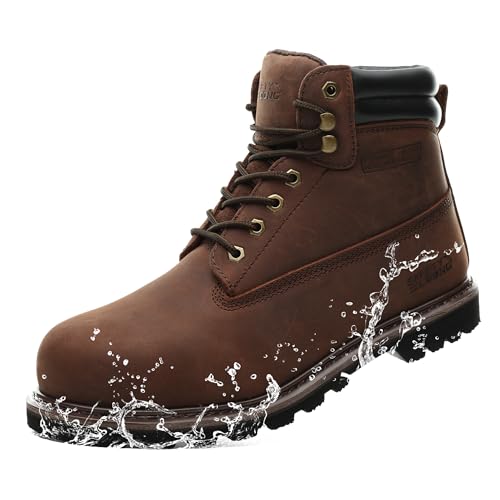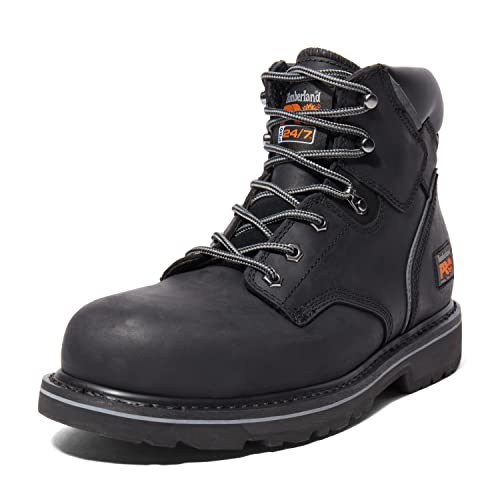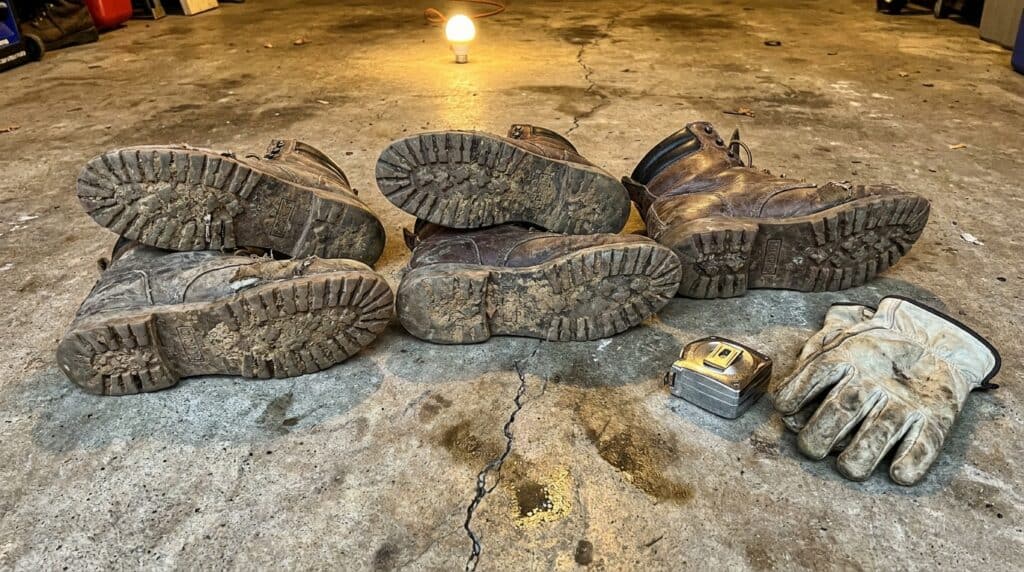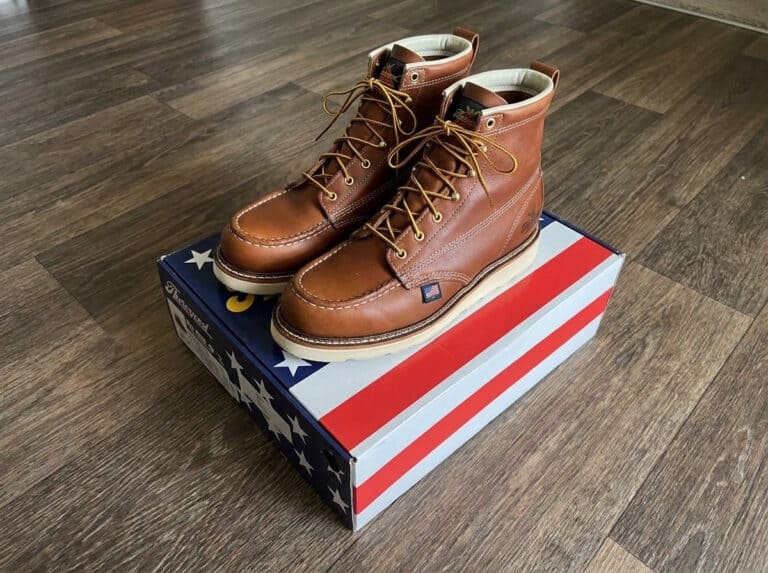

Here is the question most “best work boots under $100” articles are afraid to answer honestly: are cheap work boots actually safe? The answer is not a clean yes or no β it depends entirely on who made them, whether they have genuine independent certification, and what job site they are going onto. And none of the competing articles tell you how to tell the difference before you need the protection.
This guide is built differently. Before showing a single product, it explains the ASTM certification fraud problem that affects a significant percentage of budget work boots sold on Amazon, builds an explicit brand trust hierarchy so you know exactly which picks are safe for OSHA-regulated environments and which carry caveats, and decodes what “waterproof” actually means across the three different things budget boot sellers mean by it.
The honest headline: you can get a genuinely ASTM-certified work boot for under $100 β but only from the right brands. CAT, Wolverine, and Timberland PRO all sell verified-certified boots in this price range at certain sizes and availability windows. The budget picks in this guide serve a real and legitimate purpose β for seasonal workers, non-regulated environments, and workers cycling through footwear rapidly β but they require caveats that no competing article provides.
Quick answers: Best heritage brand overall β CAT Threshold Waterproof. Best PU midsole value β EVERBOOTS Tank S. Most ankle support β Wolverine Floorhand 10″. Best hiker style β Timberland PRO Keele Ridge. Best wet outdoor β Rubber Steel Toe Boot. Best side-zip β DahWe Side Zipper.
Β
Jump to: ASTM Certification Guide | Brand Tier Hierarchy | Midsole Durability | Waterproofing Decoded | Job-Site Picker | Comparison Table | All Reviews | Wolverine Floorhand Guide | Side-Zip Guide | Rubber Boot Guide | Women’s Guide | FAQ
β οΈ ASTM F2413 Certification: What It Really Means and How to Verify It
The most important safety content in this entire guide β read this before buying any boot.
“Meets ASTM F2413 standards” written in an Amazon listing is a marketing claim that requires no testing, no certification, and no independent verification. Any seller can print it. The physical ASTM F2413 label sewn inside the boot tongue is the only reliable indicator of genuine certification β and a significant percentage of budget work boots sold on Amazon claiming ASTM compliance arrive without it.
How to Verify ASTM Certification When Boots Arrive
When your boots arrive, open the box and immediately look inside the tongue of each boot for a permanently affixed sewn-in label. A genuine ASTM F2413 label must contain all of the following:
- ASTM F2413 β the standard designation
- Edition year β e.g., -18 for the 2018 standard or -11 for the 2011 standard
- M/I/75 β impact protection at 75 ft-lbs (required for steel/composite toe classification)
- M/C/75 β compression protection at 2,500 lbs (required for steel/composite toe classification)
- EH β electrical hazard rating, if claimed
- PR β puncture resistant, if claimed
A label that reads only “Safety Toe,” “Steel Toe,” “Meets ASTM Standards,” or “Steel Toe Protection” without these specific codes is not genuine ASTM certification. If an “ASTM certified” boot arrives without the physical label, return it. Do not wear it in an OSHA-regulated environment that requires certified PPE β the listing claim without the physical label is a misrepresentation that creates both personal safety risk and employer compliance risk.
Which Picks in This Guide Have Verified Physical ASTM Labels
| Boot | Brand Tier | ASTM Certification Status |
|---|---|---|
| CAT Threshold, CAT Wheelbase | β Tier 1 β Heritage Safety Brand | Physical ASTM F2413 label confirmed β independent laboratory certified through Caterpillar’s production process |
| Wolverine Floorhand | β Tier 1 β Heritage Safety Brand | Physical ASTM F2413 label confirmed β Wolverine has certified safety footwear for decades |
| Timberland PRO Keele Ridge | β Tier 1 β Heritage Safety Brand | Physical ASTM F2413 label confirmed β Timberland PRO is an established safety footwear line |
| EVERBOOTS Tank S | β οΈ Tier 2 β Amazon-Established Brand | Significant Amazon review history suggests consistent labelling β verify physical label on arrival; not a heritage safety brand |
| FREE SOLDIER, SUREWAY, DahWe, Composite Toe (generic), Rubber Boot (generic), Puncture Proof (generic) | β οΈ Tier 3 β Budget / Generic | Listing claims only β physical label must be verified on arrival. Do not wear in OSHA-regulated environments without confirming the physical label is present and complete |
The Three Tiers of Budget Work Boots β The Guide Nobody Builds Explicitly
No “best work boots under $100″ article tells buyers explicitly why the trust level differs between a CAT boot and a budget Amazon listing β or what the practical consequences of that difference are. Here it is:
| Tier | Brands | ASTM Reliability | Appropriate For | Not Appropriate For |
|---|---|---|---|---|
| β
Tier 1 Heritage Safety Brands |
CAT/Caterpillar, Wolverine, Timberland PRO | Independent laboratory tested. Physical ASTM label sewn in. Consistent across production runs. Documented warranty process. | Any job site including OSHA-regulated environments. Workers whose employers mandate certified PPE. High-impact environments. | N/A β these are the highest-trust picks in the guide |
| β οΈ Tier 2 Amazon-Established Brands |
EVERBOOTS | Thousands of Amazon reviews across multiple product lines suggesting consistent construction. Not independent lab-certified heritage brand. | Job sites with standard PPE requirements where some certification confidence exists from review history. Workers comfortable with established Amazon brands. | Regulated environments where employer or inspector verifies the specific ASTM certification documentation |
| β οΈ Tier 3 Budget / Generic |
FREE SOLDIER, SUREWAY, DahWe, unnamed generic listings | Listing claims only. Quality control varies by production run. Physical label may or may not be present β must verify on arrival. | Seasonal workers. Non-enforced PPE environments. Workers cycling through boots rapidly (every 3β6 months). Light duty or occasional use. | OSHA-regulated environments. High-impact job sites. Electrical environments without label verification. Anywhere the employer verifies PPE certification. |
EVA vs PU Midsole β The Durability Math That Changes Which Boot Is Actually Cheapest Per Day
At the sub-$100 price point, most boots use EVA (ethylene vinyl acetate) foam midsoles because EVA is cheaper to manufacture than PU (polyurethane). This is the single most important durability distinction in this guide for workers who log high daily step counts.
EVA midsoles compress permanently at 300β500 miles of hard use. For a worker covering 5 miles of warehouse or construction floor per day, 5 days per week, that is 6 to 10 weeks before the midsole loses meaningful cushioning. The boot still has a safety toe β but the comfort that justified buying it in the first place is gone.
PU midsoles last 800β1,200 miles under the same conditions β three to four times longer. At equivalent daily mileage, a PU midsole boot provides genuine cushioning for 8 to 12+ months.
| Boot | Midsole Type | Est. Midsole Life (5 mi/day) | Cost Per Month at That Life |
|---|---|---|---|
| Wolverine Floorhand | PU midsole β Wolverine confirmed | 12β18 months | ~$5β$8/month at ~$90 |
| EVERBOOTS Tank S | PU midsole β product spec confirms | 10β15 months | ~$5β$8/month at ~$70 |
| CAT Threshold | EVA foam | 6β8 months | ~$10β$13/month at ~$80 |
| CAT Wheelbase | EVA foam | 6β8 months | ~$9β$12/month at ~$70 |
| Timberland PRO Keele Ridge | Verify on current listing | 8β12 months (Timberland PRO boots vary) | ~$8β$12/month at ~$95 |
| Budget brands (generic) | Lower-grade EVA foam | 4β6 months | ~$5β$10/month at $30β$50 β but less cushioning at end of life |
What “Waterproof” Actually Means in Budget Work Boots
Every work boots article mentions waterproofing without explaining that “waterproof” means three fundamentally different things in this price category. Here is the guide that no competitor provides:
| Waterproofing Type | How It Works | Real Protection Level | Which Boots in This Guide |
|---|---|---|---|
| Genuine membrane waterproofing | Sealed ePTFE or TPU membrane bonded inside the upper prevents water ingress from sustained exposure | Best β resists sustained immersion, rain, and wet terrain. Can be refreshed with waterproofing spray on the outer surface. | CAT Threshold, Timberland PRO Keele Ridge, Wolverine Floorhand β the established brand picks with genuine waterproof construction |
| DWR-treated / water-resistant upper | Outer material treated with durable water repellent (DWR) finish that sheds water on contact | Moderate β repels light rain and puddle splash. Wets through at seams under sustained exposure. Treatment wears off with use. | FREE SOLDIER and most budget boots that describe themselves as “waterproof” β the most common usage of the term in this price tier |
| Rubber shell (vulcanised rubber) | The entire boot shell is moulded vulcanised rubber β no membrane, no treatment, the shell itself excludes water | Maximum β hose-down cleanability. No seams to leak. True waterproofing by construction. Best for standing water environments. | Rubber Steel Toe Boot (B0GR9W47KV) β the only boot in this guide waterproof by construction rather than treatment |
| Not waterproof | Mesh, fabric, or non-waterproofed synthetic upper β no water exclusion claimed | None against moisture β breathable and appropriate for dry environments | CAT Wheelbase (breathable mesh upper), DahWe side-zip β correct for dry indoor work where breathability matters more than moisture exclusion |
Job-Site Suitability Picker β Which Boot for Which Work Environment
| Work Environment | Key Requirements | Best Picks from This Guide | What to Avoid |
|---|---|---|---|
| Warehouse / distribution centre (dry indoor) | PU midsole for cushioning durability, lightweight, steel toe, slip resistance on smooth concrete | CAT Wheelbase (breathable, lightweight), EVERBOOTS Tank S (PU midsole endurance) | Rubber boots (too heavy, too warm for extended indoor walking), Wolverine Floorhand (overkill shaft height for indoor) |
| Outdoor construction (wet/mud/rain) | Genuine membrane waterproofing, lug outsole, steel toe, ankle support | CAT Threshold, Timberland PRO Keele Ridge, Wolverine Floorhand; SUREWAY/FREE SOLDIER (budget β verify label) | Non-waterproof boots, side-zip (zipper clogs with outdoor debris) |
| Electrical / HVAC (EH rating required) | EH rating verified on physical label, composite toe preferred for non-conductive environments | Composite Toe pick (B0F631B4X7) if EH is on physical label; CAT picks with verified EH marking | Any boot claiming EH protection without the EH code visible on the physical label inside the tongue |
| Agricultural / wet outdoor / standing water | True waterproof by construction, easy hose-clean, steel toe | Rubber Steel Toe Boot (B0GR9W47KV) β the only genuinely waterproof-by-construction pick | Membrane waterproof leather (eventually compromised by sustained standing water); non-waterproof boots |
| Light industrial / food service / multiple donning cycles | Slip resistance on smooth floors, quick entry/exit, oil resistance | DahWe side-zip (convenience for frequent donning/doffing), EVERBOOTS Tank S | Heavy rubber boots without cushioning for sustained walking |
| Roofing / demolition / puncture risk | PR (puncture resistant) plate between insole and outsole, non-slip outsole | Steel Toe Puncture Proof Non-Slip (B0FPW9S3FM) β verify PR code on physical label | Standard work boots without puncture plate β an exposed nail through the outsole is a serious injury |
Steel Toe vs Composite Toe Under $100 β The Practical Decision Guide
Choose steel toe if: You want maximum impact and compression durability. You work in environments where the toe cap may take repeated impacts over a career. The weight difference (typically 100β200g heavier than composite) doesn’t significantly affect your work. Budget is the primary driver β steel toe boots at this price tier outnumber composite options.
Choose composite toe if: You work in electrical environments where non-conductive toe caps are required β composite does not conduct electricity, steel does. You commute through metal detectors (airport security, secure facility access). You work in extreme temperature environments where steel conducts cold or heat more aggressively than you want in a toe cap. You prefer a lighter boot overall.
The certification reality check: Both steel and composite toe must meet the same ASTM F2413 impact (75 ft-lbs) and compression (2,500 lbs) ratings to be classified as ASTM-compliant safety footwear. The material difference does not affect the protection level β if both are certified, both protect equally to the ASTM standard. The difference is in the characteristics above, not the fundamental safety.
All 11 Picks at a Glance
| Pick | Brand Tier | Toe Type | ASTM Status | Midsole | Waterproofing | Women’s Available | Buy |
|---|---|---|---|---|---|---|---|
| β CAT Threshold | β Tier 1 β Heritage | Steel | β Verified | EVA | β Membrane | Verify on Amazon | View β |
| β CAT Wheelbase | β Tier 1 β Heritage | Steel | β Verified | EVA | β Not waterproof | Verify on Amazon | View β |
| β Wolverine Floorhand 10″ | β Tier 1 β Heritage | Steel | β Verified | PU | β Membrane | β Men’s only | View β |
| β Timberland PRO Keele Ridge | β Tier 1 β Heritage | Steel | β Verified | Verify from listing | β Waterproof | Verify on Amazon | View β |
| EVERBOOTS Tank S | β οΈ Tier 2 β Amazon brand | Steel | β οΈ Verify label | PU | β Waterproof | β Men’s only | View β |
| FREE SOLDIER | β οΈ Tier 3 β Budget | Steel | β οΈ Verify label | EVA | β οΈ DWR / water resistant | β Men’s only | View β |
| Composite Toe (generic) | β οΈ Tier 3 β Budget | Composite | β οΈ Verify label | EVA | Verify from listing | β Men and Women | View β |
| SUREWAY | β οΈ Tier 3 β Budget | Steel/Composite/Soft | β οΈ Verify label | EVA | β οΈ DWR / varies | Verify on Amazon | View β |
| DahWe Side Zipper 8″ | β οΈ Tier 3 β Budget | Steel | β οΈ Verify label | EVA | β Not waterproof | β Men’s only | View β |
| Rubber Steel Toe Boot | β οΈ Tier 3 β Generic | Steel | β οΈ Verify label | None (rubber) | β By construction | Verify on Amazon | View β |
| Puncture Proof Non-Slip (generic) | β οΈ Tier 3 β Generic | Steel | β οΈ Verify PR label | EVA | Verify from listing | Verify on Amazon | View β |
Full Reviews β All 11 Work Boots Under $100
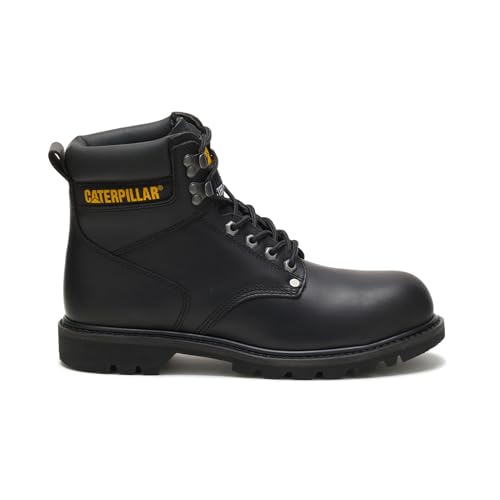
Pick 1. CAT Footwear Threshold Waterproof Steel Toe β Best Heritage Brand Overall β
The CAT Threshold is the anchor pick for any buyer who needs a genuinely certified safety boot under $100 and is not willing to compromise on the verification question. Caterpillar has been producing ASTM-certified work boots for decades β the physical F2413 label inside the boot tongue is a given, not a hope. For a worker going onto a regulated construction site, working for an employer who requires certified PPE, or simply wanting the assurance that comes with a heritage safety brand, the Threshold is the right choice at this price tier.
The waterproofing is genuine membrane construction β not DWR-treated leather that will wet through at the seams after a month of wet weather, but genuine waterproof construction that handles sustained rain and wet terrain. The full-grain leather upper adds durability that synthetic budget alternatives cannot match at this price. The steel toe meets ASTM F2413 M/I/75 and M/C/75 protection codes. The EVA midsole is the expected compromise at this price β adequate for 6 to 8 months of full daily use before cushioning compression becomes noticeable, and appropriate for the construction and outdoor work environments this boot targets.
| Boot Specs | |
|---|---|
| Brand tier | β Tier 1 β CAT/Caterpillar heritage safety brand |
| Toe type | Steel toe |
| ASTM status | β Verified β physical label confirmed |
| Midsole | EVA foam β 6β8 months at 5 miles/day |
| Waterproofing | β Genuine waterproof construction |
| Upper | Full-grain leather |
| Women’s available | Verify on Amazon β CAT has women’s lines |
| ASIN | B06ZZF255C |
β
Right for: OSHA-regulated construction sites, outdoor work in wet conditions, workers whose employers require certified PPE, buyers who want CAT brand assurance at the lowest available price.
β Wrong for: Dry indoor warehouse work where the waterproof premium and leather weight are unnecessary (CAT Wheelbase is the right pick there); workers whose primary need is all-day cushioning comfort over 12+ months (Wolverine Floorhand’s PU midsole is better suited).
Pros: Heritage brand certification β verified physical ASTM label Β· genuine membrane waterproofing holds up in sustained wet conditions Β· full-grain leather upper outlasts synthetic alternatives Β· CAT brand track record for quality control
Cons: EVA midsole compresses at 6β8 months of daily use β not the best midsole longevity at this tier Β· leather construction is heavier than synthetic/athletic work boots at similar price
Pick 2. CAT Men’s Wheelbase Steel Toe β Best Heritage Brand for Dry / Indoor Environments
The CAT Wheelbase is what the Threshold isn’t: light, breathable, and not waterproofed β which is exactly right for warehouse workers, indoor industrial workers, and dry-climate construction workers who don’t need to pay the weight and cost premium of waterproof leather construction for a job that doesn’t expose them to sustained moisture. The mesh/fabric upper breathes significantly better than full-grain leather in warm environments, reducing the foot heat and sweat accumulation that makes leather work boots uncomfortable in summer warehouse conditions. The trade-off is fully intentional β if your floors are dry and you’re covering miles inside a distribution centre or factory, the Wheelbase outperforms the Threshold for that use case.
The ASTM F2413 certification is the same verified status as the Threshold β this is a CAT heritage brand boot with the physical label inside the tongue. The steel toe provides certified impact and compression protection. The EVA midsole is the standard at this price tier; for warehouse workers covering significant daily mileage, the EVA compression timeline (6β8 months at 5 miles/day) is the honest durability expectation. Workers who need longer midsole life should consider the EVERBOOTS Tank S or Wolverine Floorhand for PU midsole alternatives, though both sacrifice the CAT brand certification heritage.
| Boot Specs | |
|---|---|
| Brand tier | β Tier 1 β CAT/Caterpillar heritage brand |
| Toe type | Steel toe |
| ASTM status | β Verified β physical label confirmed |
| Midsole | EVA foam β 6β8 months at 5 miles/day |
| Waterproofing | β Not waterproof β breathable mesh upper |
| Upper | Mesh/fabric (breathable, lighter weight) |
| Women’s available | Verify on Amazon |
| ASIN | B07FM92N9J |
β
Right for: Warehouse workers, indoor industrial, dry-climate construction, workers who value breathability over waterproofing, buyers who want CAT heritage certification without the leather waterproof premium.
β Wrong for: Any outdoor work in rain or wet conditions β the breathable mesh upper will wet through immediately. Not for environments with standing water or sustained moisture exposure.
Pros: Heritage brand certification β same verified ASTM status as the Threshold Β· breathable construction for warm-environment comfort Β· lighter than leather alternatives Β· lower price point than waterproof CAT models
Cons: Not waterproof β the wrong pick for outdoor or wet environments Β· EVA midsole compresses at 6β8 months of daily use
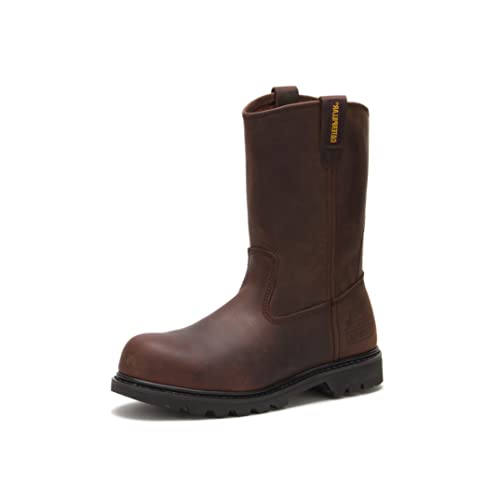
Pick 3. Wolverine Men’s Floorhand Waterproof 10″ Steel Toe β The Standout Pick in This Guide β
The Wolverine Floorhand is the most surprising and most valuable pick in this entire guide. A genuine Wolverine 10-inch waterproof work boot with a PU midsole and ASTM-certified steel toe at a price point that regularly falls under $100 on Amazon β it is the kind of find that makes “best work boots under $100” a meaningful category rather than a race to the bottom. Wolverine has been producing ASTM-certified work boots since 1883. The Floorhand is the brand’s entry-level work boot line, designed for the budget-conscious tradesperson who wants Wolverine assurance without the Durashocks or 1000 Mile price. And at this price point, it provides a PU midsole β the single most impactful durability feature in this guide β that the CAT picks at comparable prices do not.
The 10-inch shaft height is the feature that separates the Floorhand from every other boot in this guide. It provides genuine above-ankle protection β appropriate for electrical utility workers who need debris exclusion above the ankle, outdoor workers in environments with snake risk, workers on muddy sites where water intrusion above a 6-inch shaft is a real concern, and anyone who has sprained an ankle on uneven terrain and wants the lateral support of a higher shaft. The PU midsole means this boot will be cushioning properly 12 to 18 months into daily use β substantially longer than the EVA alternatives in this roundup. The waterproofing is genuine Wolverine construction, not a marketing claim.
The price caveat β check your size before purchasing: The Floorhand fluctuates in price by size and availability. Some sizes are consistently under $100; others occasionally rise to $105β$115. Always verify the current price at your specific size before purchasing. It still belongs in this guide regardless β even at $105, the PU midsole longevity, Wolverine certification heritage, and 10-inch waterproof construction represent value that nothing else in the budget tier matches.
| Boot Specs | |
|---|---|
| Brand tier | β Tier 1 β Wolverine heritage safety brand |
| Toe type | Steel toe |
| ASTM status | β Verified β physical label confirmed |
| Midsole | PU β 12β18 months at 5 miles/day |
| Waterproofing | β Genuine Wolverine waterproof construction |
| Shaft height | 10 inches β the tallest in this guide |
| Weight | Heavier than most sub-$100 boots β the 10″ construction adds weight |
| Women’s available | β Men’s only in this ASIN |
| Price note | Verify current price at your size β fluctuates by size availability |
| ASIN | B01ITL8EI6 |
β
Right for: Electrical utility workers, outdoor workers in environments with ankle-level debris or snake risk, workers in wet outdoor environments requiring 10″ waterproof coverage, anyone who wants the longest midsole life available at this price tier, buyers who want Wolverine heritage brand assurance with PU midsole longevity.
β Wrong for: Indoor warehouse workers (10″ shaft and heavier weight are unnecessary overkill); workers in hot dry climates where the extra shaft height adds unwanted warmth; buyers who specifically need side-zip or lighter construction.
Pros: PU midsole β the best midsole longevity in this guide Β· Wolverine heritage brand with verified ASTM F2413 certification Β· 10″ shaft provides genuine above-ankle protection that no other pick in this guide offers Β· genuine waterproofing from a brand with decades of waterproof boot experience Β· the highest-trust pick at or near this price point
Cons: Heavier than lower-shaft alternatives β 10″ construction adds weight that indoor workers don’t need Β· price fluctuates by size β verify current price before purchasing Β· men’s only at this ASIN
Pick 4. Timberland PRO Men’s Keele Ridge Steel Toe Waterproof β Best Heritage Brand Hiker Style
The Timberland PRO Keele Ridge brings the brand’s industrial hiker construction to the sub-$100 price window β a genuine Timberland PRO safety boot for workers who find traditional heavy work boots too stiff, too heavy, and too old-fashioned for their active outdoor work style. The industrial hiker format combines the lug sole and ankle support of a traditional work boot with the flexible, athletic-inspired construction of a hiking boot β producing a boot that feels more natural in motion while still providing waterproof protection and ASTM-certified steel toe coverage. For delivery drivers, light construction workers, landscapers, and outdoor workers who are on their feet across varied terrain throughout the day, the hiker-style construction reduces the fatigue that comes from a stiff traditional work boot over 8 to 10 hours.
The waterproofing is genuine Timberland PRO construction β not a marketing qualifier. The steel toe carries the verified ASTM F2413 certification that makes Timberland PRO an appropriate choice for regulated job sites without requiring the buyer to verify a physical label against hope. Timberland PRO’s track record is consistent: the brand does not sell uncertified boots with ASTM claims. The Keele Ridge’s ASIN (B0F24Z87RX) suggests a relatively recent listing β verify current review count before committing, as review history provides additional quality-consistency confidence.
| Boot Specs | |
|---|---|
| Brand tier | β Tier 1 β Timberland PRO heritage safety brand |
| Toe type | Steel toe |
| ASTM status | β Verified β Timberland PRO certified production |
| Midsole | Verify from current listing β Timberland PRO boots vary |
| Waterproofing | β Waterproof construction |
| Style | Industrial hiker β flexible, athletic-inspired construction |
| Women’s available | Verify on Amazon β Timberland PRO has women’s lines |
| ASIN | B0F24Z87RX |
β
Right for: Active outdoor workers who find traditional work boots too heavy and stiff; delivery drivers, landscapers, light construction workers; buyers who want Timberland PRO brand assurance with an athletic-influenced construction; wet outdoor environments.
β Wrong for: Workers who specifically need a traditional high-shaft work boot with maximum ankle support β the Wolverine Floorhand 10″ is better there; purely indoor workers where the waterproof construction adds unnecessary weight.
Pros: Timberland PRO heritage brand with verified ASTM certification Β· waterproof construction for wet environments Β· hiker-style flexibility reduces fatigue for active outdoor workers Β· well-known brand with documented warranty and return infrastructure
Cons: Newer listing (verify review count for quality confidence) Β· midsole type should be confirmed from current listing before purchasing for high-mileage use
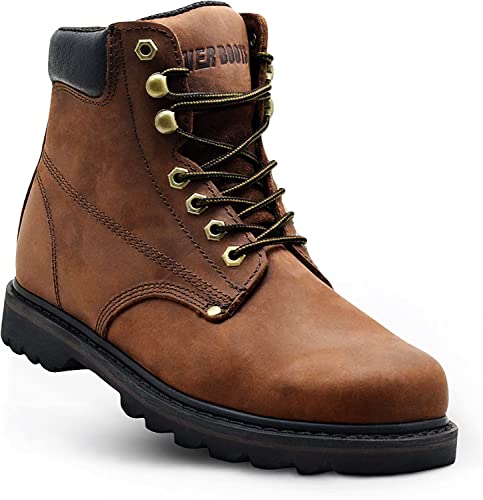
Pick 5. EVERBOOTS Tank S Steel Toe Work Boots β Best Amazon-Established Brand / Best PU Midsole Value
The EVERBOOTS Tank S earns its place in this guide through one specification that matters more than almost anything else for daily-wear warehouse and industrial workers: its PU midsole. At the sub-$100 price point, finding a boot with a PU midsole β rather than the EVA foam that most budget boots use β is genuinely unusual. PU midsoles last 800 to 1,200 miles of hard use before significant compression, compared to 300 to 500 miles for EVA. For a warehouse worker covering 5 miles per day, that difference translates to a boot that is still cushioning properly at 8 to 10 months vs. one that has lost meaningful cushioning at 2 months. At similar price points to budget EVA alternatives, the Tank S’s PU midsole makes it the better long-term value for high-mileage daily use.
EVERBOOTS is not a heritage safety brand in the way that CAT, Wolverine, and Timberland PRO are β it does not have decades of independent laboratory certification history. But it has accumulated significant Amazon review history across its product lines, with thousands of documented positive buyer experiences suggesting consistent construction quality. The practical guidance for purchasing: treat it as a reliable Amazon-established brand, verify the physical ASTM label inside the boot tongue when it arrives, and use the extensive review history as an additional quality signal. The waterproofing claims should be understood as construction-level waterproofing at an Amazon-brand level of assurance, not Wolverine-level waterproof heritage.
| Boot Specs | |
|---|---|
| Brand tier | β οΈ Tier 2 β EVERBOOTS (Amazon-established brand) |
| Toe type | Steel toe |
| ASTM status | β οΈ Verify physical ASTM label on arrival |
| Midsole | PU β 10β15 months at 5 miles/day |
| Waterproofing | β Waterproof (verify construction type from listing) |
| Women’s available | β Men’s only in this ASIN |
| ASIN | B07T8CFZ73 |
β
Right for: High-mileage warehouse and industrial workers who need the longest midsole cushioning life available at this price tier; buyers comfortable with a well-established Amazon brand rather than a heritage safety brand; workers who want better PU midsole longevity than the CAT alternatives.
β Right for: Verify ASTM label on arrival before use in OSHA-regulated environments β not a heritage brand with independently verified laboratory certification. Not for workers whose employers or job sites explicitly require heritage brand certification.
Pros: PU midsole β the best cushioning longevity-to-price ratio in this guide alongside the Wolverine Floorhand Β· extensive Amazon review history suggests consistent quality Β· waterproof construction Β· significant step up from budget no-name picks
Cons: Not a heritage safety brand β physical ASTM label verification on arrival is required Β· men’s only at this ASIN Β· not the right choice where employer specifically requires heritage brand certification documentation
Pick 6. FREE SOLDIER Men’s Durable Work Boots β Best Budget Waterproof / Tactical Style
The FREE SOLDIER enters this guide as the tactical-influenced budget pick β a military-inspired aesthetic, waterproofing claims, and steel toe at a price point that puts it firmly in the seasonal worker and non-regulated environment category. For workers who need a work boot appearance and some level of protection at minimum cost, who cycle through boots every few months due to wear or environment, or who work in environments where PPE compliance is informal rather than enforced by OSHA inspection, the FREE SOLDIER provides adequate protection at a price that doesn’t require a significant budget commitment.
The honest assessment of “waterproof” at this budget tier: the water resistance is DWR-treated material that sheds light rain and puddle splash in the early months of the boot’s life. It will not maintain that resistance through sustained wet-terrain use and the treatment degrades with use and cleaning. For incidental moisture exposure in a mostly-dry outdoor environment, it is adequate. For workers who genuinely stand in wet conditions regularly, the Rubber Steel Toe Boot or the heritage-brand waterproof picks are the correct choice. The steel toe provides steel toe-level protection β but verify the physical ASTM F2413 label inside the tongue when the boots arrive before relying on the certification claim in any regulated environment.
| Boot Specs | |
|---|---|
| Brand tier | β οΈ Tier 3 β Budget brand |
| Toe type | Steel toe |
| ASTM status | β οΈ Verify physical ASTM label on arrival |
| Midsole | EVA foam β 4β6 months at 5 miles/day |
| Waterproofing | β οΈ DWR/water resistant β not genuine membrane waterproof |
| Style | Tactical/military-influenced design |
| Women’s available | β Men’s only in this ASIN |
| ASIN | B091F45PLD |
β
Right for: Seasonal workers, irregular or casual job site use, non-regulated PPE environments, buyers who want tactical aesthetic at budget price, workers cycling through boots every 3β6 months.
β Wrong for: OSHA-regulated environments without physical label verification; sustained wet conditions where genuine waterproofing is required; workers who need long-term cushioning for high daily mileage.
Pros: Tactical aesthetic if that matters for the buyer Β· waterproofing adequate for incidental moisture Β· budget entry price Β· adequate protection for non-regulated informal environments
Cons: Budget tier certification β physical ASTM label must be verified on arrival Β· DWR waterproofing not equivalent to membrane waterproofing Β· lower-grade EVA midsole compresses faster than premium alternatives
Pick 7. Composite Toe Work Boots for Men and Women β Best Budget Composite Toe / Women-Inclusive
The composite toe work boot listed for both men and women is the most gender-inclusive pick in this guide β and the most important recommendation for workers who specifically need composite over steel. Composite toe caps are non-conductive, meaning they are the correct choice for electrical environments where the EH (electrical hazard) rating is required β but only if the EH code appears on the physical label inside the boot tongue. Composite is also lighter than steel by typically 100β200 grams per boot, thermally neutral (does not conduct cold or heat the way steel does in extreme temperature environments), and preferred for workers who regularly pass through metal detectors at airport security or secure facilities.
For women specifically: composite toe caps often fit women’s feet better than steel toe caps, because composite can be moulded to narrower profiles that accommodate the generally narrower forefoot of women’s feet more naturally than the wide, flat profile of many steel toe caps designed for men’s wider forefoot. The gender-inclusive sizing on this listing is a practical advantage in the sub-$100 category where women’s specific options are rare. The honest caveat: at budget tier pricing, verify the physical ASTM label AND verify that the EH code appears on that label if you are purchasing for electrical environments β composite toe alone is not sufficient for electrical hazard protection without the full EH certification.
| Boot Specs | |
|---|---|
| Brand tier | β οΈ Tier 3 β Budget generic |
| Toe type | Composite (non-metallic, non-conductive) |
| ASTM status | β οΈ Verify physical label on arrival β verify EH code separately if needed |
| Midsole | EVA foam β verify from listing |
| Waterproofing | Verify from current listing |
| Women’s available | β Explicitly listed for men and women |
| ASIN | B0F631B4X7 |
β
Right for: Workers who need composite over steel (EH environments if certified, summer heat, metal detector environments), women seeking sub-$100 work boots, buyers who find steel toe caps too heavy or thermally uncomfortable.
β Wrong for: EH-rated environments without first verifying the EH code on the physical label β composite alone is not EH protection without the label verification.
Pros: The only explicitly women-inclusive pick in this guide Β· composite toe: lighter, thermally neutral, non-conductive Β· appropriate for electrical environments if EH code verified on physical label Β· budget price point
Cons: Budget certification β physical label verification mandatory Β· EH protection requires the EH code on the physical label, not just composite construction Β· generic listing with limited brand accountability
Pick 8. SUREWAY Men’s Heavy Duty Work Boots β Best Budget Multi-Use with Flexible Toe Options
SUREWAY’s listing offers multiple toe protection options β soft toe, composite toe, and steel toe β at a single product page with variant selection. This variety makes it the most flexible pick for buyers who aren’t certain which toe type their job site requires, or who need to order different variants for different workers without managing multiple product pages. Heavy-duty is the claimed construction positioning; at the budget price tier, “heavy duty” should be understood as heavier-grade budget construction rather than professional-grade durability.
The practical guidance for SUREWAY: it is the right choice for budget-first buyers in non-regulated environments, workers who cycle through boots seasonally rather than expecting year-round daily performance, and situations where the specific toe type selection is more important than brand heritage. The toe type you select at checkout determines the certification you need to verify on the physical label β steel toe variants need the M/I/75 and M/C/75 codes; composite variants need these codes plus confirmation that EH is listed if electrical environments are involved. Verify the appropriate codes on the physical label regardless of which variant you order.
| Boot Specs | |
|---|---|
| Brand tier | β οΈ Tier 3 β Budget brand |
| Toe type | Soft / Composite / Steel (select at checkout) |
| ASTM status | β οΈ Verify physical label matching your selected variant |
| Midsole | EVA foam β verify from listing |
| Waterproofing | β οΈ DWR / water resistant β verify from current listing |
| Women’s available | Verify on Amazon |
| ASIN | B09KQC4H9X |
β
Right for: Budget-first buyers in non-regulated environments; workers who need to choose between multiple toe types without managing separate product pages; seasonal workers.
β Wrong for: OSHA-regulated environments without physical label verification; workers who need guaranteed year-round durability from daily heavy industrial use.
Pros: Flexibility to choose toe type at checkout Β· budget price point Β· heavy-duty construction positioning relative to price Β· adequate for non-regulated informal environments
Cons: Budget certification β physical label must be verified for each variant Β· variable availability of specific toe type variants Β· quality control may vary between production runs
Pick 9. DahWe Men’s Steel Toe Side Zipper 8″ β Best Side-Zip for Quick Donning and Doffing
The DahWe fills the side-zip slot in this guide β and it serves a specific and legitimate buyer need that the lace-up alternatives cannot address: workers who need to don and doff their boots multiple times per shift. Clean room workers, food processing workers who transition between outdoor and indoor environments, workers whose employers require boots to be removed at shift boundaries, and workers with reduced hand dexterity who find lace management difficult β all of these buyers have a genuine reason to prefer side-zip over traditional lace-up at this price tier. The side-zip saves 30 to 45 seconds per boot cycle; across a career of daily boot management, that time adds up.
The zipper durability caveat β the most important thing to know before purchasing: Budget side-zip work boots at this price tier use standard fashion-boot zipper mechanisms rather than the heavy-duty YKK zippers found in premium tactical and work boots. Amazon reviews across budget side-zip work boot categories consistently document zipper failure at 4 to 8 months of daily industrial use. The mechanism itself β the slider, the teeth, and the pull tab β are simply not engineered to survive the repeated mechanical stress of industrial-environment daily donning and doffing. The DahWe is the right purchase for workers who will use it for one season (3 to 6 months), for workers with lower-intensity daily use, or for workers who cycle through budget boots regularly and accept the zipper as a consumable element. It is not the right purchase for workers who need a side-zip boot to last 18 months of daily heavy industrial use β that buyer should budget for a premium option with YKK zipper hardware.
| Boot Specs | |
|---|---|
| Brand tier | β οΈ Tier 3 β Budget brand |
| Toe type | Steel toe |
| ASTM status | β οΈ Verify physical ASTM label on arrival |
| Closure | Side zipper (primary) + laces (secondary) |
| Shaft height | 8 inches |
| Midsole | EVA foam |
| Waterproofing | β Not waterproof β verify from listing |
| Zipper durability | Budget mechanism β expect 4β8 months under daily heavy industrial use |
| Women’s available | β Men’s only in this ASIN |
| ASIN | B0FD9KQ9MX |
β
Right for: Workers who need rapid boot entry/exit across multiple shift transitions; workers with reduced hand dexterity; one-season or occasional-use buyers who understand the zipper timeline; light-duty industrial environments.
β Wrong for: Workers who need a side-zip boot to last 12+ months of daily heavy industrial use (the zipper will fail before then); outdoor environments where debris can clog the zipper mechanism; waterproof environments.
Pros: 30β45 seconds faster per boot cycle β meaningful over a work year Β· 8″ shaft for above-ankle protection Β· budget price for the side-zip functionality Β· steel toe protection
Cons: Budget zipper mechanism β primary failure point at 4β8 months of daily heavy use Β· not waterproof Β· budget ASTM verification required
Pick 10. Men’s Rubber Boots Steel Toe β Best for Wet Outdoor / Agricultural / Standing Water
The rubber steel toe boot is the only product in this guide that is waterproof by construction rather than by treatment or membrane β and for certain work environments, this distinction is not a minor specification difference but the fundamental reason to choose it over everything else in this roundup. Vulcanised rubber construction means there are no seams to leak, no membrane to degrade over time, no DWR coating to wear off, and no footwear material that becomes water-permeable through sustained exposure. Agriculture, concrete pouring, fish and food processing, car washing, drainage work, landscaping in wet conditions, and any job site with persistent standing water β these are the environments where the rubber shell boot is not just one option among many, but the clearly correct choice.
The honest limitations of rubber steel toe boots are equally important to understand before purchasing. Rubber construction provides minimal cushioning β there is no meaningful midsole foam between the foot and the rubber shell. On concrete floors or any hard surface, foot fatigue accumulates significantly faster than in cushioned work boots; most workers find rubber boots acceptable for 4 to 6 hours on hard surfaces and uncomfortable after that threshold. These boots are not for extended walking on hard indoor surfaces. They are for lower-movement wet-environment work where the waterproofing justification outweighs the cushioning limitation. Additionally, rubber steel toe boots typically run large β sizing down half a step when ordering with heavy socks is the standard recommendation. Verify the physical ASTM label for the steel toe certification on arrival.
| Boot Specs | |
|---|---|
| Brand tier | β οΈ Generic / no-name listing |
| Toe type | Steel toe |
| ASTM status | β οΈ Verify physical label on arrival |
| Construction | Vulcanised rubber shell β waterproof by construction |
| Midsole | None / minimal β rubber shell construction |
| Waterproofing | β Maximum β waterproof by shell construction, not membrane or treatment |
| Sizing note | Runs large β size down half step when ordering with heavy socks |
| Women’s available | Verify on Amazon |
| ASIN | B0GR9W47KV |
β
Right for: Agriculture, concrete pouring, fish/food processing, car washing, drainage work, landscaping in wet conditions, any job site with persistent standing water β environments where vulcanised rubber is the only genuinely appropriate waterproof construction.
β Wrong for: Extended walking on hard indoor surfaces β minimal cushioning causes significant fatigue within 4 to 6 hours on concrete. Not for high-mileage indoor warehouse work.
Pros: Genuinely waterproof by construction β no membrane to fail, no seams to leak Β· hose-clean exterior Β· appropriate for standing water environments where no membrane boot can compete Β· affordable entry for wet environment coverage
Cons: Minimal cushioning β significant foot fatigue on hard surfaces beyond 4 to 6 hours Β· heavier than cushioned work boots Β· runs large β sizing down half step required Β· not for sustained hard-floor walking
Pick 11. Steel Toe Work Boots Puncture Proof & Non-Slip β Best Budget Puncture Protection
The puncture-proof non-slip pick addresses the specific protection need that no other boot in this guide covers: underfoot puncture risk. Roofers, demolition workers, scrap yard workers, and anyone working on construction sites where nail and sharp object debris on the ground is a real and daily hazard need puncture-resistant construction β a steel plate or equivalent puncture-resistant layer between the insole and outsole that prevents a nail or sharp object from being driven through the outsole into the foot. Standard work boots, including every other boot in this guide, do not include this plate by default. Without it, a nail through the outsole is an injury that happens despite proper steel toe protection, because the steel toe only protects the toe area, not the full underfoot zone.
The critical caveat for this pick: “puncture proof” in a product listing title does not guarantee that the boot carries the ASTM F2413 PR (puncture resistant) code. The PR certification requires that the puncture-resistant plate passes a specific load test (270 lbs minimum, no penetration) independently verified by a laboratory. A boot with a plastic plate in the midsole and “puncture proof” in its title may or may not have passed this test. Verify the PR code on the physical label inside the boot tongue. If it is absent, the boot is not ASTM PR-certified regardless of the product title. For workers on regulated job sites that specifically require ASTM PR-certified footwear β which some demolition and roofing contracts mandate β the physical PR label is the non-negotiable verification.
| Boot Specs | |
|---|---|
| Brand tier | β οΈ Generic / no-name listing |
| Toe type | Steel toe |
| Puncture resistance | β οΈ Verify “PR” code on physical ASTM label β critical for this pick |
| ASTM status | β οΈ Verify full label including PR and SR codes on arrival |
| Slip resistance | Verify “SR” designation on physical label or from listing |
| Midsole | EVA with puncture-resistant plate β verify from listing |
| Waterproofing | Verify from current listing |
| Women’s available | Verify on Amazon |
| ASIN | B0FPW9S3FM |
β
Right for: Roofing, demolition, scrap yards, construction sites with nail and sharp debris β environments where underfoot puncture protection addresses a specific and real daily hazard that standard work boots do not protect against.
β Wrong for: Puncture-risk job sites in regulated environments without confirming the PR code is present on the physical ASTM label β the product title alone is insufficient verification for regulated PPE compliance.
Pros: Addresses a specific protection need (underfoot puncture) that no other pick in this guide covers Β· budget price for the protection layer Β· non-slip outsole for construction site debris surfaces
Cons: Generic listing β physical ASTM label verification is non-optional before relying on PR protection claim Β· budget construction limits longevity expectations
The Wolverine Floorhand Anomaly β Why a Name-Brand 10″ Work Boot Ends Up Under $100
The Wolverine Floorhand is not a bargain-bin product or a discounted return. It is Wolverine’s entry-level work boot line β intentionally designed for the tradesperson who wants Wolverine brand assurance without the Durashocks or 1000 Mile premium pricing. Wolverine uses the Floorhand to serve the budget end of the work boot market without abandoning the certification standards and manufacturing processes that have made the brand a trusted name in safety footwear for over a century.
The result: a boot that carries genuine ASTM F2413 certification, genuine PU midsole construction, and genuine Wolverine waterproofing at a price that is only possible because it is positioned as the entry line rather than the flagship. For buyers who compare it to other sub-$100 boots without context, it looks anomalously good. It isn’t anomalous β it is Wolverine deliberately choosing to serve this price point without cutting the certification or construction corners that would compromise the brand’s core identity.
The 10-inch shaft specifically: the Floorhand’s 10″ height is appropriate for electrical utility work (above-ankle protection from debris and live line contact risk), outdoor work in environments with snake or underbrush risk, and muddy outdoor construction where an 8″ boot fills with mud and water faster than a 10″ boot. It is not necessary for indoor warehouse work β the extra height adds weight and warmth that are unnecessary in that environment. But for the outdoor tradesperson who genuinely benefits from 10″ coverage, the Floorhand provides it at a price that no other brand comes close to matching.
Side-Zip vs Lace-Up β The Daily Boot Management Decision
For most work boot buyers, the closure choice is instinctive β laces are the default and side-zip is the exception. But for workers who manage boot donning and doffing multiple times per day, the daily time cost of lace-up becomes a legitimate operational consideration.
When side-zip is genuinely worth considering: Clean room workers who remove boots at decontamination zones; food processing workers who transition between outdoor receiving and indoor production areas; workers with reduced hand dexterity or arthritis who find lace management slow and difficult; any worker who dons and doffs their boots 4+ times per shift.
The budget side-zip reality: At sub-$100, side-zip work boots use standard commercial zipper hardware rather than the heavy-duty YKK zippers in premium tactical and work boots. The mechanical difference matters under daily industrial stress β zipper failure (slider separation, broken teeth, stuck pulls) is the primary negative review complaint across budget side-zip work boot categories, with most failure reports appearing at 4 to 8 months of daily use. This does not make budget side-zip boots worthless β it defines their appropriate use case: workers who cycle through boots seasonally, occasional-use environments, and light-duty applications where the zipper does not receive the extreme daily stress of heavy industrial environments.
The upgrade path: Workers who specifically need a long-lasting side-zip boot for year-round daily heavy industrial use should budget above $100 for options with YKK zipper hardware β the mechanical quality difference in the zipper alone justifies the step up.
Rubber Steel Toe Boots for Wet Outdoor Work β When They Are the Only Right Choice
Most work boot articles mention rubber boots briefly without explaining why they are categorically different from every other pick in a “best work boots” guide. Here is the distinction:
Every other waterproof boot in this guide β including the CAT Threshold, Timberland PRO Keele Ridge, and Wolverine Floorhand β keeps water out through a membrane or treated upper. These are excellent technologies that work well in rain, light immersion, and wet terrain. But they have one shared limitation: given sustained exposure to standing water above the waterline, or enough time submerged that water works through seams and eyelets, they will eventually allow water ingress.
A vulcanised rubber shell boot has no membrane to degrade, no seams at waterline level to work through, and no upper material that becomes water-permeable over time. The shell is rubber. The construction is rubber. There is no path for water to enter except over the top of the boot. For workers in truly wet environments β standing in a fish processing drain, walking through agricultural mud that covers the boot, working concrete pours where the slurry splashes and soaks the boot for hours β the rubber shell boot is not just a good option. It is the correct choice, and the membrane waterproof alternatives are adequate compromises at best.
The cushioning limitation applies fully: rubber construction provides no meaningful midsole foam. Workers in standing-water environments are often doing lower-mobility work (standing in one place at a processing station, walking short distances in a wet field), which makes the cushioning limitation more tolerable than it would be for a warehouse worker covering 5 miles daily on concrete. Match the boot to the actual workflow β rubber is right for the wet-environment worker who does not cover high mileage, and wrong for the high-mileage warehouse worker regardless of how wet the floor is.
Women’s Work Boots Under $100 β Which Picks Work and What to Know
The honest assessment of women’s options in the sub-$100 category: they are limited. The composite toe pick (B0F631B4X7) is the only explicitly gender-inclusive listing in this guide. Timberland PRO Keele Ridge and CAT Threshold both have women’s versions β verify sizing and availability at your size on Amazon, as women’s specific variants of these models may have different ASINs.
The genuine women’s sizing problem at this price tier: At sub-$100, most boots that are “available in women’s sizes” are men’s last boots in smaller sizes β the internal geometry (heel-to-forefoot proportions, heel cup width, arch placement) is not adjusted for typical women’s foot anatomy. The most common consequence is heel slip β women with narrow heels experience the heel moving inside the boot with each step, causing blistering and fatigue. Women with wider feet may find the narrower forefoot of some budget “women’s” boots constraining.
The composite toe cap is one area where women often get a better fit regardless of last β composite toe caps can be moulded to narrower, lower profiles that accommodate the narrower forefoot of women’s feet more naturally than the wide, flat steel toe cap designed for the average men’s wider forefoot.
For women in regulated PPE environments: The Timberland PRO Keele Ridge (if available in women’s sizing at current price), CAT Threshold (if available in women’s variant under $100), and the composite toe pick with verified ASTM label are the appropriate safety-conscious choices. Budget tier picks (FREE SOLDIER, SUREWAY, DahWe, generic) carry the same certification verification caveats for women that they do for men. Women who require ASTM-certified PPE for regulated job sites and cannot find appropriate fit at sub-$100 may need to budget $110β$150 for options like the Skechers Work Women’s line or Timberland PRO Women’s dedicated product lines that use genuine women’s lasts.
Frequently Asked Questions
Can you get ASTM-certified work boots for under $100?
Yes β from established heritage brands. CAT Footwear (Threshold, Wheelbase), Wolverine (Floorhand), and Timberland PRO (Keele Ridge) all sell genuinely ASTM F2413-certified boots at or under $100 at certain sizes and availability windows. Budget brands frequently claim ASTM compliance in their listings without independent certification β the only reliable indicator is the physical ASTM F2413 label sewn inside the boot tongue, complete with the edition year and specific protection codes.
How do I verify that cheap work boots are actually ASTM F2413 certified?
When the boots arrive, look inside the tongue for a sewn-in label reading “ASTM F2413” with the edition year (e.g., -18) and specific codes: M/I/75 for impact, M/C/75 for compression, EH for electrical hazard, PR for puncture resistant. A label reading only “Safety Toe” or “Meets ASTM Standards” without these codes is not genuine certification. Return any boot without the complete label if you need certified protection.
How long do work boots under $100 last?
It depends on midsole type and daily mileage. EVA foam midsoles compress permanently at 300β500 miles β 6 to 10 weeks for a worker covering 5 miles daily. PU midsoles last 800β1,200 miles β 8 to 15 months at the same pace. The Wolverine Floorhand and EVERBOOTS Tank S both use PU midsoles. Budget no-name brands use lower-grade EVA; expect 4 to 6 months of cushioned comfort before significant compression.
Are no-name brand steel toe boots safe to wear on a construction site?
It depends on your job site’s PPE requirements. Budget brands claim ASTM compliance without independent laboratory verification. On OSHA-regulated sites requiring certified PPE, verify the physical ASTM F2413 label inside the boot tongue when it arrives. If absent, do not wear it in regulated environments. Budget boots are appropriate for seasonal, non-regulated, or informal PPE environments.
What is the difference between steel toe and composite toe work boots?
Steel toe provides maximum impact and compression durability and is heavier. Composite toe (fiberglass, carbon fiber, Kevlar) is lighter, thermally neutral, non-conductive for electrical environments, and preferred for metal detector environments. Both meet the same ASTM F2413 impact and compression ratings when certified β the protection level is identical if both are certified; the difference is in weight, thermal properties, and electrical hazard suitability.
Are the Wolverine Floorhand boots worth buying under $100?
Yes β the Floorhand is the highest-value pick in this guide. Genuine Wolverine certification, PU midsole for 12β18 months of cushioning life at high daily mileage, 10-inch waterproof construction, and heritage brand quality control β all at or near $100. Verify current price at your specific size before purchasing, as some sizes may exceed $100 depending on availability.
What work boots under $100 are available for women?
The Composite Toe Work Boots (B0F631B4X7) is explicitly listed for men and women. Timberland PRO Keele Ridge and CAT Threshold have women’s versions β verify sizing and availability on Amazon. At sub-$100, genuine women’s-last construction is rare. Women requiring ASTM-certified PPE for regulated environments may need to budget $110β$150 for genuine women’s-last options from Skechers Work or Timberland PRO women’s dedicated lines.
When should I choose a rubber steel toe boot over a leather work boot?
Choose rubber when your environment involves persistent standing water, mud, agricultural work, concrete pouring, fish/food processing, or drainage work β environments where no membrane waterproof boot can match vulcanised rubber shell construction. Do not choose rubber for extended walking on hard indoor surfaces; minimal cushioning causes significant foot fatigue within 4 to 6 hours on concrete.
Final Verdict β The Right Pick for Your Job and Budget
Decision hierarchy: First, determine which tier of certification your job site requires. Then match the right boot to your specific environment. Then consider midsole type if daily mileage is high.
- Best Heritage Brand Overall (OSHA-regulated environments, outdoor wet work): CAT Threshold Waterproof Steel Toe
- Best Heritage Brand Lightweight (dry indoor / warehouse): CAT Wheelbase Steel Toe
- Best Overall Pick (PU midsole + heritage brand + 10″ waterproof): Wolverine Floorhand Waterproof 10″ β verify price at your size
- Best Heritage Brand Hiker Style (active outdoor workers): Timberland PRO Keele Ridge Waterproof
- Best PU Midsole Value (high daily mileage, Amazon brand): EVERBOOTS Tank S Steel Toe
- Best Budget Waterproof (seasonal / non-regulated): FREE SOLDIER Men’s Work Boots
- Best Composite Toe / Women-Inclusive: Composite Toe Work Boots (Men & Women)
- Best Budget Multi-Toe-Type: SUREWAY Heavy Duty Work Boots
- Best Side-Zip / Quick Donning: DahWe Steel Toe Side Zipper 8″
- Best for Wet Outdoor / Agricultural / Standing Water: Men’s Rubber Steel Toe Boot
- Best Budget Puncture Protection: Steel Toe Puncture Proof Non-Slip