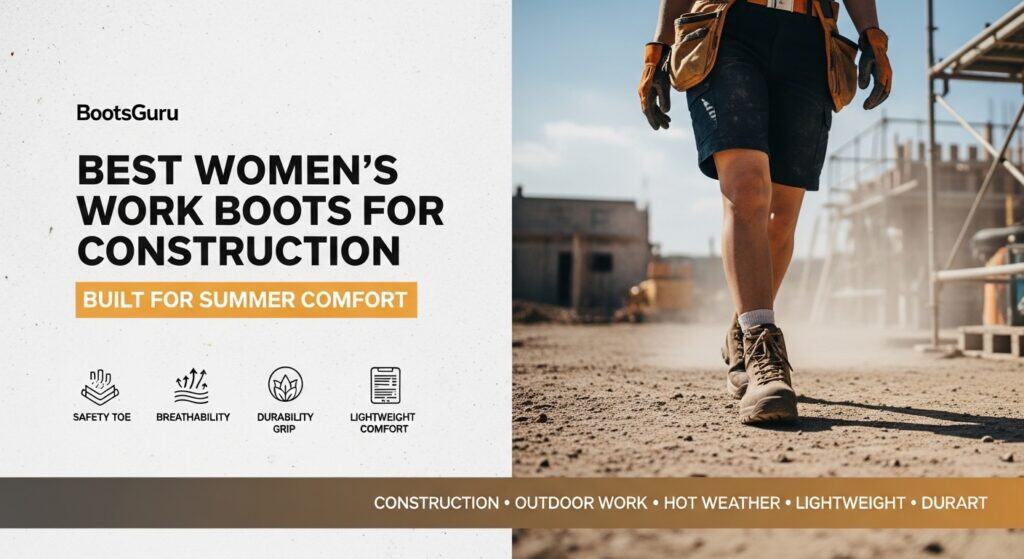

Female construction worker wearing durable work boots on site, highlighting the best women's construction boots for summer projects.

Best Women’s Construction Work Boots for Summer

Summer changes everything about women’s construction boot selection. The boot that worked all winter — heavy leather, sealed membrane, maximum waterproofing — becomes a foot sauna by July when the site temperature hits 95°F, the concrete underfoot reaches 150°F in direct sun, and your feet are producing nearly a litre of sweat per day. The result: thermal fatigue, afternoon blisters, and the kind of foot pain that ends careers early.

The problem is compounded for women by a market that has historically offered one of three inadequate solutions: heavy men’s boots in smaller sizes that slip at the heel, scaled-down men’s designs with arch support positioned behind where women’s arches actually sit, or fashion-oriented “women’s” boots that look the part but carry none of the ASTM certifications a construction site legally requires. January 2025’s OSHA update to 29 CFR 1926.95(c) changed the regulatory landscape — employers are now required to provide PPE that properly fits each employee, giving women explicit legal backing to demand boots built for their anatomy, not men’s boots in a smaller size.

This guide covers the ten best women’s work boots for construction in summer 2026: composite vs. steel toe thermal science, the waterproof paradox that sends many women to non-waterproof breathable boots in summer, the genuine women’s last explained, the afternoon swelling problem nobody else addresses, and a trade-specific picker across framing, concrete, electrical, and landscaping. Everything a woman in construction needs to keep her feet functional through a 10-hour summer shift.

⚡ Quick Picks — Best Women’s Work Boots for Construction in Summer

Best For Boot Toe WP Breathability Price
Best overall summer Carhartt Women’s Rugged Flex 6″ WP CT Composite ⭐⭐⭐⭐ ~$155
Best breathability / hot dry sites Timberland PRO Women’s Reaxion CT Composite ⭐⭐⭐⭐⭐ ~$130
Best framing / active climbing KEEN Utility Women’s Flint II ST Steel ⭐⭐⭐⭐ ~$155
Best concrete standing / heat Ariat Women’s Treadfast 6″ ST Steel ⭐⭐⭐ ~$175
Best electrical / EH composite Timberland PRO Women’s Titan EV Composite ⭐⭐⭐ ~$165
Best landscaping / outdoor grounds Merrell Women’s Moab 3 Mid WP Soft toe ⭐⭐⭐⭐ ~$140
Best wide toe box summer KEEN Utility Women’s Atlanta Cool Low ST Steel ⭐⭐⭐⭐⭐ ~$120
Best budget summer safety boot Skechers Women’s Work Arch Fit SR CT Composite ⭐⭐⭐⭐ ~$95
Best waterproof + breathable Danner Women’s Trail 2650 GTX Soft toe ✅ GTX ⭐⭐⭐⭐ ~$175
Best low-cut / shoe silhouette KEEN Utility Women’s Vista Energy Lo ST Steel ⭐⭐⭐⭐⭐ ~$150

Table of Contents

  1. OSHA 2025: Your Right to Properly Fitting Safety Boots
  2. The Genuine Women’s Last: What It Is and Why It Matters
  3. Composite vs. Steel Toe in Summer: The Thermal Science
  4. The Summer Waterproof Paradox
  5. What Actually Makes a Boot Breathable: 5 Features Ranked
  6. The Mesh Upper Durability Problem on Construction Sites
  7. The Afternoon Swelling Problem
  8. Trade-Specific Picker: Which Boot for Your Role
  9. Best Overall: Carhartt Women’s Rugged Flex 6″
  10. Best Breathability: Timberland PRO Women’s Reaxion CT
  11. Best Framing / Climbing: KEEN Utility Women’s Flint II
  12. Best Concrete / Standing: Ariat Women’s Treadfast 6″
  13. Best Electrical / EH: Timberland PRO Women’s Titan EV
  14. Best Landscaping / Outdoor: Merrell Women’s Moab 3 Mid WP
  15. Best Wide Toe Box: KEEN Utility Women’s Atlanta Cool Low
  16. Best Budget: Skechers Women’s Work Arch Fit SR CT
  17. Best Waterproof + Breathable: Danner Women’s Trail 2650 GTX
  18. Best Low-Cut: KEEN Utility Women’s Vista Energy Lo ST
  19. The Summer Sock System
  20. Heat Illness Prevention and the Mid-Shift Sock Swap
  21. Insole Upgrade Guide for Summer
  22. Boot Care in Summer
  23. FAQ — 8 Summer-Specific Questions
  24. Final Verdict by Trade

OSHA 2025: Your Legal Right to Properly Fitting Safety Footwear

In January 2025, OSHA updated 29 CFR 1926.95(c) to explicitly require that PPE — including safety footwear — must properly fit each individual employee. The update was directly prompted by data showing that ill-fitting PPE creates preventable hazards for women workers who have historically been provided men’s boots in smaller sizes rather than properly fitting women’s footwear.

What this means for women in construction: you have explicit regulatory backing to request genuinely women’s-last safety boots from your employer. An employer who hands you a men’s-last boot in a women’s size and tells you “this is what we have” may now be in violation of the updated OSHA standard if that boot does not properly fit — causing heel slippage, incorrect toe cap alignment, or inadequate arch support. Document your request in writing, cite 29 CFR 1926.95(c), and ask for footwear that “properly fits” as the standard requires.

Every boot in this guide is either built on a confirmed women’s last or, where that cannot be verified, is explicitly flagged so you can make an informed decision.

The Genuine Women’s Last: What It Is, Why It Matters, and How to Identify It

The “last” is the three-dimensional foot-shaped form around which a boot is constructed. A women’s-specific last accounts for the actual anatomical differences between women’s and men’s feet: a narrower heel relative to forefoot width, a more forward arch position relative to foot length, a shorter arch, and a lower ankle bone position. A boot built on a men’s last in a women’s size addresses only length — leaving the heel cup too wide (causing heel slippage and Achilles blisters), arch support positioned behind the actual arch (providing zero benefit), and toe box geometry proportioned for men’s narrower forefoot-to-heel ratio.

The consequences on a construction site are not minor inconveniences: heel slippage creates blister conditions that become unworkable by the end of a shift; incorrect arch support causes the plantar fascia to work unsupported, accelerating fatigue; and a mispositioned safety toe cap may not protect the toes it was rated to protect if the foot’s geometry doesn’t align with the cap’s position in the boot.

How to Identify a Genuine Women’s Last on a Product Listing

Look for the phrase “women’s-specific last,” “women’s last,” or “built on a women’s last” in the product description — not just “available in women’s sizes.” If the description only mentions women’s sizing without mentioning the last, assume you are getting a scaled men’s design. The brands that consistently manufacture on genuine women’s lasts for work boots: KEEN Utility (women’s-specific last across their work line), Carhartt (Rugged Flex Women’s series), Timberland PRO (Women’s series), and Ariat (Women’s Work series).

Composite vs. Steel Toe in Summer: The Thermal Science That Makes This a Summer-Specific Decision

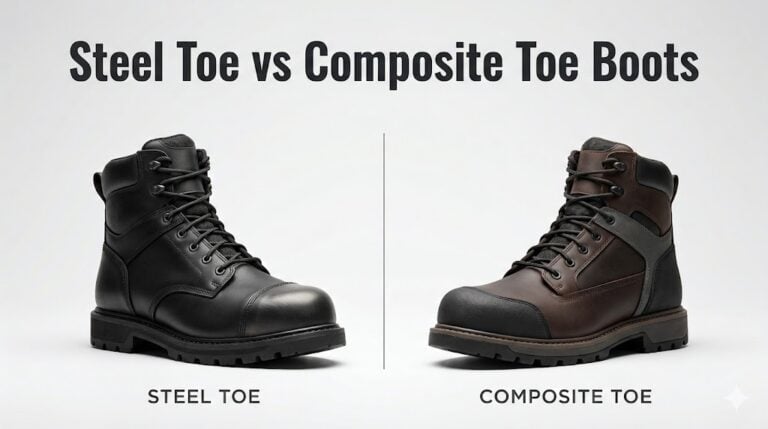
Every work boot article notes that composite toes are lighter than steel. What none explains is the additional summer-specific thermal advantage that makes composite the specifically correct choice for hot-weather construction.

Steel and alloy toe caps are metallic — they conduct heat from the environment. On a 95°F construction site with hot concrete underfoot reaching 150°F in direct summer sun, a steel toe cap absorbs ambient heat throughout the day, progressively warming the toe box interior until it is meaningfully hotter than body temperature. This thermal load adds directly to the heat fatigue that affects performance and increases heat illness risk in hot environments.

A composite toe cap — whether carbon fibre, fibreglass, or Kevlar composite — is thermally non-conductive. It does not absorb ambient heat from the environment, maintaining a temperature close to interior boot temperature regardless of the hot concrete and steel around it. For summer construction specifically, this thermal insulation advantage is at least as important as the weight saving. It is also non-metallic: it passes metal detectors, which matters for electricians, HVAC workers, and anyone on sites with metal detector access control.

Summer Toe Type Recommendation

For all summer construction in hot environments: composite toe is the correct choice. Steel toe is adequate in temperate conditions where thermal conduction is not a daily issue. In sustained 90°F+ environments, composite’s thermal insulation advantage is real, measurable, and directly affects end-of-shift comfort and heat management.

The Summer Waterproof Paradox: When Breathability Beats Waterproofing

woman on construction site 202605190810

woman on construction site 202605190810

Waterproofing is automatically recommended in almost every work boot guide regardless of season. In summer, this recommendation is frequently wrong — and understanding why saves you from spending months in a foot sauna.

Waterproof membranes — Gore-Tex, DRYShield, OutDry — work by blocking liquid water while allowing vapour to pass through. In theory, breathable waterproofing keeps you dry from both directions. In practice, in sustained hot-weather active construction work, the foot produces sweat faster than any waterproof membrane can transmit vapour. The result: moisture accumulates inside the sealed boot throughout the shift, creating a hot, wet internal environment that accelerates blistering, skin maceration, and fungal conditions far more effectively than a non-waterproof boot that gets wet from outside once and dries in 20 minutes.

Many experienced summer construction workers specifically choose non-waterproof breathable boots and accept incidental moisture from dew and puddles in exchange for genuine ventilation that keeps the foot drier across the full shift.

Summer Condition Correct Choice Reason
Dry heat, minimal water contact Non-waterproof breathable mesh Maximum ventilation prevents sweat accumulation; incidental moisture dries quickly
Daily rain or standing water Waterproof with best available breathability Persistent wet without drying windows; waterproof with Gore-Tex ECR or equivalent
Mixed conditions (dry most days, wet occasionally) DWR-treated leather without membrane Weather resistance without full seal; breathes better than waterproof; handles light wet
Concrete washdown, sustained wet site Full waterproof Direct sustained water contact without drying time requires waterproof membrane

What Actually Makes a Boot Breathable: The 5 Features Ranked by Real Impact

Every boot is marketed as “breathable.” The features that actually create measurable cooling in a summer construction boot, ranked by real-world impact:

1. Mesh or open-panel upper fabric — the single biggest contributor, moving 5–8x more air than perforated leather. If a boot’s upper is predominantly mesh, it ventilates. If it’s predominantly leather with mesh accents, the leather dominates the airflow equation.

2. Moisture-wicking interior liner — actively pulls sweat off the skin surface to enable evaporation. This is the difference between wet skin (blister-generating) and damp skin (manageable). Coolmax and polypropylene liners outperform generic nylon liners in summer conditions.

3. Removable insole — allows overnight drying, significantly reducing the moisture accumulation that creates the hot, wet environment by mid-afternoon on the following shift. Never underestimate how much of the heat problem is caused by a sodden insole that never dried from the previous day.

4. Perforated or EVA-foam insole (non-sealed) — vents heat from below the foot rather than trapping it in a solid foam layer. The difference is subtle but real across a long shift.

5. Zero or minimal insulation — any insulation above 200g actively traps body heat. Summer construction boots should carry no insulation whatsoever. If a boot description mentions “insulated” anywhere, it is wrong for summer.

The “Breathable Waterproof” Marketing Warning

All waterproof membranes limit breathability — including those marketed as “breathable waterproof.” Gore-Tex Extended Comfort Range is the best currently available at transmitting vapour while blocking liquid, but even it cannot match the ventilation of an unsealed breathable mesh upper in active summer use. “Breathable waterproof” is better than “non-breathable waterproof,” but it is not the same as genuinely breathable non-waterproof in summer conditions.

The Mesh Upper Durability Problem on Construction Sites

Maximum mesh is the most breathable upper option — and often the wrong choice for construction specifically. Exposed mesh panels contact rough concrete edges, rebar, rough-cut lumber, and tile edges that abrade mesh significantly faster than leather, creating holes that compromise the boot’s structure and introduce debris entry into the toe box area.

The correct summer construction upper is not maximum mesh — it is strategically placed mesh in zones where construction debris is unlikely to contact, with leather or ballistic nylon reinforcement over the forefoot, toe area, and lateral panels where abrasive contact is routine.

Look for: “hybrid leather-mesh” (leather over toe and lateral zones, mesh on tongue and upper collar), reinforced nylon overlays over mesh panels at contact zones, or TPU-reinforced mesh that provides abrasion resistance without sealing the ventilation. Avoid fully exposed mesh across the toe box and lateral forefoot on any construction site with rough debris.

The Afternoon Swelling Problem: Why Your Boot That Fits at 8 AM Hurts by 2 PM

Feet swell during active summer work — by 8–12% in volume — from the combined effects of sustained standing, heat-driven vasodilation, and fluid accumulation in the lower extremities. For women specifically, hormonal factors during the luteal phase of the menstrual cycle can amplify this swelling by an additional 5–8%. A boot that fits correctly at 8 AM can be generating painful forefoot compression and blister-producing heel friction by early afternoon.

The practical solutions that no other guide provides:

  • Try on boots in the afternoon — ideally after 30 minutes of standing — not first thing in the morning. Morning feet are the smallest your feet will be all day.
  • Wear your actual work socks during try-on. Thick merino wool work socks add meaningful volume compared to thin test socks.
  • In summer, size half a step up from your perfect morning fit. The afternoon swelling will consume that margin.
  • Choose wide toe box designs (KEEN asymmetric toe box, moc toe styles) that accommodate afternoon forefoot expansion without the safety cap becoming compressive.
  • Lace with a mid-shift loosening plan — lace firmly at the ankle and heel for lockdown, slightly looser across the forefoot to allow swelling room.

Trade-Specific Picker: Which Summer Boot for Your Construction Role

Trade / Role Summer Priority Best Pick
Framing / Rough Carpentry Ankle support for climbing, defined heel for ladder, breathable hybrid upper KEEN Utility Women’s Flint II
Concrete Work / Flatwork Sustained standing comfort, composite toe thermal insulation, anti-fatigue midsole Ariat Women’s Treadfast 6″
Electrical / HVAC EH rated, composite toe (non-metallic), breathable, metal detector safe Timberland PRO Women’s Titan EV
Landscaping / Grounds Maximum ventilation, outdoor grip, lightweight for high daily step count Merrell Women’s Moab 3 Mid WP
General Construction (dry sites) Breathability priority, composite toe, versatile performance Timberland PRO Women’s Reaxion CT
General Construction (wet sites) Best waterproof + breathable combination, composite toe Carhartt Women’s Rugged Flex 6″ WP CT
Indoor Industrial / Light Assembly Low-cut for maximum flexibility and ventilation, steel toe, athletic feel KEEN Utility Women’s Vista Energy Lo ST

Best Overall: Carhartt Women’s Rugged Flex 6″ Waterproof Composite Toe

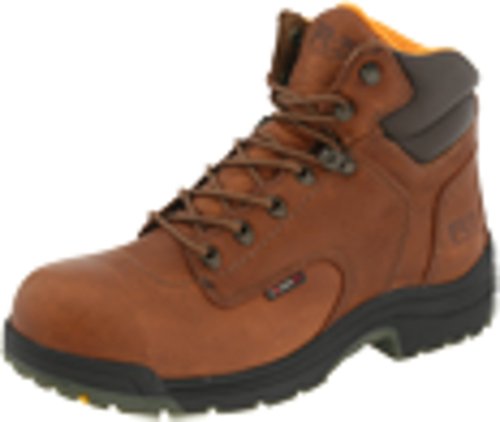
Carhartt Women's Rugged Flex 6' Comp Toe Work Boot, Brown, 10 M US

The Carhartt Rugged Flex Women’s is the most complete summer construction boot in this guide: a genuine women’s last with confirmed heel lockdown, a composite toe that provides both ASTM F2413 certification and summer thermal insulation, Rugged Flex EVA midsole that balances protection with the flexibility that active construction roles demand, and a waterproof construction that handles the mixed-condition summer sites where morning dew, afternoon rain, and concrete washdown coexist. The women’s last — built specifically for the narrower heel-to-forefoot ratio of women’s feet — is the fundamental reason this boot earns its place as the overall pick over the men’s-last alternatives in this category. You should not spend a shift fighting heel slippage. This boot prevents it.

Carhartt Women's Rugged Flex 6' Comp Toe Work Boot, Brown, 10 M US

The composite toe is the summer-appropriate choice over steel: no thermal conduction from hot concrete or ambient heat, no metal detector triggering for sites with access control, and meaningful weight reduction that compounds over a full active construction shift. ASTM F2413 I/75 C/75 certified — the same protection standard as steel at less weight and without the thermal penalty. EH rated for electrical hazard protection across construction environments. The Rugged Flex EVA midsole moves with the foot rather than resisting flexion — relevant for tradeswomen who climb, crouch, and kneel repeatedly throughout a shift, where a rigid midsole creates the fatigue that a flexible one avoids.

Carhartt Women's Rugged Flex 6' Comp Toe Work Boot, Brown, 10 M US

The waterproof construction does carry the standard summer breathability trade-off: the sealed membrane limits vapour transmission, making this boot slightly warmer in dry sustained heat than non-waterproof alternatives. For mixed-condition summer sites — the majority of real construction environments — the protection from wet concrete, morning dew, and incidental rain more than compensates. For consistently dry desert or inland summer sites where rain is genuinely rare, the Timberland PRO Reaxion (Pick 02) is the breathability-first alternative. Sizing: runs true to size in women’s; size half up from your normal street shoe if you have wide forefeet or experience afternoon swelling.

Carhartt Women's Rugged Flex 6' Comp Toe Work Boot, Brown, 10 M US

Summer Construction Specs

Toe: Composite — ASTM F2413 I/75 C/75 (non-metallic, thermally insulating)  |  EH Rated: ✅ Yes
Waterproof: ✅ Yes — sealed membrane  |  Breathability: ⭐⭐⭐⭐ Good (waterproof trade-off)
Midsole: Rugged Flex EVA (flexible, anti-fatigue)  |  Women’s last: ✅ Confirmed
Insulation: None — summer appropriate  |  Break-in: 5–8 hours
✅ Best for: General construction · Mixed wet/dry summer sites · Any trade requiring composite + EH + waterproof

Pros: Genuine women’s last with confirmed heel lockdown; composite toe thermal advantage in summer; EH rated; Rugged Flex EVA for all-day flexibility; excellent mixed-condition waterproofing.

Cons: Waterproof membrane reduces breathability vs. non-WP alternatives in dry sustained heat; slightly heavier than purely athletic-construction alternatives.

Check Price on Amazon →

Best Breathability / Hot Dry Sites: Timberland PRO Women’s Reaxion Composite Toe

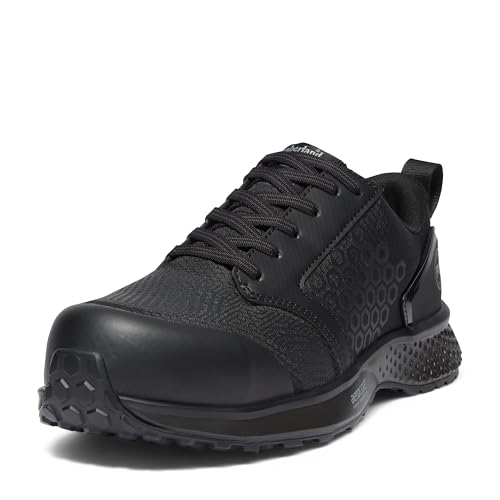
Timberland PRO Women's Reaxion Composite Safety Toe Industrial Athletic Work Shoe, Black/Grey-2024 NEW, 5.5

The Timberland PRO Reaxion is the breathability-first answer for summer construction. It is deliberately non-waterproof — and that is its primary summer advantage. Without a waterproof membrane sealing the interior, the Reaxion’s mesh upper vents freely throughout the shift, allowing sweat to evaporate rather than accumulating into the hot, wet internal environment that sealed boots create. For tradeswomen working in dry summer construction environments — frame carpentry in inland climates, summer site prep in arid regions, any role where rain is rare and foot heat is the dominant discomfort — the Reaxion’s ventilation profile translates directly to cooler, drier feet from morning to the end of shift.

Timberland PRO Women's Reaxion Composite Safety Toe Industrial Athletic Work Shoe, Black/Grey-2024 NEW, 5.5

The composite toe is ASTM F2413 certified and non-metallic — providing the summer thermal insulation advantage over steel toe and passing metal detectors at sites with access control. The Timberland PRO Reaxion uses an anti-fatigue technology midsole system — Timberland’s specific anti-fatigue platform that provides genuine energy return and cushioning across long shifts on hard surfaces, not simply EVA padding. EH rated. The upper uses an athletic mesh construction with minimal leather reinforcement — the reinforcement exists at the toe bumper and lateral contact zones, while the majority of the upper panels are open mesh for maximum airflow. This is the correctly-positioned breathability hybrid: mesh where ventilation is the priority, reinforcement where construction site contact is inevitable.

Timberland PRO Women's Reaxion Composite Safety Toe Industrial Athletic Work Shoe, Black/Grey-2024 NEW, 5.5

The non-waterproof upper is the limitation to state honestly: this boot will get wet in rain, standing water, and morning dew. For tradeswomen who work in consistently wet summer conditions or on sites with regular washdown, the Carhartt Rugged Flex (Pick 01) or Timberland PRO Titan EV (Pick 05) provide better moisture management. For consistently dry summer work, the Reaxion’s breathability advantage is the correct trade-off. Women’s last confirmed on the Timberland PRO Women’s line. Sizing: true to size in women’s Timberland sizing.

Timberland PRO Women's Reaxion Composite Safety Toe Industrial Athletic Work Shoe, Black/Grey-2024 NEW, 5.5

Summer Construction Specs

Toe: Composite — ASTM F2413 (non-metallic, thermally insulating)  |  EH Rated: ✅ Yes
Waterproof: ❌ None — maximum breathability  |  Breathability: ⭐⭐⭐⭐⭐ Best in guide
Midsole: Anti-Fatigue Technology (TPR energy return)  |  Women’s last: ✅ Confirmed (Timberland PRO Women’s)
Insulation: None — summer appropriate  |  Break-in: 2–4 hours (athletic construction)
✅ Best for: Dry summer construction · Arid climates · Maximum ventilation priority

Pros: Best ventilation in guide (non-waterproof mesh upper); composite toe summer thermal advantage; Anti-Fatigue Technology midsole; EH rated; immediate comfort; women’s last confirmed.

Cons: Non-waterproof — not for wet sites, standing water, or rainy climates; mesh upper offers less abrasion resistance on very rough construction surfaces.

Check Price on Amazon →

Best Framing / Active Climbing: KEEN Utility Women’s Flint II Steel Toe

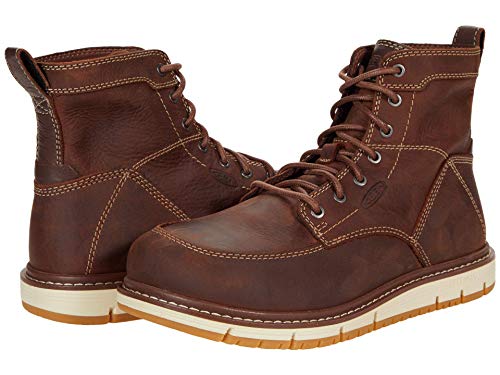
KEEN Utility Women's Flint 2 Mid Steel Toe Waterproof Work Boots Construction, Magnet/Vapor, 11

For framing, rough carpentry, and any construction role that involves active climbing, ladder work, and repeated direction changes, the KEEN Utility Women’s Flint II earns its place through the combination of KEEN’s asymmetric wide toe box — the widest in the work boot category — with a defined, stable heel platform for ladder grip and a steel toe that provides the maximum impact resistance for a role where heavy materials are handled overhead. The KEEN asymmetric toe box specifically accommodates afternoon forefoot swelling that narrows safety toe boots cannot: the wider interior geometry allows the foot to spread into available space as the shift progresses, rather than compressing against a toe cap that becomes painful as swelling occurs.

KEEN Utility Women's Flint 2 Mid Steel Toe Waterproof Work Boots Construction, Magnet/Vapor, 11

The non-waterproof construction is the correct summer choice for framing: breathability is the priority for an active role in outdoor summer heat. The KEEN.DRY waterproof option exists for wet-site framing but the non-WP version ventilates significantly better in dry summer conditions. Steel toe is the honest note to address for summer: as discussed in the thermal science section, steel conducts ambient heat from hot surfaces. For framing in 95°F weather with hot lumber and metal underfoot, composite toe would be the cooler choice. The Flint II’s steel toe is chosen here because it provides the maximum impact resistance for overhead lumber and materials handling — a framing-specific protection requirement — and for most framing environments the steel’s thermal conduction on lumber is less significant than on hot concrete.

KEEN Utility Women's Flint 2 Mid Steel Toe Waterproof Work Boots Construction, Magnet/Vapor, 11

KEEN Utility builds on a genuine women’s last across their work line. EH rated. The rubber outsole provides the defined heel edge that ladder contact requires — not a rounded heel that reduces ladder rung stability. The KEEN asymmetric toe is also the specific design that accommodates bunions and wide forefeet — women in construction who have struggled with toe box pressure in other brands consistently find KEEN’s geometry the solution. Sizing: KEEN typically runs slightly wide — consider your normal shoe size, but try a half size down if you have a narrow foot.

KEEN Utility Women's Flint 2 Mid Steel Toe Waterproof Work Boots Construction, Magnet/Vapor, 11

Summer Construction Specs

Toe: Steel — ASTM F2413 I/75 C/75 (note: conducts ambient heat)  |  EH Rated: ✅ Yes
Waterproof: ❌ (non-WP version — maximum breathability)  |  Breathability: ⭐⭐⭐⭐ Very Good
Toe box: KEEN asymmetric wide — accommodates afternoon swelling  |  Women’s last: ✅ KEEN Women’s last
Insulation: None — summer appropriate  |  Break-in: 3–6 hours
✅ Best for: Framing · Rough carpentry · Ladder-heavy roles · Wide forefoot women

Pros: KEEN asymmetric wide toe box — best for afternoon swelling accommodation; EH rated; defined heel for ladder grip; women’s last; non-WP version excellent breathability.

Cons: Steel toe conducts ambient heat in sustained 90°F+ environments — composite preferred for concrete-heavy roles; KEEN toe box may be too wide for narrow-footed women.

Check Price on Amazon →

Best Concrete Standing / Summer Heat: Ariat Women’s Treadfast 6″ Steel Toe

ARIAT Women’s Treadfast 6” Waterproof Work Boot

Concrete work presents the most demanding combination of summer heat challenges: the hardest standing surface (concrete conducts cold and retains heat, pressing directly against the boot’s outsole for hours), the hottest underfoot environment (summer concrete in direct sun reaches 150°F+), and the most sustained static standing posture that accelerates lower extremity fatigue and foot swelling. The Ariat Women’s Treadfast addresses this with a specific focus on anti-fatigue midsole performance and durable waterproof construction that handles the concrete washdowns that are routine on flatwork construction sites. The Ariat ATS-based comfort system provides the cushioning depth that sustained concrete standing demands.

ARIAT Women’s Treadfast 6” Waterproof Work Boot

The steel toe carries ASTM F2413 I/75 C/75 certification. For concrete work specifically, composite toe would be the summer-preferred choice for thermal insulation against hot concrete — if your site’s requirements allow composite, the composite-toe Treadfast variant is worth considering. EH rated for electrical hazard protection across mixed trade environments. The waterproof construction handles the concrete washdowns and standing water that flatwork sites commonly involve. Ariat’s women’s work line uses a confirmed women’s last — the Treadfast provides the heel lockdown that prevents the Achilles friction that ruins long standing shifts.

ARIAT Women’s Treadfast 6” Waterproof Work Boot

The summer protocol for concrete work specifically: rotate insoles at lunch if possible — remove the insole, set it on a dry surface for 15–20 minutes, and it releases a significant portion of the morning’s accumulated moisture. This single mid-shift action reduces the afternoon heat-and-wet cycle that makes concrete standing increasingly miserable as the shift progresses. The removable insole on the Treadfast enables this protocol. The ATS midsole provides the sustained-standing support that maintains proper arch engagement through the full shift — not just the first four hours.

ARIAT Women’s Treadfast 6” Waterproof Work Boot

Summer Construction Specs

Toe: Steel — ASTM F2413 I/75 C/75 (composite variant available)  |  EH Rated: ✅ Yes
Waterproof: ✅ Yes — for concrete washdowns  |  Breathability: ⭐⭐⭐ Good (waterproof trade-off)
Midsole: Ariat ATS anti-fatigue  |  Women’s last: ✅ Ariat Women’s
Removable insole: ✅ For mid-shift drying protocol  |  Break-in: 5–8 hours
✅ Best for: Concrete flatwork · Sustained standing · Summer construction with washdown sites

Pros: ATS anti-fatigue midsole specifically suited to sustained concrete standing; waterproof for washdown sites; women’s last; EH rated; removable insole for mid-shift drying protocol.

Cons: Steel toe conducts concrete heat — consider composite variant for extreme heat environments; waterproof membrane reduces breathability vs. non-WP alternatives.

Check Price on Amazon →

Best Electrical / EH Summer: Timberland PRO Women’s Titan EV Composite Toe

Timberland PRO Women's Titan EV Oxford Composite Safety Toe Industrial Casual Work Shoe, Medium Brown Full Grain, 5.5 Medium

The Timberland PRO Women’s Titan EV is the correct electrical trade boot for summer: composite toe is non-metallic (mandatory for many electrical sites with metal detector access control), EH rated for electrical hazard protection, and the Titan EV’s construction provides the all-day anti-fatigue performance that electrical and HVAC work demands across mixed indoor and outdoor environments in summer heat. Timberland PRO’s Titan line has long been the standard specification in electrical trades for its reliability on EH certification and its durability under mixed site conditions.

Timberland PRO Women's Titan EV Oxford Composite Safety Toe Industrial Casual Work Shoe, Medium Brown Full Grain, 5.5 Medium

The composite toe provides the full summer advantage: no thermal conduction from ambient heat, no metal detector triggering, ASTM F2413 I/75 C/75 certified for impact and compression protection. For electrical work specifically, composite is not just a preference — it is the correct specification for sites where metallic toe caps are prohibited for electrical safety reasons, in addition to the metal detector access argument. EH rated. The EVA midsole delivers anti-fatigue cushioning for the mixed standing, climbing, and active movement that electrical installation requires across a full day. Waterproof construction manages the mixed indoor-outdoor summer conditions that electrical work involves.

Timberland PRO Women's Titan EV Oxford Composite Safety Toe Industrial Casual Work Shoe, Medium Brown Full Grain, 5.5 Medium

Timberland PRO Women’s construction uses a women’s last confirmed across the Titan Women’s series. The boot provides a professional black appearance that satisfies most electrical contractor uniform requirements. Break-in for the leather upper is moderate — plan 5–8 hours of shorter wear before your first full shift. Sizing: Timberland PRO Women’s runs true to size; size half up if you have wide forefeet or experience significant afternoon swelling on long hot shifts.

Timberland PRO Women's Titan EV Oxford Composite Safety Toe Industrial Casual Work Shoe, Medium Brown Full Grain, 5.5 Medium

Summer Construction Specs

Toe: Composite — ASTM F2413 (non-metallic, passes detectors, thermally insulating)  |  EH Rated: ✅ Yes
Waterproof: ✅ Yes  |  Breathability: ⭐⭐⭐ Good (waterproof trade-off)
Women’s last: ✅ Timberland PRO Women’s  |  Break-in: 5–8 hours
Insulation: None — summer appropriate
✅ Best for: Electrical trades · HVAC · Any EH-priority summer construction

Pros: Composite toe mandatory-spec for many electrical sites; EH certified; non-metallic passes metal detectors; Anti-Fatigue midsole; women’s last; professional appearance.

Cons: Waterproof membrane reduces breathability in dry summer heat; 5–8 hour leather break-in required.

Check Price on Amazon →

Best Landscaping / Outdoor Grounds: Merrell Women’s Moab 3 Mid Waterproof

Merrell Women's Moab 3 Mid Wp Hiking Boots, New Monument/Fuchsia, 8, M, US

Landscaping and grounds maintenance presents a different summer footwear requirement from construction site work: the terrain is varied (wet grass, loose soil, gravel paths, paved areas), the step count is high (landscape crews cover significant daily mileage), and the primary hazards are terrain-related (ankle roll on uneven ground, slip on wet surfaces) rather than falling objects. The Merrell Women’s Moab 3 Mid WP is the hiking-boot-meets-work-boot hybrid that addresses this profile precisely: Merrell’s trail-proven outsole and midsole technology in a waterproof construction that handles morning dew and irrigation systems, with an aggressive Vibram outsole for outdoor terrain grip that a standard construction boot cannot match.

Merrell Women's Moab 3 Mid Wp Hiking Boots, New Monument/Fuchsia, 8, M, US

The Moab 3 is not a safety-toe boot — it is a protective work boot for environments where falling object risk is lower and terrain variability is higher. For landscaping, groundskeeping, nursery work, and outdoor grounds maintenance, the absence of a safety toe is appropriate when the role does not involve working near overhead heavy materials or machinery with crush hazards. Confirm your employer’s PPE requirements before selecting a soft-toe option. Merrell DRY waterproofing keeps feet dry through morning dew, irrigation spray, and wet terrain without the full concrete-site waterproofing demands. The Vibram TC5+ outsole grips wet grass, loose soil, and mixed outdoor terrain significantly better than the flat or shallow-lug construction site outsoles that are optimised for concrete and hard pack.

Merrell Women's Moab 3 Mid Wp Hiking Boots, New Monument/Fuchsia, 8, M, US

The mid-cut height provides ankle support for uneven outdoor terrain — the ankle roll risk that flat ground construction workers rarely face is a daily reality for grounds maintenance workers navigating slopes, garden edges, and uneven turf. Merrell’s women’s construction uses a women’s-specific last with proper heel lockdown — important for the active walking that grounds maintenance involves, where heel slippage accumulates across miles of daily movement in a way that standing site workers experience less. The breathable mesh lining and removable insole support the summer comfort system. Sizing: Merrell runs true to women’s sizing.

Merrell Women's Moab 3 Mid Wp Hiking Boots, New Monument/Fuchsia, 8, M, US

Summer Construction Specs

Toe: Soft toe (no safety cap — confirm PPE requirements)  |  EH Rated: — (not rated)
Waterproof: ✅ Merrell DRY  |  Breathability: ⭐⭐⭐⭐ Good
Outsole: Vibram TC5+ — best outdoor terrain grip in guide  |  Women’s last: ✅ Merrell Women’s
Mid-cut: ✅ Ankle support for uneven outdoor terrain  |  Break-in: 2–4 hours
✅ Best for: Landscaping · Grounds maintenance · Nursery · Outdoor high-step-count roles without overhead crush hazard

Pros: Vibram TC5+ outsole — best outdoor terrain grip in guide; waterproof for wet outdoor conditions; mid-cut ankle support; women’s last; lightweight hiking-boot comfort for high step counts.

Cons: Soft toe — not for sites with falling object hazards; no EH rating; confirm safety requirements before selecting.

Check Price on Amazon →

Best Wide Toe Box / Maximum Ventilation: KEEN Utility Women’s Atlanta Cool Low Steel Toe

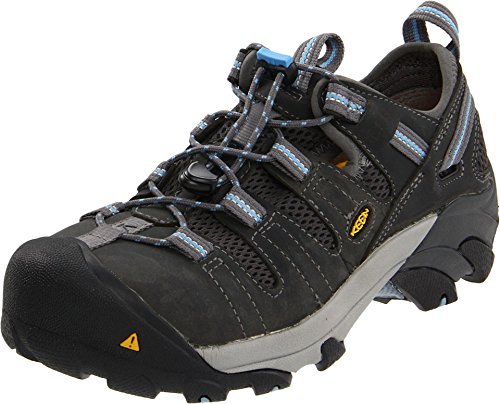
KEEN Utility Women's Atlanta Cool Low Steel Toe ESD Work Shoe, Gargoyle/Gargoyle, 8 Wide US

The KEEN Utility Women’s Atlanta Cool Low is the summer-specialist in the KEEN Utility Work line — the model specifically designed for hot indoor work environments where maximum ventilation is the primary requirement. The mesh upper provides near-maximum airflow for a safety-rated work shoe, and the low-cut athletic silhouette reduces the shaft material that traps heat around the ankle and lower leg. The Atlanta Cool’s design brief is explicitly summer heat management: the name is not marketing, it is a functional specification. For tradeswomen in warehouse, manufacturing, assembly, and light industrial environments where summer HVAC may be limited and the working day involves sustained indoor heat, the Atlanta Cool’s ventilation profile is the correct answer.

KEEN Utility Women's Atlanta Cool Low Steel Toe ESD Work Shoe, Gargoyle/Gargoyle, 8 Wide US

KEEN’s asymmetric wide toe box is present in the Atlanta Cool — accommodating afternoon swelling in the same way it does in the Flint II. Steel toe ASTM F2413 certified. EH rated. The wide toe box is the specific solution for women who experience the afternoon compression that progressively narrows safety toe boots impose on swelling forefeet through the second half of a hot shift. Non-waterproof construction maximises ventilation — the correct choice for clean indoor environments where water is not a hazard. The non-slip outsole handles polished industrial floors, smooth concrete, and the mixed hard surfaces of indoor manufacturing and assembly environments.

KEEN Utility Women's Atlanta Cool Low Steel Toe ESD Work Shoe, Gargoyle/Gargoyle, 8 Wide US

KEEN Utility Women’s uses a confirmed women’s last. The low-cut silhouette is important for indoor industrial environments where a tall shaft is unnecessary for debris protection and adds heat and weight without benefit. For outdoor construction sites with debris, standing water, or terrain variation, the low-cut is the wrong choice — the Flint II (6″ height) or Vista Energy Lo (Pick 10) provide more appropriate coverage. The Atlanta Cool is specifically for clean indoor environments in summer heat. Sizing: KEEN runs slightly wide; narrow-footed women may find it loose.

KEEN Utility Women's Atlanta Cool Low Steel Toe ESD Work Shoe, Gargoyle/Gargoyle, 8 Wide US

Summer Construction Specs

Toe: Steel — ASTM F2413 I/75 C/75  |  EH Rated: ✅ Yes
Waterproof: ❌ — maximum indoor ventilation  |  Breathability: ⭐⭐⭐⭐⭐ Best for indoor heat
Toe box: KEEN asymmetric wide — afternoon swelling accommodation  |  Women’s last: ✅ KEEN Women’s
Silhouette: Low-cut — minimum upper heat retention  |  Break-in: Minimal
✅ Best for: Indoor manufacturing · Assembly · Warehouse in summer heat · Wide forefoot women

Pros: Best summer indoor ventilation; KEEN wide asymmetric toe box; EH rated; women’s last; low-cut minimises upper heat; immediate comfort.

Cons: Low-cut not for outdoor debris or terrain; steel toe conducts ambient heat; not for wet outdoor environments.

Check Price on Amazon →

Best Budget Summer Safety Boot: Skechers Women’s Work Arch Fit SR Composite Toe

Skechers Work Arch Fit SREbinal Work Shoe Womens Oxford 8 BM US BlackGrey

The Skechers Women’s Work Arch Fit provides the most accessible price point for women needing ASTM-certified composite toe protection in summer — and it earns its budget recommendation on specific technical merits, not just price alone. The Arch Fit insole system is Skechers’ podiatrist-certified arch support technology, providing immediate out-of-box comfort that typically requires no break-in period. For women who purchase new work boots and begin wearing them immediately on a demanding shift — the most common new-boot mistake — the Arch Fit’s instant comfort is a genuine safety benefit. Composite toe is ASTM F2413 certified, non-metallic, and thermally non-conductive: the summer-correct toe specification at the lowest price point in this guide.

Skechers Work Arch Fit SREbinal Work Shoe Womens Oxford 8 BM US BlackGrey

The slip-resistant outsole provides the oil and water slip resistance that Skechers Work is known for in healthcare and food service environments — both surfaces that construction workers encounter in summer site conditions. Non-waterproof mesh upper maximises ventilation for hot summer conditions — the correct choice for indoor-primary roles and dry outdoor environments. The athletic construction provides immediate comfort in a women’s silhouette that accommodates normal women’s foot geometry. No EH rating on this model — verify your site’s electrical hazard requirements before purchasing; for EH-required environments, the Timberland PRO Titan EV (Pick 05) or Carhartt Rugged Flex (Pick 01) are the appropriate alternatives.

Skechers Work Arch Fit SREbinal Work Shoe Womens Oxford 8 BM US BlackGrey

The honest service life context for a budget athletic-construction work boot: cement construction at this tier typically delivers 10–14 months of daily work use before the midsole compression or outsole wear triggers replacement. For the first 10 months, the Arch Fit system provides genuine comfort. The trade-off of budget vs. premium is service life — not immediate performance. For women testing construction work boots for the first time, women in a transitional role, or budget-constrained workers who need ASTM certification without premium cost, the Skechers Work Arch Fit is the honest correct answer. Sizing: true to women’s standard sizing.

Skechers Work Arch Fit SREbinal Work Shoe Womens Oxford 8 BM US BlackGrey

Summer Construction Specs

Toe: Composite — ASTM F2413 (non-metallic)  |  EH Rated: ❌ Verify site requirement
Waterproof: ❌ — breathable mesh  |  Breathability: ⭐⭐⭐⭐ Very Good (mesh upper)
Arch support: Arch Fit (podiatrist-certified)  |  Women’s last: ✅ Women’s silhouette
Break-in: None  |  Service life: 10–14 months daily wear
✅ Best for: Budget-conscious tradeswomen · First work boot purchase · Indoor / dry summer sites

Pros: Most affordable ASTM composite toe in guide; podiatrist-certified Arch Fit insole; immediate comfort, no break-in; breathable non-WP mesh for summer; composite toe non-metallic.

Cons: No EH rating — verify site requirements; cement construction limits service life vs. welted alternatives; budget outsole rubber wears faster than premium compounds.

Check Price on Amazon →

Best Waterproof + Breathable: Danner Women’s Trail 2650 GTX

No products found.

For tradeswomen who need genuine waterproofing in summer — persistent wet conditions, regular stream crossings, wet Pacific Northwest summer construction, or logging and forestry environments — the Danner Women’s Trail 2650 GTX represents the waterproof + breathable combination at its best. Gore-Tex lining provides the gold-standard waterproof membrane alongside the best currently available breathability in a waterproof boot. Danner’s construction quality is among the best in outdoor and work footwear — their boots are built to be resoleable and last years rather than seasons. The Trail 2650’s hiking boot DNA delivers the kind of all-day comfort that sustained outdoor work demands.

No products found.

The soft toe — no safety cap — is the honest limitation to state upfront: the Danner Trail 2650 GTX is a protective outdoor work boot for environments where terrain and weather are the primary hazards, not falling objects or crush risk. For landscaping, forestry, grounds maintenance, park services, and outdoor field work in summer wet conditions, this is the correct choice. For construction sites with mandatory safety toe requirements, the Carhartt Rugged Flex (Pick 01) or Ariat Treadfast (Pick 04) with waterproofing are the appropriate alternatives. Confirm your site’s PPE requirements before choosing a soft-toe boot.

No products found.

The Gore-Tex membrane is the best performing waterproof + breathable technology available — significantly better breathability than most proprietary waterproof membranes at the same waterproofing level. For summer wet-environment work where both dry feet AND non-swamp-hot feet are required, Gore-Tex is the correct specification. Danner’s women’s construction uses a women’s-specific last. The Vibram outsole provides outdoor terrain grip for the mixed surfaces of outdoor summer work. Sizing: Danner runs true to size in women’s; consider half up if you have wide feet or plan extended summer use with swelling.

No products found.

Summer Construction Specs

Toe: Soft toe — no safety cap (confirm PPE requirements)  |  EH Rated:
Waterproof: ✅ Gore-Tex — best breathable waterproof membrane  |  Breathability: ⭐⭐⭐⭐ Best WP option in guide
Outsole: Vibram — outdoor terrain grip  |  Women’s last: ✅ Danner Women’s
Break-in: 3–5 hours  |  Best environment: Wet outdoor summer roles
✅ Best for: Landscaping · Forestry · Outdoor field work · Wet Pacific Northwest summer conditions

Pros: Gore-Tex — best breathable waterproof membrane available; Vibram outdoor terrain outsole; Danner construction quality; women’s last; best WP + breathable combination in guide.

Cons: Soft toe — not for sites with falling object hazards; no EH rating; premium price for non-safety-toe boot.

Check Price on Amazon →

Best Low-Cut / Shoe Silhouette: KEEN Utility Women’s Vista Energy Lo Steel Toe

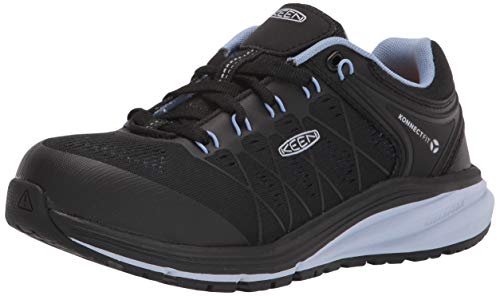
KEEN Utility Women's Vista Energy Low Height Sneakers Composite Toe Industrial Work Shoes, Hydrangea/Black, 8

The KEEN Utility Women’s Vista Energy Lo is the safety shoe silhouette designed specifically for indoor industrial and light construction environments where ankle-height boot shafts are unnecessary overhead and the lower-cut design provides superior summer ventilation by eliminating the shaft material that retains heat against the ankle and lower leg. For warehouse workers, assembly line roles, indoor construction finishing, and any environment where the boot-height coverage of a 6″ construction boot is not needed, the low-cut Vista Energy Lo provides KEEN’s full safety specification — steel toe ASTM F2413, EH rated — in an athletic shoe profile that breathes significantly better than taller alternatives.

KEEN Utility Women's Vista Energy Low Height Sneakers Composite Toe Industrial Work Shoes, Hydrangea/Black, 8

KEEN’s asymmetric wide toe box is present in the Vista Energy Lo, accommodating afternoon swelling in summer heat. EH rated for electrical hazard environments — this is one of KEEN’s EH-rated construction footwear options in a low-cut profile, which is relatively rare in the market. Steel toe ASTM F2413 I/75 C/75 certified. The Energy outsole system provides comfort across long indoor shifts. For summer industrial work where the primary complaints are hot feet and fatigue, the low-cut design directly addresses the thermal retention problem while the KEEN cushioning system addresses the fatigue problem.

KEEN Utility Women's Vista Energy Low Height Sneakers Composite Toe Industrial Work Shoes, Hydrangea/Black, 8

The steel toe — like the Flint II — conducts ambient heat from the environment. In predominantly indoor environments with air conditioning or reduced direct sun exposure, this thermal conduction is less impactful than on hot outdoor construction concrete. For exclusively indoor summer use, the Vista Energy Lo’s steel toe is an adequate choice alongside the ventilation benefits of the low-cut silhouette. KEEN Utility Women’s construction confirmed women’s last. Sizing: KEEN typical — slightly wide; narrow-footed women should try a half size down.

KEEN Utility Women's Vista Energy Low Height Sneakers Composite Toe Industrial Work Shoes, Hydrangea/Black, 8

Summer Construction Specs

Toe: Steel — ASTM F2413 I/75 C/75  |  EH Rated: ✅ Yes
Waterproof: ❌ — maximum ventilation  |  Breathability: ⭐⭐⭐⭐⭐ Best low-cut option
Silhouette: Low-cut safety shoe  |  Toe box: KEEN asymmetric wide
Women’s last: ✅ KEEN Women’s  |  Break-in: Minimal
✅ Best for: Indoor industrial · Assembly · Warehouse · Light construction finishing in summer heat

Pros: Low-cut silhouette — best ankle ventilation in guide; EH rated safety shoe; KEEN wide toe box; women’s last; immediate comfort; ASTM certified.

Cons: Low-cut not for outdoor debris or terrain; steel toe conducts indoor ambient heat (less significant indoors than outdoor); not waterproof.

Check Price on Amazon →

The Summer Sock System: The $20 Upgrade That Transforms Any Boot

The sock matters as much as the boot for summer foot health — and most workers are wearing exactly the wrong sock for summer construction.

What not to wear: Cotton socks. Cotton absorbs moisture, retains it against the skin, and provides zero insulation when wet. In summer work conditions, a cotton sock is wet, hot, and blister-generating by mid-morning.

What to wear: Lightweight merino wool (Darn Tough, Smartwool work line). Merino wool at 150–200 gsm wicks moisture away from the skin surface, dries rapidly, provides mild temperature regulation in both hot and cool conditions, and resists odour that synthetic materials accumulate. For summer specifically: the thin merino liner sock weight — not the padded hiking sock weight.

The two-pair system: Carry a clean pair in your work bag or vehicle. At lunch, swap the morning pair for the dry pair. The morning pair air-dries during the afternoon half of the shift and is ready for tomorrow. This single practice eliminates the afternoon hot-wet foot cycle that is responsible for most summer work boot discomfort.

Heat Illness Prevention: Boots, Hydration, and the Mid-Shift Sock Swap Protocol

OSHA records consistently show that heat-related illness peaks in summer construction and outdoor industrial work. Footwear plays a specific role in heat illness risk that most safety guides never address: the foot contains a dense network of blood vessels used for heat dissipation. When footwear traps heat around the foot, this thermoregulation mechanism is compromised, contributing to elevated core body temperature.

The practical heat management protocol for summer construction footwear:

  • Choose non-waterproof breathable boots on dry sites — sealed boots prevent foot thermoregulation, contributing to heat buildup.
  • The mid-shift sock swap — at lunch, remove boots, swap socks, and allow feet 5–10 minutes of air exposure. This resets foot temperature and removes accumulated sweat before the afternoon accumulation begins. Workers who do this consistently report measurably better afternoon comfort and reduced heat exhaustion symptoms.
  • Use the insole drying opportunity — remove the insole during the lunch break and let it air separately from the boot. A dry insole in the afternoon half of the shift provides meaningfully better ventilation than a saturated one.
  • Hydration connection — the same conditions creating hot feet accelerate total body dehydration. Sweat production from active summer construction can reach 1–2 litres per hour. Electrolyte replacement (not just water) is required to replace what summer footwear-accelerated sweating removes.

Insole Upgrade Guide for Summer: Arch Support Without Added Heat

The factory insole in most work boots is the first component to fail — compressing by 4–6 months under daily use, losing its arch support and cushioning long before the boot’s outsole or upper shows visible wear.

For summer specifically, the insole upgrade has a ventilation dimension: perforated or foam-channel insoles move air beneath the foot more effectively than solid EVA insoles, contributing to the overall ventilation system of the boot.

Best summer work insole picks: Superfeet Work (firm arch support, low-profile, fits most work boots without crowding the toe box — specifically recommended for plantar fasciitis and flat arch workers); Currex WorkPro (medium arch, perforated for ventilation, designed specifically for work boot use); Ariat footbed replacement (women’s-specific arch positioning for boots with excessive insole compression). Replace at the first sign of flattening — proactive replacement at 4–5 months is significantly cheaper than replacing the entire boot.

Boot Care in Summer: Sweat Management and Service Life Extension

Daily: Remove insoles every day and let both boot and insole dry separately at room temperature. Never close boots in a bag or locker with wet insoles inside — fungal growth and midsole degradation follow.

Odour management: A light spray of 70% isopropyl alcohol on the interior of the boot after removing the insole kills odour-causing bacteria without damaging the lining. More effective than deodorising sprays, which mask rather than eliminate.

Leather conditioning: In summer, apply leather conditioner every 6–8 weeks to prevent the surface cracking that UV exposure and heat accelerate. On waterproofed leather, use wax-based conditioners that are compatible with waterproof membranes — not oil-based (mink oil, neatsfoot oil) which degrade Gore-Tex and synthetic membranes.

Drying protocol: Never apply direct heat — radiators, boot dryers, direct sun. Heat drying degrades waterproof membranes, loosens adhesive bonds, and accelerates midsole compression. Air dry at room temperature with tongue extended and insoles removed.

FAQ — 8 Summer-Specific Women’s Construction Boot Questions

Do I need waterproof work boots in summer construction?

It depends on your specific site conditions. In dry summer climates or predominantly indoor roles: a non-waterproof breathable boot keeps feet cooler and drier than a sealed waterproof boot because perspiration can evaporate rather than accumulating inside a sealed membrane. In wet summer conditions — persistent rain, concrete washdown sites, standing water — waterproof remains the correct choice. The summer waterproof paradox: all waterproof membranes limit breathability, so a waterproof boot in sustained summer heat will generate a hot, wet interior even as it blocks outside water. Choose based on your actual site conditions, not the default “always buy waterproof” advice.

Is composite toe better than steel toe for hot weather construction?

Yes, for two reasons. First, composite toes are non-conductive — they do not absorb ambient heat from hot concrete, steel, and metal surfaces the way steel toes do, keeping the toe box interior cooler throughout the shift. Second, composite toes are non-metallic — they pass metal detectors and are the mandatory specification at many electrical and government construction sites. The protection level is identical (both ASTM F2413 I/75 C/75). For summer construction specifically, composite is the correct choice in any hot environment.

Why do my work boots make my feet so hot in summer?

The primary causes: (1) waterproof membrane sealing perspiration inside the boot rather than allowing it to evaporate; (2) leather-dominant upper with minimal mesh preventing air circulation; (3) compressed insole retaining moisture from previous shifts; (4) steel toe cap absorbing ambient heat from hot surfaces. The fixes: choose non-waterproof breathable uppers for dry sites, replace the insole when it compresses, use the mid-shift sock swap protocol, and choose composite over steel toe in sustained heat environments.

What is a genuine women’s last and why does it matter for construction boots?

A last is the 3D mold around which a boot is constructed. A genuine women’s last accounts for women’s actual foot anatomy: narrower heel relative to forefoot width, arch positioned further forward, lower ankle bone position. A men’s boot in a women’s size addresses only length — leaving the heel cup too wide (causing slippage and blisters), arch support positioned behind the actual arch (useless), and toe box proportioned for men’s geometry. The 2025 OSHA PPE-fit update (29 CFR 1926.95) requires that safety footwear properly fit each employee — a boot on the wrong last does not properly fit and may not be compliant regardless of its ASTM certifications.

Can I claim properly fitting safety boots from my employer under OSHA rules?

Yes. OSHA’s January 2025 update to 29 CFR 1926.95(c) explicitly requires that PPE must properly fit each individual employee. You can request properly fitting women’s safety footwear from your employer, citing 29 CFR 1926.95(c). An employer who provides only men’s boots in women’s sizes when properly fitting women’s alternatives exist may be in violation. Document your request in writing and cite the specific regulation.

Why do my work boots fit fine in the morning but hurt by afternoon in summer?

Feet swell 8–12% in volume during active summer work from sustained standing, heat-driven vasodilation, and fluid accumulation. Women may experience additional swelling (5–8% extra) during the luteal phase of the menstrual cycle. A boot that fits at 8 AM may be compressing the forefoot against the safety toe cap by 2 PM. Solutions: try boots on in the afternoon, wear your actual work socks during try-on, size half up for summer use, choose wide toe box designs (KEEN asymmetric), and lace with room for forefoot expansion.

What socks should women wear in work boots in summer?

Lightweight merino wool (150–200 gsm weight — Darn Tough lightweight, Smartwool work line). Merino wicks moisture off the skin, dries rapidly, regulates temperature, and resists odour. Not cotton — cotton retains moisture and provides no wet insulation. Carry a spare pair for the mid-shift sock swap at lunch, which is the single most effective action for afternoon summer foot comfort.

How do I keep my feet cool in steel-toe work boots on a hot summer construction site?

In order of impact: (1) If site allows, switch to composite toe — it does not conduct ambient heat from hot surfaces the way steel does; (2) Choose non-waterproof breathable upper if site conditions permit — sealed membranes trap heat; (3) Perform the mid-shift sock swap — dry socks at lunch and brief air exposure reset foot temperature; (4) Replace your insole — compressed insoles retain moisture and reduce ventilation; (5) Air dry boots overnight with insoles removed — wet boots from yesterday’s shift compound today’s heat problem from the first hour.

Final Verdict: Best Women’s Work Boot for Construction in Summer by Trade

Trade / Condition → Best Summer Pick

General construction, mixed wet/dry summer conditions: Carhartt Women’s Rugged Flex 6″ WP CT — women’s last, composite toe, waterproof, EH

Maximum breathability / dry summer sites: Timberland PRO Women’s Reaxion CT — non-WP mesh, composite toe, Anti-Fatigue midsole

Framing / rough carpentry / ladder work: KEEN Utility Women’s Flint II ST — wide toe box, defined heel, ankle support, EH

Concrete flatwork / sustained standing: Ariat Women’s Treadfast 6″ ST — ATS anti-fatigue, waterproof, women’s last, EH

Electrical / HVAC / EH priority: Timberland PRO Women’s Titan EV CT — composite non-metallic, EH, passes detectors, women’s last

Landscaping / outdoor grounds / high step count: Merrell Women’s Moab 3 Mid WP — Vibram outsole, waterproof, ankle support, women’s last

Wide forefoot / afternoon swelling accommodation: KEEN Utility Women’s Atlanta Cool Low ST — widest toe box, indoor ventilation, EH

Budget / first work boot / test purchase: Skechers Women’s Work Arch Fit SR CT — Arch Fit system, composite, mesh breathability

Wet summer outdoor conditions / Gore-Tex: Danner Women’s Trail 2650 GTX — Gore-Tex best WP + breathable, Vibram, women’s last

Indoor industrial / assembly / shoe silhouette: KEEN Utility Women’s Vista Energy Lo ST — low-cut maximum ventilation, EH, wide toe box

The 2025 OSHA update gave women the legal backing to demand boots that actually fit. The boots in this guide deliver on that promise: verified women’s lasts, summer-appropriate composite toes, and the breathability science to keep feet functional through a 10-hour summer shift. Know your trade, know your site conditions, and buy the boot that solves your specific problem — not the generic recommendation that ignores that summer and construction are a genuinely specific combination.