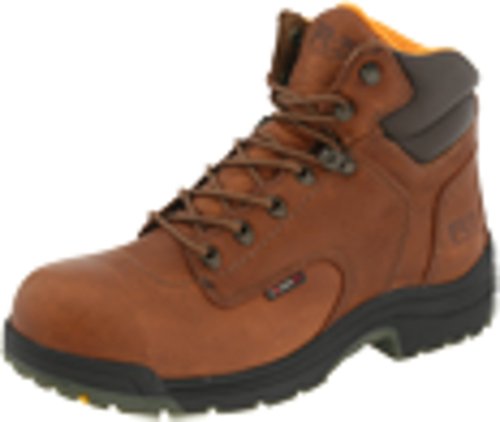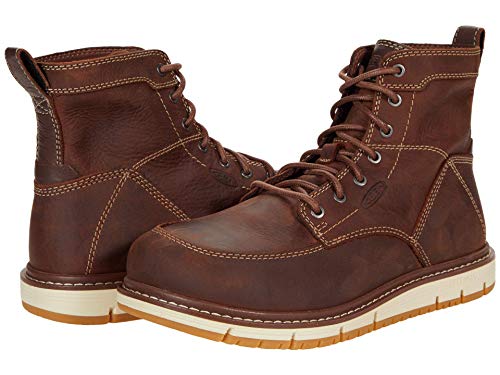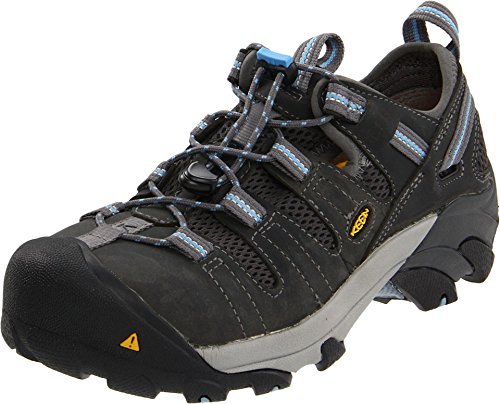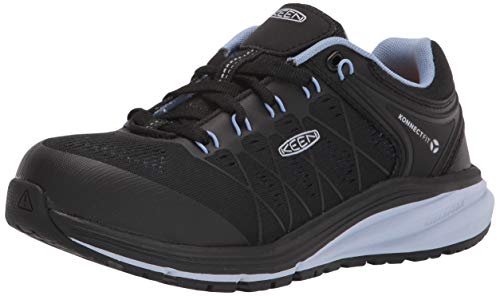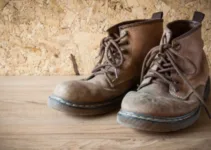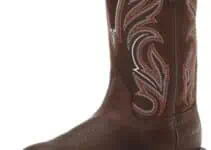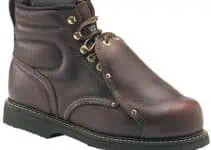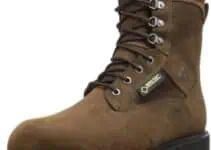

High-quality women's work boots ideal for construction sites, offering safety, durability, and comfort for summer work conditions. Perfect for outdoor construction projects.

Best Women’s Work Boots for Construction in Summer (2026)

Here is the honest problem: most boots sold as “women’s construction boots” are men’s boots built on a smaller last, repainted, and marketed to women. The heel is too wide, the arch hits in the wrong place, and the toe box is shaped for men’s narrower forefoot geometry. That is uncomfortable in January. In August on a concrete slab in 95Β°F heat, it becomes a genuine daily injury risk.

Summer adds four compounding problems to an already under-served category. Steel toes conduct ambient heat directly to your toes throughout the day. Heavy full-leather uppers trap sweat and raise core body temperature. Waterproof membranes seal in the moisture your feet produce faster than they can expel it. And heat-driven foot swelling turns a boot that fit at 8 AM into a vice by 2 PM.

This guide solves all four. Every boot below is on a genuine women’s last or carries a women’s-specific version, carries verified ASTM F2413 safety certification, and is selected specifically for summer construction conditions. You will also get the sections no competing article has written: the 2025 OSHA women’s PPE fit mandate, composite vs. steel in summer heat science, a trade-specific picker, and the sock-boot system that makes the difference between comfortable feet and a blister problem by shift’s end.

Β 

Quick Comparison: Best Women’s Work Boots for Construction in Summer

Boot Best For Toe Type ASTM / EH Upper Women’s Last Price
KEEN Utility San Jose 6β€³ Best overall Alloy F2413 EH Leather/Mesh hybrid Yes (Women’s) ~$150–$175
Carhartt Rugged Flex 6β€³ Women’s ST Framing / heavy construction Steel F2413 EH Full-grain leather Yes β€” genuine women’s last ~$110–$145
Wolverine Overpass 6β€³ CT WP Electricians / EH required Composite F2413 EH Leather, waterproof Women’s available ~$110–$140
Merrell Work Moab 3 Mid WP Lightweight / high step count Soft / Safety toe Verify listing Leather/mesh, Merrell DRY Women’s version ~$130–$155
KEEN Utility Vista Energy Lo Best breathable / dry hot sites Steel F2413 EH Leather/mesh β€” open mesh zones Yes (Women’s) ~$120–$150
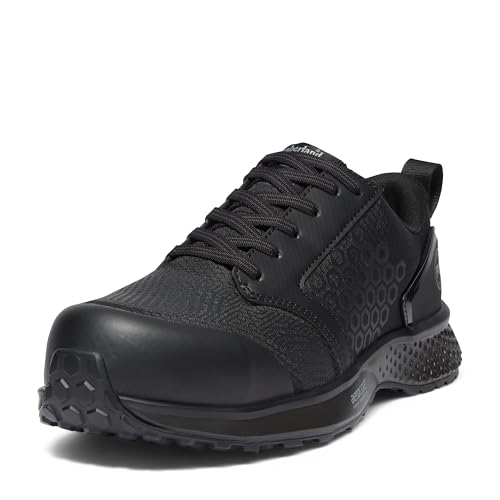
Timberland PRO Reaxion Athletic / finishing trades Composite F2413 EH Synthetic/mesh β€” athletic Women’s available ~$130–$165
Merrell Moab Vertex Mid Site supervisors / dual-role Composite F2413 Leather/mesh β€” 4.5β€³ height Women’s version ~$150–$185
BRUNT Marin Welted CT Best composite value / resoleable Composite F2413 EH Full-grain leather, waterproof Women’s available ~$140–$165
Ariat Treadfast 6β€³ Steel Toe Concrete / chemical resistance Steel F2413 EH Full-grain leather Women’s available ~$120–$145
KEEN Utility Flint II Steel Toe Best budget / wide fit Steel F2413 EH Leather, KEEN.DRY Yes β€” wide toe box ~$120–$150

The 2025 OSHA Women’s PPE Fit Requirement: Your Rights on the Jobsite

Woman in safety gear on construction site

Understanding the 2025 OSHA Women’s PPE Fit Requirement.

In January 2025, OSHA clarified enforcement of 29 CFR 1926.95(c), making explicit that personal protective equipment β€” including safety footwear β€” must properly fit each affected employee. This was a direct response to decades of women in construction wearing boots that were simply men’s models scaled to smaller sizes, a practice that creates documented hazards: improperly-fitting safety footwear causes heel slippage, arch fatigue, and toe cramping that changes how workers walk, increasing trip and sprain risk over a shift.

The practical implications for women in construction are significant. Your employer is responsible for ensuring your safety footwear properly fits your anatomy. If your employer provides only one unisex or men’s boot option in smaller sizes, you now have regulatory backing to request women’s-specific safety footwear. Document the request in writing. If the employer fails to provide properly-fitting PPE after a documented request, that creates employer liability under OSHA’s PPE standards.

What “properly fitting” means for construction footwear under this standard: your heel must seat fully in the heel cup with minimal slippage; the safety toe cap must not press directly against your toes when standing; the boot shaft must secure the ankle without constricting circulation; and the overall fit must allow normal gait without compensation. A boot that causes you to walk differently to avoid pain is an improperly-fitting boot β€” and under the 2025 OSHA update, providing it is an employer’s compliance problem.

Note that this regulation applies specifically to employer-provided PPE. Whether your employer provides boots or requires you to purchase your own depends on your union agreement, employer policy, and whether the boots are site-specific (like metatarsal guards) vs. general safety boots that can be worn off-site. Verify with your site safety officer or union representative.

Genuine Women’s Last vs. Resized Men’s Boot: The Most Important Distinction in This Guide

A boot built on a genuine women’s last is engineered around female foot anatomy: a narrower heel cup, an arch that sits further forward to match women’s shorter arch length, different shaft geometry at the ankle, and a forefoot proportioned for the wider forefoot-to-heel ratio common in women’s feet. A “women’s” boot built on a resized men’s last has none of these adaptations β€” it is simply a men’s boot made smaller, with the same proportional errors carried through at a smaller scale.

The consequences in summer are amplified. As feet swell in heat, a heel cup that was already too wide for a women’s anatomy allows increasing slippage β€” which causes blisters at the Achilles and back heel. A misplaced arch creates forefoot overload that increases with every mile walked. A toe box proportioned for men’s narrower forefoot becomes progressively more cramping as feet swell to their afternoon maximum volume.

How to identify a genuine women’s last before purchasing: look for language like “women’s specific last,” “women’s last construction,” or a dedicated women’s product line with model names different from the men’s equivalent. Carhartt’s Women’s Rugged Flex line, KEEN’s women’s construction line, and Merrell’s women’s work boots are all built on genuine women’s lasts. Many no-name and budget brands simply list the same product in women’s sizing without any last modification β€” check reviews for mentions of heel slippage, arch problems, or fit issues from female buyers specifically.

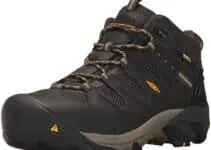
1. KEEN Utility San Jose 6β€³ β€” Best Overall for Summer Construction

KEEN Utility Men's San Jose 6' Soft Toe Waterproof Wedge Work Boots

Best for: Women in general construction, site work, and high-mobility trades who need full ASTM safety compliance with the best available summer breathability in a work boot.

ASIN B07RV2GZ21
Toe Type Alloy β€” lighter than steel, same ASTM I/75 C/75 protection
ASTM Rating F2413 I/75 C/75 EH β€” verify current Amazon listing
Waterproof Yes β€” KEEN.DRY membrane (women’s version available)
Upper Leather and mesh hybrid β€” mesh zones actively vent heat
Midsole LuftCell PU β€” lightweight, resists compression
Weight ~15 oz per boot β€” among the lightest safety boots available
Women’s Last Yes β€” women’s-specific version available
Sizing Note KEEN runs slightly large β€” check women’s sizing chart; size down half if between sizes
Price Range ~$150–$175
KEEN Utility Men's San Jose 6' Soft Toe Waterproof Wedge Work Boots

The KEEN San Jose earns its best-overall position through a combination that is genuinely rare in ASTM-rated women’s construction boots: 15 ounces per boot, a leather-and-mesh hybrid upper that actively vents heat through the mesh zones, and an alloy toe that delivers full ASTM I/75 C/75 protection without conducting ambient heat into the toe box the way steel does. On a 95Β°F site, the weight difference between a 15-oz athletic-construction boot and a 28-oz traditional leather work boot is felt as real fatigue reduction by hour six β€” and that weight difference compounds across a five-day summer work week into a meaningful occupational health advantage.

KEEN Utility Men's San Jose 6' Soft Toe Waterproof Wedge Work Boots

The LuftCell PU midsole is a genuine performance feature rather than a marketing claim β€” it is a lightweight polyurethane formulation engineered to resist the midsole compression that EVA foam boots suffer after 6 months of daily construction use. The KEEN.DRY membrane provides waterproof protection for rain and wet ground contact without the full bootie construction that Gore-Tex uses, maintaining more interior volume and breathability than a sealed waterproof boot. The asymmetric wide toe box follows women’s natural forefoot geometry, which reduces forefoot cramping as feet swell across a hot construction shift. KEEN’s women’s-specific version is built on a women’s last β€” not a resized men’s boot β€” making this the most anatomically appropriate pick in this guide for most women’s foot shapes.

Best trade match: General construction, site work, concrete delivery, landscaping, inspections, finishing β€” any summer construction role where mobility matters as much as protection.
Pros: Lightest ASTM-rated boot in this guide, alloy toe doesn’t heat-conduct like steel, mesh hybrid upper vents actively, KEEN.DRY maintains volume, genuine women’s last, no break-in period.
Cons: Mesh upper is less durable than full-grain leather in abrasive environments (keep brush clean to maintain airflow). Not the best choice for heavy welding sparks or heavy falling object environments.

Check Price on Amazon β†’

2. Carhartt Rugged Flex 6β€³ Women’s Steel Toe β€” Best for Framing and Heavy Construction

Carhartt Rugged Flex 6” Composite Toe Work Boots for Women - Lightweight, Moisture-Wicking, and Cushioned Comfort, Brown - 9 M/W

Best for: Women in framing, rough carpentry, roofing, and heavy construction where full-grain leather protection and ankle support are non-negotiable, even in summer heat.

ASIN B00T4ZR1BI
Toe Type Steel toe β€” ASTM F2413 I/75 C/75
ASTM Rating F2413 I/75 C/75 EH
Waterproof No β€” water-resistant leather upper
Upper Full-grain leather
Key Summer Feature FastDry moisture-wicking lining β€” moves sweat away from skin
Key Construction Feature Rugged Flex articulated sole β€” bends naturally with foot during climbing, kneeling
Women’s Last Yes β€” genuine Carhartt women’s last, not a resized men’s boot
Sizing Note Carhartt women’s runs true to size
Price Range ~$110–$145
Carhartt Rugged Flex 6” Composite Toe Work Boots for Women - Lightweight, Moisture-Wicking, and Cushioned Comfort, Brown - 9 M/W

Framing in summer is one of the most physically demanding and foot-hazardous environments a woman can work in: nail gun debris underfoot, heavy lumber that falls, ladders, and concrete subfloor contact throughout the day. This environment demands full-grain leather protection and a 6-inch shaft for ankle coverage β€” and those requirements exist whether it is January or July. The Carhartt Women’s Rugged Flex meets those requirements while addressing the summer problem through the FastDry moisture-wicking lining, which is the most effective anti-sweat technology available in a full-grain leather construction boot at this price point. Rather than simply venting heat out (which requires mesh zones that reduce durability), FastDry actively pulls sweat away from the skin so it can evaporate through the lining β€” your feet stay drier even when the boot exterior runs warm.

Carhartt Rugged Flex 6” Composite Toe Work Boots for Women - Lightweight, Moisture-Wicking, and Cushioned Comfort, Brown - 9 M/W

The Rugged Flex articulated construction is the other key feature for framing women: flexible zones built into the sole allow the boot to bend naturally when climbing ladders, kneeling on plywood, or crouching in tight framing spaces. Traditional rigid construction work boots fight your movement and accelerate fatigue; the Rugged Flex moves with you. This is particularly important during summer heat when muscular fatigue from fighting stiff footwear compounds the fatigue from heat exposure itself. Built on a genuine Carhartt women’s last with a properly-positioned arch and narrower heel cup, this boot fits female foot anatomy β€” not a smaller version of a man’s foot.

Best trade match: Framing, rough carpentry, roofing, structural steel, any role with nail/puncture hazards and demand for full ankle protection.
Pros: Genuine women’s last, FastDry lining for summer sweat management, Rugged Flex for active mobility, full ASTM compliance including EH, proven Carhartt durability.
Cons: Full-grain leather runs warmer than mesh hybrid β€” the best summer option in full-leather, but will still be warmer than picks 1 and 5. Not waterproof β€” treat leather regularly for wet-site conditions.

Check Price on Amazon β†’

3. Wolverine Overpass 6β€³ Composite Toe WP β€” Best for Electricians

Wolverine Men'sOverpass 6' Mid Composite Toe Waterproof Work Boot, Summer Brown, 9.5 Medium

Best for: Women electricians, HVAC technicians, and utility workers where EH-rated composite toe is required β€” the cooler, lighter, non-conductive safety toe choice for summer electrical work.

ASIN B01MU1VO3P
Toe Type Composite β€” non-metallic, non-conductive, ASTM I/75 C/75
ASTM Rating F2413 I/75 C/75 EH β€” verify current Amazon listing
Waterproof Yes β€” full waterproof membrane
Upper Leather β€” ContourWelt flexible construction
Summer Advantage Composite toe does not conduct ambient heat β€” critical for EH work in summer
Women’s Last Women’s version available β€” check listing
Sizing Note Wolverine runs slightly large β€” consider half size down
Price Range ~$110–$140
Wolverine Men'sOverpass 6' Mid Composite Toe Waterproof Work Boot, Summer Brown, 9.5 Medium

For women electricians, the EH (Electrical Hazard) rating is mandatory β€” and composite toe is the correct pairing for EH work, particularly in summer. Here is why: steel toe conducts heat from the environment. On a summer site, a steel toe cap heats from hot concrete underfoot, direct sun exposure, and ambient air temperature. Composite materials (fiberglass, Kevlar, carbon fiber) have thermal conductivity near zero β€” they are effective insulators that don’t transfer environmental heat into the toe box. The safety protection is identical: both steel and composite carry ASTM F2413 I/75 C/75 certification. But the thermal experience inside the toe box on a 95Β°F jobsite is meaningfully different.

Wolverine Men'sOverpass 6' Mid Composite Toe Waterproof Work Boot, Summer Brown, 9.5 Medium

The Wolverine Overpass adds the full trifecta required for outdoor electrical work: composite toe, EH rating, and genuine waterproof membrane β€” the combination that protects against wet ground, accidental live circuit contact, and foot impact hazards simultaneously. The ContourWelt construction gives the boot a degree of flexibility unusual for a waterproof safety boot at this price β€” it bends more naturally with the foot when climbing ladders, stepping over conduit, and crouching in mechanical rooms. The multi-directional lug outsole handles the mixed surfaces that electrical work requires: polished concrete, wet outdoor terrain, gravel, and asphalt.

Best trade match: Electricians, HVAC technicians, utility workers, anyone in EH-required environments on summer sites.
Pros: Composite toe runs cooler than steel in summer, full EH rating, waterproof for outdoor electrical work, ContourWelt flexibility for ladder and kneeling work, lighter than steel-toe equivalents.
Cons: Waterproof membrane runs warmer than non-waterproof on hot dry sites β€” justified when EH + wet conditions are both present. Wolverine runs large; size down half a step.

Check Price on Amazon β†’

4. Merrell Work Moab 3 Mid WP β€” Best for Lightweight / High Step Count

Merrell Men's Moab 3 Mid Waterproof Hiking Boot, New Boulder, 11

Best for: Women in construction roles that involve high daily step counts β€” site supervision, deliveries, inspections, general labour across large sites β€” where boot weight directly translates to end-of-day fatigue.

ASIN B0D97392TQ
Toe Type Safety toe (verify on listing β€” women’s version with steel or alloy)
Waterproof Yes β€” Merrell DRY breathable membrane
Outsole Vibram TC5+ β€” reliable grip on mixed surfaces
Midsole Air cushion heel + EVA β€” comfort-focused for walking
Removable Insole Yes β€” Kinetic Fit Base, orthotic-ready
Upper Leather and mesh β€” Merrell DRY sealed
Women’s Last Women’s version available
Sizing Note Merrell runs true to size
Price Range ~$130–$155
Merrell Men's Moab 3 Mid Waterproof Hiking Boot, New Boulder, 11

The Merrell Moab 3’s defining characteristic for summer construction is its athletic construction feel β€” it is built more like a trail running shoe than a traditional work boot, and on a summer jobsite where you are walking 8–12 miles across mixed surfaces, the difference in daily fatigue is meaningful. The Vibram TC5+ outsole delivers legitimate grip performance: the compound was specifically formulated for mixed-terrain reliability, and the heel brake controls descent speed on ramps, stairs, and sloped sites. The Merrell DRY membrane provides waterproof protection while maintaining more breathability than a full Gore-Tex bootie β€” important for summer sites where the objective is to minimize internal heat buildup without sacrificing waterproofing entirely.

Merrell Men's Moab 3 Mid Waterproof Hiking Boot, New Boulder, 11

The removable Kinetic Fit Base insole is orthotic-compatible β€” for women who use arch support or custom devices to manage flat feet or overpronation, the Moab 3 accommodates them without requiring the boot interior to be crammed with two insole layers. The air cushion heel provides shock absorption that specifically reduces the cumulative impact fatigue of walking on concrete and hardpack throughout a summer shift. This boot comes in a women’s version built on a women’s last, and the roomy toe box reduces the forefoot cramping that becomes significant as feet swell in afternoon heat.

Best trade match: Site supervisors, inspectors, tradeswomen covering large sites, any role where daily step count exceeds 8,000 steps on a summer construction site.
Pros: Athletic feel reduces fatigue on high-step-count days, Vibram TC5+ outsole, Merrell DRY maintains breathability, orthotic-ready, women’s version on women’s last.
Cons: Less ankle rigidity than a traditional 6β€³ work boot β€” not the right choice for heavy framing or rough carpentry. Verify safety toe spec on current Amazon listing before purchasing for ASTM-required sites.

Check Price on Amazon β†’

5. KEEN Utility Vista Energy Lo β€” Best Breathable Boot for Hot Dry Sites

KEEN Utility Vista Energy (Comp Toe) Vapor/Black 10.5 D (M)

Best for: Women working on outdoor construction sites in hot, dry climates β€” Southwest, high desert, Mountain West β€” where breathability is the primary priority and sustained rain or standing water are uncommon.

ASIN B08JPNVZCY
Toe Type Steel toe β€” ASTM F2413 I/75 C/75
ASTM Rating F2413 I/75 C/75 EH β€” verify current Amazon listing
Waterproof No β€” DWR treated; breathable-first design
Upper Leather and open mesh β€” mesh zones actively dump heat
Key Summer Feature Open mesh ventilation zones β€” the most breathable construction in this guide
Midsole KEEN.ReGEN β€” firm energy return
Women’s Last Yes β€” women’s-specific version
Sizing Note KEEN runs slightly large β€” size down half if between sizes
Price Range ~$120–$150
KEEN Utility Vista Energy (Comp Toe) Vapor/Black 10.5 D (M)

The KEEN Vista Energy Lo makes an explicit design trade that most work boot guides never acknowledge: it prioritizes breathability over waterproofing because, for workers in hot dry climates, that is the correct trade. On a Phoenix, Albuquerque, or Denver summer site, a waterproof membrane seals in sweat vapor faster than it exits β€” the result is wetter feet inside the boot than if the trail surface had reached them. The Vista’s open mesh zones allow genuine airflow: hot air and sweat vapor exit through the mesh; cool air enters. The steel toe and EH rating meet the same ASTM standard as every other boot in this guide β€” the safety performance is not compromised by the breathability focus.

KEEN Utility Vista Energy (Comp Toe) Vapor/Black 10.5 D (M)

The KEEN.ReGEN midsole provides firm, energy-returning cushioning that doesn’t collapse under sustained construction work the way soft EVA foam does. KEEN’s asymmetric wide toe box accommodates women’s natural forefoot geometry β€” the wider area near the big toe where most female construction boot cramping occurs. The low-cut design (Lo) reduces shaft material around the ankle, further reducing heat retention compared to 6β€³ alternatives. The DWR treatment on the leather zones sheds light rain and morning dew for the first 30–45 minutes of contact β€” sufficient for incidental wet exposure on a dry-climate summer site, though not for sustained rain or wet environments.

Best trade match: Outdoor construction in hot dry climates, Southwest and Mountain West sites, any role where sustained rain is not a daily variable and maximum breathability is the priority.
Pros: Most breathable construction in this guide, genuine women’s last, ASTM steel toe + EH, KEEN.ReGEN midsole, wide asymmetric toe box, lower cut reduces ankle heat retention.
Cons: Not waterproof β€” wrong choice for wet climates or trades with sustained water contact (plumbing, concrete work). Mesh zones require regular brushing to maintain airflow on dusty sites.

Check Price on Amazon β†’

6. Timberland PRO Reaxion β€” Best Athletic-Style Construction Boot

Timberland PRO Men's Reaxion Mid Soft Toe Waterproof Industrial Hiker Work Boot, Brown/Brown-2024 NEW, 10W

Best for: Women in finishing trades, light construction, and modern worksite environments who want ASTM-rated safety compliance in an athletic, lightweight boot that doesn’t feel like a traditional heavy work boot.

ASIN B0CLT1R54L
Toe Type Composite toe β€” ASTM F2413 I/75 C/75
ASTM Rating F2413 EH β€” verify current listing
Waterproof Verify on listing β€” breathable versions available
Upper Synthetic and mesh β€” athletic construction, highly breathable
Midsole Anti-fatigue footbed + EVA
Key Feature Sneaker-style composite toe β€” dramatically lighter and more breathable than leather Timberland PRO models
Women’s Last Women’s version available
Sizing Note Check women’s sizing chart β€” Timberland PRO women’s runs true to women’s sizing
Price Range ~$130–$165
Timberland PRO Men's Reaxion Mid Soft Toe Waterproof Industrial Hiker Work Boot, Brown/Brown-2024 NEW, 10W

The Timberland PRO Reaxion represents a genuine shift in work boot design philosophy: it is built on an athletic sneaker platform rather than a traditional work boot last, and carries composite toe, EH rating, and slip resistance into that lighter, more breathable construction. The synthetic and mesh upper provides far superior summer breathability than any of Timberland PRO’s full-leather models β€” the same brand, the same ASTM compliance, but a dramatically different thermal experience on a hot jobsite. The composite toe runs cooler than steel in summer (see the heat science section), reducing the toe-cramping and heat buildup that traditional steel-toe Timberland boots cause by mid-afternoon in summer temperatures.

Timberland PRO Men's Reaxion Mid Soft Toe Waterproof Industrial Hiker Work Boot, Brown/Brown-2024 NEW, 10W

The anti-fatigue footbed provides energy return at the heel β€” Timberland PRO’s proprietary geometry-based insert that absorbs impact on the way down and returns energy on push-off. On finishing-trade work that involves sustained walking on concrete and tile, this system provides measurable fatigue reduction compared to flat foam alternatives. The slip-resistant outsole handles the polished concrete floors, ceramic tile surfaces, and wet epoxy scenarios that finishing tradeswomen encounter. The women’s version is available and built to women’s sizing β€” verify the specific listing for women’s width and size availability.

Best trade match: Finishing trades, tile setting, drywall, painting, interior construction, any summer role where light weight and breathability matter more than maximum ankle protection.
Pros: Most athletic-feeling ASTM boot in guide, composite toe cooler than steel in summer, highly breathable synthetic/mesh upper, anti-fatigue footbed, full ASTM compliance.
Cons: Less ankle protection and debris exclusion than 6β€³ leather boots β€” not for framing or rough carpentry environments. Verify waterproof status and specific ASTM codes on current listing.

Check Price on Amazon β†’

7. Merrell Moab Vertex Mid β€” Best for Site Supervisors and Project Managers

Merrell Men's Moab Vertex 2 Mid Waterproof Carbon Fiber Construction Boot, Earth, 9 Wide

Best for: Women project managers, site supervisors, and construction engineers who split time between active construction sites and office/client-facing environments in summer.

ASIN B0CRPL6XT8
Toe Type Composite toe β€” ASTM F2413
Height 4.5β€³ β€” lower than standard 6β€³ construction boots
Key Feature Professional enough for office/client visits; rugged enough for site walkthroughs
Upper Leather and mesh β€” clean professional appearance
Insole OrthoLite cushioned footbed β€” removable
Women’s Last Women’s version available
Sizing Note Merrell runs true to size
Price Range ~$150–$185
Merrell Men's Moab Vertex 2 Mid Waterproof Carbon Fiber Construction Boot, Earth, 9 Wide

The dual-role challenge for women construction managers in summer is specific: you need ASTM-rated safety footwear for site access, but you also attend client meetings, walk building lobbies, and sit in site trailers where a heavy mud-caked 6β€³ work boot is the wrong footwear. The Merrell Moab Vertex Mid addresses this with a 4.5-inch height that provides adequate ankle coverage for site walkthroughs without the bulk of a traditional construction boot, and a leather-and-mesh upper that presents professionally enough for business-adjacent environments. The composite toe provides full ASTM impact and compression protection without the visual heaviness of a steel-toe cap, and without conducting summer heat into the toe box the way steel does.

Merrell Men's Moab Vertex 2 Mid Waterproof Carbon Fiber Construction Boot, Earth, 9 Wide

The lower cut specifically reduces summer heat retention: every inch of shaft removed from a boot is less material trapping heat around the ankle and lower leg. On a day of walking active construction sites in summer heat, the difference between a 4.5β€³ and a 6β€³ boot at the ankle and calf is noticeable by mid-afternoon. The OrthoLite footbed provides premium cushioning for the variety of surfaces a supervisor covers in a day β€” concrete slabs, gravel staging areas, and office floors alike. The removable insole accepts custom orthotics, which is relevant for the significant percentage of professional women who manage arch conditions with orthotic support.

Best trade match: Project managers, site supervisors, construction engineers, safety officers β€” anyone splitting time between active sites and professional environments in summer.
Pros: Professional appearance suitable for client-facing use, lower cut reduces summer heat retention, composite toe cooler than steel, OrthoLite cushioning, ASTM compliant for site access.
Cons: 4.5β€³ height provides less ankle protection and debris exclusion than 6β€³ boots β€” not suitable as a primary boot for active framing, roofing, or rough carpentry. More expensive than construction-focused alternatives.

Check Price on Amazon β†’

8. BRUNT Marin Welted Composite Toe β€” Best Composite Toe Value

BRUNT Marin Welted (Comp Toe) - Men’s Size 14, Brown - 6' Waterproof Safety Toe Wedge Work Boot - Goodyear Welt Construction - EH & ESR Rated - Oil & Slip Resistant - Adjustable Width System

Best for: Women in general construction who want a resoleable Goodyear-welted composite toe boot at under $165 β€” the best long-term cost-per-wear value in this guide for daily construction use.

ASIN B0D4RKKZZ1
Toe Type Composite β€” ASTM F2413 I/75 C/75
ASTM Rating F2413 EH β€” verify current listing
Waterproof Yes β€” waterproof construction
Upper Full-grain leather
Sole Construction Goodyear welt β€” resoleable for long-term cost efficiency
Summer Advantage Composite toe insulates against summer ambient heat; lighter than steel toe
Women’s Last Women’s version available β€” check listing
Sizing Note BRUNT runs true to size; women’s sizing chart available
Price Range ~$140–$165
BRUNT Marin Welted (Comp Toe) - Men’s Size 14, Brown - 6' Waterproof Safety Toe Wedge Work Boot - Goodyear Welt Construction - EH & ESR Rated - Oil & Slip Resistant - Adjustable Width System

BRUNT’s direct-to-consumer business model allows them to deliver Goodyear welt construction β€” the resoleable sole attachment method that extends a boot’s service life from 12 months to 3+ years with a $75–$90 resole β€” at a price point well below comparable welted boots from traditional brands. For women in construction who wear boots daily and have been replacing cemented-sole boots every 8–12 months, the math is compelling: a $155 Goodyear-welted boot resoled once at $80 provides 36+ months of service for $235, compared to three $120 cemented boots over the same period at $360 with three painful break-in cycles. The composite toe delivers the summer heat advantage over steel β€” thermal insulation, no environmental heat conduction into the toe box β€” while meeting the same ASTM F2413 I/75 C/75 protection standard.

BRUNT Marin Welted (Comp Toe) - Men’s Size 14, Brown - 6' Waterproof Safety Toe Wedge Work Boot - Goodyear Welt Construction - EH & ESR Rated - Oil & Slip Resistant - Adjustable Width System

BRUNT’s full-grain leather upper is more resistant to the abrasion of framing lumber, rebar edges, and concrete rubble than synthetic alternatives. The waterproof construction protects against the morning dew and unexpected summer rain that outdoor construction workers in most regions encounter. Athletic-flex midsole construction within the Goodyear welt framework provides more flexibility than traditional stiff welted boots β€” important for construction women who kneel, climb, and crouch throughout the day. Women’s sizing is available; confirm via the product listing before ordering.

Best trade match: General construction, framing, site work β€” daily construction wear where long-term value and composite toe summer performance are both priorities.
Pros: Goodyear welt resoleable β€” best long-term cost per wear, composite toe runs cooler than steel in summer, full ASTM compliance, waterproof, full-grain leather durability, athletic flex in welted construction.
Cons: Full-grain leather runs warmer than mesh hybrid uppers β€” this is the composite toe welted pick, not the breathability pick. Goodyear welt requires 1–2 weeks of break-in. Confirm women’s sizing on current Amazon listing.

Check Price on Amazon β†’

9. Ariat Treadfast 6β€³ Steel Toe β€” Best for Concrete and Chemical Resistance

ARIAT Mens Treadfast 6'' Steel Toe Work Boot Distressed Brown 12

Best for: Women concrete finishers, tile setters, flooring specialists, and chemical-adjacent tradeswomen who stand on hard surfaces in summer heat and need arch support and chemical-resistant outsoles.

ASIN B08ZRVL1R1
Toe Type Steel toe β€” ASTM F2413 I/75 C/75
ASTM Rating F2413 I/75 C/75 EH
Waterproof No β€” full-grain leather DWR treated
Upper Full-grain leather
Key Feature ATS technology β€” Ariat’s arch support and shock absorption system for hard floor standing
Outsole Duratread β€” abrasion and chemical resistant
Women’s Last Women’s version available
Sizing Note Ariat runs true to size
Price Range ~$120–$145
ARIAT Mens Treadfast 6'' Steel Toe Work Boot Distressed Brown 12

Ariat built its work boot reputation on boots designed for people who stand on hard surfaces all day β€” originally ranchers and agricultural workers, but the same engineering applies directly to concrete finishers and flooring specialists. The ATS (Advanced Torque Stability) system is the defining feature: a fiberglass shank, an EVA midsole shock absorption layer, and a contoured footbed work together to distribute standing load evenly across the arch. For women who stand on concrete slabs in summer heat for 8–10 hours, arch collapse from inferior midsoles is the primary source of end-of-day foot pain β€” and the ATS system directly addresses this with more structural sophistication than most work boots at this price point.

ARIAT Mens Treadfast 6'' Steel Toe Work Boot Distressed Brown 12

The Duratread outsole compound is Ariat’s proprietary rubber formulation, rated significantly more abrasion-resistant than standard rubber and with resistance to the chemicals commonly encountered in concrete work: sealants, curing compounds, epoxy grout, and tile adhesive. These chemicals degrade standard rubber compounds over time; Duratread’s resistance extends outsole life by 30–50% compared to standard rubber in chemical-adjacent environments. The full-grain leather upper resists the abrasion of concrete rubble and finishing work without the weight of heavy logger-style leather. This is not the most breathable boot in the guide β€” full leather runs warm in summer β€” but the concrete finisher’s need for hard-floor support and chemical resistance outweighs the breathability advantage of mesh uppers on this specific application.

Best trade match: Concrete finishers, tile setters, flooring specialists, chemical applicators, any role involving prolonged standing on hard surfaces with chemical exposure in summer.
Pros: ATS arch support specifically engineered for hard floor standing, Duratread chemical-resistant outsole, full ASTM compliance, proven Ariat durability.
Cons: Full-grain leather is the warmest upper material in this guide β€” pair with merino socks and two-pair rotation for summer comfort. Not waterproof β€” DWR treatment only.

Check Price on Amazon β†’

10. KEEN Utility Flint II Steel Toe β€” Best Budget / Wide Fit

KEEN Utility Flint II Mid Steel Toe Cascade Brown/Golden Rod 11 D (M)

Best for: Women in construction who need ASTM-rated safety compliance at under $150 with KEEN’s wide asymmetric toe box β€” the best budget pick for women with wider forefoot geometry.

ASIN B07VCLW7B4
Toe Type Steel toe β€” ASTM F2413 I/75 C/75
ASTM Rating F2413 I/75 C/75 EH β€” verify current listing
Waterproof Yes β€” KEEN.DRY membrane
Upper Leather β€” KEEN.DRY sealed
Key Feature KEEN asymmetric wide toe box β€” most women-friendly toe geometry at this price
Outsole Oil/slip-resistant rubber β€” non-marking
Women’s Last Yes β€” KEEN women’s version; wide sizing available
Sizing Note KEEN runs slightly large β€” size down half if between sizes
Price Range ~$120–$150
KEEN Utility Flint II Mid Steel Toe Cascade Brown/Golden Rod 11 D (M)

The KEEN Flint II delivers the full summer construction safety specification β€” ASTM F2413 I/75 C/75, EH rating, KEEN.DRY waterproof membrane, slip-resistant outsole β€” at under $150, making it the clearest value-per-safety-spec boot in this guide. The defining advantage for women over generic budget boots at this price: KEEN’s asymmetric wide toe box. Where most budget construction boots use a standard symmetrical safety toe cap that forces the big toe inward, KEEN’s asymmetric design widens toward the big toe to match the natural shape of the human forefoot. For women whose biggest complaint about budget work boots is forefoot cramping by afternoon, this geometric difference is often the entire reason they return three other pairs and keep the KEEN.

KEEN Utility Flint II Mid Steel Toe Cascade Brown/Golden Rod 11 D (M)

The KEEN.DRY membrane maintains the same interior-volume advantage over Gore-Tex bootie construction that characterizes all KEEN waterproof boots: as a laminate rather than a separate inner bootie, it reduces interior width less than standard waterproof membranes β€” important for women who have found that “waterproof” versions of boots feel tighter than the non-waterproof equivalent. The non-marking rubber outsole is a practical feature often overlooked in construction boots: for women working on finished floors, polished concrete, or client-facing construction environments, a non-marking sole prevents the black scuff marks that draw complaints from site managers and clients. Wide sizing is available on the Flint II women’s version for women with broader forefoot width.

Best trade match: General construction, light framing, finishing trades, any role requiring full ASTM compliance at a budget price point β€” particularly for women with wider forefoot geometry.
Pros: Full ASTM compliance under $150, KEEN asymmetric wide toe box, KEEN.DRY waterproofing, non-marking outsole, genuine women’s last, wide sizing available.
Cons: EVA midsole will pack out faster under daily hard use than the PU midsoles in picks 1 and 3 β€” plan for replacement at 12–14 months under full-time construction use. Full leather upper runs warmer than mesh hybrid alternatives.

Check Price on Amazon β†’

Summer Heat Science: Why Composite Toe Runs Cooler Than Steel

Comparing composite and steel toe work boots

Discover why composite toe boots are cooler this summer!

Steel is a metal. Its thermal conductivity is approximately 50 watts per metre-kelvin β€” it readily absorbs heat from its environment and transfers it to whatever it is in contact with. On a construction site in summer, a steel toe cap absorbs heat from three sources simultaneously: hot concrete underfoot, direct sun exposure, and ambient air temperature. By mid-afternoon on a 95Β°F day, a steel toe cap can reach 110–120Β°F inside the boot from environmental heat conduction alone β€” before your foot has contributed any body heat at all.

Composite materials β€” fiberglass, Kevlar, carbon fiber β€” have thermal conductivity below 1 watt per metre-kelvin. They are effective thermal insulators. A composite toe cap does not conduct ambient heat into the toe box because the material physically cannot transfer heat efficiently. The interior temperature of a composite toe box on the same 95Β°F site stays close to interior boot temperature, which is determined by body heat and ventilation rather than environmental heat absorption.

The safety protection is identical. Both steel and composite toe caps that carry ASTM F2413 certification have passed the same I/75 (75 ftΒ·lbs impact) and C/75 (2,500 lbs compression) tests. The toe protection standard does not differentiate between materials β€” it tests the performance output. What differs is weight (composite is typically 20–30% lighter than steel), thermal conductivity, and electrical conductivity (composite is non-metallic β€” required for proper EH work where the non-conductive property is part of the protection chain).

The practical summer rule: if your site requirements and trade hazards allow either steel or composite, composite is the better choice in summer. If your site specifically requires steel toe (some union agreements, some heavy industrial environments), choose the lightest steel-toe boot available and pair it with a moisture-wicking sock to manage the additional internal heat production.

ASTM F2413 Labels Decoded: What Every Construction Woman Needs to Verify

The ASTM label is printed on a sticker inside the boot tongue. Here is what each code means so you can verify compliance before purchasing and before walking onto any regulated jobsite.

F2413-[year] β€” the standard itself, with the edition year (e.g., -18 = 2018 edition, -24 = 2024 edition, the current standard). Content citing only -18 is technically outdated β€” -24 is the current specification.

W or M β€” Women’s (W) or Men’s (M) last. The safety cap dimensions and test methodology differ by gender. A W-labeled boot has been tested to women’s foot geometry clearance specifications, which is 0.468 inches of clearance vs. 0.500 for men’s.

I/75 β€” Impact toe protection. The cap withstands 75 ftΒ·lbs of impact force β€” a 50-pound object dropped from 18 inches. Required for all ASTM-certified safety toe boots.

C/75 β€” Compression protection. The cap withstands 2,500 lbs of rolling compression. Always paired with I/75.

EH β€” Electrical Hazard. The sole and heel withstand 18,000 volts at 60 Hz for 60 seconds with less than 1 milliampere of current leakage under dry conditions. Secondary protection only β€” does not replace lockout/tagout procedures. Required for electricians and anyone in live-circuit environments. Note: EH performance is compromised by worn or wet soles.

PR β€” Puncture Resistant. A midsole plate withstands 270 lbs of nail penetration force. Required for roofing, demolition, and sites with nail hazards.

MT β€” Metatarsal guard. Protects the top of the foot behind the toes from impact. Required in welding and heavy steel fabrication environments.

What to verify for summer construction: Your site safety requirements will specify which codes are mandatory. At minimum for most construction: I/75, C/75, and EH. If you work on roofing or demolition sites: add PR. If you weld or work in steel fabrication: verify MT requirement with your site safety officer.

Trade-Specific Summer Boot Guide: Match Your Boot to Your Work

The correct summer construction boot depends on your specific trade hazards as much as on the heat. Here is the practical match between trade and boot requirements β€” and the picks from this guide that address each.

Framing and rough carpentry: Nail and puncture hazards (PR rating recommended), heavy lumber impact, ladder work (defined heel preferred for rung-locking), ankle support (6-inch height), and debris exclusion. Breathability is a secondary concern to protection. Best pick: Carhartt Rugged Flex Women’s (Pick 2). Consider adding a PR-rated boot if your site specifically requires puncture resistance.

Electrical work: EH-rated composite toe is required β€” non-metallic and non-conductive. The EH rating protects against accidental open-circuit contact under dry conditions; composite toe ensures no metal in the toe box that could compromise the EH protection chain. Lightweight for ladder and confined-space work. Best pick: Wolverine Overpass CT WP (Pick 3).

Concrete finishing and flooring: Chemical-resistant outsole for sealants, curing compounds, epoxy, and tile adhesives. Hard-floor arch support for prolonged standing. Slip resistance on wet, polished surfaces. Best pick: Ariat Treadfast (Pick 9).

Plumbing and pipefitting: EH recommended near electrical systems, waterproof for working around water supply lines, flexible construction for kneeling and crawlspace work. Composite toe preferred. Best pick: Merrell Work Moab 3 (Pick 4).

Site supervision and project management: ASTM compliance for site access and safety regulation, but professional enough for client meetings and office environments. Lower cut for less bulk and less summer heat retention. Best pick: Merrell Moab Vertex Mid (Pick 7).

Outdoor site work in hot dry climates: Breathability as primary priority, ASTM compliance maintained, non-waterproof preferred for maximum ventilation. Best pick: KEEN Vista Energy Lo (Pick 5).

General construction with high step count: Lightweight for fatigue management, athletic flex, Vibram outsole for mixed surfaces. Best pick: KEEN Utility San Jose (Pick 1) or Merrell Work Moab 3 (Pick 4).

Breathable vs. Waterproof: The Summer Decision Guide

Every construction boot guide tells you to buy waterproof boots. None of them tell you when that is the wrong call in summer. Here is the honest breakdown.

A waterproof membrane prevents liquid from entering and exiting. On a cold, wet day, that is exactly what you need. On a hot, dry summer day with aerobic construction work, your feet produce sweat vapor faster than the membrane transfers it out β€” the inside of the boot becomes wet from the inside regardless of what happens on the outside. The result is macerated skin, increased blister risk, and elevated foot temperature from the moisture retention.

The decision by geography: if you work in the Pacific Northwest, Southeast coastal states, Great Lakes region, or anywhere with regular summer afternoon thunderstorms β€” waterproof wins even in summer. The external moisture risk outweighs the internal sweat retention problem. If you work in the Southwest, Mountain West, or high-elevation dry-climate construction β€” non-waterproof with aggressive DWR treatment is often the better summer choice, supplemented by moisture-wicking socks and two-pair rotation.

The decision by trade: concrete and plumbing involve constant water contact β€” always waterproof. Framing and electrical on dry outdoor sites β€” breathable may serve you better in summer. The honest rule: if you are going to be in standing water or sustained rain, waterproof is mandatory. If your trade involves incidental but not sustained moisture, a well-treated non-waterproof boot with excellent breathability often provides drier feet overall in summer because the sweat management advantage outweighs the external moisture risk.

KEEN.DRY provides the best summer compromise for mixed-condition sites: it is a breathable laminate rather than a full inner bootie, maintaining more interior volume and breathability than Gore-Tex while still providing waterproof protection for light rain and wet ground contact.

Heat Illness and Footwear: What OSHA and NIOSH Say

OSHA’s Heat Illness Prevention Standard and NIOSH’s guidelines on working in hot environments both address the role of personal protective equipment β€” including footwear β€” in heat stress management. The mechanism is physiological: feet are one of the body’s primary heat dissipation surfaces. When footwear is impermeable, heavily insulated, or restricts airflow around the lower extremities, it reduces the body’s ability to shed heat through that surface. Heavy, poorly-ventilated work boots on a hot construction site don’t just cause discomfort β€” they measurably slow the body’s core temperature regulation.

This has a practical implication that no construction boot guide discusses: on days above 90Β°F with direct sun exposure, choosing the lightest ASTM-compliant boot available β€” composite toe, mesh or hybrid upper, adequate ventilation β€” is a direct occupational health decision, not merely a comfort preference. A 15-ounce mesh-hybrid composite toe boot and a 28-ounce full-leather steel toe boot provide the same ASTM impact protection. They do not provide the same thermal load on the wearer’s body across an eight-hour summer shift.

This does not mean compromising on safety β€” ASTM compliance is non-negotiable on regulated construction sites. But within the universe of ASTM-compliant options, the lightest and most breathable boot that meets your specific trade hazard requirements is also the boot that supports your body’s heat regulation most effectively. That is the selection logic this guide applies to every pick in this article.

Important: no boot eliminates heat illness risk. Adequate hydration (0.5 liters of water per hour in extreme heat), scheduled shade breaks, acclimatization protocols, and buddy systems for heat monitoring are primary prevention measures that footwear choice supplements but cannot replace.

The Sock-Boot System: Summer Socks for Construction Women

The boot is half the equation. A cotton sock in a breathable construction boot neutralizes the breathability advantage and creates a wet, hot interior that causes blisters faster than a poor-quality boot with a good sock. The sock-boot system matters β€” and no competing guide explains it.

Never cotton for construction in summer. Cotton absorbs moisture and holds it β€” a saturated cotton sock against your skin in a hot boot is a blister-incubation environment. Cotton provides no moisture-wicking function. On a summer construction site, cotton socks are a comfort and health liability regardless of boot quality.

Merino wool β€” the best summer construction sock material. Merino wicks moisture away from skin effectively, releases it into the boot lining for evaporation, and remains comfortable even when damp. It regulates temperature in both directions β€” cooler in heat, warmer in cold. It is naturally odor-resistant, which matters across a five-day work week without daily washing. Darn Tough (Vermont-made, lifetime warranty) and Smartwool are the benchmark brands for construction women. Medium-weight crew socks are the right choice for summer β€” heavy cushioned socks add thermal insulation you don’t want in August.

Synthetic moisture-wicking socks β€” Coolmax-based, nylon/polyester blends β€” dry faster than merino and are a good alternative for extreme heat where maximum dry speed is the priority. They are less comfortable when damp and less odor-resistant than merino, but the fast-dry performance is valuable when conditions are severe.

The midday sock swap. This is the single most impactful protocol for summer construction women that costs almost nothing: carry a fresh pair of merino socks to the jobsite and swap at lunch. Clean, dry socks at the midday break eliminate the accumulated moisture and bacterial load from the morning session. The afternoon shift begins with dry skin and significantly reduced blister risk. Women who adopt this protocol consistently report that afternoon blister and hot-spot problems largely disappear even in boots they previously found uncomfortable in summer.

Boot Rotation and Overnight Care: The Drying Protocol That Makes Breathable Boots Work

The best breathable construction boot in this guide will behave like a sweaty oven by day 3 if worn consecutively without proper overnight drying. The interior foam, mesh lining, and insole absorb sweat over an eight-hour construction shift. That absorbed moisture does not fully evaporate in an eight-hour break in a closed work bag or locker. By day 3, the boot’s interior is permanently damp β€” and a damp boot interior provides no breathability advantage regardless of what the upper material is.

Two-pair rotation. Maintaining two pairs of the same boot and alternating daily is the single most effective protocol for summer construction boot performance. Each boot gets 24 hours of open airflow between wears. Both pairs dry completely. Both maintain their cushioning properties more consistently. The total investment is doubled upfront but extends the service life of each pair by 30–50%, making it cost-neutral over a season.

The overnight protocol. After each construction shift: pull the insoles out completely β€” insoles dry three times faster when removed from the boot. Place boots in a ventilated area, not in a closed bag, truck cab, or locker. Lace the boots fully open or remove laces to allow airflow through the shaft. Use cedar shoe trees or stuff loosely with newspaper to absorb residual moisture and maintain boot shape.

Boot dryers. Electric boot dryers ($25–$50 on Amazon) reduce drying time from 8–12 hours to 2–3 hours. This is particularly valuable in humid climates where air drying is slow β€” the Southeast, Pacific Northwest, and Great Lakes regions where summer humidity keeps ambient moisture high. Place dryers in the boot shaft, not the toe, to avoid heat-damaging the safety cap adhesives.

Cleaning mesh uppers. Mesh construction work boot uppers will clog with construction dust, concrete dust, and fine debris over time. A clogged mesh provides zero breathability advantage β€” it becomes effectively solid material. After every shift, dry-brush mesh zones with a stiff brush to keep airflow channels open. A weekly damp wipe-down of the mesh with a soft cloth removes accumulated fine particles that brushing alone doesn’t clear.

Sizing for Summer Heat: The Construction Fitting Protocol

Standard boot-sizing advice β€” try on in the store, one thumb’s width at the toe β€” produces boots that fit perfectly in the morning and feel punishing by 2 PM on a hot construction site. Here is why, and how to prevent it.

Feet swell in heat through two mechanisms: hydrostatic pressure from prolonged standing causes fluid accumulation in the lower extremities, and heat causes vascular dilation that increases blood volume in the foot. On an active construction site in summer, both mechanisms operate simultaneously across a full shift. Foot volume at 3 PM on a 90Β°F site is meaningfully larger than foot volume at 8 AM in an air-conditioned boot store β€” often by half a length size and a quarter width size.

The summer construction fitting protocol: Try on construction boots in the afternoon, not the morning. After you have been on your feet for at least 30 minutes, not fresh from your car. Wearing the specific socks you will use on the jobsite β€” not thin store socks. Walk for 10 minutes in the store before committing to the fit. Your thumb should still fit at the toe after walking, not just when standing still.

The summer sizing adjustment: If boots fit perfectly in the morning in the store with thin socks, they will likely cramp by mid-afternoon on a hot summer jobsite with work socks. For construction boots you intend to use in summer: size up half a step from your perfect morning fit, and confirm that the heel still seats correctly in the heel cup at the larger size. A half-size up with a heel that slips is the wrong answer β€” look for a different boot with a narrower heel cup rather than sizing down to stop the slippage.

Steel toe cap sizing note. The safety cap does not expand. If your toes touch the cap in the morning in the store, they will be pressed against it by 2 PM on a summer site. The cap clearance you need in a construction boot must be measured at the end of a day on your feet in summer conditions, not at the beginning of a shopping trip. Composite toe caps generally have slightly more interior volume than equivalent steel toes β€” another summer advantage of composite beyond heat conduction.

Brand-specific notes for this guide: KEEN (Picks 1, 5, 10) runs slightly large β€” standard or half-size down. Carhartt (Pick 2) runs true to size. Wolverine (Pick 3) runs slightly large β€” half-size down. Merrell (Picks 4, 7) runs true. Timberland PRO (Pick 6) runs true in women’s sizing. BRUNT (Pick 8) runs true. Ariat (Pick 9) runs true.

Frequently Asked Questions

Do women need different work boots than men for construction?

Yes β€” for fit and safety reasons. Women’s feet have a narrower heel relative to forefoot width, a different arch position, and different overall volume distribution. Boots built on genuine women’s lasts address these differences; boots that are simply men’s lasts in smaller sizes do not. Under the 2025 OSHA update to 29 CFR 1926.95(c), employers are required to provide properly-fitting PPE β€” including safety footwear β€” which means women now have regulatory backing to request women’s-specific construction boots.

Are composite toe boots OSHA compliant for construction sites?

Yes. Composite toe boots that carry ASTM F2413 certification with I/75 C/75 ratings meet the same OSHA foot protection standard as steel toe boots. OSHA references ASTM F2413 for compliance, not the toe material. Composite toes are additionally beneficial for summer construction because they don’t conduct ambient heat into the toe box the way steel does β€” both meet the same protection standard with very different thermal experiences inside the boot.

How do I keep my feet cool in work boots during summer construction?

Four factors that compound: (1) choose a mesh-hybrid or lightweight upper instead of full-grain leather where trade hazards permit; (2) choose composite over steel toe β€” 20–30% lighter and thermally insulating; (3) wear merino wool or synthetic moisture-wicking socks, never cotton; (4) rotate two pairs to allow overnight drying. The midday sock swap β€” carrying a fresh pair to the jobsite and changing at lunch β€” provides an additional significant reduction in afternoon heat and blister problems.

What’s the difference between steel and composite toe in summer heat?

Steel conducts heat β€” it absorbs ambient heat from hot concrete, sun, and air and transfers it to your toes throughout the day. Composite materials (fiberglass, Kevlar, carbon fiber) are thermal insulators β€” they don’t transfer environmental heat into the toe box. The ASTM safety protection is identical. Composite is also 20–30% lighter, reducing foot fatigue on high-step-count construction days.

Should I buy waterproof work boots for summer construction?

It depends on your climate and trade. In the Pacific Northwest, Southeast, and Great Lakes β€” yes, because afternoon thunderstorms and morning dew create sustained moisture contact. In the Southwest and Mountain West β€” a breathable non-waterproof boot with DWR treatment often serves better because sweat buildup in a sealed boot creates wetter feet than incidental moisture would. For trades with constant water contact (plumbing, concrete) β€” waterproof. For dry outdoor trades in hot climates β€” breathable-first.

What socks should women wear in construction boots in summer?

Merino wool medium-weight crew socks (Darn Tough or Smartwool) β€” not cotton. Cotton holds moisture and creates a wet, hot boot interior. Merino wicks sweat away from skin, remains comfortable when damp, and is naturally odor-resistant. Synthetic moisture-wicking (Coolmax-based) socks dry faster than merino and are a good alternative for extreme heat. Carry a second pair and swap at lunch to reset moisture levels for the afternoon shift.

How do I size women’s work boots for summer construction?

Try on in the afternoon after 30 minutes on your feet, wearing the exact socks you’ll use on site. Your thumb should still fit at the toe after 10 minutes of walking. For summer construction specifically, size up half a step from your perfect morning fit to account for afternoon heat swelling. Confirm the heel still seats correctly at the larger size β€” if it slips, look for a boot with a narrower heel cup rather than sizing back down.

Can my employer require me to wear ill-fitting work boots on a construction site?

Not under the current OSHA framework. 29 CFR 1926.95(c), with enforcement updated in 2025, requires that employer-provided PPE properly fit each affected employee. Improperly-fitting safety footwear that creates hazards (heel slippage, toe cramping that alters gait, arch fatigue) is non-compliant PPE. If your employer provides only men’s boots in smaller sizes, document a written request for properly-fitting women’s-specific safety footwear. Whether your employer is responsible for providing the boots (vs. you purchasing your own) depends on your union agreement and company policy β€” verify with your site safety officer.

Final Verdict: Which Boot for Your Trade and Your Summer Site

For most women in general summer construction who need ASTM compliance, genuine women’s fit, and maximum breathability: the KEEN Utility San Jose 6β€³ is the clearest recommendation β€” 15 ounces, alloy toe that doesn’t heat-conduct, leather-mesh hybrid that actively vents, genuine women’s last, full ASTM compliance.

For framing and heavy construction where full-grain leather protection is non-negotiable: Carhartt Rugged Flex Women’s β€” genuine women’s last, FastDry lining for sweat management, Rugged Flex for active mobility.

For electricians and EH-required trades: Wolverine Overpass CT WP β€” composite toe that doesn’t conduct heat, full EH rating, waterproof for outdoor electrical work.

For hot dry climates where breathability wins over waterproofing: KEEN Vista Energy Lo β€” the most breathable ASTM-rated boot in this guide, for women in Southwest and Mountain West construction.

For concrete finishers and chemical-adjacent trades: Ariat Treadfast β€” ATS hard-floor support and Duratread chemical-resistant outsole.

For site supervisors splitting office and site: Merrell Moab Vertex Mid β€” professional enough for client meetings, ASTM-compliant for site access, lower cut for less summer heat retention.

For the best long-term cost-per-wear with composite toe: BRUNT Marin Welted β€” Goodyear welt resoleable, composite toe for summer heat, under $165.

For wide forefoot fit at the best value: KEEN Utility Flint II β€” KEEN’s asymmetric wide toe box, full ASTM compliance, under $150.

Β