
Most women's hiking boots are built too narrow. The industry standard women's last is a B-width — narrower than the average woman's foot, and considerably narrower than the roughly 15% of women whose feet genuinely qualify as wide. The result is a category filled with boots that look great on paper and cause blisters, lost toenails, and numb toes on trail.
Finding a waterproof hiking boot that solves this isn't just about filtering for "wide" — it's about understanding the difference between a wide toe box and a wide-width platform, knowing how your waterproofing membrane affects interior volume, and knowing which brands actually build for wide feet vs. which ones just stretch a standard last and call it wide. This guide covers all of it.
Every boot below is available on Amazon with genuine wide-fit construction, real waterproofing, and verified Amazon affiliate links from our spreadsheet. We've also included the sections that no competing guide has written: the Gore-Tex volume effect, the wide-width vs. wide-toe-box distinction, when waterproof actually makes wide feet worse, and the zero-drop transition warning that prevents Achilles injuries.
Last updated: April 2026. All prices and availability verified on Amazon at time of writing.
Quick Comparison: Best Women's Waterproof Hiking Boots for Wide Feet
| Boot | Best For | Waterproofing | Width Type | Brand Origin | Price |
|---|---|---|---|---|---|
| KEEN Targhee IV Wide WP | Best overall | KEEN.DRY | Wide toe box | US | ~$180–$200 |
| Merrell Moab 3 Mid Wide WP | Best budget / day hiking | Merrell DRY | True wide-width (D) | US | ~$130–$155 |
| Altra Lone Peak 9 WP Mid | Widest toe box / zero-drop | eVent (most breathable) | FootShape™ extra-wide | US | ~$160–$185 |
| HOKA Anacapa Mid GTX Wide | Technical terrain / max cushion | Gore-Tex | Wide version | French/US | ~$200–$225 |
| Oboz Bridger Mid Wide WP | Backpacking / heavy loads | B-DRY | True wide-width (D) | US | ~$150–$175 |
| Salomon X Ultra 4 GTX Wide | Athletic / fast hiking | Gore-Tex | Wide version (European narrow) | French | ~$160–$185 |
| KEEN Circadia Mid WP Wide | Bunions / hallux valgus | KEEN.DRY | Wide toe box — bunion-safe | US | ~$155–$180 |
| Columbia Newton Ridge Plus Wide | Best value / beginners | Omni-Tech | True wide-width (D) | US | ~$110–$130 |
| New Balance Hierro v8 Wide | Truly wide feet (4E available) | Waterproof (select models) | Wide AND 4E/extra-wide | US | ~$130–$160 |
| Altra Lone Peak Mid (non-WP) | Warm weather / breathability | None — DWR only | FootShape™ extra-wide | US | ~$145–$165 |
Wide Width vs. Wide Toe Box: The Most Important Distinction in This Guide
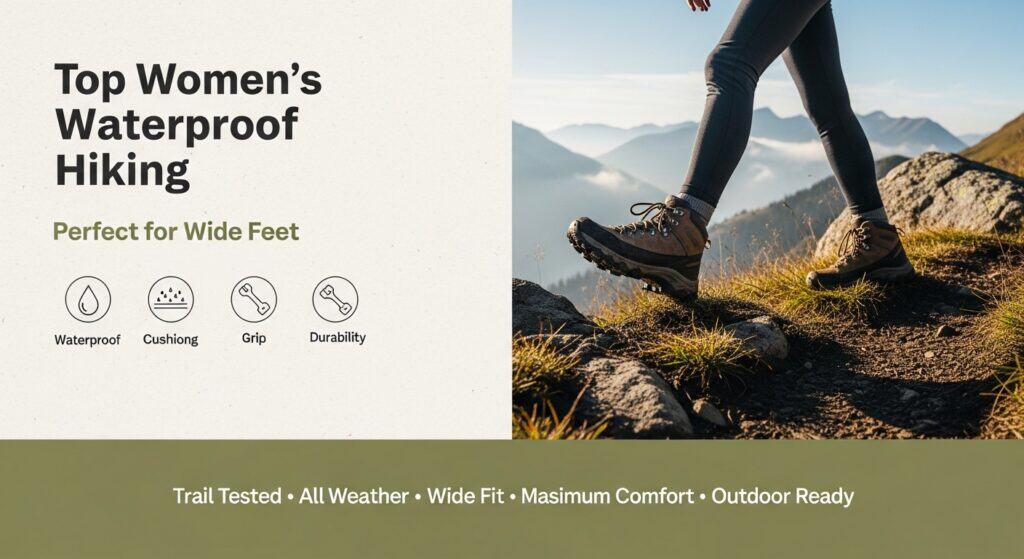
Before buying any boot, you need to know which type of "wide" you actually have — because they require completely different boots, and buying the wrong one is the most common mistake wide-footed women make.
A wide-width boot (labeled "D" for women, or "2E" in some brands) has a broader platform across its entire length — the heel, the midfoot, and the forefoot are all wider than standard. This is the right choice for women whose feet are wide from heel to toe, who need more room throughout the entire boot, not just at the front.
A wide toe box boot has a flared, anatomically-shaped forefoot while the heel and midfoot may be standard-width or even slightly narrow. This is the right choice for the most common female wide-foot pattern: a narrow heel with a significantly wider forefoot — the shape where standard boots cramp the toes but gape at the back.
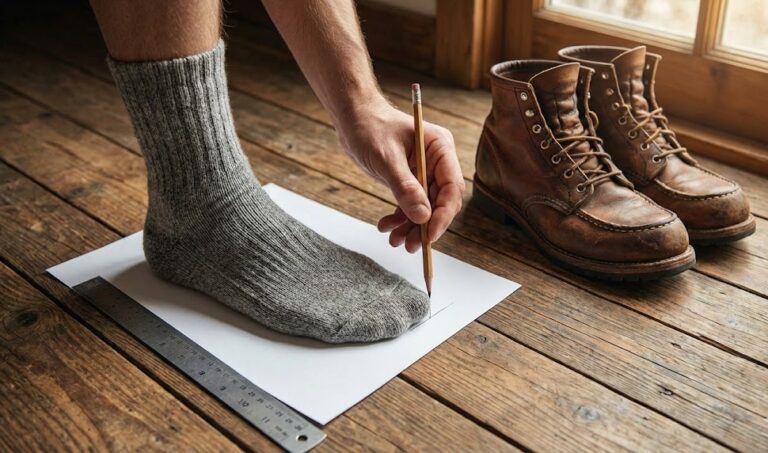
The symptom guide: if your heel slips in boots labeled "wide," you need a wide toe box, not wide-width. If your forefoot still cramps in wide-toe-box boots, you need true D-width or wider throughout. The self-test: trace your bare foot on paper. If the trace at the heel and at the widest forefoot point are roughly equal in width, you need wide-width. If the forefoot is significantly wider than the heel trace, you need wide toe box.
In this guide: true wide-width picks include the Merrell Moab 3 Wide, Oboz Bridger Wide, Columbia Newton Ridge Wide, and New Balance Hierro (also 4E). Wide-toe-box picks include the KEEN Targhee IV, KEEN Circadia, Altra Lone Peak, and HOKA Anacapa GTX Wide.
1. KEEN Targhee IV Wide — Best Overall

Best for: Wide-footed women who want the most reliable all-round waterproof hiking boot — day hikes, established trails, light backpacking, all weather conditions.
| ASIN | B0FDBH8FLX |
| Waterproofing | KEEN.DRY breathable membrane |
| Width type | Wide toe box — 106.4mm (widest in guide) |
| Outsole | KEEN All-Terrain rubber — 4mm multi-directional lugs |
| Midsole | KEEN.ReGEN — firm energy return |
| Removable insole | Yes — metatomical footbed, orthotic-ready |
| Brand origin | US — naturally wide last |
| Sizing note | True to size; KEEN.DRY maintains volume better than Gore-Tex |
| Price range | ~$180–$200 |

The KEEN Targhee IV has held the top spot for wide-footed women's hiking boots for years — and the Targhee IV earns it by doing everything right for a wide foot. The 106.4mm toe box measurement is the widest in this guide by a measurable margin, and KEEN's asymmetric cap design specifically avoids pressure at the first metatarsophalangeal joint — the big toe base that standard boots cramp first. The metatomical footbed is contoured with a real arch structure and deep heel cup, not just flat foam, which makes it one of the few hiking boots that provides meaningful out-of-the-box arch support for wide-footed women who also have low arches.

The KEEN.DRY membrane is a genuine advantage for wide-footed women who are close to the maximum available sizing: unlike a Gore-Tex bootie (which adds 2mm of material to each interior side), KEEN.DRY is a breathable laminate that maintains closer to the boot's advertised interior width. The KEEN.ReGEN midsole provides firm, responsive cushioning — not the soft EVA that compresses under load, but a material engineered to bounce back and resist midsole collapse across hundreds of trail miles. The removable insole has enough clearance for full-length custom orthotics once removed.
Good for conditions: Bunions, flat feet, wide-from-toe-to-heel, orthotics users.
Pros: Widest toe box in this guide, KEEN.DRY preserves interior volume, orthotic-ready, proven multi-year durability, excellent out-of-the-box comfort.
Cons: Not the best choice for steep technical terrain with heavy packs — look at Oboz Bridger for that. Heel cup can feel slightly loose for women with narrow heels.
2. Merrell Moab 3 Mid Wide Waterproof — Best Budget Pick

Best for: Wide-footed women who want genuine D-width waterproof performance at under $155 — established trails, moderate day hikes, all-weather confidence without spending $200+.
| ASIN | B0987XM1MW |
| Waterproofing | Merrell DRY waterproof membrane |
| Width type | True D-width — entire platform is wider |
| Outsole | Vibram TC5+ — 5mm lugs with heel brake |
| Midsole | Air cushion heel + EVA foam |
| Removable insole | Yes — Kinetic Fit Base, orthotic-ready |
| Brand origin | US — wide lasts available up to Women's 13 |
| Sizing note | True to size in wide; order half size up for thick orthotics |
| Price range | ~$130–$155 |

The Merrell Moab 3 has been a benchmark hiking boot for over a decade — and the genuine wide-width version is one of the most accessible, reliable entry points for women with wide feet who need waterproof trail performance. Where most "wide" options in this category top out at size 11, the Moab 3 Wide extends to Women's 13, making it one of the few waterproof hiking boots for women with genuinely large wide feet. The Vibram TC5+ outsole with heel brake delivers real grip on wet rock, mud, and root-covered trails — this isn't a budget outsole compound, it's the same Vibram used on boots costing $100 more.

The Merrell DRY membrane maintains waterproof integrity across stream crossings and sustained rain without the full interior-volume reduction of a Gore-Tex bootie. The Kinetic Fit Base insole is removable and leaves enough depth for a standard Superfeet or Powerstep orthotic, which makes this an excellent choice for women who manage arch conditions with OTC insoles. The air cushion heel provides meaningful shock absorption for women who hike on hard-packed trail and gravel. Out-of-the-box comfort is excellent — multiple testers report no break-in period needed at all.
Good for conditions: Standard wide feet (D-width end-to-end), orthotics, large sizes (up to 13W).
Pros: Best value at under $155, genuine D-width available, Vibram outsole, available up to Women's 13, orthotic-friendly, immediate comfort.
Cons: Not ideal for backpacking with loads over 30 lbs — the midsole compresses faster under sustained heavy weight. EVA midsole will pack out at 18–24 months under daily heavy use.
3. Altra Lone Peak 9 WP Mid — Widest Toe Box / Zero-Drop

Best for: Wide-footed women who want the absolute widest available toe box in a waterproof mid-cut boot — thru-hikers, bunion sufferers, women with forefoot splay conditions, zero-drop enthusiasts.
| ASIN | B0D47ZBSZZ |
| Waterproofing | eVent — most breathable waterproof membrane available |
| Width type | FootShape™ extra-wide — anatomically widest toe box in guide |
| Outsole | MaxTrac rubber — 4mm lugs, StoneGuard rock plate |
| Midsole | Altra EGO — balanced cushion / responsiveness |
| Heel-to-toe drop | Zero drop — heel and toe at same height |
| Removable insole | Yes — thin, limited extra depth for thick orthotics |
| Brand origin | US — designed specifically for wide natural-shape feet |
| Sizing note | True to size; eVent membrane is less volume-reducing than Gore-Tex |
| Price range | ~$160–$185 |

The Altra Lone Peak's FootShape™ toe box is the widest design available in a waterproof hiking boot — it's not a stretched standard last, it's an anatomically shaped platform that mirrors the natural width distribution of a human foot. Where standard boots narrow toward the toes (mimicking a fashion shoe shape), the Lone Peak widens at the front to allow natural toe splay with every step. For women who have spent years losing toenails on descents, developing forefoot blisters, or compensating with oversized boots, this design is often described as transformative. The eVent waterproof membrane is the most breathable waterproof technology available — vapor moves out more efficiently than Gore-Tex or standard membranes, which translates to drier, cooler feet in warm weather.

The StoneGuard rock plate provides underfoot protection against sharp rocks without adding rigidity to the forefoot — the boot still flexes naturally at the ball of the foot. The MaxTrac outsole grips reliably on wet grass, mud, and moderate rocky terrain. One important note: the Lone Peak 9 WP Mid is a zero-drop boot. If you've been hiking in standard 8–12mm drop boots (Merrell, KEEN, Salomon), transitioning directly to zero-drop on a long steep hike will overload your Achilles tendon and calves. See the full transition guide later in this article before committing to this boot for serious terrain.
Good for conditions: Bunions (big toe stays straight), hammer toes, severe forefoot splay, Morton's neuroma, natural gait preference.
Pros: Absolutely widest toe box available, most breathable waterproofing (eVent), rock plate, natural forefoot feel, excellent for long-distance hiking once transitioned.
Cons: Zero-drop requires genuine transition period — not suitable for immediate heavy use by standard-drop hikers. Thin insole limits custom orthotic compatibility for thicker devices.
4. HOKA Anacapa Mid GTX Wide — Best for Technical Terrain
Best for: Wide-footed women tackling technical, rocky, or steep terrain — day hiking and light backpacking where maximum cushion, aggressive grip, and ankle support are priorities.
| ASIN | B0C6GPDNY8 |
| Waterproofing | Gore-Tex — full waterproof bootie construction |
| Width type | Wide version — broader platform than standard |
| Outsole | Vibram Megagrip — best wet-rock traction in this guide |
| Midsole | Maximum EVA stack — HOKA's signature plush cushion |
| Key feature | Swallowtail heel extension for rear stability |
| Brand origin | French/US — wide version significantly better fit than standard |
| Sizing note | Size up half a size — Gore-Tex reduces interior volume by ~quarter-size |
| Price range | ~$200–$225 |
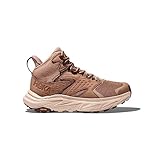
The HOKA Anacapa Mid GTX Wide earns its place as the technical-terrain pick for wide-footed women through the combination of Vibram Megagrip rubber and HOKA's maximum-stack midsole. Vibram Megagrip is the highest-grip outsole compound available in hiking footwear — it was developed specifically for wet granite and performs measurably better than standard rubber compounds on slick rock faces, stream-crossing boulders, and damp root networks. Wide-footed women who hike in the Pacific Northwest, the Cascades, or any persistently wet rocky terrain will feel the difference vs. standard rubber outsoles within the first wet descent. The Swallowtail heel extension — HOKA's signature design where the midsole extends beyond the heel — provides a platform that catches and stabilizes your foot on impact, which reduces ankle-roll risk for wide-footed women whose foot can shift laterally in wider boots.
Important sizing note for this boot: it uses standard Gore-Tex bootie construction, which reduces interior width by approximately 4mm total (2mm per side) compared to the non-waterproof version. For wide-footed women, this is not a trivial amount. Always size up half a size from your normal HOKA sizing when ordering the GTX version. The maximum midsole stack requires a short adaptation period — the first few hikes can feel slightly unstable as your ankles adjust to the elevated platform. After 3–5 hikes, most women describe the comfort as exceptional for long technical days.
Good for conditions: Hammer toes (high-volume toe box accommodates vertical height needs), general wide forefoot.
Pros: Vibram Megagrip for best wet traction, max cushion for technical descents, Swallowtail heel stability, Gore-Tex reliability.
Cons: Gore-Tex reduces interior volume — must size up half a size. Heavy for a day hike (over 2 lbs/pair). Not ideal for warm-weather hiking where breathability is the priority.
5. Oboz Bridger Mid Wide Waterproof — Best for Backpacking
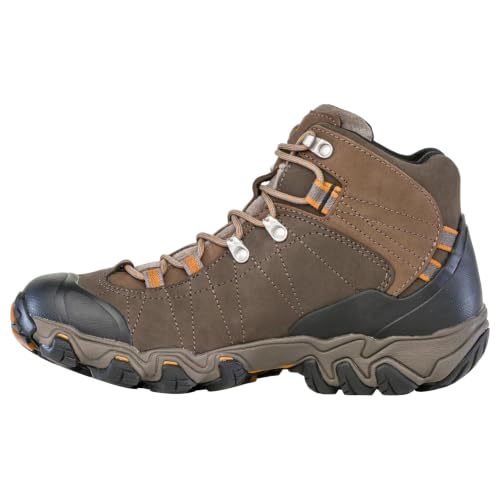
Best for: Wide-footed women doing multi-day backpacking trips with 30–50 lb packs — the best combination of genuine wide-width fit, structural support, and waterproofing for sustained heavy loads.
| ASIN | B00FJ2LH88 |
| Waterproofing | B-DRY proprietary waterproof membrane |
| Width type | True D-width — genuine wide-width platform |
| Outsole | Oboz Trail Tread — 5mm deep lugs, heel brake |
| Midsole | Dual-density EVA — firm structure for loaded hiking |
| Insole | BFit Eco — structured arch support (removable) |
| Brand origin | US — genuine wide last with excellent arch geometry |
| Sizing note | True to size; B-DRY maintains interior volume well |
| Price range | ~$150–$175 |

Backpacking with wide feet introduces a specific problem that day hiking doesn't: when you carry a 35–50 lb pack for 8–12 hours, your foot spreads progressively wider under the added load, and a boot that was comfortable at the trailhead starts compressing your forefoot by mile eight. The Oboz Bridger Wide is designed with genuine D-width across the full platform, so that forefoot expansion has room to occur without pushing against the upper. The dual-density EVA midsole is specifically tuned for loaded hiking — it's firmer than the midsoles on most day-hiking boots, which prevents the arch collapse that begins when softer foam compresses under sustained pack weight. The BFit Eco insole provides structured arch support that most hiking boot insoles lack.

The B-DRY waterproof membrane from Oboz performs reliably across stream crossings, morning dew on grass, and sustained rain — multiple long-distance hikers report consistent dry performance well past 500 miles. It maintains interior volume better than Gore-Tex bootie construction, which is an advantage for wide-footed women whose foot needs every millimeter of available width. The 5mm deep lugs with heel brake provide the grip confidence needed on steep, loaded descents where a foot slip with a heavy pack has serious consequences.
Good for conditions: Wide feet end-to-end (D-width), flat feet, orthotics users, multi-day hiking, heavy loads.
Pros: Genuine D-width for loaded hiking, BFit insole with structured arch, B-DRY maintains interior volume, 5mm lugs for loaded descents, excellent long-term durability.
Cons: Heavier than day-hiking picks at ~2.5 lbs/pair. Leather upper requires conditioning and maintenance. Break-in of 1–2 weeks for full-day comfort.
6. Salomon X Ultra 4 GTX Wide — Best for Athletic / Fast Hiking
No products found.Best for: Wide-footed women who hike fast on established trails and want a lightweight, athletic-feel waterproof boot — speed-hiking, trail running crossover, women coming from a running background.
| ASIN | B096VBQ7D5 |
| Waterproofing | Gore-Tex — full bootie construction |
| Width type | Wide version — note: European brand, still narrower than US standard |
| Outsole | Contagrip TA — multi-directional rubber, aggressive lug |
| Midsole | Cushlon 3D EVO — lightweight EVA |
| Lacing | Quicklace system — one-pull lacing for fast adjustments |
| Brand origin | French — wide version is necessary; standard is very narrow |
| Sizing note | Size up half a size for Gore-Tex volume; wide version essential for wide feet |
| Price range | ~$160–$185 |
Salomon builds the most athletically-oriented hiking boots in this guide — and the X Ultra 4 GTX in wide is the choice for wide-footed women who hike at pace, prefer a trail-runner feel over a traditional boot, and prioritize light weight and responsiveness over maximum cushioning or load support. At under 1.7 lbs per pair, it's among the lightest boots in this guide while still delivering genuine Gore-Tex waterproofing and Contagrip outsole performance. The Quicklace system allows single-pull tightening and quick adjustment during a hike — particularly useful for wide-footed women who need to adjust lacing when forefoot swelling increases on long climbs.
No products found.Critical note for wide-footed women considering this boot: Salomon is a French brand and runs significantly narrower than US brands by default. The standard X Ultra 4 GTX is too narrow for most women with genuinely wide feet. The wide version is essential — and even then, it runs closer to a US brand's medium-wide than a true D-width. If you've found that KEEN or Merrell wide versions feel right, the Salomon wide is likely to work. If you need the extra room of KEEN's 106mm toe box, this boot may still cramp you. Additionally, the Gore-Tex bootie construction reduces interior volume — size up half a size from your normal Salomon fit.
Good for conditions: Moderately wide feet (forefoot wider than heel), established trail hikers, athletic use.
Pros: Lightest waterproof boot in guide, athletic trail feel, Quicklace convenience, reliable Gore-Tex, excellent traction.
Cons: European brand — wide is still narrower than US standard wide; not for truly wide feet. Gore-Tex reduces interior volume — size up half a size. Not suitable for heavy backpacking.
7. KEEN Circadia Mid WP Wide — Best for Bunions

Best for: Wide-footed women with bunions (hallux valgus) or other first MTP joint conditions — the most bunion-specific wide waterproof hiking boot in this guide.
| ASIN | B09NP8D33K |
| Waterproofing | KEEN.DRY breathable membrane |
| Width type | Wide toe box — KEEN asymmetric design, no MTP joint pressure |
| Outsole | KEEN All-Terrain — 4mm lugs |
| Midsole | KEEN.ReGEN cushioning |
| Removable insole | Yes — orthotic-ready |
| Brand origin | US |
| Sizing note | True to size; KEEN.DRY maintains interior volume |
| Price range | ~$155–$180 |

The KEEN Circadia's asymmetric wide toe box is specifically shaped to avoid pressure at the first metatarsophalangeal joint — the exact location where a bunion protrudes. Standard boots, even wide-width ones, often have a seam, overlay, or lacing hardware directly at the widest point of the forefoot. When a bunion sits at that point, the result is a pressure point that deteriorates from uncomfortable to genuinely painful by mile four. KEEN's design places the widest point of the Circadia's toe box exactly where the foot is widest, with no structural elements pressing against the first MTP joint from any direction. The KEEN.DRY membrane maintains the same interior volume advantage over Gore-Tex as the Targhee IV — an important consideration for bunion sufferers who need every millimeter of toe box clearance.

The Circadia is built on a slightly lighter platform than the Targhee IV — less aggressive midsole, somewhat lighter construction — which makes it a better choice for women who prioritize all-day comfort on moderate trails over maximum durability on rugged terrain. The KEEN.ReGEN midsole provides the same energy-return cushioning as the Targhee, and the All-Terrain outsole handles established trails, light rocky terrain, and wet conditions reliably. The removable metatomical footbed leaves clearance for custom orthotics, which is important for bunion sufferers who often co-present with arch instability.
Good for conditions: Bunions (hallux valgus), hallux rigidus, MTP joint pain, wide forefoot with standard or narrow heel.
Pros: Most bunion-specific design in this guide — no MTP joint pressure, KEEN.DRY maintains interior volume, KEEN.ReGEN cushioning, orthotic-ready, true US wide last.
Cons: Lighter construction than Targhee IV — not ideal for technical terrain or heavy backpacking. Similar to the Targhee in most respects if bunion protection isn't the priority — consider Targhee IV instead.
8. Columbia Newton Ridge Plus Waterproof Wide — Best Budget / Beginners

Best for: Wide-footed women new to hiking, casual hikers on established trails, or anyone who wants genuine wide-width waterproof performance at under $130.
| ASIN | B0CLW95FMH |
| Waterproofing | Omni-Tech waterproof breathable membrane |
| Width type | True wide-width (D) — full platform is broader |
| Outsole | Omni-Grip — multi-terrain traction |
| Midsole | TechLite — lightweight EVA cushioning |
| Upper | Full-grain leather and suede |
| Brand origin | US |
| Sizing note | True to size; order half size up for thick socks or orthotics |
| Price range | ~$110–$130 |
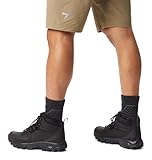
The Columbia Newton Ridge Plus in wide is the most accessible entry point in this guide — under $130, genuine D-width construction, real waterproofing, and a classic design that holds up across years of regular use on established trails. Columbia's Omni-Tech waterproofing is a full sealed-seam membrane that performs comparably to Gore-Tex for standard hiking conditions: sustained rain, wet grass, light stream crossings, and morning dew. The TechLite midsole provides adequate cushioning for day hikes without the fatigue you'd expect from a budget-tier boot, and the full-grain leather and suede upper develops a natural form to your foot over 2–3 hikes of break-in.

The honest limitations: this is a beginner-to-intermediate boot. The Omni-Grip outsole lacks the Vibram compound's grip on wet granite or serious technical terrain. The TechLite midsole won't stand up to aggressive backpacking or steep, rugged routes the way a Vibram-soled boot will. But for the enormous segment of wide-footed women who hike on maintained forest trails, national park paths, and weekend day hikes on established routes — this boot does everything needed at $60–$90 less than most competitors. The wide-width construction is genuine, not just a marketing label, and the Omni-Tech waterproofing is reliable for everything short of sustained stream wading.
Good for conditions: Standard D-width feet, general wide forefoot, beginners, casual hikers.
Pros: Best value under $130, genuine D-width, Omni-Tech waterproofing, classic durable design, available in wide sizes.
Cons: Not suitable for technical terrain or heavy backpacking. Omni-Grip outsole less grippy on wet rock than Vibram. TechLite midsole packs out faster under heavy daily use.
9. New Balance Hierro v8 Wide — Best for Truly Wide Feet (4E Available)
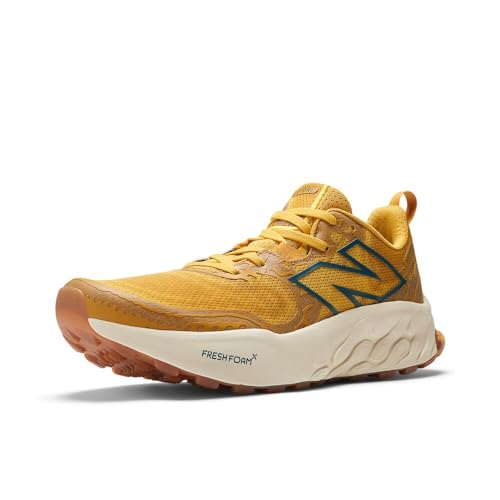
Best for: Wide-footed women for whom every other "wide" option still feels cramped — the only boot in this guide available in both D-width AND extra-wide (4E), making it the last resort that actually works for the widest feet.
| ASIN | B0CLB8DY3P |
| Waterproofing | Waterproof (select models) — check listing for WP version |
| Width type | D-wide AND 4E extra-wide — unique in this guide |
| Outsole | Vibram Megagrip — same compound as HOKA Anacapa |
| Midsole | Fresh Foam — plush stability-oriented cushioning |
| Key feature | Only 4E/extra-wide option in this guide |
| Brand origin | US |
| Sizing note | True to size; confirm waterproof vs non-WP on Amazon listing |
| Price range | ~$130–$160 |

For women who have tried every "wide" option on this list and still find their forefoot compressed, the New Balance Hierro v8 is the answer: it's the only hiking boot in this guide available in 4E (extra-wide) sizing, making it genuinely suitable for feet that no standard wide boot accommodates. The 4E option broadens the forefoot platform substantially — this is not a minor variation from D-width but a meaningfully different last designed for feet that are wider than 99% of commercially available boots can accommodate. The Vibram Megagrip outsole matches the HOKA Anacapa GTX for wet-rock traction, and Fresh Foam provides a plush, stability-oriented cushioning platform that absorbs impact effectively across technical trail surfaces.

Important purchasing note: the New Balance Hierro v8 is available in both waterproof and non-waterproof versions on Amazon. Verify you are selecting the waterproof variant on the product listing before ordering — the ASIN in this guide (B0CLB8DY3P) covers the Hierro v8 Wide family, but confirm the specific variant includes waterproofing if that is your requirement. The 4E sizing is available in select colorways — check the size/width selector carefully. Women who have been hiking in oversized boots to compensate for width will find that the 4E Hierro brings them back to their correct length sizing with genuine width accommodation.
Good for conditions: Truly extra-wide feet (4E), women for whom D-wide still cramps, wide forefoot + wide heel.
Pros: Only 4E extra-wide option in this guide, Vibram Megagrip for technical traction, Fresh Foam cushioning, US brand wide lasts.
Cons: Verify waterproof variant on listing — not all Hierro v8 colorways include waterproofing. 4E sizing not available in all colors.
10. Altra Lone Peak Mid (Non-Waterproof) — Best for Warm-Weather Hiking
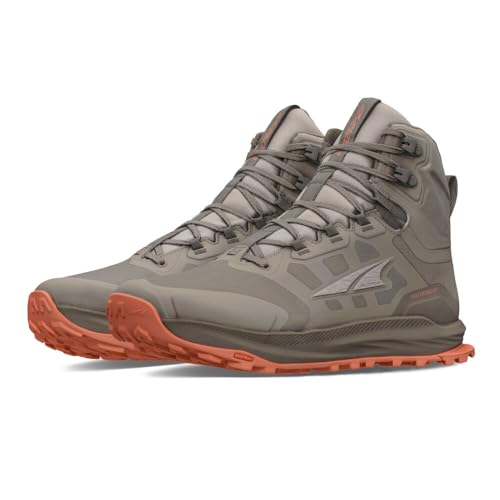
Best for: Wide-footed women hiking above 60°F on trails without persistent wet conditions — the same FootShape wide toe box as the WP version without the membrane that traps heat and sweat in warm weather.
| ASIN | B0FD2VQD72 |
| Waterproofing | None — DWR treated upper only |
| Width type | FootShape™ extra-wide — same as WP version |
| Outsole | MaxTrac rubber — 4mm lugs, StoneGuard rock plate |
| Midsole | Altra EGO — balanced cushion |
| Heel-to-toe drop | Zero drop |
| Breathability | Significantly more breathable than waterproof version |
| Sizing note | True to size; more interior volume than the WP version |
| Price range | ~$145–$165 |

This pick exists to answer a question every article in this category ignores: when should you NOT buy a waterproof boot? Wide feet have more surface area than narrow feet, which means more sweat production. Add a Gore-Tex or eVent membrane that blocks vapor escape from outside — and in temperatures above 60–65°F, your feet are producing moisture faster than it can exit through the membrane. The net result is feet that are wetter from sweat inside the boot than they would have been if the trail surface had gotten to them. For warm-weather hiking in the Pacific Southwest, intermittent summer trail hiking, or any route where stream crossings are rare and rain is not forecast, the non-waterproof Altra Lone Peak provides the same FootShape wide toe box, zero-drop platform, and MaxTrac outsole as the WP version — with vastly better breathability and faster drying if the boot does get wet.

The DWR (durable water repellent) treatment on the upper sheds light rain and dewy grass for the first 30–45 minutes of contact — sufficient for the brief wet encounters on a summer hike that isn't crossing streams or hiking in sustained rain. If the boot does get thoroughly wet, a non-waterproof Altra dries in 2–4 hours in good conditions, compared to 12–24 hours for a waterproof-membrane boot. The zero-drop transition warning from Pick 3 applies equally here — see the dedicated transition section before committing to this boot for long, steep routes.
Good for conditions: Same as WP version — bunions, forefoot splay, natural toe splay preference; warm weather only.
Pros: Same wide toe box as WP version with superior breathability, faster drying, more interior volume, lower price than WP model.
Cons: No waterproof membrane — not suitable for persistent rain, cold conditions, or regular stream crossings. Zero-drop requires transition period.
Waterproofing Membranes Compared: Gore-Tex vs. KEEN.DRY vs. B-DRY vs. eVent
Every article says "get Gore-Tex." None explain what choosing one membrane over another actually means for a wide-footed woman buying a hiking boot. Here's the honest breakdown.
Gore-Tex (standard): A fully sealed waterproof bootie sewn inside the boot upper. Tested to 24+ hours of submersion and consistent across all weather conditions. The limitation: the Gore-Tex bootie adds approximately 2mm of material to each interior side of the boot, reducing interior width by ~4mm total and interior volume by roughly a quarter-size. For wide-footed women at the edge of available sizing, this matters. Always size up half a size when buying a Gore-Tex version of a boot you've tried non-waterproof.
Gore-Tex Extended Comfort (ePE): A newer, more breathable variant of Gore-Tex used by La Sportiva and select HOKA models. It provides comparable waterproofing with meaningfully better vapor transfer — closer to eVent in breathability while maintaining Gore-Tex's durability. The same volume-reduction consideration applies.
KEEN.DRY: A breathable waterproof laminate bonded to the interior of the upper fabric — not a separate bootie construction. This maintains more of the boot's advertised interior width than Gore-Tex, making it a better choice for wide-footed women who are close to maximum sizing. Reliable for sustained rain and wet trail surfaces, and fast stream crossings. Not rated for prolonged submersion the way Gore-Tex is. Best for women who value interior volume and breathability as much as waterproofing.
Oboz B-DRY: Oboz's proprietary membrane, comparable to Merrell DRY in performance. Sealed seams, reliable in hiking conditions. Slightly less breathable than KEEN.DRY but more consistent at seam integrity over long miles. A good middle-ground option for women who want waterproof reliability without Gore-Tex volume reduction.
Altra eVent: The most breathable waterproof membrane available. eVent uses a different manufacturing process that allows vapor molecules to exit more freely than Gore-Tex — the difference is noticeable in warm conditions above 60°F. Not quite as durable as Gore-Tex over thousands of miles, but excellent for wide-footed women who hike in variable conditions and need breathability alongside waterproofing.
The decision guide: Cold, wet, persistent rain or stream crossings → Gore-Tex. Wide feet near max sizing, warm-wet conditions → KEEN.DRY or B-DRY. Warm-weather variable conditions → eVent. Summer dry trails with occasional wet → skip waterproofing entirely (see Pick 10).
How the Gore-Tex Volume Reduction Affects Wide-Footed Women
This is the most practically important technical concept in this guide for women on the edge of sizing. The Gore-Tex bootie construction adds a full inner layer of material to the inside of the boot. This layer is approximately 2mm thick on each side, which means the interior width of a Gore-Tex boot is roughly 4mm narrower than the same boot without a waterproof membrane.
For women with standard feet, this is negligible. For wide-footed women buying a boot that already fits snugly in the toe box, 4mm less width is often enough to move a comfortable fit into a cramping fit — and that cramping will worsen as foot swelling adds additional volume over the course of a hike.
The rule is simple: if you've tried the non-waterproof version of a boot and it fits correctly, size up half a size when ordering the Gore-Tex model. This applies to every Gore-Tex boot in this guide — the HOKA Anacapa, the Salomon X Ultra, and any other boots you encounter with Gore-Tex construction. KEEN.DRY boots (Targhee IV, Circadia) use a laminate rather than a bootie and maintain closer to their advertised interior width — the half-size-up rule is less critical but still recommended if you're between sizes.
Sizing Hiking Boots for Wide Feet: The Complete Protocol
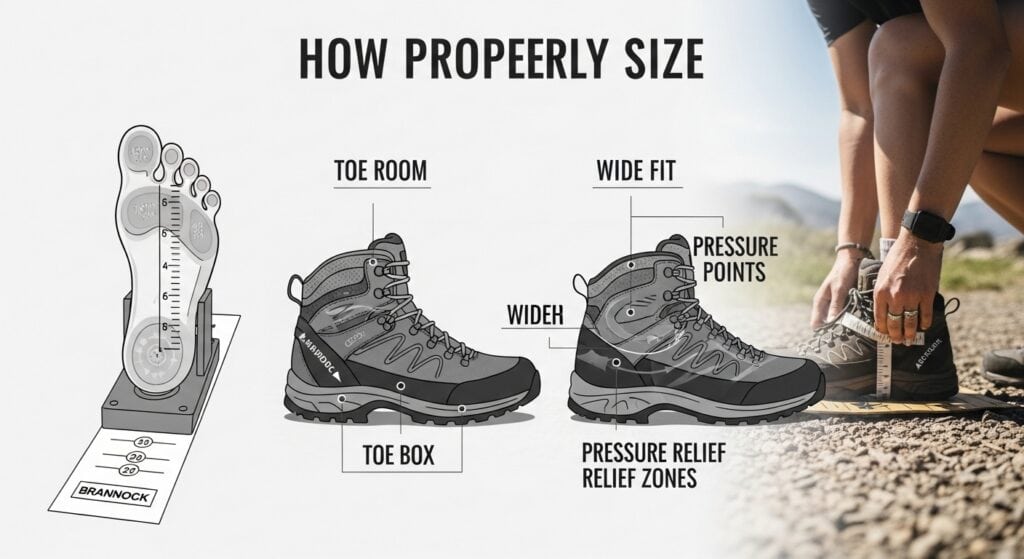
Wide-footed women lose more toenails, develop more metatarsal blisters, and return more boots than any other hiker demographic — and the primary cause is improper sizing at purchase. Here's how to get it right.
Try on in the afternoon. Feet reach their maximum daily volume after hours of standing and walking. A boot that fits at 9 AM can be painfully tight at 3 PM on trail. Always try hiking boots after you've been on your feet for at least 30 minutes.
Wear your actual hiking socks. Thick merino wool hiking socks add 2–3mm of volume compared to thin everyday socks. The difference is significant. Always fit hiking boots with the exact sock you'll wear on trail.
The thumb test at the toe — on the trail, not just in the store. The classic "one thumb's width" gap at the toe is correct — but the test must be done after walking, not just standing. Foot swelling during hiking pushes the foot forward in the boot. Your thumb should still fit at mile 8, not just mile 0. If the boot passes the thumb test in the store but not after 10 minutes of walking, it is too small for trail use.
Account for pack weight. If you're buying boots for backpacking, foot spread increases noticeably under a 35+ lb pack. Try on with your pack if possible, or add half a width size to your day-hiking selection for backpacking boots.
Brand-specific sizing notes: KEEN (Targhee IV, Circadia) runs true to size with generous toe room — standard sizing works for most wide-footed women. Merrell (Moab 3) runs slightly small in standard but true in wide. Altra runs true to size with more toe box room than any other brand. Oboz runs true. Salomon runs narrow — the wide version is essential for any wide-footed woman, and half a size up is recommended for Gore-Tex models. Columbia (Newton Ridge) runs true to size. New Balance Hierro runs true to size.
European vs. US Brand Lasts: The Framework Every Wide-Footed Hiker Needs
This single piece of knowledge saves wide-footed women from the most common frustrated purchase in hiking footwear: buying a European brand boot in "wide" and finding it still cramped.
US brands — KEEN, Merrell, Altra, Oboz, Danner, New Balance, Columbia — build on last shapes derived from US foot measurements, which are on average wider than European feet. A US brand's standard-width women's boot is often as wide as a European brand's wide option.
European brands — Salomon (French), Lowa (German), La Sportiva (Italian), Scarpa (Italian), Zamberlan (Italian) — build on European lasts that run significantly narrower by default. Their wide versions are wider than their standard, but typically still narrower than a US standard width. A Salomon "wide" is approximately equivalent to a US brand "medium-wide" — not a true D-width.
The practical guide: for genuinely wide feet (D-width and above), prioritize US brands first — KEEN, Merrell, Altra, Oboz, New Balance. If you want a European brand boot (Salomon is in this guide for its athletic performance), buy it in wide AND size up half a size for Gore-Tex models, and accept that it will fit more snugly than a US wide boot. If you have tried the European wide and it still cramps, don't force it — return to US brands.
Boots for Bunions, Hammer Toes, and Morton's Neuroma
Wide feet and foot conditions co-occur at a very high rate. Here's what each condition actually requires — and which boots in this guide address it.
Bunions (hallux valgus): A bony prominence at the base of the big toe caused by the toe drifting toward the second toe. The requirement is a wide toe box with no structural element pressing directly against the first metatarsophalangeal joint. Look for boots with no lacing hardware, overlays, or seams at the base of the big toe. KEEN Circadia and KEEN Targhee IV are specifically designed with this in mind — their asymmetric cap design widens toward the big toe, not away from it. Altra's FootShape design allows the big toe to remain straight, which is the most effective single measure for preventing bunion pressure on trail.
Hammer toes: Toes that curl downward at the middle joint, creating a raised knuckle that presses against the top of the boot interior. The requirement is vertical height (high-volume toe box) in addition to lateral width. A boot can be wide enough laterally and still cause hammer toe pain if the toe box is shallow from top to bottom. HOKA Anacapa's high midsole stack naturally raises the entire forefoot interior ceiling. Look for reviewer language describing the toe box as "roomy" or "high-volume," not just "wide."
Morton's neuroma: Nerve pain between the third and fourth toes caused by compression of the forefoot, typically from constrictive lacing across the ball of the foot. The requirement is a wide forefoot AND a lacing system that allows forefoot looseness while securing the midfoot and heel. Merrell Moab 3's traditional lacing with separate eyelet rows allows this customization. Avoid boots with a single continuous lace tension that tightens across the forefoot and midfoot simultaneously. The heel-lock lacing technique — using the top two eyelets in a loop — is essential for these hikers to secure the heel while keeping the forefoot loose.
Sesamoiditis (ball-of-foot pain): Pain under the big toe joint from impact on the two small sesamoid bones. The requirement is substantial forefoot cushioning. HOKA Anacapa's max-stack midsole provides the best sesamoid protection in this guide. Avoid thin-soled or zero-drop boots (including Altra) for active sesamoiditis — the lack of heel drop increases forefoot loading with every step.
Zero-Drop Transition Guide: How to Move to Altra Without an Achilles Injury
Altra Lone Peak is the widest hiking boot available and earns its place at the top of many wide-foot hiking guides. It also causes more Achilles tendon injuries among transitioning hikers than any other boot in the category — not because the boot is poorly designed, but because hikers skip the transition protocol.
Standard hiking boots have a heel-to-toe drop of 8–12mm — the heel sits 8–12mm higher than the toe. Your calf muscles and Achilles tendon are acclimated to a shortened, slightly contracted resting position in this geometry. Zero-drop boots place the heel and toe at the same height, requiring the Achilles to work through a longer range of motion with every step. The change is most significant on ascents and descents, where the Achilles load multiplies under pack weight and grade.
The transition protocol: Weeks 1–2 — wear Altras for walks and flat trails under 3 miles, no pack. Notice any calf tightness or Achilles fatigue and take rest days. Weeks 3–4 — easy trail hikes under 5 miles, minimal elevation gain. Weeks 5–8 — moderate hikes with some grade and a light pack. Month 3 — full use on your normal hiking terrain.
Warning signs that require a pause: sharp Achilles pain, localized tendon swelling, heel pain on first morning steps, or calf cramping that doesn't resolve within a day. If any of these occur, return to standard-drop boots for 2–3 weeks before retrying. Women with pre-existing Achilles tendinopathy, severe plantar fasciitis, or rigid flat feet should consult a podiatrist before transitioning to zero-drop footwear.
When NOT to Buy a Waterproof Hiking Boot
Every guide in this category tells you to buy waterproof boots. None of them tell you when waterproofing makes your feet worse — and for wide-footed women in particular, this happens more than you'd expect.
Waterproof membranes prevent liquid from entering the boot from outside. They also slow vapor from exiting the boot from inside. Sweat vapor from your feet builds up inside a sealed boot, and when you're producing vapor faster than the membrane can transfer it out — which happens reliably above 65°F on aerobic hiking — the interior of the boot becomes wet from the inside out. Wide feet produce more sweat than narrow feet due to greater skin surface area. The result: blisters from macerated skin that never properly dried, even though no external water got in.
The honest decision guide: If temperatures are consistently below 55°F, you're hiking in rain or persistent wet conditions, or you regularly cross streams — buy waterproof. If temperatures are above 65°F, trails are primarily dry with only occasional wet sections, and you're doing serious aerobic hiking — consider the non-waterproof version with a high-quality DWR treatment, re-applied every season. A wet non-waterproof boot dries in 2–4 hours. A soaked waterproof boot can take 24 hours or more to fully dry from the interior. Pick 10 in this guide — the Altra Lone Peak Mid non-waterproof — specifically exists for warm-weather wide-footed hiking.
Orthotics and Insole Compatibility
Many wide-footed women also use custom orthotics or OTC insoles to manage arch collapse, plantar fasciitis, or overpronation — conditions that co-occur with wide feet at a notably high rate. Fitting an orthotic inside a hiking boot requires a boot with both a removable factory insole AND sufficient interior depth to accommodate the orthotic's thickness without pushing the foot too high in the boot.
Orthotic-compatible boots in this guide: KEEN Targhee IV — fully removable metatomical footbed, ample depth, the most orthotic-friendly boot in this guide. Merrell Moab 3 Wide — removable Kinetic Fit Base insole, good interior depth, comfortable with Superfeet Green or Powerstep Pinnacle. Oboz Bridger Wide — removable BFit Eco insole, deep interior, compatible with full-length custom devices. Columbia Newton Ridge Wide — removable insole, basic depth, suitable for OTC insoles. KEEN Circadia — removable insole, same depth as Targhee IV.
Boots with limitations: Altra Lone Peak WP and non-WP — thin removable insole, but zero-drop creates a problem for posted orthotics (orthotics with medial arch elevation effectively create heel drop in a zero-drop boot, which can cause forefoot discomfort). Custom orthotics work better with a small amount of heel drop. Salomon X Ultra 4 — narrow interior even in wide version limits orthotic thickness. HOKA Anacapa — high midsole stack means less room for thick devices.
The rule: remove the factory insole, place your orthotic in the empty boot, and check that (a) the orthotic sits flat and doesn't curl up at the edges, and (b) when you place your foot in, your heel is correctly seated in the heel cup. If the orthotic pushes your foot too high or forward, the boot interior is too shallow — try a thinner OTC device or choose a different boot.
Looking for the best boot in every category? See our best hiking boots guide.
Frequently Asked Questions
What's the difference between a wide hiking boot and a wide toe box hiking boot?
A wide-width boot (D-width for women) has a broader platform across its entire length — heel, midfoot, and forefoot. A wide toe box boot has a flared forefoot but the heel and midfoot may be standard width. The most common female wide-foot pattern — narrow heel, wide forefoot — is best served by a wide toe box boot. Women with uniformly wide feet need a true wide-width boot. Self-test: trace your bare foot and compare heel width to forefoot width to identify your type.
Does Gore-Tex make hiking boots fit smaller? How do I compensate?
Yes. The Gore-Tex inner bootie adds approximately 2mm of material on each interior side, reducing available interior width by ~4mm and volume by roughly a quarter-size. For wide-footed women, this is significant. The fix: always size up half a size when ordering the Gore-Tex version of a boot you've tried in non-waterproof. KEEN.DRY boots use a laminate rather than a bootie and have less volume reduction — less critical to size up, but recommended if you're between sizes.
Which waterproof hiking boot brand has the widest fit for women?
KEEN, followed by Altra and Merrell. KEEN's standard last is wider than most brands' wide options — their Targhee IV standard has a 106.4mm toe box, which exceeds many brands' wide measurements. Altra's FootShape design is anatomically the widest toe box available. Merrell's genuine D-width option is the most accessible true wide-width boot. For truly extra-wide feet, New Balance Hierro in 4E is the only option in this guide.
Are Altra Lone Peak hiking boots good for wide feet with arch support issues?
Good for wide feet — yes, the best available. For arch support, with caution. Altra's zero-drop design places more load on the plantar fascia than standard heel-drop boots. Women with plantar fasciitis or significant arch collapse are better served by KEEN Targhee IV (structured metatomical footbed) or Merrell Moab 3 Wide until they've properly transitioned to zero-drop. If you want the width of Altra and need arch support, a Superfeet Green or custom orthotic in the Altra will help — but see the orthotic compatibility notes above.
Can I use custom orthotics in waterproof hiking boots?
Yes, in the right boots. Best compatibility: KEEN Targhee IV, Merrell Moab 3 Wide, Oboz Bridger Wide. Remove the factory insole before inserting your orthotic — never stack them. Check that the orthotic sits flat and your heel seats correctly in the heel cup. Size up half a size from your normal boot size to accommodate orthotic volume.
What waterproof hiking boots work best for bunions?
KEEN Circadia Mid WP Wide (the most bunion-specific design in this guide — no pressure at the first MTP joint) and Altra Lone Peak 9 WP Mid (FootShape design allows the big toe to remain straight). Both use KEEN.DRY and eVent membranes respectively, which preserve more interior width than Gore-Tex — important for keeping the boot from pressing on a bunion.
How much do feet swell during hiking and how does it affect sizing?
Feet swell 5–10% in volume during strenuous hiking — roughly half a width-size and half a length-size over 3–4 hours of aerobic activity. Wide feet swell more at the forefoot than narrow feet. Always try hiking boots in the afternoon, after walking for 30 minutes, with your hiking socks. The thumb-width gap at the toe must still exist after 10 minutes of walking, not just when you first put the boot on.
When is a non-waterproof boot actually better for wide-footed women?
Above 65°F on trails that aren't persistently wet. Wide feet sweat more than narrow feet, and waterproof membranes trap interior moisture as effectively as they block exterior water. In warm-weather conditions, a non-waterproof boot with DWR treatment keeps feet drier overall than a sealed waterproof boot, and dries in 2–4 hours if it gets wet rather than 12–24 hours for a waterproofed boot.
Final Verdict: Which Boot for Your Foot and Your Trail
Wide feet are not a uniform condition, and the right boot depends on your specific foot shape, the terrain you hike, your conditions, and any co-existing foot health issues. Here's the final match:
For most wide-footed women on most trails: the KEEN Targhee IV Wide is the safest, most versatile choice — the widest toe box, KEEN.DRY that preserves interior volume, orthotic-ready, and proven across thousands of miles of use by wide-footed hikers.
For the best value under $155: the Merrell Moab 3 Mid Wide offers genuine D-width construction, Vibram outsole, and reliable waterproofing at significantly less than most alternatives.
For the absolute widest toe box — bunion sufferers, forefoot splay, natural gait: Altra Lone Peak 9 WP Mid — but read the zero-drop transition guide before your first long hike.
For technical rocky terrain with heavy pack loads: HOKA Anacapa Mid GTX Wide — Vibram Megagrip and max cushion, with the half-size-up rule for Gore-Tex.
For multi-day backpacking: Oboz Bridger Mid Wide — the structural support and genuine D-width platform that loaded hiking demands.
For bunions specifically: KEEN Circadia Mid WP Wide — no pressure at the MTP joint, KEEN.DRY preserves interior volume.
For truly extra-wide feet where everything else still cramps: New Balance Hierro v8 in 4E — the only boot in this guide with an extra-wide option.
For warm weather above 65°F: Altra Lone Peak Mid non-waterproof — same wide toe box without the membrane that traps heat and sweat in summer conditions.