
Plantar fasciitis doesn't stop when you lace up your boots — it gets worse. The wrong pair amplifies every heel strike, turns a 5-mile trail into a 2-mile limp, and leaves you icing your foot on the drive home. The right pair doesn't cure PF, but it does something almost as good: it makes hiking possible again.
I've fitted dozens of hikers dealing with PF over the years. The boots that consistently work share three things: a firm structured arch, a deep heel cup, and a stiff midsole that flexes at the ball — not through the arch. Here are the six worth your money in 2026.
Best Hiking Boots for Plantar Fasciitis — Quick Comparison
| Boot | Best For | Waterproof | Price | Link |
|---|---|---|---|---|
| KEEN Targhee III Mid | Best Overall | KEEN.DRY | ~$175 | Check Price on Amazon |
| Salomon X Ultra 4 Mid GTX | Technical Terrain | GORE-TEX | ~$185 | Check Price on Amazon |
| Merrell Moab 3 Mid | Best Value | M Select DRY | ~$130 | Check Price on Amazon |
| Hoka Kaha 2 GTX | Max Cushioning | GORE-TEX | ~$220 | Check Price on Amazon |
| Oboz Bridger Mid B-DRY | Best Arch Support | B-DRY | ~$165 | Check Price on Amazon |
| Brooks Cascadia 17 | Fast & Light | ❌ | ~$140 | Check Price on Amazon |
What Plantar Fasciitis Actually Needs From a Boot
Plantar fasciitis is inflammation of the band of tissue connecting your heel bone to your toes. It flares when that band is overstretched — arch collapse under load, hard heel strikes without cushioning, or inward foot roll (pronation) without support. A hiking boot addresses all three if it has the right construction.
- Firm, structured arch support — not soft foam. PF needs support that pushes back, not squishes flat under your weight
- Deep heel cup — cradles the heel bone and reduces stress at the fascia attachment point
- Stiff midsole with controlled flex — flex at the ball of the foot, not through the arch
- Slight positive heel drop (4–8mm) — takes tension off the fascia; most PF sufferers do better with a small heel lift than a flat platform
What doesn't help: maximalist cushion with no structure, zero-drop boots for most PF cases, and flexible midsoles that let your arch overwork on uneven terrain.
The 6 Best Hiking Boots for Plantar Fasciitis (2026)
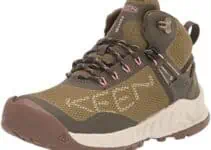
1. KEEN Targhee III Mid Waterproof — Best Overall
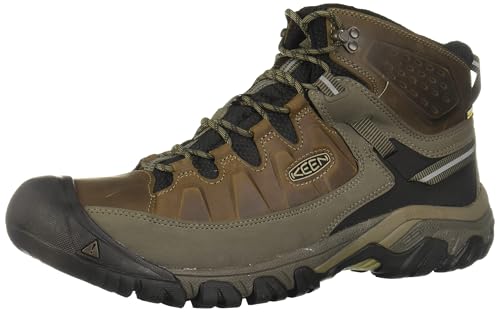
The Targhee III is the boot I've recommended most consistently for PF, and the reasons are structural. The ESS shank runs the full midsole length, preventing arch collapse on uneven terrain. The heel cup is one of the deepest in the category — it cradles the heel bone and reduces direct fascia stress at its attachment point.
KEEN's naturally wider toe box reduces compensatory arch movement. When toes can't spread, the arch works harder to stabilize — cutting that cycle matters on long trail days. Wide sizing (EE) is available across most colorways.

Who it's NOT for: Ultralight hikers — at ~1lb 15oz per pair it's heavier than trail runners. If you prioritize weight over support, the Brooks Cascadia at #6 is your pick.

- ✅ Full-length ESS shank prevents arch collapse
- ✅ Deep heel cup — best in class for PF
- ✅ Wide toe box reduces forefoot compensatory movement
- ✅ KEEN.DRY waterproofing (breathable)
- ✅ Wide sizing (EE) available
- ❌ Heavier than trail runners
2. Salomon X Ultra 4 Mid GTX — Best for Technical Terrain

Salomon's X Ultra line is the benchmark for technical hiking, and the PF credentials are earned. The Contragrip outsole grips loose and wet rock without requiring your foot to work overtime stabilizing — less corrective foot movement means less fascia stress per step. The Ortholite insole provides structured support rather than pure cushion.
The 4mm lug depth means you're spending less energy fighting for traction on unstable surfaces. PF flares hardest when your foot is compensating on awkward terrain — the more the boot handles stability, the less your fascia has to.

Who it's NOT for: Wide feet — Salomon runs narrow. If your foot measures EE or wider, go with KEEN or Merrell instead.

- ✅ Outstanding grip reduces corrective foot movement
- ✅ GORE-TEX waterproofing
- ✅ Ortholite structured insole
- ✅ Lighter than most waterproof mid boots
- ❌ Narrow fit — not suitable for wide feet
3. Merrell Moab 3 Mid Waterproof — Best Value

The Moab 3 is the most trail-tested hiking boot in the world. The upgrade from Moab 2 that matters specifically for PF: the Kinetic Fit BASE insole provides structured arch support that holds its shape over a full day on trail. The classic failure mode of cheap footbeds — going soft and flat under sustained load — doesn't happen here.
The Vibram TC5+ outsole is proven across millions of miles of real hiking. At its price point, nothing in this category beats the Moab 3 for PF support per dollar spent.

Who it's NOT for: Technical alpine terrain — the Moab 3 is a workhorse on established trails, not a precision tool for exposed scrambling or loose rock faces.

- ✅ Best price-to-support ratio in the category
- ✅ Vibram TC5+ outsole
- ✅ Kinetic Fit BASE structured insole
- ✅ Wide sizing (2E) available
- ❌ Less technical performance than Salomon or KEEN on difficult terrain
4. Hoka Kaha 2 GTX — Best Cushioning With Structure
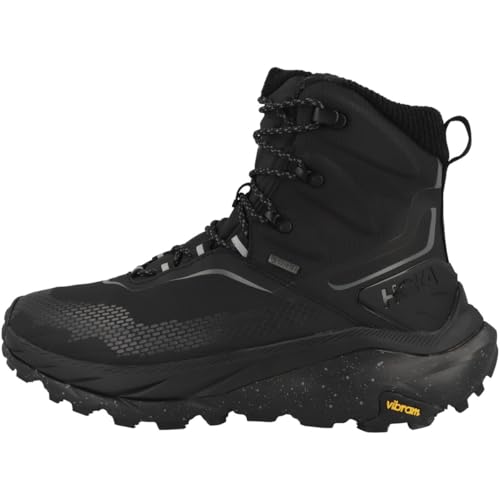
Hoka built its reputation on maximalist cushioning, but the Kaha 2 avoids the classic pitfall of cushion without control. The J-Frame technology provides medial support that prevents overpronation — the most common driver of PF — while the oversized midsole absorbs heel strike impact before it reaches the fascia.
If your PF is driven primarily by impact — you feel it most on downhills or hard heel strikes on packed surfaces — the Kaha 2 is the right call. If your PF is driven by arch collapse or pronation, KEEN or Salomon serve you better.

Who it's NOT for: Budget buyers — at $220+ it's the most expensive boot here. Also not ideal on narrow singletrack where the wide platform can feel unstable.

- ✅ Superior impact absorption — best for heel-strike driven PF
- ✅ J-Frame anti-pronation medial support
- ✅ GORE-TEX waterproofing
- ✅ Excellent for multi-day backpacking
- ❌ Most expensive option on this list
- ❌ Wide platform can feel unstable on narrow singletrack
5. Oboz Bridger Mid B-DRY — Best Arch Support
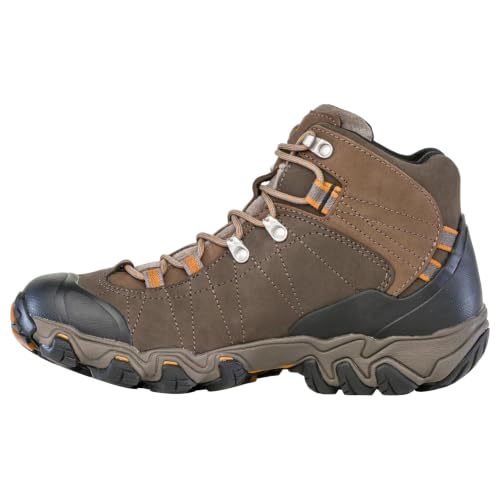
Oboz is the most underrated brand for PF in the hiking boot category. The BioSystem footbed ships with an aggressive arch profile that most brands charge $40–60 extra for in aftermarket insoles. If you've been putting Superfeet or Powerstep in every pair of boots you own, try the Oboz Bridger first — many PF sufferers find the stock insole is sufficient.
The B-DRY waterproofing is durable and more breathable than most membranes at this price point. The platform is stable on uneven ground without the stiff, plank-like feel that makes some supportive boots uncomfortable over long distances.

Who it's NOT for: Hikers who need wide sizing — the Bridger runs standard width only in most retail channels.

- ✅ Best stock arch support footbed in this category
- ✅ May eliminate need for aftermarket orthotics
- ✅ B-DRY waterproofing — durable and breathable
- ✅ Stable platform on uneven ground
- ❌ Less widely stocked — best ordered online
6. Brooks Cascadia 17 — Best for Fast & Light Hiking

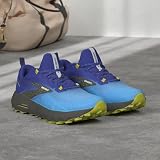
Technically a trail runner, not a hiking boot — but for PF hikers who move fast and light on established trails, the Cascadia 17 earns its spot. Brooks' DNA LOFT v2 midsole delivers structured cushioning rather than pure soft foam, and the BioMoGo DNA compound adapts to your foot strike pattern over time. At under 12oz per shoe it's the lightest option on this list by a wide margin.
The Cascadia 17 works best for PF hikers on well-maintained trails where you're not fighting terrain constantly — the lighter construction means your foot works slightly harder on technical ground than it would in a full mid-cut boot.
Who it's NOT for: Wet conditions (no waterproofing in the standard version) or hikers who need mid-cut ankle support on uneven terrain.

- ✅ Lightest option — under 12oz per shoe
- ✅ DNA LOFT v2 structured cushioning
- ✅ BioMoGo DNA adapts to your foot strike over time
- ✅ Excellent for high-mileage days on established trail
- ❌ No waterproofing in standard version
- ❌ Less ankle support than any mid-cut boot
Should You Add Aftermarket Insoles?
For moderate to severe PF, yes. Here's what actually works on trail:
- Superfeet GREEN — industry standard for high-arch PF. Very firm, very effective, takes 1–2 weeks to break in fully
- Powerstep Pinnacle — slightly less aggressive, more immediately comfortable; good for mild to moderate PF
- Sole Signature Footbed — heat-moldable to your exact foot shape; best for hikers who've tried standard insoles without success
Important: Always remove the stock insole before inserting aftermarket orthotics. Stacking insoles raises your heel inside the boot, changes the fit geometry, and creates new problems while solving the old one.
Frequently Asked Questions
Are hiking boots good for plantar fasciitis?
Yes — the right hiking boots are significantly better than trail runners or casual shoes for PF. They offer more structured arch support, deeper heel cups, and stiffer midsoles. The key is choosing a boot built around stability, not just cushioning.
Is more cushioning better for plantar fasciitis?
Not always. Pure cushion without structure can make PF worse by allowing the arch to collapse under load. The best boots combine cushioning with a firm midsole shank and deep heel cup — cushion layered on structure, not cushion alone.
Should I size up if I have plantar fasciitis?
No. Sizing up in length doesn't add meaningful width at the ball of the foot. If your foot is wide, find the correct length in a genuine wide width (EE or 2E). Sizing up in length causes heel slippage and creates new problems.
How long does plantar fasciitis take to heal while hiking?
Mild cases can improve in weeks with the right footwear and stretching. Severe chronic PF can take 6–12 months. The right boot reduces flare-ups but doesn't replace physical therapy or a morning stretching routine.
Final Verdict
For most hikers dealing with plantar fasciitis, the KEEN Targhee III Mid is the right call — it balances arch support, heel stability, and waterproofing better than anything else at its price. If budget is the priority, the Merrell Moab 3 delivers without the premium. If your PF is impact-driven and you're covering serious miles, invest in the Hoka Kaha 2.
Whatever you choose — pair it with morning calf stretches before your first steps of the day. No boot eliminates PF, but the right one makes it manageable.
Check Current Prices
- KEEN Targhee III Mid — Check Price on Amazon
- Salomon X Ultra 4 Mid GTX — Check Price on Amazon
- Merrell Moab 3 Mid Waterproof — Check Price on Amazon
- Hoka Kaha 2 GTX — Check Price on Amazon
- Oboz Bridger Mid B-DRY — Check Price on Amazon
- Brooks Cascadia 17 — Check Price on Amazon

Written by Ethan Walker
Ethan spent 8+ years fitting tradespeople and hikers at a Midwest construction supply store — including many customers managing plantar fasciitis on the job and on trail. He's personally tested hiking boots across warehouse work, outdoor labor, and trail use.