

Most runners already know the drill: get properly fitted running shoes, and if that's not enough, add an off-the-shelf insole. That combination handles foot pain for a lot of people. But for runners who keep cycling through insoles without lasting relief, it's worth understanding what arch support actually does, where off-the-shelf options run out of runway, and what a more personalized approach looks like.
What Arch Support Actually Means for Runners
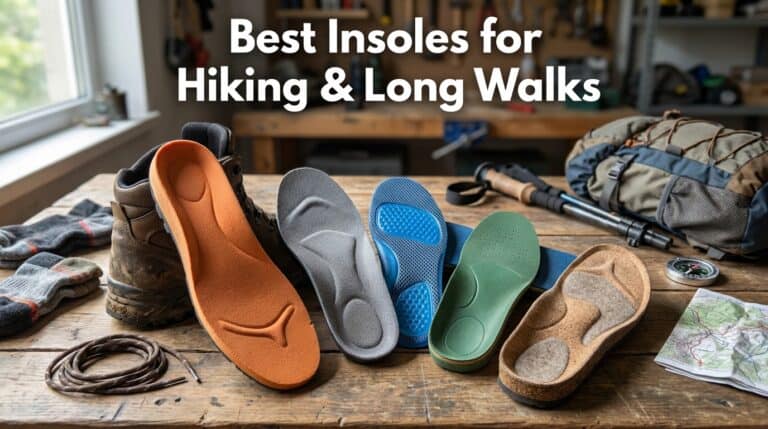
Arch support refers to anything that reinforces the arch of the foot to help distribute pressure more evenly and limit excess motion during your stride. Running shoes provide some of this through their midsole and built-in stock insole, which is generally shaped for a neutral, average foot. Off-the-shelf running insoles add another layer on top, typically more cushioning or a firmer arch shell, and for a lot of runners, that's genuinely enough to train comfortably through base building, speed work, and race day alike.
Off-the-Shelf Insoles vs. Personalized Arch Support
The difference between an off-the-shelf insole and a personalized arch support comes down to what it's built around. Off-the-shelf insoles are designed to fit a range of feet reasonably well, using a handful of standard shapes and sizes. A personalized arch support, like the kind fitted at Good Feet, is built from a digital scan of your actual foot, capturing arch height, heel width, and other structural details specific to you, so the support level matches your foot rather than an average one. For runners logging serious mileage, that distinction matters more than it does for casual walking, since running is a high-repetition sport that exposes small structural mismatches faster than everyday activity does.
Signs You Might Need More Than a Stock Insole
Recurring shin splints, plantar fasciitis that improves during a taper and flares again once mileage climbs, or one leg or hip consistently feeling more worked than the other are common signs the issue is structural rather than a cushioning problem. IT band tightness that shows up at the same mileage marker every training block, or an old ankle or knee issue that quietly changes how you load one side, can point to the same root cause. If you've already tried more than one off-the-shelf insole and adjusted your shoe rotation without lasting results, that pattern is usually a sign the fix needs to be specific to your foot and gait rather than a firmer arch or more foam.
How Good Feet's Arch Support Fitting Works for Runners
A personalized fitting starts with that digital foot scan rather than a size chart. From there, a specialist builds a support level around your actual foot and training load instead of handing you one generic shape meant to fit everyone reasonably well. Good Feet's system also separates support by activity level, so a runner might use a firmer support for long runs and speed work and a softer one for recovery days and easy miles, rather than relying on one insole to do every job across a full training cycle. Runners typically bring their actual training shoes to the appointment so the fit gets tested against what they'll really be running in, with adjustments made on the spot instead of after a few runs of trial and error at home.
What to Expect After You Start Wearing Them
Like any new insole or support, arch supports need a short adjustment period. Some fatigue or mild soreness in the first couple of weeks is normal as your feet adapt to a new support pattern, so it's worth easing in during lower-mileage weeks rather than jumping straight into peak training. Good Feet backs every fitting with a 90-Day Customer Satisfaction Policy, including complimentary follow-up fittings if something feels off partway through a training block. For a runner who's already spent money on a few insoles that didn't hold up, that's a meaningfully lower-risk way to test whether a more personalized approach actually solves the problem.
Arch Support for Runners: Frequently Asked Questions
How long does it take to adjust to arch supports as a runner?
Most runners notice their adjustment period easing within one to two weeks, though it depends on your mileage and how consistently you follow a gradual break-in schedule rather than jumping straight into peak training. Mild fatigue or soreness in the first few runs is normal and typically improves as your feet adapt. Easing in during lower-mileage weeks tends to make the transition smoother.
Can I use the same arch supports in more than one pair of running shoes?
Yes. Arch supports are fitted to your foot rather than to a specific shoe, so many runners move them between a couple of pairs in rotation, including race-day and training shoes, as long as there's enough depth and a removable insole to accommodate them. A specialist can confirm which of your shoes will work well during the fitting.
Do arch supports replace the need for supportive running shoes?
No. Arch supports are meant to work alongside a supportive running shoe, not instead of one. The shoe still handles cushioning, ground contact, and overall fit, while the arch support addresses the structural, foot-specific piece that a stock insole isn't built to solve.
How do I know if my foot pain is structural rather than just needing new shoes?
If new shoes and more than one off-the-shelf insole haven't resolved the same recurring pain, especially if it shows up at a consistent point in your training cycle or affects one side more than the other, that pattern points toward a structural cause rather than a shoe or cushioning issue. A digital foot scan during a personalized fitting can help clarify what's actually going on.
Are personalized arch supports worth it for casual runners, or just marathoners?
Mileage matters less than whether you're dealing with recurring pain that hasn't resolved with shoes and insoles alone. A casual runner logging fewer miles per week can have the same structural mismatch as a marathoner, it just may take longer to show up. The 90-Day Customer Satisfaction Policy makes it a reasonable option to test regardless of training volume.