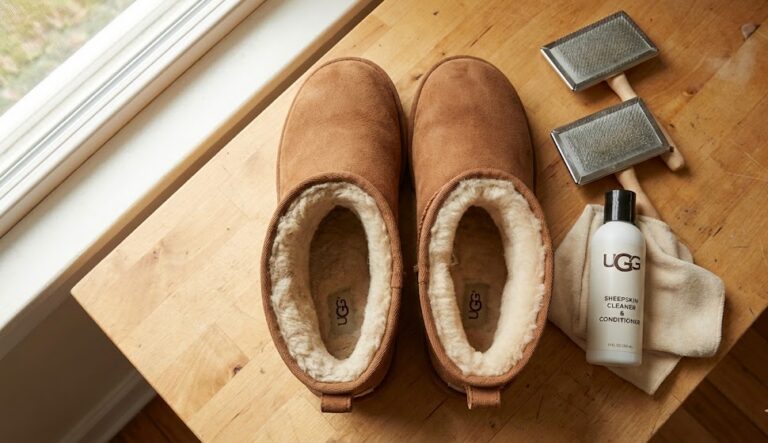
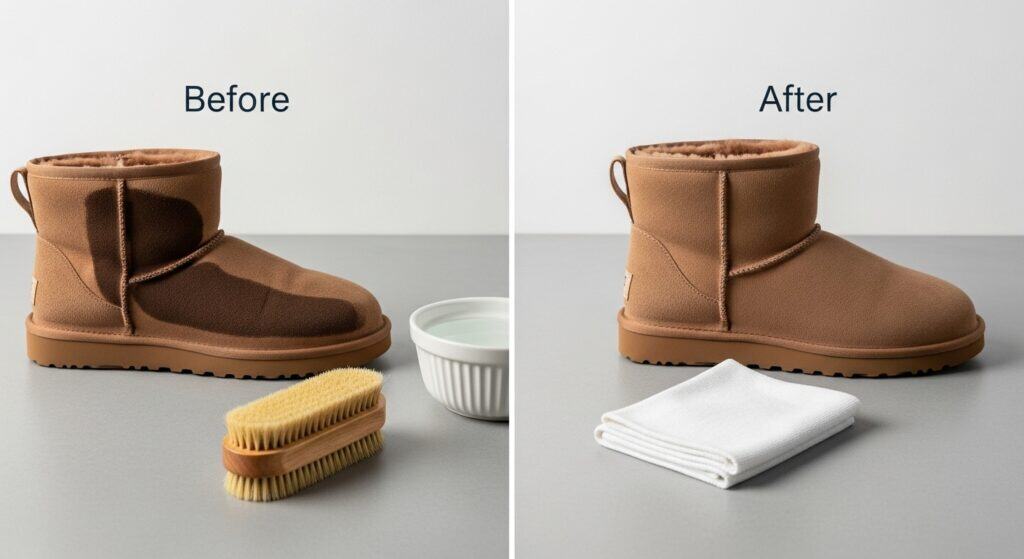

Quick answer: let the stain dry, brush it with a suede brush, and rub small marks with a suede eraser. For water marks, salt and general dirt, dampen the whole boot with cold water, clean it with a sheepskin cleaner on a sponge, rinse, stuff with paper and let it air dry away from heat. For oil, skip the water and cover the spot with cornstarch first. When the boots are dry, brush the nap back up and spray them with a suede protector.
That's the method UGG itself recommends for sheepskin, and the one detail most people get wrong is cleaning only the stain. Suede dries with a ring around any spot that was wet on its own, so the whole boot needs to be damp at the same time. UGG also notes that sheepskin is delicate and not every stain can be removed (UGG, retrieved 2026-09-24).
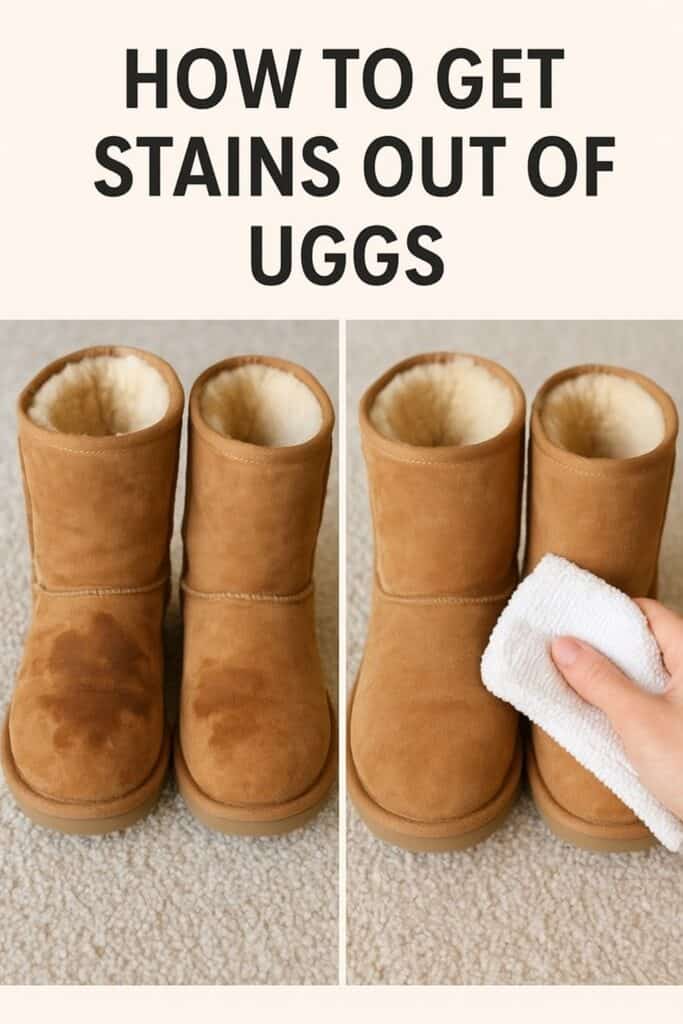
Blot and brush. Scrubbing a wet stain pushes it deeper into the suede.
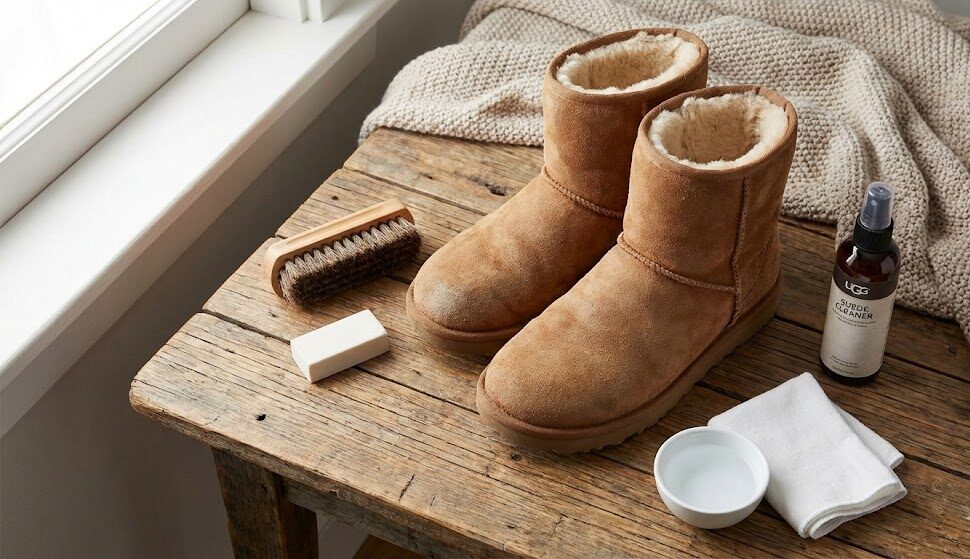
What You Need
| Product | What it does | Why pick it |
|---|---|---|
| UGG Care Kit | Cleaner, protector, deodorizer and suede brush | Made by UGG for its own sheepskin. Rated 4.6 stars from 1,002 Amazon ratings (retrieved 2026-09-24). |
| UGG Protector spray | Water and stain repellent | For boots that are already clean. Rated 4.6 stars from 7,503 Amazon ratings (retrieved 2026-09-24). |
| Fiamme Suede and Nubuck Cleaning Kit | Brass and nylon brushes, suede eraser | The budget option for dry stains and scuffs. Rated 4.6 stars from 409 Amazon ratings (retrieved 2026-09-24). |
| Jason Markk Suede Essentials Bundle | 4oz cleaning solution, two brushes, suede eraser | A full kit if you also clean suede sneakers. Rated 4.4 stars from 301 Amazon ratings (retrieved 2026-09-24). |
| Crep Protect spray + eraser | Protector spray and scuff eraser | An alternative protector. Crep Protect lists it as safe on suede and nubuck. |
You also need two or three clean white cloths (colored ones can bleed dye), a bowl of cold water and plenty of paper for stuffing. Amazon ratings change over time, so check the current listing.

What Not to Do
- Don't use the washing machine. UGG says hand wash only. The tumbling distorts the shape and can loosen the sole.
- Don't dry with heat or in the sun. UGG warns against direct heat and sunlight. Heat stiffens and cracks suede and softens the glue.
- Don't scrub a wet stain. Blot it. Rubbing pushes the stain into the nap.
- Don't spot-clean with water. Wet one area and you get a ring. Dampen the whole boot.
- Don't use dish soap or household cleaners. They can strip color and leave blotches. Use a cleaner made for suede or sheepskin.
How to Remove Each Type of Stain
Water stains and water rings
Water marks are the most common UGG stain, and the fix is more water, spread evenly. Follow the full wet cleaning method below. Dampening the entire outside of the boot lets it dry to one even color instead of leaving a tide line.
Salt stains
- Let the boots dry fully, then brush off loose white salt with a suede brush.
- Mix equal parts white vinegar and cold water. Dampen a white cloth and blot only the salt lines.
- Then do the full wet cleaning method on the whole boot, so the vinegar spot doesn't dry into a ring.
For salt on leather boots as well as suede, see our guide to removing salt stains from boots.
Oil and grease
- Blot off any excess with a dry cloth. Don't add water.
- Cover the spot with cornstarch or talc and leave it for several hours or overnight to draw the oil out.
- Brush the powder off outdoors. Repeat if the mark is still dark.
- If a shadow remains, finish with the full wet cleaning method.
Mud
Leave wet mud alone until it dries completely. Then break it off and brush it away with a suede brush, and use the eraser on what's left. Wet-clean only if a mark remains.
Coffee, tea, soda and wine
Blot immediately with a dry white cloth to lift as much liquid as you can. Don't rub. Once it's dry, try the brush and eraser. Sugary and colored drinks usually need the full wet cleaning method with a sheepskin cleaner. Dark red wine may not fully come out of light-colored suede.
Ink and pen marks
Try a suede eraser gently on dry ink. Don't use water, which spreads ink through the nap. If the eraser doesn't lift it, take the boots to a shoe repair or cleaning shop. Home remedies for ink carry a real risk of a bigger stain.
Chewing gum
Put ice in a plastic bag and hold it on the gum until the gum goes hard. Then pick it off gently. Brush the nap afterward, and use the eraser on any residue.
Mold and mildew
If boots were stored damp, take them outside and brush the spots off the dry surface, away from your face. Wet-clean the whole boot, then dry it thoroughly with good airflow. If spots or a musty smell come back, the lining may need professional cleaning.
The Full Wet Cleaning Method
This follows UGG's own sheepskin care instructions.
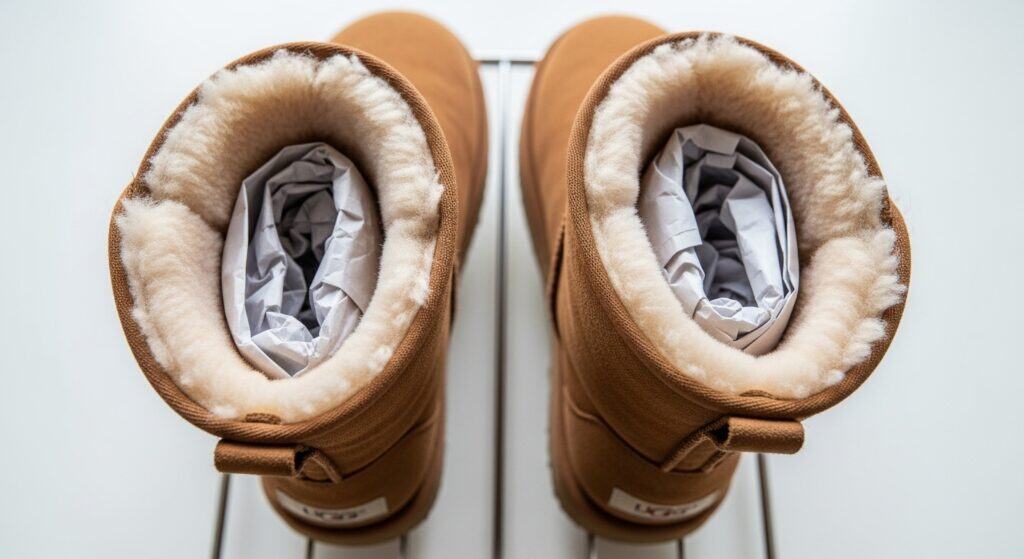
Stuff with paper and let them dry slowly, away from heat and sun.
- Dry brush. Brush the whole boot in one direction to remove loose dirt.
- Dampen the entire outside with clean, cold water using a sponge. Damp, not soaked.
- Clean. Put a small amount of sheepskin cleaner on the wet sponge, not on the boot, and gently scrub the whole boot.
- Rinse with a sponge and clean, cold water to remove all the cleaner.
- Stuff and dry. Stuff lightly with paper to hold the shape and let the boots dry naturally and slowly, away from heat and direct sunlight. Change the paper if it gets soggy. Thick sheepskin can take a day or two.
- Brush the nap. Once fully dry, brush lightly in one direction with the soft side of a suede brush.
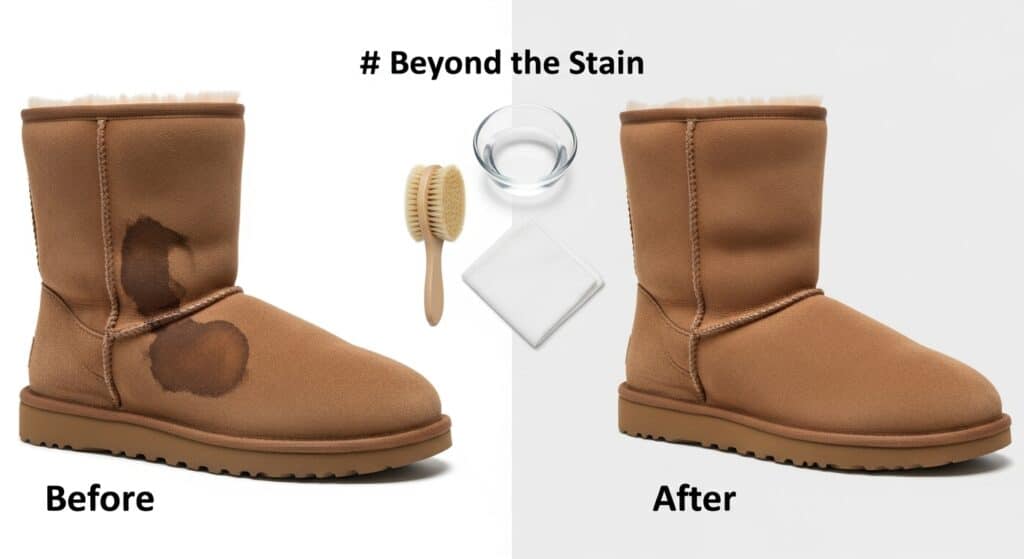
Suede looks darker while wet and lightens as it dries.
Cleaning and Deodorizing the Inside
- Odor: sprinkle baking soda inside, leave it overnight, then shake or vacuum it out. The UGG Care Kit also includes a deodorizer.
- Stains on the lining: wipe with a cloth dampened in cold water, then with a little wool-safe cleaner if needed. Blot with plain water to rinse, then stuff and air dry.
- Flat, matted fleece: see our step-by-step guide to fixing a matted UGG lining.
Protect Them So It Doesn't Happen Again

UGG's directions for its protector: work in a well-ventilated area, hold the spray about six inches from the boot, spray evenly, let the boots dry naturally for at least 24 hours away from heat and sun, then brush the nap in one direction (UGG, retrieved 2026-09-24). Only spray clean, fully dry boots, so you don't seal dirt in.
A protector makes suede water-resistant, not waterproof. For rain and slush, a boot with a waterproof membrane is the better choice. Our best winter boots for women covers those. For other boot materials, see what to spray on boots to waterproof them.
Check the current price of UGG Protector on Amazon
Looking for new slippers? See our best men's slippers, including the UGG Ascot and Scuff.
Frequently Asked Questions
Can you put UGGs in the washing machine?
No. UGG says hand wash only. The machine can distort the shape, damage the sheepskin and loosen the sole.
How do you get water stains out of UGGs?
Dampen the whole outside of the boot evenly with cold water, clean with a sheepskin cleaner on a sponge, rinse, stuff with paper and air dry. Water rings come from wetting only part of the boot.
Can I use vinegar on UGGs?
A 50/50 mix of white vinegar and cold water is a common fix for salt lines. Blot it on only the salt, then wet-clean the whole boot so it dries evenly.
Can I use dish soap on UGGs?
We don't recommend it. Household soaps can strip color and leave blotches on suede. A cleaner made for sheepskin is safer.
How long do UGGs take to dry?
Usually a day or two. If the inside still feels cool to the touch, they're still damp. Don't speed it up with a hair dryer or heater.
Why do my UGGs feel stiff after cleaning?
Suede often dries stiff. Once the boots are completely dry, brush them in one direction with a suede brush to soften the nap.
Can I use UGG cleaner on other suede boots and slippers?
Most suede and sheepskin footwear takes the same care. Test on a hidden spot first. If you're shopping for new house shoes, see our women's slippers roundup.
When should I take them to a professional?
For deep oil stains, ink, dye transfer, mold that keeps returning, or boots you're afraid to ruin. A shoe repair or cleaning shop that handles suede and sheepskin can do more than home methods.
The Bottom Line
Most UGG stains come out if you brush dry stains first, treat oil with powder before any water, and wet-clean the whole boot rather than the spot. Dry them slowly with no heat, brush the nap, and spray a protector. If you want everything in one box, the UGG Care Kit covers cleaning, protecting and deodorizing. For dry stains and scuffs on a budget, the Fiamme suede kit does the job.