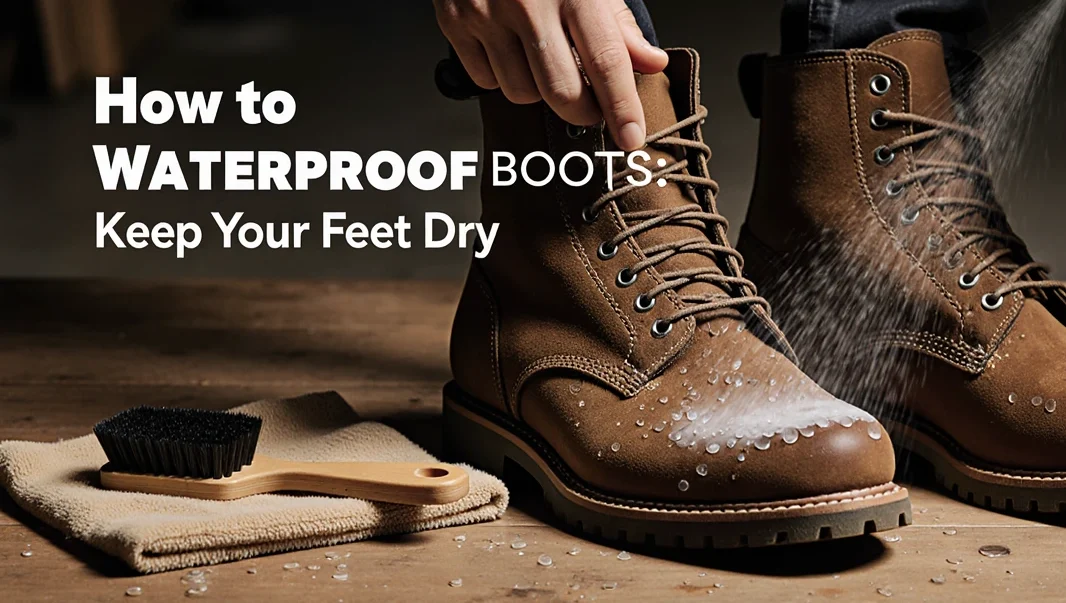

Short answer: spray suede, nubuck and fabric boots with a protector spray labeled for those materials, such as Crep Protect or Scotchgard Outdoor Water Shield. Use a water-based treatment like Nikwax Fabric & Leather Proof on mixed fabric and leather hiking boots, especially GORE-TEX ones. For smooth leather work boots, a spray is only a light, short-term fix. A beeswax like Sno-Seal lasts much longer.
Waterproofing leather work boots? Our how to waterproof work boots guide covers stitched vs glued soles, GORE-TEX work boots and how often to re-treat for your job.
Our Top 3 Boot Waterproofing Picks
| Pick | Type | Best for |
|---|---|---|
| Nikwax Fabric & Leather Proof | Water-based spray | Hiking boots, including GORE-TEX |
| Sno-Seal | Beeswax | Smooth leather work boots |
| Crep Protect | Protector spray | Suede, nubuck and sneakers |
1. Nikwax Fabric & Leather Proof: Best for Hiking Boots

Most hiking boots mix fabric and leather, and many have a GORE-TEX membrane. Nikwax makes this spray for exactly that, and it's PFAS-free. Spray it on clean, wet boots, which is the step most people miss. It has 4.4 stars from 3,340 Amazon ratings.
Check the Nikwax Fabric & Leather Proof price on Amazon
2. Sno-Seal: Best for Smooth Leather Work Boots

A spray is only a short-term fix on smooth leather. Sno-Seal is a beeswax you rub into warm leather, and it lasts much longer in mud, snow and standing water. It darkens leather permanently and isn't for suede. The 3.5 oz tin we link to comes with an applicator and has 4.6 stars from 378 ratings.
Check the Sno-Seal price on Amazon
3. Crep Protect: Best for Suede and Nubuck

Wax and oil ruin suede, so suede needs a protector spray. Crep Protect leaves an invisible water-repelling layer on suede, nubuck, leather and canvas. Two light coats, then reapply every 3 to 4 weeks with daily wear. The listing we link to bundles the spray with a scuff eraser and has 4.6 stars from 127 ratings.
Check the Crep Protect price on Amazon
Canvas or synthetic boots? Use Scotchgard Outdoor Water Shield. Dry, cracking leather? Condition it with Obenauf's Heavy Duty LP before you waterproof. Both are covered below.
The right choice comes down to one question: what is your boot's outer material? The table below answers it in seconds. The rest of this guide explains how to apply each product so it actually works.
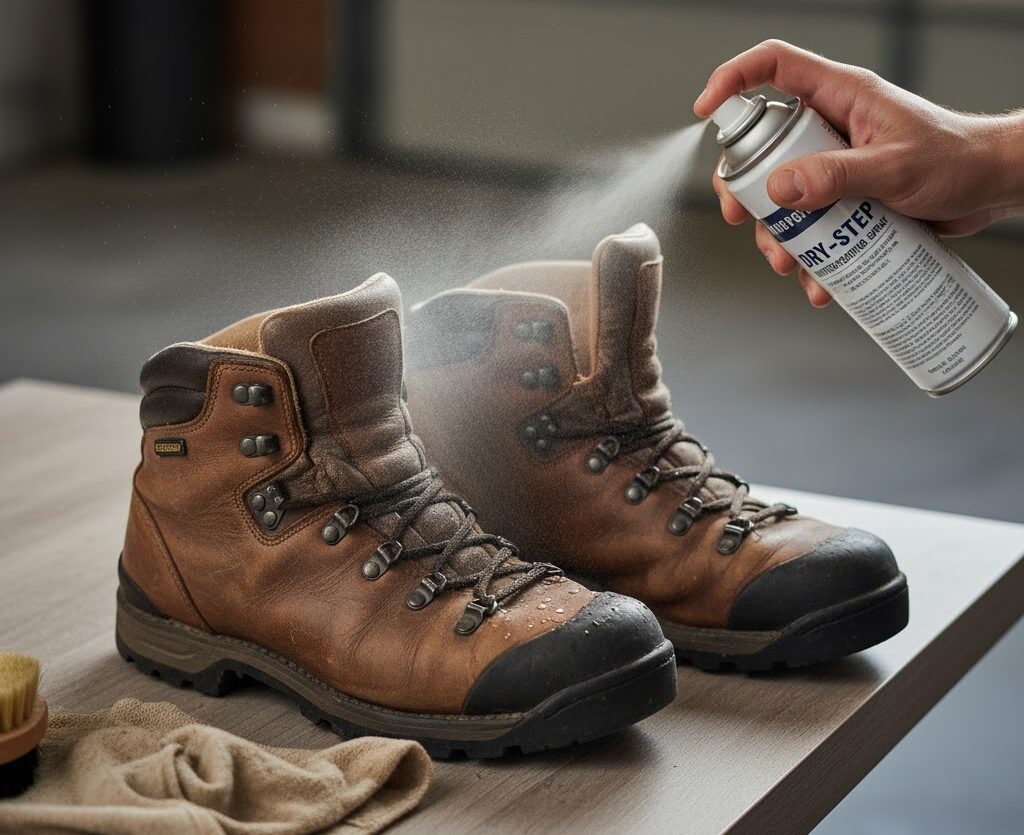
What to Use on Each Boot Material
| Boot material | Use this | Product example | Avoid |
|---|---|---|---|
| Suede and nubuck | Protector spray | Crep Protect | Wax, oil, mink oil (they flatten and darken the nap) |
| Fabric, canvas, synthetic | Fabric waterproofing spray | Scotchgard Outdoor Water Shield | Wax and leather creams |
| Mixed fabric and leather (most hiking boots) | Water-based footwear proofer | Nikwax Fabric & Leather Proof | Heavy wax on the fabric panels |
| Smooth full-grain leather | Beeswax (longest lasting) | Sno-Seal | Relying on a spray alone for heavy wet work |
| Dry, cracking leather | Conditioner first, then waterproof | Obenauf's Heavy Duty LP | Waxing leather that's already dried out |
Waterproof vs Water-Resistant
No spray turns a boot into a waterproof boot. A truly waterproof boot has a membrane inside, such as GORE-TEX, or is made of rubber. Sprays and waxes make the outer material water-resistant, so water beads and rolls off instead of soaking in.
That matters even on membrane boots. When the outer leather or fabric soaks through, the boot gets heavy and cold, and the membrane can't breathe as well, so feet get damp from sweat. A good surface treatment keeps a waterproof boot working the way it should. Our GORE-TEX vs waterproof leather guide explains the difference.
The 5 Products, and What Each Is Good For
Crep Protect: best for suede and nubuck
Crep Protect says its spray protects leather, nubuck, suede and canvas with an invisible hydrophobic layer. The directions: spray from about 20cm, let it dry for 10 minutes, apply a second coat and dry another 10 minutes. With daily wear, reapply every 3 to 4 weeks. It lists at $16 (Crep Protect product page, retrieved 2026-09-24). The Amazon listing we link to bundles the spray with Crep Protect's scuff eraser, which is handy for cleaning suede before you spray.
Skip it if you need heavy protection for leather work boots in mud and standing water. It's a light surface protector.
Check the current price of Crep Protect on Amazon
Scotchgard Outdoor Water Shield: best for fabric and canvas
Scotchgard sells this spray as Outdoor Water Shield (the same formula is also listed as Heavy Duty Water Shield). 3M lists it as safe for polyester, nylon, polypropylene, cotton, leather and suede (3M Scotchgard product page, retrieved 2026-09-24). It's a general outdoor fabric spray, so it covers canvas boots, fabric panels and gear like tents and bags. Always test on a hidden spot first, especially on light-colored suede.
Skip it if you want a treatment made specifically for footwear membranes. Nikwax is designed for that.
Check the current price of Scotchgard Outdoor Water Shield on Amazon
Nikwax Fabric & Leather Proof: best for hiking boots
Nikwax makes this for fabric and leather combination footwear and recommends it for GORE-TEX, eVent and BDRY boots. It's PFAS-free and non-flammable. One detail most people miss: Nikwax says to apply it to clean, wet footwear, and it develops as it air dries (Nikwax product page, retrieved 2026-09-24).
Skip it if your boots are all suede or nubuck. Nikwax sells a separate Nubuck & Suede Proof for those.
Check the current price of Nikwax Fabric & Leather Proof on Amazon
Sno-Seal: best for smooth leather work boots
Sno-Seal is a silicone-free beeswax that dries to a solid wax on the leather. Atsko says to warm clean, dry boots first, to no more than a comfortable-to-handle temperature of about 120°F, then rub the wax in so it melts into the leather. Atsko is clear about two things: it will darken leather permanently, and it's not recommended for suede (Atsko application instructions, retrieved 2026-09-24).
Skip it if you want to keep your leather's original color, or your boots are suede, nubuck or roughout.
Check the current price of Sno-Seal on Amazon
Obenauf's Heavy Duty LP: best conditioner before waterproofing
Obenauf's Heavy Duty LP is a blend of natural oils, propolis and beeswax. Obenauf's describes it as a leather conditioner, not a waterproofing product. It will darken leather, and it's not for suede (Obenauf's FAQ, retrieved 2026-09-24). Use it on dry, stiff or cracking leather to bring it back, then waterproof. The Amazon listing we link to is the 8 oz tin, with 4.8 stars from more than 11,400 ratings.
Obenauf's suggests applying every six months in temperate climates, every three months in hot, dry climates, and at least monthly on hard-used leather.
Check the current price of Obenauf's Heavy Duty LP on Amazon
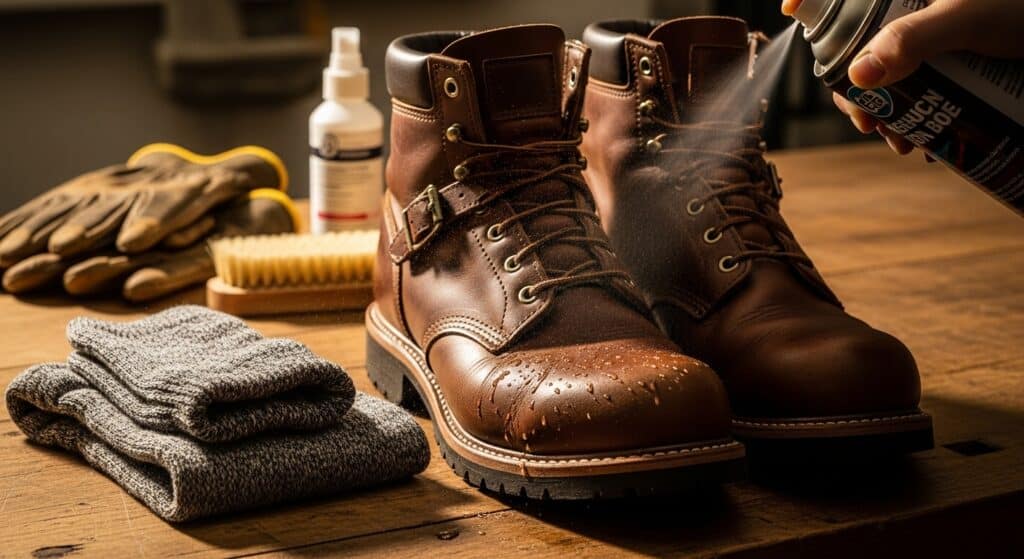
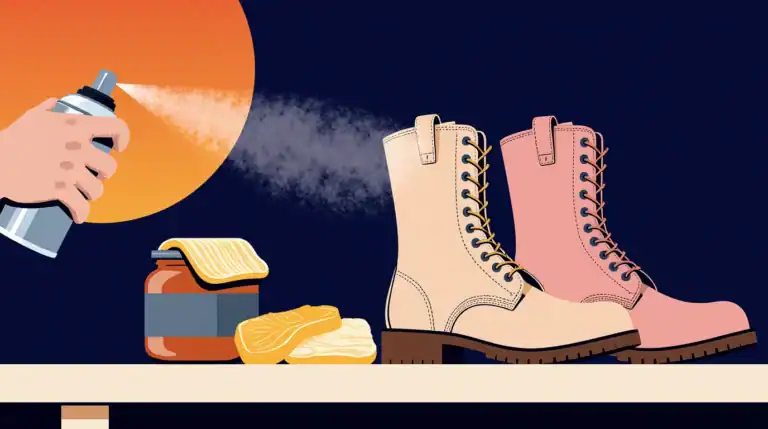
How to Spray Boots to Waterproof Them
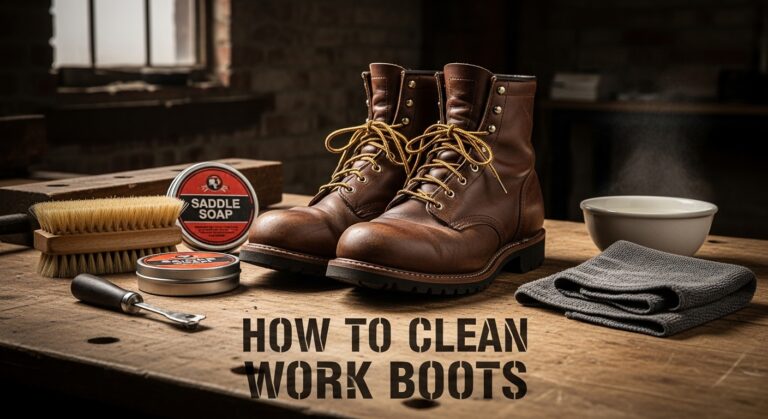
- Clean them first. Brush off dried mud and dust. Treatment sprayed over dirt doesn't bond. For work boots, see how to clean work boots properly.
- Check whether the product wants wet or dry boots. Most sprays go on dry boots. Nikwax Fabric & Leather Proof goes on clean, wet boots.
- Test a hidden spot. Spray a small area near the heel and let it dry, to check for color change.
- Spray outdoors or with good airflow. Hold the can at the distance on the label, often around 15 to 20cm, and cover the seams and the area where the upper meets the sole.
- Use two light coats, not one heavy one. Let the first coat dry before the second.
- Let them dry fully at room temperature. Keep them away from heaters, which can crack leather and weaken glue.
How to Wax Smooth Leather Boots
- Clean the boots and let them dry completely.
- Warm the leather gently, with sunlight, a hair dryer on low or a warm room, until it's warm to the touch but comfortable to hold.
- Rub the wax in with your fingers or a cloth, working it into the seams and the welt.
- Let it soak in, then wipe off the excess.
- Leave the boots overnight before heavy wet use.
How Often to Re-Waterproof
- Protector sprays: every 3 to 4 weeks with daily wear (Crep Protect's guidance), or when water stops beading.
- Wax: when water stops beading on the leather, usually after several months of regular use.
- Conditioner: when the leather looks dry or pale, per the maker's schedule.
The simplest test works for all of them: flick a few drops of water on the boot. If they bead and roll off, you're fine. If they darken the material and soak in, it's time to reapply.
Frequently Asked Questions
What is the best spray to waterproof boots?
It depends on the material. Use Crep Protect or a suede-safe spray on suede and nubuck, Scotchgard Outdoor Water Shield on fabric and canvas, and Nikwax Fabric & Leather Proof on mixed fabric and leather hiking boots.
Can I use waterproof spray on leather boots?
Yes, many sprays are safe on leather, but they wear off faster than wax. For smooth leather work boots that see a lot of water, beeswax such as Sno-Seal lasts longer.
Should I waterproof brand new boots?
For suede and nubuck, yes. A protector spray before the first wear prevents water spots and stains. Smooth leather boots usually have a factory finish, so you can treat them once water stops beading.
Does waterproofing spray affect breathability?
Any coating can affect it a little. Water-based footwear proofers like Nikwax are designed to keep breathability, and Nikwax says its treatment helps restore it on membrane boots. Heavy wax reduces breathability more.
Can I use wax or mink oil on suede boots?
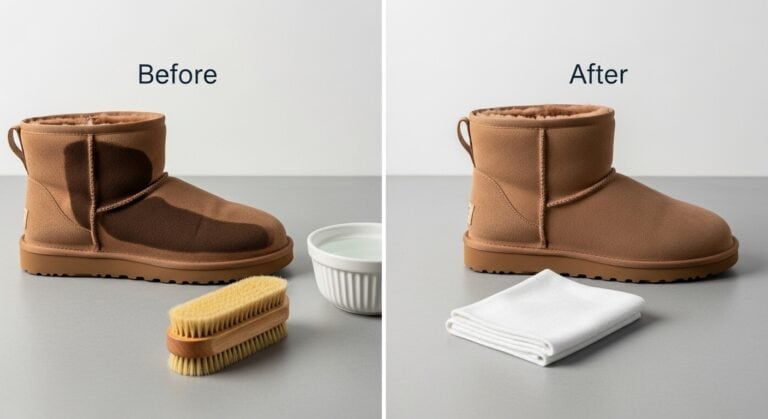
No. Wax and oils flatten and darken the nap. Use a suede-safe spray. For cleaning suede, see our guide to getting stains out of UGGs. For rough-out leather, see how to clean roughout leather boots.
Should I condition leather before waterproofing?
If the leather is dry or cracking, yes. Condition first, let it absorb, then waterproof. Our guide to using leather conditioner on boots covers how.
The Bottom Line
Match the product to the material. Crep Protect for suede and nubuck, Scotchgard Outdoor Water Shield for fabric and canvas, Nikwax Fabric & Leather Proof for hiking boots, and Sno-Seal for smooth leather work boots. Clean the boots first, test a hidden spot, and reapply when water stops beading.