
Last Updated: March 2026 | By: The BootsGuru Team
If you love winter hiking, you already know how quickly a normal trail can turn into a dangerous ice rink. Packed snow, frozen mud, and icy switchbacks can turn even experienced hikers into slip-and-slide disasters — and the same goes for ice walking on frozen paths, parking lots, and winter roads.
This is where microspikes become essential. These compact traction devices stretch over your boots and add metal spikes that bite into ice and packed snow. Think of them as tire chains for your hiking boots — lightweight, packable, and game-changing on winter terrain.
But not all traction devices are the same. Some hikers confuse microspikes, crampons, and Yaktrax-style coils. Using the wrong one can actually be dangerous on steep icy trails. This guide covers microspikes for hiking, trail running, and ice walking — so you'll know exactly which pair fits your needs.
After testing traction devices on icy New England trails and packed snow in the Rockies, here's what we found:
- What microspikes are and when to use them
- The difference between microspikes, crampons, and coils
- The best microspikes tested for every use case
- Which boots work best with microspikes
- How to choose the right pair for your adventures
What Are Microspikes?
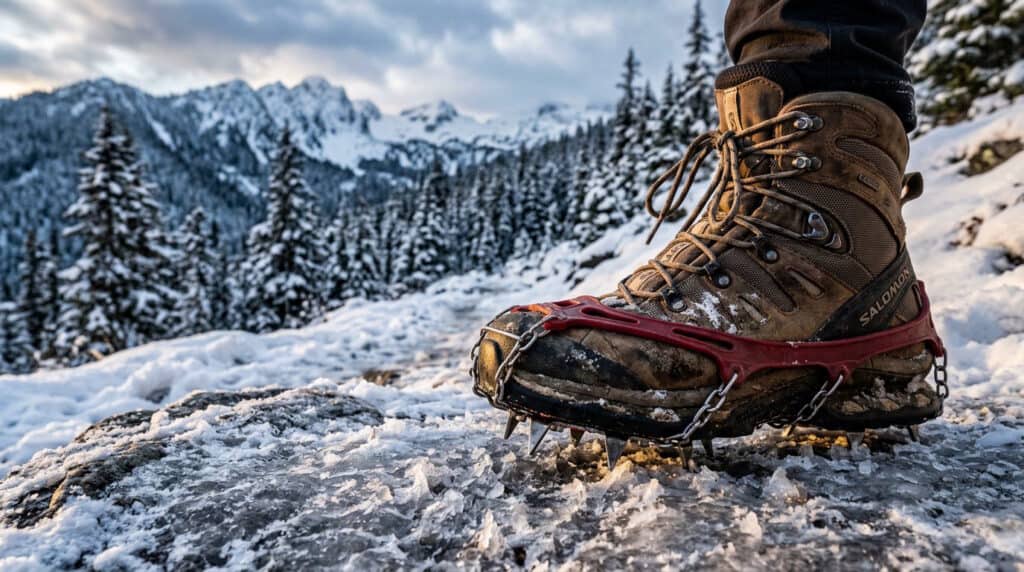
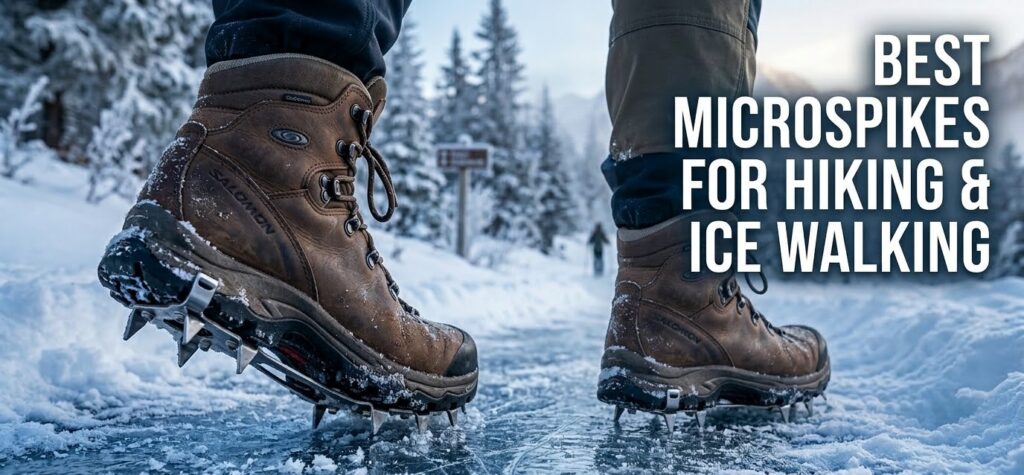
Ready for the adventure! This boot is equipped for icy trails.
Microspikes are lightweight traction devices that stretch over hiking boots or shoes. They use small metal spikes connected by chains and a flexible rubber harness to grip ice and packed snow.
Unlike mountaineering crampons, microspikes are designed for normal winter hiking and ice walking. They are flexible, lightweight, and easy to pack in a backpack when trail conditions change.
Most microspikes feature between 10 and 18 stainless steel spikes that dig into ice, dramatically improving traction and reducing the risk of slipping on frozen terrain.
Quick Picks: Best Microspikes 2026
| Award | Model | Best For | Spikes | Weight | Price |
|---|---|---|---|---|---|
| 🏆 Best Overall | Kahtoola MICROspikes | All-around hiking | 12 stainless steel (9.5mm) | ~11 oz | $$$ |
| 💪 Best for Steep Terrain | Hillsound Trail Crampon Ultra | Steep icy trails | 18 stainless steel | ~15.7 oz | $$$ |
| 👟 Best for Trail Running | Black Diamond Distance Spike | Trail running & fast hiking | 14 hybrid spikes | ~7 oz | $$$ |
| 🚶 Best for Ice Walking | Kahtoola MICROspikes | Urban ice, paths, roads | 12 stainless steel | ~11 oz | $$$ |
| 💰 Best Budget | Yaktrax Spikes | Light icy trails & walking | 6 tungsten carbide | ~8 oz | $ |
When Should You Use Microspikes?
Microspikes are designed for icy trails, packed snow, and frozen surfaces. They provide grip when hiking boots alone cannot safely hold on to the ground beneath you.
Use microspikes when:
- Trails are covered in packed snow or black ice
- Ice patches appear on hiking trails or switchbacks
- Temperatures cause overnight freeze-thaw cycles
- You are hiking on icy slopes, ridgelines, or exposed terrain
- You are walking on icy sidewalks, roads, or parking lots
- You are trail running in winter conditions
BootsGuru Expert Tip: Microspikes are most useful during early winter and spring when trails freeze overnight but partially melt during the day — creating the most dangerous black ice conditions.
Microspikes vs Crampons vs Yaktrax: Full Comparison
One of the most common questions we get is: "Do I need microspikes or crampons?" The answer depends entirely on your terrain. Here's a full breakdown:
| Feature | Microspikes | Crampons | Yaktrax Coils |
|---|---|---|---|
| Spike Depth | ~8–10 mm | 20–40 mm | None (wire coil) |
| Best Terrain | Packed snow, icy trails | Steep ice, mountaineering | Flat sidewalks, light ice |
| Boot Compatibility | Any flexible hiking boot | Stiff mountaineering boots | Any shoe |
| Weight (pair) | 7–16 oz | 16–32 oz | 5–10 oz |
| Safety on Steep Ice | ✅ Moderate–Good | ✅ Excellent | ❌ Poor |
| Packability | ✅ Very packable | ⚠️ Bulky | ✅ Very packable |
| Good for Hiking? | ✅ Yes | ⚠️ Overkill for most trails | ❌ No |
| Good for Ice Walking? | ✅ Yes | ❌ No | ✅ Yes (flat surfaces only) |
Bottom line: For most winter hikers and ice walkers, microspikes hit the sweet spot — aggressive enough for icy trails, light enough to carry everywhere. Crampons are for technical mountaineering only. Yaktrax coils are fine for flat sidewalks but dangerous on any slope.
Microspikes Full Comparison Table
| Model | Spike Count | Spike Length | Best Use | Durability | Weight |
|---|---|---|---|---|---|
| Kahtoola MICROspikes | 12 | 9.5 mm | General hiking & ice walking | ★★★★★ | ~11 oz |
| Hillsound Trail Crampon Ultra | 18 | 12 mm | Steep icy terrain | ★★★★★ | ~15.7 oz |
| Black Diamond Distance Spike | 14 | 8 mm | Trail running | ★★★★☆ | ~7 oz |
| Yaktrax Spikes | 6 | 6 mm | Walking / light ice | ★★★☆☆ | ~8 oz |
How to Choose Microspikes: Buying Guide
Not every microspike is built the same. Here's what actually matters when you're comparing models:
- Spike length matters more than spike count: A model with 12 deep 9.5mm spikes (like Kahtoola) outperforms an 18-spike model with shorter spikes on hard black ice. Depth = grip.
- Spike material: Heat-treated stainless steel lasts the longest. Tungsten carbide tips stay sharp longer on rocky mixed terrain. Avoid cheap zinc alloy spikes — they dull quickly.
- Harness elasticity in extreme cold: The rubber harness must stay flexible below -10°C (-14°F). Cheap harnesses stiffen and crack in deep winter. Look for elastomer or TPE harness materials.
- Boot compatibility: Microspikes work best with flexible hiking boots, trail runners, or insulated winter boots. Avoid using them on rigid mountaineering boots — they won't seat properly.
- Sizing: Most brands size by shoe size ranges (S/M/L). Always check the manufacturer's size chart for your specific boot — oversized microspikes can twist underfoot.
- Weight: If you're trail running or moving fast, choose models under 8 oz. For general hiking, 10–12 oz is perfectly acceptable for the extra grip you get.
- Ease of donning with gloves: In real winter conditions, you need to put these on with cold or gloved hands. Chain-and-harness designs (like Kahtoola) are easier than multi-strap systems.
Top 4 Best Microspikes: Detailed Reviews
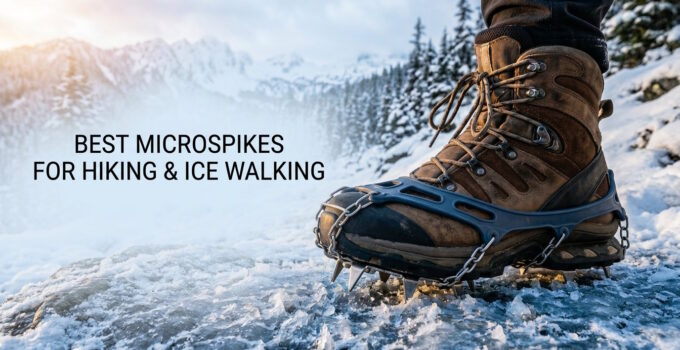
BootsGuru.com highlights the best microspikes for hiking and ice walking in 2026, emphasizing their superior traction, durability, and safety features for winter outdoor adventures.
🏆 1. Kahtoola MICROspikes — Best Overall

The Honest Take: Kahtoola MICROspikes remain the gold standard for winter hiking traction. They feature 12 heat-treated stainless steel spikes (9.5mm deep) connected by durable chains that dig aggressively into ice and packed snow.
The elastomer harness is extremely durable and stays flexible even in freezing temperatures — a critical advantage over budget alternatives whose harnesses stiffen and snap in deep winter. In our testing, these spikes provided reliable grip on everything from black ice to frozen mud to icy switchbacks.
Also excellent for ice walking: The Kahtoola MICROspikes work great for walking on icy sidewalks, frozen paths, and winter roads. The spike depth provides far more grip than Yaktrax coils on uneven frozen surfaces.
- Pros: Best-in-class grip, durable harness, easy to put on with gloves, works for hiking and ice walking
- Cons: Heavier than trail running options, premium price
💪 2. Hillsound Trail Crampon Ultra — Best for Steep Terrain

The Honest Take: The Hillsound Trail Crampon Ultra provides extremely aggressive traction thanks to 18 stainless steel spikes (12mm deep) and an added Velcro strap that locks the spikes securely to your boot — preventing the harness from shifting on steep descents.
This is the model to choose if you regularly tackle steep icy ridgelines, exposed winter trails, or sustained icy slopes where the Kahtoola feels like it's at its limit. The extra spike depth bites harder into solid ice and the strap system gives you confidence on sketchy descents.
- Pros: Most aggressive traction available in microspike category, strap keeps everything secure, great for steep terrain
- Cons: Heavier than other options, overkill for flat trails and ice walking
👟 3. Black Diamond Distance Spike — Best for Trail Running

The Honest Take: Designed specifically for trail runners and fast hikers, the Black Diamond Distance Spike weighs just about 7 ounces per pair while still offering 14 stainless steel spikes arranged to maximize grip during a running stride.
The harness is low-profile and won't interfere with your gait on mixed terrain. If you regularly alternate between snow and dry trail sections, the Distance Spike is comfortable enough to keep on for longer stretches without the clunky feel of heavier traction devices.
- Pros: Lightest option, running-optimized spike placement, packable into a vest pocket
- Cons: Not as aggressive as Kahtoola on pure ice, less suitable for steep technical terrain
💰 4. Yaktrax Spikes — Best Budget

The Honest Take: Yaktrax Spikes are the budget entry point into real spike traction (as opposed to the coil-based Yaktrax Walk). They use 6 tungsten carbide-tipped spikes and provide noticeably better grip than basic coil devices on light icy trails and winter sidewalks.
These are a solid choice for casual hikers, dog walkers, and urban commuters dealing with icy conditions. However, for serious winter hiking on steep terrain, the spike count and depth is insufficient — step up to Kahtoola for that use case.
- Pros: Budget-friendly, lightweight, great for light icy trails and sidewalks
- Cons: Only 6 spikes — not enough for steep or heavily iced trails, lower durability
Best Microspikes for Ice Walking
Ice walking is different from trail hiking. You're typically on flatter frozen surfaces — icy sidewalks, parking lots, frozen paths, and winter roads — rather than steep mountain trails. The right microspike for ice walking prioritizes comfort on flat surfaces and easy on/off over maximum spike aggression.
Best microspikes for ice walking:
- Best overall for ice walking: Kahtoola MICROspikes — the 9.5mm spike depth gives you confidence on uneven frozen surfaces that Yaktrax coils simply cannot handle
- Best budget for ice walking: Yaktrax Spikes — the tungsten carbide spikes are good enough for flat icy sidewalks and occasional winter walks
- Best lightweight for ice walking: Black Diamond Distance Spike — low-profile enough to wear comfortably on a mix of dry and icy surfaces without feeling clunky
BootsGuru Tip: For pure city ice walking (flat sidewalks only), you don't need the aggressive 18-spike Hillsound. Save those for steep icy trail descents where every spike counts.
Best Boots for Microspikes
Microspikes perform best with the right boot. The harness is designed to stretch over a flexible sole — so your boot choice matters for both fit and safety.
Best boot types for microspikes:
- Flexible hiking boots (mid or low cut): The ideal pairing — the rubber sole flexes naturally with the microspike harness and the boot provides ankle support on icy terrain
- Insulated winter hiking boots: Great for cold-weather hiking; the lugged rubber sole gives the harness something to grip onto
- Trail running shoes: Work well with lightweight microspikes like the Black Diamond Distance Spike — the flexible sole is a natural match
- Work boots and rubber boots: Most microspikes will fit over standard work boot soles — useful for workers on icy job sites
Avoid these with microspikes:
- Rigid mountaineering boots: The stiff sole prevents the harness from seating correctly — use crampons instead
- Soft-soled fashion boots: The harness can slip on smooth leather or synthetic soles without a proper lug pattern
- Narrow pointed toe boots: The harness may not stretch properly over unusually narrow or pointed toes
👉 Check our guide to the best winter hiking boots for our top boot recommendations that pair perfectly with microspikes.
Best Microspikes by Use Case
| Use Case | Best Pick | Why |
|---|---|---|
| General Winter Hiking | Kahtoola MICROspikes | Best all-around grip and durability |
| Steep Icy Trails | Hillsound Trail Crampon Ultra | Most aggressive spike count and depth |
| Trail Running | Black Diamond Distance Spike | Lightest option, running-optimized |
| Ice Walking (Urban) | Kahtoola MICROspikes | Deep spikes handle uneven frozen surfaces |
| Budget / Casual Use | Yaktrax Spikes | Affordable, good for light icy paths |
How to Put On Microspikes
- Stretch the rubber harness over the toe of your boot.
- Pull the back of the harness over your heel.
- Adjust the chains so spikes sit flat and centered on the sole.
- Check that nothing is twisted — chain slop underfoot can cause instability.
- Take a few test steps and re-adjust if the harness shifts.
Pro tip: Practice putting them on at home before your hike. In the field, you'll be doing this with cold hands or gloves on in freezing temperatures.
How to Care for Microspikes
Proper care significantly extends the life of your microspikes:
- Rinse after every use — salt and road grit accelerate rust on the chains and spikes
- Dry before storing — never store them damp in a bag, as this causes the rubber harness to degrade faster
- Avoid walking on pavement or dry rock — this blunts the spikes quickly; remove microspikes when terrain becomes ice-free
- Store in a breathable pouch — most microspikes come with a stuff sack; use it
How Long Do Microspikes Last?
High-quality microspikes typically last 3–5 seasons with regular use. The rubber harness usually wears out before the spikes themselves — look for cracking or loss of elasticity as the sign it's time to replace.
Walking on pavement or rocky dry surfaces is the fastest way to wear down spikes. Remove them the moment the trail becomes dry to maximize lifespan.
Frequently Asked Questions
Are microspikes worth it?
Yes. For winter hikers they are one of the most important safety tools. Microspikes dramatically improve traction on icy trails and prevent dangerous falls. A good pair costs $50–$100 and can last 3–5 seasons — excellent value for the safety benefit.
Do microspikes work on ice?
Yes. Stainless steel spikes (especially 9mm+ depth) dig into hard ice and packed snow, providing grip that hiking boots alone simply cannot achieve. For very steep technical ice, crampons are more appropriate — but for trail hiking and ice walking, microspikes are ideal.
Can you wear microspikes on pavement?
You can, but it will wear down the spikes quickly and can feel slippery on very smooth, flat surfaces. It's best to remove them when you reach dry pavement and put them back on when ice returns.
Are microspikes better than Yaktrax?
Yes for hiking. Standard Yaktrax coil models are designed for flat sidewalks, while microspikes with real metal spikes provide far better grip on icy trails and slopes. Yaktrax Spikes (the spiked version) close the gap somewhat, but Kahtoola MICROspikes are still significantly more capable on serious terrain.
What are the best microspikes for beginners?
The Kahtoola MICROspikes are the best choice for most beginners — they're easy to put on, work on a wide variety of terrain, and are very durable. If you're on a tight budget and only doing light winter walks, Yaktrax Spikes are a reasonable starting point.
Can I use microspikes on rocky trails?
Yes, but limit the time you spend walking on bare rock — it dulls the spikes quickly. Microspikes are best on icy and snow-covered trails. On mixed terrain (some ice, some dry rock), shorter spike models like the Black Diamond Distance Spike hold up better.
Microspikes vs ice cleats — what's the difference?
"Ice cleats" is a broad term that includes both microspikes and simpler coil devices like Yaktrax. True microspikes use multiple metal spikes connected by chains — they provide much more grip than basic rubber ice cleats. If you see something marketed as "ice cleats" with coils or small rubber nubs, treat it as a sidewalk device, not a hiking tool.
Do microspikes fit all boots?
Most microspikes come in S/M/L sizes based on shoe size ranges. They fit best on flexible hiking boots, trail runners, and insulated winter boots. They don't work well on rigid mountaineering boots (use crampons instead) or narrow fashion boots.