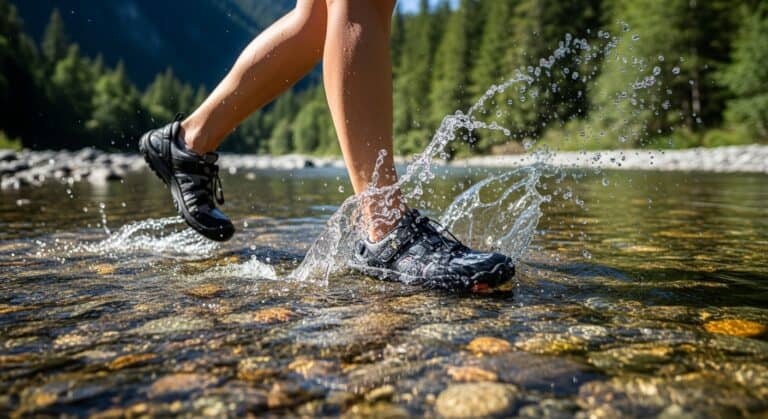
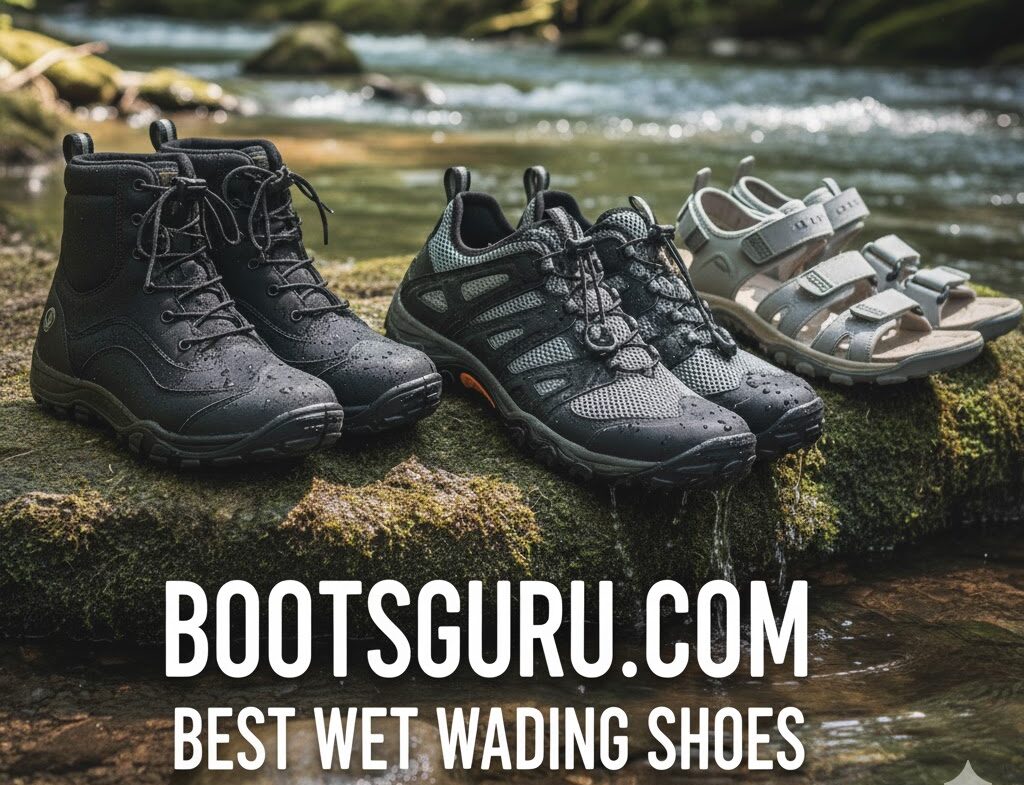

Wet wading shoes, lightweight wading boots, sticky rubber soles — choose the right pair and the river becomes your playground, not a hazard.
Quick takeaway: For most anglers, a high-quality sticky rubber sole shoe is the best mix of traction, durability and environmental responsibility. Add screw-in studs for extreme slickness.
Why Your Regular Hiking Boots Won't Cut It
Using trail shoes for river wading is a fast track to discomfort and injury. Here's why:
- No grip: Standard hiking soles are slick on algae-covered rocks. Dedicated wading soles stick.
- Waterlogged & heavy: Regular shoes absorb water and sap energy.
- Poor drainage: Trapped water = sloshing, chafing, and blisters.
- Lack of wading protection: No reinforced toe caps, specialized ankle support, or drainage tech.
Bottom line: Dedicated wet wading shoes and lightweight wading boots are purpose-built tools for safety, comfort, and performance.
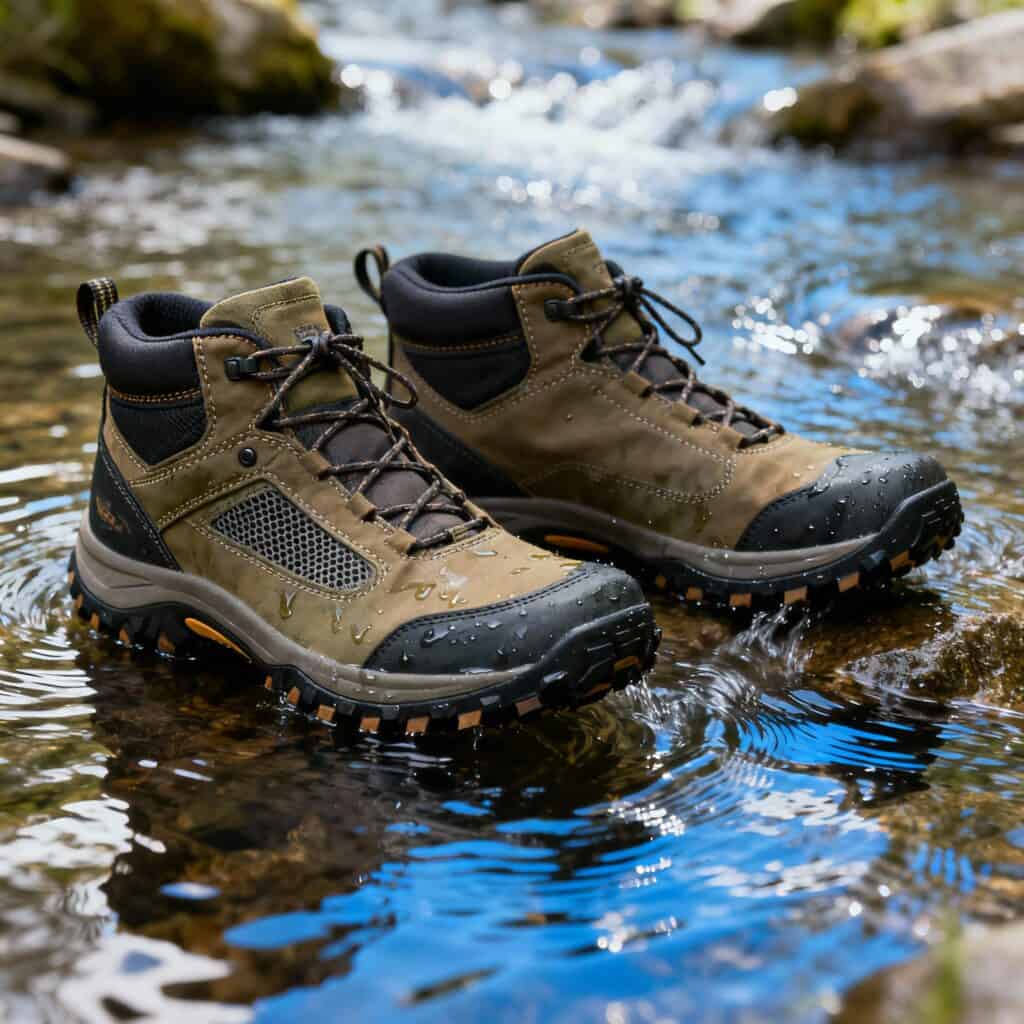
Water Temperature & Wet Wading Safety: Know Before You Wade
Wet wading is one of fishing's great pleasures in the right conditions — and a genuine hazard in the wrong ones. Water temperature is the factor most anglers underestimate, and it deserves its own section.
Water Temperature Thresholds
| Water Temp | Wet Wading Status | What to Expect |
|---|---|---|
| 65°F+ (18°C+) | ✅ Ideal | Comfortable for extended wading. Light neoprene or wool socks are still recommended for rock cushioning. |
| 55–65°F (13–18°C) | ⚠️ Manageable | Cool but tolerable with 3–5mm neoprene socks. Limit sessions and monitor for numbness in feet or legs. |
| 50–55°F (10–13°C) | ⚠️ Caution | Cold shock risk increases. Neoprene socks are essential. Keep wading sessions shorter and stay alert for muscle cramps. |
| Below 50°F (10°C) | 🚫 High Risk | Cold water shock, rapid loss of muscle control, and hypothermia become real dangers. Full waders strongly recommended. If you do wet wade, exit the water the moment you feel numbness spreading above the ankle. |
When to Use a Wading Staff
A wading staff is not just for older anglers or beginners. Consider it mandatory in any of these situations:
- Current faster than a brisk walk: If you wouldn't comfortably walk that pace on land, the current is working against your stability.
- Visibility below the knee: Turbid water hides drop-offs, submerged rocks, and holes. A staff gives you a third point of contact to probe ahead.
- Water above mid-thigh: Your center of gravity shifts dramatically once water reaches thigh height — a staff compensates for this.
- Rocky or uneven substrate: Even in clear, slow water, rounded boulders covered in biofilm are unpredictable. A staff lets you test footing before committing weight.
- Wading alone: If you're soloing a stretch of river, a staff is your insurance policy.
A collapsible wading staff (like those from Simms or Fishpond) folds away when you're casting and deploys in seconds. It's one of the highest-value safety investments in fly fishing.
The Sole of the Matter: Felt vs Rubber vs Studs
Choosing a sole determines your safety and traction. Here's a clear breakdown.
| Sole Type | The Good | The Bad (Honesty First) |
|---|---|---|
| Felt Soles | Unmatched grip on smooth, algae-covered rocks. Quiet and stealthy. | Banned in many regions (spreads invasive species). Poor on muddy banks and grass. |
| Sticky Rubber Soles | Modern standard — excellent on rocks, boats, and trails; durable; eco-friendlier. | Less secure than felt on the slickest "bowling ball" rock without studs. |
| Studded Rubber Soles | Ultimate traction — metal studs bite into slime, ice, and rock. | Loud and unsuitable in boats; can be slippery on smooth dry rocks. |
Practical verdict: For most anglers choose a quality sticky rubber sole. Add screw-in studs when you frequent ultra-slick runs.
Anatomy of a Great Wet Wading Shoe
- Rapid drainage: Mesh panels and drainage ports shed water instantly.
- Ankle support & protection: Mid-height cut, padded collar, reinforced toe & heel caps.
- Durable, quick-dry materials: Synthetic leather, hydrophobic fabrics, and rubber overlays.
- Secure lacing: Robust, non-corrosive hardware (important for saltwater).
- Lightweight construction: Nimble shoes reduce fatigue — essential for long approaches.
Sizing Guide: How to Get the Fit Right
Wading shoe fit is different from any other footwear you own. Get it wrong and you're dealing with blisters, slipping heels, or — worse — a shoe that comes off in current. Here's what you need to know before ordering.
Should You Size Up for Neoprene Socks?
Yes — almost always. Neoprene wading socks add meaningful volume to your foot, particularly the 3–5mm thickness recommended for fly fishing. As a general rule:
- 3mm neoprene sock: Size up half a size from your regular shoe size.
- 5mm neoprene sock: Size up a full size, sometimes 1.5 sizes if you have a wider foot.
- Thin wool liner + 3mm sock combo: Size up a full size.
When in doubt, size up rather than down. A slightly roomy wading shoe with neoprene socks will feel snug and secure. A too-tight shoe with neoprene socks will restrict circulation, cause numbness faster in cold water, and create pressure points that turn into blisters on long approaches.
How Lasts Differ Between Brands
A "last" is the foot-shaped mold a shoe is built around. Different brands use different lasts, which is why the same size can fit very differently across manufacturers:
| Brand | Last Profile | Best Foot Type |
|---|---|---|
| Simms | Medium-width, anatomical arch, snug heel | Medium-volume feet; true-to-size with neoprene adjustment |
| Korkers | Wider toe box, roomier overall | Wide or high-volume feet; good for bunions or swelling |
| Astral | Narrow midfoot & heel, wider toe box | Feet with a slim arch but splayed toes; runs narrow in the midfoot |
| Chaco (sandal) | Adjustable strap system — highly adaptable | Works for most foot widths; ideal if you fall between sizes |
| Frogg Toggs | Wide wading last with roomy toe box | Wider feet or those wearing thick neoprene socks |
Half Sizes & Width Options
Many wading boot brands offer limited half sizes and even fewer width options compared to standard footwear. If you're between sizes, the standard advice is to go up — but also check whether the brand offers a wide (2E) option before assuming a larger size will compensate. A longer shoe with a narrow last won't fit a wide foot; it'll just give you toe room you didn't need while still squeezing the ball of your foot.
Break-In Period
New wading boots — especially stiffer leather or synthetic leather uppers — benefit from a short break-in. Wear them dry around the house for a few sessions before hitting the river. Wet leather and synthetics will mold to your foot over time, but starting with a dry break-in prevents the worst hotspots from forming on your first full day out.
Quick Comparison — Top Wet Wading Shoes 2025
| Product | Best For | Sole Type | Price | Quick Rating |
|---|---|---|---|---|
| Chaco Z/2 Classic | Wading sandal for warm-weather, versatile use | Sticky rubber (ChacoGrip) | $$ | ⭐⭐⭐⭐ |
| Astral Loyak AC | Water-to-pavement hybrid, kayak fishing | Sticky rubber (Flex-Grip) | $$$ | ⭐⭐⭐⭐½ |
| Frogg Toggs Hellbender Wading Boot | Budget lightweight boot for moderate use | Felt or sticky rubber (model dependent) | $ | ⭐⭐⭐½ |
Best Wading Sandal: Chaco Z/2 Classic

- Polyester jacquard webbing upper wraps around the foot and through the midsole for a customized fit toe loop for secure fit adjustable and durable high-tensile webbing heel risers injection-molded ladder lock buckle
- Men's specific LUVSEAT PU midsole vegan-friendly construction
- Non-marking ChacoGrip rubber compound 3mm lug depth
| Sole Type | ChacoGrip™ rubber with good lug depth for wet traction |
| Best For | Versatility, casual wading |
| Key Feature | Adjustable webbing straps and a toe loop for secure fit, podiatrist-certified footbed |
Field-tested review: Chacos give a secure, connected feel thanks to the toe loop and adjustable strap system. The footbed provides excellent arch support for long days, and the sandals are resoleable for years of use.
Pros & Cons
- Pros: Very versatile, durable, excellent arch support, resoleable.
- Cons: Open-toe design leaves toes vulnerable — not ideal on very rocky runs.
Best Hybrid Water-to-Pavement Shoe: Astral Loyak AC
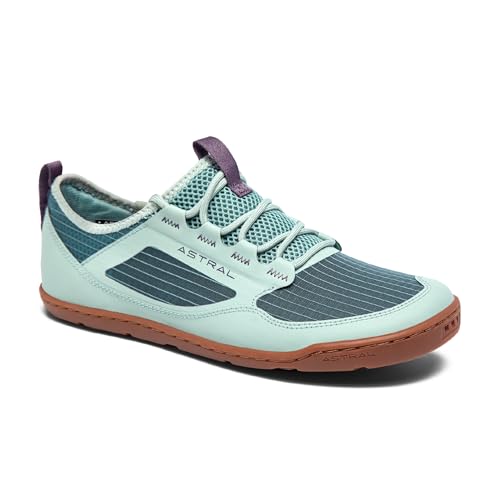
- Air Conditioned | Ultralight, hyper-breathable version of Astral’s best-selling Loyak Shoe for life on the water, especially when it’s warmer.
- Balanced Geometry | Outdoor industry’s first drop-in midsole pairs with a flexible outsole, a wider toe box, and Level Footbed’s zero drop for a barefoot-like feel.
- G.15 Rubber Flex Grip Outsole | Astral’s most durable rubber compound increases abrasion resistance and longevity while ensuring an excellent non-marking grip on wet and dry surfaces.
- Water Ready | Ultrafine ripstop mesh upper with drainage ports at the toebox reduce the entry of sand and silt. Lightweight, flexible design packs in the tightest cockpits and fullest backpacks. Every material used was designed to be submerged and dry quickly.
- Tech Specs | [Intended Use] Kayaking, SUP, Rafting, Water Hikes, Beach, Sailing, Fishing; [Drop] 0mm; [Weight] 6.9oz; [Shape] Narrow Midfoot & Heel, Wider Toe Box; [Upper] Ultrafine 100% Recycled Ripstop Mesh, TPU Reinforcements, Water-Resistant Laces; [Midsole] Removable 45C Closed Cell EVA Foam; [Outsole] Flex Grip Non-Marking Razor Siped G.15 Rubber
| Sole Type | G.15™ Flex-Grip rubber for wet and mixed surfaces |
| Best For | Kayak fishing, light wading, post-fish activities |
| Key Feature | Excellent drainage, minimalist water-friendly materials, sock-like entry |
Field-tested review: The Loyak AC drains instantly, looks sharp, and handles mixed surfaces well. The sock-like entry keeps grit out, but the shoe runs a bit narrow and the thin sole can transmit sharp rocks.
Pros & Cons
- Pros: Multi-surface performance, low water drag, comfortable fit.
- Cons: Narrow fit, thin sole — not ideal for heavy rocky wading.
Best Budget Lightweight Wading Boot: Frogg Toggs Hellbender Wading Boot

- FELT or CLEATED – available with felt or cleated soles to match your fishing environment and provide traction on wet rocks, gravel, mud and debris
- WATER DRAINING – durable, lightweight mesh and PVC upper with enhanced toe and heel caps provide protection and comfort for a full day of fishing
- COMFORT – polyurethane midsole provides cushioned comfort, wide wading last adds support and stability, padded ankle collar for a comfortable fit, speed laces for fast and secure fit feature locking lace clip
- DESIGNED FOR YOU, CREATED FOR THE OUTDOORS - our focus is on providing better performance, technology, features and affordability for our customers
- SINCE 1996 - frogg toggs has endeavored to provide the world’s best rainwear, waders, cooling products, footwear and accessories at the best possible prices

| Sole Type | Choose either felt sole or cleated / sticky rubber sole depending on model. |
| Best For | Beginner anglers or those on a budget for moderate wading. |
| Key Feature | Reinforced toe & heel, durable design for moderate river use. |
Field-tested review: For under $100 these boots punch above their weight for casual users — reinforced toecaps, durable hardware, and reasonable comfort for moderate use. Not built for daily, extreme fishing seasons.
Pros & Cons
- Pros: Affordable, available in felt or sticky rubber options.
- Cons: Heavier than wet-wading shoes, build quality below premium boots.
Essential Companions: Wading Socks & Gravel Guards
Never wet wade without these two items. They're critical for comfort and preventing blisters.
Wading Socks
Skip cotton. The standard is a 3–5mm neoprene wading sock for insulation and rock cushioning. Use merino wool liners for moisture-wicking in colder conditions.

- Constructed with an ultra-breathable and quick-draining mesh upper, stretch collar and high-abrasion TPU overlays in key wear areas
- Non-marking siped outsole for wet-slip resistance
- The Simms Pursuit Shoe is your ultimate wet-wading cross trainer powered by an upstanding in-river grip that's equally at home on the deck, paddle board, or anywhere you plan to pool your efforts
- Quick-lacing system allows for easy fit adjustment and low-line snag
- Sized to be worn barefoot or with a thin liner sock

- Purpose-Built for Wet Wading – Designed for days when waders aren’t needed, these neoprene socks provide comfort, warmth, and protection inside Simms wading boots.
- Durable Neoprene Construction – Built with 3.5mm abrasion-resistant neoprene in the upper and gravel guard for long-lasting use in rugged conditions.
- Integrated Gravel Guard – Fold-down gravel guard with boot hook keeps debris out of your boots, reducing discomfort and extending boot life.
- Unisex Sizing Options – Available in XS–XL with clear men’s and women’s sizing guidance to ensure a secure, reliable fit for every angler.
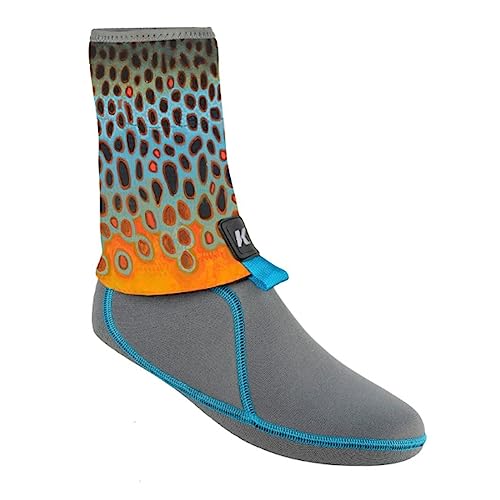
- KORKERS I-Drain Neoprene Guard Sock, Deyoung Brown Flank 3.5 mm
Gravel Guards
Neoprene cuffs that hook to your laces and stop sand, grit and small stones from getting in. Many modern socks have built-in gravel guards that clip to laces for convenience.
Pro Tips & Field Notes
Pro tip: Keep a spare pair of dry socks in a water-proof bag. If your feet go numb from cold or fatigue, swapping socks can restore circulation faster.
Field note: Screw-in studs are an excellent upgrade for sticky rubber soles on ultra-slick boulder runs — but remove them before stepping into boats or rafts to avoid damage.
How to Choose the Right Wet Wading Shoes
- Match sole to river conditions: If your runs are covered in algae and slick rock, consider studs or felt (but check regional regulations). Sticky rubber is a solid all-round option.
- Fit and protection: For sharp or uneven riverbeds, choose a thicker sole and reinforced toecap or heel support.
- Drainage: Good wet wading shoes drain quickly to avoid water drag inside your shoe.
- Materials: Hydrophobic synthetics help dry faster and reduce risk of spreading invasive species.
FAQ — Quick Answers
Are felt soles banned?
Yes — some regions ban felt soles because they can spread invasive aquatic species. Always check local regulations before using felt. When in doubt, use sticky rubber soles.
Do I need socks with wet wading shoes?
Yes — neoprene wading socks (3–5mm) are recommended for insulation, cushioning against rocks, and to reduce chafing inside the shoe.
Can I use studs in sticky rubber soles?
Yes — adding screw-in studs improves traction on slick surfaces. But remove studs when using boats or rafts and always follow local rules.
What water temperature is too cold for wet wading?
Below 50°F (10°C) is genuinely dangerous for wet wading. Cold water shock and rapid muscle fatigue can set in quickly. At 55°F and below, always wear neoprene socks, limit your time in the water, and never wade alone.
Should I size up wading shoes for neoprene socks?
Yes. Size up half a size for 3mm neoprene socks, and a full size for 5mm socks. Always try wading shoes on while wearing the socks you plan to fish in — never size based on your bare foot.
Step Confidently and Focus on the Fish
A dedicated wet wading shoe is an investment in safety, comfort, and better days on the water. Choose the right footwear, pair it with quality wading socks and gravel guards, and you'll spend more time fishing and less time worrying about your feet.