
The Brooks Cascadia 18 was, to put it diplomatically, a disappointment. It was heavier than its predecessor, ran on uninspiring foam, and multiple experienced testers found it difficult to run in at any meaningful pace. After 18 versions of one of trail running's most iconic shoes, there were serious questions about where the Cascadia line was heading.
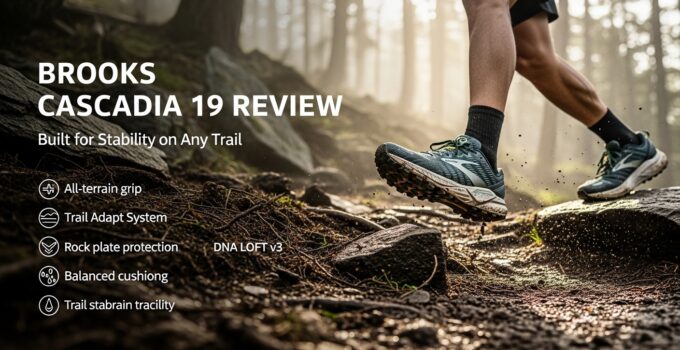
The Cascadia 19 answers every one of those questions. Released on August 1, 2025, it arrives with nitrogen-infused DNA Loft v3 foam, a genuinely lighter construction, significantly more forefoot cushion, and an updated Trail Adapt plate that finally lives up to its name. Tested across 100+ miles by independent reviewers from Rocky Mountain trails to Alpine Lakes Wilderness to Colorado's Front Range, the verdict is consistent: this is the best Cascadia in years, and one of the top all-around trail shoes of 2026.
This review covers everything you need to know — including the Cascadia 18 vs 19 comparison (the most common question for returning buyers), a plain-English explainer of what DNA Loft v3 actually means, a terrain-by-terrain performance table, a GTX vs standard decision guide, and an honest assessment of the shoe's one real weakness.
Disclosure: This review synthesises independent field testing data (including testers who purchased at retail), lab measurements, and real buyer feedback. Our Amazon link earns us a small commission at no cost to you.
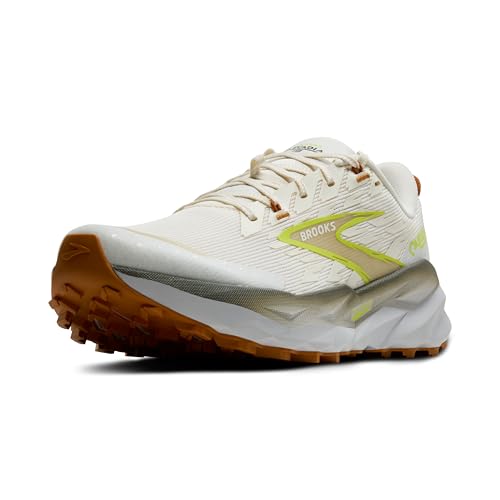
Overall rating: 8.6 / 10
→ Check current price and colorways on Amazon
Quick Verdict: Buy or Skip?
| Buy the Cascadia 19 if you... | Skip it if you... |
|---|---|
| Run mixed terrain — wet rock, hardpack, technical singletrack | Want a fast, snappy shoe for race-pace efforts |
| Are upgrading from a worn-out Cascadia 18 | Run primarily in deep mud (SC6 is better there) |
| Want a trail shoe that also works for hiking | Need max cushioning for 20+ mile ultras |
| Prioritise stability and protection over speed | Prefer a low-drop shoe (6mm may not suit you) |
| Want comfort from the first run — zero break-in | Run in very hot climates where the tongue retains sweat |
Key Specs at a Glance
| Spec | Value |
|---|---|
| Weight (men's size 9) | 10.7 oz / 303g (lighter than Cascadia 18) |
| Weight (women's) | ~9.4 oz / 266g spec (down from 10.1 oz on C18) |
| Stack height (heel / forefoot) | 34.8mm heel / 27mm forefoot (lab measured) |
| Heel-to-toe drop | 6mm claimed / 7.8mm lab measured |
| Midsole | DNA Loft v3 — nitrogen-infused supercritical EVA, two layers |
| Rock plate | Trail Adapt System — articulated Ballistic Rock Shield, flexible pod design |
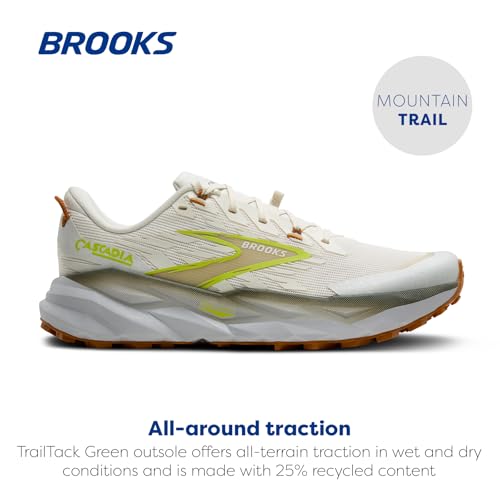
| Outsole | TrailTack Green — 25% recycled content, multidirectional chevron lugs |
| Upper | Airy engineered mesh, 53% recycled materials (69.6% at some retailers) |
| Sustainability | Certified CarbonNeutral® product |
| Versions | Standard + Gore-Tex (GTX); regular + wide widths; men's + women's |
| Price | $140–150 (standard); GTX ~$170–180 |
| Release date | August 1, 2025 |
Cascadia 18 vs Cascadia 19: What Actually Changed?
If you own a pair of Cascadia 18s and are deciding whether to upgrade, this is the section you came for. The short answer is: yes, upgrade — and the improvements are more meaningful than a typical annual update.
The Cascadia 18 drew consistent criticism from experienced trail runners. One long-term Cascadia fan who had run in every version admitted he "couldn't really run in it" and said the experience made him dread the 19 entirely. RunRepeat was characteristically direct in their C18 assessment, writing that after eighteen versions, it was finally time for Brooks to make the leap on foam technology. The C19 is that leap.
| Feature | Cascadia 18 | Cascadia 19 | Change |
|---|---|---|---|
| Weight (men's sz 9) | ~11.5 oz / 326g | 10.7 oz / 303g | Noticeably lighter — zippiest Cascadia yet |
| Women's weight | ~10.1 oz / 286g | ~9.4 oz / 266g | Significant reduction — more agile feel |
| Stack height (heel) | 32.6mm (lab) | 34.8mm (lab) | +2mm — more heel cushion |
| Stack height (forefoot) | 23.8mm (lab) | 27.0mm (lab) | +4mm forefoot — major improvement for forefoot runners |
| Heel-to-toe drop | 8mm | 6mm (claimed) / 7.8mm (lab) | Lower drop — more natural for varied footstrikes |
| Midsole foam | DNA Loft v2 — firm, dull, energy-returning | DNA Loft v3 — nitrogen-infused, noticeably softer and springier | The single biggest improvement |
| Rock plate | Trail Adapt (original design) | Trail Adapt updated — articulated pod design, more flexible | Better terrain adaptability, less rigidity |
| Upper overlays | Heavier, more continuous overlays | Lighter overlays — less midfoot stiffness, better water drainage | More agile, drains faster after water crossings |
| Gaiter attachment | Velcro loop — frequently caught on roots | Removed — replaced with clean corded hook | No more snagging on undergrowth |
| Tongue design | Standard | Plush padded — more comfort, retains moisture | Comfort gain, wet-day trade-off |
| Sustainability | 25% recycled outsole | 53%+ recycled upper + 25% recycled outsole + CarbonNeutral® certified | Significant eco-story improvement |
Verdict for Cascadia 18 owners: When your C18 is worn out, replace it with the 19 without hesitation. This is the largest single-version improvement the Cascadia line has seen in recent memory — the foam upgrade alone justifies the move, and the lighter weight makes the C19 genuinely more enjoyable to run in across every distance and pace.
Technology Explained: What the Specs Actually Mean on Trail

DNA Loft v3: what nitrogen-infused foam actually means in plain English
Every competitor review mentions DNA Loft v3. Almost none of them explain what it means or why it matters beyond calling it "softer." Here's the practical version.
Standard EVA foam is made by mixing chemicals that produce gas bubbles as the foam sets — the bubbles create the cushioning. Supercritical nitrogen injection (the "nitrogen-infused" part) replaces this process with a more controlled method: nitrogen gas under extreme pressure is injected into the foam compound, creating significantly smaller and more uniform closed-cell bubbles throughout the foam matrix. The result: the same volume of foam contains more bubbles, each smaller, creating a more consistent cushioning response with less material.
In real-world terms this translates to three things runners actually care about: lighter weight than standard EVA at the same cushioning level, better rebound retention over the life of the shoe (smaller bubbles compress and recover more consistently than larger ones), and a noticeably springier, livelier feel underfoot. Lab testing confirms a foam softness of 37.7 AC on the main midsole slab — RunRepeat confirmed this is notably lower (softer) than the C18's DNA Loft v2, which explains why the 19 feels like a different shoe entirely beneath the foot.
The C19 uses a two-layer midsole design: the main nitrogen foam slab sits below the Trail Adapt rock plate and registers at 37.7 AC. A secondary, thinner layer sits above the plate at 37.1 AC. Brooks is using essentially the same foam compound in both layers, creating a balanced ride that doesn't feel squishy at top or bottom — just consistently cushioned and controlled throughout the stack.
Trail Adapt System: articulated protection that moves with the terrain
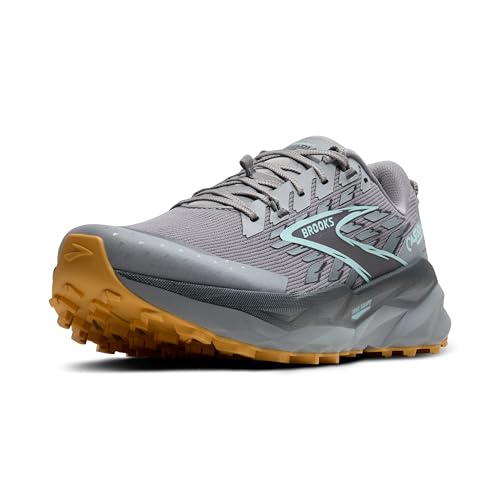
The Trail Adapt System — which Brooks calls an "articulated Ballistic Rock Shield" — is the C19's protective spine. Previous Cascadias used a more rigid plate that provided protection by resisting deformation. The updated design in the 19 takes a different approach: individual pods throughout the plate can flex and respond to terrain independently, allowing the shoe to conform to uneven surfaces without the stiff, disconnected sensation of a fully rigid plate.
In practice, the result is what iRunFar describes as the ability to "stay centred over your foot more easily without losing contact with the ground." On rocky, rooty, and off-camber terrain, the shoe molds around the surface beneath you rather than fighting it — giving a more natural, ground-connected feel while still protecting against sharp rock intrusion. The plate integrates directly with the DNA Loft v3 foam layers rather than sitting as a separate element, which is why the C19 doesn't feel like it has a rock plate when you're running — you feel the protection without the stiffness.
TrailTack Green outsole: all-terrain traction with eco credentials
The TrailTack Green outsole uses multidirectional chevron-pattern lugs in a rubber compound made with 25% recycled content. The tread pattern features triangular lugs at the toe and forefoot for uphill grip on ascents, and a wider braking lug pattern at the heel for controlled descents. This multidirectional design provides reliable traction across wet rock, hardpack dirt, packed gravel, and mixed surfaces — the Cascadia's intended terrain. It is not a specialist mud compound like Contagrip (Salomon) — if deep mud is your primary surface, see the terrain table below and the alternatives section. The "Green" designation reflects Brooks' commitment to sustainability in outsole manufacturing — a modest but meaningful step toward reduced environmental impact in the outsole production process.

→ Check current price on Amazon
Upper, Fit, and Comfort: What Running in It Actually Feels Like
The upper: breathable, agile, and drainage-improved
The C19 upper is built from an airy engineered mesh with structural overlays in key areas and uses at least 53% recycled materials by weight — rising to 69.6% recycled content at some retailers' spec listings, reflecting variation in manufacturing batches. The mesh is notably breathable compared to previous Cascadias, and iRunFar's Bryon Powell — who has tested every Cascadia in recent years — specifically notes that the 19 drains better than all prior versions after water crossings and submersions. Lighter and less continuous overlays in the midfoot and heel create slightly less stiffness and better overall flex than the C18.
The toe bumper provides generous coverage and flexible protection — multiple testers noted it's exceptional on technical rocky descents without creating pressure points even for runners who instinctively grip with their toes on steep terrain. The reinforced mudguard at the heel protects the lower upper from abrasion on rocky ground.
The tongue: comfort win with one honest caveat
The C19's padded tongue is plush and immediately comfortable — multiple testers describe the shoe as feeling like a "trail-ready slipper" straight out of the box, requiring essentially no break-in period. The tongue provides thick but lightweight cushioning at the ankle that helps prevent hot spots on long days.
The honest weakness: on warm days or wet runs, the padded tongue retains moisture and acts somewhat like a sponge. Two independent testers (Running Shoes Guru and Meta Endurance) specifically flagged this as a con — the tongue holds onto water and sweat longer than a thinner tongue would. In cold or mild conditions this is a non-issue. In summer heat or on very wet days, expect to notice it. It doesn't affect performance or fit, but it's worth knowing upfront rather than being surprised mid-run.
Fit and lockdown
The Cascadia 19 has a roomy toe box that allows natural toe splay without the pressure points that narrower trail shoes create on long descents. Midfoot lockdown is excellent — the structured mesh and lacing system hold the foot securely on off-camber and uneven terrain without feeling constrictive. Multiple testers describe the fit as immediately confidence-inspiring for technical running. CleverHiker describes it as a "snug fit and simple, effective lacing system" that makes it a favourite for long days.
The Ride: A Monster Truck, Not a Sports Car — and That's the Point
The best single description of the Cascadia 19's personality came from Better Trail: it's a monster truck, not a sports car. This framing is worth building on because it sets correct expectations for every type of runner considering the shoe.
The C19 prioritises protection, stability, and terrain confidence over speed, snap, and responsiveness. The wide platform gives a planted, grounded sensation on uneven surfaces — you feel stable rather than agile. The DNA Loft v3 foam provides smooth, balanced cushioning that's neither ultra-plush nor firm — it's the comfortable middle ground that allows you to run long without foot fatigue while still feeling connected to the trail beneath you.
On daily 4–6 mile loops on easy singletrack, the Cascadia 19 can feel slightly plodding compared to lighter, faster alternatives. The shoe is not what you reach for when you want to chase a fast pace on runnable terrain. On big mountain days — 10 to 20 miles with significant elevation change, technical terrain, and varied surfaces — it absolutely clicks into its purpose. MountaineerJourney's tester ran 100+ miles of this type of terrain and rated it among their top trail shoes of 2026. CleverHiker's Ben Van Apple, who has used the Cascadia since 2018 including PCT and CDT thru-hikes, describes the 19 as comfortable and agile for long-distance use.
The responsiveness is genuinely improved over previous versions — the nitrogen foam does add a touch of bounce that rewards quicker paces on runnable dirt sections. But compared to the Saucony Peregrine 16 or Topo Mtn Racer, which feel firmer and faster, the Cascadia 19 sits on the lower end of the responsiveness spectrum. It's a comfort-first, protection-first, confidence-first trail shoe — and in those categories, it excels.
Terrain-by-Terrain Performance
| Terrain | Performance | Rating |
|---|---|---|
| Wet rock and slick surfaces | Excellent — TrailTack Green compound grips wet rock reliably. One of the shoe's strongest terrains and a meaningful advantage over the Speedcross 6 on this surface. | ★★★★★ |
| Rocky technical singletrack | Very good — Trail Adapt plate provides confident protection without rigidity. Toe bumper handles rocky impacts well. iRunFar wore them straight out of the box on an 11-mile rocky Colorado Front Range run comfortably. | ★★★★½ |
| Hardpack dirt and packed trails | Very good — smooth transitions, reliable grip, efficient energy return from the nitrogen foam. One of the most enjoyable surfaces for the C19. | ★★★★ |
| Loose gravel and scree | Good — chevron lugs dig into loose material on ascents. Anti-debris mesh construction keeps material out of the shoe. | ★★★★ |
| Mixed mountain terrain | Excellent — the C19's designed environment. Better Trail's best outing was a 13-mile hike/run with 3,500ft of elevation in Alpine Lakes Wilderness where the shoe "really clicks." | ★★★★★ |
| Light mud and wet soft ground | Good — adequate grip in light muddy conditions. Not a specialist mud shoe. The Salomon Speedcross 6's Contagrip compound significantly outperforms on saturated mud. | ★★★ |
| Deep mud | Below average — shallow lugs by mud-specialist standards don't evacuate thick mud efficiently. Choose the Speedcross 6 for sustained deep mud terrain. | ★★ |
| Snow and early-season conditions | Good — adequate grip on packed snow. The broader platform provides stability on uneven frozen ground. Not as aggressive as specialist winter trail shoes. | ★★★★ |
| Road crossover | Possible for short sections — tested comfortable on road to trail access. The aggressive outsole causes premature wear with sustained road mileage, and the chunky sole feels stiff on pavement. Occasional crossover fine; daily road use not recommended. | ★★ |
Cascadia 19 GTX vs Standard: Which Version Should You Buy?

Both versions share the same DNA Loft v3 midsole, Trail Adapt plate, and TrailTack Green outsole. The difference is entirely in the upper. The GTX version uses Gore-Tex Invisible Fit technology — a membrane seamlessly bonded to the inside of the upper for waterproof protection. Here's how to choose.
| Feature | Standard Cascadia 19 | Cascadia 19 GTX |
|---|---|---|
| Waterproofing | Water-resistant mesh — handles light rain, not submersion | Full Gore-Tex waterproofing — feet stay dry in sustained wet conditions |
| Breathability | Good — airy mesh upper, notably breathable | Reduced — Gore-Tex membrane limits airflow significantly |
| Water drainage | Excellent — drains faster than all prior Cascadias (iRunFar) | Does not drain — waterproof membrane holds water inside if breached |
| Weight penalty | Base weight (10.7 oz men's sz 9) | Minimal — a few grams heavier |
| Price premium | $140–150 | ~$170–180 (+$20–30) |
| Best conditions | All seasons, warm/hot weather, stream crossings where drainage matters | Year-round wet climates, winter running, extended rain/puddle conditions |
Choose the GTX version if:

- You run year-round in a consistently wet or rainy climate — Pacific Northwest, UK, Scandinavia, New Zealand, wet mountain regions
- You run in cold winter conditions where keeping feet dry is important for warmth and performance
- You frequently encounter sustained puddle sections, bog crossings, or running in rain that lasts for hours rather than minutes
- You also use the shoe for hiking in wet conditions where foot dryness matters more than breathability
Choose the standard version if:
- You run in spring, summer, or mild autumn conditions — the standard mesh breathes significantly better than the GTX
- You run in hot climates where foot temperature is already a challenge
- You regularly cross streams where good water drainage matters — the standard version drains much faster than GTX after a wet crossing
- You're budget-conscious — the standard version handles light rain adequately due to the mesh construction
Key insight: Road Trail Run's Jana, who reviewed the GTX version specifically, found it "feels solid and trail-ready" with a true to size fit and good wraparound heel security. The GTX is not dramatically heavier or stiffer than the standard — it's a reasonable upgrade if your climate genuinely demands it. But the standard version's breathability and drainage advantage makes it the right choice for most runners.
Is the Brooks Cascadia 19 Good for Hiking?
Yes — and it's one of the better trail/hiking crossover shoes available in 2026. This is a meaningful claim worth substantiating.
The Cascadia has always straddled the running and hiking boundary, and the 19 is the most capable version for hikers yet. Better Trail logged a 13-mile hike and run in Washington's Alpine Lakes Wilderness with 3,500 feet of elevation — including steep hiking and some off-trail travel — and reported the shoe "really clicks" on this type of big, varied mountain day. CleverHiker's Ben Van Apple, who has logged over 6,000 miles on trails including the PCT, CDT, and Pinhoti Trail in Cascadias, rates the 19 as one of his favourite all-around trail runners for both running and hiking.
The wide platform gives a stable base for carrying load over technical terrain. The Trail Adapt plate provides meaningful underfoot protection for long hiking days. The DNA Loft v3 cushioning is genuinely comfortable for sustained walking gaits. The mild rocker keeps transitions natural at hiking pace. And the shoe is comfortable straight out of the box — CleverHiker confirmed no break-in period required, even on long days.
The honest caveats for hikers: the shallow lugs limit effectiveness in technical scrambling conditions where a stiffer, more aggressive hiking boot would provide better grip. The foam midsole reduces ground feel compared to a traditional hiking shoe — that "less sensory feedback" from the plush foam can make it harder to find perfect foot placement on genuinely technical off-trail terrain. And iRunFar notes the shoe isn't a replacement for a proper hiking boot when carrying a heavy pack on sustained technical routes. For day hiking on established and semi-established trails with moderate to challenging terrain — it's excellent. For multi-day backpacking with significant loads — consider a more supportive option.
iRunFar has included the Cascadia 19 in both their Best Trail Running Shoes guide and their Best Road-to-Trail Running Shoes guide — confirming the dual-use versatility is real and not just marketing language.
Sustainability: The Cascadia 19's Underreported Story
The Brooks Cascadia 19 is a certified CarbonNeutral® product — independently verified, not self-declared. This means Brooks has measured the full lifecycle carbon footprint of the shoe and offset or reduced emissions to achieve net-zero carbon across production, distribution, and disposal. The upper uses at least 53% recycled materials by weight, rising to 69.6% recycled content in some production batches. The TrailTack Green outsole uses 25% recycled rubber content without compromising performance — the "Green" designation reflects genuine manufacturing process improvements rather than a marketing label.
For eco-conscious trail runners, the Cascadia 19 is one of the most credibly sustainable options in its price range. Competitors like the Salomon Speedcross 6 have no equivalent sustainability certification at the shoe level. Hoka Speedgoat 5 uses some recycled materials but does not carry CarbonNeutral® certification. The Cascadia 19's sustainability profile is a genuine differentiator — and one that most reviews don't mention at all.
Durability: What to Expect Over Time
Field testing through 2025 and into 2026 gives a consistent picture of C19 durability. Running Shoes Guru reported impressive outsole and upper integrity after 70 miles of mixed and rocky terrain. MountaineerJourney logged 100+ miles including technical mountain terrain with no significant wear issues. CleverHiker, whose tester has logged thousands of miles in previous Cascadias, notes the 19 is "less durable than other hiking shoes" and wears down faster on rough routes — but qualifies this in the context of a trail running shoe being used for hike mileage, where a heavier hiking boot would typically outlast a trail runner on abrasive terrain.
The upper durability appears excellent — the Ripstop-reinforced mesh and welded overlays show good abrasion resistance at current testing mileage. The toe bumper protects the most impact-prone section effectively. No significant structural failures (eyestay, midsole delamination) have been reported in current testing data.
Expected lifespan on mixed trail terrain: 400–500 miles, consistent with the Cascadia line's historical durability. On very abrasive rocky terrain with heavy daily use, expect the lower end of that range. The nitrogen foam's better rebound retention compared to standard EVA suggests the cushioning will stay effective longer into the shoe's life than previous Cascadia versions.
Sizing: How to Get the Right Fit
Brooks is consistently regarded as the most accurate brand for true-to-size running shoes. The Cascadia 19 upholds this reputation — the majority of testers across all reviewed sources found their standard size worked correctly. Brooks' own fitting data supports true to size for most buyers.
The one nuance: iRunFar's reviewer notes that if you're between sizes, definitely try both and consider sizing down for more technical running use — the smaller size provides a more precise lockdown on steep, technical terrain. For hiking, comfort-oriented use, or if you're at the larger end of a size, true to size or half a size up is fine.
The toe box is roomy compared to many trail running shoes — it allows natural toe splay without feeling sloppy in the midfoot. The midfoot lockdown from the structured lacing system keeps the foot secure even with a roomier toe box than runners are sometimes used to. Wide versions are available and recommended for anyone with above-average foot width.
One note from Running Warehouse buyer feedback: some runners who previously wore older Cascadia models found the C19 felt slightly larger than prior versions due to the updated upper construction. If you're coming from a C15 or earlier, consider this when ordering.
Alternatives: When the Cascadia 19 Isn't the Right Shoe
The Cascadia 19 is an excellent trail shoe. It is not the right trail shoe for every runner. Here's what to consider if the shoe's personality doesn't match your needs.
If you want more mud grip: Salomon Speedcross 6 (~$140–160)
The Speedcross 6's Contagrip compound is specifically engineered for mud and soft terrain — it outperforms the TrailTack Green significantly in saturated ground conditions. The trade-off: the SC6 scores 1/5 for breathability (vs the Cascadia's good ventilation), it has only 10.4 oz weight at a 10mm drop, and it's an inferior choice on wet rock where the Cascadia excels. If your trails are primarily muddy — SC6. If your trails are mixed — Cascadia 19. See our full Salomon Speedcross 6 review for the direct comparison.
If you want more speed and snap: Saucony Peregrine 16 (~$140)
The Peregrine is firmer, faster-feeling, and more responsive on runnable terrain. Its Vibram Megagrip outsole also lasts longer on abrasive rock than TrailTack Green. The trade-off: less cushioning and stability than the Cascadia 19, not as comfortable for long hiking days, and a less plush overall experience. For runners who want the "sports car" instead of the "monster truck" — the Peregrine is the choice.
If you want more cushioning for ultras: Hoka Speedgoat 5 (~$155)
The Speedgoat prioritises maximalist cushioning for ultra-distance efforts — significantly more foam, a softer ride, and better shock absorption for 20+ mile days. The trade-off: heavier, less technically precise on steep terrain, and less stable on off-camber surfaces than the Cascadia 19. For runs regularly exceeding 20 miles, the Speedgoat's cushioning advantage matters.
If you want zero drop and a wide toe box: Altra Lone Peak 9 (~$130)
Zero drop, foot-shaped toe box, completely different running philosophy. For forefoot strikers, runners transitioning to natural foot mechanics, or anyone who finds the Cascadia's 6mm drop too high — the Altra is the alternative. The trade-off: less structured support, different outsole, different cushioning philosophy entirely.
Final Verdict: Is the Brooks Cascadia 19 Worth It in 2026?
Yes. Unambiguously, and without significant qualification. The Cascadia 19 is what trail running's most storied all-around shoe was always supposed to be — protective without being heavy, cushioned without being mushy, stable without being rigid, and versatile without compromising any individual performance category.
The DNA Loft v3 foam upgrade is real and meaningful. The lighter construction makes a genuine difference to how the shoe feels on foot. The Trail Adapt plate finally delivers on its premise of terrain adaptability. And the CarbonNeutral® certification makes it one of the most sustainably credible trail shoes in its price range.
The honest limitations are narrow: it is not a fast shoe, not a mud specialist, and not suited to ultra distances where maximum cushioning matters more than terrain confidence. Runners who understand these limitations and buy accordingly will find it earns a permanent rotation spot.
At $140–150, it's priced competitively against the Peregrine, Speedcross 6, and Speedgoat. Given what it delivers, it offers excellent value.
Rating: 8.6 / 10
- ✅ DNA Loft v3 — finally the foam this shoe deserved
- ✅ Lighter than every recent Cascadia
- ✅ Excellent on wet rock, technical singletrack, and mixed mountain terrain
- ✅ Best trail/hiking crossover shoe in its price range
- ✅ CarbonNeutral® certified — most sustainable option in class
- ✅ Comfortable from day one — zero break-in required
- ⚠️ Padded tongue retains moisture in warm/wet conditions
- ⚠️ Not a mud specialist — SC6 wins in deep mud
- ⚠️ Not a fast shoe — trades speed for protection and stability
→ Check current price and colorways on Amazon
Frequently Asked Questions
Is the Brooks Cascadia 19 worth it in 2026?
Yes — one of the top all-around trail shoes of 2026 at $140–150. The DNA Loft v3 foam, lighter construction, and improved forefoot cushioning make it a genuine step forward. Rated 8.6/10 by independent testers with 100+ miles of testing from launch date.
Should I upgrade from the Cascadia 18 to the 19?
Yes, when your C18 is worn out. The C19 is lighter (down to 10.7 oz from ~11.5 oz), has significantly more forefoot cushion (+4mm), softer and more responsive nitrogen foam, and better water drainage. The Cascadia 18 was widely criticised for its heavy, uninspiring foam — the 19 addresses both issues directly. This is the largest single-version improvement in recent Cascadia history.
Is the Brooks Cascadia 19 GTX worth the extra cost?
Worth it for wet-climate year-round runners and those who run in winter conditions where waterproofing is a genuine priority. Not worth it for summer running or warm climates — the Gore-Tex membrane reduces the standard version's good breathability significantly. Note: the standard version's airy mesh drains faster after stream crossings than GTX, which can be an advantage on routes with water obstacles.
Is the Brooks Cascadia 19 good for hiking?
Yes — one of the best trail/hiking crossover shoes in 2026. Wide platform, Trail Adapt plate protection, and DNA Loft v3 cushioning make it genuinely comfortable for big mountain days. CleverHiker's tester has logged thousands of miles in Cascadias across PCT and CDT thru-hikes. Best for day hiking on technical established trails — not ideal for multi-day backpacking with heavy loads.
Does the Brooks Cascadia 19 run true to size?
Yes — Brooks is the most consistent brand for true-to-size running shoes. Most buyers find their standard size works correctly. If between sizes, iRunFar recommends trying both and considering the smaller for technical terrain use. Wide version available. Roomy toe box allows natural splay without needing to size up.
How does the Cascadia 19 compare to the Salomon Speedcross 6?
The Cascadia 19 is more versatile overall — significantly better breathability, excellent on wet rock and mixed terrain, and more comfortable for hiking. The Speedcross 6 wins in pure mud and soft-ground traction due to its Contagrip compound, and provides a firmer, more ground-connected feel for technical singletrack specialists. If your running is mixed — Cascadia. If mud is your primary surface — SC6. See our full Speedcross 6 review for the direct head-to-head comparison.
What is DNA Loft v3 and is it better than previous versions?
DNA Loft v3 uses nitrogen-infused supercritical EVA foam — a manufacturing process that creates smaller, more uniform bubbles in the foam matrix, producing lighter weight, better rebound, and a springier feel compared to standard EVA. Lab testing confirms the C19 midsole is noticeably softer than the C18's DNA Loft v2. In practice: the C19 feels like a different (better) shoe under your feet from the first run.