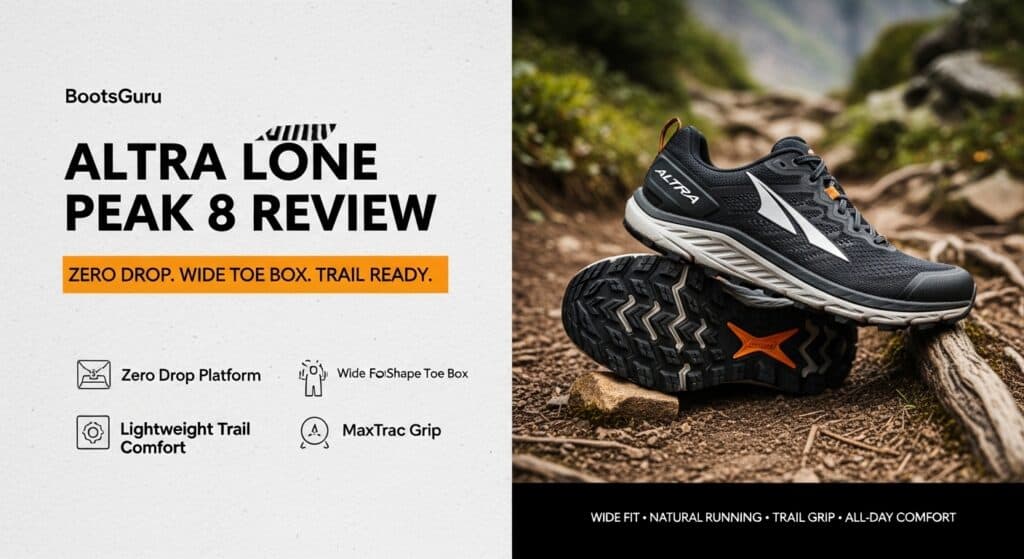

There is a running joke in the long-distance hiking community: "Altra doesn't make hiking shoes — they make trail runners that hikers keep stealing." The Altra Lone Peak has been the most popular shoe on the Appalachian Trail for years running. In the 2025 AT Thru-Hiker Survey, over 50% of trail runner wearers rated their footwear a perfect 10/10. The Lone Peak is the primary reason for those numbers. And the LP8, released in January 2024, may be the best version yet — not because it reinvented the formula, but because it finally fixed the one thing that needed fixing.
⭐ Quick Verdict: Altra Lone Peak 8 — 8.1/10
"The Trail Running Shoe That Hikers and Thru-Hikers Love Even More Than Runners Do"
The Altra Lone Peak 8 is the most consistently loved trail shoe among hikers and thru-hikers — not because it is the best trail runner, but because its wide FootShape toe box, zero-drop geometry, and immediate comfort make it exceptional for long, loaded days. The ripstop upper upgrade over the LP7 addressed the one meaningful durability concern. The MaxTrac outsole remains the honest limitation — adequate on dry terrain, poor on wet rock. At a discounted price in 2026 with the LP9 now available, the LP8 represents outstanding value for established-trail hikers and thru-hikers.
✅ Buy if: Wide feet, established trail hiking, thru-hiking, zero-drop convert, LP7 owner wanting a better upper, looking for value vs. LP9. | ❌ Skip if: Wet/technical terrain focus, narrow feet throughout, need arch support, winter/snow conditions, or unwilling to transition to zero-drop gradually.
This review is written in 2026 with the benefit of real-world data across 300–500 miles from multiple independent testing sources, the LP8 vs. LP9 comparison that 2024 reviews couldn't make, and a hiking-first perspective that most trail running reviews underweight. If you are searching "Altra Lone Peak 8 review" in 2026 and wondering whether to buy the LP8 at a discount or spend full price on the LP9, this is the review that answers that question directly.
Table of Contents
- Technical Specifications
- What's New in the LP8: The Ripstop Upgrade
- Fit, Sizing, and the FootShape Difference
- Foot-Type Matching Guide
- Zero-Drop: The Science and Adaptation Protocol
- Midsole: EGO Foam Performance
- Outsole: MaxTrac — The Honest Assessment
- Upper: Ripstop Mesh Breathability and Durability
- StoneGuard Rock Plate and Toe Protection
- Gaiter Trap: The Thru-Hiker Feature
- Durability: 300–500 Miles, What Fails First
- Trail Running Performance
- Hiking and Backpacking Performance
- Thru-Hiking: By Trail, By Conditions
- LP7 vs LP8 vs LP9: The Head-to-Head
- vs. Hoka Speedgoat, Topo Traverse, Salomon Speedcross
- Who Should NOT Buy the LP8
- Is the LP8 Still Worth Buying in 2026?
- Performance Scores by Category
- FAQ — 10 Questions Answered
- Final Verdict
Technical Specifications

| Specification | Value | Source / Notes |
|---|---|---|
| MSRP | $140 | $10 less than LP7 ($150) — Altra's counter-inflation move |
| Drop | 0 mm (zero-drop) | Heel and forefoot at equal height |
| Stack Height (claimed) | 25 mm / 25 mm | Altra spec |
| Stack Height (lab measured) | 22.7 mm heel / 21.3 mm forefoot | RunRepeat caliper measurement; 1.4mm actual heel-toe difference |
| Weight (men's size 9) | 10.7 oz / 303 g per shoe | Men's pair: 21.4 oz |
| Weight (women's) | 9.2 oz / 261 g per shoe | Women's pair: 18.3 oz |
| Midsole | Altra EGO foam | Firm-side of moderate cushioning; consistent with LP7 |
| Outsole | MaxTrac rubber — 3mm chevron lugs | Multi-directional, versatile but not specialist |
| Upper | Ripstop mesh (new for LP8) | Key upgrade vs LP7's air mesh; square pattern vs LP7's diamond |
| Rock plate | ✅ StoneGuard (forefoot) | Full-length, flexible; does not significantly impair flex |
| Waterproof | ❌ No | Non-WP mesh only; GTX version not available in LP8 |
| Toe box width (lab) | 84.2 mm at big toe | RunRepeat caliper; widest toe box in class |
| Midfoot width (lab) | 97.9 mm | RunRepeat caliper; wider than average |
| Sizing | True to size | LP8 runs very slightly larger than LP7; consistent across sources |
| Wide option | ✅ Available | Both men's and women's |
| Gaiter trap | ✅ Velcro tab (larger than LP7) | For running gaiters; front gaiter ring removed in LP6+ |
| Ideal use | Trail running, hiking, thru-hiking | Widely acknowledged as a dual-purpose shoe |
Check Current Price on Amazon →
What's New in the Lone Peak 8: The Ripstop Upper Upgrade

The Altra Lone Peak 8 is, as Believe in the Run put it, "nearly identical to version seven" — and that is almost entirely good news. The LP7 was an excellent shoe. The one persistent criticism was upper durability: the quick-dry air mesh of the LP7 was vulnerable to failure at the mesh-meets-foam junction along the sides, a specific structural weakness that showed up in aggressive off-trail use. The LP8 fixes this with a new ripstop nylon mesh upper — the same construction Altra used in the LP4 and LP6 — that is meaningfully more abrasion-resistant without sacrificing breathability.
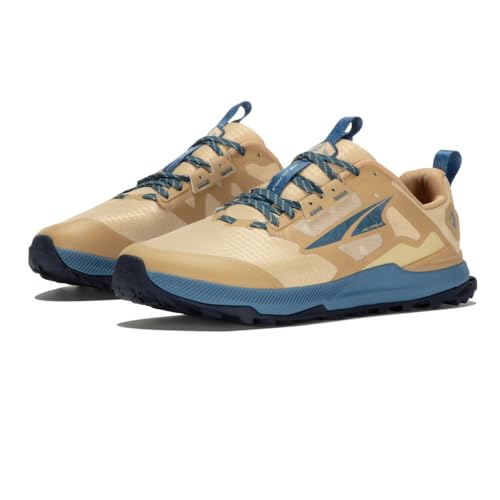
How to tell them apart at a glance: the LP7 has a diamond mesh pattern; the LP8 has square-shaped ripstop gridded mesh. That visual distinction is the fastest identification test for anyone trying to distinguish the two on the trail or in a used gear sale.
The other LP8 updates are small but thoughtful. A longer heel pull tab solved the LP7's frustrating entry problem when feet are swollen or the shoe is frozen in cold conditions. The velcro gaiter trap is wider than the LP7's for more reliable gaiter attachment. The lateral tongue gusset is tighter, improving midfoot lockdown and reducing debris entry. Laces are slightly longer with extra lace holes for fit customisation. The lowest lace holes have added plastic support for upper integrity under hard lateral loads.
What did not change: the Altra EGO midsole compound, the MaxTrac outsole geometry, the FootShape toe box dimensions, the StoneGuard rock plate, and the zero-drop geometry. This is the correct approach to iteration — fix what was broken, preserve what worked.
One more notable fact: Altra reduced the MSRP from $150 (LP7) to $140 (LP8). In a market where most brands add $5–$10 with each model update, this counter-inflation move was noticed and appreciated across every review that mentioned it.
Fit and Sizing: The FootShape Difference, Width Options, and the LP8 Quirk

The Altra Lone Peak 8 fits true to size for the vast majority of buyers. This is a simpler answer than many trail shoe reviews give — but it comes with one important qualifier: the LP8 runs very slightly larger than the LP7. If you are sizing based on previous LP7 ownership, be aware that some LP7 owners found the LP8 slightly roomier and preferred a half-size down from their LP7 size. If you are new to Altra, order your standard running shoe size.
The FootShape toe box is the defining fit characteristic of the entire Lone Peak line. At 84.2mm wide at the big toe (RunRepeat caliper measurement), it is one of the widest toe boxes in trail footwear. The geometry allows your toes to splay naturally rather than being compressed toward a narrowed point — which is why the Lone Peak is so frequently recommended as a solution for blisters, black toenails, and forefoot compression pain. The Doctors of Running team described the upper as having "one of my better fitting trail uppers this year" — locking down almost like a performance shoe in the midfoot while maintaining the roomy forefoot.
The wide option is genuinely useful for a specific profile: hikers whose midfoot pushes out over the sole edge of the standard width, rather than those who simply have wide toes. The FootShape toe box already accommodates wide forefeet; the wide version adds midfoot volume. If you are only wide at the forefoot, the standard width with the FootShape geometry may be sufficient without going to wide.
One sizing note that multiple sources confirm: the LP8 feels slightly larger than the LP7, with the toe box measuring marginally wider. For runners and hikers who like their Lone Peak with very precise midfoot lockdown, this may mean the half-size-down option is worth trying if you are between sizes. For everyone else — order your normal size.
Foot-Type Matching Guide: Who the LP8 Fits Perfectly — and Who It Doesn't
The Lone Peak 8 is genuinely excellent for specific foot profiles and measurably wrong for others. No other review maps this comprehensively.
| Foot Profile | LP8 Fit | Notes |
|---|---|---|
| Wide forefoot, standard heel | ✅ Perfect | The LP8's primary design target. FootShape toe box + midfoot lockdown was made for this profile |
| Wide forefoot and wide midfoot | ✅ Great — order wide | Standard width may still work; try standard first; go wide if midfoot overhangs the sole |
| Average-width foot | ✅ Good | Midfoot lockdown keeps average foot well-placed despite the wider forefoot geometry |
| Narrow foot throughout | ⚠️ Challenging | Heel rotation on uneven terrain documented across reviews. Midfoot locks but heel cup has excess volume. Better on mellow trails; problematic for technical running |
| Flat feet / low arch | ✅ Good | Neutral flat footbed provides no unwanted arch pressure. One of the better flat-foot trail options |
| High arch | ✅ Good | FootShape geometry accommodates high arches. Add an aftermarket insole (Superfeet) if more arch support is needed |
| Bunions / wide big-toe joint | ✅ Excellent | Minimal taper toward big toe makes LP8 one of the best bunion-friendly trail shoes available |
| Severe overpronation | ❌ Not recommended | Strictly neutral with no medial post or motion control. Severe overpronators need a stability shoe |
Zero-Drop: The Science Behind It and the Adaptation Protocol You Actually Need

Zero-drop is the most talked-about Altra feature and the most incompletely explained. Every review mentions "there's an adjustment period" and moves on. Here is what actually happens to your body — and the specific protocol for transitioning safely.
The Physiology of Zero-Drop
In conventional running and hiking shoes, a heel drop of 8–12mm means the heel is elevated relative to the forefoot throughout the stride. This shortened position reduces the loading on the calf-Achilles chain and shifts more load to the knee. Zero-drop places the heel and forefoot at equal height, requiring full-length calf engagement through the stride, loading the Achilles tendon through a longer range of motion, and engaging the plantar fascia in its natural stretched position.
The consequence of switching too quickly: the calf muscle complex (gastrocnemius and soleus) and the Achilles tendon have been operating in a shortened range in conventional footwear. Suddenly asking them to work through their full range under load — particularly on hilly terrain — without progressive conditioning produces Achilles tendinopathy or calf strain. These are the two most common Altra Lone Peak injuries among new zero-drop adopters who don't transition gradually. They are also entirely preventable.
The Gradual Transition Protocol
For runners transitioning from conventional drop shoes: Week 1 — 30–45 minutes per day in the LP8, conventional shoes for all other running. Week 2 — 60–90 minutes per day. Weeks 3–4 — 2–3 hours per day. Week 5 onward — full transition. Pay close attention to calf and Achilles tightness; ease back if either feels strained.
For hikers transitioning from conventional boots: Add 1–1.5 miles per week to your LP8 mileage. Start on flat terrain and add elevation gain only after the first two weeks. The lower-intensity loading of hiking vs. running gives more margin for error, but the transition still matters for multi-day trips.
If you are already in low-drop shoes (4mm or less): Minimal transition required. The remaining difference is small enough that most low-drop shoe users adapt to the LP8 within 2–5 days of use.
Long-Term Zero-Drop Benefits
After full adaptation: stronger lower-leg musculature, improved Achilles resilience, more natural toe-off mechanics, improved proprioception, and reduced knee loading for many runners. iRunFar describes the experience as "a heightened lower leg strength experience." The Trek's triple-crowner author has used Lone Peaks across PCT, CDT, and AT — over 10,000 miles — and attributes much of their foot health to the natural position the Lone Peak provides.
Zero-Drop and Plantar Fasciitis
Zero-drop is not automatically better or worse for plantar fasciitis — it depends on the specific biomechanical cause of your condition. Some sufferers benefit from the natural foot position and ground contact; others experience increased plantar fascia tension without adequate heel elevation. If you have active plantar fasciitis, consult a sports podiatrist before committing to zero-drop. For prevention and long-term foot health in most healthy feet, zero-drop is supportable.
Midsole Performance: What EGO Foam Feels Like After 400 Miles

The Altra EGO midsole sits on the firmer side of moderate cushioning — it is not the plush, maximalist stack of a Hoka Speedgoat, and it is not the paper-thin minimal feel of a racing flat. The Doctors of Running described it as "a consistent and predictive ride" that "does not feel like it facilitates your movement in a 'speed' or 'performance' way, rather a 'natural' way." Running Lab's reviewer offered a memorable comparison: "like an old school Jeep Wrangler, in a world where a lot of other trail shoes are trying to be like Land Rovers." That framing captures something real — the LP8 gives you what you need and not a great deal more.
The 22.7–25mm stack height (measured slightly lower than claimed by RunRepeat's caliper) provides adequate protection against rocks and roots while maintaining enough ground feel to make technical footwork intuitive. This is the correct balance for a shoe used for both trail running and hiking — maximalist cushioning reduces proprioception on technical terrain, and the LP8's moderate stack height keeps your foot-brain connection active on variable surfaces.
Over 300–500 miles, the EGO foam compresses gradually. Most testers report the LP8 feeling noticeably less cushioned by 350–450 miles — not useless, but reduced. This is consistent with the LP8's overall service life of approximately 400–500 miles. iRunFar notes: "Some runners may say that Altras break down fast, which may be attributed to midsole foam. But the Altra EGO used in many Altra shoe models provides a firm comfort over many miles." The firmness is an advantage here — firmer foams resist compression set better than softer maximalist compounds under the same mileage load.
The LP8's midsole stiffness is also specifically appropriate for hiking with moderate pack loads. A soft, pillowy midsole compresses unevenly under lateral load on uneven terrain when carrying a pack — reducing stability. The EGO foam's firmer character keeps the foot platform stable under the 20–25 lb pack loads that most day hikers and lighter backpackers carry.
MaxTrac Outsole: The Honest Assessment
The MaxTrac outsole is the LP8's most consistently noted limitation — and the limitation is specific enough that it shouldn't deter most hikers while it should absolutely inform anyone buying the LP8 for wet technical terrain.
| Surface Type | MaxTrac Performance | Notes |
|---|---|---|
| Hard-packed dry trail | ✅ Good | Reliable, confident — the surface the LP8 was built for |
| Loose dry dirt / gravel | ✅ Good | Chevron lugs handle loose surface reasonably; adequate on most established trails |
| Mixed dry terrain (rocks, roots, dirt) | ✅ Good | Versatile — handles mixed surfaces without excelling or failing on any single type |
| Wet rock (granite, sandstone, slate) | ❌ Poor | The LP8's documented weak point. Slipping on wet stone reported by multiple independent testers. Vibram Megagrip outperforms significantly |
| Mud | ⚠️ Average | 3mm chevron lugs lack the depth for true mud-shedding; ok on light mud, not on deep mud |
| Ice / frozen surface | ❌ No grip | Non-WP mesh and no microspike compatibility makes winter use inappropriate |
| Outsole durability | ⚠️ Average | RunRepeat's Dremel wear test showed faster wear than Vibram equivalents. Lug wear begins around 200–250 miles under heavy use |
Believe in the Run stated it directly: "Topo's use of Vibram in every model is actually light-years ahead of Max-Trac." That is a fair assessment for wet rock traction specifically. For the established dry-trail hiking that represents the majority of LP8 use, MaxTrac is adequate and the wet-rock limitation rarely comes into play. Know your trails before you buy.
Upper: Ripstop Mesh Breathability, Debris Exclusion, and Quick-Dry

The ripstop mesh upper is simultaneously the LP8's biggest improvement over the LP7 and one of its strongest individual attributes. Multiple independent testers noted it as one of the most breathable trail uppers they had worn — Switchback Travel's tester reported dry hiking socks at camp after full summer days in direct sun. The mesh's breathability in hot, dry conditions is exceptional, and the dual-purpose design of the ripstop material (more durable than air mesh while maintaining comparable breathability) represents a genuine material improvement.
Debris exclusion is better than the mesh's apparent openness suggests. The nearly fully gusseted tongue (tighter in the LP8 than the LP7) keeps debris out through the tongue gap, and the ripstop weave blocks most fine trail particulates from entering the upper panels directly. Multiple testers noted surprise at how debris-free the interior remained despite the shoe's breathable construction.
Quick-dry performance is a genuine LP8 strength for hiking specifically. Switchback Travel's tester post-holed through late-season snowfields and creek crossings and found the shoe dried quickly in ambient air. Non-waterproof mesh that dries in 20–30 minutes of walking is actually a better blister-management system than a waterproof boot that retains water for 24+ hours once saturated — a counter-intuitive reality covered in our trail running shoes vs. hiking boots comparison.
Cold performance is the mesh's limitation. iRunFar ran in cold rain, mud, and snow and kept feet warm — but this is with appropriate sock layering. The mesh itself provides minimal insulation. In cold conditions below approximately 45°F with wet exposure, feet will get cold faster in the LP8's mesh than in an insulated waterproof boot. This is not a year-round shoe in cold climates without appropriate sock management.
StoneGuard Rock Plate and Toe Protection
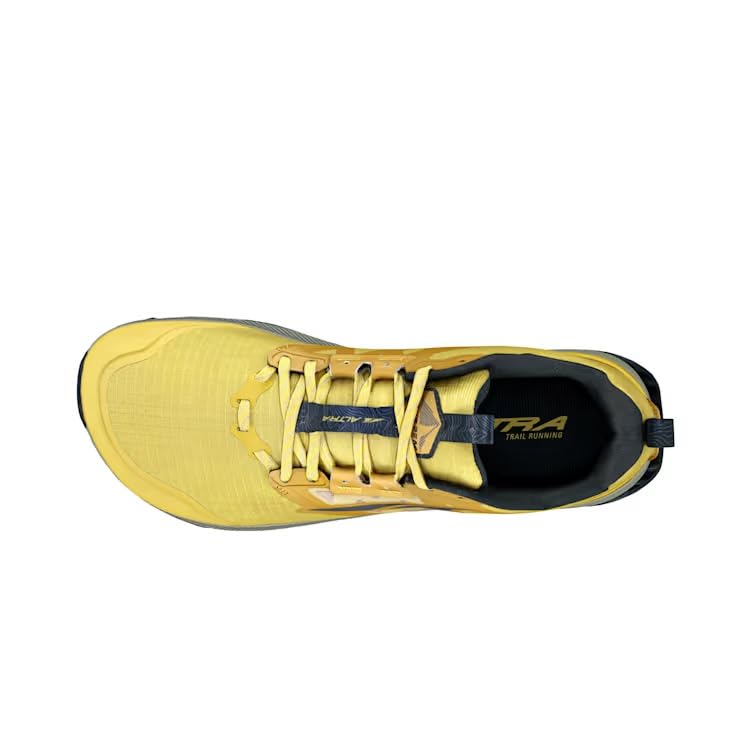
The LP8 includes a full-length StoneGuard rock plate in the forefoot. This flexible insert sits between the midsole and outsole, deflecting sharp rock edges and preventing the painful "stone bruising" that occurs when a sharp rock impacts the forefoot with full foot-strike force. The StoneGuard adds minimal weight and does not impair the LP8's characteristic flexibility — the shoe flexes naturally through the toe-off motion even with the plate present.
The toe bumper protection received mixed assessments from reviewers. iRunFar noted that the LP8 has "less overall toe protection with decreased rubber bumper on both the medial and lateral toebox" compared to the LP7 — calling this a con but acknowledging it as likely a weight-saving decision consistent with the LP8's overall mission. For trail runners taking direct rock impacts at speed, the reduced bumper is noticeable. For hikers at walking pace on established trails, the StoneGuard's underfoot protection is more practically relevant than the bumper's impact resistance.
Gaiter Trap: The Thru-Hiker Feature That Makes a Practical Difference
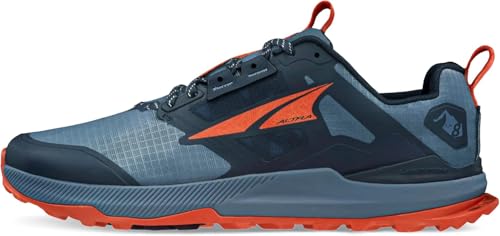
The velcro gaiter trap on the heel of the LP8 is a small feature with outsized practical importance for thru-hikers and trail runners who use gaiters. The Trek's triple-crowner author states it plainly: "If your shoes don't come with this, you have to mess around with superglue to try and attach velcro to your shoe — and it invariably falls off mid thru-hike."
Running gaiters (Dirty Girl, Altra brand) attach via velcro on the inside of the gaiter that grabs the velcro tab on the shoe's heel. Without the gaiter trap, you can manually apply velcro adhesive — but the adhesive fails under trail conditions within weeks. With the LP8's built-in tab, the attachment is reliable throughout the shoe's service life.
The LP8's gaiter trap is larger than the LP7's, providing more velcro contact area and more reliable attachment. The front gaiter ring (a second attachment point that appeared on LP1 through LP5) was removed starting with the LP6 — the rear velcro tab alone is sufficient for most gaiter use, though some thru-hikers miss the additional security of the dual attachment system.
Compare this to the LP9's upgrade: the Lone Peak 9 replaced the velcro tab with a built-in gaiter hook — a direct attachment point that some users find more secure than velcro. For LP8 buyers who use gaiters regularly, the velcro system works reliably; the LP9's hook is an improvement but not so significant it should drive the purchasing decision alone.
Durability: The 300–500 Mile Reality and What Actually Fails First

Altra shoes have a reputation for shorter service life than heavier, leather-construction alternatives. The LP8 has improved on the LP7 in the area that needed the most improvement, while the other durability characteristics remain consistent with the line's history.
Upper Durability: Significantly Improved
The LP7's primary premature failure mode was mesh-meets-foam junction breakdown along the sides of the shoe — the mesh tore away from the foam sidewall reinforcement under abrasive off-trail use. The Trek author went through 3 pairs of LP6s in just 800 miles, with the LP7 performing better but still subject to the junction failure under aggressive conditions. The LP8's ripstop mesh addresses this directly. The TGO Magazine test — 300km (186 miles) on the Cape Wrath Trail in wet Scotland, soaked most of the time — showed no mesh failure. Switchback Travel's 100-mile Pacific Northwest backpacking test found "virtually no wear" on the ripstop panels. The upper durability improvement is real and documented.
Outsole Durability: Unchanged and Modest
The MaxTrac rubber wears faster than Vibram equivalents under the same mileage load. RunRepeat's Dremel abrasion test confirmed this numerically. Most testers report noticeable lug wear beginning around 200–250 miles under heavy use. The outsole is the LP8's first durability failure point in most cases.
Midsole Durability: Adequate But Not Exceptional
The EGO foam maintains its cushioning well through approximately 300 miles, then shows progressive compression. Most testers report the shoe feeling noticeably less cushioned by 350–450 miles. iRunFar's more positive assessment — "firm comfort over many miles" — reflects the EGO foam's relative resistance to compression compared to softer maximalist foams. The LP8 does not "go flat" suddenly; it degrades gradually.
Overall Service Life
400–500 miles is the realistic service life for most LP8 users under regular trail running and hiking use. Thru-hikers who wear the LP8 for 500+ consecutive miles in demanding conditions (stream crossings, rough terrain, daily wear) should expect the shoe at the lower end of this range. For casual hikers doing 50–100 miles per year, a pair will last several seasons before meaningful degradation.
Trail Running Performance
As a trail runner, the LP8 occupies a specific niche: the natural-feeling, nimble, versatile daily trainer for runners who prioritise ground feel, toe splay, and a low-to-the-ground connection over maximum cushioning or carbon plate energy return.
The Doctors of Running found it excels in trails with "a lot of turns and a real need to be nimble" — the LP8's low stack height and flexible geometry make it quick-footed on technical, variable terrain where higher-stacked shoes lose responsiveness. The LP8 is not the shoe for speed work, racing, or trying to cover ground as efficiently as possible — for those applications, Altra's Timp (Vibram outsole, more structure) or shoes from Salomon's S-Lab line are more appropriate. The LP8 is the shoe for hard days on the trail where you want to feel the terrain under your foot and run naturally rather than be propelled artificially.
Multiple reviewers noted a maximum-distance consideration: the moderate stack height means that repeated impact against hard trail surfaces becomes apparent after approximately 15 miles in a single session — not painful at moderate intensity, but noticeable by late miles on very long days. Runners regularly covering 20+ mile training runs in the LP8 may find a higher-stack alternative more forgiving for mileage beyond this range.
Hiking and Backpacking Performance
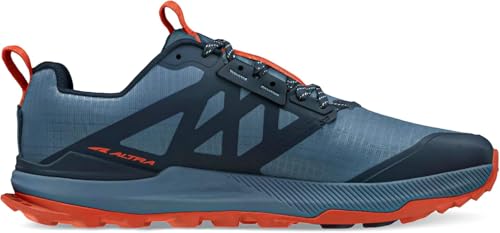
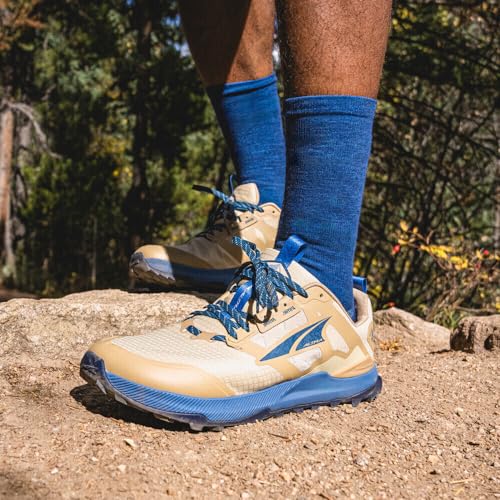
This is where the LP8 arguably earns its strongest endorsements — not from trail runners, but from hikers, backpackers, and long-distance walkers who have adopted it as their primary footwear. The iRunFar review named it "Best Zero-Drop Shoe" in their trail running guide specifically, but noted that it "ranks highly as an everyday shoe for individuals seeking underfoot comfort, a touch of grit, and a heightened lower leg strength experience."
For day hiking on established maintained trails, the LP8 is immediately comfortable with no break-in, light enough that shoe weight is never a complaint at the end of a long day, and sufficiently protective for standard trail debris and rocky surfaces. The FootShape toe box prevents the forefoot compression and black toenail issues that conventional hiking shoes cause on long descents — the toe can spread naturally as the foot impacts each step rather than being compressed against a narrow toe box.
For backpacking, the LP8 works well with pack weights under approximately 25 lbs. Above this weight, the softer midsole provides less lateral stability under load on uneven terrain than a stiffer hiking shoe or boot would. This is not a hard failure — experienced hikers with strong ankles have carried significantly more in trail runners — but the soft midsole is less forgiving at higher loads for less experienced backpackers.
The CNN Underscored tester took the LP8 to Sri Lanka for 60 miles of cycling and extensive hiking through tea plantations, mountain ascents, and winding village paths. Their assessment was clear: the shoes were sufficiently grippy across most terrain, remarkably comfortable throughout, and their feet "never got tired or blistered" across a very active multi-week trip.
Thru-Hiking: Which Trails, Which Conditions, How Many Pairs

The Altra Lone Peak line has been the most popular shoe on the Appalachian Trail for years. The 2025 AT survey confirms this dominance. But not all long trails are the AT, and the LP8's thru-hiking suitability varies significantly by trail conditions.
Where the LP8 Excels for Thru-Hiking
The LP8 is an excellent choice for: the Appalachian Trail (well-maintained, predominantly established surface, moderate technical demands), the Pacific Crest Trail in its dry southern and central sections (though snow sections require alternative footwear), the Arizona Trail (dry desert conditions — breathability is a significant advantage in 100°F+ heat), and the Ouachita Trail. In these environments, the LP8's light weight, immediate comfort, wide toe box, and gaiter trap combine to make it one of the best available choices at the price.
Where the LP8 Struggles for Thru-Hiking
The LP8 is a poor choice for: PCT sections with sustained snow and ice (non-WP mesh, no microspike compatibility, no insulation); the Great Divide Trail north of Jasper (The Trek author specifically calls this terrain out as LP-unfriendly due to notoriously wet and boggy conditions where the non-WP mesh is constantly saturated with no drying window); and any trail with sustained stream crossings in cold temperatures where wet feet create a hypothermia risk. For those specific environments, waterproof footwear or insulated boots are the appropriate choice regardless of the LP8's other strengths.
How Many Pairs for a 2,000-Mile Trail?
The average AT thru-hiker goes through four pairs of footwear, one roughly every 520 miles. This is consistent with the LP8's 400–500 mile service life. Budget for four to five pairs for a 2,000-mile trail. Altra's pricing ($140 MSRP, often less at discount in 2026) makes this financially manageable — four pairs at $130 each is $520, comparable to two pairs of premium leather boots.
The gaiter trap is a practical thru-hiking advantage that deserves specific mention here. Running gaiters (Dirty Girl, Altra) dramatically reduce sand, grit, and debris infiltration on long days — particularly important in the desert sections of the PCT and AZ Trail. The LP8's built-in velcro attachment makes gaiter use reliable where shoe modifications fail.
LP7 vs LP8 vs LP9: The Head-to-Head Comparison
This is the comparison that 2024 reviews couldn't write — and the primary question most Altra buyers have in 2026 as the LP8 sells at discount alongside the new LP9.
| Feature | LP7 | LP8 | LP9 |
|---|---|---|---|
| Upper material | Air mesh (diamond pattern) | Ripstop mesh (square) — durability upgrade | Updated mesh (further changes) |
| MSRP | $150 | $140 (reduced $10) | $150 |
| Gaiter attachment | Velcro tab | Velcro tab (wider) | Built-in gaiter hook (superior for thru-hikers) |
| Heel collar | Softer, forgiving | Slightly stiffer, reinforced | Redesigned — causes initial blisters for some; better after break-in |
| Heel pull tab | Short (hard when frozen/swollen) | Longer — solved LP7's entry problem | Continued improvement |
| Midsole | Altra EGO | Altra EGO (same) | More cushioning, more bounce |
| Outsole | MaxTrac | MaxTrac (same) | Updated MaxTrac — reportedly better grip and durability |
| Out-of-box comfort | Excellent | Excellent (soft heel cup) | Good — heel collar may need break-in |
| 2026 buy recommendation | Hard to find | ✅ Excellent value at discount | ✅ Best version — worth premium for outsole + gaiter hook |
The 2026 verdict on LP8 vs LP9: For thru-hikers planning to buy multiple pairs at the LP8's discounted price — this is the smart play. The LP9's improvements (better outsole, gaiter hook, more cushioning) are real but not transformative enough to justify paying $40–$60 more per pair when you need four pairs for a 2,000-mile trail. For casual hikers buying one pair and wanting the best current version regardless of price, the LP9 is worth the full MSRP. For anyone who has used the LP7 and loved it, the LP8 at a discount is an easy recommendation.
How the LP8 Compares: Hoka Speedgoat, Topo Traverse, Salomon Speedcross
| Shoe | Drop | Stack | Weight | Outsole | Choose This Over LP8 If… |
|---|---|---|---|---|---|
| Altra Lone Peak 8 | 0mm | 25mm | 10.7oz | MaxTrac | Zero-drop, wide forefoot, thru-hiking, established dry trails |
| Hoka Speedgoat 6 | 4mm | 38mm | 9.4oz | Vibram Megagrip | Max cushioning, wet terrain, long daily mileage, standard heel drop preferred |
| Topo Traverse 3 | 5mm | 28mm | 10oz | Vibram Megagrip | Vibram traction is a priority, near-zero drop preferred, slightly narrower fit needed |
| Salomon Speedcross 6 | 10mm | 35mm | 11.6oz | Contagrip MA | Mud and wet technical terrain specialist — not for established dry trails |
| Brooks Cascadia 17 | 6mm | 29mm | 11.2oz | TrailTack | Stability shoe preferred, moderate drop, conventional trail running fit |
The LP8 owns the zero-drop + wide toe box category decisively. No other shoe in the comparison provides that combination. The Topo Traverse is the closest competitor with its near-zero drop and wide-ish fit — but its narrower toe box and Vibram outsole give it a different character. Choose the LP8 for zero-drop hiking and established trail running; choose the Hoka Speedgoat for max cushion and wet terrain; choose the Topo Traverse if you need Vibram traction with near-zero drop.
Who Should NOT Buy the Altra Lone Peak 8
The most trust-building section of any honest review is the one that tells you not to buy the product when it is genuinely wrong for your needs. The LP8 is excellent for a specific range of users and wrong for others.
Skip the LP8 if you primarily hike wet or technical terrain. The MaxTrac outsole's documented poor performance on wet rock is not a minor quirk — it is a real grip deficit on the surfaces where grip matters most. If your trails are in the Pacific Northwest, Scottish Highlands, or any environment with persistent wet rock, you need Vibram Megagrip or Contagrip TA. The Hoka Speedgoat or Topo Traverse serve this need better.
Skip the LP8 if you have narrow feet throughout. Heel rotation on uneven terrain is a documented pattern among narrow-footed LP8 wearers. The midfoot locks down but the heel cup has excess volume for narrow heels. This is not dangerous, but it is uncomfortable and reduces your connection with technical terrain. A snugger heel-cup shoe — Salomon's X Ultra line or Brooks Cascadia — serves narrow feet better.
Skip the LP8 if you will not commit to the zero-drop transition. Achilles tendinopathy from sudden zero-drop adoption is real and documented. If you are not willing to follow a gradual transition protocol — starting with 30–45 minutes per day and building over 4–6 weeks — do not buy a zero-drop shoe for a specific upcoming demanding hike. The injury risk is genuine.
Skip the LP8 for winter hiking. The non-waterproof mesh provides no insulation in cold conditions, no water resistance for snow and ice, and no microspike or crampon compatibility. In winter conditions, you need insulated waterproof footwear.
Skip the LP8 if you need significant arch support. The neutral flat footbed provides no arch correction for severe overpronation. Motion control and stability shoe requirements are not met by the LP8.
Skip the LP8 for speed work and racing. The LP8's flexible, flat geometry doesn't provide the energy return or rocker-propulsion efficiency of performance-oriented shoes. The Altra Escalante or any carbon-plate road shoe is more appropriate for track work and racing.
Is the Altra Lone Peak 8 Still Worth Buying in 2026?
Yes — with clear-eyed context. The LP9 is now available at $150 MSRP, and the LP8 is selling at meaningful discount across retailers as inventory clears. The LP9 is a better shoe in three specific ways: a built-in gaiter hook (superior to the LP8's velcro tab for thru-hikers), an updated MaxTrac outsole with reportedly better traction and durability, and a more cushioned midsole with more bounce. These are real improvements.
The LP8 advantages in 2026: significantly lower price (often $90–$110 vs LP9 at $150), proven 300–500 mile durability data across multiple real-world long tests, and a softer, more forgiving heel cup that fits comfortably out of the box for most feet. The LP9's redesigned heel collar has caused initial blisters for some users — a break-in characteristic that the LP8's collar does not share. For thru-hikers who plan to go through four pairs across a 2,000-mile trail, the LP8 at $100 each is a $200 saving over the LP9 at $150 — money that buys you trekking poles, food, or resupply boxes.
💡 The 2026 LP8 Buying Recommendation
Buy LP8 if: You are a thru-hiker buying multiple pairs (the per-pair savings over four pairs are significant); you are an LP7 owner who wants the improved upper at a reduced price; you want proven real-world durability data at a lower price point. Buy LP9 if: You are buying one pair and want the best current version regardless of price, you prioritise the gaiter hook over the velcro tab, or you want the improved outsole traction for more varied terrain. Either way: The Lone Peak line remains the most trusted trail shoe in the hiking community for established trail use, and either version delivers on that reputation.
Performance Scores: Altra Lone Peak 8
Scores synthesised from 10+ independent test sources representing over 1,000 collective miles of testing including Cape Wrath Trail (300km), PCT, CDT, AT, Pacific Northwest, desert, and everyday trail use.
| Category | Score | Summary |
|---|---|---|
| Fit / Toe Box | 9.5/10 | The LP8's most consistent strength — 84.2mm toe box width, immediate comfort, no blisters reported across all tests |
| Out-of-Box Comfort | 9.0/10 | No break-in required; comfortable from first wear for all foot types except narrow-heeled |
| Upper Breathability | 9.0/10 | Exceptional in heat; dry socks at camp after full summer days; quick-dry post-crossing |
| Upper Durability (vs LP7) | 8.0/10 | Ripstop meaningfully improved over LP7's air mesh; no junction failures in 300km wet test |
| Dry Trail Traction | 7.5/10 | Reliable on hard-pack and mixed dry terrain; adequate for most established trail use |
| Wet / Technical Traction | 5.5/10 | MaxTrac's documented weakness — poor on wet rock; clearly outperformed by Vibram and Contagrip |
| Midsole Cushioning | 7.0/10 | Firm-moderate; appropriate for the shoe's identity; not a maximalist platform |
| Ground Feel | 8.5/10 | Low stack + flexible geometry provides excellent terrain feedback for technical footwork |
| Hiking Performance | 9.0/10 | Exceptional for established trail hiking; one of the best hiking-first trail runners available |
| Thru-Hiking Suitability | 8.8/10 | AT survey validated; 10,000+ LP miles of thru-hiking experience across multiple reviewers |
| Overall Durability | 7.0/10 | 400–500 mile service life; upper improved vs LP7; outsole wear remains the weak point |
| Value at Current Price | 9.0/10 | At 2026 discounted price vs LP9, represents excellent value — especially for thru-hikers buying multiple pairs |
| OVERALL SCORE | 8.1/10 | Strongly recommended for established-trail hikers, thru-hikers, and zero-drop trail runners. Best zero-drop trail shoe for hiking. |
FAQ — 10 Altra Lone Peak 8 Questions Answered
Is the Altra Lone Peak 8 good for hiking or just trail running?
It is genuinely excellent for hiking and widely considered better for hiking and thru-hiking than for pure trail running performance. The wide FootShape toe box prevents forefoot compression, the zero-drop geometry strengthens lower legs on long hikes, and the immediate comfort with no break-in makes it ideal for multi-day hiking. The 2025 AT Thru-Hiker Survey found over 50% of trail runner wearers (primarily Altra LP users) gave their footwear a perfect 10/10 satisfaction rating.
Do I need to size up in the Altra Lone Peak 8?
No — the LP8 fits true to size for most buyers. The LP8 runs very slightly larger than the LP7, so if you are sizing from an LP7, you may want to try a half-size down from your LP7 size. If you are new to Altra, order your standard running shoe or athletic shoe size. The wide toe box already provides forefoot room that standard shoe sizing does not account for — you do not need to size up to get toe room.
What is zero-drop and how long does it take to adjust to the Lone Peak 8?
Zero-drop means the heel and forefoot are at equal height — unlike conventional shoes with 8–12mm heel elevation. This shifts more load onto the calf, Achilles, and plantar fascia. New zero-drop users should transition gradually: start with 30–45 minutes per day, increase by 15–20 minutes per session over 4–6 weeks. Rushing the transition risks Achilles tendinopathy. Existing zero-drop or low-drop shoe users typically need only 2–5 days to adapt to the LP8 specifically.
Is the Altra Lone Peak 8 good for thru-hiking?
Yes — for the right trails in the right conditions. The LP8 is excellent for the AT, PCT (dry sections), Arizona Trail, and most established long trails in dry-to-moderate conditions. It is not suitable for sustained snow/ice sections, consistently cold-wet terrain without drying windows, or trails in cold temperatures where wet feet create a hypothermia risk. Budget four to five pairs for a 2,000-mile trail; the LP8's 400–500 mile service life means multiple replacements on any long trail.
Altra Lone Peak 8 vs LP9 — which should I buy?
For thru-hikers buying multiple pairs: LP8 at the discounted price is the smart financial choice — four pairs at $40–$60 less each saves $160–$240 over the LP9. For casual hikers buying one pair: the LP9 offers the improved gaiter hook, updated outsole, and more cushioning for the same $150 MSRP as the LP7 — worth the premium for a single-pair purchase. The LP8 remains excellent; the LP9 is better in measurable ways at a higher price.
Is the Altra Lone Peak 8 waterproof?
No. The LP8 is available only in a non-waterproof mesh upper — there is no Gore-Tex or waterproof membrane version. For routes requiring waterproofing in cold wet conditions, look at alternatives such as the Hoka Kaha GTX or a mid-cut waterproof hiking shoe. For most warm-weather trail use with incidental stream crossings, the non-WP mesh's quick-dry capability (20–30 minutes post-crossing) actually outperforms waterproof boots that seal in water for 24+ hours once saturated.
How many miles does the Altra Lone Peak 8 last?
400–500 miles is the realistic service life for most users. Outsole lug wear begins around 200–250 miles under heavy use; the midsole shows notable compression by 350–450 miles. Thru-hikers in demanding conditions should expect closer to 400 miles. Casual hikers doing 50 miles per year will get multiple seasons from a single pair. The ripstop upper is the most durable component; the MaxTrac outsole wears first.
Is the Altra Lone Peak 8 good for wide feet?
Yes — the LP8's FootShape toe box at 84.2mm width is one of the widest toe boxes in trail footwear. The standard width accommodates most wide forefeet without needing the wide option. If your midfoot — not just forefoot — requires extra width, the wide option is available in both men's and women's sizing. The LP8 is consistently recommended by podiatrists and gear reviewers as one of the best options for wide feet, bunions, and anyone who has experienced black toenails or forefoot blisters in conventional footwear.
Is the Altra Lone Peak 8 still worth buying in 2026?
Yes, at its current discounted price. The LP9 has launched at $150 MSRP, making the LP8 available at significant discount — often $90–$110 — for functionally very similar performance. The LP8's proven real-world durability data (300km Cape Wrath Trail, 10,000+ LP miles across PCT/CDT/AT), improved ripstop upper, and softer out-of-box heel comfort make it excellent value in 2026. The primary reason to spend more for the LP9 is the built-in gaiter hook, improved outsole, and slightly more cushioning — worthwhile for one-pair buyers, less compelling for thru-hikers buying multiple pairs.
Is the Altra Lone Peak 8 good for plantar fasciitis?
It can be — but zero-drop is not automatically a plantar fasciitis solution. Some sufferers benefit from the natural foot position and ground contact; others experience increased plantar fascia tension from the eliminated heel elevation. If you have active plantar fasciitis, consult a sports podiatrist before committing to zero-drop. For prevention and general foot health in most otherwise healthy feet, the LP8's wide toe box (reduces forefoot compression that contributes to PF), natural toe splay, and lower-leg strengthening from zero-drop can be beneficial over time.
Final Verdict
The Altra Lone Peak 8 is the trail shoe that the hiking and thru-hiking community keeps choosing — not because it is the best trail runner, but because it is the best trail shoe for the way most people actually hike. The wide FootShape toe box eliminates forefoot blisters. The zero-drop geometry strengthens the lower leg across long miles. The immediate comfort means no painful break-in on a trip you have been planning for months. The ripstop upper is meaningfully more durable than the LP7's. And the gaiter trap is the small feature that makes gaiters actually work on a long trail.
The MaxTrac outsole remains the honest limitation — poor on wet rock, average in mud, adequate everywhere else. If wet rock is a regular part of your trails, the Hoka Speedgoat 6 (Vibram Megagrip) is the better choice for your specific terrain.
In 2026, with the LP9 available at full price and the LP8 at significant discount, the LP8 represents one of the better gear values in trail footwear. For thru-hikers, buy multiple pairs now while stock lasts at the lower price. For one-pair casual hikers, the LP9's improved outsole and gaiter hook justify the premium. For everyone else — this is still the shoe that earned a near-perfect satisfaction rating from thousands of real hikers on real trails.