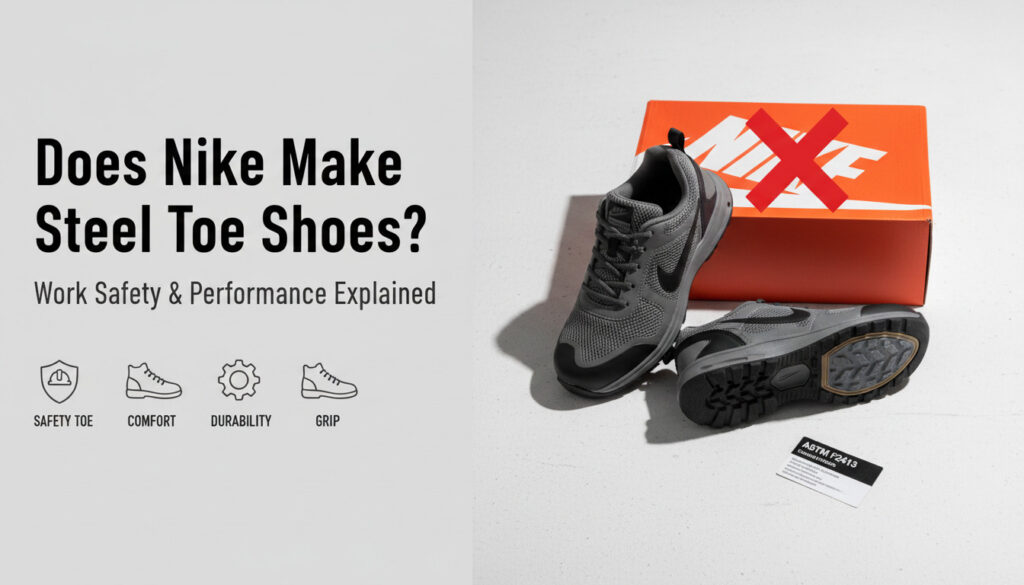

⚡ The Direct Answer
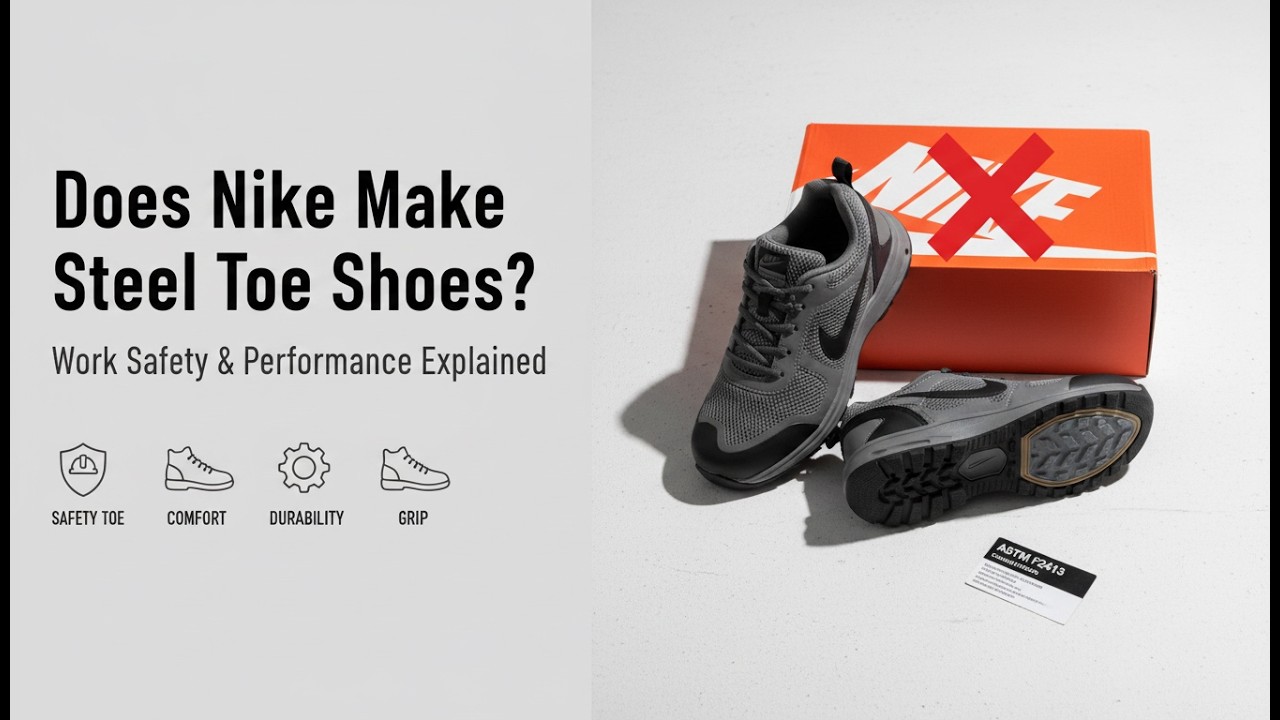
No — Nike does not make steel toe shoes or boots. Nike has never manufactured ASTM F2413-certified steel toe, composite toe, or alloy toe safety footwear for civilian commercial sale. Their product line is entirely focused on athletic performance, casual lifestyle, and tactical military and law enforcement footwear. Their tactical boots — the SFB series, ACG models — are not ASTM-rated safety footwear and would not meet OSHA requirements on a regulated job site. The good news: several brands have built their entire work shoe line around delivering the Nike-like athletic feel with genuine ASTM safety certification — and those are exactly what this guide covers.
You searched for Nike steel toe shoes because you trust the brand, you know what Nike feels like on your feet, and you want that same experience on the job site. That instinct makes complete sense. The problem is that Nike doesn't make them — and a growing number of articles online are falsely claiming otherwise, listing ordinary Nike lifestyle sneakers as "steel toe work boots" with no safety certification whatsoever. A worker who buys one of those expecting toe protection will show up to a site inspection without compliant footwear.
This article gives you the accurate answer, explains the real reasons Nike has chosen not to enter the safety footwear market, covers what Nike does make for tough environments (and where it falls short), flags the misinformation problem, and then gives you ten genuinely Nike-like alternatives — all ASTM F2413 certified, all on Amazon — organized by what specifically makes each one feel closest to what you're used to wearing.
Table of Contents
- Why Doesn't Nike Make Steel Toe Shoes?
- The Nike Grind Programme: Why Metal Is Off the Table
- What Nike DOES Make for Tough Environments
- Warning: Articles Claiming Nike Makes Steel Toes Are Wrong
- What Nike Fans Actually Want: The Athletic-Feel Checklist
- How to Verify Any Safety Shoe: The ASTM Label Decoded
- Quick Comparison Table — All 10 Alternatives
- Best Overall: Timberland PRO Reaxion CT
- Most Athletic Feel: KEEN Utility San Jose 6″
- Best Low-Cut / Sneaker Style: KEEN Utility Vista Energy Lo
- Best for Walking / Warehouse: Merrell Work Moab 3 Mid WP
- Best Professional Appearance: Merrell Moab Vertex Mid
- Best Composite / Resoleable: BRUNT Marin Welted CT
- Best for Concrete Floors: Ariat Treadfast 6″ ST
- Best Budget: KEEN Utility Flint II ST
- Best Orthopedic / Foot Pain: OrthoFeet Granite
- Best Women's Alternative: Carhartt Rugged Flex 6″
- The Look vs. Protection Trap
- FAQ — 8 Nike Safety Shoe Questions
- Final Verdict by Job Type
Why Doesn't Nike Make Steel Toe Shoes? The Real Reasons
Every other article answers the question "does Nike make steel toe shoes?" with a blunt "No" and immediately pivots to alternatives. None of them explains why — which is the second-most natural question any curious reader asks, and the answer is genuinely interesting. Understanding Nike's reasoning also helps you understand what to look for in an alternative.
Brand Strategy and Market Positioning
Nike's entire commercial identity is built on athletic aspiration. The "Just Do It" brand cannot simultaneously position itself as a PPE manufacturer without creating serious brand confusion. Safety footwear is a utility purchase — workers buy it because they have to, and they evaluate it primarily on compliance, durability, and cost. Nike sells an aspirational lifestyle product that people choose because of what it signals about them. These are fundamentally incompatible market positionings. Introducing an OSHA-regulated steel toe work boot would actively undermine the premium aspirational brand equity that Nike has spent decades and billions building.
ASTM Certification Infrastructure
ASTM F2413 certification is not a one-time sticker — it requires ongoing third-party laboratory testing for each model, rigorous compliance documentation, and regulatory oversight infrastructure. Nike has none of this, and the safety footwear segment is not large enough relative to their core athletic and lifestyle business to justify the significant investment of building it. The compliance overhead alone would divert resources from Nike's actual competitive advantages: design innovation, athletic performance research, and marketing.
Market Economics
The safety footwear market is a low-margin, OSHA-regulated commodity market at the entry and mid levels. The top end is dominated by deeply established brands with decades of trade-specific loyalty — Ariat for Western work, KEEN Utility for construction, Timberland PRO for general industry. Nike's premium manufacturing cost structure and brand positioning are incompatible with the pricing dynamics that govern most safety footwear purchases. There is no profitable niche waiting for them in this market.
The Bottom Line
Nike has made a deliberate, strategic choice not to enter the safety footwear market. This is not an oversight or a gap they plan to fill — it reflects their fundamental brand architecture. Do not expect Nike steel toe shoes to appear on their product line in the foreseeable future.
The Nike Grind Recycling Programme: The Structural Reason Metal Is Off the Table
There is one more specific reason Nike avoids metal components in their consumer footwear, and it is more concrete than brand strategy: the Nike Grind programme.
Nike Grind is Nike's shoe recycling initiative, which has been running since 1993. Consumers return worn Nike footwear to drop-off points worldwide, where it is collected and processed through industrial shredding. The shredded material — rubber, foam, fabric — is converted into granules used for sports surfaces (running tracks, basketball courts, playgrounds) and as material in new Nike products.
The problem with steel is mechanical: the industrial shredding machinery used in the Grind process cannot process metal components. Metal parts damage the shredding equipment, create contamination in the rubber and foam granulate output stream, and require expensive separation processes that would fundamentally compromise the programme's economics. Nike has processed millions of pairs of shoes through the Grind programme and has a documented environmental commitment to it as a cornerstone of their sustainability reporting.
Introducing steel toe caps — or any metal safety components — into Nike's consumer product line would either require excluding those products from the Grind programme entirely, or retrofitting the programme's infrastructure to handle metal separation at significant cost. Neither option aligns with Nike's sustainability commitments or operational priorities. The Grind programme creates a structural, policy-level barrier to metal in Nike consumer footwear that reinforces the brand strategy reasoning above.
This is the most specific and verifiable answer to "why doesn't Nike make steel toe shoes" — and it is the answer that no other article currently ranking for this query fully explains.
What Nike DOES Make for Tough Environments — and Where It Falls Short
Nike does make footwear designed for demanding conditions. Understanding what it offers — and what it critically does not — is important for workers trying to figure out whether any existing Nike product could serve them on a regulated job site.
Nike SFB (Special Field Boot) Series
The SFB line is Nike's military-inspired tactical boot, used by US armed forces and law enforcement. It features durable full-grain leather or ballistic nylon construction, ankle support, Vibram outsoles for traction, and a low-profile military silhouette. These are genuinely well-made, tough boots. What they are not: ASTM F2413-certified. They do not carry rated impact protection, compression resistance, electrical hazard protection, or puncture resistance certification. On a construction site, manufacturing floor, or warehouse environment where OSHA requires safety toe footwear, a Nike SFB does not satisfy that requirement — regardless of how robust and durable it appears.
Nike ACG (All Conditions Gear)
Nike's ACG line covers hiking and outdoor boots designed for trail use and rugged terrain. Not safety footwear. Not ASTM-rated. Not appropriate for regulated job sites.
The Critical Distinction Every Worker Must Understand
Tough and durable" is not the same as "ASTM-certified safety footwear." A boot can withstand a military patrol without passing the 75 ft-lb drop test that ASTM I/75 requires. A Nike SFB on a construction site is not compliant footwear regardless of how robust it feels under your foot. If your employer or job site specifies safety toe footwear, Nike's tactical boots do not satisfy that requirement and you risk failing a PPE inspection.
✅ When Nike Tactical Boots ARE Appropriate
Security guard patrol, military, law enforcement, outdoor and trail work, active environments where foot protection is a personal preference rather than an OSHA regulatory requirement. If your workplace does not have a mandatory safety toe requirement, Nike SFB boots are a legitimate option for demanding conditions.
⚠️ Warning: Articles Claiming Nike Makes Steel Toe Shoes Are Wrong
This section exists because the misinformation problem in this corner of the internet is a genuine safety issue, not merely an SEO annoyance.
If you search "Nike steel toe shoes" right now, you will find articles listing the Nike Woodside Chukka, the Nike Oneonta, and the Nike Air Rift as "steel toe work boots." These are regular Nike lifestyle shoes and sneakers. None of them has a steel toe. None of them has ASTM F2413 certification. None of them provides rated impact or compression protection for your toes. They are fashion and lifestyle shoes that happen to share a brand name with a product these articles are falsely describing.
These articles appear to have been generated without any factual verification — they conflate the existence of a Nike shoe with the existence of a Nike steel toe shoe, apparently by merging search query terms with brand names without checking whether the products described actually exist or contain the features being attributed to them.
The real-world consequence of this misinformation is serious: a worker who reads one of these articles and purchases a Nike Oneonta believing it has steel toe protection will arrive on their job site without any toe protection whatsoever. The shoe will look normal. It will feel normal. But it will provide zero impact resistance, and a PPE inspection will immediately reveal non-compliance — or worse, an unprotected foot injury will reveal it first.
How to Protect Yourself
Always check the physical label printed inside the boot tongue or lining for "ASTM F2413" text and the protection codes (I/75, C/75, EH). This label is the legal safety certification — it is not optional or decorative. If you cannot find this label inside the shoe, the shoe is not safety-certified, regardless of what any website, listing, or product description says about it.
What Nike Fans Actually Want: The Athletic-Feel Checklist for Safety Footwear
People searching "Nike steel toe shoes" are not looking for just any steel toe shoe — they are looking for a shoe that feels like a Nike: lightweight, flexible, comfortable from day one, with a low-profile athletic silhouette rather than the heavy, stiff traditional work boot. Understanding what you actually want helps you find the right alternative from the picks below.
Lightweight — Under 18 oz Per Boot
Nike shoes typically weigh 8–12 oz. Traditional steel toe work boots weigh 22–32 oz. The weight shock of switching from Nikes to standard safety boots is the single most common complaint from first-time safety footwear buyers. In this guide, picks prioritising low weight: Timberland PRO Reaxion (~13 oz), Merrell Work Moab 3 (~14 oz), KEEN San Jose (~21 oz). These are genuinely close to Nike's weight territory.
Flexible Construction
Nike shoes flex freely with your foot through every stride. Traditional Goodyear-welted work boots resist flex significantly due to the structural welt. Look for: cement construction, strobel construction, ContourWelt, or Rugged Flex technology — all allow more natural foot movement than traditional welted construction. Most athletic-style safety shoes use cement or strobel construction for this reason.
Low-Profile Silhouette
Nike shoes are low-cut or ankle-height. The classic 6-inch work boot covers more of the lower leg and reads immediately as workwear. For the most Nike-like silhouette: KEEN Vista Energy Lo (low-cut, the most sneaker-like profile in this guide), Merrell Moab Vertex Mid (4.5-inch, between low and mid), Timberland PRO Reaxion (mid-cut but with an athletic build).
Comfortable From Day One
Nike shoes require essentially no break-in. Traditional full-grain leather work boots need 1–2 weeks of break-in before they feel natural. Athletic-construction safety shoes — Timberland PRO Reaxion, Merrell Moab 3, KEEN San Jose — are comfortable immediately due to their synthetic and mesh uppers and EVA-based midsole systems. If break-in time is a dealbreaker, choose from these three first.
Breathable Upper
Nike's engineered mesh uppers are a benchmark for breathability in athletic footwear. Equivalents in the safety shoe category: mesh and leather hybrid uppers (KEEN Vista Lo), synthetic mesh uppers (Timberland PRO Reaxion), moisture-wicking proprietary linings (Carhartt FastDry). Full-grain leather alternatives require more break-in but breathe less — the opposite of what Nike fans typically prefer.
Cushioned Midsole
Nike's EVA and Air cushioning is a benchmark many workers use as their reference for shoe comfort. Direct equivalents in certified safety footwear: Timberland PRO Anti-Fatigue Technology (geometric energy-return midsole), KEEN.ReGEN compound (similar energy-return properties), Merrell air cushion heel, OrthoFeet's orthopedic cushion system for foot-pain sufferers.
How to Verify Any Safety Shoe Before You Buy: The ASTM Label Decoded
This is the most practically important section in this article for first-time safety footwear buyers. A shoe only provides the safety protection it claims if it carries the correct ASTM F2413 label — and knowing how to read that label protects you from buying non-compliant footwear regardless of what the product listing says.
| Code on Label | What It Means | When You Need It |
|---|---|---|
| F2413-[year] | The standard itself. Current edition is -24. F2413-18 is acceptable but older. | All job sites requiring safety footwear |
| M or W | Men's or Women's last — toe cap clearance dimensions differ between sexes | Always check matches your boot |
| I/75 | Impact: toe cap withstands 75 ft·lbs drop force — baseline protection for most job sites | Construction, manufacturing, warehouse |
| C/75 | Compression: withstands 2,500 lbs rolling force — always paired with I/75 | Same sites as I/75 — both required together |
| EH | Electrical Hazard: outsole withstands 18,000V dry — insulation against ground-fault shock | Electricians, EH-designated sites, equipment operators |
| PR | Puncture Resistant: sole stops 270 lbs nail penetration from below | Roofing, demolition, construction with nails/debris |
| Where to find it | Printed on a label inside the boot tongue or lining — not on the box, not in the product description | If you can't find it inside the shoe, it is NOT certified |
🛒 The Correct Buying Order (Don't Invert This)
Step 1: Verify ASTM F2413 label exists — non-negotiable. Step 2: Check toe type matches your site requirement (steel, composite, or alloy). Step 3: Confirm EH rating if your site or job specifies it. Step 4: Then choose based on weight, comfort, style, and price. Inverting this order — buying based on looks and hoping it's certified — is how workers end up with non-compliant footwear that fails a site inspection.
Quick Comparison Table — All 10 Nike Alternatives
| Boot | Toe Type | EH | Women's | Cut | Construction | Best Nike Attribute | Price |
|---|---|---|---|---|---|---|---|
| Timberland PRO Reaxion CT | Composite | ✅ | ✅ | Mid-cut | Athletic/cement | Lightest (~13 oz), sneaker feel | $120–$150 |
| KEEN Utility San Jose 6″ | Alloy ⚠️ | ✅ | ✅ | Mid-cut | Athletic/cement | Trail-shoe feel on site | $140–$170 |
| KEEN Vista Energy Lo | Steel | ✅ | — | Low-cut | Athletic/cement | Most sneaker-like silhouette | $110–$140 |
| Merrell Work Moab 3 Mid WP | Composite | ✅ | ✅ | Mid-cut | Athletic/cement | Highest step-count comfort | $130–$160 |
| Merrell Moab Vertex Mid | Composite | ✅ | — | 4.5″ mid | Athletic/cement | Professional + site dual-role | $130–$160 |
| BRUNT Marin Welted CT | Composite | ✅ | — | Mid-cut | Goodyear welt | Resoleable long-term value | $165–$195 |
| Ariat Treadfast 6″ ST | Steel | ✅ | ✅ | Mid-cut | Cement | ATS arch support for hard floors | $130–$160 |
| KEEN Utility Flint II ST | Steel | ✅ | ✅ | Mid-cut | Athletic/cement | Best ASTM compliance under $150 | $120–$150 |
| OrthoFeet Granite Work Boot | Steel | ✅ | ✅ | Mid-cut | Athletic/cement | Plantar fasciitis / arch conditions | $140–$170 |
| Carhartt Rugged Flex 6″ Women's | Steel | ✅ | ✅ Women's last | Mid-cut | Rugged Flex | Women's anatomy fit + flexibility | $120–$145 |
All boots designed to meet ASTM F2413 — verify certifications on current Amazon listing before purchase. ⚠️ Alloy toe (KEEN San Jose) is metallic and will trigger metal detectors.
Best Overall Nike Alternative: Timberland PRO Reaxion Composite Toe

If you wear Nikes to the gym, to the store, and everywhere else, and you've just been told you need safety toe footwear on site, the Timberland PRO Reaxion is the boot that will cause the least shock to your feet and your self-image. It looks like a sneaker. It weighs approximately 13 oz — comparable to many mid-weight Nike trail shoes and dramatically lighter than the 24–30 oz traditional steel-toe work boot. It flexes with your foot rather than resisting it. It requires essentially no break-in. And it carries full ASTM F2413 composite toe and EH certification. It is the most genuinely Nike-like experience you will find in a certified safety shoe.

The composite toe is the right call here for multiple reasons. It is lighter than steel, matching the weight advantage that makes the Reaxion exceptional. It does not conduct cold in winter or heat in summer. And critically, it does not trigger metal detectors — relevant for Nike fans working in warehouse environments, distribution centres, airport facilities, or government sites with access control. The ASTM F2413 EH certification covers both impact/compression protection and electrical hazard — the baseline requirement for most construction, manufacturing, and warehouse job sites. The synthetic and mesh upper is where the Nike comparison is most direct: engineered fabric that breathes, moves naturally, and doesn't require a leather conditioning routine to maintain.

Timberland PRO's Anti-Fatigue Technology in the midsole uses a geometric wave-shaped insert that returns energy at toe-off — a measurably different experience from the compressed foam insoles found in budget safety shoes. If you are coming from Nike's Air or React cushioning systems, the Reaxion is the safety shoe whose midsole feel will surprise you least. Available in black for sites with uniform requirements. Women's sizing available. The one limitation worth noting: the Reaxion is not waterproof — the mesh upper allows moisture in, which is ideal for breathability but means wet-site or rainy outdoor work requires either gaiters or a different pick.

Specs at a Glance
Toe: Composite (non-metallic) — ASTM F2413 I/75 C/75 | EH Rated: ✅ Yes
Weight: ~13 oz — one of the lightest certified safety shoes made | Construction: Athletic/cement
Upper: Synthetic/mesh — no break-in required | Women's available: ✅ Yes
Waterproof: — (mesh upper) | Break-in required: No
✅ Delivers: Lightweight · Sneaker feel · Breathable · Immediate comfort · No metal detector issues
Pros: Lightest ASTM-certified safety shoe in this guide at ~13 oz; No break-in — comfortable from day one; Composite toe passes metal detectors; Anti-Fatigue Technology midsole; Available in black.
Cons: Not waterproof — mesh upper not suited for wet outdoor conditions; Less ankle support structure than leather equivalents for rough terrain.
Most Athletic Feel / Low Profile: KEEN Utility San Jose 6″
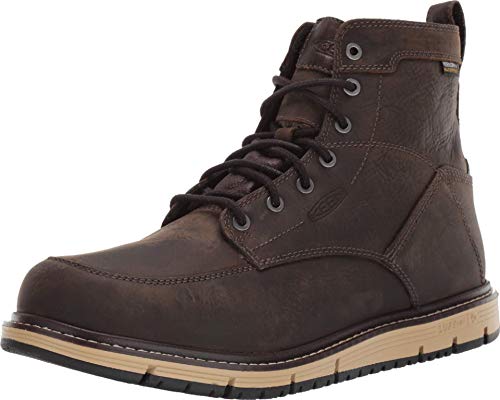
The KEEN Utility San Jose delivers something that most safety shoe buyers don't expect: a boot that genuinely feels like a trail running shoe on a job site. At approximately 15 oz, it is among the lightest safety boots with a full leather and mesh hybrid upper in this guide. The KEEN asymmetric wide toe box follows the natural shape of the foot rather than forcing your toes into a symmetrical mould — an experience that Nike fans who are accustomed to anatomically shaped athletic shoes will recognise immediately as familiar and comfortable. This is the pick for workers in outdoor or mixed-terrain construction roles where the ground beneath your feet changes throughout the day.

One critical specification that every buyer must understand before purchasing: the San Jose uses an alloy (aluminum alloy) toe, not a fiberglass or carbon composite toe. Alloy is a metallic material — it carries full ASTM F2413 I/75 C/75 protection and is EH rated, but it will trigger walk-through metal detectors. If your site has metal detector access control — common in distribution centres, government facilities, airport environments, and some secured manufacturing — the San Jose is not the right choice and the Timberland PRO Reaxion composite or BRUNT Marin composite should be selected instead. For outdoor construction and mixed-terrain sites without metal detector access requirements, the alloy toe's weight advantage (lighter than steel, same protection rating) is a genuine benefit.

KEEN.DRY waterproofing means the San Jose handles wet outdoor conditions that the Reaxion's mesh upper cannot — useful for construction sites in rainy climates or early-morning starts with dew-covered ground. The leather and mesh hybrid upper provides a breathable but more durable surface than pure mesh, with meaningful resistance to abrasion from construction debris. Women's version is available on a women's last. No significant break-in required due to the athletic construction. Sizing note: KEEN runs wide in the forefoot — if you have a narrow heel with a wide forefoot, consider aftermarket lacing techniques to improve heel lockdown.

Specs at a Glance
Toe: Alloy (aluminum — metallic, same ASTM protection as steel) — F2413 I/75 C/75 | EH Rated: ✅ Yes
Weight: ~15 oz | Construction: Athletic/cement
Waterproof: ✅ KEEN.DRY | Women's available: ✅ Yes (women's last)
Metal detectors: ⚠️ Alloy toe IS metallic — will trigger
✅ Delivers: Trail-shoe feel · Waterproof · Athletic construction · Wide toe box
Pros: Trail-shoe feel with full ASTM certification; KEEN.DRY waterproof; Wide asymmetric toe box for natural foot shape; Women's version on women's last; Lightweight at ~15 oz.
Cons: Alloy toe IS metallic — triggers metal detectors (not for detector-access sites); KEEN wide toe box not ideal for narrow-foot profiles.
Best Low-Cut / Sneaker Silhouette: KEEN Utility Vista Energy Lo

The Vista Energy Lo is the pick that most closely replicates the visual silhouette of a Nike shoe on a job site. It is low-cut — sitting at or just above ankle height — with a profile that reads as a work shoe rather than a work boot. For Nike fans who find the idea of a 6-inch work boot psychologically as well as physically heavy, the Vista Energy Lo is the answer: full ASTM F2413 steel toe and EH certification in a package that looks from a distance like something you'd wear to the gym. The low-cut height also means significantly less hot-weather heat retention than mid or high shaft boots, which matters on summer outdoor work.

KEEN.ReGEN midsole compound is KEEN's energy-return technology — it provides more rebound per step than standard EVA foam, which translates to less muscular effort on high-step-count days. For warehouse workers, retail-floor employees, and indoor site roles where you cover 10,000–20,000 steps per shift, the energy return from the midsole is a meaningful daily comfort difference. The leather and mesh hybrid upper with open mesh zones delivers genuine breathability in warm indoor environments — closer to what Nike fans expect from a shoe than the sealed leather uppers of traditional work boots. Non-marking outsole is confirmed, which is required by many indoor facilities and finished-floor work environments.

The Vista Energy Lo's limitation is the same as most low-cut options: reduced ankle support for rough, uneven terrain, and less protection from ankle rolling on construction site rubble. It is best suited for indoor environments — warehouse, manufacturing, retail, distribution — where the floor surface is consistent and the primary demands are step-count comfort and a professional appearance rather than outdoor terrain stability. Wide sizing is available, which accommodates natural foot swelling over a long shift. Verify composite vs. steel toe specification on the current listing — confirm the safety toe type before ordering for any specific site requirement.

Specs at a Glance
Toe: Steel — ASTM F2413 I/75 C/75 | EH Rated: ✅ Yes
Cut: Low-cut — most sneaker-like silhouette in guide | Construction: Athletic/cement
Midsole: KEEN.ReGEN energy return | Outsole: Non-marking
Break-in required: No | Waterproof: —
✅ Delivers: Sneaker silhouette · Low profile · Energy return midsole · Non-marking · Breathable
Pros: Most sneaker-like visual silhouette in the guide; KEEN.ReGEN energy-return midsole; Non-marking outsole for indoor floors; No break-in; Low cut reduces heat retention.
Cons: Low-cut means less ankle support for rough outdoor terrain; Not waterproof.
Best for Walking / Warehouse: Merrell Work Moab 3 Mid WP

Warehouse workers and mobile site employees — people who cover 8–15 miles of floor per shift — need a safety shoe that treats long-distance walking as its primary design brief rather than an afterthought. The Merrell Work Moab 3 Mid does exactly that. Built on an athletic trail shoe platform, it weighs approximately 14 oz and absorbs the cumulative impact of thousands of steps on hard warehouse or concrete floors through Merrell's air cushion heel system — a technology directly comparable to Nike's Air heel in purpose and mechanism. If your primary complaint about your current work footwear is foot pain and fatigue by hour six, the Moab 3 addresses that more specifically than any other boot in this guide.
The composite toe is fully non-metallic — lighter than steel, no temperature conduction, and no metal detector issues for workers crossing security access points during shifts. Merrell DRY waterproofing provides protection from the tracked-in moisture and cleaning solutions that warehouse floors regularly carry. Vibram TC5+ outsole delivers excellent slip resistance on the polished and sometimes wet hard floors of distribution and manufacturing environments. The removable insole accepts aftermarket orthotics — a significant practical feature for workers managing plantar fasciitis or arch conditions who need more support than factory insoles provide. ASTM F2413 EH certified.

Women's version is available on a women's last — one of the few safety shoes in this category where the women's version is a genuinely different fit rather than the same boot in a smaller size. No significant break-in required. The Moab 3's limitation versus the Reaxion is that Merrell DRY, while functional, is slightly warmer than a non-waterproof mesh boot in summer heat — a trade-off that is worth making in wet conditions but unnecessary in dry. For outdoor summer work in hot climates, the Reaxion's non-waterproof mesh upper breathes more freely. For mixed indoor conditions, the Moab 3 is the superior comfort tool.

Specs at a Glance
Toe: Composite (non-metallic) — ASTM F2413 I/75 C/75 | EH Rated: ✅ Yes
Weight: ~14 oz | Waterproof: ✅ Merrell DRY
Outsole: Vibram TC5+ (slip resistant on hard floors) | Insole: Removable (orthotic-ready)
Women's available: ✅ Yes (women's last) | Break-in required: No
✅ Delivers: Highest step-count comfort · Air cushion heel · Waterproof · Orthotic-ready
Pros: Best mileage comfort in the guide — air cushion heel for long shifts; Vibram TC5+ on wet/hard floors; Orthotic-ready removable insole; Women's version on women's last; No metal detector issues.
Cons: Merrell DRY warmer than non-WP mesh for summer outdoor work; Mid-cut not as low-profile as the Vista Energy Lo.
Best Professional Appearance / Dual-Role: Merrell Moab Vertex Mid

Not every safety shoe buyer spends their entire day on the production floor. Site supervisors, project managers, safety officers, and trades workers who transition between job sites and client meetings need footwear that reads as professional in both environments. The Merrell Moab Vertex Mid solves this specific problem: at 4.5 inches of shaft height, it sits between a low-cut sneaker and a traditional 6-inch work boot, presenting a clean, professional silhouette that does not announce "construction" to everyone in a conference room. ASTM F2413 composite toe and EH certified. Comfortable enough for a full day of movement. Professional enough for a client presentation at the end of it.

The composite toe is non-metallic — no metal detector issues when accessing secured client facilities or government sites. OrthoLite cushioned footbed provides meaningful arch and heel support across the mixed terrain of a supervisor's day: concrete floors, outdoor site surfaces, and the vehicle-to-site-to-office transition that characterises management-level construction and industrial roles. Waterproof construction handles the outdoor elements of site visits. The clean, non-tactical aesthetic of the Vertex Mid places it within Nike's visual language — it looks like a premium athletic boot, not a traditional work boot, while carrying full safety certification.

The 4.5-inch shaft height is the key design decision here: low enough to avoid the ankle-boot visual bulk of a 6-inch work boot, high enough to provide meaningful ankle support on construction site terrain and debris. For Nike fans transitioning into safety footwear who work in roles where professional appearance matters alongside site compliance, the Vertex Mid is the most complete solution in this guide. No break-in required. Not available in women's on this specific model — women should refer to the Merrell Work Moab 3 which has a women's last version, or the Carhartt Rugged Flex Women's pick below.

Specs at a Glance
Toe: Composite (non-metallic) — ASTM F2413 I/75 C/75 | EH Rated: ✅ Yes
Cut: 4.5″ — between low and mid, professional silhouette | Waterproof: ✅ Yes
Footbed: OrthoLite cushioned | Women's: — (see Moab 3 or Carhartt)
Break-in required: No | Metal detectors: ✅ Composite — safe
✅ Delivers: Professional appearance · Site + office dual-role · Non-metallic · Clean aesthetic
Pros: 4.5″ height reads professional in both site and office environments; Composite toe for metal detector access; Waterproof; OrthoLite footbed; Clean athletic aesthetic.
Cons: No women's version on this model; 4.5″ less ankle support than 6″ for rough outdoor site terrain.
Best Composite Toe / Long-Term Value: BRUNT Marin Welted Composite Toe
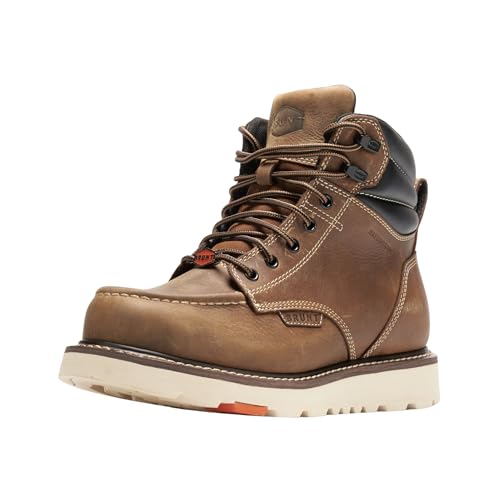
Most athletic-style safety shoes use cement (glued) construction — lightweight and flexible, but not resoleable. When the midsole compresses or the outsole wears through, you replace the entire shoe. The BRUNT Marin Welted is the exception in this guide: it uses Goodyear welt construction, meaning when the outsole wears down after 12–18 months of daily use, a cobbler replaces it for $60–$90 and the boot continues. At a purchase price of $165–$195, a resoled Marin at year two costs significantly less per year than replacing a $150 cement-construction alternative annually. For Nike fans who want the best composite toe option and are thinking beyond their first pair, the Marin is the long-term value calculation that pays off.

The true non-metallic composite toe is fiberglass — lighter than steel, non-conductive, and confirmed metal-detector safe, which is the full set of composite advantages without compromise. ASTM F2413 EH certified. Full waterproof construction. Full-grain leather upper provides durability that synthetic mesh uppers cannot match in abrasive industrial environments, at the cost of slightly more break-in time (3–5 shifts) compared to the instant comfort of the Reaxion or Moab 3. The Goodyear welt construction also provides a structural rigidity that distributes plantar load more evenly on hard concrete floors — a comfort advantage over purely athletic constructions for workers in static-standing roles.

Available in black for sites with uniform requirements. The Marin is the most traditionally constructed boot in this guide — which makes it less immediately Nike-like in feel but more appropriate for demanding industrial environments where leather durability and Goodyear welt construction life are priorities. Think of it as the hybrid choice: athletic-flex composite toe with the long-term resilience of a proper work boot underneath. BRUNT backs this construction with a direct-brand warranty that covers manufacturing defects, which is unusual at this price tier and reflects confidence in the build quality.

Specs at a Glance
Toe: Composite fiberglass (non-metallic) — ASTM F2413 I/75 C/75 | EH Rated: ✅ Yes
Construction: Goodyear welt — resoleable | Waterproof: ✅ Yes
Upper: Full-grain leather | Metal detectors: ✅ Composite — safe
Break-in required: 3–5 shifts | Women's: —
✅ Delivers: Resoleable value · Non-metallic · Waterproof · Long-term durability
Pros: Goodyear welt — resoleable, lowest long-term cost-per-wear; True non-metallic composite; Waterproof; EH rated; Full-grain leather durability; Metal-detector safe.
Cons: 3–5 shift break-in (leather upper); Heavier than athletic-mesh alternatives; No women's version; Higher upfront price (justified by resoleability).
Best for Concrete Floors / Static Standing: Ariat Treadfast 6″ Steel Toe

Nike fans who work primarily on hard flat surfaces — concrete manufacturing floors, retail environments, assembly lines, poured concrete construction — face a specific challenge that trail-shoe-construction safety footwear does not fully address: the cumulative compressive loading on the plantar fascia and heel that flat, hard surfaces impose over a 10-hour shift. The Ariat Treadfast is engineered specifically for this environment. The ATS (Advanced Torque Stability) arch support system is Ariat's anti-fatigue technology developed for agricultural and industrial workers spending long shifts on unforgiving surfaces — it distributes weight more evenly across the footbed and reduces the forefoot loading that causes metatarsalgia and plantar fasciitis in workers whose footwear lacks appropriate support.

The Duratread outsole is chemical-resistant — protecting against cleaning solutions, industrial fluids, and the mild chemical exposure that many manufacturing and retail environments involve. EH rated. Full-grain leather upper for durability on concrete environments where abrasion from equipment, pallet edges, and general industrial debris is constant. The steel toe meets ASTM F2413 I/75 C/75. Women's version is available, which is important for the retail and assembly line environments where the Treadfast performs best — these are roles with significant female participation that deserve a properly fitted women's option.

The Treadfast is not the most Nike-like boot in this guide in terms of aesthetic or athletic silhouette — it is a traditional 6-inch work boot with a professional work appearance rather than a sneaker profile. But for workers whose primary pain point is foot fatigue and arch pain on concrete, it outperforms the lighter athletic-construction options that sacrifice support structure for weight. If you left Nike because of foot pain on hard floors, the Treadfast's ATS system may give you more relief than any lightweight athletic alternative. Break-in time is moderate — 3–5 shifts — due to the leather upper.

Specs at a Glance
Toe: Steel — ASTM F2413 I/75 C/75 | EH Rated: ✅ Yes
Arch support: ATS (anti-fatigue technology for hard floors) | Outsole: Duratread (chemical resistant)
Upper: Full-grain leather | Women's available: ✅ Yes
Break-in required: 3–5 shifts | Waterproof: —
✅ Delivers: ATS arch support · Chemical-resistant outsole · Concrete floor fatigue management
Pros: ATS anti-fatigue arch support specifically for hard floor standing; Duratread chemical-resistant outsole; Women's version available; EH rated; ASTM F2413.
Cons: Traditional work boot aesthetic — less Nike-like silhouette than athletic alternatives; 3–5 shift break-in for leather upper; Not the lightest option.
Best Budget Nike Alternative: KEEN Utility Flint II ST

ASTM F2413 compliance is non-negotiable — and the KEEN Utility Flint II ST delivers it without asking you to spend $160+. At under $150, it is the best-value fully certified safety shoe in this guide that does not require a compromise on the core specification. Full ASTM F2413 I/75 C/75 EH certification. KEEN asymmetric wide toe box — the most comfortable steel toe geometry at this price tier, providing natural foot shape accommodation that narrow-box budget alternatives at this price point do not. Non-marking outsole for indoor floors. KEEN.DRY waterproof. Wide sizing available for foot swelling accommodation.

KEEN.ReGEN energy-return midsole compound — the same technology found in the higher-priced Vista Energy Lo — is present in the Flint II, providing meaningful step-count comfort beyond what standard foam midsoles deliver at this price. The leather and mesh hybrid upper balances breathability and durability for typical indoor-to-outdoor mixed site conditions. Women's version is available on a women's last — a meaningful distinction that many budget-tier safety shoes skip entirely by simply producing the men's boot in smaller sizes. EH rated for electrical hazard environments.

The Flint II's primary limitation versus the higher-priced picks is its traditional mid-cut aesthetic — it reads more clearly as a work boot than a sneaker, which matters for Nike fans who specifically want the low-profile athletic look. For workers whose primary requirements are ASTM compliance, comfort, and budget rather than visual similarity to Nike footwear, the Flint II delivers exceptional value. It is also the right pick for workers who want to test whether safety footwear can feel comfortable enough before investing in a premium option — it provides enough comfort performance at its price to be a fair evaluation tool.

Specs at a Glance
Toe: Steel — ASTM F2413 I/75 C/75 | EH Rated: ✅ Yes
Waterproof: ✅ KEEN.DRY | Midsole: KEEN.ReGEN energy return
Outsole: Non-marking | Women's available: ✅ Yes (women's last)
Wide sizing: ✅ Available | Price: Best value in guide
✅ Delivers: Full ASTM compliance · Budget price · KEEN.ReGEN comfort · Wide toe box
Pros: Best price-to-certification ratio in the guide; KEEN.ReGEN energy-return midsole; KEEN.DRY waterproof; Wide KEEN toe box; Women's version on women's last; Non-marking outsole.
Cons: Traditional work boot aesthetic — less sneaker-like than Reaxion or Vista Lo; Mid-cut less low-profile than low-cut options.
Best for Orthopedic / Foot Pain: OrthoFeet Granite Work Boot

For Nike fans who also manage plantar fasciitis, flat feet, bunions, or other structural foot conditions, every other boot in this guide is a partial solution at best. The OrthoFeet Granite Work Boot is the only pick in this guide purpose-built for structural foot conditions with full safety certification attached. OrthoFeet's premium orthotic insole features anatomical arch support with posted heel and forefoot cushioning that a general-purpose athletic insole does not replicate. The extra-depth toe box accommodates custom orthotics — which many podiatrists prescribe for workers with plantar fasciitis or severe flat feet, but which standard-depth boots cannot accept without the insole being removed entirely.

Full ASTM F2413 steel toe and EH certification — the Granite is not a fashion work shoe that looks safe, it is a properly certified safety boot with an orthopedic foundation. The wide toe box provides natural toe splay without cramping for workers with wider forefeet or bunions. Slip-resistant outsole for hard floor environments. The construction is athletic and cement-based, providing flexibility without the rigidity of traditional welted construction — appropriate for foot conditions where the shoe needs to flex naturally with therapeutic foot movement rather than resist it.

Workers who have been wearing Nike specifically because of its comfort for foot conditions will find the OrthoFeet Granite the most direct substitute for that therapeutic comfort in a certified safety shoe. The OrthoFeet insole system is comparable to mid-grade custom orthotics in terms of arch support and cushioning — it is not a standard foam pad dressed up with branding. Women's version available. For Nike fans without foot conditions, other picks in this guide deliver a better balance of athletic feel and price. For those managing chronic foot pain on the job, the Granite addresses the problem that other safety shoes ignore.

Specs at a Glance
Toe: Steel — ASTM F2413 I/75 C/75 | EH Rated: ✅ Yes
Insole: Premium orthotic with arch posting — extra-depth for custom orthotics | Women's: ✅ Yes
Toe box: Wide — accommodates bunions and wide forefeet | Outsole: Slip resistant
Break-in required: Minimal | Best for: Plantar fasciitis · Flat feet · Bunions · Custom orthotic users
✅ Delivers: Therapeutic arch support · Extra-depth custom orthotic capacity · Full ASTM certification
Pros: Premium orthotic insole — the best foot pain management in the guide; Extra-depth accommodates custom orthotics; Wide toe box for bunions; Full ASTM F2413 + EH; Women's available.
Cons: Designed for foot pain management, not the most athletic-looking shoe in the guide; Not the lightest option; Best for workers with specific structural foot conditions.
Best Women's Nike Alternative: Carhartt Rugged Flex 6″ Women's

Nike is disproportionately popular among female consumers — the brand's aesthetic appeal, lifestyle positioning, and genuine comfort in women's sizing make it a default choice across demographics. Women searching "Nike steel toe shoes" are often making their first safety footwear purchase and are specifically looking for something that does not look or feel like a men's work boot in a smaller size. The Carhartt Rugged Flex 6″ Women's addresses this directly: it is built on a genuine women's last — not a men's boot in a women's size — with the narrower heel cup, correctly positioned arch, and proportionally different forefoot geometry that women's foot anatomy actually requires.

Rugged Flex is Carhartt's articulated sole technology — a construction approach that allows the boot to flex more naturally with the foot than traditional rigid-sole work boots. For women transitioning from the natural flex of Nike athletic shoes to safety footwear, Rugged Flex is the closest approximation of that movement experience available in a certified safety boot. FastDry lining is Carhartt's proprietary moisture management system — it moves sweat away from the foot and toward the exterior, maintaining a drier foot environment during long shifts. Steel toe meets ASTM F2413. EH rated. Under $145 for the women's version — competitive for a women's-specific safety shoe with this specification.

The women's safety shoe category is plagued by products that claim women's sizing while using men's lasts in reduced dimensions. The consequences are practical and cumulative over a long shift: heel slippage that causes blisters, arch support positioned too far back for women's shorter foot proportions, and forefoot cramping from symmetrical toe boxes that don't account for women's wider forefoot-to-heel ratio. The Carhartt Rugged Flex Women's avoids all of these because it was designed on a women's last from the beginning. For women who have been frustrated by "women's" safety shoes that don't actually fit women, this is the correct starting point.

Specs at a Glance
Toe: Steel — ASTM F2413 I/75 C/75 | EH Rated: ✅ Yes
Last: Women's-specific (not a men's boot in women's size) | Flex: Rugged Flex articulated sole
Lining: FastDry moisture management | Price: Under $145
Break-in required: Minimal — Rugged Flex construction | Waterproof: ✅ Yes
✅ Delivers: Women's anatomy fit · Natural flex · FastDry comfort · Full ASTM certification
Pros: Genuine women's last — not a scaled-down men's boot; Rugged Flex natural sole movement; FastDry moisture management; Steel toe + EH; Under $145; Waterproof.
Cons: 6-inch shaft is not low-profile — less Nike-like silhouette than the Vista Energy Lo; Traditional boot look rather than sneaker appearance.
⚠️ The Look vs. Protection Trap: How to Avoid Buying the Wrong Athletic Safety Shoe
The athletic-style safety shoe category has a specific problem that Nike fans buying their first safety footwear need to understand: not every sporty-looking shoe that claims safety certification actually delivers it — and not every certified shoe delivers equal protection for every environment.
Not All "Athletic Safety Shoes" Are ASTM Certified
Some brands market stylish, sports-looking shoes as "work shoes" without ASTM F2413 certification. They look the part. They may even say "safety" or "protective" in their marketing. But if the ASTM F2413 label is not physically present inside the shoe tongue or lining, the shoe is not certified and will not pass a PPE inspection on a regulated job site. Always check the label — not the product listing, not the box, not the marketing description. The label inside the shoe is the only thing that legally counts.
The Cement Construction Durability Warning
Most athletic-style safety shoes use cement (glued) construction for their lightweight, flexible feel. Cement construction is appropriate for 12–18 months of regular daily use, after which midsole compression and outsole delamination typically require replacement of the entire shoe — it cannot be resoled. For workers who want longer-term value without frequent replacement, Pick 06 (BRUNT Marin Welted) is the only boot in this guide that uses Goodyear welt construction while still delivering an athletic-flex composite toe experience.
The EH Trap with Athletic Styles
Some athletic-style safety shoes that look and feel excellent are not EH-rated. If you work near electrical hazards — in construction, manufacturing, equipment operation, or any EH-designated environment — verify the EH rating before purchasing any shoe regardless of how comfortable it appears. The comparison table above indicates EH status for all ten picks in this guide.
The Correct Priority Order for First-Time Safety Shoe Buyers
- Verify ASTM F2413 label exists inside the shoe — non-negotiable. No label = not certified.
- Confirm toe type matches your site requirement — steel, composite, or alloy (and note alloy triggers metal detectors).
- Check EH rating if your site or employer specifies it.
- Then evaluate weight, comfort, style, and price.
Inverting this order — choosing based on looks first and hoping it's certified — is the mistake that leaves workers non-compliant and unprotected. Nike fans transitioning to safety footwear for the first time are particularly vulnerable to this because they are accustomed to choosing footwear entirely on aesthetic and comfort grounds, without a compliance step in the process.
FAQ — 8 Nike Safety Shoe Questions Answered
Does Nike make steel toe work shoes?
No. Nike has never manufactured ASTM F2413-certified steel toe, composite toe, or alloy toe safety footwear for civilian commercial sale. Their product line covers athletic performance, casual lifestyle, and tactical military and law enforcement footwear. None of their products carries ASTM F2413 safety certification or would meet OSHA foot protection requirements on a regulated job site.
Does Nike make any safety-rated footwear at all?
No. Nike does not make ASTM-rated safety footwear of any kind. Their tactical boots — the SFB series, ACG models — are durable and capable in demanding environments, but they carry no ASTM F2413 certification. They are appropriate for military, law enforcement, and environments where safety toe is a personal preference rather than an OSHA regulatory requirement. On a job site that requires certified safety footwear, Nike tactical boots are not compliant.
Are Nike SFB boots ASTM-certified for construction sites?
No. The Nike SFB (Special Field Boot) line carries no ASTM F2413 certification. They are military and law enforcement tactical boots with durable construction and Vibram outsoles — excellent for their intended purpose, but not appropriate as safety toe substitutes on OSHA-regulated construction, manufacturing, or warehouse job sites. If your site requires safety toe footwear, Nike SFB boots will not pass a PPE inspection.
Why doesn't Nike make steel toe shoes?
Four main reasons: (1) Brand positioning — Nike's aspirational athletic brand is incompatible with OSHA-regulated utility PPE manufacturing. (2) ASTM certification infrastructure — Nike has no existing regulatory compliance infrastructure for safety footwear and no strategic reason to build it. (3) Nike Grind recycling programme — Nike's industrial shredding process for worn footwear cannot handle metal components, creating a structural barrier to steel in consumer footwear. (4) Market dynamics — the safety footwear market's pricing and competitive dynamics don't align with Nike's premium brand and manufacturing cost structure.
What is the closest thing to a Nike shoe with a steel toe?
The Timberland PRO Reaxion Composite Toe is the closest match: approximately 13 oz (near Nike athletic shoe weight), synthetic and mesh upper like Nike's engineered mesh, athletic sneaker silhouette, cement construction that flexes freely, Anti-Fatigue Technology midsole comparable to Nike Air in purpose, and full ASTM F2413 EH certification. It is genuinely the boot designed for Nike fans who need safety footwear.
Are the Nike steel toe shoes listed on other websites real?
No. Articles listing Nike shoes such as the Nike Woodside Chukka, Nike Oneonta, or Nike Air Rift as "steel toe work boots" are incorrect. These are regular Nike lifestyle shoes with no safety certification. They do not have steel toes. They would not pass an ASTM or OSHA inspection. Buying one of these expecting safety toe protection would leave you without any actual toe protection and potentially in violation of your job site's PPE requirements.
Can I wear Nike shoes to a job site that requires safety toe footwear?
No. If your job site specifies safety toe footwear — whether steel toe, composite toe, or alloy toe — no Nike product meets that requirement. Nike does not make ASTM-certified safety footwear. Wearing Nike shoes on a site with a mandatory safety toe requirement exposes you to removal from site, potential employer discipline, and most importantly, unprotected feet in an environment where the requirement exists for genuine injury prevention reasons.
What brand makes safety shoes that feel most like Nikes?
Timberland PRO (Reaxion line), KEEN Utility (San Jose, Vista Energy Lo), and Merrell Work (Moab 3) all specifically design their athletic-construction safety shoes to deliver the lightweight, flexible, immediately comfortable experience that Nike fans are accustomed to. Timberland PRO Reaxion is the closest in overall feel — the combination of weight, mesh upper, athletic silhouette, and cushioning midsole matches Nike's experience profile more closely than any other ASTM-certified option.
Final Verdict: The Best Nike Alternative for Your Job Type
Job Type → Best Pick Reference
Closest to Nike feel overall / lightest option: Timberland PRO Reaxion CT — ~13 oz, composite toe, sneaker aesthetic, immediate comfort
Outdoor construction / mixed terrain (non-metal-detector site): KEEN Utility San Jose 6″ — trail-shoe feel, KEEN.DRY waterproof ⚠️ alloy toe triggers detectors
Most Nike-like silhouette / indoor work: KEEN Utility Vista Energy Lo — low-cut, sneaker profile, non-marking outsole
Warehouse / high step count / walking shifts: Merrell Work Moab 3 Mid WP — air cushion heel, Vibram TC5+, orthotic-ready, women's available
Site + office dual-role / professional appearance: Merrell Moab Vertex Mid — 4.5″ height, composite toe, clean athletic profile
Long-term value / resoleable / metal-detector safe: BRUNT Marin Welted CT — Goodyear welt, fiberglass composite, waterproof
Concrete / hard floor standing / arch support: Ariat Treadfast 6″ ST — ATS anti-fatigue, chemical-resistant Duratread outsole, women's available
Best budget with full ASTM compliance: KEEN Utility Flint II ST — under $150, KEEN.ReGEN, KEEN.DRY, women's available
Plantar fasciitis / flat feet / custom orthotics: OrthoFeet Granite Work Boot — premium orthotic insole, extra-depth, wide toe box
Women's best fit (genuine women's last): Carhartt Rugged Flex 6″ Women's — women's last, Rugged Flex, FastDry, EH rated, under $145
Nike doesn't make steel toe shoes — and for good reasons that reflect their brand, their recycling commitments, and their market positioning. But the ten picks above demonstrate that you don't have to choose between the athletic feel you know and the safety certification your job requires. Verify the ASTM F2413 label inside the shoe when it arrives. Match your pick to your specific job environment. And choose the lightest, most breathable boot that meets your site's safety requirements — because footwear that feels good is footwear you'll actually wear correctly every shift.