
If you have high arches, your foot acts like a rigid tripod rather than a shock absorber. Standard boots will leave you with heel pain, shin splints, and a throbbing instep by lunch. This guide breaks down the specific biomechanics you need to bridge the gap and stop the pain.
The Biomechanics: Why Your Feet Are Fighting You
Most work boots are built for flat or "neutral" feet. When you put a high-arched foot (Pes Cavus) into a flat boot, two painful things happen:
- The Bridge Collapse: Your arch is a bridge with no pillar underneath it. Without contact, your plantar fascia strains to hold that arch up all day.
- The Shockwave: Flat feet are flexible; they collapse to absorb shock. High arches are rigid. They don't collapse. Every step on concrete sends a shockwave straight up your heel, into your shins, and into your back.
The "High Instep" Trap
If you have a high arch, you almost certainly have a high instep (a tall foot profile). The number one complaint isn't just arch pain—it's the boot tongue digging into the top of your foot like a knife, cutting off circulation.
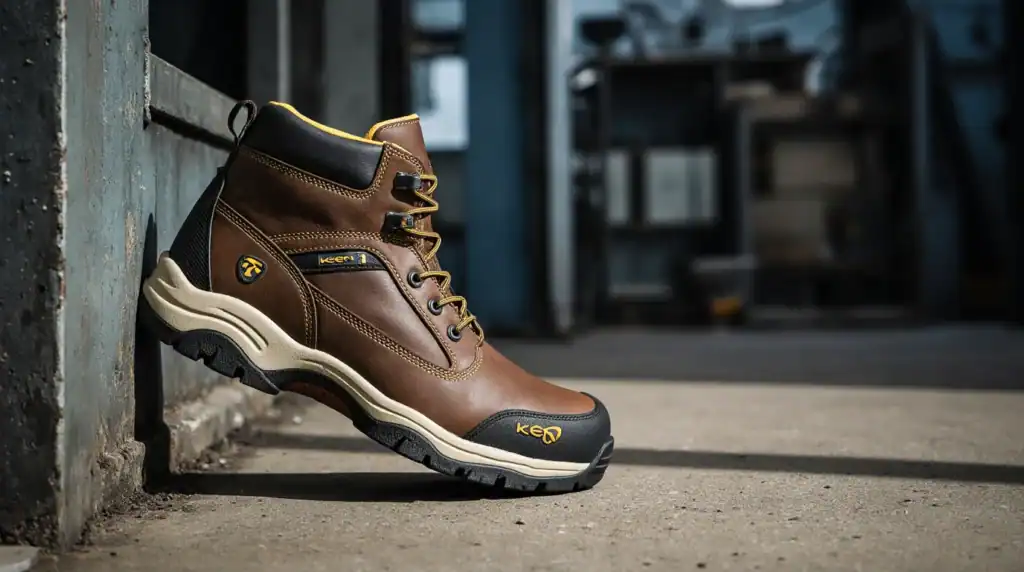
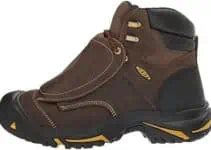
keen utility work boot with visible metatomical arch support footbed designed for high arches and long shifts
The 3 Non-Negotiables for High Arch Boots
Ignore generic "softness." You need structure.
1. The Shank is Your Best Friend
The shank is the stiff strip hidden inside the sole. For high arches, the shank acts as the bridge support.
- Avoid: Flimsy "cement construction" hikers with no shank. Your arch will collapse them.
- Look For: A Rigid Shank (Steel, Fiberglass, or extra-wide Nylon). Brands like Ariat (ATS Max) use an extra-wide shank that acts like a platform for your arch.
2. You Need "Artificial" Shock Absorption
Since your foot is too rigid to absorb shock, the boot must do it for you.
- The Fix: Look for deep PU (Polyurethane) midsoles or "Energy Return" foams. Hard rubber soles (like traditional lug soles) transfer too much shock unless they have a thick midsole layer.
3. Vertical Volume (The Instep Fix)
You need a boot with a "High Internal Volume.
- Lacing matters: Look for "U-Throat" lacing (where the laces go way down near the toe) rather than Wellingtons (Pull-ons). Pull-on boots are often a nightmare for high arches because the "throat" is too tight to get your foot past the turn.
The Specialist Picks
These aren't just random boots; they solve specific high-arch problems based on biomechanics.
| Category | Boot Model | Why It Works |
|---|---|---|
| Best Overall Support | Ariat WorkHog (ATS Max) | Features an extra-wide shank that stabilizes the foot and prevents supination (rolling outward). The platform is massive, catching the arch before it strains. |
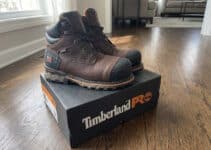
| Best Cushioning | Timberland PRO Boondock | Deep "Anti-Fatigue" geometry provides the shock absorption your rigid foot can't provide naturally. Excellent for concrete floors. |
| Best Wedge Sole | Thorogood American Heritage | Unlike most wedges which are flat, this features a fiberglass shank and a Poron comfort cushion. Good for those who need a flat sole but still need arch structure. |
| Budget / Lightweight | Skechers Work Arch Fit | Certified podiatrist-certified arch support shape at a much lower price point than heavy loggers. |
| The "Buy Once" King | Nicks / White's Boots | Pacific Northwest brands use a stacked leather shank ("Arch Ease") that physically molds to high arches over time. Expensive, but the ultimate solution. |
The "Window Lacing" Hack (Critical!)
If the top of your boot hurts your instep, do not just suffer through it. Use the "Window Lacing" technique to relieve pressure over the Navicular bone (the highest point of your foot).
- Unlace your boot down to the ankle.
- Identify the eyelet where the pressure is worst (usually the middle of the instep).
- Skip that eyelet entirely. Run the lace vertically to the next hook up, leaving a gap or "window" over the painful spot.
- Lock it down with a surgeon's knot at the top.
This allows the leather to expand over your high instep without the laces digging in.
The Ugly Truth About Insoles
Even the best boots (except maybe Nicks/White's) come with generic foam insoles. Throw them away.
For high arches, a soft gel insole is useless because it will just flatten out. You need a Semi-Rigid Orthotic. Look for brands like Superfeet Green or Sole Performance. These have a hard plastic cap on the bottom that bridges the gap between your high arch and the flat boot sole.
Conclusion
Don't rely on "breaking in" a boot that lacks structure. High arches require a bridge. If you are on a budget, the Skechers Arch Fit is a great entry point. For maximum stability, grab the Ariat WorkHog. If you need massive shock absorption for concrete, go Timberland Pro Boondock. And whatever you do, use the Window Lacing trick to save the top of your feet.