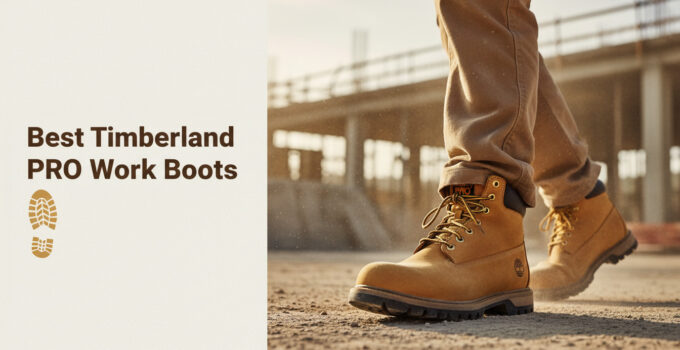
Timberland PRO is the most-searched work boot brand in North America — and for good reason. (Curious about the brand itself? See where Timberlands are actually made.) The line spans everything from the bone-crushing durability of the Pit Boss Goodyear welt to the 13-oz, sneaker-feel Reaxion composite. But that range is also the source of the most common Timberland PRO buying mistake: picking the wrong model for your trade and either suffering through a brutal 40-hour break-in you didn’t need, or wearing a heavyweight outdoor boot in a warehouse when the Reaxion would have served you four times better.
This guide covers all ten Timberland PRO models from your spreadsheet, reviewed by trade and construction type — not alphabetically, not by price, and not generically. You will also find the most important piece of Timberland PRO knowledge that no other roundup article publishes: the Anti-Fatigue midsole and the AFT stock insole are two separate components with dramatically different lifespans, and the workers who throw away a $180 boot at month seven because their feet started hurting are making a $160 mistake. That section alone is worth bookmarking.
Table of Contents
- AFT Technology: The Midsole That Lasts vs. the Insole That Doesn’t
- Construction Decision Guide: Goodyear vs. Cement vs. 270° Hybrid
- Sizing Guide & The Heel-Slip Warning
- Quick Comparison Table — All 10 Models
- Best Overall: Timberland PRO Boondock HD
- Best Durability / Framing: Timberland PRO Pit Boss Steel Toe
- Best Rugged Outdoor / Waterproof: Timberland PRO Boondock 6
- Best Lightweight / Warehouse: Timberland PRO Reaxion CT
- Best for Concrete Standing: Timberland PRO Titan EV 6″
- Best for Electricians: Timberland PRO Titan 6″ Alloy
- Best Met Guard / Ironwork: Timberland PRO Endurance 6
- Best Modern Tech: Timberland PRO Morphix
- Best Mixed-Duty Value: Timberland PRO Titan 6″ Safety Toe
- Best Budget / Wide: Timberland White Ledge Wide
- The Boondock Rubber Toe Cap: Who Actually Needs It
- Break-In Protocol by Construction Type
- Trade-Specific Model Picker
- Insole Replacement Guide
- ReBOTL and Sustainability
- When Timberland PRO Is NOT the Right Choice
- Women’s Timberland PRO Guide
- Boot Care and Maintenance
- FAQ — 8 Questions Answered
- Final Verdict by Trade
Timberland PRO Anti-Fatigue Technology Explained: The Midsole That Lasts vs. the Insole That Doesn’t
This is the most important section in this guide. Read it whether you own Timberland PRO boots already or are buying for the first time — it will change how you evaluate and maintain them.
Timberland PRO markets “Anti-Fatigue Technology” as a single system. Every competitor article treats it that way. It is not. It is two completely separate components with dramatically different lifespans, and confusing them is how tens of thousands of workers end up throwing away a perfectly good $180 boot at month seven.
Component 1: The AFT Midsole (The Part That Lasts)
Embedded in the rubber outsole-midsole complex, beneath the removable insole, is a geometrical array of inverted PU (polyurethane) cone structures. These cones compress under heel strike to absorb impact and rebound to return energy at toe-off — mechanical energy return, not foam cushioning. PU rubber compound resists compression set far better than EVA foam. Under daily heavy construction use, the AFT midsole maintains its energy-return properties for two to three years in most cases. This is the component responsible for Timberland PRO’s famous out-of-the-box comfort — and it is still working at month eighteen even when the boot feels dead. The midsole outlasts everything else.
Component 2: The AFT Stock Insole (The Part That Fails)
The removable orange foam insert sitting on top of the midsole is a standard EVA-based comfort foam with an OrthoLite top layer for moisture management. EVA foam compresses and loses return capacity under sustained load. For a 180–200+ lb worker doing fifty-hour weeks in heavy construction, this insole can feel flat and dead as early as month four to six. When it fails, the AFT midsole beneath it is still performing — but your foot no longer reaches it through the compressed foam. The boot feels dead. Your feet hurt. And without knowing this, you throw away a $180 boot when a $20 replacement insole would have fixed it immediately.
The AFT Insole Lifespan by Worker Profile
| Worker Profile | Expected Insole Lifespan |
|---|---|
| 150 lb, light-duty / retail | 12–15 months |
| 180 lb, moderate construction | 6–9 months |
| 200+ lb, heavy construction / 50-hr weeks | 4–7 months |
The thumb test: Press your thumb firmly into the centre of the orange insole. If it leaves a permanent indent that doesn’t spring back, the insole is dead. Replace it immediately — the boot is fine.
Replacement options: Timberland PRO AFT replacement insole ($20–$25, same geometry as original), Superfeet Green (flat feet / plantar fasciitis), OrthoLite Flex (balanced arch support), or custom orthotics if prescribed. Replace proactively at the intervals above — not after the pain arrives. This single protocol saves the boot and saves $150 in unnecessary replacement cost.
Construction Method Decision Guide: Goodyear Welt vs. Cement vs. 270° Hybrid vs. TPU Wrap
The construction method determines the boot’s weight, flexibility, durability on specific terrain, and break-in time. It is the single most important variable in matching a Timberland PRO model to a specific trade — and it is the variable that every other Timberland PRO article glosses over.
| Method | Models | Strengths | Limitations | Best Trade |
|---|---|---|---|---|
| Full Goodyear Welt | Pit Boss, Endurance | Maximum sole integrity on abrasive terrain; torsional rigidity on uneven surfaces; stiffest outsole for ladder rung grip | Heaviest; 30–50 hr break-in; not cost-effective to resole | Framing, roofing, ironwork, rough outdoor construction |
| Cement / Direct Attach | Titan, Reaxion, Morphix base | Lightweight; flexible sneaker-feel; zero to minimal break-in; best on flat smooth surfaces | Not resoleable; less durable on rough abrasive terrain | Warehouse, light industrial, flat concrete, high step-count indoor |
| 270° Welt + Cement Heel | Boondock, Boondock HD | Welt durability at front 270° (highest stress zone) + cement heel flexibility for natural stride; best balance for heavy outdoor work | Not resoleable; heavier than cement-only | General heavy outdoor construction, plumbing, concrete, wet sites |
| TPU Wrap | Morphix | TPU abrasion resistance + StepPropel energy return; modern athletic feel; lighter than Goodyear welt leather | Less proven long-term than traditional welt; more modern aesthetic than traditional work site | Site supervision, project management, professional dual-role |
The decision rule: Rough outdoor terrain with abrasion priority → Goodyear welt (Pit Boss) or 270° hybrid (Boondock). Lightweight flat surface with immediate comfort → Cement (Titan, Reaxion). Modern professional look with composite toe and waterproofing → Morphix (TPU wrap).
Sizing Guide and the Heel-Slip Warning: Model-by-Model
Timberland PRO boots have two documented sizing characteristics that cause the majority of returns — and neither is a manufacturing defect. Both are fixable with the right information before you buy.
Boondock Sizing: Half a Size Large, One Width Wider
The Boondock line consistently runs half a size large and one width wider than workers expect. Workers who buy true-to-size often find the Boondock too long and the toe box excessive in width. Recommendation: size down half a size from your normal work boot size. If you normally wear wide, try standard width first in the Boondock — the wide toe box may already provide the forefoot room you need.
Pit Boss Sizing: True Length, Slightly Wide
The Pit Boss runs true to length but slightly wide. Narrow-heeled workers will experience heel cup gap and potential heel lift in the first two weeks of the 30–50 hour break-in period.
Titan and Reaxion Sizing: True to Size
Cement-construction models run true to size with minimal heel cup issues due to their inherent flexibility. Immediate comfort from day one means sizing fits as expected.
The Heel-Slip Mechanism and the Fix
Timberland PRO’s rigid heel counters on Goodyear welt models can cause heel lift for narrow-heeled workers. The counter grabs the heel only once the leather collar softens — typically at fifteen to twenty hours of wear. Before that, friction against the rigid counter causes Achilles blisters on the first week of full shifts.
The Fix (Do This Before Day 1 on Site)
Wear thick merino wool socks (Darn Tough, Smartwool) during the first 15–20 hours of break-in. The extra sock volume fills the gap between your heel and the rigid counter, eliminating friction blisters while the leather softens. After 20 hours, the leather collar conforms to your heel shape and the problem resolves permanently. This is a break-in characteristic, not a defect — and it saves the most common return in the Timberland PRO Goodyear welt line.
Quick Comparison Table — All 10 Timberland PRO Models
| Model | Construction | Toe | EH | WP | Break-In | Best Trade | Price |
|---|---|---|---|---|---|---|---|
| Boondock HD | 270° Welt | Composite | ✅ | ✅ | 10–20 hrs | Plumbing, flooring, kneeling trades | $175–$210 |
| Pit Boss Steel Toe | Full GYW | Steel | ✅ | — | 30–50 hrs | Framing, roofing, rough terrain | $150–$185 |
| Boondock 6 | 270° Welt | Composite | ✅ | ✅ | 10–20 hrs | Outdoor construction, wet sites | $170–$205 |
| Reaxion CT | Cement | Composite | ✅ | — | 0–5 hrs | Warehouse, distribution, airport | $120–$150 |
| Titan EV 6″ | Cement/EV | Composite | ✅ | ✅ | 0–5 hrs | Hard floor standing, assembly, TSO | $140–$170 |
| Titan 6″ Alloy | Cement | Alloy ⚠️ | ✅ | — | 0–5 hrs | Electricians, HVAC, EH-required | $130–$160 |
| Endurance 6 | Full GYW | Steel | ✅ | — | 30–50 hrs | Ironwork, steel, met guard roles | $140–$175 |
| Morphix | TPU Wrap | Composite | ✅ | ✅ | 5–10 hrs | Site supervision, professional dual-role | $160–$195 |
| Titan 6″ Safety Toe | Cement | Safety toe | ✅ | — | 0–5 hrs | Mixed-duty, light construction, maintenance | $120–$150 |
| White Ledge Wide ⚠️ Non-PRO | Cement | Verify listing | — | ✅ | Minimal | Budget / wide feet / non-safety-critical | $80–$110 |
GYW = Goodyear Welt · ⚠️ Alloy toe is metallic — triggers metal detectors · White Ledge = non-PRO, verify safety toe on current listing · All PRO models ASTM F2413 EH rated · Prices approximate.
Best Overall / Heavy Outdoor Construction: Timberland PRO Boondock HD
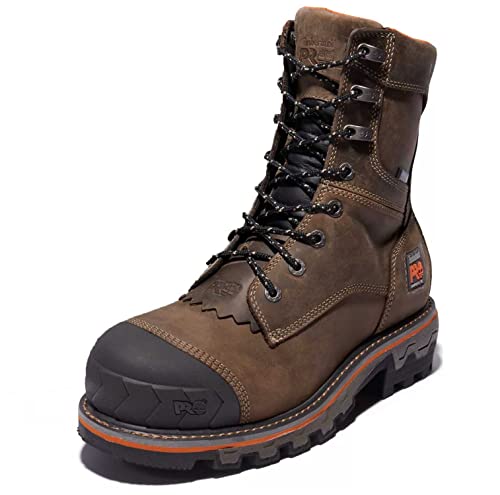
The Timberland PRO Boondock HD earns the best-overall designation by solving the trade-off that plagues every other boot in the line: the Pit Boss’s Goodyear welt is the most durable construction available but imposes a brutal 30–50 hour break-in and significant weight penalty; cement construction boots are light and immediately comfortable but can’t handle the abrasive demands of serious outdoor work sites. The Boondock HD’s 270° Goodyear welt solves this by stitching the welt across the front 270° of the boot — the zone that bears the most stress from terrain abrasion and kneeling contact — while cementing the heel for a natural, comfortable stride from day one. Best of both constructions. For plumbers, flooring installers, concrete workers, and anyone whose work involves sustained kneeling, the Boondock HD is the pick.

The molded rubber toe cap is the Boondock HD’s most distinctive feature and its most misunderstood. For kneeling-heavy trades, leather over a safety toe wears through from sustained abrasion against hard surfaces before the safety toe protection itself fails. The rubber cap — bonded over the leather toe area at outsole-equivalent thickness — prevents this degradation and extends the boot’s service life by 6–12 months for workers who regularly kneel on rough surfaces. The composite toe beneath it meets ASTM F2413 I/75 C/75 EH. Ever-Guard leather upper resists abrasion on rough outdoor terrain while remaining waterproof through the full-boot waterproof membrane. ReBOTL lining — minimum 50% recycled PET — provides moisture management without compromising the boot’s interior durability. The dual-density PU/TPU outsole handles the heavy mixed-terrain of outdoor construction.

Break-in for the Boondock HD sits at 10–20 hours — significantly faster than the Pit Boss due to the cemented heel allowing natural stride movement from day one. The 270° welt front does require the leather collar to soften, but workers can expect comfortable full shifts by the end of the first week. Sizing note: the Boondock line runs half a size large and one width wider — size down half a step from your normal work boot size. The AFT stock insole replacement timeline: 6–9 months for a 180 lb moderate construction worker, 4–7 months for 200+ lb heavy-duty use. Replace the insole when it fails the thumb test — the boot’s 270° welt construction will outlast several insole replacements.

Timberland PRO Specs
Construction: 270° Goodyear welt + cement heel | Toe: Composite (non-metallic, ASTM F2413 I/75 C/75)
EH Rated: ✅ Yes | Waterproof: ✅ Full membrane | Met guard: —
Break-in: 10–20 hrs | Insole replacement: 6–9 months (180 lb moderate), 4–7 months (200+ lb heavy)
Sizing note: Size down ½ step — runs large and wide | ReBOTL lining: ✅ 50%+ recycled PET
✅ Best for: Plumbing · Flooring · Kneeling-heavy outdoor construction · Concrete · Wet sites
Pros: 270° welt durability + cement heel comfort — best balance in the line; Rubber toe cap extends service life 6–12 months for kneeling trades; Composite toe non-metallic, EH rated, metal-detector safe; Full waterproof membrane.
Cons: Runs half a size large and wide — sizing down is essential; Rubber toe cap adds visual bulk and weight for trades that don’t kneel.
Best Durability Benchmark / Framing: Timberland PRO Pit Boss Steel Toe
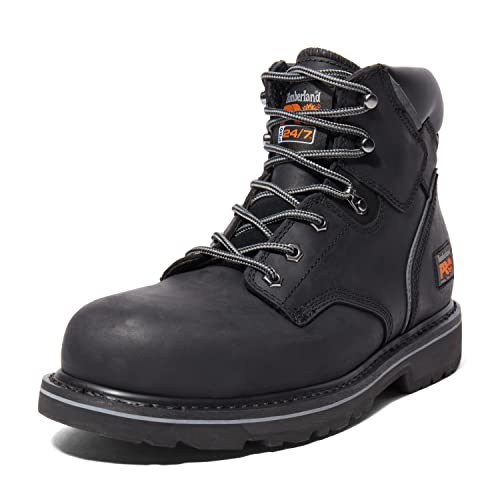
The Pit Boss is the durability benchmark of the Timberland PRO line — not because it is the most technologically sophisticated boot in this guide, but because it is the most battle-tested. The full Goodyear welt construction bonds the upper to the outsole with a lockstitch that gravel, concrete, and rough outdoor terrain cannot peel or separate. For framers whose boots encounter nail boards, loose concrete aggregate, and abrasive OSB edges daily, and for roofers whose boots contact rough shingles during every kneeling shift, the Pit Boss’s welt integrity outlasts cement and hybrid alternatives significantly. It is also the only model in this line with a genuine ladder-rung grip advantage: the torsional rigidity of the full Goodyear welt creates a stiff platform that catches and holds ladder rungs in a way that flexible cement-construction boots cannot replicate.

The 24/7 Comfort Suspension system is the Pit Boss’s midsole technology — a direct predecessor to the AFT geometry found in newer models. The oil, slip, and abrasion-resistant rubber outsole handles the chemical exposure of construction sites and the traction demands of rough outdoor terrain. Water-resistant leather upper — not fully waterproof, a genuine limitation on wet sites — provides meaningful protection for light rain and morning dew. Steel toe meets ASTM F2413 I/75 C/75 EH. The padded collar requires break-in but becomes the boot’s most comfortable element once the leather softens to your ankle shape. The honest break-in warning: 30–50 hours minimum, and attempting to break this boot in on a full 10-hour shift on day one is the most reliable way to produce raw Achilles skin and week-one hatred of an excellent boot.

The AFT stock insole replacement is particularly important for Pit Boss owners: the Goodyear welt construction will last far beyond the stock insole’s useful life. At month 6–9 for heavy construction workers, replace the orange insole — the boot welt has years left. The insole failure is misread as boot failure constantly in this model. Sizing runs true to length, slightly wide — narrow-heeled workers will benefit from the thick merino sock heel-slip fix during the 30–50 hour break-in. The Pit Boss is not the right choice for workers who prioritise immediate comfort, low weight, or flat-surface warehouse work — for those trade profiles, the Reaxion or Titan EV serve far better.

Timberland PRO Specs
Construction: Full Goodyear welt | Toe: Steel — ASTM F2413 I/75 C/75
EH Rated: ✅ Yes | Waterproof: — (water-resistant leather) | Met guard: — (see Endurance)
Break-in: 30–50 hrs — do NOT wear full shift on day 1 | Insole replacement: 6–9 months heavy use
Sizing note: True length, slightly wide — use thick merino socks for heel slip during break-in
✅ Best for: Framing · Roofing · Rough outdoor construction · Any terrain that fights back
Pros: Full Goodyear welt — maximum durability on abrasive outdoor terrain; Torsional rigidity for ladder rung grip; 24/7 Comfort Suspension; EH rated; The most durability-per-dollar in the PRO line.
Cons: 30–50 hour break-in — the most demanding in the line; Not waterproof (water-resistant only); Heaviest model in guide; Steel toe triggers metal detectors.
Best Rugged Outdoor / Waterproof: Timberland PRO Boondock 6
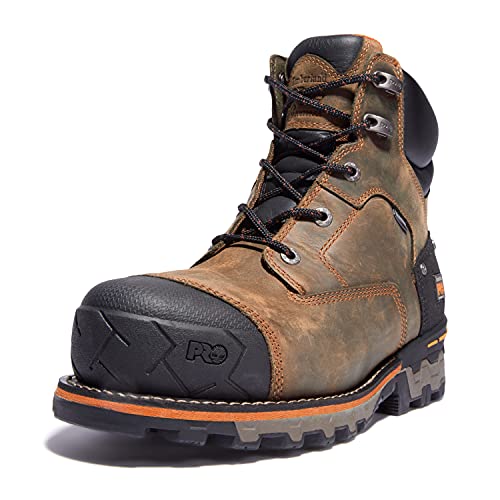
The Boondock 6 is the Boondock HD with one significant difference: no rubber toe cap. For outdoor construction workers who need the 270° Goodyear welt’s durability, full waterproofing, and composite toe protection but who work primarily on their feet rather than on their knees, the standard Boondock 6 provides every key feature of the HD at a slightly lighter and cleaner profile. The absent rubber cap reduces bulk at the toe box — relevant for workers navigating tight spaces, working in finished interior environments, or simply preferring a less industrial silhouette. For Pacific Northwest, Great Lakes, and Southeast outdoor construction where composite toe, full waterproofing, and welt durability are simultaneously required, the Boondock 6 is the most complete single boot in the Timberland PRO line.

The 270° Goodyear welt provides the front-zone welt durability that sustains contact with rough outdoor surfaces — gravel, aggregate, rough-cut wood, and construction debris — while the cemented heel delivers stride comfort and natural flexibility from day one. Full waterproof membrane keeps feet dry in sustained rain and wet site conditions. Composite toe meets ASTM F2413 I/75 C/75 EH — non-metallic, lighter than steel, and passes metal detectors for workers accessing secured sites. The deep lug TPU outsole handles the mixed-surface demands of outdoor construction: wet concrete, mud, gravel, and uneven terrain. Fiberglass shank provides torsional stability without the full stiffness of a Goodyear welt midsole, giving the boot a more natural flex than the Pit Boss while maintaining structural integrity on uneven ground.

Anti-Fatigue midsole geometry provides the energy return characteristic of the PRO line. The AFT stock insole replacement timeline applies: 6–9 months for moderate use, 4–7 months for heavy. Same Boondock sizing note applies as the HD version — size down half a step from your normal work boot, as the line runs large and wide. Break-in at 10–20 hours is significantly faster than the Pit Boss; expect comfortable full shifts by end of week one. The Boondock 6 without the rubber toe cap is the right choice for plumbers, electricians (composite toe, EH rated), and general outdoor construction workers who are on their feet more than their knees and prioritise the cleanest 270° welt profile available in the PRO line.

Timberland PRO Specs
Construction: 270° Goodyear welt + cement heel | Toe: Composite — ASTM F2413 I/75 C/75
EH Rated: ✅ Yes | Waterproof: ✅ Full membrane | Met guard: —
Break-in: 10–20 hrs | Insole replacement: 6–9 months (moderate), 4–7 months (heavy)
Sizing note: Size down ½ step — same Boondock line sizing applies
✅ Best for: Outdoor construction wet climates · Plumbing · General heavy outdoor · EH composite toe required
Pros: 270° welt + full waterproof + composite toe in one boot; Non-metallic composite — EH rated and metal-detector safe; Fiberglass shank for stability without Pit Boss rigidity; Faster break-in than full Goodyear welt.
Cons: No rubber toe cap — kneeling-heavy workers should choose Boondock HD; Runs large and wide — size down essential.
Best Lightweight / Warehouse: Timberland PRO Reaxion Composite Toe

At approximately 13 oz, the Reaxion CT is the lightest ASTM-certified boot in the Timberland PRO line — and the weight difference from a Pit Boss or Boondock matters significantly when you are covering ten to fifteen miles of warehouse floor per shift. Each extra 100 grams of footwear adds roughly 1% of additional oxygen consumption during walking — a fatigue multiplier that compounds over a ten-hour distribution centre shift. For warehouse workers, fulfilment centre employees, airport ground crews, and anyone whose primary job demand is high step-count walking on smooth indoor surfaces, the Reaxion is not just the most comfortable PRO option — it is the specifically correct tool for the job, in the same way the Pit Boss is specifically correct for rough outdoor construction.

The cement construction is the foundation of the Reaxion’s performance advantages: it is flexible from day one, requires essentially zero break-in, and delivers a sneaker-like feel that workers coming from athletic shoes or lighter footwear will find immediately familiar. The synthetic and mesh upper breathes significantly better than full-grain leather alternatives — critical in warm warehouse environments where internal boot temperature directly affects foot fatigue over a long shift. Composite toe is non-metallic: lighter than steel, non-conductive (no cold transfer in winter, no heat retention in summer), and confirmed metal-detector safe — relevant for airport, government facility, and distribution centre workers who cross scanner access points during shifts. ASTM F2413 EH certified. Anti-Fatigue Technology footbed provides energy return on the warehouse floor surface where the Reaxion spends its life.

The Reaxion’s limitations are clear and worth stating directly: the mesh upper offers no meaningful protection against Sonoran Desert vegetation, rough terrain abrasion, or sustained water exposure. It is not waterproof. On rough outdoor sites — where gravel, aggregate, and rough-cut materials contact the boot regularly — the mesh panels shred faster than leather. The Reaxion is exclusively the right choice for smooth-surface, indoor-dominant, high-step-count work environments. For those environments, it is the best boot in this guide. Sizing runs true — no half-size adjustment needed. Women’s version available. Available in black for sites with uniform requirements.

Timberland PRO Specs
Construction: Cement (athletic) | Toe: Composite (non-metallic) — ASTM F2413
EH Rated: ✅ Yes | Waterproof: — (mesh upper) | Weight: ~13 oz — lightest in PRO line
Break-in: 0–5 hrs — immediate comfort | Women’s: ✅ Available
Metal detectors: ✅ Composite — passes | Sizing: True to size
✅ Best for: Warehouse · Distribution · Airport · Fulfilment · Any high step-count smooth-floor role
Pros: Lightest ASTM-certified PRO boot at ~13 oz; Zero break-in — immediate full-shift comfort; Composite toe passes metal detectors; Breathable mesh upper; Women’s available.
Cons: Not waterproof — mesh unsuitable for outdoor wet conditions; Mesh panels less durable on rough abrasive terrain; Not for outdoor construction sites.
Best for Standing on Concrete / Hard Floors: Timberland PRO Titan EV 6″
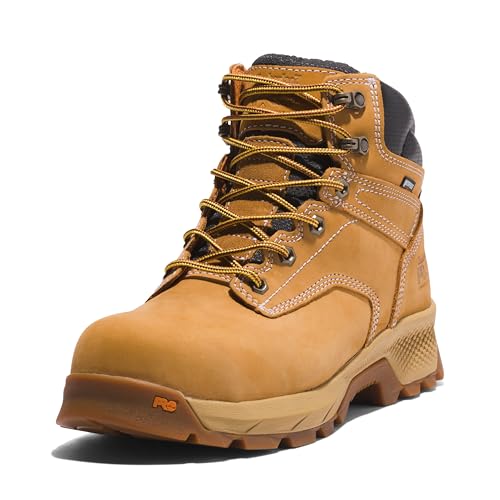
The Titan EV addresses a specific work scenario that the Reaxion’s light weight and the Pit Boss’s welt durability both handle suboptimally: standing stationary on concrete, polished tile, or hard industrial floors for 8–12 hours. The EV designation signals Timberland PRO’s maximum-volume foam midsole platform — a meaningfully thicker EVA stack than found in the standard Titan or the Reaxion. For assembly line workers, concrete finishers in their static pouring positions, retail floor supervisors, Transportation Security Officers, and healthcare workers standing at workstations for full shifts, the Titan EV’s midsole thickness distributes compressive load over a larger area and maintains more cushioning depth through a long shift than the lighter-midsole alternatives in this guide.

The Anti-Fatigue geometric energy return system embedded in the EV midsole uses inverted cone geometry to mechanically return energy at toe-off — the same mechanism that makes the AFT midsole outlast EVA foam competitors. For the static-standing use case, this mechanical return is particularly valuable: it reduces the muscular effort required to maintain posture over a long shift on a flat surface. Composite toe is ASTM F2413 certified — non-metallic, EH rated, confirmed metal-detector safe. Full waterproof construction for workers in environments where cleaning solutions, water, or light chemical splash is present. Available in black for TSO and uniform-required roles. Sizing runs true to size with minimal break-in required due to cement construction.

The AFT stock insole replacement guidance for the Titan EV: for workers who stand stationary rather than walk significant distances, the insole compresses differently — lateral and forefoot compression rather than heel compression. The thumb test still applies: press firmly into the forefoot and heel sections. If either leaves a permanent indent, replace the insole. Women’s version available. The Titan EV is heavier than the Reaxion — the extra midsole volume adds mass — which means it is not the right choice for high step-count walking roles where the Reaxion excels. It is specifically optimised for the standing-dominant role, and for that role, it is the best boot in this guide.

Timberland PRO Specs
Construction: Cement / EV foam midsole | Toe: Composite — ASTM F2413 I/75 C/75
EH Rated: ✅ Yes | Waterproof: ✅ Yes | Women’s: ✅ Available
Break-in: 0–5 hrs | Metal detectors: ✅ Composite — passes
Midsole: EV (extra volume) — maximum cushion platform in PRO line
✅ Best for: Assembly line · Concrete finisher (standing) · Retail · TSO · Healthcare standing roles
Pros: Maximum midsole cushioning in the PRO line — best for static hard-floor standing; Anti-Fatigue geometric energy return; Composite toe + EH + waterproof in one boot; Women’s available; Metal-detector safe.
Cons: Heavier than Reaxion — not optimal for high-mileage walking roles; EV midsole adds bulk compared to standard Titan.
Best for Electricians / Lighter Duty: Timberland PRO Titan 6″ Alloy Safety Toe
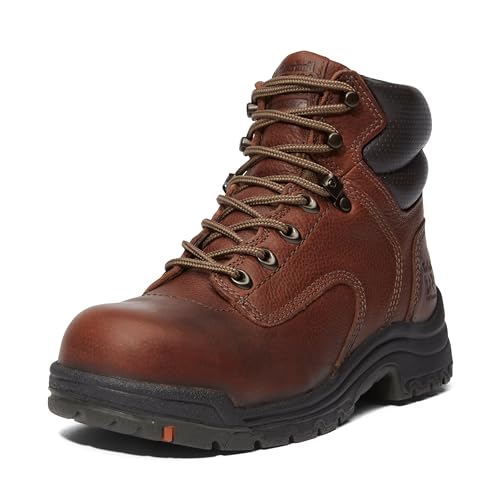
For electricians, HVAC technicians, and EH-required roles where lighter weight is a genuine daily advantage on ladder work, the Titan Alloy is the specific answer within the Timberland PRO line. The alloy (aluminum alloy) toe is lighter than steel by approximately 30% while delivering identical ASTM F2413 I/75 C/75 impact and compression protection — a meaningful weight reduction when multiplied across the hundreds of ladder climbs an electrician or HVAC tech completes in a working week. The EH rating is confirmed, covering the electrical hazard protection that is mandatory on most electrical trade job sites and explicitly required by OSHA for workers exposed to live circuit environments.

One critical specification that every buyer must understand before purchasing: the alloy toe is a metallic material. It will trigger walk-through metal detectors and body scanner alarms. If your site, client facility, or access point uses metal detector screening — common at airports, government buildings, secured distribution centres, and utility company facilities — the Titan Alloy is not the right choice and the composite toe Reaxion, Titan EV, or Boondock 6 should replace it. For sites without metal detector requirements, the alloy toe’s weight advantage over steel is a legitimate daily benefit. The Anti-Fatigue Technology midsole provides energy return across ladder climbing and mixed-terrain movement. Cement construction means immediate comfort with no meaningful break-in period.

The Titan Alloy is the mid-tier value entry into the Timberland PRO EH-rated line — lighter than the Boondock 6 composite, less expensive than the Titan EV composite, and specifically positioned for the electrician and HVAC trade profile where EH is mandatory, lighter weight is valued for ladder work, and metal detector access is not a daily consideration. Sizing runs true. The AFT stock insole replacement timeline applies at the same intervals as the standard Titan line. Not waterproof — relevant limitation for outdoor electrical work in wet climates, where the Boondock 6 composite is the better waterproof EH option.

Timberland PRO Specs
Construction: Cement | Toe: Alloy (aluminum — metallic, same ASTM protection as steel)
EH Rated: ✅ Yes — mandatory for most electrical trade sites | Waterproof: —
Metal detectors: ⚠️ Alloy IS metallic — will trigger
Break-in: 0–5 hrs | Weight advantage: ~30% lighter toe cap than steel
✅ Best for: Electricians · HVAC · EH-required ladder work · Non-metal-detector sites
Pros: ~30% lighter toe cap than steel — meaningful for ladder-climbing trades; Full EH certification; Immediate comfort; Anti-Fatigue midsole; Good value entry to PRO EH line.
Cons: Alloy toe IS metallic — triggers metal detectors (use composite toe alternatives for detector access sites); Not waterproof.
Best Met Guard / Ironwork: Timberland PRO Endurance 6

The Timberland PRO Endurance 6 is the met guard answer within the PRO line — and metatarsal guard protection is the most underspecified safety rating in work boot purchasing. On job sites with heavy fabrication, ironwork, overhead material handling, or structural steel work where objects can fall at height and strike the metatarsal bones above the safety toe cap, the standard I/75 C/75 toe protection covers only the toes themselves. ASTM MT (metatarsal) rating certifies protection for the metatarsal arch — the bones that connect your toes to your ankle and that a dropped I-beam or heavy fabricated component can destroy even when a certified toe cap protects the digits. If your site or employer specifies ASTM MT metatarsal protection, the Endurance with met guard is the pick. Verify the met guard variant on the current listing — Timberland PRO offers the Endurance in both standard and met guard configurations.

The full Goodyear welt construction gives the Endurance the same abrasive-terrain durability as the Pit Boss — the correct choice for ironwork and heavy fabrication environments where rough structural materials, metal shavings, and concrete aggregate are in constant contact with the boot. Steel toe meets ASTM F2413 I/75 C/75. EH rated for electrical hazard protection — relevant for ironworkers and fabricators working near electrical equipment, control panels, and welding circuits. The 24/7 Comfort system provides baseline anti-fatigue support for the standing-heavy and climbing-heavy work patterns of structural ironwork. Oil and slip-resistant rubber outsole handles the industrial floor surfaces of fabrication shops and structural steel sites.

The Endurance carries the same 30–50 hour break-in reality as the Pit Boss — full Goodyear welt construction requires collar softening before full-shift comfort is achieved. The thick merino sock break-in protocol applies. Not waterproof — water-resistant leather only — which is an acceptable trade-off for the primarily indoor and covered fabrication shop environments where the Endurance is most commonly used. For outdoor ironwork in wet climates, the Boondock 6 composite with its full waterproof membrane and 270° welt provides a waterproof alternative, though without met guard availability. Replace the AFT stock insole at 6–9 months under moderate-heavy industrial use. Sizing true to length, slightly wide.

Timberland PRO Specs
Construction: Full Goodyear welt | Toe: Steel — ASTM F2413 I/75 C/75
Met guard: ✅ Available (verify on current listing) — ASTM MT | EH Rated: ✅ Yes
Waterproof: — (water-resistant) | Break-in: 30–50 hrs
Insole replacement: 6–9 months heavy use | Sizing: True length, slightly wide
✅ Best for: Ironwork · Structural steel · Heavy fabrication · Any ASTM MT metatarsal protection requirement
Pros: Met guard available for ASTM MT metatarsal protection — rare in the PRO line; Full Goodyear welt durability; EH rated; Steel toe ASTM certified.
Cons: 30–50 hour break-in (same as Pit Boss); Not waterproof; Verify met guard variant specifically on current listing — not all Endurance listings include it.
Best Modern Tech / Professional Appearance: Timberland PRO Morphix

The Morphix is the newest construction philosophy in the Timberland PRO line and the most visually distinctive: a TPU (thermoplastic polyurethane) wrap midsole with StepPropel geometry replaces the traditional rubber outsole-midsole complex with a modern, athletic-performance architecture. For site supervisors, project managers, safety officers, and tradespeople who transition between outdoor site environments and professional office meetings, the Morphix presents a clean, modern silhouette that the Boondock’s rubber toe cap and the Pit Boss’s traditional work boot aesthetic cannot match. It looks like high-end technical footwear rather than a traditional work boot — which is increasingly a relevant consideration for the growing number of construction professionals who move between field and conference room in the same boots.

The StepPropel energy return geometry in the TPU midsole provides mechanical energy return at toe-off — a modern alternative to the traditional AFT inverted cone geometry. Composite toe is confirmed as CarbonShield — a carbon fiber and composite blend that provides ASTM F2413 I/75 C/75 protection at a lower weight than fiberglass-only composite options, making the Morphix one of the lightest waterproof composite options in the PRO line. Full waterproof construction. EH rated. The TPU wrap provides abrasion resistance at the midsole perimeter that traditional rubber outsoles handle through lug depth — a different engineering approach to the same durability requirement, optimised for the mixed indoor/outdoor profile of the supervision and management role.

Break-in for the Morphix is 5–10 hours — significantly faster than either Goodyear welt model due to the lighter TPU midsole construction and leather upper that softens quickly. The modern athletic feel is immediate for most workers. Sizing runs true. The Morphix represents Timberland PRO’s forward direction in boot engineering — lighter materials, modern energy return geometry, cleaner aesthetics — and for the specific role of construction management and supervision, it outperforms both the traditional heavy welt boots and the athletic-sneaker Reaxion by combining professional appearance with genuine site compliance. Not the right choice for the heaviest outdoor construction where Goodyear welt durability is needed — for that, the Boondock HD or Pit Boss are the correct tools.

Timberland PRO Specs
Construction: TPU wrap midsole (StepPropel energy return) | Toe: CarbonShield composite — ASTM F2413
EH Rated: ✅ Yes | Waterproof: ✅ Yes | Break-in: 5–10 hrs
Silhouette: Modern / professional — best appearance for dual site-office role
Sizing: True to size
✅ Best for: Site supervision · Project management · Professional dual-role · Modern construction aesthetics
Pros: Cleanest professional appearance in the PRO line; CarbonShield composite toe — lightest composite option; StepPropel energy return; Waterproof; EH rated; Fast break-in.
Cons: Less proven long-term durability than Goodyear welt alternatives; Not the right choice for the heaviest outdoor abrasive construction roles.
Best Mixed-Duty Value: Timberland PRO Titan 6″ Safety Toe

The Titan 6″ Safety Toe is the everyday workhorse of the Timberland PRO line — the model that delivers the core PRO value proposition (Anti-Fatigue Technology, ASTM certification, EH rating) at the most accessible price point in the line. For workers in light construction, general maintenance, facilities management, and mixed indoor/outdoor roles who need Timberland PRO’s anti-fatigue system and ASTM compliance without the premium cost of the Boondock 6’s 270° welt or the Titan EV’s maximum-cushion platform, the standard Titan provides everything that matters at a lower price. It is not the right boot for heavy rough terrain (go Pit Boss or Boondock), sustained wet sites (go waterproof Boondock or Titan EV), or maximum indoor walking (go Reaxion). For everything between those extremes, it performs well.

Cement construction gives the Titan 6″ Safety Toe the same immediate comfort and flexibility advantage as the Reaxion and Titan Alloy — no meaningful break-in required, comfortable from the first shift. Anti-Fatigue midsole provides the energy return geometry across the mixed work patterns this boot is designed for. EH rated for electrical hazard environments — relevant for maintenance workers who may encounter live circuit exposure in facilities environments. The safety toe meets ASTM F2413 — verify the specific toe type (steel, composite, or alloy) on the current Amazon listing for your site’s requirements. Available in multiple colourways for sites with footwear colour standards.

The standard Titan’s AFT stock insole replacement timeline: 8–12 months for typical mixed-duty light construction and maintenance use, where the loading profile is less extreme than heavy outdoor construction. The thumb test still applies — replace proactively when compression is visible. Sizing runs true. The Titan Safety Toe is also the right recommendation for workers who are trying Timberland PRO for the first time and want to evaluate the AFT system before committing to a premium model like the Boondock HD or Morphix. At its price point, it provides an honest evaluation of the core PRO comfort system.

Timberland PRO Specs
Construction: Cement | Toe: Safety toe — verify type on current listing
EH Rated: ✅ Yes | Waterproof: — | Break-in: 0–5 hrs
Insole replacement: 8–12 months (mixed-duty) | Sizing: True to size
✅ Best for: Light construction · Maintenance · Facilities · Mixed indoor/outdoor · First-time PRO buyers
Pros: Best price entry to AFT system in PRO line; Immediate comfort (cement construction); EH rated; Anti-Fatigue midsole at accessible price.
Cons: Not for heavy rough terrain or sustained wet sites; Verify toe type on current listing; Not waterproof.
Best Budget / Wide Feet: Timberland White Ledge Wide (⚠️ Non-PRO)
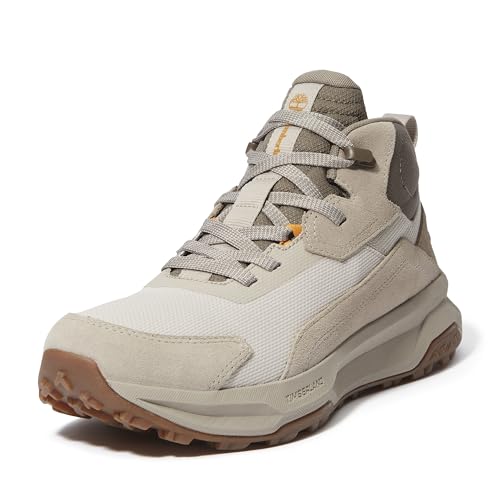
The White Ledge is included in this guide with an explicit and important caveat: it is not a Timberland PRO model. The “PRO” designation is Timberland’s work and safety boot line; the White Ledge is Timberland’s general outdoor hiking and casual boot line. This distinction matters for workers in regulated environments: the White Ledge on most listings does not carry ASTM F2413 safety toe certification, does not offer EH protection, and cannot satisfy a job site’s PPE safety toe requirement. For workers on OSHA-regulated sites requiring safety toe footwear, the White Ledge is not the correct choice and any model in the PRO line above is the right one. The White Ledge belongs in this guide for one specific group: workers who need the Timberland brand, waterproofing, and wide width sizing at a lower price point for environments where safety toe is not required.

For that specific use case, the White Ledge delivers. Full waterproof construction handles outdoor conditions effectively. Wide sizing accommodates workers with broader feet who find standard-width work boots uncomfortable — a genuine need that the PRO line doesn’t serve as broadly at this price point. Seam-sealed waterproof construction provides full water protection in outdoor conditions. Cement construction provides lightweight, immediate comfort. The price is meaningfully lower than any PRO model. For site supervisors who spend most of their time in non-hazard zones, contractors doing client-site visits in non-regulated environments, or general outdoor workers whose site does not require ASTM-certified footwear, the White Ledge is a practical, comfortable, Timberland-quality option.

Verify the specific listing carefully before purchasing: the White Ledge family includes multiple variants, and safety toe availability varies by colourway and listing. If a safety toe variant exists on the current listing, confirm the ASTM F2413 label explicitly — not all “safety toe” labelled products in this price tier carry the physical ASTM certification. Sizing on the White Ledge runs closer to Timberland’s standard outdoor hiking boot sizing than the PRO line’s work boot sizing — try true to your normal outdoor hiking boot size rather than your work boot size if the two differ.

⚠️ Non-PRO — Important
This is NOT a Timberland PRO model. | Safety toe: Verify on current listing — most variants have none
EH Rated: — | ASTM F2413: Not standard — verify before ordering for any regulated site
Waterproof: ✅ Yes | Wide sizing: ✅ Yes | Price: Lowest in guide
✅ Best for: Non-safety-critical outdoor roles · Wide-foot Timberland fans · Budget waterproof outdoor boot only
Pros: Waterproof; Wide sizing for broader feet; Lowest price point; Timberland build quality at outdoor boot price.
Cons: Not a PRO model — no ASTM certification standard, no EH, no safety toe on most variants; Cannot substitute for PRO boots on regulated safety sites.
The Boondock Rubber Toe Cap: What It Is and Who Actually Needs It
The molded rubber cap covering the toe box of the Boondock and Boondock HD is the most visually distinctive element of those models and the least understood. Most articles note it exists and move on. Here is what it actually does and the specific worker profile that needs it.
The rubber cap is bonded over the leather toe area at a thickness equivalent to a standard boot outsole. It is not decorative. For trades that involve sustained kneeling — plumbers working in crawlspaces on pipe systems, flooring installers on their knees across finished surfaces, concrete finishers in kneeling positions during pour work, tile setters — the leather over the safety toe box wears through from sustained abrasion against hard kneeling surfaces before the safety toe protection itself fails. The rubber cap prevents this leather degradation. For kneeling-heavy trades, it extends the boot’s service life by 6–12 months.
Secondary function: the rubber cap provides an external impact buffer that absorbs the first layer of kinetic energy before it reaches the safety toe cap — relevant for workers handling heavy equipment or materials that can fall onto the toe at height.
Who does NOT need the HD rubber cap: Workers who walk primarily and do not kneel regularly. The cap adds bulk to the toe box silhouette and contributes to the boot’s overall weight without providing meaningful benefit for walking-dominant trade profiles. For those workers, the standard Boondock 6 without the HD rubber cap is the better choice — same 270° welt construction, same composite toe and waterproofing, cleaner profile, slightly lighter.
Break-In Protocol by Construction Type: The “Pit Boss Shuffle” and Realistic Timelines
The break-in experience varies dramatically across Timberland PRO construction methods — and ignoring this variation is how workers end up with raw Achilles skin on day one and a belief that their new $175 boot doesn’t fit. It fits. It’s breaking in.
Pit Boss and Endurance — Full Goodyear Welt: 30–50 Hours
The “Pit Boss Shuffle” is real: during the first two weeks of break-in, the stiff leather collar digs into the shin and the heavy Goodyear welt requires extra hip flexor effort to lift with each stride. Workers develop a slightly modified gait — shorter stride, more deliberate foot placement — until the collar softens and the sole flexes. Week 1 protocol: wear for 4-hour sessions maximum, thick merino socks, apply leather conditioner to the collar area to accelerate softening. Week 2: full shifts are possible, shin and collar irritation diminishes. Week 3: boot is broken in. Never attempt a full 10-hour shift on day one in a Goodyear welt Timberland PRO.
Boondock and Boondock HD — 270° Welt: 10–20 Hours
Significantly faster than the Pit Boss because the cemented heel allows natural stride movement from day one. The front 270° welt is stiff initially, but most workers find comfortable full shifts achievable by end of the first week. The collar softening is the primary break-in item. Thick merino socks during the first week prevent heel slip.
Titan, Reaxion, Titan EV — Cement Construction: 0–5 Hours
Near-zero break-in. The cement construction is flexible from the first wear. Minor upper leather softening is the only component. These boots are suitable for immediate full-shift use. If you need comfort on day one — and most workers do — these are the models to choose.
Morphix — TPU Wrap: 5–10 Hours
The TPU midsole needs minimal compression settling. The lighter leather upper softens quickly due to the boot’s overall lighter construction. Essentially immediate comfort with a short adjustment period for the midsole geometry.
Trade-Specific Model Picker: Which Timberland PRO for Your Trade
| Trade / Role | Key Requirements | Best Model |
|---|---|---|
| Framing / Rough Carpentry | Nail hazards, uneven terrain, ladder work, heavy materials | Pit Boss Steel Toe |
| Roofing | Kneeling on shingles, abrasive surfaces, ladder work | Boondock HD (rubber cap for kneeling) or Pit Boss |
| Electrical / HVAC | EH mandatory, ladder work, composite or alloy preferred | Titan Alloy (lighter, no detector) or Titan EV (composite, max cushion) |
| Ironwork / Fabrication | Met guard required, heavy impact risk, EH | Endurance with met guard |
| Concrete / Hard Floor Standing | Static load, max cushion, chemical exposure | Titan EV |
| Plumbing / Pipefitting | EH + waterproof + flexible for kneeling | Boondock 6 (composite, WP, 270° welt) |
| Warehouse / Distribution | High step count, smooth floors, lightest weight | Reaxion CT (13 oz, immediate comfort) |
| Site Supervision / Management | ASTM compliance + professional appearance + dual-role | Morphix |
| General Mixed-Duty / Maintenance | ASTM + EH + affordable entry to PRO line | Titan 6″ Safety Toe |
The Insole Replacement Guide: When, What, and How
This is the most financially valuable section in this guide. Most Timberland PRO boots that get discarded at month seven are being discarded unnecessarily — the boot is fine. The AFT stock insole failed, and a $20 replacement would have extended the boot’s service life by another 12+ months.
When to Replace
Do the thumb test: press your thumb firmly into the centre of the orange stock insole, hold for three seconds, and release. If a permanent indent remains that does not spring back, the insole foam is compressed beyond its recovery point and is no longer providing meaningful cushioning or energy return. For most heavy construction workers, this happens at month 4–7. For moderate-duty workers, month 6–9. For light retail or warehouse, 12–15 months. Replace proactively at the lower end of your expected range — waiting until the pain arrives means you have already been working on a dead insole for weeks.
What to Replace With
The official Timberland PRO AFT replacement insole ($20–$25) replicates the original geometry and provides the same level of cushioning as the stock insole at day one. For workers who want to improve on the stock insole, Superfeet Green provides more aggressive arch support and is the standard recommendation for flat feet and plantar fasciitis. OrthoLite Flex provides a balanced arch with good energy return. Workers who have received custom orthotics from a podiatrist should remove the stock insole entirely and use their prescription orthotics — the boot’s extra-depth construction accommodates most custom orthotics without the sole deformation that prevents their use in low-volume standard boots.
How to Do It
Remove the laces and pull the tongue forward. The orange insole is not glued — it lifts out with finger pressure at the heel. Insert the replacement, confirm it sits flat without bunching at the toe or heel, and relace. The entire process takes under two minutes. Clean the boot interior with a damp cloth before inserting a new insole if the old one has left significant debris or sweat residue.
Timberland PRO ReBOTL and Sustainability: What It Means and Why It Matters
Timberland PRO’s ReBOTL material designation appears in product descriptions across the Boondock line and is glossed over by every competitor article without explanation. ReBOTL is Timberland’s branded material for boot linings made from a minimum of 50% recycled PET plastic — the same polymer used in plastic beverage bottles, reclaimed and processed into synthetic lining fabric.
The practical performance of ReBOTL lining is equivalent to conventional synthetic lining in moisture wicking and antimicrobial performance. It does not sacrifice interior comfort or durability for its recycled content. The Boondock HD and Boondock 6’s waterproof linings use this material across the full interior surface.
Timberland was among the first major work boot brands to integrate recycled materials at scale across their PRO line — a distinction that has practical significance for contractors and construction companies whose sustainability reporting, ESG commitments, or procurement policies include supply chain environmental impact. For safety officers and project managers with environmental certification or sustainability targets to meet, specifying Timberland PRO boots with ReBOTL certification is a documentable environmental action within their PPE specification process.
For individual workers, it means that a portion of the petroleum-derived material in their boot lining was diverted from landfill — a small but real environmental contribution embedded in every pair of Boondock boots purchased.
When Timberland PRO Is NOT the Right Choice: The Honest Guide
No affiliate article tells you when to buy something else. This one does — because the goal is helping you get the right boot, not the most commission.
You Need a Boot That Lasts 5+ Years and Can Be Resoled
Most Timberland PRO models use cement or 270° hybrid construction that is not cost-effective to resole. The Pit Boss and Endurance are Goodyear welted but not designed or priced for professional resoling the way a Thorogood or Red Wing is. If you want to invest once and maintain a boot for a decade through successive resoling, look at Thorogood American Heritage (USA-made Goodyear Storm Welt, see where Thorogood boots are made), Danner Quarry USA, or Red Wing Iron Ranger. These boots are more expensive initially but their resole economics — $80–$100 to replace an outsole that lasts another 2–3 years — deliver far lower lifetime cost for workers who commit to boot maintenance.
You Need the Flattest Possible Sole for Concrete Standing
For workers who stand stationary on concrete all day in a single position, a wedge sole provides better compressive force distribution than any lug-sole boot. The Thorogood MAXWear Wedge sole’s full-contact surface eliminates the pressure point concentration that occurs under lug ridges on a standing worker. The Titan EV is the best Timberland PRO answer for hard floor standing and is genuinely good — but Thorogood’s wedge outsole outperforms it specifically for the pure static-standing scenario.
You Walk 15,000+ Steps Daily Indoors
The Reaxion CT is the right Timberland PRO answer for high step-count indoor roles at 13 oz. But at 15,000+ steps per day, the running-shoe-derived midsole engineering and width options of New Balance, Reebok Work, or KEEN Utility athletic models provide additional foot health advantages. The Reaxion is excellent — it is simply worth evaluating athletic work shoe alternatives at this step count.
You Have Severe Overpronation or Structural Flat Feet
Timberland PRO’s AFT system provides excellent cushioning and energy return but limited medial arch posting. For workers diagnosed with overpronation or severe flat feet by a podiatrist, KEEN Utility models with their wide asymmetric toe box, or OrthoFeet work boots with their extra-depth orthotic system, provide better structural correction than the PRO line. The PRO line accommodates aftermarket orthotics in most models — but the base insole provides minimal arch correction on its own.
Women’s Timberland PRO Guide: Models, Fit, and Alternatives
Every Timberland PRO roundup on the internet is written for male workers. This section isn’t.
Timberland PRO produces women’s versions of several models — the Titan line (including Titan EV), the Reaxion CT, and select Boondock colourways. The women’s last has specific proportional differences from the men’s: slightly narrower heel cup, different arch positioning for women’s shorter relative foot geometry, and different forefoot width-to-length ratio. These differences matter after 10 hours — a boot built on a men’s last in a women’s size creates heel slippage (the heel cup is too wide), arch fatigue (arch support lands too far back), and toe cramping (the forefoot proportions don’t match women’s anatomy). A genuine women’s last avoids all of these.
Best Women’s Timberland PRO Picks
Timberland PRO Reaxion CT (Women’s): The lightest and most immediately comfortable option in the PRO women’s line — same composite toe, EH rating, and Anti-Fatigue Technology as the men’s version. Available on women’s last. Best for warehouse, distribution, and high step-count roles. Check the Reaxion on Amazon and confirm the women’s variant on the listing.
Timberland PRO Titan EV (Women’s): Best option for women in standing-heavy roles (assembly, retail, healthcare). Women’s last, EV midsole cushioning. Check the Titan EV on Amazon — confirm women’s version on listing.
When Timberland PRO Women’s Selection Doesn’t Work
If your foot shape doesn’t fit the PRO women’s last — or if you need models not available in women’s sizing (the Pit Boss and Endurance, for example, have limited women’s variants) — the Carhartt Rugged Flex Women’s and KEEN Utility women’s line are the strongest alternatives with genuine women’s lasts, ASTM certification, and comparable comfort technology.
Boot Care and Maintenance: Extending Timberland PRO Service Life
Leather conditioning: Apply leather conditioner (Obenauf’s Heavy Duty LP, mink oil, or neatsfoot oil) to full-grain leather uppers every 4–6 weeks under heavy use. Conditioned leather resists cracking, remains pliable through temperature changes, and maintains its waterproofing better than dry leather. Do not over-condition — one light coat per application is correct.
Waterproofing maintenance: Re-treat waterproof models (Boondock, Boondock HD, Titan EV, Morphix) with a silicone or beeswax-based waterproofing spray every 4–6 weeks in wet conditions. The factory DWR (durable water repellent) coating degrades with wear and cleaning — reapplication restores beading performance.
Drying: Never dry Timberland PRO boots near direct heat (fire, propane heater, radiator, direct sun). Heat degrades the adhesive bonds in cement construction, accelerates leather drying and cracking, and can damage waterproof membranes. Air dry at room temperature with boot trees or crumpled newspaper inside to maintain shape.
Outsole inspection: Check outsoles monthly for cracks or significant wear-through. Worn outsoles compromise both slip resistance and EH protection — a cracked outsole eliminates EH certification regardless of the original rating. Replace or resole (for Goodyear welt models) before critical wear-through occurs.
Insole rotation: As covered in the insole guide above — replace the AFT stock insole proactively at the appropriate interval for your weight and work intensity. This single maintenance action extends the boot’s effective service life more than any other care step.
FAQ — 8 High-Intent Timberland PRO Questions
How long do Timberland PRO boots last?
The AFT midsole geometry lasts 2–3 years under heavy construction use. The stock insole lasts 4–7 months for heavy construction workers, 6–9 months for moderate use, and 12–15 months for light-duty retail. The upper leather typically lasts the midsole’s lifetime with proper conditioning. The critical insight: “the boot stopped being comfortable at month 7” is almost always an insole failure, not a boot failure. Replace the $20 orange insole and the boot continues. Most Timberland PRO boots are discarded prematurely because of this misdiagnosis.
When should I replace the Timberland PRO anti-fatigue insole?
Do the thumb test: press firmly into the centre of the orange insole and hold for three seconds. If the indent remains permanently rather than springing back, the insole is dead. Replace proactively — for heavy construction workers (200+ lb, 50-hour weeks), expect to replace at month 4–6. For moderate construction (180 lb), month 6–9. For light-duty, 12–15 months. Replace with the Timberland PRO AFT replacement insole, Superfeet Green (plantar fasciitis), or OrthoLite Flex (balanced arch).
Are Timberland PRO boots Goodyear welted and resoleable?
Two models in this guide use full Goodyear welt construction: the Pit Boss and the Endurance. The Boondock and Boondock HD use a 270° Goodyear welt with cement heel — welt across the front 270°, cemented at the rear. In theory, Goodyear-welted boots can be resoled, but the Pit Boss and Endurance are not priced or designed for professional cobbler resoling in the way that Thorogood or Red Wing boots are. If resolability for long-term investment is the primary goal, Thorogood American Heritage or Red Wing Iron Ranger are the correct alternatives.
What is the difference between the Timberland PRO Boondock and Pit Boss?
The Pit Boss uses full Goodyear welt construction for maximum outsole durability on abrasive terrain, has a steel toe, and requires 30–50 hours of break-in. The Boondock uses 270° Goodyear welt (front) plus cement heel (rear) for a balance of durability and comfort, has a composite toe, is waterproof, and breaks in at 10–20 hours. The Pit Boss is for framing, roofing, and rough abrasive outdoor terrain. The Boondock is for heavy outdoor construction where waterproof composite toe and faster break-in are valued alongside welt durability.
Do Timberland PRO boots run true to size?
It depends on the model. Boondock and Boondock HD: size down half a step — they consistently run half a size large and one width wider. Pit Boss: true to length, slightly wide. Titan and Reaxion: true to size, immediate fit. If in doubt between models, order the Titan or Reaxion in your standard size and adjust for the Boondock line.
Why does my Timberland PRO boot cause heel blisters at first?
The rigid heel counter on Goodyear welt models grabs the heel only after the leather softens — typically at 15–20 hours of wear. Before that, friction against the counter causes Achilles blisters. The fix: wear thick merino wool socks (Darn Tough, Smartwool) during the first 15–20 hours of break-in. The extra sock volume fills the gap between heel and counter, eliminating friction while the leather softens. This is a break-in characteristic, not a fit problem — the blister disappears permanently once the counter conforms to your heel shape.
Are Timberland PRO composite toe boots metal-detector safe?
Yes — composite toe models (Boondock, Boondock 6, Reaxion CT, Titan EV, Morphix) use non-metallic composite materials (fiberglass, carbon fiber blend) that do not trigger metal detectors or body scanners. The Titan Alloy uses an aluminum alloy toe — this IS metallic and WILL trigger metal detectors. The Pit Boss and Endurance use steel toes — also metallic and detector-triggering. For any site with metal detector access control, choose composite toe models only.
What is ReBOTL material in Timberland PRO boots?
ReBOTL is Timberland’s branded material for boot linings made from a minimum of 50% recycled PET plastic — reclaimed from plastic bottles and processed into synthetic lining fabric. It performs identically to conventional synthetic lining in moisture wicking and durability while diverting post-consumer plastic from landfill. It appears primarily in the Boondock and Boondock HD linings. For contractors and companies with sustainability reporting requirements, ReBOTL provides a documentable environmental specification within PPE procurement.
Final Verdict: The Right Timberland PRO for Your Trade and Budget
Trade → Boot Quick Reference
Framing / Roofing / Rough Outdoor: Pit Boss Steel Toe — full Goodyear welt, maximum terrain durability, 30–50 hr break-in
Best Overall / Heavy Outdoor (kneeling trades): Boondock HD — 270° welt + rubber toe cap, composite, waterproof, 10–20 hr break-in
Outdoor Construction / Wet Sites / Plumbing: Boondock 6 — 270° welt, composite, waterproof, no rubber cap
Warehouse / Distribution / Airport / High Step Count: Reaxion CT — 13 oz, zero break-in, composite, metal-detector safe
Hard Floor Standing / Assembly / TSO / Healthcare: Titan EV 6″ — maximum EV midsole cushion, composite, waterproof
Electricians / HVAC (non-detector sites): Titan 6″ Alloy — lighter toe for ladder work, EH rated ⚠️ alloy triggers detectors
Ironwork / Steel / Met Guard Required: Endurance 6 with met guard — full Goodyear welt, ASTM MT metatarsal
Site Supervision / Professional Dual-Role: Morphix — TPU wrap, composite, waterproof, modern professional silhouette
General Mixed-Duty / Maintenance / Best Value PRO Entry: Titan 6″ Safety Toe — cement, AFT, EH, accessible price
Budget / Wide Feet / Non-Safety-Critical: White Ledge Wide ⚠️ Non-PRO — waterproof, wide fit, no ASTM standard — verify listing before ordering for any regulated site
Whatever model you choose: replace the orange AFT stock insole proactively at the interval appropriate for your weight and work intensity. That single $20 action extends the effective life of every Timberland PRO boot in this guide and prevents the most common, most avoidable, and most expensive mistake Timberland PRO owners make.