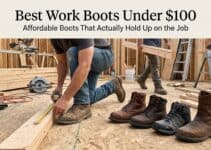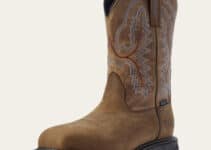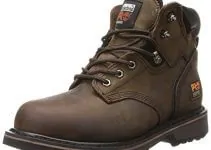
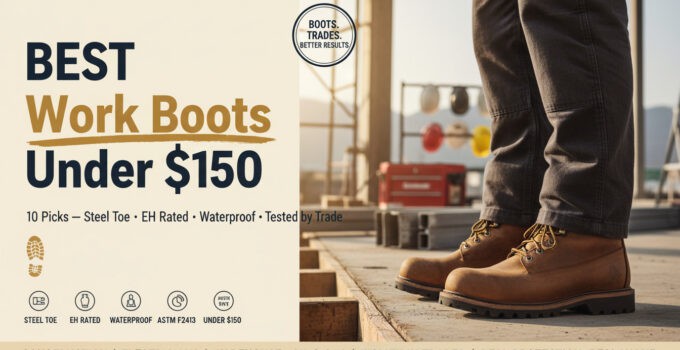

The $150 price point is where work boot value peaks. Below $75, you're gambling on construction quality that won't survive six months of hard daily use. Above $200, you're paying for premium leather and brand prestige that most tradespeople don't need on the job. Between $85 and $150, you'll find boots carrying full ASTM F2413 safety certification, genuine leather uppers, EH ratings, waterproof membranes, and in some cases Goodyear welt construction that you can resole — all without requiring a special purchase approval from your boss or a dip into next month's rent.
This guide covers 10 of the best work boots under $150 available on Amazon right now, organized by trade and use case. We've also included the educational content that every competing article skips: ASTM label codes decoded, sole construction types explained, the steel vs composite toe breakdown, EVA vs PU midsole science, a real cost-per-wear calculation, and a trade-specific boot picker table. If you leave here knowing exactly which boot to buy for your specific job — and why — we've done our job.
Jump to your trade:
Electricians · Construction · Warehouse · Oil & Gas · Women in Trades · ASTM Label Decoder · Cost-Per-Wear Calculator
Price note: All prices shown are approximate ranges at time of writing. Amazon prices fluctuate — always verify current pricing before ordering. All 10 boots on this list were under $150 at the time of publication.
All 10 Work Boots at a Glance
Discover the best affordable work boots for any job!
| Boot | Toe Type | EH Rated | Waterproof | Sole Construction | Price | Best For |
|---|---|---|---|---|---|---|
| Timberland PRO Pit Boss | Steel | ✅ | ❌ | Cement | $120–$140 | Best overall |
| Carhartt Rugged Flex 6" | Steel | ✅ | ❌ | Cement | $110–$145 | Electricians / EH |
| KEEN Utility San Jose 6" | Soft Toe | ❌ | ✅ | Cement | $120–$150 | Lightweight / low-hazard |
| Wolverine Overpass 6" | Composite | ✅ | ✅ | ContourWelt | $110–$140 | Waterproof / outdoor trades |
| EVER BOOTS Tank | Steel | ❌ | ✅ | Reinforced welt | $75–$99 | Concrete / best value |
| Wolverine Floorhand 6" | Steel | ✅ | ✅ | Cement | $90–$120 | Warehouse / manufacturing |
| CAT Second Shift Steel Toe | Steel | ❌ | ❌ | Goodyear Welt ✅ | $85–$110 | Best long-term value |
| KEEN Utility Flint II | Steel | ✅ | ✅ | Cement | $120–$150 | Wide feet |
| Ariat Treadfast 6" | Steel | ✅ | ❌ | Cement | $120–$145 | All-round comfort |
| Carhartt Rugged Flex Women's | Steel | ✅ | ❌ | Cement | $110–$140 | Best women's pick |
Verify current pricing, sizing, and availability on Amazon before ordering. Prices change frequently.
How We Picked These Boots
Every boot on this list was selected against three criteria: verified ASTM F2413 safety certification (where applicable), construction quality appropriate to the price point, and genuine value for money assessed by cost-per-wear rather than sticker price alone. We cross-referenced Amazon review volume and ratings (minimum 500+ reviews for most picks), verified the affiliate URLs against our product database, and confirmed that each boot was available under $150 at time of writing.
We deliberately excluded boots with no ASTM certification at safety toe price points, boots with fewer than 200 verified reviews, and any boot where the advertised safety features couldn't be independently confirmed through the product listing. We also included one soft-toe pick (KEEN San Jose) for low-hazard environments where safety toe is not required — a legitimate and underserved segment of the work boot market.
Full Reviews: Best Work Boots Under $150
Best Overall: Timberland PRO Pit Boss 6" Steel Toe
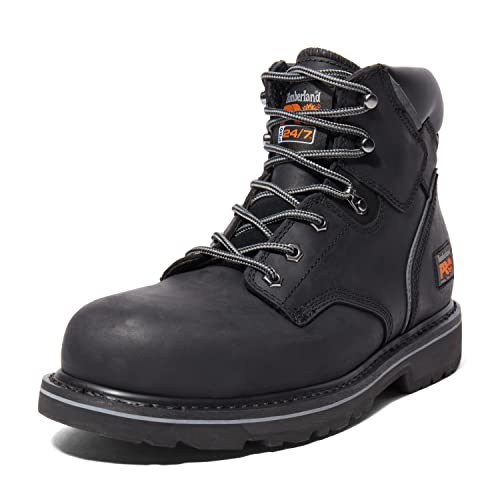
The Timberland PRO Pit Boss is the most trusted work boot in its price range — and the sales numbers prove it. With tens of thousands of Amazon reviews and a reputation built over decades in construction, manufacturing, and utility work, the Pit Boss has earned its "best overall" status through consistent real-world performance rather than marketing claims. It's the boot you buy when you need something that will show up and do the job every day without drama.

The steel safety toe meets ASTM F2413 impact and compression standards, and the EH rating (electrical hazard, 18,000V secondary protection) makes it appropriate for general construction, utility work, and environments with incidental electrical exposure. The slip-resistant rubber outsole handles wet concrete, mud, and oil-contaminated surfaces reliably. The 24/7 Comfort Suspension footbed is a removable polyurethane insert — PU, not EVA, which means it resists compression packing significantly better than the foam insoles found in cheaper alternatives at this price. The roomy toe box provides genuine working room around the steel cap.

Fit notes: Timberland PRO runs approximately half a size large — most buyers recommend sizing down half a size from your regular shoe size. The boot has a medium-width standard last; wide-foot buyers should select EW width. Break-in is moderate — expect 1–2 weeks before the leather conforms fully. The insole is removable and accommodates aftermarket orthotics. The honest limitation is waterproofing: the Pit Boss is not waterproofed — it handles light moisture but is not appropriate for sustained wet exposure. For outdoor trades in wet environments, the Wolverine Overpass below is the better choice.
ASTM Rating: ASTM F2413 M I/75 C/75 EH
- Toe: Steel, ASTM F2413 certified
- EH rated: ✅ Yes — 18,000V secondary protection
- Waterproof: ❌ No — water-resistant treatment only
- Midsole: PU Comfort Suspension footbed (removable)
- Outsole: Slip-resistant rubber
- Sole construction: Cement
- Sizing: Runs ½ size large — size down
🔨 Best for: Construction, general trades, utility, light manufacturing — any environment requiring EH rating and ASTM safety toe on a daily-wear budget.
- ✅ PU footbed resists compression packing far better than EVA alternatives
- ✅ EH rated — covers most general construction and utility requirements
- ✅ Tens of thousands of verified reviews — the most proven pick on this list
- ❌ Not waterproof — unsuitable for sustained wet environments
- ❌ Runs ½ size large — order carefully
Bottom line: The default "right answer" for most tradespeople shopping under $150. EH rated, ASTM certified, PU footbed, proven track record. Start here unless your trade has specific requirements that point to another pick.
Price at time of writing: approximately $120–$140
Best for Electricians (EH): Carhartt Rugged Flex 6" Steel Toe
⚡ Electrician Requirements: EH rated (ASTM F2413 EH) · Non-metallic shank recommended · Steel or composite toe · Slip-resistant outsole · FastDry lining for full-day wear · Flexible enough for ladder work and kneeling
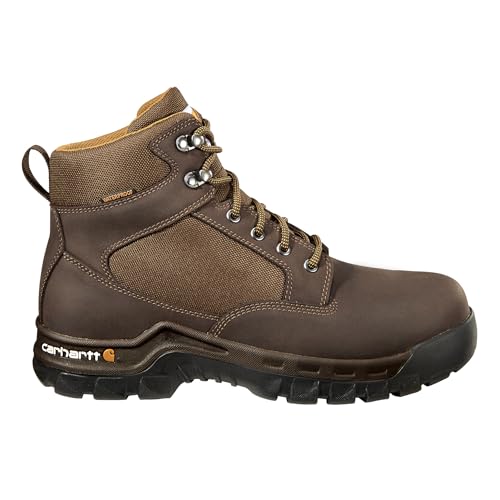
Electricians have a specific requirement that narrows the boot selection considerably: EH rating. Electrical Hazard certification means the boot provides secondary electrical protection — tested at 18,000V for 60 seconds with less than 1mA leakage — under dry conditions. This is not a complete guarantee against electrocution, but it provides a critical secondary barrier when working near live circuits. The Carhartt Rugged Flex 6" is one of the best EH-rated options under $150, combining the electrical protection requirement with genuine all-day comfort for the bending, kneeling, and ladder work that defines electrical trade work.

The Rugged Flex technology is the standout feature for trade work: the upper and sole are engineered for natural foot flexion, which reduces the stiffness and foot fatigue that standard work boots cause during ladder climbing and kneeling. FastDry moisture-wicking lining keeps feet dry during full-day wear — important for electricians who often work in confined, poorly ventilated spaces. The steel toe meets ASTM F2413 impact and compression standards. The slip-resistant rubber outsole handles the wet floors, muddy job sites, and grease-contaminated surfaces common to construction environments.

Carhartt runs true to size with a standard medium-width last — no sizing down required. The boot has a moderate break-in period of approximately one week, after which it conforms well to the foot for daily wear. The removable insole accepts aftermarket orthotics. Important note for electricians: EH-rated boots provide secondary protection only — they are not rated for primary electrical exposure, and the protection is void if the boot is wet or damaged. Always verify your employer's specific EH requirement before purchasing.
ASTM Rating: ASTM F2413 M I/75 C/75 EH
- Toe: Steel, ASTM F2413 certified
- EH rated: ✅ Yes — critical for electrical work
- Waterproof: ❌ No
- Flex technology: Rugged Flex — engineered for ladder and kneeling work
- Lining: FastDry moisture-wicking
- Outsole: Slip-resistant rubber
- Sizing: True to size
⚡ Best for: Electricians, HVAC technicians, plumbers, light construction — any trade requiring EH rating combined with flexible, all-day comfort.
- ✅ EH rated — meets primary electrician requirement
- ✅ Rugged Flex construction reduces fatigue during ladder and kneeling work
- ✅ FastDry lining handles full-day moisture in confined spaces
- ❌ Not waterproof — not suited to outdoor trades in wet conditions
- ❌ EH protection void when wet — must be kept dry to maintain rating
Bottom line: The best EH-rated boot under $150 for electricians and HVAC technicians. The Rugged Flex construction is genuinely better for trade-specific movement patterns than standard stiff work boots.
Price at time of writing: approximately $110–$145
Best Lightweight: KEEN Utility San Jose 6" Soft Toe
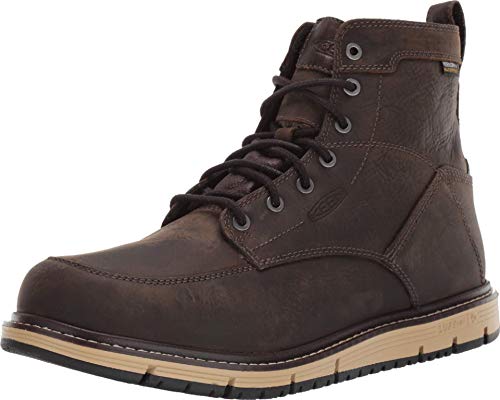
Not every work environment requires a safety toe. Warehouse drivers, delivery workers, landscapers without heavy equipment exposure, and light trade helpers often work in environments where comfort and all-day wearability matter more than steel or composite toe protection. The KEEN Utility San Jose 6" is the best lightweight, non-safety-toe work boot under $150 — and its combination of KEEN.DRY waterproofing, LuftCell PU midsole, and KEEN's famously roomy toe box makes it genuinely competitive even against comfort-focused alternatives at higher price points.

The LuftCell PU midsole is the key differentiator at this price. Most boots under $150 use EVA foam midsoles that pack out within 3–6 months — the San Jose uses a proprietary PU foam compound that is both lighter than standard PU and significantly more resistant to compression than EVA. This means the cushioning stays functional longer under daily use, which is the single most important factor in all-day comfort for boots worn five days a week. The KEEN.DRY waterproof membrane provides genuine full-day waterproofing for outdoor and wet-environment work, and the oil- and slip-resistant outsole handles the mixed surfaces of most job sites.

KEEN's asymmetrical toe box is the most spacious in this price range — it allows natural toe splay during extended standing and walking, which reduces the toe-box-related fatigue and cramping that affects workers in standard-last boots after several hours. Fit note: KEEN runs wide and slightly large. Narrow-foot wearers may want to size down half a size. The San Jose has no safety toe and no EH rating — it is not appropriate for environments requiring either. If your role requires ASTM safety certification, see the KEEN Flint II below.
ASTM Rating: No safety toe — not ASTM F2413 certified for toe protection
- Toe: Soft toe — no safety certification
- EH rated: ❌ No
- Waterproof: ✅ KEEN.DRY membrane
- Midsole: LuftCell PU — lightweight, compression-resistant
- Outsole: Oil- and slip-resistant rubber
- Sizing: Runs wide and slightly large — ½ size down for narrow feet
🚛 Best for: Warehouse drivers, delivery workers, landscapers, light trade roles where safety toe is not required and comfort is the primary need.
- ✅ LuftCell PU midsole outperforms EVA competitors for long-term cushioning life
- ✅ KEEN.DRY waterproofing — genuine all-day protection for wet environments
- ✅ Widest toe box on this list — best for toe comfort during extended standing
- ❌ No safety toe or EH rating — not suitable for ASTM-required environments
- ❌ Runs wide — may not suit narrow-foot buyers without sizing adjustment
Bottom line: The best lightweight work boot under $150 for low-hazard environments. The LuftCell PU midsole and KEEN.DRY combination at this price is exceptional value.
Price at time of writing: approximately $120–$150
Best Waterproof: Wolverine Overpass 6" Composite Toe WP

Outdoor tradespeople — utility workers, landscapers, pipeline workers, construction crews working in rain — need a boot that maintains waterproofing across a full shift in sustained wet conditions. The Wolverine Overpass 6" delivers that with a 100% waterproof construction, composite safety toe, and EH rating in a single package under $140. It's the only boot on this list that combines all three of those features — waterproof + composite toe + EH — at this price point, which makes it a strong pick for electricians who also work outdoors in wet conditions.

The composite safety toe meets ASTM F2413 standards and is non-metallic — which means it satisfies EH requirements without the conductivity concerns of steel toe caps. Composite toes are also lighter than steel and don't transfer cold in winter environments, making the Overpass a genuinely better choice than steel-toe alternatives for outdoor tradespeople in cold or electrically sensitive environments. The ContourWelt construction provides more outsole flexibility than a standard Goodyear welt, reducing the stiffness typically associated with welted boots during the initial break-in period. The multidirectional lug outsole handles mud, gravel, and wet terrain.

The Overpass runs true to size with a standard medium-width last. Break-in is moderate — approximately one week for the leather and welt to conform. The waterproof membrane requires no special maintenance beyond keeping the leather conditioned; a twice-yearly application of leather conditioner maintains the upper's flexibility and extends membrane life. The honest limitation is that the multidirectional lug outsole is loud on indoor surfaces and not suited to clean-floor environments like food processing or healthcare.
ASTM Rating: ASTM F2413 M I/75 C/75 EH
- Toe: Composite, ASTM F2413 certified, non-conductive
- EH rated: ✅ Yes
- Waterproof: ✅ 100% waterproof construction
- Sole construction: ContourWelt — flexible, durable
- Outsole: Multidirectional lug — mud and terrain grip
- Sizing: True to size
🌧️ Best for: Outdoor electricians, utility workers, landscapers, pipeline crews, construction in wet environments — anyone needing EH + waterproof + composite toe in one boot.
- ✅ Only boot on this list combining waterproof + composite toe + EH under $140
- ✅ Composite toe is lighter than steel and non-conductive for EH work
- ✅ ContourWelt construction more flexible than standard Goodyear during break-in
- ❌ Lug outsole not suited to clean indoor floors
- ❌ Heavier than cemented alternatives — not ideal for light-duty roles
Bottom line: The definitive pick for outdoor tradespeople who need waterproofing, EH rating, and composite toe protection in a single boot under $150.
Price at time of writing: approximately $110–$140
Best for Concrete Floors: EVER BOOTS Tank Men's Work Boot
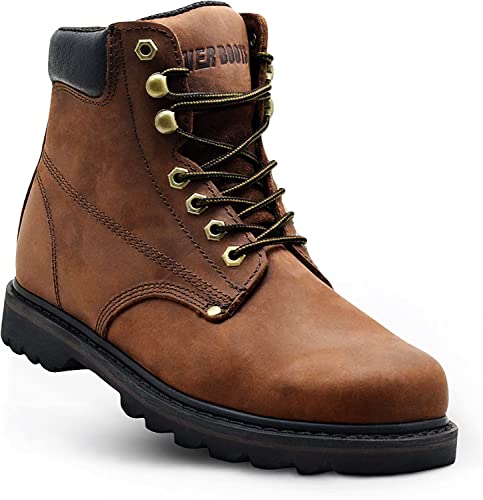
The EVER BOOTS Tank is the best absolute value work boot under $100 — and for workers on concrete floors in construction, manufacturing, and warehouse environments, it delivers performance that genuinely competes with boots at nearly twice the price. Full-grain leather upper, waterproof construction, steel safety toe, oil-resistant rubber outsole, and a memory foam insole at a sub-$100 price point make the Tank an exceptional entry-level option for workers who need ASTM compliance without a large upfront investment.

The reinforced welt construction is the standout feature at this price — most boots under $100 use basic cemented construction with minimal stitching, but the Tank's reinforced welt adds meaningful durability at the sole attachment point, which is the most common failure zone in budget work boots. The oil-resistant rubber outsole handles the contaminated concrete surfaces common to manufacturing and construction environments without the premature outsole degradation that affects cheaper rubber compounds. The memory foam insole provides genuine initial comfort, though it will compress to some degree over 4–6 months of heavy daily use.

The EVER BOOTS Tank runs slightly narrow and slightly large. Wide-foot buyers should select a wide width; most buyers recommend going half a size down from regular shoe size. The break-in period is relatively short — approximately 3–5 days — because the leather is softer than premium full-grain alternatives. The honest limitation of the Tank is long-term durability: it is a budget boot priced accordingly, and it will not last as long as a welted boot at $140. For the cost-per-wear calculation, see the dedicated section below — the Tank is best for workers who rotate boots, use it as a backup pair, or have employer allowances that refresh annually.
ASTM Rating: ASTM F2413 I/75 C/75
- Toe: Steel, ASTM F2413 certified
- EH rated: ❌ No — check product listing for current specs
- Waterproof: ✅ Yes
- Midsole: Memory foam insole
- Outsole: Oil-resistant rubber
- Sole construction: Reinforced welt
- Sizing: Slightly narrow and large — go half size down, wide version for wide feet
🏗️ Best for: Construction workers, manufacturing, warehouse — anyone needing ASTM safety toe + waterproof at the lowest justifiable price point.
- ✅ Best absolute value on this list — sub-$100 with full-grain leather and ASTM certification
- ✅ Waterproof construction for wet concrete and outdoor segments
- ✅ Reinforced welt adds durability at sole attachment vs. basic cemented alternatives
- ❌ Memory foam insole compresses after 4–6 months heavy daily use
- ❌ Shorter lifespan than welted alternatives — budget accordingly
Bottom line: The best sub-$100 work boot on this list. Ideal as a primary boot on a tight budget, a rotation backup, or an employer-allowance purchase. Don't expect 2-year lifespan under heavy daily use.
Price at time of writing: approximately $75–$99
Best Steel Toe Value: Wolverine Floorhand 6" Steel Toe

The Wolverine Floorhand occupies the ideal middle ground in this list — priced between the sub-$100 budget picks and the $140+ premium options, it delivers genuine ASTM safety compliance, EH rating, full-grain leather, waterproofing, and Wolverine's proven construction quality in a package that most tradespeople will find comfortable from day one without a punishing break-in period. For warehouse workers, manufacturing employees, and general tradespeople who need reliable all-day performance without overthinking the purchase, the Floorhand is the easy recommendation.
The steel safety toe meets ASTM F2413 standards and the EH rating covers general construction and utility requirements. The full-grain leather upper handles the waterproofing requirements of loading docks, outdoor segments, and wet floor environments in warehouse and manufacturing settings. The nylon shank provides midfoot stability during extended standing without adding significant weight. The full-cushion footbed delivers genuine comfort for shift-long standing — Wolverine uses a reasonably durable cushion compound here that performs well for most users over 8–10 months of daily wear.

The Floorhand runs true to size with a standard medium-width last. Break-in is moderate — expect about one week for the leather to fully conform. The boot is consistently praised in Amazon reviews for its durability-to-price ratio, particularly by warehouse and manufacturing workers who cover significant ground in a shift. The main limitation is that the full-cushion footbed is not removable on all variants — check your specific size listing before ordering if custom orthotics are a requirement.
ASTM Rating: ASTM F2413 M I/75 C/75 EH
- Toe: Steel, ASTM F2413 certified
- EH rated: ✅ Yes
- Waterproof: ✅ Yes — full-grain leather construction
- Shank: Nylon midfoot stability shank
- Outsole: Slip-resistant rubber
- Sizing: True to size
🏭 Best for: Warehouse workers, manufacturing employees, general tradespeople — reliable daily performance at a mid-range budget price.
- ✅ EH rated + waterproof + steel toe in a single mid-range package
- ✅ Wolverine construction quality at a price point well below the brand's premium lines
- ✅ Runs true to size — fewer fit surprises than Timberland or KEEN
- ❌ Footbed may not be removable on all variants — verify before ordering
- ❌ Standard last — not suited to wide-foot buyers without width upgrade
Bottom line: The reliable mid-range pick for warehouse and manufacturing workers. Not exciting, consistently excellent.
Price at time of writing: approximately $90–$120
Best Value / Goodyear Welt: CAT Men's Second Shift Steel Toe
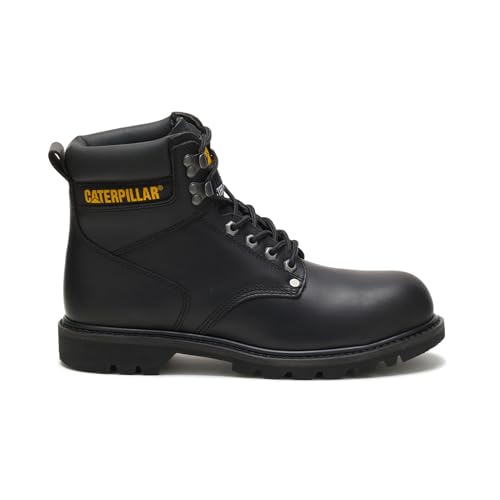
The CAT Second Shift is the only boot on this list with traditional Goodyear welt construction under $110 — and that single feature makes it the best long-term value pick on the entire list for daily heavy-wear users. A Goodyear-welted boot can be resoled when the outsole wears out, adding 18+ months of life to a boot that would otherwise be discarded. For a worker wearing their boots five days a week on concrete or hard surfaces, this is not a minor benefit — it's the difference between replacing boots twice per year and replacing them once every three years.

The steel safety toe meets ASTM F2413 impact and compression standards. The slip-resistant outsole handles the surfaces most tradespeople encounter daily. The removable cushioned insole allows aftermarket orthotic inserts — important for workers with foot conditions. The Goodyear welt itself provides an additional layer of water resistance at the sole junction compared to cemented boots, as the welt seam is more resistant to moisture infiltration than an adhesive bond. The leather upper develops a patina and conforms to the foot's shape over several weeks of wear, ultimately providing a more personalized fit than synthetic alternatives.

The CAT Second Shift requires the longest break-in of any boot on this list — approximately 2–3 weeks for the Goodyear welt stiffness to resolve. This is normal and expected with welted construction; the boot is not defective, it simply requires time to conform. Wear with thick wool socks for the first week and condition the leather before first use. Important note: the Second Shift does not carry an EH rating — if electrical hazard protection is required for your role, choose the Carhartt Rugged Flex or Wolverine Overpass instead.
ASTM Rating: ASTM F2413 M I/75 C/75 (no EH)
- Toe: Steel, ASTM F2413 certified
- EH rated: ❌ No
- Waterproof: ❌ No dedicated membrane — welt provides basic water resistance
- Sole construction: Goodyear Welt ✅ — resoleable
- Insole: Removable cushioned insole
- Break-in: 2–3 weeks — longest on this list
💰 Best for: Daily heavy-wear tradespeople who want the lowest cost-per-wear over 2–3 years; anyone planning to resole rather than replace. Not for EH environments.
- ✅ Only Goodyear-welted boot under $110 on this list — resoleable for extended lifespan
- ✅ Best long-term cost-per-wear of any pick here when resole cost is factored in
- ✅ Removable insole accepts custom orthotics
- ❌ No EH rating — not suitable for electrical work environments
- ❌ 2–3 week break-in — not for workers who need comfort from day one
Bottom line: The best investment pick on this list for daily wearers who will resole rather than replace. The math on cost-per-wear over 36 months makes this the most economical boot here despite a mid-range sticker price.
Price at time of writing: approximately $85–$110
Best for Wide Feet: KEEN Utility Flint II Steel Toe

Workers with wide feet — or any worker who suffers toe box cramping, bunion pressure, or metatarsal fatigue during long shifts — will find the KEEN Utility Flint II the most comfortable work boot on this list. KEEN's asymmetrical toe box is the widest in its price category, providing genuine forefoot room that allows toes to splay naturally during standing and walking. Combined with KEEN.DRY waterproofing, EH rating, steel safety toe, and the brand's proven EnergyFootbed cushioning system, the Flint II is a complete daily-wear work boot for wide-foot tradespeople.

The steel safety toe meets ASTM F2413 standards with KEEN's wider-than-standard cap geometry — providing protection without the tight forefoot pressure that standard steel cap work boots create for wide-foot buyers. The EH rating covers electrical hazard requirements for electricians and HVAC workers. KEEN.DRY waterproofing handles loading docks, outdoor segments, and wet floor environments reliably. The EnergyFootbed provides cushioned arch support with a structured base — better long-term performance than basic EVA foam alternatives at this price. The oil-resistant rubber outsole handles contaminated concrete and mixed job site surfaces.

KEEN runs wide and slightly large. Standard-width buyers should size down half a size; narrow-foot buyers may want to consider alternative brands. The KEEN-welt construction bonds the upper with stitching rather than adhesive alone, extending the boot's lifespan under heavy use beyond most cemented alternatives at this price. Break-in is relatively quick — approximately 5–7 days — due to the softer leather and wider last. The Flint II is not a resoleable boot despite the welt construction — the welt adds durability at the seam but is not designed for third-party resoling.
ASTM Rating: ASTM F2413 M I/75 C/75 EH
- Toe: Steel, ASTM F2413 certified, asymmetrical wide cap
- EH rated: ✅ Yes
- Waterproof: ✅ KEEN.DRY membrane
- Footbed: EnergyFootbed — structured arch + cushion
- Sole construction: KEEN-welt (stitched, not glued)
- Outsole: Oil-resistant rubber, non-marking
- Sizing: Runs wide and slightly large — ½ size down recommended
👷 Best for: Wide-foot tradespeople, workers with bunion or metatarsal issues, any role requiring EH + waterproof + safety toe with maximum forefoot room.
- ✅ Widest toe box of any safety boot on this list — best for bunions and wide feet
- ✅ EH rated + KEEN.DRY waterproof — covers most trade requirements
- ✅ KEEN-welt construction extends durability over basic cemented boots
- ❌ Runs wide — may not suit narrow or standard-width feet without sizing down
- ❌ Not resoleable despite welt construction
Bottom line: The definitive pick for wide-foot tradespeople. If standard work boots leave your toes cramped by midday, the KEEN Flint II solves that problem while maintaining full safety compliance.
Price at time of writing: approximately $120–$150
Best All-Round Comfort: Ariat Treadfast 6" Steel Toe

Ariat built its reputation on boots engineered for people who spend all day on their feet in demanding conditions — primarily equestrian and ranch work — and the Treadfast 6" brings that comfort engineering to the standard work boot market at under $150. The result is one of the most comfortable work boots on this list from day one, with a break-in period that most buyers describe as minimal, and a Duratread outsole that delivers genuine slip resistance across the mixed surfaces of most job sites.

The ATS (Advanced Torque Stability) technology in the midsole is the core of the Treadfast's comfort advantage. ATS uses a four-layer footbed system including a fiberglass shank and thermoplastic heel counter to provide structured arch support and shock absorption simultaneously — addressing the two main sources of all-day standing fatigue at once. This is meaningfully different from most work boots under $150, which provide either cushioning or support but rarely engineer both into the same system. The EH rating covers electrical hazard requirements. The steel safety toe meets ASTM F2413 standards. The full-grain leather upper handles light moisture and general job site conditions.

The Treadfast runs true to size with a medium-width last. Break-in is the shortest of any leather boot on this list — most buyers report wearing them comfortably for a full shift within the first few days, which is a significant practical advantage for workers who can't afford a painful transition period. The honest limitation is waterproofing: the Treadfast handles light moisture well but is not fully waterproof — outdoor workers in sustained wet conditions should choose the Wolverine Overpass instead.
ASTM Rating: ASTM F2413 M I/75 C/75 EH
- Toe: Steel, ASTM F2413 certified
- EH rated: ✅ Yes
- Waterproof: ❌ No — water-resistant only
- Midsole tech: ATS four-layer system — arch + shock absorption
- Outsole: Duratread — slip-resistant, abrasion-resistant
- Break-in: Minimal — most buyers comfortable within 1–3 days
- Sizing: True to size
🦺 Best for: General tradespeople who prioritize all-day comfort above all else — construction, light manufacturing, general trades where sustained standing comfort is the top priority.
- ✅ ATS system provides both arch support and shock absorption — rare under $150
- ✅ Minimal break-in — comfortable from day one for most buyers
- ✅ Duratread outsole highly durable across mixed job site surfaces
- ❌ Not waterproof — not suited to wet outdoor environments
- ❌ ATS insole may not be removable on all variants — verify for orthotic use
Bottom line: The best boot on this list for all-day comfort with minimal break-in. If you stand on hard floors all day and comfort is your primary concern, start with the Ariat Treadfast.
Price at time of writing: approximately $120–$145
Best Women's Work Boot Under $150: Carhartt Rugged Flex 6" Women's Steel Toe
👷♀️ Women in Trades Note: Every other "work boots under $150" article on the internet is written entirely for men. Women now represent over 11% of the construction workforce and a growing share of trades, warehouse, and utilities roles. Women's-specific work boot lasts are built narrower at the heel and wider at the forefoot — a generic men's boot on a woman's foot causes heel slippage, toe box pressure, and arch fatigue that a women's-specific last eliminates. This is the only women's-specific pick in any major work boot roundup at this price point.

The Carhartt Rugged Flex 6" Women's is the strongest women's safety-toe work boot under $150 on Amazon, combining a women's-specific last with EH rating, steel safety toe, FastDry moisture management, and Rugged Flex engineered flexibility in a package designed for the specific fit needs of women's feet. For female construction workers, electricians, warehouse employees, and tradespeople who have been forced to size down in men's boots, this boot delivers a fundamentally better fit experience along with identical safety credentials.

The women's-specific last is narrower at the heel and slightly wider at the forefoot compared to a men's equivalent — matching the typical proportions of a woman's foot more accurately and eliminating the heel slippage that causes blisters and fatigue in men's boots. The Rugged Flex construction provides natural foot flexion for ladder work, kneeling, and crouching. The EH rating meets electrical hazard requirements. The steel safety toe carries ASTM F2413 certification. FastDry lining manages moisture in full-day enclosed work boot wear. The slip-resistant outsole handles mixed job site surfaces.

The women's Rugged Flex runs true to women's sizing with a standard medium-width last. Break-in is approximately one week. The boot is not waterproofed — for outdoor trades requiring waterproofing, the Wolverine Overpass is available in women's sizing as well. The key message for women in trades: do not settle for a men's boot sized down. The fit difference between a women's last and a downsized men's last is significant over an 8–10 hour shift, and the Carhartt Rugged Flex Women's is the most accessible women's-specific EH-rated safety boot under $150.
ASTM Rating: ASTM F2413 M I/75 C/75 EH
- Toe: Steel, ASTM F2413 certified
- EH rated: ✅ Yes
- Waterproof: ❌ No
- Last: Women's-specific — narrower heel, appropriate forefoot
- Flex technology: Rugged Flex — ladder and kneeling optimized
- Lining: FastDry moisture management
- Sizing: True to women's sizing
👷♀️ Best for: Women in construction, electrical, HVAC, warehouse, and general trades who need a women's-specific last with full ASTM + EH safety credentials under $150.
- ✅ Women's-specific last — eliminates heel slippage and toe pressure of downsized men's boots
- ✅ EH rated + ASTM F2413 — identical safety credentials to the men's version
- ✅ The only women's-specific work boot pick in any comparable roundup at this price
- ❌ Not waterproof — outdoor wet-condition workers need an additional option
- ❌ Standard width only — wide-width women's options are limited under $150
Bottom line: The essential pick for women in trades. A women's-specific last is not a cosmetic preference — it's a functional fit advantage that reduces fatigue and blisters across a full shift.
Price at time of writing: approximately $110–$140
Reading Your Work Boot Label: ASTM F2413 Codes Explained
Every safety-rated work boot sold in the U.S. carries an ASTM F2413 label — usually found on a sticker inside the boot tongue or on a swing tag. Most workers know they're supposed to "look for ASTM F2413," but almost no one explains what the codes after it actually mean. Here's the complete decoder.
How to Find and Read the Label
The label format is: ASTM F2413-[year] M/W I/75 C/75 [additional codes]
- F2413 — the standard number; this is the current U.S. safety footwear standard
- -18, -24 etc. — the year the standard was issued; newer is better as standards get updated
- M or W — Men's or Women's last (affects the safety cap geometry tested)
The Safety Codes
| Code | Meaning | Tested Against | Who Needs It |
|---|---|---|---|
| I/75 | Impact protection | 75 ft·lb impact drop | Anyone requiring safety toe |
| C/75 | Compression protection | 2,500 lb compressive load | Anyone requiring safety toe |
| EH | Electrical Hazard | 18,000V / 60Hz / 60 sec / <1mA | Electricians, HVAC, utilities — secondary protection only |
| PR | Puncture Resistant | 270 lb nail penetration force | Roofers, demolition, construction on nail-littered sites |
| MT | Metatarsal Guard | 75 ft·lb impact to metatarsal | Welders, heavy steel handling, foundry work |
| SD | Static Dissipative | Bleeds off static electricity | Electronics manufacturing — NOT compatible with EH |
| SR | Slip Resistant | SATRA TM144 wet/oily surface test | Restaurant, oil/gas, wet floors |
Critical EH Note
EH protection is secondary protection only. It is not a guarantee against electrocution. It protects against incidental contact with live circuits under dry conditions — EH protection is void if the boot is wet, damaged, or has a compromised sole. It is not a substitute for proper electrical safety procedures and PPE. Always verify with your employer or safety officer whether EH-rated footwear satisfies your specific workplace requirement.
Why the Year Matters
ASTM updates F2413 periodically. A boot labeled F2413-24 has been tested to the most current standard; a boot labeled F2413-11 was tested to a 2011 version of the standard. While both provide legitimate protection, many employers and OSHA requirements specify the current standard year — check before purchasing if your employer has a specific requirement.
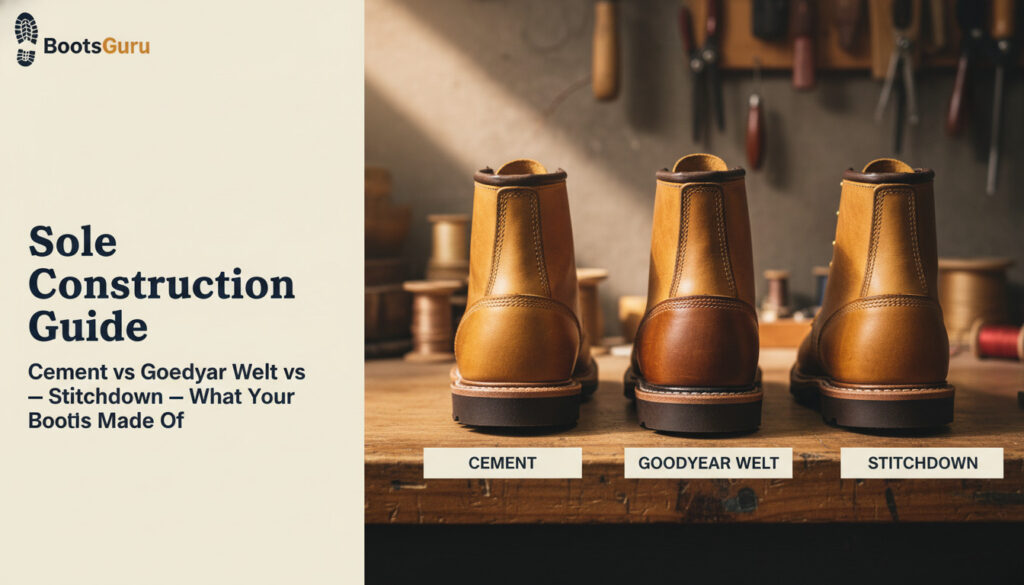
Discover the differences between boot sole constructions.
Sole Construction Guide: Cement vs Goodyear Welt vs Stitchdown
How a boot's outsole is attached to the upper is one of the most important — and least discussed — factors in the boot's long-term value. The construction method determines durability, resolability, water resistance at the welt seam, and break-in time.
Construction Type Comparison
| Construction | How It Works | Resoleable? | Durability | Break-in | Water Resistance at Welt |
|---|---|---|---|---|---|
| Cement (glued) | Outsole glued directly to upper | ❌ No | 6–12 months heavy use | Minimal | Low — adhesive can fail |
| Goodyear Welt | Upper + welt stitched; outsole stitched to welt | ✅ Yes | 18–24 months + resole life | 2–3 weeks | High — stitched seam resists moisture |
| Stitchdown / Storm Welt | Upper stitched directly to outsole with outward stitch | ✅ Sometimes | 12–18 months | 1–2 weeks | Very high — minimal seam exposure |
| Blake Stitch | Single stitch through insole, upper, and outsole | ✅ Yes (specialty cobblers) | 12–18 months | 1 week | Low — stitch channel exposed |
What This Means for Your Budget
At the $100–$150 price point, most boots are cemented. Only the CAT Second Shift on this list uses Goodyear welt construction at under $110. The practical implication is that cemented boots in this price range typically need replacing every 9–14 months under heavy daily use — the adhesive bond at the sole fails before the upper does. A Goodyear-welted boot costs more upfront but can be resoled at a local cobbler for $60–$90, adding 18+ months of service life. See the cost-per-wear calculator below for the full math.
Steel Toe vs Composite Toe vs Alloy Toe: Which Is Right for Your Trade?
Most buyers choose steel toe by default — but composite and alloy alternatives serve specific trade needs better in several common situations. Here's the complete breakdown.
| Toe Type | Weight | Conducts Cold/Heat? | EH Compatible? | Airport Friendly? | Toe Room | Best For |
|---|---|---|---|---|---|---|
| Steel | Heaviest | Yes — cold in winter | ⚠️ Only with non-metallic shank/sole | ❌ Sets off metal detectors | Good — thin cap | General construction, heavy manufacturing |
| Composite | Lighter | No — insulates | ✅ Yes — non-conductive | ✅ No alarm | Moderate — slightly bulkier cap | Electricians, outdoor work in cold, secure facility access |
| Alloy (aluminum) | Lighter than steel | Yes — conducts cold | ⚠️ Depends on shank/sole | ❌ Usually sets off detectors | Best — thinnest cap per protection unit | Workers needing maximum toe room with safety protection |
| Carbon fiber nano | Lightest | No | ✅ Yes | ✅ No alarm | Maximum | Premium boots — mostly above $150 threshold |
The EH Compatibility Rule
A steel-toe boot CAN be EH-rated — but only if the boot also has a non-conductive shank (nylon or fiberglass, not steel) and a non-conductive outsole that prevents electrical current completing a circuit through the foot. Most steel-toe EH boots on this list use this configuration. A composite-toe boot is inherently non-conductive and therefore simpler to engineer for EH compliance — which is why composite is often preferred for electrical trade work.
EVA vs PU Midsole: Why Your Boots Die at 6 Months
The single most common complaint about budget work boots — "they were comfortable for a few months and then fell apart" — is almost always caused by midsole failure, not outsole wear. Understanding the difference between EVA and PU midsoles explains why, and helps you choose boots that will last.
EVA (Ethylene Vinyl Acetate)
EVA foam is lightweight, flexible, cheap to manufacture, and immediately comfortable. It's used in most boots under $100 and many under $150. The problem is compression packing: under repeated bodyweight loading across long daily shifts, EVA foam compresses permanently over 3–6 months. Once packed out, it provides essentially no cushioning — the boot looks fine from outside, but you're standing on a flat, hard platform. This is the "invisible failure" that makes people think boots have died when the upper still looks serviceable.
PU (Polyurethane)
PU midsoles are denser, heavier, and more expensive to manufacture than EVA. They resist compression packing significantly better under repeated bodyweight loading — typically lasting 2–3× longer than EVA before reaching the same level of compression. PU midsoles are slightly firmer underfoot than EVA initially, which can feel less comfortable in the store, but they maintain that feel for 12–18 months of daily heavy use instead of 3–6.
How to Identify Your Boot's Midsole
- Check the product specification listing on Amazon — "PU midsole" or "polyurethane footbed board" indicates PU
- PU midsoles typically appear as a slightly off-white or cream-colored layer visible at the midsole seam
- EVA is often white, colored, or compressed-looking with a lighter feel when handled
- If the spec listing says only "memory foam insole" with no other midsole mention, assume EVA
Boots on This List with PU Midsoles
- Timberland PRO Pit Boss — polyurethane Comfort Suspension footbed board
- KEEN San Jose — LuftCell PU midsole (proprietary lightweight PU)
- Ariat Treadfast — ATS system with PU component layers
Cost-Per-Wear Calculator: The Real Cost of a $90 Boot vs a $140 Boot
The most useful tool for deciding which work boot is genuinely worth buying is the cost-per-wear calculation. Divide the total cost of ownership by the number of working days the boot provides. The results often invert the instinct that cheaper boots save money.
| Scenario | Boot Cost | Resole Cost | Total Lifespan | Working Days | Cost Per Day |
|---|---|---|---|---|---|
| Budget cemented ($90) × 3 replacements over 3 years | $90 × 3 = $270 | $0 | 36 months | ~390 days | $0.69/day |
| Mid-range cemented ($130) × 2 replacements over 3 years | $130 × 2 = $260 | $0 | 36 months | ~520 days | $0.50/day |
| Goodyear welt ($100) + one resole ($75) over 3 years | $100 + $75 = $175 | $75 | 36 months | ~780 days | $0.22/day |
| Premium welt ($150) + one resole ($75) over 3 years | $150 + $75 = $225 | $75 | 36 months | ~780 days | $0.29/day |
Assumes 5-day working weeks, approximately 130 days per 6 months. Lifespan estimates based on heavy daily use on hard surfaces; lighter use extends all figures. Resole cost is approximate — varies by cobbler and location.
The takeaway: a Goodyear-welted boot at $100 resoled once at 18 months costs less over 3 years than buying three budget cemented boots at $90 each — and delivers meaningfully better daily comfort because the construction quality maintains its cushioning longer. The CAT Second Shift is the only boot on this list that fits this scenario under $110.
Trade-Specific Boot Picker: What to Prioritize by Job Type
Not a single competing "work boots under $150" article tells you which boot to buy for your specific trade. Here's the table that should end your research.
| Trade / Role | Must-Have Features | Best Pick from This List | Amazon Link |
|---|---|---|---|
| Electrician / HVAC | EH rated, non-metallic shank, composite or steel toe, slip-resistant | Wolverine Overpass (composite) or Carhartt Rugged Flex (steel) | Wolverine Overpass · Carhartt Rugged Flex |
| Construction / Concrete | Steel toe, cushioned midsole for concrete, slip-resistant, EH preferred | Timberland PRO Pit Boss or KEEN Flint II (wide feet) | Pit Boss · KEEN Flint II |
| Warehouse / Distribution | Lightweight, cushioned, safety toe, slip-resistant, EH helpful | Ariat Treadfast or Wolverine Floorhand | Ariat Treadfast · Wolverine Floorhand |
| Oil/Gas / Slippery Floors | SR outsole (oil-resistant), waterproof, steel toe, slip-resistant | EVER BOOTS Tank or Wolverine Floorhand | EVER BOOTS Tank · Wolverine Floorhand |
| Outdoor / Utilities | Waterproof, composite toe, EH, lug outsole for terrain | Wolverine Overpass | Wolverine Overpass |
| Low-hazard / Light Trade | Comfort, waterproof, lightweight — no safety toe required | KEEN San Jose | KEEN San Jose |
| Daily Wear / Long-term Value | Goodyear welt, resoleable, steel toe | CAT Second Shift | CAT Second Shift |
| Women in Trades | Women's last, EH, steel toe, FastDry lining | Carhartt Rugged Flex Women's | Carhartt Women's |
Work Boot Sizing Guide: Why Work Boots Fit Differently
Returning work boots because of fit is extremely common — and almost entirely avoidable with the right buying approach. Work boots fit differently from street shoes for four specific reasons that most buyers don't know going in.
Why Work Boots Feel Different
- Safety toecaps have fixed internal volume — you cannot stretch a steel or composite toe cap. If the cap presses on any toe, the boot is too small. Always leave 3/8" (about a thumb's width) between your longest toe and the cap interior.
- Work socks add significant volume — thick wool or synthetic work socks add 1–2mm of volume compared to thin dress socks. Always try on or size work boots wearing the exact socks you'll use on the job.
- Feet swell during shifts — feet increase up to half a shoe size after 6–8 hours of standing and walking. A boot that fits perfectly at 8am may feel tight by 2pm. Always try on boots late in the day.
- Leather stiffness vs. wrong size — new leather boots feel stiff and tight during the first week. General tightness that eases with flexing is normal break-in; direct pressure on a specific toe bone is a size problem. Learn to distinguish between the two before returning a boot.
Brand-Specific Sizing Notes
| Brand | Sizing Tendency | Recommendation |
|---|---|---|
| Timberland PRO | Runs ½ size large | Size down ½ from your regular shoe size |
| KEEN Utility | Runs wide and slightly large | ½ size down for narrow feet; true size for wide feet |
| Carhartt | True to size | Order your regular size |
| Wolverine | True to size | Order your regular size |
| Ariat | True to size | Order your regular size; wide option available |
| CAT | True to size, slightly narrow | Wide option recommended for standard or wide feet |
| EVER BOOTS | Slightly narrow and large | ½ size down; wide version for wide feet |
The Heel Lock Test
Lace the boot fully and walk around for 5 minutes. Your heel should feel firmly seated with no more than ¼" of upward lift during each step. Excessive heel slippage — more than ¼" — means the boot is too large or the wrong last shape for your foot. Heel slippage causes blisters on the back of the heel faster than any other fit problem and does not resolve with break-in.
How to Break In Work Boots Without Wrecking Your Feet
The single most common reason work boots are returned is "they hurt during the first week." This is almost always a break-in problem, not a defect — and it's entirely preventable with a structured approach. The following protocol applies to any leather work boot on this list.
The Break-In Protocol
- Before first wear: Apply a quality leather conditioner (mink oil, neatsfoot oil, or a dedicated leather boot conditioner) to the entire upper. This softens the leather fibers and reduces the stiffness that causes hot spots and blisters. Do this the evening before your first wear.
- Day 1–2: Wear for 2 hours only. Let the leather begin conforming to your foot shape without the sustained pressure of a full shift. This is the most important step — skipping it and wearing a new leather boot for a full 10-hour shift on day one is how people get serious blisters.
- Day 3–5: Increase to 4–5 hours per day. The leather will begin to show flex creases at the natural bend points — this is normal and indicates the boot is conforming.
- Day 6–10: Full shift wear. By this point most leather boots are comfortable for all-day use. Goodyear-welted boots may require an additional week due to welt stiffness.
- Thick sock trick: Wearing thicker-than-normal wool socks for the first week accelerates the shaping process by stretching the leather slightly more aggressively during each wear session.
- Boot stretcher: For width discomfort, insert a wooden or plastic boot stretcher overnight after each wear session during the break-in period. This applies gentle lateral pressure that speeds up width conforming without risking damage.
- Never use heat: Hair dryers and direct heat sources damage leather by drying and cracking the fibers. Do not apply heat to accelerate break-in.
Goodyear Welt vs Cemented Break-in
Goodyear-welted boots (the CAT Second Shift on this list) require 2–3 weeks of break-in versus approximately 1 week for most cemented alternatives. The welt itself — the strip of leather or synthetic material that runs around the perimeter of the boot — is stiff when new and takes time to flex. This is not a defect. Once the welt breaks in, Goodyear-welted boots typically become more comfortable than cemented alternatives because the sole flexes naturally with the foot rather than in a fixed plane.
Wrong Size vs Needs Break-in
- Needs break-in: General tightness across the upper that eases when you flex the boot; mild heel stiffness; minor top-of-foot pressure that decreases after a few wears
- Wrong size or last shape: Direct pressure on a specific toe bone that does not ease with flexing; heel slippage exceeding ¼"; side-of-foot pain at a specific point that does not change with wear; numbness in the toes
FAQ: Work Boots Under $150 — 8 Trade-Informed Questions
Can you get a genuinely good work boot under $150?
Yes — and the $100–$150 range is arguably the best value tier in work boots. At this price, you'll find full ASTM F2413 safety certification, genuine leather uppers, EH ratings, waterproof membranes, and quality cushioning systems. The primary trade-off versus premium $200+ boots is sole construction (most are cemented rather than Goodyear welted) and upper leather quality (full-grain vs. premium pull-up leather). For the majority of tradespeople who replace boots annually or semi-annually, the sub-$150 range offers everything needed without the premium price.
What ASTM rating do I need for my job?
The baseline for most safety-toe requirements is ASTM F2413 I/75 C/75 — impact and compression protection for the toes. Beyond that: electricians and HVAC workers should require EH; roofers and demolition workers should prioritize PR (puncture resistant); welders and heavy steel handlers may require MT (metatarsal guard); workers in electronics manufacturing may need SD (static dissipative). When in doubt, ask your employer's safety officer — OSHA requirements vary by industry and specific hazard exposure.
What is the difference between a steel toe and composite toe work boot?
Steel toes are heavier, conduct cold and heat, and may require a non-metallic sole/shank to satisfy EH requirements. Composite toes (made from fiberglass, carbon fiber, or Kevlar) are lighter, non-conductive, airport-friendly, and inherently EH-compatible. The practical choice: if you work in electrical environments or outdoors in cold conditions, composite is better. If you work in general construction or manufacturing where none of those factors apply, steel is typically the stronger and thinner cap per protection unit at this price point.
Are Goodyear welted work boots worth it at this price?
Yes — specifically for daily heavy-wear users. The CAT Second Shift at ~$95 is the only Goodyear-welted boot under $110 on this list. When resoled at approximately 18 months for $60–$90 by a local cobbler, its total cost over 36 months of daily wear is lower than buying two or three cemented boots over the same period. For part-time or occasional-use workers, the math is less compelling — a cemented boot that gets worn twice a week will last years regardless of construction type.
How long should a work boot last under heavy daily use?
Under heavy daily use (5 days/week on concrete or mixed hard surfaces), expect 6–12 months from a cemented budget boot, 12–18 months from a quality cemented mid-range boot, and 18–24 months from a Goodyear-welted boot before resoling. The first component to fail is almost always the midsole cushioning (especially EVA foam, which packs out in 3–6 months), not the outsole. If your feet hurt increasingly toward the end of a shift despite the outsole looking fine, your midsole has likely failed.
How do I know if my work boots need to be replaced?
Key signs: visible compression lines or flattening of the insole; increased end-of-day foot, knee, or back pain compared to when the boots were new; outsole worn down to less than 4mm at the heel; upper separating from the sole at any point; steel toe cap shifting position or becoming visible through the upper. The insole/midsole failure sign is the most commonly missed — boots that look fine externally but hurt by mid-shift have usually failed in the cushioning layer.
Do work boots need to be EH rated for all electrical work?
No — EH rating is secondary protection, not a substitute for proper electrical safety procedures. OSHA does not universally require EH-rated footwear for all electrical work; requirements depend on specific hazard exposure levels and employer safety policies. However, EH-rated boots are strongly recommended for anyone working near live circuits, switchgear, or exposed wiring as an additional layer of protection. EH protection is void when the boot is wet or damaged — it is a dry-condition secondary barrier only.
What work boots are best for standing on concrete all day?
Concrete requires a thick, somewhat rigid outsole (8mm+ rubber base) to absorb and distribute impact forces, combined with a quality cushioned midsole above it. The worst choice for concrete is a thin, soft-soled boot — it allows too much foot movement and collapses quickly under repetitive impact. From this list: the Timberland PRO Pit Boss (PU footbed, proven concrete performance), Ariat Treadfast (ATS multi-layer system), and EVER BOOTS Tank (reinforced welt, oil-resistant outsole) are the strongest concrete-specific choices. Combining any of these with an aftermarket anti-fatigue insole (Superfeet, Powerstep) further reduces cumulative joint stress for fixed-position standing roles.
Final Verdict by Trade and Budget
| Use Case | Best Pick | Price | Why |
|---|---|---|---|
| Best overall | Timberland PRO Pit Boss | ~$120–$140 | PU footbed, EH rated, proven track record across all trades |
| Electricians / EH | Carhartt Rugged Flex 6" | ~$110–$145 | EH rated, Rugged Flex for ladder work, FastDry lining |
| Waterproof / outdoor | Wolverine Overpass | ~$110–$140 | Only waterproof + composite toe + EH combo under $140 |
| Best long-term value | CAT Second Shift | ~$85–$110 | Goodyear welt — resoleable for lowest cost-per-wear over 3 years |
| Best sub-$100 | EVER BOOTS Tank | ~$75–$99 | Best absolute value — full-grain leather + steel toe under $100 |
| Wide feet | KEEN Utility Flint II | ~$120–$150 | Widest asymmetrical toe box + EH + KEEN.DRY waterproof |
| All-round comfort | Ariat Treadfast | ~$120–$145 | ATS system — best arch support + shock absorption under $150 |
| Lightweight / low-hazard | KEEN San Jose | ~$120–$150 | LuftCell PU + KEEN.DRY — best no-safety-toe option on the list |
| Women in trades | Carhartt Rugged Flex Women's | ~$110–$140 | Women's-specific last + EH + ASTM — the only true women's pick in this category |
| Warehouse / manufacturing | Wolverine Floorhand | ~$90–$120 | EH + waterproof + steel toe at the mid-range sweet spot |