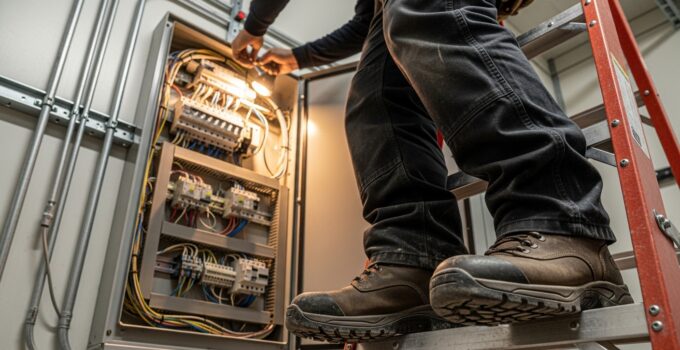

Electricians face a unique paradox when it comes to footwear: you need the heavy-duty protection of a construction boot, but the flexibility of a sneaker for crouching in cabinets and crawling through attics.
And unlike the general laborer, your boots serve a critical safety function—they are part of your PPE against electrocution.
It’s not just about comfort; it’s about ASTM F2413 Electrical Hazard (EH) compliance. One wrong step on a live wire or a voltage leak, and the only thing standing between you and "grounding out" is the rubber on your feet.
After analyzing the latest industry standards and listening to pros who spend 6+ hours a day balancing on fiberglass ladder rungs, we’ve narrowed down the list. Here is the no-fluff guide to the best boots for wiremen in 2026.
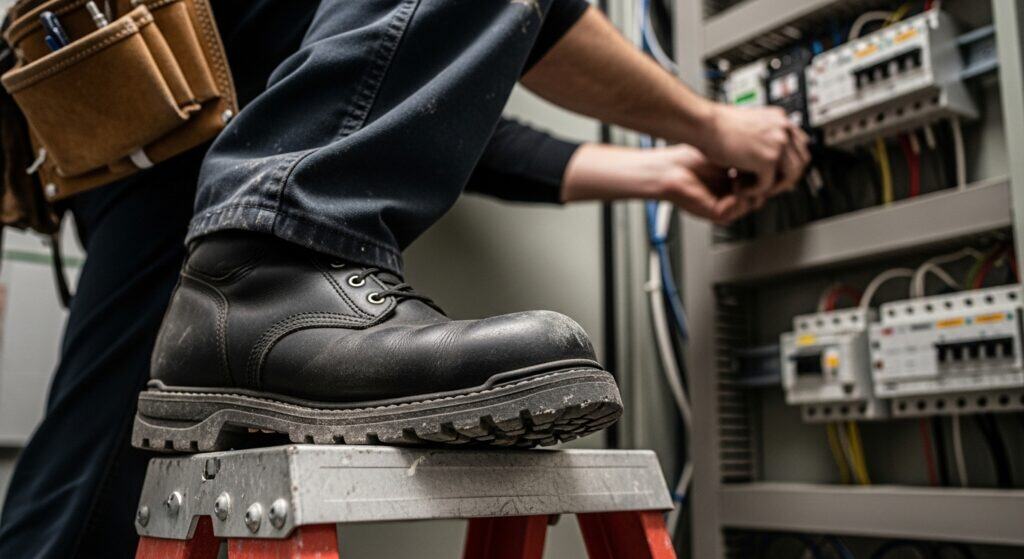
Caption: Durable safety work boots are essential for industrial workers, providing protection and comfort during demanding tasks like electrical work and heavy-duty labor.
Who This Guide Is For (And Who It Isn't)
Before you drop $250, let's make sure you're in the right place.
- This guide IS for: Residential Wiremen, Commercial/Industrial Electricians, Low Voltage Techs, and PLC Technicians.
- This guide is NOT for: Linemen or Pole Climbers.
Why? Linemen require specialized logger heels with aggressive shanks and significantly heavier insulation (often specific pole-climbing boots like those from Hoffman or Wesco). This guide focuses on indoor/outdoor service and construction.
The Cheat Sheet: Top Picks at a Glance
If you’re on a lunch break and need to order now, here is the breakdown.
| Category | Product Name | Why It Wins |
|---|---|---|
| Best Overall | Thorogood American Heritage | Zero break-in, max comfort on concrete, Made in USA. |
| Best for Ladders | Timberland PRO Boondock | Rigid shank prevents foot fatigue; aggressive tread. |
| Best Heavy Duty | Red Wing Traction Tred Lite | Modern upgrade to the classic; lighter & non-metallic. |
| Best Pull-On | Ariat Workhog Carbon Toe | Easy on/off for service calls; lightweight carbon toe. |
| Most Comfortable | Wolverine DuraShocks SR Icon | Sneaker-like energy return for long days on hard surfaces. |
Critical Buying Guide: The "Sparky" Requirements
You can't just buy any boot off the rack. Here are the three non-negotiables for electrical work.
1. Electrical Hazard (EH) Rating 101
You need to see ASTM F2413 on the label. Specifically, you are looking for the "EH" designation.
- The Tech: These boots are tested to withstand 18,000 volts at 60Hz for one minute with no current flow or leakage in excess of 1.0 milliampere under dry conditions.
- The Reality: This is secondary protection. It kicks in when you accidentally step on a live wire. It does not mean you can stand in water and touch a bus bar.
2. The "Ladder Shank" Factor
If you've ever felt like your foot was breaking in half after standing on a ladder rung for an hour, that's "Ladder Foot" (plantar fasciitis strain).
The Fix: You need a boot with a rigid shank. This is a stiff strip (usually fiberglass or steel) between the insole and outsole that distributes your weight. For electricians, fiberglass shanks are preferred because they don't conduct heat, cold, or electricity.
3. Toe Caps: Why Composite Wins
Steel toes can be EH rated (the steel cap is insulated by the sole and leather), but Composite or Carbon/Nano toes are superior for this trade because:
- Thermal Insulation: Steel transfers cold instantly. If you are doing a rough-in during winter, steel toes will freeze your feet. Composite does not.
- Weight: They are significantly lighter, meaning less fatigue after 10,000 steps.
- Safety: Zero risk of exposed conductive metal if you wear through the toe leather.
Detailed Product Reviews
1. The Industry Standard: Thorogood American Heritage (Moc Toe)

Best For: Flat concrete work, extensive walking, and indoor finish work.
The Verdict: If you walk onto a job site, 50% of the guys are probably wearing these. They are famous for having zero break-in time—they feel like slippers right out of the box.
Specs: MAXWear Wedge outsole, Fiberglass Shank, Made in USA.
2. The Ladder King: Timberland PRO Boondock (Composite Toe)

Best For: Heavy construction, muddy sites, and all-day ladder work.
The Verdict: This boot is a tank. It features a combination of a Goodyear welt and a cement heel, giving it massive stability. The outsole has deep lugs and a "ladder lock" radius that grips rungs securely.
Specs: Composite Safety Toe, Anti-Fatigue Technology, Waterproof Membrane.
3. The Modern Upgrade: Red Wing Traction Tred Lite
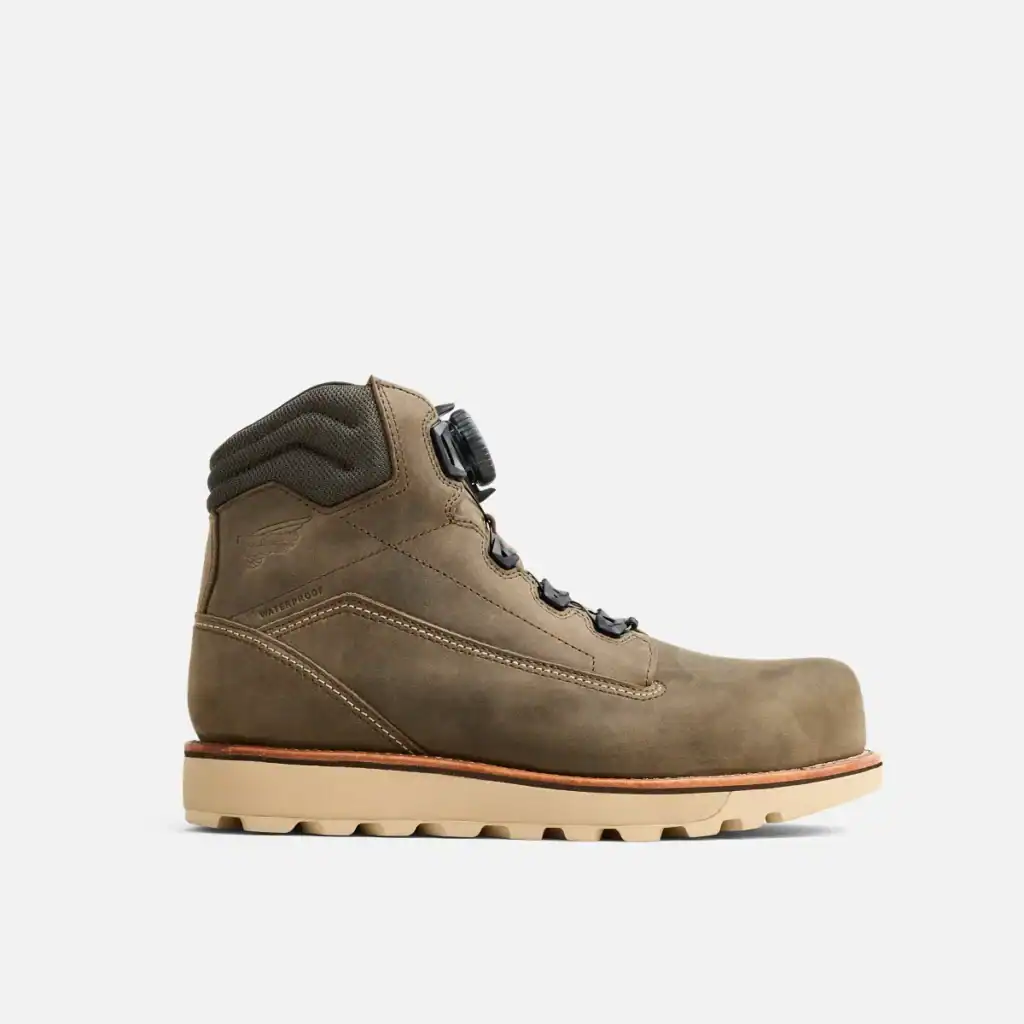
red wing traction tred lite
Best For: Commercial electricians who want the "wedge" look but need modern tech.
The Verdict: The classic Red Wing (Style 875) is iconic, but it lacks the safety features many sites require. The Traction Tred Lite is the solution. It keeps the flat-bottom wedge sole comfort but upgrades the materials to be lighter and uses a Vibram sole that doesn't wear out as fast as the old crepe soles.
Specs: Vibram® Litebase outsole, Waterproof, Non-Metallic Safety Toe.
4. The Service Call Specialist: Ariat Workhog Carbon Toe

Best For: Residential service electricians.
The Verdict: If you are entering finished homes five times a day, you need to take your boots off at the door to keep the customer happy. A pull-on boot is essential here.
Specs: Carbon Safety Toe, EH Rated, Oil/Slip Resisting Duratread outsole.
5. The Comfort Pick: Wolverine DuraShocks SR Icon
Best For: Long shifts on hard concrete floors.
The Verdict: If you struggle with knee or back pain, the DuraShocks technology is legit. It uses compression pads in the heel and forefoot to absorb shock, acting almost like a running shoe inside a work boot.
Specs: DuraShocks energy-returning outsole, Waterproof full-grain leather, Moisture-wicking mesh lining.
"Why We Didn't Pick..."
To be honest with you, there are some popular boots we purposely left off this list.
- Generic $50 Amazon Boots: While cheap, they often use low-quality rubber or synthetic leather that can melt instantly if touched by a hot wire or solder. They rarely hold up to the specific EH certification testing required for professional safety.
- Red Wing Iron Ranger: This is a fantastic heritage boot, but it is a "lifestyle" work boot. It generally lacks the safety toe, EH rating, and cushioned midsole required for modern electrical job sites.
- Danner Bull Run: While stylish and USA-made, many users report the outsole wears out significantly faster than Thorogood’s, and the stitching on the moc-toe is a known weak point that blows out within a year of hard use.
Care & Maintenance for Safety
Your boots are only safe if you take care of them.
- The "Nail Check": Check your soles weekly. If you step on a nail or a screw and it embeds in the rubber, it creates a conductive path from the ground to your foot. This renders the EH rating useless. Pull them out immediately.
- Solvent Damage: Keep oils, hydraulic fluids, and chemical solvents off the rubber. Over time, these can rot the sole, reducing its insulating properties.
- Don't Force Dry: If your boots get wet, don't put them in front of a heater. It cracks the leather. Use a boot dryer that circulates room-temperature air to prevent bacterial growth and rot.
FAQ
Q: Are EH boots OSHA-approved for electricians?
A: Yes. OSHA 1910.136(a) requires protective footwear. Boots meeting ASTM F2413 (EH) standards satisfy this requirement for electrical hazards.
Q: Can electricians wear steel toe boots?
A: Yes, provided the steel toe is capped with a non-conductive material (leather/rubber) and the boot is EH rated. However, exposed steel (if the leather wears away) is a major risk, which is why we recommend Composite/Carbon toes.
Q: How often should I replace my boots?
A: If the steel or composite toe is showing through the leather, or if the sole is worn smooth (making it slippery on ladders), replace them immediately. For daily use, expect to replace them every 12-18 months.
Final Verdict
- For pure comfort and flat surfaces: Go with the Thorogood American Heritage.
- For ladder safety and heavy construction: Go with the Timberland PRO Boondock.
- For a modern, lightweight upgrade: Grab the Red Wing Traction Tred Lite.
Don't risk your feet or your life on cheap gear. Invest in your boots—they're the most important tool you own.