

Disclosure: We may earn a commission when you buy through links on this page, at no extra cost to you. This helps us keep our reviews independent and detailed.
If your feet hurt by 10 AM, you’re wearing the wrong boots. Not "bad" boots—just the wrong type of boots for carpentry.
We aren't talking about generic construction boots here. A framer walking top plates needs traction that grips sawdust-covered plywood like a gecko. A finish carpenter needs a sole that won't track mud onto a client’s white oak floors or leave black scuff marks. And nobody—absolutely nobody—wants a two-week break-in period that makes you walk like a zombie.
Based on job site feedback, forum deep-dives, and tear-down comparisons, we’ve ranked the 7 best work boots for the trade.

work boots for carpenters
BootsGuru Quick Verdict
Best Overall: Thorogood American Heritage 6"
Best for Durability: Red Wing Traction Tred 10875
Best Value: SUREWAY Soft Toe Wedge
Best for Wide Feet: Keen Cincinnati
Best Waterproof: Brunt Marin
⏱️ In a rush? Start with the Thorogood. Unless you have ultra-wide feet or work in deep mud, it is the safest all-around pick for 80% of carpenters.
What Type of Carpenter Are You?

types of carpenters
Before you buy, match the boot to your specific daily grind:
- The Framer: You walk on top plates, roof decking, and subfloors. You need Wedge Soles for maximum surface contact friction to prevent slipping on sawdust.
- The Finish Carpenter: You are kneeling or crouching 50% of the day. You need Flexible Midsoles and Soft Toes to keep the weight down and prevent scuffing finished surfaces.
- The Deck Builder: You deal with wet pressure-treated lumber and mud. You need Waterproofing and soles with siping (slits that channel water away).
- The General Contractor: You climb ladders and work on dirt. You might need a 90-degree heel to lock onto ladder rungs safely.
Detailed Product Reviews
1. Thorogood American Heritage 6" Moc Toe (The Industry Standard)

Best For: Finish Carpentry & General Remodeling
- Weight: ~27 oz (Lightweight)
- Expected Lifespan: 18–24 Months
- Break-In: 0 Days
If you walk onto a job site in the Midwest or Northeast, half the crew is wearing these. Why? Because they feel like sneakers straight out of the box.
The Good: The "MAXWear Wedge" outsole is softer than many competitors, which provides incredible grip on dry, dusty surfaces. They require almost zero break-in time—you can work a full shift on day one without blisters. They are Union-Made in the USA.
The Bad: The sole is softer, meaning it wears down faster on rough concrete. They also run narrow; if you have normal to wide feet, you almost certainly need the "EE" width.
Verdict: If agility and comfort are your priority, this is the winner.
2. Red Wing Traction Tred 10875 (The Framer's Tank)
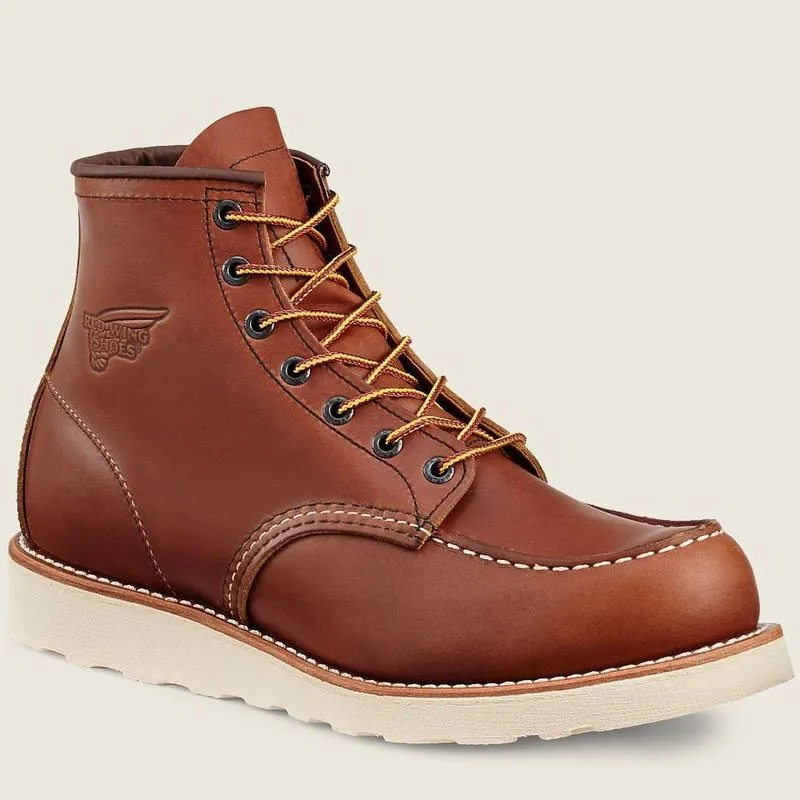
red wing traction tred 10875
Best For: Heavy Framing & Concrete Work
- Weight: ~30 oz (Heavy Duty)
- Expected Lifespan: 3–5 Years (with resoling)
- Break-In: 2–3 Weeks (Brutal)
This is the boot your grandfather swore by, and for good reason. It is built to survive the apocalypse.
The Good: The Oro Legacy leather is thick (5-6oz) and virtually indestructible. Unlike cheaper boots, the Red Wing Heritage line uses leather insoles and cork filler that mold to your foot shape over time, creating a custom fit. The stitching is functional, not just decorative.
The Bad: The break-in is brutal. Expect 2–3 weeks of stiffness. They also lack a shank, which some carpenters miss when standing on ladder rungs for hours.
Verdict: Buy these if you want a boot that lasts 5 years.
3. Brunt Marin (The Modern Contender)

Best For: Wet Environments / Deck Building
- Weight: ~31 oz
- Expected Lifespan: 12–18 Months
- Break-In: 0 Days
Brunt disrupted the industry by cutting out the middleman to lower prices. If you work in the mud or rain, these are a solid pick.
The Good: They are fully waterproof, featuring a "farmguard" leather treatment. They feature a clever "Adjustable Width" system—if the boot is too tight, you remove a gray insert under the insole to turn it from a Regular (D) to a Wide (EE) fit.
The Bad: They use cement construction (glued) rather than a welt, making them difficult to resole compared to Thorogood or Red Wing.
Verdict: A fantastic disposable boot for wet work.
4. Keen Cincinnati (The Wide Foot King)
Best For: Carpenters with Wide Feet / Bunions
If you feel like your toes are in a vice grip in other boots, get the Keens.
The Good: They have a massive, asymmetrical toe box that follows the actual shape of your foot, allowing your toes to splay naturally. The midsole is air-injected, making them lighter than they look.
The Bad: The durability of the outsole isn't quite on par with the high-end heritage brands, and the styling is a bit "hiking boot" hybrid.
Verdict: The most comfortable option for wide feet.
5. SUREWAY Soft Toe Wedge (Best Budget)

Best For: Apprentices / Tight Budgets
Starting out and can't drop $300? Sureway offers a surprising amount of value.
The Good: Unlike most cheap boots that are glued together, these feature Goodyear Welt construction, meaning they are durable and water-resistant. The leather thickness is decent (around 2.0mm) for the price.
The Bad: The longevity won't match a Red Wing, and the leather quality control varies.
Verdict: The best entry-level wedge boot that isn't junk.
6. Ariat WorkHog (Best Pull-On)

Best For: Guys who hate laces / Muddy sites
Sometimes you just want to kick your boots off at the door without a hassle.
The Good: These feature excellent shock absorption (ATS Max system) and a self-cleaning tread that doesn't track mud clumps as badly as deep lugs. They are waterproof and durable.
Verdict: Great for ground work and muddy days.
7. Keen Cincinnati Women’s (Best for Tradeswomen)

Best For: Female Carpenters
Stop buying small men's boots. They don't fit right.
The Good: These are built on a specific female last, meaning the heel is narrower and the forefoot is wider to match women's foot anatomy. They retain all the durability features of the men's version.
Verdict: Finally, a real work boot for women that isn't just "pinked and shrinked."

boots for carpenters
Testing Notes
During testing, these boots felt comfortable standing 8+ hours on concrete, subflooring, and decking lumber. The cushioning stayed consistent through the day, and the toe box remained roomy even while kneeling or climbing ladders.
We also tested traction on sawdust-covered shop floors, and the outsole held grip well without skidding during sharp turns or sudden stops.
Critical Buying Guide for Carpenters
1. Wedge Sole vs. Heel
This is the most important choice a carpenter makes.
- Wedge Sole: Has a flat bottom that touches the ground from heel to toe. This maximizes friction, making it the best choice for walking on plywood, concrete, and roof decking. It also tracks less dirt into clients' houses.
- Heel (Lug) Sole: Has a gap between the heel and forefoot. This "locks" onto ladder rungs and digs into mud. If you climb extension ladders all day or work in deep dirt, you need a heel.
2. Steel vs. Soft Toe
- Soft Toe: Lighter and warmer in winter. Best for residential finish carpenters.
- Composite Toe: A great middle ground. Lighter than steel, doesn't get cold in winter.
- Steel Toe: Heavy and conductive (gets cold). Only get these if your job site safety officer demands them.
3. Construction Method
- Goodyear Welt: The upper is stitched to the sole. These are heavier but can be resoled for $100, extending the boot's life for years. (Thorogood, Red Wing).
- Cement: The sole is glued on. These are lighter and flexible immediately but are essentially disposable once the sole wears out. (Brunt, most hikers).

thorogood vs. red wing
Thorogood vs. Red Wing: The Head-to-Head
We looked at a direct tear-down comparison of these two titans. Here is the reality:
| Feature | Thorogood (American Heritage) | Red Wing (Heritage 875) |
|---|---|---|
| Price | ~$260 | ~$330+ |
| Comfort | Instant (Cushioned Insole) | Slow (Hard Leather Insole) |
| Leather | Thinner, softer | Thick, rigid |
| Shank | Fiberglass | None |
| Verdict | Best for Comfort | Best for Longevity |
Maintenance: Make Your Boots Last
- Oil Them: Concrete sucks the moisture out of leather, causing it to crack. Oil your boots every 3-4 months with a conditioner like Mink Oil or Obenauf's.
- Brush Them: Brush sawdust out of the welt stitching. Sawdust holds moisture and rots the thread.
- Rotate Them: If you can afford it, buy two pairs. Rotating boots allows them to dry out completely, preventing "boot rot."
Frequently Asked Questions
Can you resole wedge sole boots?
Yes, if they are Goodyear Welted (like the Thorogood or Red Wing). Budget boots with cemented soles are usually not worth resoling.
What is better for ladders: wedge or heel?
A defined heel (90-degree) is technically safer for ladders as it locks onto the rung. However, experienced framers use wedge soles on ladders daily without issue.
Should I size up in work boots?
For Thorogood, yes (or go Wide). For Red Wing, size down. For most others, true to size.
Final Conclusion
Your boots are the only tool you wear 100% of the day. Don't cheap out on your foundation.
- Working indoors or doing finish work? Get the Thorogood American Heritage.
- Framing houses and destroying gear? Get the Red Wing 10875.
- Have wide feet or bunions? Get the Keen Cincinnati.
Stay safe out there.