
If you work in landscaping, you know the drill: your feet are wet by 8 AM thanks to morning dew, irrigation overspray, or mixing fertilizer. By noon you’re baking in the heat, and by 5 PM your back is screaming from hauling pavers or riding a mower with zero suspension.
Standard construction boots are often too heavy and hot for walking 10–15 miles a day. Hiking boots are comfy but fall apart the second they touch nitrogen fertilizer. And cheap boots? They turn into slip-and-slide hazards on wet grass embankments.
This guide cuts through the marketing noise to rank the 10 Best Work Boots for Landscaping in 2026, organized by real-world tasks: Lawn Care (light & fast), Hardscaping (protection & grip), and Irrigation/Mud (waterproof warriors).
Testing Methodology: How We Ranked Them
To pick winners we scored each boot across the main landscaping stressors:
- Slope Traction: Grip on dew-soaked slopes without tearing turf.
- Chemical Resistance: Will urea/nitrogen fertilizer rot the stitching?
- Breathability: Performance in July/August heat.
- Flex vs. Support: Flexibility for mowing vs. rigid shank for digging.
- Durability & Construction: Direct-attach vs welted, rubber lowers, seam integrity.
- Community Feedback: Cross-checks on Lawnsite, Reddit r/Landscaping, and pro crew input.
Quick Decision Guide (Top 10 Ranked)
work boots for landscaping
If you’re in a rush, click any model to jump to the full review below.
| Model | Best For | Waterproof? | Weight | Toe Type |
|---|---|---|---|---|
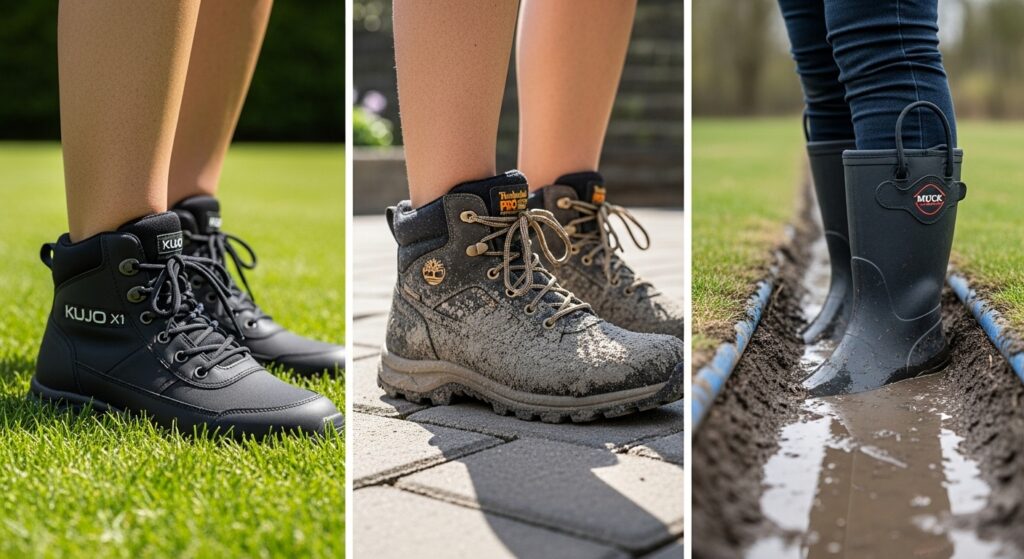
| 1. Kujo Yardwear X1 | Mowing & Agility | Yes (Toe Cap) | Light (~1.5 lb/foot) | Composite |
| 2. HOKA Kaha 3 GTX | High-Mileage Walking | Yes (Gore-Tex) | Ultra-Light (~1.3 lb/foot) | Soft |
| 3. Wolverine DuraShocks SR | Comfort on Concrete | Water-Resistant | Medium (~1.8 lb/foot) | Soft / Optional Steel |
| 4. Timberland PRO Boondock | Heavy Hardscaping | Yes | Heavy (~2.2 lb/foot) | Composite |
| 5. CAT Excavator XL | Uneven Terrain / Ditches | Yes | Heavy (~2.0 lb/foot) | Composite |
| 6. Keen Utility Cincinnati | Wedge / All-Rounder | Yes (Keen.Dry) | Mid (~1.7 lb/foot) | Soft / Comp |
| 7. Muck Boot Chore Cool | Mud & Irrigation | 100% | Heavy (~2.4 lb/foot) | Steel / Soft |
| 8. Bogs Workman | Chemical Resistance | 100% | Medium-Heavy (~2.0 lb/foot) | Composite |
| 9. Ever Boots Ultra Dry | Best Value (Under $100) | Yes | Light-Mid (~1.6 lb/foot) | Soft |
| 10. Ariat Groundbreaker | Best Pull-On / Residential | No (Mesh-Lined) | Light (~1.4 lb/foot) | Soft / Optional Steel |
Landscaper’s Buying Guide: What Actually Matters
1. Mowing vs. Hardscaping: Totally Different Needs
Mowers need lightweight flexibility — you walk miles and hop on/off equipment constantly. Look for a hybrid traction outsole that grips wet grass but doesn’t tear turf.
Hardscapers need rigid shanks, defined heels, and toe protection. You’re kneeling on pavers and moving stone — you need a lugged sole and durable toe cap.
2. The “Morning Dew” Problem
Dew saturates leather faster than heavier rainfall. Boots without a proper membrane soak and stay wet. For daily dew you want either a true membrane (GORE-TEX, Keen.Dry) or rubberized lower sections and direct-attach construction to avoid rot at the seams.
3. Traction: The Wedge Sole Warning
Wedge soles are comfy on concrete but often slip on wet grass because they lack a heel to dig in. For landscaping favor hybrid lug patterns or a heel-lug design unless you strictly work on flat hardscapes.
4. Chemical & Fertilizer Exposure
Nitrogen fertilizers and lime break down stitching and leather finishes. Prefer direct-attach or cemented soles and synthetic uppers where possible. Rubber lowers and seamless construction dramatically reduce chemical failure points.
best for lawn care
Best Work Boots for Landscaping 2026 (Full Reviews)
1. Kujo Yardwear X1 — The Specialist Pick

Best For: Mowing crews, steep grassy slopes, landscapers who walk all day.
Why we like it: Built for landscapers — waterproof toe cap, breathable mesh upper, and a hybrid lug that grips without tearing turf. Direct-attach construction at the sole reduces chemical-rot risk.
Specs: Weight ~1.5 lb/foot; Boot height 6". Price tier: $$
- Pros: Lightweight, turf-friendly traction, great breathability.
- Cons: Not designed for heavy stone work; limited color/size options.
2. HOKA Kaha 3 GTX — The Comfort King

Best For: High-mileage maintenance routes, long-walk properties.
Why we like it: Running-shoe level cushioning with a rugged upper and full GORE-TEX. It saves knees for crews walking 10–20k steps/day.
Specs: Weight ~1.3 lb/foot; Boot height ~6". Price tier: $$$
- Pros: Excellent shock absorption, ultra-comfortable, fully waterproof.
- Cons: Not built for repeated toe-scuffing on pavers; higher price.
3. Wolverine DuraShocks SR — Budget Comfort Pick

Best For: Mowing, general maintenance, work-on-a-budget crews.
Why we like it: Energy-returning pads reduce fatigue; direct-attach construction limits stitch rot. Lighter than traditional loggers and solid slip resistance.
Specs: Weight ~1.8 lb/foot; Boot height 6". Price tier: $
- Pros: Affordable, comfortable, chemical-resilient sole.
- Cons: Less ankle support for heavy hardscaping tasks.
4. Timberland PRO Boondock Comp Toe — The Tank

Best For: Hardscaping, moving pavers, heavy-duty crews.
Why we like it: Massive rubber toe bumper protects leather while kneeling and placing pavers. Rugged lug outsole for stone and mud.
Specs: Weight ~2.2 lb/foot; Boot height 6–8". Price tier: $$$
- Pros: Extremely durable, excellent toe protection, built for abuse.
- Cons: Heavy for long walking days, can be hot in summer.
5. CAT Excavator XL — Best Ankle Support

Best For: Uneven terrain, ditch work, crews who need ankle stability.
Why we like it: Deep heel lugs and robust ankle bracing keep you steady when hopping in/out of trenches. Composite toe reduces weight vs steel.
Specs: Weight ~2.0 lb/foot; Boot height 6–8". Price tier: $$
- Pros: Great support, good for rough terrain.
- Cons: Heavier and stiffer than mower-focused boots.
6. Keen Utility Cincinnati — The Hybrid Wedge
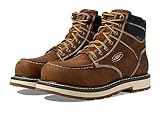
Best For: Crews that switch between mowing and light hardscaping.
Why we like it: A wedge-style sole designed with siped and hybrid lugs that grip grass better than typical wedges. Durable leather upper with Keen.Dry membrane.
Specs: Weight ~1.7 lb/foot; Boot height 6". Price tier: $$
- Pros: Comfortable wedge feel, improved turf grip.
- Cons: Slightly heavier than athletic options; less aggressive lugging for deep mud.
7. Muck Boot Chore Cool — Best for Mud & Irrigation

Best For: Irrigation repair, muddy spring jobs, wet trenches.
Why we like it: 100% waterproof rubber boot with the XpressCool liner that reduces internal heat build-up. Excellent chemical resistance due to seamless construction.
Specs: Weight ~2.4 lb/foot; Boot height 11". Price tier: $$
- Pros: Totally waterproof, cooling liner helps in summer, easy to clean.
- Cons: Heavy for all-day walking; limited ankle support for hardscaping.
8. Bogs Workman — Seamless Chemical Durability

Best For: Chemical-heavy work, manure/ fertilizer exposure, muddy conditions.
Why we like it: One-piece construction = no stitching to fail. Very durable and resistant to fertilizer rot.
Specs: Weight ~2.0 lb/foot; Boot height 11". Price tier: $$
- Pros: Extremely durable, low failure points, chemical-resistant.
- Cons: Can be warm without the cooling liners; heavier than leather options.
9. Ever Boots Ultra Dry — Best Value (Under $100)

Best For: Seasonal workers, budget crews, starter pair.
Why we like it: Solid waterproofing and reliability for the price. No frills, but it performs well for lighter jobs and mowing.
Specs: Weight ~1.6 lb/foot; Boot height 6". Price tier: $
- Pros: Affordable, surprisingly durable, good waterproofing for cost.
- Cons: Lacks advanced anti-fatigue tech and long-term durability of premium boots.
10. Ariat Groundbreaker — Best Pull-On / Residential

Best For: Residential crews needing quick on/off to enter clients’ homes.
Why we like it: Pull-on convenience with Ariat’s Duratread outsole for traction and durability. Great for teams that switch between lawn and indoor work.
Specs: Weight ~1.4 lb/foot; Boot height pull-on ~9". Price tier: $
- Pros: Easy on/off, solid traction, prevents tracking mud indoors.
- Cons: Not ideal for heavy hardscaping; may let in more heat than mesh-lined sport boots.
Heat Management for Landscapers
- Sock Strategy: Never wear cotton. Use Merino wool or synthetic blends (Coolmax) to wick sweat and reduce hot spots.
- Waterproof vs. Unlined: Waterproof membranes trap some heat. In bone-dry climates consider unlined leather for breathability.
- Rotate Boots: Use two pairs to let each dry fully between shifts — it reduces odor and extends lifespan.
Maintenance Tips (Add 1–2 Years)
- The Fertilizer Rinse: Rinse boots daily after working with fertilizer. Nitrogen salts eat stitching.
- Rotate Boots: Alternating two pairs gives internal foam and leather time to dry and recover.
- Oil vs. Wax: Use wax for wet-work protection. Oil softens leather and can reduce structural support.
FAQ
Can you wear steel toes for mowing?
You can, but steel toes are heavy and can tire you over long walking days. Composite toes are lighter, don’t conduct heat, and are generally a better choice for mowing-focused landscapers.
Are hiking boots good for landscaping?
Hiking boots are comfortable but often lack chemical resistance and can fail at stitching when exposed to fertilizers. If you use hikers, pick models with work-rated uppers and robust construction (e.g., HOKA Kaha with work-grade upper).
Why do boots crack at the toe bend?
Leather cracks from repeated wet/dry cycles and chemical exposure. Regular cleaning and conditioning with wax help maintain flexibility and prevent cracking.
Are rubber boots good for summer landscaping?
Only certain models with cooling liners (like Muck Chore Cool) are acceptable for summer. Standard rubber boots trap heat and increase blister risk.
landscaping boots
Conclusion & Final Verdict
- Best for Lawn Care: Kujo Yardwear X1 — turf-friendly, light, and breathable.
- Best for Hardscaping: Timberland PRO Boondock — tough, protective, built for stone work.
- Best for Wet Conditions: Muck Chore Cool — fully waterproof without baking your feet.
Save your feet, your back, and your boots. Match the boot to your daily grind — that’s the single best upgrade you can make this season.<!--