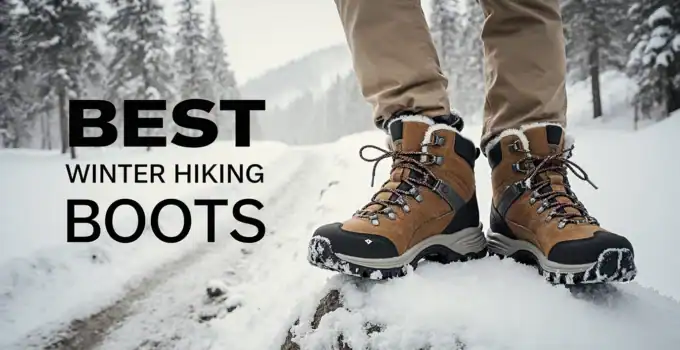

I remember the exact moment I knew my trusty "waterproof" hiking boots had betrayed me. I was post-holing through knee-deep snow, and my feet weren't just cold; they were numb in a way that felt... disconnected. I could feel the icy slush that had seeped through the seams slowly freezing my wool socks into a solid brick. Every step was a miserable, squishy crunch.
That day, after frantically Googling "frostbite symptoms" back at the car, I promised my toes I'd never put them through that again. After years of testing gear across frozen terrains in the US and Europe, I've learned one non-negotiable lesson: regular hiking boots are a recipe for misery in the snow. Proper cold weather hiking footwear isn't a luxury; it's essential for safety and actually enjoying your time out there.
This guide is that promise kept. We're going to break down why winter boots are different, what specs actually matter, and I'll share my top picks—boots that I or fellow trail veterans have put through the wringer. No BS, just warm, safe feet.
best winter hiking boots
Quick Picks: The Best Winter Hiking Boots of 2026
| Boot Model | Insulation | Outsole (Traction) | Best For |
|---|---|---|---|
| Salomon X Ultra 4 Mid Winter | 200g Thinsulate™ | Winter Contagrip® | Agile, fast-paced hiking |
| Oboz Bridger 10" Insulated | 400g 3M™ Thinsulate™ | Vibram Arctic Grip | Extreme cold & deep snow |
| Columbia Bugaboot Celsius Plus | 400g + Omni-Heat™ Infinity | Omni-Grip™ | All-around value |
| KEEN Revel IV High Polar | 200g KEEN.WARM | KEEN.POLAR Traction | Hikers with wide feet |
The Big Question: "Are My Regular Hiking Boots Good Enough for Snow?"
The short answer, delivered honestly and directly, is: No. These aren't just snow boots for hiking; they are specialized equipment. Here’s the blunt-but-honest reason why your three-season boots will fail you on frozen terrain:
Insulation: The Coffee Thermos vs. The Ceramic Mug
Your regular boot is a ceramic mug. It holds the liquid but offers zero heat retention. A winter boot is a vacuum-insulated thermos, specifically built to stop the cold ground from stealing your warmth. Without dedicated insulation (measured in grams), you're fighting a losing battle, and the risk of frostbite or permanent soft tissue damage increases substantially.
Rubber Outsoles: Summer Tires vs. Winter Tires
This is the most overlooked detail, and it’s a big safety issue. The rubber on your summer boots gets stiff and hard as a hockey puck in freezing temperatures, losing its ability to grip. Winter hiking boots use specialized rubber compounds and aggressive, deep lugs designed to stay flexible and bite into snow and ice, providing reliable traction to prevent injuries.
Waterproofing: A Drizzle vs. a Deluge
Your Gore-Tex boot is great for rain, but hiking for hours in wet, heavy snow is constant pressure and saturation. If your feet get wet, you lose body heat exponentially faster, drastically increasing the risk of hypothermia. Proper insulated waterproof boots have higher cuffs and gusseted tongues (webbing that connects the tongue to the boot) to seal out moisture completely.
Fit and Volume: Room for a Winter System
Winter hiking requires thicker merino wool socks. If you cram a thick sock into a tight boot, you restrict blood flow, which ironically makes your feet colder. Many winter boots are built with a wider toe box to provide ample space for thick socks and promote circulation.
The Winter Boot Buyer's Guide: Decoding the Tech Specs
Let's cut through the marketing jargon and focus on what actually matters when you're choosing a boot.
1. Insulation Level (The Warmth Rating)
Insulation is measured in grams, specifying the weight of the material per square meter.
- 200g Insulation: The sweet spot for active hiking and snowshoeing. It's enough to keep you warm while you’re generating body heat, but not so much that you'll overheat. Perfect for temps down to around 10°F to 20°F (-12°C to -6°C) during active use.
- 400g Insulation: This is for serious warmth, colder climates, or less intense activities (like winter photography). A great choice for temps down to -10°F to -20°F (-23°C to -29°C).
- Advanced Tech: Materials like Aerogel, used in boots like the Salomon Toundra Pro, can offer warmth rated to extreme temperatures like -40°F/°C.
2. The Outsole (Your Connection to the Ground)
This is all about finding the best traction for icy trails. Look for aggressive, deep lugs that shed snow.
- Vibram Arctic Grip: This is the industry benchmark for grip on wet ice. Textured lugs with tell-tale blue or grey flecks bite into slick surfaces, offering outstanding stability. My Vibram Arctic Grip review is simple: it's the closest you can get to built-in microspikes.
- Brand-Specific Tech: Reliable systems like Salomon's Winter Contagrip® or KEEN's Polar Traction are also designed with multi-directional lugs to provide excellent grip.
3. Waterproofing (The 'Stay Dry' Guarantee)
Waterproofing is non-negotiable. Look for a waterproof/breathable membrane.
- Gore-Tex (GTX): The most famous name in the game, used by many top brands.
- Proprietary Systems: Brands have developed their own excellent membranes, too, like KEEN.DRY, Oboz’s B-DRY, and Columbia’s Omni-Tech.
- Construction Matters: Always check for a gusseted tongue to prevent snow and water from entering from the top.
4. Height & Build (The Snow Armor)
Opt for a boot that is at least 8 inches high. This height is crucial for keeping deep snow from spilling over the top. Also, look for a gaiter ring (a small D-ring at the base of the laces) for securely attaching gaiters.
The Guru's Top Picks for Snowy Trails
Here are four solid recommendations based on our testing, covering performance, warmth, and value.
1. The Flexible and Nimble Option: Salomon X Ultra 4 Mid Winter TS CSWP
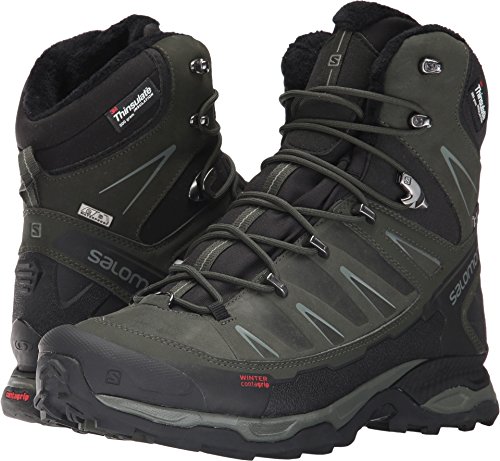
- Full waterproof bootie.
- Light Thinsulate insulation for winter comfort.
- Ice grip compound and aggressive lug design.
- Salomon 2 year limited warranty
Best For: Hikers who want an athletic, nimble boot that doesn't feel clunky. Perfect for day hikes and fast-paced snowshoeing.
The Straight Dope: This boot feels less like a traditional winter tank and more like a beefed-up trail runner. It’s incredibly comfortable right out of the box and the aggressive traction from the Winter Contagrip® sole is confidence-inspiring on packed snow. The 200g of Thinsulate™ insulation is the perfect balance for keeping feet warm without them turning into a swamp when you're pushing uphill.
Heads Up: Because it’s built on an athletic chassis, it might feel a bit narrow for hikers with very wide feet. And while 200g is great for moving, if you plan to stand still for long periods in sub-zero temps, you might want more insulation.
Check Price & Reviews on Amazon
2. The Toasty Fortress: Oboz Bridger 10" Insulated Waterproof
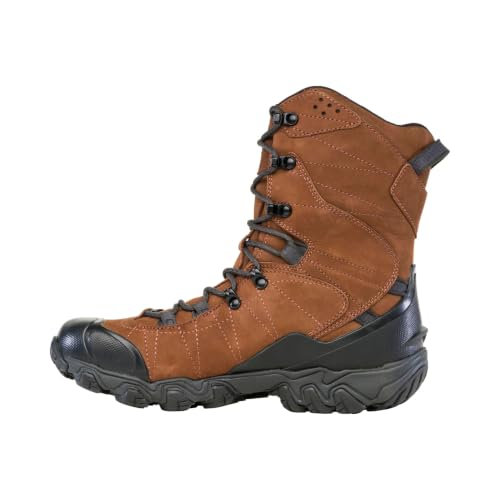
- B-DRY WATERPROOFING: A DWR-treated waterproof nubuck leather upper works with the breathable B-DRY membrane to block outside moisture while allowing sweat vapor to escape, giving these men’s waterproof boots coverage for snow, slush and wet conditions.
- FREEZE GUARD 400 INSULATION: The 400g Freeze Guard insulation provides maximum warmth for frigid environments and is made from post-consumer recycled polyester, making these extreme cold-weather boots suitable for deep winter adventures.
- O FIT THERMAL COMFORT: Triple-density EVA combines cushioned heel and forefoot pods, a firm shell, deep heel cup and reflective Mylar bottom layer, giving these snow shoe cushioning, structure and additional underfoot warmth.
- KINERTIA CUSHIONING: The KINERTIA midsole and supportive Trail Chassis add underfoot structure, while a molded rubber heel kick and gaiter-compatible D-ring equip these snowshoeing boots for deep winter hikes and snowy outdoor routes.
- TRAIL TREAD POLAR TRACTION: The winter-specific rubber compound stays pliable in cold conditions, allowing deep traction lugs to maintain contact across snowy paths, frozen ground and icy terrain for dependable cold-weather grip.
Best For: Seriously cold days, deep snow, or anyone whose feet are perpetually cold.
The Straight Dope: Wearing the Oboz Bridger is like putting your foot into a warm, supportive fortress. The 10-inch height means you can laugh at deep snow, and the 400g of 3M™ Thinsulate™ insulation is no joke. I've worn these in -20°F actual and -50°F windchill and could still feel my toes. The inclusion of Vibram Arctic Grip on the outsole provides incredible traction on treacherous, icy surfaces.
Heads Up: This is a substantial, stiff boot that's heavier than the others. It might run a bit small, so consider sizing up half a size, especially if you plan on wearing thick wool socks.
Check Price & Reviews on Amazon
3. The Budget-Friendly Workhorse: Columbia Bugaboot Celsius Plus
Best For: The weekend warrior who needs a reliable, warm boot that won't destroy their wallet.
The Straight Dope: Columbia packs in the features for a great price. The Bugaboot combines 400g of insulation with their Omni-Heat™ Infinity gold-dot lining that reflects your body heat back to you. It's a noticeably warm system that handles slush and snow without complaint. For the price, the level of warmth and waterproofing is hard to beat.
Heads Up: The Omni-Grip™ outsole is good, but it's not on the same level as the specialized Vibram compounds, especially on sheer ice. You'll definitely want to pair these with microspikes for icy conditions. It can also feel a bit stiff before it's broken in.
Check Price & Reviews on Amazon
4. The Wide-Foot Wonder: KEEN Revel IV High Polar Boot
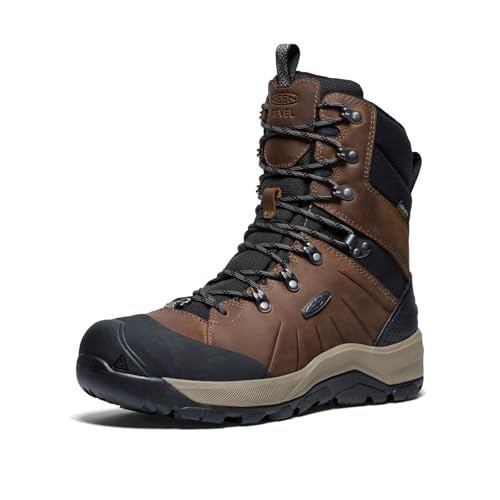
- WATERPROOF: KEEN.DRY waterproof breathable membrane keeps feet dry and comfortable all day long by allowing vapor out without letting water in
- INSULATION: KEEN.WARM insulation made with recycled plastic bottles works with thermal heat shield rated -25°F/-32°C for 365 degrees of warmth
- TRACTION: KEEN.FREEZE rubber outsole provides high traction grip in cold environments and on rocky surfaces; 5mm multi directional lugs deliver added traction; Non marking rubber outsoles leaves no trace or imprints when walking indoors
- SUPPORT & COMFORT: External stability shank offers lightweight support for improved mobility and torsion control on uneven surfaces; Cushioned collar reduces irritation and discomfort around ankle
- CARE TIPS: Gently brush the boot with a soft bristle brush or hand towel to remove loose dirt and debris; Treat stains by lightly rubbing a gum eraser in a circular motion over the location and lightly brush afterward
Best For: Hikers with wider feet who need warmth and solid traction without feeling constricted.
The Straight Dope: If you find most hiking boots pinch your toes, meet your new best friend. KEEN is famous for its generous toe box, which allows your toes to splay naturally, aiding circulation and warmth. The KEEN.POLAR traction outsole provides a fantastic bite in the snow, and the 200g of KEEN.WARM insulation is surprisingly effective without adding extra bulk.
Heads Up: This is a very durable boot, but it's one of the more expensive options in the 200g category. Some testers find the leather upper a bit stiff initially, requiring a break-in period.
Check Price & Reviews on Amazon
The Complete Winter Foot System: It's More Than Just Boots
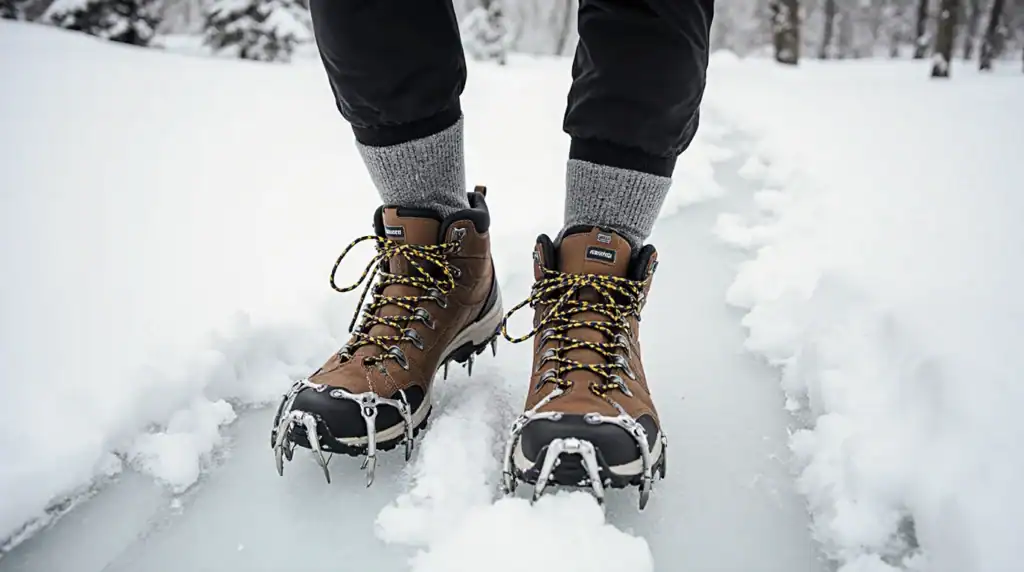
complete winter foot system
You can have the best boots in the world, but if the rest of your system is flawed, you'll still end up with cold feet.
1. The Right Socks (Your First Line of Defense)
Rule #1: No Cotton. Ever. Cotton absorbs sweat, traps moisture, and freezes. Invest in mid-to-heavyweight merino wool or synthetic socks from brands like Darn Tough or Smartwool. They wick moisture and insulate even when damp.
Pro Tip: Choose knee-high socks. They don't slide down, and stopping to adjust layers in the cold is a hassle. Always pack a spare, dry pair.
2. Gaiters (The Unsung Heroes)
Gaiters are waterproof sleeves that cover the top of your boot and your lower leg. They are essential for deep snow, creating a perfect seal to stop snow from getting into your boots from the top. Winter boots with a D-ring make attaching them a breeze.
3. Traction Devices (Your Life Insurance on Ice)
Even the best outsoles will fail on sheer ice. This is non-optional safety equipment.
- Microspikes: For packed trails and moderate ice, flexible traction devices like Kahtoola MICROspikes are the industry standard. They stretch over any boot and provide incredible grip.
- Crampons: These are for technical mountaineering on steep, icy terrain and require specialized boots and training. For 99% of trail hikers, microspikes are the answer.
Not sure how much insulation you need? See Thinsulate grams explained: 200g vs 400g vs 800g vs 1000g.
Looking for the best boot in every category? See our best hiking boots guide.
Winter Hiking Boot FAQs
Can I hike in snow with regular boots?
No. Regular hiking boots lack insulation, traction, and waterproofing for snowy terrain.
What temperature are 200g insulated boots good for?
200g insulation is ideal for active hiking down to about 10°F (-12°C). Below that, choose 400g or more.
Final Word: Go Enjoy the Silence
Getting your winter foot system dialed in—the right boots, wool socks, and traction—is the key to unlocking a whole new season of hiking. It’s about being warm, dry, and safe.
There's something magical about a trail covered in snow—the quiet, the beauty, the challenge. Don't let fear of the cold keep you inside. Gear up properly, and go enjoy it.
Last Updated: September 2026