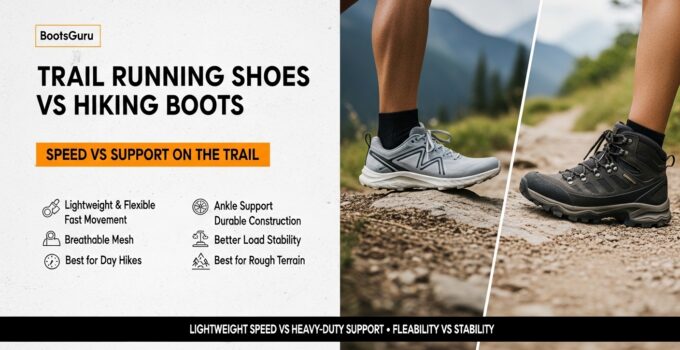

Today you'll find trail runners at the Appalachian Trail starting line alongside full leather boots, and hikers in both camps who will argue passionately for their choice as the objectively correct one. The problem is that most comparison guides still frame this as a simple binary decision, repeat the same received wisdom about ankle support without citing any evidence, and ignore the data that has accumulated from real hikers over real miles.
This guide takes a different approach. We looked at the biomechanical research, the 2025 Appalachian Trail Thru-Hiker Survey covering thousands of real hikers, the blister science on waterproof vs. non-waterproof footwear, and the actual cost-per-mile math over a hiker's career. The honest answer is more nuanced than most guides admit — and it may well be different from what you've been told.
Table of Contents
- What Actually Defines Each Category
- Weight Difference — and Why Foot Weight Is Not Equal to Pack Weight
- The Ankle Support Myth: What the Research Shows
- Real-World Data: What 2025 AT Thru-Hikers Actually Chose
- Waterproof vs. Non-Waterproof: The Counterintuitive Blister Science
- The Spectrum — Not the Binary: A Third Category You Need to Know
- Terrain Decision Matrix: 8 Environments Mapped to Correct Footwear
- Pack Weight Threshold: The 25–30 lb Rule and Why It Exists
- Break-In Time and the Beginner Injury Risk Nobody Talks About
- Cost-Per-Mile Analysis: The Lifetime Financial Comparison
- Durability: Miles Before Replacement, Compared
- Traction Comparison: Outsole Science on Different Surfaces
- Climate and Seasonal Guide
- Beginner vs. Experienced Hiker: Two Different Correct Answers
- Backpacking and Thru-Hiking Specifically
- Recommended Models in Each Category
- The 6-Question Decision Framework
- FAQ — 10 Questions Answered
- The Honest Answer
What Actually Defines Each Category
Before comparing them, it helps to understand what makes a trail runner a trail runner and a hiking boot a hiking boot — because the differences run deeper than collar height and material choice.
Trail Running Shoes
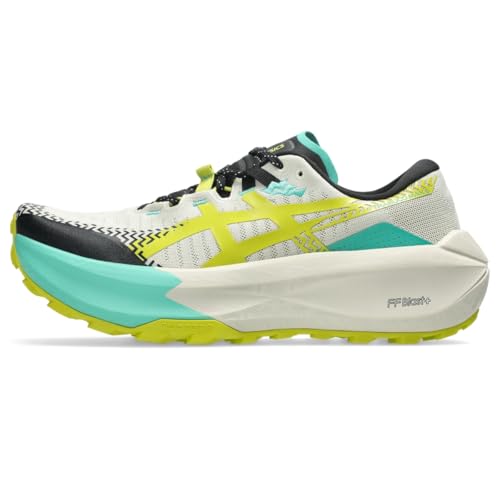
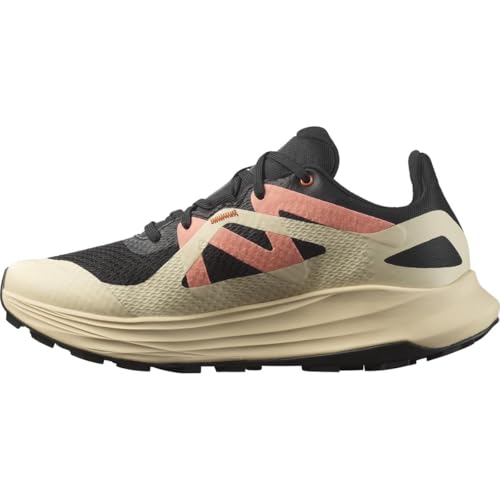
Trail running shoes are designed around one primary engineering constraint: they must be light enough to run in without sacrificing the traction, protection, and durability needed for off-road surfaces. The midsole uses soft, responsive foam (EVA or proprietary compounds like Hoka's PROFLY or Salomon's ENERGY SAVE) that compresses and rebounds rapidly under running gait. The outsole uses aggressive rubber lugs — typically Vibram Megagrip, Continental rubber, or proprietary compounds — that grip unpredictable trail surfaces. The upper is predominantly open-weave mesh for breathability and low weight, with rubber overlays at the toe cap and lower panels for debris protection. Most trail runners sit at 20–25 oz per pair (around 10–12 oz per shoe).
What trail runners do not prioritise: structural rigidity, upper durability for abrasive vegetation, sustained ankle coverage, or waterproofing in the standard non-GTX version. These are deliberate design choices, not oversights.
Hiking Boots
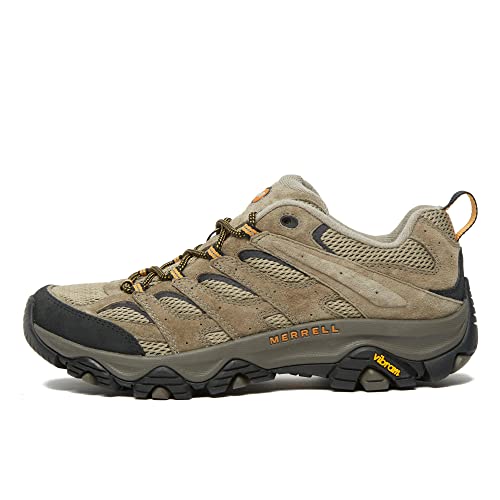
Hiking boots are designed around a different constraint: they must withstand sustained abrasion, carry load stability, and protect the foot across highly variable and technical terrain conditions. The midsole uses denser, stiffer foam or a rigid shank — sometimes both — that resists lateral flex under heavy pack loads and on uneven surfaces. The upper uses leather, reinforced nylon, or leather/fabric composites that resist thorny vegetation, rock abrasion, and debris penetration. The collar extends above the ankle to provide coverage against rocks, roots, and debris while offering some lateral structure. Most hiking boots weigh between 2.5 and 3+ lbs per pair (40–48 oz) — approximately twice the weight of trail runners.
The key distinction: hiking boots are engineered for protection and load-carrying stability. Trail runners are engineered for efficient, responsive movement. These are different problems, and solving one typically compromises the other.
Weight Difference — and Why Foot Weight Is Not Equal to Pack Weight
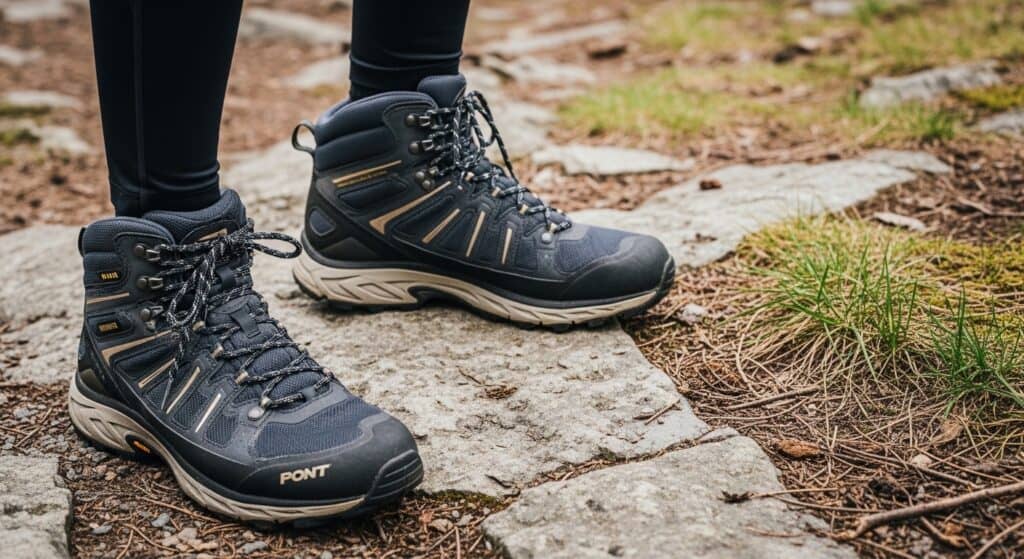
Step into adventure with durable hiking boots!
Every comparison article notes that trail runners are lighter than hiking boots. What most fail to explain is why this weight difference matters so much more than the numbers suggest.
Research into footwear biomechanics consistently shows that weight on the foot requires approximately 4 to 6 times the energy to carry compared to equivalent weight on the back. This is because every stride lifts the foot, decelerates it, and re-accelerates it — a pendulum motion that multiplies the energy cost of distal mass relative to axial load on the torso. A 1 lb difference per shoe — roughly the difference between a typical trail runner and a typical hiking boot — is biomechanically equivalent to carrying an additional 4–6 lbs in your pack for the same total energy expenditure per mile.
Concretely: if you trade a 2.5 lb pair of hiking boots for a 1.0 lb pair of trail runners, you save 1.5 lbs per pair. At the 4–6x multiplier, this feels like removing 6–9 lbs from your pack. Over a 20-mile hiking day, this fatigue reduction compounds significantly. Over a 2,000-mile thru-hike, it is one of the dominant variables in daily foot comfort and overall completion probability.
The weight argument for trail runners is not about aesthetics or preference — it is grounded in basic mechanics, and the magnitude of the advantage is larger than most hikers intuitively assume.
⚖️ The Weight Comparison in Numbers
| Footwear Type | Typical Weight (per pair) | Pack-Equivalent Fatigue |
|---|---|---|
| Trail runner (e.g. Hoka Speedgoat 6) | ~19–25 oz / pair | Baseline |
| Low-cut hiking shoe | ~28–32 oz / pair | +4–8 lbs equivalent pack weight |
| Mid/high hiking boot | ~40–48 oz / pair | +15–24 lbs equivalent pack weight vs. trail runner |
The Ankle Support Myth: What the Research Actually Shows
Ask almost anyone why hikers wear hiking boots, and "ankle support" will be the first answer. It has been repeated so consistently — in outdoor store conversations, in gear guides, on hiking YouTube channels, in Scout troop handbooks — that it has acquired the status of obvious fact. The problem is that the research does not support it as clearly as the consensus implies.
What the Biomechanical Studies Found
A large longitudinal study conducted on military personnel — who train extensively in both boots and running shoes on demanding terrain — found similar rates of foot and ankle injury in both boots and running shoes. Biomechanical step tests comparing hiking boots and hiking shoes found that the two performed almost equivalently, with no identifiable factors pointing to one offering meaningfully better ankle protection than the other. These are not fringe findings — they are published in peer-reviewed sports medicine and biomechanics journals.
The Counterintuitive Boot Mechanism
Here is what the research also shows: hiking boots increase the rotational inertia of the foot due to their significantly greater mass. This increased inertia requires more muscular effort to control with each stride, leading to higher energy expenditure and faster fatigue accumulation. Fatigue is itself an independent risk factor for ankle injury — a tired hiker makes less precise foot placements, reacts more slowly to unstable surfaces, and has reduced proprioception. A heavy boot that increases fatigue relative to a lighter alternative may, in some scenarios, increase rather than decrease ankle sprain risk on a long day.
What Actually Prevents Ankle Sprains
The evidence-based answer is ankle strength and proprioception, not collar height. Ankle strengthening exercises and balance training reduce sprain incidence more effectively than footwear height in most athletic populations. The boot collar provides some structural resistance to extreme inversion, but the primary mechanism of ankle sprain — rapid, involuntary inversion of the loaded foot — overwhelms the collar's resistance in the moment it matters. Strong ankles don't let the inversion happen; boot collars try to stop it after it has already begun.
The Nuance (and It Matters)
This is not an argument that hiking boots are worthless for ankle safety. For hikers who have not yet built trail-specific ankle strength and proprioception — which takes consistent mileage on varied terrain to develop — a boot's collar does provide a meaningful margin of error during the conditioning period. For experienced hikers with well-conditioned ankles on most established trails, the boot collar provides a smaller marginal benefit than its weight cost imposes. The correct recommendation genuinely diverges by experience level, and most guides present only the beginner-appropriate advice as universal truth.
Real-World Data: What 2025 AT Thru-Hikers Actually Chose — and How Satisfied They Were
The most credible large-scale real-world data on hiking footwear satisfaction comes from The Trek's annual Appalachian Trail Thru-Hiker Survey. The 2025 edition, published in January 2026, surveyed hundreds of AT thru-hikers who completed the trail and asked them to rate their footwear satisfaction on a 1–10 scale. The results are striking.
📊 2025 AT Thru-Hiker Survey — Footwear Satisfaction Data
| Footwear Type | 10/10 Rating | 3/10 or Lower | Summary |
|---|---|---|---|
| Trail runners | 50%+ gave 10/10 | <10% | Highest satisfaction of any category by a significant margin |
| Hiking boots | 20% gave 10/10 | ~50% rated 6/10 or lower | Most mixed reviews; highest "regret rate" of any footwear category |
Source: The Trek 2025 AT Thru-Hiker Survey, published January 2026
The 2025 survey also confirmed that the average AT thru-hiker goes through four pairs of footwear — roughly one pair every 520 miles — and this replacement frequency was consistent across both trail runner and boot wearers. The durability advantage that boot advocates cite as a primary reason to choose boots did not translate into reduced replacement frequency on a thru-hike, where any footwear type eventually fails under sustained abuse.
A significant 2025 development: the percentage of hikers in standard trail runners dropped by 4% versus 2024 — but those hikers did not return to traditional hiking boots. They moved to high-top trail runners, the hybrid category that blends trail running shoe weight and breathability with mid-boot ankle coverage. The trail runner consensus is not reversing; it is maturing into a more nuanced spectrum of choices.
One important caveat: the Appalachian Trail is predominantly a well-maintained established trail on relatively moderate terrain (by thru-hiking standards). The dominance of trail runners in the AT survey data reflects the trail's actual demands — not necessarily the demands of highly technical terrain, heavy off-trail travel, or winter alpine conditions.
Waterproof vs. Non-Waterproof: The Counterintuitive Blister Science

The near-universal recommendation in hiking footwear guides is waterproof boots for wet conditions. On its surface this seems obvious — wet feet are uncomfortable, waterproof boots keep feet dry, therefore waterproof boots are the correct choice in wet conditions. The actual relationship between waterproof footwear and foot health is more complicated, and in many wet-condition scenarios, non-waterproof trail runners produce fewer blisters than waterproof boots.
How the Blister Mechanism Works
Blisters form when sustained friction shears the skin layers against each other. The friction threshold — the amount of rubbing required to produce a blister — is dramatically lower when the skin is wet and macerated (softened by prolonged moisture exposure). Macerated skin tears under friction that dry skin would resist without damage.
The waterproof boot problem: once water enters over the boot collar — which happens on any stream crossing deeper than the collar height, in sustained heavy rain, or on saturated trail surfaces — the waterproof membrane becomes a sealed chamber. Water that enters cannot escape. The boot retains that moisture for as long as you wear it and for 24+ hours after you stop, because the membrane that blocks outside water also blocks inside moisture from evaporating. Your foot sits in wet, macerated skin for the duration, dramatically increasing blister susceptibility.
The non-waterproof trail runner response: a mesh trail runner that gets wet through a stream crossing or heavy rain will typically drain immediately and dry within 20–30 minutes of walking in ambient air. The foot experiences a brief wet period followed by recovery to a dry or nearly dry state. The maceration window is short; the blister risk window is correspondingly short.
When Waterproof IS the Right Choice
The argument against waterproof boots is not universal. In specific conditions, waterproof footwear is genuinely the correct choice:
- Cold and persistently wet conditions — Pacific Northwest from October through May, Northeast shoulder seasons, cold alpine environments. When the temperature makes wet feet a hypothermia risk rather than merely a comfort issue, and when the wet conditions are sustained enough that a mesh shoe cannot reach a dry state between exposure events, waterproofing is correct.
- Shallow snow and slush — conditions where the waterproof membrane can actually do its job without being overwhelmed from above. Waterproofing works when the water source is below the collar; it fails when the source is above it.
- Short hikes on wet trails where the boot will stay dry — a 3-hour spring hike on a wet but not flooded trail, where puddles are avoidable and crossings are minimal, is exactly the scenario a waterproof boot handles well.
🧦 The Non-Waterproof System That Actually Works
Non-waterproof trail runners + merino wool socks (Darn Tough, Smartwool) + gaiters for debris. Merino wool provides meaningful insulation even when wet — unlike cotton, which provides none. This system manages wet crossings better than waterproof boots in conditions where the water source exceeds collar height, and produces far fewer blisters across a full hiking day. It is the standard kit among thru-hikers and experienced fast-and-light hikers for non-cold conditions.
The Spectrum — Not the Binary: The Third Category You Need to Know
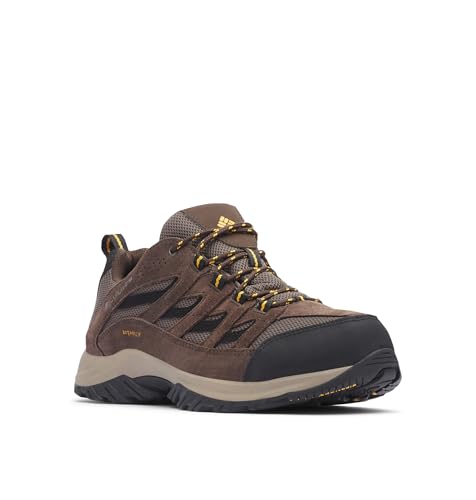
Hiking footwear is not a binary choice between trail runners and hiking boots. It is a continuous spectrum of five meaningful categories, each occupying a distinct zone of the protection-vs-weight trade-off. Most comparison guides acknowledge two of these. The 2025 AT survey shows that a third category — high-top trail runners — is growing in popularity as hikers recognise that the binary framing leaves an important gap.
| Category | Weight (pair) | Key Characteristics | Best For | Example Models |
|---|---|---|---|---|
| Trail runner (low) | 19–25 oz | Soft midsole, mesh upper, no ankle collar, maximum breathability | Fast hiking, thru-hiking, established trails under 30 lb pack | Hoka Speedgoat 6, Altra Lone Peak 9, Topo Traverse |
| High-top trail runner | 25–32 oz | Ankle collar of a boot, weight and breathability of a trail runner — the 2025 growth category | Hikers wanting ankle coverage without full boot weight; rocky terrain with moderate loads | Altra Lone Peak Hiker 3 Mid, Salomon XA Pro 3D Mid, Hoka Kaha GTX |
| Low-cut hiking shoe | 28–34 oz | Stiffer midsole, reinforced upper, no ankle coverage — hiking performance at moderate weight | Day hiking, moderate backpacking, strong-ankled hikers who want protection without a boot | Salomon X Ultra 5, Merrell Moab 3, KEEN Targhee IV |
| Lightweight mid boot | 34–42 oz | Modern boot architecture — ankle coverage, stiffer sole, durable upper — in a lighter package | Technical terrain, loads over 30 lbs, off-trail, beginners building ankle strength | Salomon Quest 4 GTX, Merrell Moab Speed 2 Mid, Lowa Renegade GTX Mid |
| Traditional leather boot | 44–56 oz+ | Maximum durability, rigidity, and protection; resoleable; premium longevity | Off-trail heavy loads, extreme terrain, alpine environments, long-term investment buyers | Danner Mountain 600, La Sportiva Trango, Asolo Fugitive GTX |
Understanding this spectrum changes the decision. The choice is rarely between "trail runner" and "hiking boot" at the extremes — it is usually between trail runner, high-top trail runner, or lightweight hiking shoe for most hikers on most trails. Full traditional leather boots are the correct choice for a narrower range of demanding applications than the conventional wisdom suggests.
Terrain Decision Matrix: 8 Trail Environments Mapped to the Right Footwear
The most useful framework in this debate is not "boots vs. trail runners" in the abstract — it is "what footwear is correct for the specific terrain and conditions of your actual hike?" Here is how the choice maps across the eight most common hiking environments.
| Terrain / Condition | Correct Footwear | Reasoning |
|---|---|---|
| Established maintained trail, light pack (<20 lbs), dry/warm conditions | Trail runners | Maximum weight efficiency; the smooth, maintained surface demands less protection than the weight cost imposes |
| Trail with stream crossings, warm temperatures (>60°F) | Non-WP trail runners + merino socks | Dries in 20–30 minutes; waterproof boots seal in water and take 24+ hrs to dry — higher blister risk |
| Technical rocky/root terrain, moderate pack (25–35 lbs) | Lightweight mid boot or stiff hiking shoe | Soft trail runner midsoles compress unevenly under load on uneven terrain; stiffer platform reduces ankle roll probability above 25 lb load |
| Off-trail bushwhacking / heavy vegetation | Mid/high hiking boot (leather preferred) | Leather upper resists thorny vegetation that shreds mesh; ankle coverage protects against debris and snake territory |
| Long-distance trail (thru-hiking: AT, PCT, CDT) | Trail runners | 75%+ of AT thru-hikers wear trail runners; >50% rate satisfaction 10/10. Weight fatigue over 2,000+ miles makes the weight advantage decisive |
| Winter / cold alpine with persistent snow | Waterproof insulated mid/high boot | Thermal insulation, depth above snow line, crampons/microspike compatibility — non-WP trail runners are inadequate in cold-wet conditions where hypothermia risk exists |
| Desert / Southwest dry summer | Non-WP trail runners or trail shoes | Breathability in extreme heat is critical; mesh drains sand better; boot heat retention at 100°F+ is a heat illness risk factor |
| Pacific Northwest / persistent cold-wet conditions | Waterproof boot or waterproof trail runner | Sustained wet without drying windows; cold temperatures make wet feet a safety issue; short drying window makes non-WP system ineffective |
Pack Weight Threshold: The 25–30 lb Rule and the Engineering Behind It
Multiple experienced sources converge on a pack weight threshold of approximately 25–30 lbs as the point where footwear stiffness begins to matter meaningfully. Below this weight, trail runners provide adequate midsole stability for most hikers on most terrain. Above it, the case for a stiffer platform becomes more compelling. But the reason for this threshold is rarely explained.
The mechanism is midsole compression under lateral load. Trail runner midsoles use soft, responsive foam optimised for the rhythmic, predominantly vertical loading of running gait. When a heavy pack introduces significant lateral force during the moment of ankle roll on uneven terrain — the outside edge of the foot landing on a tilted rock surface, for example — the soft midsole compresses under that lateral load, reducing the boot's corrective response and increasing the ankle's effective range of motion at the dangerous inversion angle. A stiffer midsole resists this lateral compression, keeping the foot platform more stable as load increases.
The 25–30 lb threshold is not a hard binary. A 180 lb hiker with conditioned ankles and good proprioception may find trail runners adequate at 35 lbs. A 130 lb hiker with a history of ankle sprains may benefit from a stiffer platform at 20 lbs. The threshold is a useful starting point, not a universal rule.
The practical recommendation: If your pack consistently exceeds 25–30 lbs, consider moving up at least one category on the footwear spectrum — from a pure trail runner to a high-top trail runner or a stiff hiking shoe. You do not necessarily need a full traditional hiking boot; you need more midsole rigidity than the lightest trail runners provide under sustained load.
Break-In Time and the Beginner Injury Risk Nobody Talks About
Every honest hiking boot guide acknowledges that leather hiking boots require a break-in period. What most guides do not explain is the specific injury risk this creates — and why it is disproportionately dangerous for beginner hikers who are most likely to be wearing new boots.
Unbroken hiking boots create hot spots and blisters at predictable friction points: the back of the heel where the rigid counter contacts the Achilles tendon, the instep where the leather lacing crosses the arch, and the toe box where the stiff toe rand contacts the longest toe on downhill grades. These hot spots worsen progressively through a long hike. On a 3-mile walk around town, they are an inconvenience. On a 10-mile mountain day hike in new boots, they can become open blisters severe enough to end the hike or cause the hiker to alter their gait in ways that increase knee and hip stress.
Trail runners are comfortable from the first wear. The mesh upper, soft foam midsole, and flexible construction conform to the foot immediately rather than requiring the foot to conform to them over dozens of hours. For a beginner hiker who has purchased footwear for a specific upcoming trip, this is not a minor advantage — it is the difference between a positive first hiking experience and a painful one that discourages continuation of the activity.
⚠️ The New Boot Warning
If you have purchased new leather or synthetic hiking boots for a specific upcoming hike, do not wear them for the first time on that hike. Complete a minimum of 5–8 hours of break-in walking on shorter, lower-stakes routes before your target hike. Apply leather conditioner to the collar and tongue area to accelerate softening. Wear moleskin patches on the heel and Achilles area during break-in. The most common first-boot mistake is beginning a 10-mile mountain trail in new boots and discovering the problem at mile 6 with no alternative.
The Break-In Timeline by Footwear Type
- Trail runners: 0–3 hours. Comfortable from first wear; minor midsole adaptation only.
- High-top trail runners: 2–5 hours. The collar requires minimal softening; the athletic midsole is immediately comfortable.
- Lightweight hiking shoe (synthetic): 5–10 hours. Some collar stiffness; noticeable improvement by 3rd–4th wear.
- Lightweight mid boot (synthetic): 10–20 hours. More significant collar break-in; plan for 2–3 shorter hikes before a long day.
- Traditional leather boot: 20–50 hours. The longest and most necessary break-in period; attempting a full hiking day in new leather boots is the most reliable way to generate severe blisters.
Cost-Per-Mile Analysis: The Lifetime Financial Comparison
The conventional wisdom is that trail runners are cheaper than hiking boots. This is true for upfront cost and for casual hikers who buy infrequently. It is not always true for frequent hikers over a multi-year period. The correct answer depends entirely on how many miles per year you hike.
| Footwear Type | Purchase Price | Miles Before Replacement | Cost Per Mile | Best For (Mileage) |
|---|---|---|---|---|
| Trail runners | $130–$160 | 300–500 miles | $0.26–$0.53/mile | Under 100 miles/year, thru-hikers (replaceable on trail) |
| Low-cut hiking shoe | $150–$200 | 500–800 miles | $0.19–$0.40/mile | 100–200 miles/year moderate hikers |
| Synthetic mid boot | $180–$280 | 600–1,000 miles | $0.18–$0.47/mile | 150–300 miles/year; not resoleable |
| Full-grain leather boot (resoleable) | $280–$400+ | 1,500–3,000+ miles with resoling ($60–$90 per resole) | $0.10–$0.20/mile | 200+ miles/year — cheapest long-term option |
The financial calculus depends entirely on usage. A casual hiker covering 40–50 miles per year will wear a pair of trail runners for 6–10 years — at which point replacement cost is minimal and the upfront affordability of trail runners wins. A dedicated hiker covering 300 miles per year replaces trail runners annually at $130–$160/year. A premium leather boot ($350) with two resoles over its life ($160 total) costs $510 over 6,000 miles at the same 300 miles/year pace — roughly 20 years of hiking at $25/year. The leather boot is dramatically cheaper long-term for frequent hikers.
The break-even point is approximately 200 miles per year, assuming the hiker commits to boot maintenance and resoling rather than replacement. Below this annual mileage, trail runners win on cost. Above it, the premium leather boot wins.
Durability: Miles Before Replacement, Compared
The durability gap between trail runners and leather hiking boots is real and significant — but it is more nuanced than the simple "boots last longer" summary most articles provide.
Trail runners: 300–500 miles is the standard manufacturer guideline, and real-world thru-hiker experience confirms this range. The limiting factors are midsole compression (the foam loses its energy return and bottom-of-foot feel diminishes), outsole lug wear (the rubber grip flattens and traction is compromised), and upper abrasion (mesh panels fray on rocky terrain). Maximalist trail runners with thick foam midsoles may show comfort decline even before visible outsole wear, because the foam compression is internal.
Synthetic mid boots: 600–1,000 miles, with the upper typically outlasting the midsole. The stiffer midsole resists compression longer than trail runner foam; the fabric/leather composite upper resists abrasion better than mesh. Not resoleable on most models — replace the full boot when outsole wears.
Full-grain leather boots: 1,500–3,000+ miles before the upper shows significant degradation, with proper care (regular leather conditioning, waterproof treatment, avoiding heat drying). The Goodyear-welted construction allows outsole replacement for $60–$90 at a cobbler — a significant investment return when the upper and midsole have years of life remaining. Danner's factory recrafting service accepts worn Acadia and Mountain 600 boots for full outsole and midsole replacement, returning the boot to near-new condition.
An important note from the 2025 AT survey: the average thru-hiker replaces footwear four times regardless of whether they wear trail runners or boots. On a trail where the daily mileage is high and the terrain is demanding, even leather boots cannot survive a full 2,000-mile thru-hike in a single pair for most hikers. The durability advantage of boots is most meaningful for casual and moderate hikers who keep a pair for multiple seasons — not necessarily for thru-hikers who will exceed any footwear's service life.
Traction Comparison: Outsole Science on Different Surfaces
Both trail runners and hiking boots use lugged rubber outsoles. The differences are in rubber compound softness, lug geometry, and how those properties interact with specific surfaces.
Rubber Compound
Trail runners frequently use sticky, soft rubber compounds (Vibram Megagrip, Continental rubber, proprietary soft compounds) that conform closely to surface irregularities and provide excellent friction on both dry and damp rock. Softer rubber grips better but wears faster. Hiking boots more often use harder, more durable rubber compounds that trade some grip on technical rock for significantly extended outsole life on abrasive terrain.
Lug Geometry
Trail runner lugs are typically shallower (3–5mm) with moderate spacing optimised for mixed terrain. Boots often use deeper lugs (5–8mm) with wider spacing for mud-shedding capability and traction on soft, loose terrain where the lug needs to penetrate the surface rather than grip its top layer.
Surface-Specific Performance
- Dry rock / slickrock: Trail runners with sticky rubber (Megagrip, Continental) frequently outperform hiking boots, where harder rubber reduces friction surface contact.
- Wet rock: Soft sticky rubber again advantages trail runners on wet stone. Contagrip TA (Salomon) is specifically formulated for wet sandstone performance.
- Mud and loose soil: Deep-lug hiking boots with wide spacing clear mud more effectively and provide better penetration into soft surfaces.
- Polished trail (established smooth surface): Fine-tread soft rubber trail runners outperform aggressive deep-lug boots on smooth maintained surfaces where lug height reduces contact area.
- Snow: Both can work with appropriate gaiters; microspike compatibility is the primary consideration, and most hiking boots accept microspikes more reliably than low-profile trail runners.
The REI observation that "many trail runners are designed to grip on the fly and won't have the same level of traction at a slower hiking pace" is worth noting: some trail runners are optimised for the higher-force footstrikes of running gait and perform slightly differently at walking pace. This is model-specific — the best trail runners for hiking are those whose outsoles are optimised for multi-directional traction at hiking speeds, not exclusively for running.
Climate and Seasonal Guide: Region-by-Region Recommendations
| Climate / Region | Season | Recommendation | Reasoning |
|---|---|---|---|
| Pacific Northwest | Oct–May | Waterproof boot or WP trail runner | Sustained wet with no drying windows; cold temps make wet feet dangerous |
| Pacific Northwest | Jun–Sep | Non-WP trail runners | Drier season with drying windows; mesh breathability worth having |
| American Southwest / Desert | All seasons | Non-WP trail runners or trail shoes | Breathability critical; waterproof boots are heat traps; sand drainage from mesh |
| Northeast / Appalachians | Jun–Sep | Trail runners (non-WP preferred) | AT thru-hiker preference confirmed; frequent water sources manageable with quick-dry mesh |
| Northeast / Appalachians | Oct–May | Waterproof mid boot | Cold-wet with ice — boot stability + microspike compatibility + waterproofing justified |
| Rocky Mountains / Alpine | Jul–Sep | Trail runners to lightweight mid boot (terrain-dependent) | Dry alpine summer allows trail runners on established trails; technical terrain escalates to boot |
| Rocky Mountains / Alpine | Oct–Jun (shoulder/winter) | Insulated waterproof mid/high boot | Snow, ice, cold: thermal insulation and microspike/crampon compatibility essential |
Beginner vs. Experienced Hiker: Two Different Correct Answers
One of the most important insights in this debate — and one that almost no competitor article articulates clearly — is that the correct footwear choice genuinely diverges by experience level. This is not a hedge or a cop-out. It is a real difference grounded in ankle physiology, proprioception development, and the specific risks each group faces.
For Beginner Hikers
The ankle protection argument for boots is most valid for beginners — not because the boot collar provides dramatic mechanical restriction of ankle inversion, but because beginners have not yet developed the trail-specific ankle strength and proprioception that experienced hikers build over hundreds of miles. Their ankles are genuinely more vulnerable to inversion injury on uneven terrain, and the boot collar does provide a real (if modest) margin of error during the period when that ankle strength is being built. Additionally, beginners benefit from the debris protection, upper durability, and psychological confidence that boots provide on terrain that feels more challenging than it does to an experienced hiker.
The practical recommendation for beginners: start with a lightweight mid-cut hiking shoe or a high-top trail runner — not necessarily a full heavy traditional boot. These provide meaningful ankle coverage and structural support without the extreme weight penalty and break-in burden of a traditional leather boot. As ankle strength and trail experience develop over 50–100 miles, the move to trail runners becomes progressively more appropriate.
For Experienced Hikers
Experienced hikers with 200+ trail miles, no ankle injury history, and conditioned lower-leg musculature get the full benefit of trail runners' weight and breathability advantages with reduced marginal ankle risk. The 2025 AT survey data reflects this: the most experienced long-distance hikers overwhelmingly choose trail runners and rate them highest. Their well-conditioned ankles do the stabilisation work that beginners rely on boots to partially provide.
The practical recommendation for experienced hikers: choose footwear based primarily on terrain difficulty, pack weight, and climate rather than defaulting to boots for "safety." On most established trails with light-to-moderate loads, trail runners are the evidence-supported choice. Reserve boots for the specific conditions where they genuinely outperform trail runners: heavy loads on technical terrain, sustained cold-wet conditions, and off-trail travel.
Backpacking and Thru-Hiking Specifically
The backpacking question — "do I need boots for an overnight or multi-day trip?" — is one of the most searched outdoor gear queries and gets the most consistently wrong answer from well-meaning but outdated advice.
The Better Trail team's conclusion, backed by extensive testing across tens of thousands of miles: "No, just because you're going backpacking doesn't mean you have to wear hiking boots. This is especially true if your pack is relatively light — under a reasonable load of 25 pounds or less for comfort, and maybe 30 pounds max — a supportive low-cut hiking shoe or trail runner will get the job done."
The 2025 AT Thru-Hiker Survey data confirms this at scale. The average AT thru-hiker carries a base weight of under 20 lbs (many ultra-light hikers carry 10–15 lbs) and completes the full 2,190-mile trail in trail runners with high satisfaction rates. One Better Trail tester hiked 650 miles of the Continental Divide Trail in the Topo Athletic Traverse trail shoe and reported comfortable feet nearly the entire time.
For backpackers specifically: the pack weight threshold (25–30 lbs) matters more than trip duration. A 3-night trip with a 20 lb pack is a better trail runner scenario than a 2-night trip with a 40 lb pack. Assess your actual pack weight for the specific trip, match it to the threshold, and choose accordingly. The days are coming to an end when "you're going overnight, so wear boots" constitutes useful advice.
Recommended Models in Each Category
This guide is primarily a comparison framework rather than a product roundup — but naming specific models that exemplify each category's characteristics helps anchor the abstract comparison to real purchasing decisions.
Best Trail Runners for Hiking

Hoka Speedgoat 6 — The most popular trail runner on the AT by model. Max-cushion EVA stack, Vibram Megagrip outsole, just over 1 lb per shoe despite the thick midsole. Best for: high-mileage days, long-distance hikers, anyone coming from maximalist footwear. Not ideal: technical rocky scrambling where ground-feel matters.

Altra Lone Peak 9 — Wide toe box, zero-drop geometry, FootShape design. The #1 brand on the AT (Altra) and this model's most popular. Best for: hikers with wide feet, zero-drop devotees, backpacking in trail runners. Requires zero-drop adaptation if transitioning from heel-elevated footwear.

Topo Athletic Traverse — 5mm drop, firm-flexible midsole, excellent durability for a trail runner. The thru-hiker-specific design that Topo built specifically for long-distance use. 650 CDT miles tested. Best for: distance hiking, hikers wanting more structure than maximalist options.
Best High-Top Trail Runners (the Hybrid Category)

Altra Lone Peak Hiker 3 Mid — The mid-cut version of the AT's most popular model. Trail runner comfort with boot-height ankle coverage. Best for: hikers who love the Lone Peak but want more ankle coverage on rugged terrain.

Hoka Kaha GTX — Gore-Tex waterproof, ankle-height collar, max-cushion comfort. The premium hybrid option. Best for: hikers wanting maximum cushion with ankle coverage in wet conditions.
Best Lightweight Mid Boots

Salomon X Ultra 5 GTX — The standard benchmark for lightweight waterproof mid boots. Excellent lateral stability, Contagrip outsole, available in wide. Best for: technical terrain with moderate loads, beginners who need boot structure.

Merrell Moab 3 Mid WP — Vibram TC5+ outsole, Merrell DRY waterproofing, wide sizing, excellent price-to-performance. Best for: casual hikers, beginners, all-around three-season use.
For full roundups in each category, see our guides to the best trail running shoes, best hiking boots, and best hiking shoes.
The 6-Question Decision Framework
Answer these six questions honestly and the correct footwear category becomes clear for most hikers on most trails.
Question 1: How experienced are you on trail?
Under 50 trail miles → lean toward mid hiking shoe or high-top trail runner during the ankle conditioning period. 100+ miles of trail experience with no ankle issues → trail runners appropriate for most terrain.
Question 2: How heavy is your pack?
Under 25 lbs → trail runners adequate on most terrain. 25–35 lbs → stiffer hiking shoe or high-top trail runner. Over 35 lbs → lightweight mid boot or full boot for midsole rigidity under sustained load.
Question 3: What is the terrain type?
Established maintained trail → trail runners. Technical rocky off-trail → hiking shoe or boot. Off-trail bushwhacking or vegetation → leather boot for upper durability and debris protection.
Question 4: What is the climate and season?
Hot and dry → non-WP trail runners (breathability priority). Stream crossings in warm temps → non-WP trail runners + merino socks (faster drying, fewer blisters). Cold-wet persistent conditions → waterproof boot. Snow/alpine → insulated waterproof boot with microspike compatibility.
Question 5: How many miles per year do you hike?
Under 100 miles/year → trail runners win on cost and convenience. 200+ miles/year → quality leather boot investment pays off long-term. Thru-hiking → trail runners per survey data (high satisfaction, replaceable on trail).
Question 6: Do you have any foot conditions or injury history?
Plantar fasciitis → maximalist trail runner (Hoka) or structured boot with custom orthotics. Ankle sprain history → lightweight boot during active recovery phase, transition to trail runners after rehabilitation. Wide feet → check toe box geometry specifically (Altra, KEEN, New Balance wide options).
FAQ — 10 Questions Answered
Can you hike in trail running shoes?
Yes — trail running shoes are among the most popular hiking footwear choices for experienced hikers. The 2025 AT Thru-Hiker Survey found over 50% of trail runner wearers rated their choice 10/10 for satisfaction. Trail runners are appropriate for most established trails with packs under 25–30 lbs. They perform less well than hiking boots on sustained technical off-trail terrain, heavy loads, and cold-wet conditions.
Do hiking boots actually prevent ankle sprains better than trail runners?
The evidence is far less conclusive than the conventional wisdom suggests. A large longitudinal military study found similar ankle injury rates in boots and running shoes during demanding training. Biomechanical tests show hiking boots and hiking shoes performing nearly equivalently on ankle protection metrics. What demonstrably reduces ankle sprains is ankle strength and proprioception — which is built through trail experience, not provided by boot height. The boot collar provides a real but smaller marginal benefit than is widely claimed, primarily for beginners who haven't yet built trail-specific ankle conditioning.
What percentage of thru-hikers wear trail runners vs. hiking boots?
Data from the 2019 AT Thru-Hiker Survey showed approximately 75% wearing trail runners and under 10% wearing traditional hiking boots. The 2025 survey confirms trail runners remain dominant, with boots showing a roughly 50% "regret rate" — about half of boot wearers rated their choice 6/10 or lower — versus trail runners where over 50% gave 10/10 satisfaction. The 2025 growth category was high-top trail runners, not traditional boots.
Are waterproof hiking boots better than non-waterproof trail runners in wet conditions?
Not always — and in many wet-trail scenarios, non-waterproof trail runners produce fewer blisters. Once water enters a waterproof boot above the collar height (which happens on stream crossings, heavy rain, or wet trail surfaces), the boot becomes a sealed chamber that retains moisture for 24+ hours. Sustained wet skin drastically increases blister risk. A non-waterproof mesh trail runner dries within 20–30 minutes of post-crossing walking. In cold-wet conditions where hypothermia from wet feet is a risk, waterproof boots are correct. In warm-wet conditions with incidental crossings, non-WP trail runners often produce better outcomes.
How long do trail running shoes last when used for hiking?
300–500 miles is the standard service life under trail running and hiking conditions. The midsole foam compresses and loses energy return; the outsole lugs wear flat; mesh uppers fray on abrasive terrain. Thru-hikers typically replace trail runners every 450–550 miles. For casual hikers doing 50 miles per year, a pair lasts 6–10 years. Replace when the midsole feels flat underfoot or the tread shows visible wear-through.
How long do hiking boots last in miles?
It depends heavily on construction and care. Synthetic mid-cut hiking boots: 600–1,000 miles before midsole or upper failure. Full-grain leather boots with regular conditioning and resoling: 1,500–3,000+ miles. Premium leather boots from Danner, La Sportiva, and Asolo can be factory-recrafted (outsole and midsole replacement) for $100–$150, returning them to near-new condition — a significant value for high-mileage hikers.
At what pack weight should I switch from trail runners to hiking boots?
Approximately 25–30 lbs is the threshold where midsole stiffness begins to matter meaningfully. Above this weight, trail runner soft midsoles compress unevenly under lateral loads on uneven terrain, reducing stability. The recommendation is to move at least one category up the footwear spectrum at this weight — from pure trail runner to high-top trail runner or stiff hiking shoe — though a full traditional boot is not necessarily required until loads exceed 35+ lbs on technical terrain.
What is a high-top trail runner, and is it better than a hiking boot?
High-top trail runners are a growing hybrid category that combines the weight, breathability, and athletic midsole of a trail runner with an ankle collar approaching mid-boot height. The 2025 AT survey noted this category grew as hikers sought ankle coverage without traditional boot weight. Models like the Altra Lone Peak Hiker 3 Mid, Salomon XA Pro 3D Mid, and Hoka Kaha GTX fit this category. They are better than traditional hiking boots for hikers who primarily need ankle coverage on established trails; boots are still the right choice for heavy off-trail loads and demanding technical terrain where upper durability and structural rigidity matter most.
Are trail runners better for beginners, or are boots safer?
For genuine beginners — fewer than 50 trail miles, unbuilt ankle conditioning — a lightweight mid hiking shoe or high-top trail runner provides a useful margin of ankle structure during the conditioning period without the extreme weight and break-in burden of traditional boots. As trail experience and ankle strength develop over 50–100 miles, the transition to trail runners becomes progressively more appropriate. Full heavy leather boots are rarely the right answer for beginners: they require 20–50 hours of break-in and are frequently abandoned after a single painful first outing.
Which is cheaper long-term: trail runners or hiking boots?
It depends on annual mileage. Trail runners ($130–$160) at 300–500 miles cost $0.26–$0.53 per mile. Premium leather boots ($300–$400) at 1,500–3,000 miles with resoling cost $0.10–$0.20 per mile — significantly cheaper for frequent hikers. The break-even is approximately 200 miles per year. Under 100 miles/year: trail runners win on upfront cost. 200+ miles/year: quality leather boots are cheaper per mile over the boot's service life.
The Honest Answer
The answer most hiking guides give you is genuinely outdated. "Wear boots" as a universal recommendation made sense when boots were the only serious option for trail use. The trail running shoe technology of the last two decades has changed the calculus — lighter, more comfortable, immediately wearable footwear that experienced hikers consistently prefer across the broadest range of three-season conditions.
But "trail runners for everyone" is equally wrong. The correct answer diverges by experience level, pack weight, terrain type, climate, and annual mileage — and it is different for a beginner on their first mountain day hike than for an experienced thru-hiker planning a 500-mile section.
The evidence-based summary:
- For experienced hikers on established trails with packs under 25 lbs in three-season conditions: trail runners are the evidence-supported choice. The 75%+ adoption and high satisfaction rates among AT thru-hikers are real-world proof at scale.
- For beginners building ankle strength: a lightweight mid hiking shoe or high-top trail runner provides meaningful structure without the extreme weight and break-in burden of traditional boots.
- For technical off-trail terrain, heavy loads (35+ lbs), or sustained cold-wet conditions: hiking boots remain the correct tool for the specific problem they solve.
- For cost-conscious frequent hikers doing 200+ miles per year: a quality leather boot with resoling is the cheapest per-mile option over a hiking career.
- For cold-wet and winter alpine conditions: hiking boots with waterproofing and microspike compatibility are non-negotiable.
The footwear spectrum — from ultralight trail runner to traditional leather boot — exists because each category solves a different problem. The skill is matching the tool to the problem you are actually trying to solve on the terrain you actually hike. No guide, including this one, can substitute for that matching process for your specific circumstances.