Here is the uncomfortable truth about buying hiking boots: the shop floor is the worst possible place to judge them. Standing in a carpeted store, both boots feel fine. …
Most hikers buy the wrong boot because they shop by brand name or star rating instead of terrain, foot shape, and pack weight. That works fine until the first …
Trail running is the most demanding sport for footwear of any athletic category. Road running, for all its intensity, presents a single consistent surface: flat, hard, predictable. Every step …
Most people approach minimalist boots the wrong way. They either dive into full barefoot footwear overnight and injure themselves, or they dismiss the concept entirely after one bad experience …
Last Updated: June 2026 Bad work boots don’t just hurt your feet. They wreck your knees, kill your back, and drain your focus by hour three of a ten-hour …
Last Updated: June 2026 Most “best work boots” articles give you ten identical pairs of steel toe boots that suit exactly one type of worker. The electrician, the roofer, …
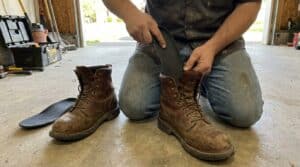
Here’s the frustration no one talks about honestly: if you wear orthotics, you’ve almost certainly bought a boot that looked perfect online, arrived, seemed promising — and then failed …
Most work boots weigh between 3 and 4 pounds per pair. That doesn’t sound like much — until you’re six hours into a shift and feel like you’re dragging …
Last Updated: June 2026 Steel toe boots get chosen for the wrong reasons all the time. Workers pick them because their site mandates “safety toe” without specifying the standard. …
Your boots can look great, pass every safety inspection, and still wreck your feet by noon. Comfort failure is the number one reason workers go through three pairs of …
Let’s get something out of the way first: having small feet as a man is not a problem to be embarrassed about — it’s a fit and style consideration …