
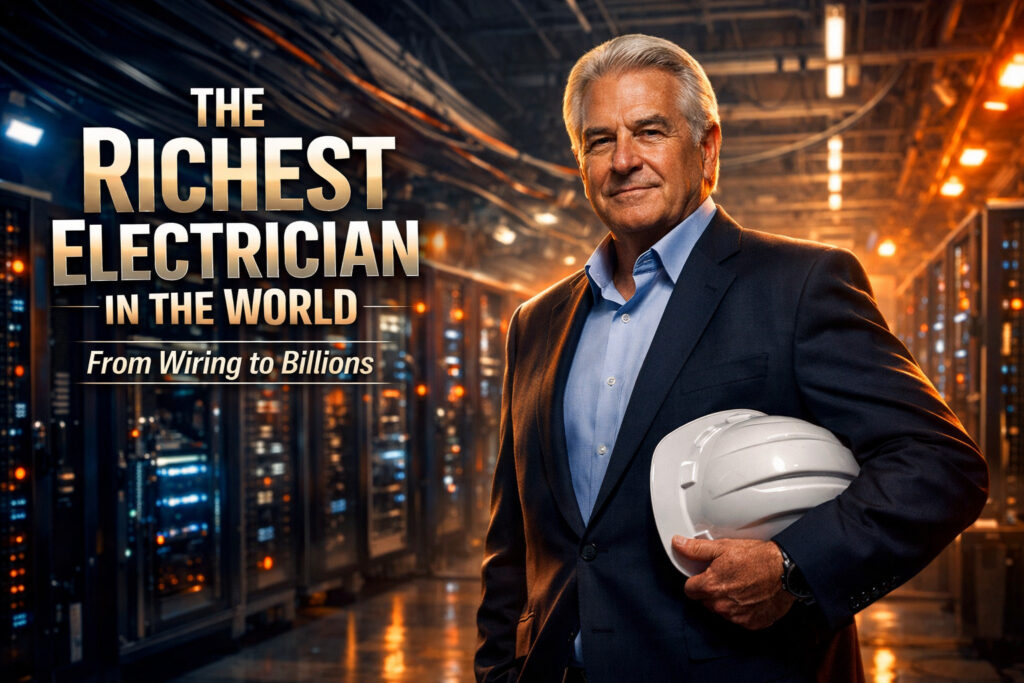

Last Updated: February 13, 2026 | By: The BootsGuru Team
Think a career as an electrician means you're limited to wiring houses and troubleshooting circuit breakers? The story of Eugene "Gene" Ravizza proves otherwise. From purchasing a small electrical shop for $12,500 in 1954 to building Cupertino Electric, Inc. (CEI) into a multi-billion dollar powerhouse acquired by Quanta Services in 2024, Ravizza's journey demonstrates the extraordinary potential within the skilled trades.
This isn't just about wealth—it's a masterclass in strategic business thinking, market positioning, and transforming technical expertise into entrepreneurial success. Whether you're an apprentice electrician, a journeyman considering your next move, or simply curious about the ceiling of success in the trades, Ravizza's story offers invaluable lessons.
From Engineering Graduate to Electrical Empire Builder
Born on July 21, 1928, in Sunnyvale, California, Eugene "Gene" Ravizza didn't start as an electrician at all. He earned a Bachelor of Science degree in electrical engineering from Santa Clara University in 1950—graduating during what many call the golden age of American capitalism.
After graduation, Ravizza fulfilled his ROTC service requirement by helping build U.S. airbases in Morocco. This overseas experience, he later said, gave him both the confidence and the savings he needed to take a risk that would change his life.
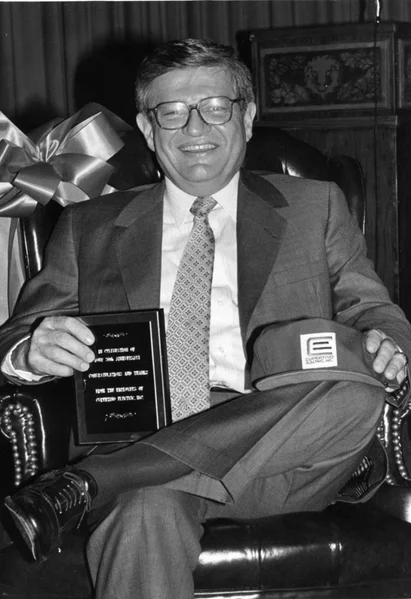
Gene Ravizza (1928-2019), founder of Cupertino Electric and one of the most successful entrepreneurs in the electrical contracting industry.
💡 Key Fact
In 1954, Ravizza purchased Kucher Electric for just $12,500 (approximately $140,000 in 2026 dollars) and renamed it Cupertino Electric, Inc. Remarkably, he had never worked as an electrician before this purchase—his engineering education and business vision were his primary assets.
The company started modestly, wiring homes in the San Francisco Bay Area. But Ravizza understood something fundamental: he wasn't just in the electrical business—he was in the people business. His philosophy was simple yet powerful: treat employees, vendors, and customers exactly as you'd want to be treated.
"You should be proud to tell a stranger on the street that you work for Cupertino Electric Inc., because we never screwed anybody—in plain English. I think employees appreciate that: Employees like to do what's right."
The Silicon Valley Timing Advantage: Right Place, Right Time
What turned CEI from a residential electrical contractor into a billion-dollar enterprise? Location and timing.
Cupertino Electric wasn't just in Silicon Valley—it was there at the beginning, perfectly positioned to ride the greatest technology boom in human history. The company became the invisible infrastructure builder that powered the tech revolution.
The Early Tech Projects That Set the Stage
CEI's breakthrough came in the 1960s when they landed contracts with emerging semiconductor companies:
- Fairchild Semiconductor - One of the first semiconductor fabrication facilities ever built
- Intel's headquarters - Helping establish what would become one of the world's most valuable companies
- Hewlett-Packard (HP) - Building electrical infrastructure for the computing giant, which led to geographic expansion into Colorado
- National Semiconductor and Siliconix - Cementing CEI's reputation in high-tech manufacturing
These weren't just contracts—they were relationships with companies that would define the digital age. And CEI built a reputation for something these companies desperately needed: reliability.

CEI's projects are massive, industrial-scale operations requiring thousands of skilled electricians and complex project management—far beyond typical electrical work.
Building a Multi-Billion Dollar Electrical Empire
Under Ravizza's leadership and later CEOs who shared his vision, Cupertino Electric experienced remarkable growth. The revenue trajectory tells an impressive story:
| Year | Revenue Milestone | Key Development |
|---|---|---|
| 1954 | Purchased for $12,500 | Gene Ravizza acquires Kucher Electric |
| 1960s-70s | Growth phase | Built reputation with Fairchild, Intel, HP |
| 2018 | $1.25 billion | Tom Schott becomes CEO |
| 2021 | $1.625 billion | Largest revenue in company history (at that time) |
| 2022 | $2.05 billion | Record revenue year |
| July 2024 | Acquired for ~$1.25B | Quanta Services acquisition |
Sources: Cupertino Electric official company history, Quanta Services investor reports, Engineering News-Record (ENR) rankings, industry publications
The Evolution: Four Leadership Eras
- Gene Ravizza (1954-1980s): Founder who established core values of integrity, innovation, and people-first leadership. Built Silicon Valley presence.
- Jim Ryley (1980s-2000s): Started as an apprentice in the 1950s, rose to CEO. Expanded commercial operations and acquired Collins Electric in San Francisco.
- John Boncher (2000s-2018): Doubled revenue during his tenure. Expanded aggressively into renewable energy and data centers.
- Tom Schott (2018-present): Nearly tripled revenue as COO before becoming CEO in 2018. Led company through acquisition by Quanta Services in 2024.
🏆 Current Status (2024-2026)
As of 2024, Cupertino Electric operates as a subsidiary of Quanta Services (NYSE: PWR), the largest specialty contracting firm in North America with $23.7 billion in annual revenue. The acquisition valued CEI's business at approximately $1.25 billion, and the company is expected to contribute roughly 9% of Quanta's total revenue by 2025.
Despite the acquisition, CEI maintains its brand, company culture, and operational independence—a testament to the strength of Ravizza's original vision.
The Business Model Behind the Billions
How does an electrical contractor generate billions in revenue? Not by competing for residential jobs or small commercial contracts. Ravizza's strategic pivot transformed CEI's business model entirely.
| Traditional Electrical Contractor | The Cupertino Electric Model |
|---|---|
| Residential and small commercial projects | Mission-critical infrastructure (data centers, hospitals, utilities) |
| Price-competitive bidding on standard jobs | Value-based contracts where reliability commands premium pricing |
| Local market focus (city or county) | National operations across 12+ states |
| Crews of 5-50 electricians | 3,800+ employees, sophisticated project management |
| Field construction primarily | Pre-fabrication, modular construction, advanced logistics |
| Project values: $10K - $500K | Project values: $10M - $500M+ |
CEI's Four Core Market Segments
Modern CEI operates across four specialized, high-growth sectors:
🖥️ Data Centers
The Crown Jewel
Powering server farms for Apple, Google, Meta, Amazon, and other tech giants. These facilities require "zero failure" electrical systems where downtime costs millions per minute. With AI driving unprecedented demand for computing infrastructure, this segment is experiencing explosive growth in 2025-2026.
☀️ Renewable Energy
The Growth Engine
Utility-scale solar farms, battery energy storage systems, and grid infrastructure. CEI was ranked by Solar Power World as one of the 10 largest EPC (Engineering, Procurement, Construction) solar contractors in the U.S. Projects include 85+ MW installations for utilities like PG&E.
🏢 Commercial
The Foundation
Major developments including NFL stadiums (Levi's Stadium - 49ers), international airports (SFO Harvey Milk Terminal), LEED Platinum university campuses (UC Merced), corporate headquarters, and hospitals. These showcase projects build reputation and relationships.
⚡ Utility & Infrastructure
The Specialist Niche
High-voltage transmission projects like the TransBay Cable (400 MW, 200 kV submarine HVDC link), power generation facilities, and critical municipal infrastructure. This work requires specialized expertise that creates significant competitive advantages.
5 Strategic Moves That Created Extraordinary Success
What separated Gene Ravizza and CEI from thousands of other electrical contractors? These five key strategic decisions made all the difference:
1. Target High-Stakes, High-Complexity Niches
Ravizza deliberately pursued projects where failure was not an option. Data centers, hospitals, biotech facilities—these are environments where electrical downtime can mean:
- 💰 Millions of dollars in lost revenue per hour
- 🏥 Compromised medical care and patient safety
- 🔬 Destroyed research and lost data
- ⚖️ Regulatory violations and legal liability
The strategic advantage: In these markets, clients don't choose based on the lowest bid—they choose based on capability, reliability, and track record. This allowed CEI to command premium pricing and avoid the race-to-the-bottom pricing pressure common in commodity electrical work.
2. Embrace Pre-Fabrication and Modular Construction
Ravizza was an early adopter of pre-fabrication—building complex electrical assemblies in controlled factory environments rather than constructing everything on-site.
Benefits of Pre-Fabrication:
- ✅ Quality Control: Factory conditions enable precision assembly and testing before installation
- ⚡ Speed: While site preparation happens, electrical systems are built in parallel
- 🛡️ Safety: Reduces hazardous on-site electrical work
- 💰 Efficiency: Less material waste, better inventory management
- 🌦️ Weather Independence: Factory work isn't delayed by rain, snow, or extreme temperatures
CEI even created "NxGen," a modular construction company (later brought in-house), specifically focused on prefabricated modular data center projects. This innovation gave them a significant competitive advantage in the fast-growing data center market.
3. Build an Unshakeable Reputation for "Zero Failure" Reliability
In mission-critical industries, reputation is everything. CEI built its brand on delivering projects:
- ⏰ On time (or ahead of schedule, like Levi's Stadium)
- 💵 On budget with no surprise cost overruns
- ✅ To specification with meticulous quality control
- 🛡️ Safely with industry-leading safety protocols
The result: This reputation meant repeat clients and word-of-mouth referrals in an industry where trust is the most valuable currency. When you're powering a data center that can't afford one second of downtime, you don't hire the cheapest bid—you hire CEI.
4. Invest Heavily in People, Training & Safety
Ravizza understood that in a service business, your people are your product. CEI made significant investments in:
- 🎓 Apprenticeship Programs: Developing the next generation of skilled electricians from the ground up
- 📚 Continuing Education: Keeping electricians current on new technologies, codes, and methods
- 🛡️ Safety Culture: Industry-leading safety standards that reduced accidents and insurance costs
- 🤝 Employee Ownership Mentality: Creating pride and accountability in the work
The company culture Ravizza built—"honest, fair, and just"—attracted top talent and reduced turnover, creating institutional knowledge that competitors couldn't easily replicate. Many CEI employees, like Jim Ryley who started as an apprentice and became CEO, built entire careers there.
5. Geographic and Market Diversification
While rooted in Silicon Valley, CEI didn't stay regional. Under Ravizza's successors, the company expanded operations to:
🗺️ California • Arizona • Colorado • Idaho • Indiana • Iowa • Michigan • New Mexico • Ohio • Oregon • Utah • Washington • Wisconsin
This geographic reach, combined with diversification across data centers, renewables, commercial, and utility sectors, protected the company from:
- Regional economic downturns
- Single-market dependencies
- Industry-specific recessions
- Client concentration risk
The lesson: Diversification isn't just smart finance—it's survival strategy for long-term success.
CEI's Landmark Projects: Infrastructure That Shaped America
The best way to understand CEI's impact is through the projects they've delivered. These aren't just contracts—they're the invisible infrastructure powering modern life. Here are some of their most impressive achievements:
🌐 Miami's Network Access Point (NAP) of the Americas
The Project: The first carrier-neutral network access point linking Latin America and the Caribbean with the rest of the world.
Significance: Verizon Terremark called it "one of the most significant telecommunications projects in the world." CEI designed and built the electrical infrastructure that handles massive data flows between continents.
Impact: Enabled international internet connectivity and cloud computing for an entire hemisphere—connecting hundreds of millions of people to the global internet.
🏟️ Levi's Stadium (San Francisco 49ers)
The Project: 1.8 million square foot NFL stadium, completed as Design/Build electrical contractor.
Achievement: Delivered ahead of schedule—a rarity in major stadium projects that typically run over time and budget.
Complexity: Required coordinating electrical systems for:
- 68,500+ seat capacity with individual amenities
- Broadcast infrastructure for global television
- 300+ luxury suites with full electrical systems
- LEED certification sustainable requirements
- Massive kitchen and hospitality electrical loads
Legacy: Home to Super Bowl 50 and countless major events—a showcase of CEI's large-scale project management capabilities.
⚡ TransBay Cable Project (400 MW, 200 kV HVDC)
The Project: Submarine high-voltage direct current (HVDC) transmission link between Pittsburg and San Francisco, California—crossing under San Francisco Bay.
Technical Achievement: Installing two converter stations for underwater power transmission, one of the most complex electrical engineering challenges.
Impact: Critical infrastructure for California's electrical grid reliability and renewable energy integration. Provides 400 megawatts of transmission capacity—enough to power approximately 300,000 homes.
Innovation: Demonstrates CEI's capability in ultra-high-voltage, mission-critical utility infrastructure that requires absolute perfection.
☀️ Google Corporate Campus - Largest Single-Campus Solar Installation
The Project: At the time of construction, the largest solar project on a single corporate campus anywhere in the world.
Result: This success led CEI to create a dedicated solar-focused division, transforming them into a renewable energy powerhouse.
Growth: CEI went on to complete multiple utility-scale PG&E solar projects, including an 85 MW installation that generates enough electricity to power approximately 25,000 homes annually.
Market Impact: Positioned CEI as a leader in the explosive renewable energy sector, earning them ranking as one of the top 10 solar EPC contractors in the United States.
🎓 UC Merced 2020 Campus Expansion
The Project: Massive, multi-year campus expansion project for the newest UC campus.
Recognition: Achieved LEED Platinum status (highest level of sustainable building certification) and won the 2021 NECA Project Excellence Award in the Educational category.
Scope: Complete electrical infrastructure for academic buildings, research facilities, student housing, and support facilities serving thousands of students.
Innovation: Demonstrated CEI's ability to deliver sustainable, complex educational infrastructure that meets the highest environmental standards while supporting cutting-edge research and education.
✈️ San Francisco International Airport (SFO) - Harvey Milk Terminal
The Project: First of many public infrastructure projects at SFO, including the terminal renovation and expansion named after civil rights leader Harvey Milk.
Complexity: Working in an operational airport environment with:
- Zero tolerance for power disruptions to critical systems
- 24/7 construction schedule coordination
- Extensive security clearances and protocols
- Integration with existing terminal electrical systems
- Complex code requirements for life safety systems
Scope: Critical infrastructure serving millions of international passengers annually, requiring the highest standards of reliability and safety.
💡 These projects represent just a fraction of CEI's portfolio, but they illustrate the scale, complexity, and importance of the work that transformed a small residential electrical contractor into a national infrastructure powerhouse. Each project powered by the richest electrician's vision and executed by thousands of skilled tradespeople.
Career Lessons for Modern Electricians: The Ravizza Playbook
What can today's electricians learn from Gene Ravizza's extraordinary success? Whether you're an apprentice just starting out or a journeyman considering your next career move, these principles apply. You don't need to build a billion-dollar company to benefit from his strategic thinking.
🎯 Lesson #1: Specialize in High-Value, High-Complexity Work
The electricians who earn the most aren't necessarily the ones who work the longest hours—they're the ones who develop specialized skills that are in high demand and short supply.
💰 High-Earning Electrician Specializations (2025-2026):
- Industrial Controls & Automation: $75,000-$120,000+ annually
- Data Center Infrastructure Specialist: $80,000-$130,000+ annually
- High-Voltage Transmission Technician: $85,000-$125,000+ annually
- Renewable Energy Systems (Solar/Wind): $70,000-$115,000+ annually
- Building Automation & Smart Systems: $75,000-$110,000+ annually
- Electrical Superintendent/Project Manager: $80,000-$150,000+ annually
- Industrial Electrician (Master Level): $70,000-$122,000+ annually
💡 BootsGuru Insight: The differential between a general electrician ($55K-$70K) and a specialized data center electrician ($80K-$130K) can be $30,000-$60,000 per year. Over a 30-year career, that's potentially $900,000 to $1.8 million in additional lifetime earnings—just from specialization.
Source: Bureau of Labor Statistics, industry surveys, union wage scales, job posting analysis 2024-2025 data
💼 Lesson #2: Think Like a Business Owner, Not Just a Technician
Ravizza had an engineering degree but had never worked as an electrician when he bought Cupertino Electric. His success came from business acumen, not just technical skill. This lesson applies whether you want to start a company or advance as an employee.
📊 Business Skills That Multiply Your Earning Potential:
- 📋 Project Management: Planning, scheduling, coordinating multiple trades
- 💵 Estimating & Bidding: Calculating labor, materials, overhead for profitable quotes
- 📈 Profit Margins & Cash Flow: Understanding job profitability and financial health
- 🤝 Client Relationship Management: Building long-term partnerships, not just transactional work
- 👥 Team Leadership: Motivating crews, delegating effectively, developing talent
- 💰 Financial Literacy: Reading P&Ls, managing budgets, making data-driven decisions
- 📱 Technology Adoption: Using project management software, digital tools, BIM (Building Information Modeling)
💡 Real-World Impact: An electrician who can estimate jobs, manage projects, and lead teams is worth 40-60% more to employers than one who only possesses technical skills. Even if you never start your own company, these skills open doors to superintendent, project manager, operations manager, and executive roles paying $100K-$200K+.
🏗️ Lesson #3: Position Yourself Where Growth Is Happening
Ravizza's timing advantage wasn't just luck—he recognized that Silicon Valley's tech boom would require massive electrical infrastructure. Where are the equivalent opportunities today?
🚀 Explosive Growth Markets for Electricians (2025-2026):
- 🤖 AI Data Centers: ChatGPT, AI training, and inference requiring unprecedented computing power and electrical capacity. Billions in investment, severe shortage of qualified electricians.
- 🔌 EV Charging Infrastructure: Federal and state mandates driving billions in public and private investment. Every parking lot, highway rest stop, and fleet depot needs electrical upgrades.
- ⚡ Grid Modernization: Aging electrical infrastructure (50-80 years old) requires urgent replacement. $100+ billion market over next decade.
- 🔋 Battery Energy Storage Systems (BESS): Critical for renewable energy integration. Utility-scale battery installations are the fastest-growing segment.
- 🏭 Semiconductor & Manufacturing Reshoring: CHIPS Act bringing chip production back to U.S. Massive electrical requirements for fab construction.
- 🏢 Smart Buildings & Energy Efficiency: Commercial properties upgrading to reduce energy costs and meet ESG (Environmental, Social, Governance) commitments.
- 🌊 Offshore Wind: East Coast offshore wind farms requiring specialized electrical expertise for high-voltage transmission.
💡 Strategic Career Move: An electrician who positions themselves in AI data centers or EV charging infrastructure today is like an electrician who positioned themselves in semiconductors in the 1960s. These aren't temporary trends—they're infrastructure buildouts that will sustain careers for 20-30 years.
🤝 Lesson #4: Reputation Is Your Most Valuable Asset
CEI's "zero failure" reputation allowed them to command premium pricing. In your career, your professional reputation follows you everywhere and determines your opportunities.
🌟 Build an Unshakeable Professional Reputation By:
- ⏰ Reliability: Show up on time, every time. Finish when you say you will.
- ✅ Quality Obsession: Take pride in workmanship. Do it right the first time, even when no one's watching.
- 📣 Proactive Communication: Keep clients and team members informed. No surprises.
- 🛠️ Ownership of Mistakes: When something goes wrong, own it immediately and make it right.
- 🚀 Going Above and Beyond: The extra effort when it really matters is what people remember.
- 🤝 Treating Everyone with Respect: From apprentices to executives—how you treat people defines you.
- 📚 Continuous Improvement: Always learning, always getting better at your craft.
- 🛡️ Safety Leadership: Protecting yourself and your crew demonstrates maturity and professionalism.
"Employees like to do what's right. You should be proud to tell a stranger on the street where you work because we never screwed anybody."
💡 The Compounding Effect: A strong reputation creates a flywheel: Better opportunities → Better projects → More skills → Stronger reputation → Even better opportunities. This compounds over a career, just like Ravizza's reputation compounded to create billion-dollar value.
📚 Lesson #5: Never Stop Learning and Adapting
The electrical trade is evolving faster than ever before. Smart buildings, renewable energy, EV charging, battery storage, IoT systems, AI-optimized grids—the technology changes constantly. Electricians who keep learning thrive; those who don't get left behind.
🎓 Stay Ahead of the Curve By:
- 📜 Certifications & Credentials: Master electrician, specialized certifications (solar PV, EV charging, data center), OSHA training
- 🔌 Adjacent Skill Development: Low-voltage systems, controls, automation, networking basics, BIM software
- 📖 Code Knowledge: Stay current with National Electrical Code (NEC) updates, local amendments, specialty codes
- 💻 Software Proficiency: Estimating software (Accubid, ConEst), project management tools (Procore, PlanGrid), CAD/BIM basics
- 🎤 Industry Engagement: Trade shows, conferences (NECA, IBEW events), manufacturer training sessions
- 👥 Mentorship: Learn from those who've achieved what you aspire to—and mentor others in turn
- 🌐 Industry News: Follow developments in renewable energy, data centers, grid technology, construction trends
💡 The 20-Year Rule: The technologies and methods you learn today might be obsolete in 20 years, but the habit of continuous learning will serve your entire career. Ravizza built CEI over 65 years by constantly adapting to new technologies—from semiconductors in the 1960s to data centers in the 2000s to renewables in the 2010s.
The Realistic Path to Six Figures as an Electrician
While reaching Ravizza-level wealth requires building and scaling a business, many electricians achieve six-figure incomes through smart career decisions. Here's the typical progression:
| Career Stage | Typical Years Experience | Annual Salary Range | Key Focus |
|---|---|---|---|
| Apprentice Electrician | 0-4 years | $35,000 - $55,000 | Learn fundamentals, safety, code |
| Journeyman Electrician | 4-8 years | $55,000 - $80,000 | Master the craft, work independently |
| Master Electrician | 8-12 years | $70,000 - $95,000 | Advanced skills, supervision ability |
| Specialized Electrician | 8-15 years | $75,000 - $120,000 | Niche expertise (data centers, industrial) |
| Superintendent / Project Manager | 10-20 years | $85,000 - $150,000+ | Leadership, project management |
| Business Owner / Executive | 15-25+ years | $100,000 - $500,000+ | Business strategy, client development |
Note: Earnings vary significantly by location, specialization, union membership, and market demand. High cost-of-living areas (San Francisco, New York, Seattle) and specialized fields (data centers, industrial, high-voltage) typically pay 20-50% above these national averages. Union electricians often earn 15-30% more than non-union with better benefits.
Impact & Legacy: More Than a Business Success
Gene Ravizza passed away on October 2, 2019, at the age of 91. But his impact extends far beyond the company he built or the wealth he accumulated. His legacy lives in multiple dimensions:
1. Elevating the Perception of Skilled Trades
Ravizza's success fundamentally challenged the "blue-collar ceiling"—the mistaken belief that skilled trades can't lead to extraordinary business success. He proved that:
- ✅ Electrical expertise can be the foundation of a multi-billion dollar enterprise
- ✅ Trade skills + business acumen = unlimited entrepreneurial potential
- ✅ The electrical profession involves sophisticated engineering and management, not just manual labor
- ✅ Electricians are critical enablers of the digital age, green energy transition, and modern infrastructure
- ✅ An apprenticeship can launch a career as impressive as any MBA
The Ravizza Award
In May 2021, Cupertino Electric established the annual "Ravizza Award" to honor the company's founder. The award recognizes employees who embody Gene Ravizza's core values:
- 🏆 Integrity - Doing what's right, even when no one's watching
- 🌟 Excellence - Commitment to the highest quality standards
- 💡 Innovation - Seeking better ways to solve problems
- 👥 People-First Leadership - Treating employees, vendors, and customers with respect
- 🛡️ Safety - Protecting the wellbeing of every team member
2. Training Thousands of Skilled Electricians
Over seven decades, CEI's commitment to apprenticeship programs has provided career pathways for thousands of electricians. The company currently employs over 3,800 field and office personnel, many of whom started as apprentices and built entire careers there.
The Jim Ryley Story: Perhaps the best example is Jim Ryley, who started as an apprentice in the 1950s, learned the trade from the ground up, and eventually became CEO. His journey from apprentice to executive leader demonstrates the career potential within electrical contracting when companies invest in people development.
3. Infrastructure That Powers Modern Civilization
Walk through a data center powering your favorite app. Watch a game at Levi's Stadium. Fly out of San Francisco International Airport. Charge your electric vehicle. Use solar-generated electricity in California. Chances are, CEI electricians built the invisible infrastructure making it possible.
This infrastructure work isn't just about commerce—it's about enabling:
- 🌐 Global connectivity through data centers and telecommunications
- 🏥 Healthcare delivery in hospitals and medical facilities
- 🎓 Education in LEED-certified university campuses
- ⚡ Renewable energy adoption through massive solar installations
- ✈️ Safe air travel through critical airport infrastructure
- 🏙️ Economic growth by powering commerce and industry
4. A Philosophy That Transcends Business
"What we do is important, but HOW we do it is everything."
This principle—that integrity matters more than profits, that how you treat people defines success, that doing the right thing is non-negotiable—created a company culture that attracted top talent, retained employees, and built unshakeable client relationships.
In an industry where cutting corners and chasing the lowest bid are common temptations, Ravizza built an empire on the opposite philosophy: Do excellent work. Treat people fairly. Never compromise integrity.
That philosophy didn't just build a successful company—it created a legacy that continues to influence the electrical contracting industry today.
Frequently Asked Questions About Gene Ravizza and Electrician Career Success
Here are the most common questions about Gene Ravizza's success story and what it means for electricians today:
❓ Who is considered the richest electrician in the world?
Eugene "Gene" Ravizza is widely considered one of the wealthiest individuals who built their fortune through the electrical contracting industry. As founder of Cupertino Electric, Inc., which was acquired by Quanta Services for approximately $1.25 billion in July 2024, his company's value far exceeded that of typical electrical contracting firms.
Important context: Precise net worth figures for private business owners like Ravizza are not publicly disclosed. At one point, Ravizza reportedly owned 33% of Cupertino Electric, which would have made his stake worth hundreds of millions of dollars based on the eventual acquisition price.
Other extremely successful electrical contractors include:
- Moses Rosendin - Founder of Rosendin Electric, valued at over $2 billion in annual revenue
- Bernard Segal - Founder of Five Star Electric, ~$517 million annual revenue
- Marion C. Dean - Founder of M.C. Dean, $2+ billion in annual revenue
What's undisputed: Ravizza transformed a $12,500 investment into a multi-billion dollar enterprise over 65 years, making him one of the most successful entrepreneurs to emerge from the electrical trade and proving that electricians can build extraordinary wealth through strategic business thinking.
❓ How did Gene Ravizza make his fortune?
Ravizza built wealth through strategic business decisions combined with perfect timing, not just electrical expertise. Here are the key factors:
1. Smart Acquisition & Timing (1954): Purchased Kucher Electric for $12,500 when Silicon Valley was just beginning its transformation into the tech capital of the world.
2. Location Advantage: Being in Cupertino, California positioned CEI to build relationships with emerging tech giants (Fairchild Semiconductor, Intel, HP, Apple, Google) that would define the digital age.
3. Strategic Specialization: Focused on complex, mission-critical projects (data centers, high-tech manufacturing, utilities) where reliability commands premium pricing rather than competing on price for commodity work.
4. Innovation Adoption: Early embrace of pre-fabrication and modular construction methods that improved efficiency, quality, and safety while reducing costs.
5. Reputation Building: Created "zero failure" brand identity that justified value-based pricing. Clients paid more for CEI because downtime wasn't an option.
6. People Investment: Built strong company culture ("honest, fair, and just") that attracted top talent, reduced turnover, and created institutional knowledge competitors couldn't replicate.
7. Market Diversification: Expanded geographically (12+ states) and into multiple high-growth sectors (renewables, data centers, commercial, utilities) to reduce risk.
8. Significant Ownership: Retained substantial equity in the company (reportedly 33% at one point), so as CEI's value grew from thousands to billions, so did his personal wealth.
The key insight: Ravizza didn't invent revolutionary electrical technology. He applied visionary business strategy to a traditional trade, positioned the company in emerging high-growth markets, and built a reputation for excellence that commanded premium pricing for 65+ years.
❓ What kind of projects does Cupertino Electric work on today?
CEI specializes in large-scale, technically complex electrical infrastructure across four main sectors. These are NOT residential jobs or small commercial contracts—CEI's projects typically range from $10 million to $500+ million.
🖥️ DATA CENTERS (The Crown Jewel):
- Mission-critical facilities for tech giants (Apple, Google, Meta, Amazon)
- Require 24/7 uptime with "zero failure" electrical systems
- Downtime costs millions per minute
- AI boom driving unprecedented demand in 2025-2026
☀️ RENEWABLE ENERGY (The Growth Engine):
- Utility-scale solar farms (85+ MW installations for PG&E)
- Battery energy storage systems (BESS)
- Grid-scale renewable infrastructure
- Ranked among top 10 U.S. solar EPC contractors by Solar Power World
🏢 COMMERCIAL (The Foundation):
- Sports venues: Levi's Stadium (1.8M sq ft, 49ers)
- Airports: SFO Harvey Milk Terminal
- Universities: UC Merced LEED Platinum campus
- Corporate campuses: Google's largest single-campus solar installation
- Healthcare: Hospitals and medical facilities requiring absolute reliability
⚡ UTILITY & INFRASTRUCTURE (The Specialist Niche):
- High-voltage transmission: TransBay Cable (400 MW, 200 kV submarine HVDC)
- Power generation: Lodi Energy Center (296 MW natural gas facility)
- EV charging: Largest installer for PG&E
- Municipal infrastructure: San Francisco Public Utilities Commission projects
💡 Scale Perspective: A typical residential electrician might wire 50-100 homes per year at $5K-$15K each ($250K-$1.5M annual revenue). CEI completes individual projects worth more than many residential electrical contractors generate in a lifetime—demonstrating the vast difference between commodity electrical work and mission-critical infrastructure contracting.
❓ Can a regular electrician become wealthy today?
Absolutely—and you don't need to build a billion-dollar company to achieve significant financial success.
Multiple paths exist for electricians to build wealth in 2025-2026:
💼 PATH 1: HIGH-EARNING EMPLOYEE (Specialization)
Focus on high-demand, high-complexity specializations:
- Industrial electricians with specialized skills: $80,000-$125,000+
- Data center electrical specialists: $85,000-$130,000+
- High-voltage transmission technicians: $85,000-$125,000+
- Controls and automation experts: $75,000-$120,000+
- Renewable energy specialists: $70,000-$115,000+
📊 PATH 2: MANAGEMENT TRACK (Leadership)
Develop business skills alongside technical expertise:
- Electrical superintendents: $85,000-$150,000+
- Project managers: $90,000-$140,000+
- Operations managers: $100,000-$180,000+
- Division VPs at large contractors: $150,000-$250,000+
🏢 PATH 3: BUSINESS OWNERSHIP
Start and scale your own electrical contracting business:
- Small contractor (5-20 employees): $100,000-$300,000+ owner income
- Mid-size firm (20-100 employees): $200,000-$1,000,000+ owner income
- Large contractors or specialists: $500,000-$5,000,000+ potential
- National scale (like CEI): Multi-million to potentially billion-dollar valuations
🎯 PATH 4: HYBRID APPROACH
Combine strategies for maximum earning potential:
- Start as specialized employee building skills and reputation
- Move into project management/superintendent roles
- Launch own business serving niche markets (solar, EV charging, data centers)
- Scale strategically in high-growth sectors
💰 WEALTH-BUILDING FACTORS THAT MATTER MOST:
- Develop high-value specialized skills in growing markets (AI data centers, renewables, EV infrastructure)
- Think strategically about positioning and career trajectory
- Build reputation for excellence and reliability
- Consider business ownership if entrepreneurially inclined
- Never stop learning and adapting to new technologies
- Position in growth markets rather than declining ones
The reality: While reaching Ravizza's billion-dollar level requires building and scaling a large business, many electricians achieve six-figure incomes ($100K-$200K+) and build substantial wealth ($1M-$5M+ net worth over a career) through smart decisions, specialization, and strategic career management. The electrician profession offers as much upward mobility as many white-collar careers, with less student debt and earlier earning potential.
❓ What happened to Cupertino Electric after Gene Ravizza?
Cupertino Electric continued to thrive and grow after Ravizza stepped back from active management, demonstrating the strength of the foundation and culture he built. The company's post-Ravizza trajectory is a testament to building systems and values that transcend any individual leader.
LEADERSHIP SUCCESSION (Proving Culture Strength):
- Jim Ryley (1980s-2000s): Former apprentice who started in the 1950s, rose to CEO. Expanded commercial operations, acquired Collins Electric in San Francisco.
- John Boncher (2000s-2018): Doubled revenue during tenure. Aggressively expanded into renewable energy and data center markets.
- Tom Schott (2018-present): Nearly tripled revenue as COO before becoming CEO. Has overseen fastest growth period.
GROWTH TRAJECTORY (Accelerating Success):
- 2018: $1.25 billion revenue
- 2021: $1.625 billion (largest in company history at that time)
- 2022: $2.05 billion (record year)
- July 2024: Acquired by Quanta Services for approximately $1.25 billion
THE QUANTA ACQUISITION (2024):
- Quanta Services (NYSE: PWR) is the largest specialty contracting firm in North America ($23.7B annual revenue)
- CEI operates as a subsidiary maintaining brand, culture, and operational independence
- Expected to contribute ~9% of Quanta's total revenue by 2025
- Access to Quanta's resources enables CEI to bid on even larger projects
- Validates CEI's business model and market position
CURRENT STATUS & FUTURE (2025-2026):
- Experiencing explosive growth driven by AI data center boom
- Expanding workforce and operations to meet unprecedented demand
- Leadership team emphasizing values established by Ravizza: integrity, excellence, innovation, people, safety
- Annual "Ravizza Award" honors employees who embody founder's principles
💡 The Legacy Lesson: Gene Ravizza passed away in October 2019, but his values—integrity, excellence, innovation, people-first leadership, and safety—remain core to CEI's culture. The company's continued success proves that building a strong culture and sustainable business model creates value that outlasts any founder. This is perhaps Ravizza's greatest achievement: creating something that thrives beyond himself.
❓ Did Gene Ravizza have any electrical training before starting CEI?
No—and this is one of the most fascinating and instructive aspects of his story.
Gene Ravizza:
- ❌ Never worked as an electrician before purchasing Kucher Electric in 1954
- ❌ Never completed an electrical apprenticeship
- ❌ Had no hands-on experience running electrical jobs or managing crews
What he DID have:
- ✅ Electrical engineering degree from Santa Clara University (1950) - understanding of electrical theory and systems
- ✅ Business vision - saw the opportunity in Silicon Valley's emerging tech boom
- ✅ Leadership skills - ability to hire, manage, and inspire skilled electricians
- ✅ Strategic thinking - positioned company in high-growth markets
- ✅ People-first philosophy - "We're in the people business"
- ✅ Capital from ROTC service - savings from working in Morocco gave him $12,500 to invest
- ✅ Confidence - overseas experience gave him belief he could build something significant
🎓 THE CRITICAL LESSON FOR ELECTRICIANS:
While technical skills are absolutely essential for electricians doing the hands-on work, building a successful electrical contracting business requires different skills:
- 🎯 Strategic vision and market positioning
- 💼 Business development and client relationships
- 💰 Financial management and profitability analysis
- 👥 Leadership and organizational culture
- 📊 Project management and operational excellence
- 🔮 Recognizing and capitalizing on market opportunities
The Division of Labor That Built CEI:
- Ravizza's role: Strategy, business development, client relationships, company culture, growth vision
- Master electricians' role: Technical expertise, job execution, crew management, quality control
- Together: They built something neither could have created alone
💡 What This Means for Your Career: If you're a skilled electrician, your technical expertise is valuable—but adding business acumen, strategic thinking, and leadership skills can multiply your earning potential 3-5X. Conversely, if you have business skills but limited electrical experience, partnering with skilled tradespeople (as Ravizza did) can create extraordinary value. The most successful electrical contractors combine both skillsets or build teams that cover both domains.
❓ What's the key takeaway from Gene Ravizza's story for electricians today?
The electrician profession has no ceiling. Success is limited only by your ambition, strategic thinking, and willingness to continuously learn and adapt.
UNIVERSAL PRINCIPLES (Apply Whether Employee or Business Owner):
1️⃣ SPECIALIZE IN HIGH-VALUE WORK
Don't compete on price in commodity markets. Develop expertise in complex, high-demand areas where your skills command premium compensation. (Data centers, industrial automation, high-voltage, renewables)
2️⃣ BUILD AN UNSHAKEABLE REPUTATION
Quality, reliability, and integrity are your most valuable assets. CEI's "zero failure" reputation allowed them to charge premium prices for 65+ years. Your professional reputation follows you everywhere.
3️⃣ POSITION IN GROWING MARKETS
Ravizza benefited from Silicon Valley's tech boom. Today's equivalent: AI data centers, renewable energy, EV infrastructure, grid modernization. Be where growth is happening, not where it was.
4️⃣ NEVER STOP LEARNING
Technology evolves. Code changes. Methods improve. The electrician who masters today's technologies while staying ahead of tomorrow's trends wins. Continuous learning isn't optional—it's survival.
5️⃣ THINK STRATEGICALLY
Ravizza had engineering knowledge but won through business strategy. Understanding project management, client development, financial literacy, and market positioning multiplies the value of technical skills.
6️⃣ INVEST IN PEOPLE & RELATIONSHIPS
Your network is your net worth. How you treat apprentices, peers, clients, and vendors determines opportunities. Ravizza's "honest, fair, and just" philosophy attracted talent and retained clients for decades.
🚀 THE ULTIMATE MESSAGE
Electricians aren't just pulling wires—they're enabling the digital age, the green energy transition, AI infrastructure, and the backbone of modern civilization. That's incredibly valuable work, and it should be valued accordingly. Whether you earn $100K as a specialized employee or build a $1B company like Ravizza, the potential is real. The only question is: What will YOU build with your skills and vision?
Gene Ravizza proved that starting with $12,500 and a vision, an electrically-oriented entrepreneur could build a multi-billion dollar empire. You don't need to replicate his exact path—but you CAN apply his principles to build a successful, financially rewarding career that makes a meaningful impact on the world.
Conclusion: More Than Just Wires—A Blueprint for Success
Gene Ravizza's journey from a $12,500 investment to building a multi-billion dollar electrical empire isn't just an inspiring success story—it's proof of what's possible when technical expertise meets strategic vision, when integrity guides business decisions, and when treating people right becomes a competitive advantage.
He proved that the electrical profession isn't a dead-end job or a temporary stop on the way to something "better." It's a foundation for building extraordinary careers, successful businesses, and critical infrastructure that literally shapes how we live, work, and connect.
The timing has never been better for ambitious electricians:
- 🤖 AI is driving unprecedented demand for data center infrastructure
- ☀️ Renewable energy is reshaping the entire power grid
- 🔌 Electric vehicles are revolutionizing transportation and charging infrastructure
- ⚡ Aging infrastructure requires massive replacement and modernization
- 🏭 Manufacturing reshoring is bringing chip fabs and factories back to America
- 🌍 Grid modernization and battery storage are critical for energy security
Ready to Build Your Electrician Career?
Whether you're just starting out or looking to specialize and advance, BootsGuru has the resources you need to succeed in the electrical trade.
The question isn't whether electricians can achieve financial success and make a meaningful impact.
Gene Ravizza answered that question decisively over 65 years of building Cupertino Electric.
The real question is: What will YOU build with your skills, vision, and determination?