
Last updated: August 2026
If you spend 10 to 12 hours a day on concrete or uneven ground, you know the feeling (see our guide on why your feet hurt when you stand on concrete). You clock out, take off your boots, and your feet are throbbing. Your lower back hurts. Your toes look like they've been bound together with electrical tape.
Traditional work boots are foot coffins. Narrow toe boxes squish your toes together, and raised heels throw off your spinal alignment — adding compounding stress to your knees and lower back across every hour of a long shift. Most workers accept this as the price of safety. It isn't.
The problem is that most true "barefoot" shoes offer zero protection against a falling sledgehammer or a rusty nail. You need a middle ground: boots that let your feet function naturally but still keep you legal and protected on the job site.
Here is the honest, no-fluff guide to the best barefoot work boots in 2026, based on safety ratings, durability, and real user experience.
Note on prices: Prices fluctuate on Amazon frequently. Always click through for current pricing before purchasing. Non-Amazon boots are linked to brand websites.
🏆 Quick Verdict: Best Barefoot Work Boots
| Label | Pick | Check Price |
|---|---|---|
| 🏗️ Best Heavy Duty (ASTM) | Jim Green Razorback | Amazon → |
| ⭐ Best ASTM Wide Toe Box (Mainstream) | KEEN Utility San Jose 6" | Amazon → |
| 💎 Best Premium / Custom | Gaucho Ninja Carpenter | Brand Website → |
| 👔 Best for Management / Electricians | Carets Determination | Brand Website → |
| 🏥 Best Light Duty / Healthcare | Birkenstock Tokio Super Grip | Amazon → |
| 🌲 Best Outdoor / Zero Drop | Vivobarefoot Tracker Leather | Amazon → |
| 👟 Best Light Industrial Sneaker | Gaucho Ninja Sneaky Ninja | Brand Website → |
| 🌿 Best Soft Toe (Outdoor / Farm) | Jim Green African Ranger | Amazon → |
| 🪖 Best Tactical / Lightweight Soft Toe | Under Armour Valsetz Zip | Amazon → |
| 🪶 Best Minimalist Soft Toe | Lems Boulder Boot | Brand Website → |
The Big 3: What Makes a Work Boot "Barefoot"?
Before you buy, you need to know what you're actually looking for. "Barefoot" gets used loosely in footwear marketing. A true barefoot work boot prioritizes three specific design features:
1. Wide Toe Box — Your toes should be able to splay (spread out naturally) inside the boot, not compress together. Toe splay improves balance, reduces bunion formation, and decreases toe cramping on long shifts. This is the most important barefoot feature and the one most safety boots get wrong.
2. Zero Drop — The heel and toe are at the same height. Traditional boots have a raised heel of 8–25mm, which tilts your body forward and forces your spine to compensate. Zero drop keeps your posture neutral and reduces strain on your knees, hips, and lower back over long shifts.
3. Flexibility (The Honest Trade-Off) — True barefoot shoes flex easily and let you feel the ground beneath you. Safety boots will never be as flexible as a running shoe — and they shouldn't be. If a boot has a puncture-resistant plate and a steel toe, it must be stiffer than a sneaker. That is the price of protection. What you can reasonably expect is a boot that is wider and flatter than traditional work boots, even if it isn't as flexible as a minimal running shoe.
How We Chose These Boots
Every boot on this list was evaluated against the same criteria: toe box width relative to foot anatomy, heel drop measurement, safety certification status (ASTM F2413, ISO 20345, or no safety rating — clearly stated), outsole flexibility, durability reports from extended real-world use, and honest limitations. Boots were not included simply because they claim to be "barefoot" — that label is verified against actual design specs. Non-ASTM boots are included where they serve legitimate use cases where safety toe certification is not required, and those cases are clearly identified.
Understanding Safety Ratings Before You Buy
Just because a boot has a "steel toe" doesn't mean it's compliant for your job site. If your work requires it, look for the ASTM F2413 label inside the boot. Here's what the certifications actually mean:
- I/75 & C/75: Impact (75 ft-lbs) and Compression (2,500 lbs) protection — covers falling objects and crush hazards at the toe.
- EH: Electrical Hazard — secondary insulation against electrical ground fault under dry conditions with an intact outsole. Not a replacement for proper electrical safety procedures.
- PR: Puncture Resistant — stops a nail going through the sole. Note: PR plates make the sole noticeably stiffer, which directly conflicts with barefoot flexibility goals.
- M/75: Metatarsal protection — covers the top of the foot. Relevant in heavy industrial environments.
ISO 20345 is the European equivalent — used by some international brands like Jim Green (South Africa) and Gaucho Ninja (Spain). It covers similar impact and compression requirements but is a different testing standard from ASTM. If your site specifies ASTM compliance, ISO certification alone does not satisfy that requirement.
Quick Comparison: All 10 Barefoot Work Boots
| Boot | Safety Rating | Toe Type | Zero Drop | Toe Box | Amazon | Best For |
|---|---|---|---|---|---|---|
| Jim Green Razorback | ASTM F2413-18 I/C/EH | Steel | Low drop | Very wide (JG last) | ✅ | Heavy construction |
| KEEN Utility San Jose 6" | ASTM F2413 I/C/EH/WP | Aluminum alloy | Near-zero (wedge) | Wide (KEEN last) | ✅ | Mainstream trades |
| Gaucho Ninja Carpenter | ISO 20345 | Steel / composite | Yes | Extra wide | ❌ Brand site | Barefoot purist |
| Carets Determination | ASTM F2413 I/C/PR/EH | Steel | Yes (hidden) | Wide | ❌ Brand site | Management / electrician |
| Birkenstock Tokio Super Grip | EN ISO 20347 (no toe cap) | None (OB standard) | No (cork insole drop) | Wide (Birkenstock last) | ✅ | Healthcare / food service |
| Vivobarefoot Tracker Leather | None | None (soft toe) | Yes | Very wide | ✅ | Outdoor / farm / landscaping |
| Gaucho Sneaky Ninja | ISO 20345 | Fiberglass | Yes | Extra wide | ❌ Brand site | Light industrial |
| Jim Green African Ranger | None (soft toe) | None | Yes | Very wide | ✅ | Farm / outdoor / DIY |
| Under Armour Valsetz Zip | None | None (soft toe) | Near-zero | Medium-wide | ✅ | Tactical / light duty |
| Lems Boulder Boot | None | None (soft toe) | Yes | Very wide | ❌ Brand site | Minimalist outdoor |
Category 1: Heavy-Duty & ASTM Certified
For construction workers, electricians, and heavy industry who need official safety certifications.
1. Jim Green Razorback — Best Heavy-Duty Barefoot Work Boot

Best for: Extreme durability, rough terrain, and workers with wide feet who need ASTM certification.
Why This Boot Stands Out
Jim Green is a South African company that builds boots designed for brutal outdoor and industrial conditions. The Razorback is the brand's workhorse — built on the wide "JG last" that gives your toes genuine room to function, rather than compressing them into a narrow traditional work boot shape. It's one of the very few boots on the market that combines ASTM F2413-18 certification with a truly wide toe box designed from the ground up for foot health.

The construction is double-layer leather with stitch-down construction — highly water-resistant and resoleable. The stitch-down method also keeps the sole closer to the ground than a traditional welt, which contributes to a lower overall stack height and more ground feel than most certified work boots.

The steel shank provides midfoot stability on rough terrain. This does limit sole flexibility compared to a true barefoot shoe — but on a construction site or farm, that stability is a safety feature, not a flaw.

Key Specs
- Safety rating: ASTM F2413-18 (I/C/EH)
- Toe type: Steel toe cap
- Zero drop: Low drop — not perfectly flat but significantly lower than most work boots
- Toe box: Very wide JG last — genuine toe splay room
- Construction: Stitch-down, double-layer leather — resoleable
Pros
- ASTM F2413-18 certified — meets US job site requirements
- Genuinely wide toe box — not just marketing language
- Resoleable construction — long-term investment value
- Excellent durability on rough terrain and gravel
Cons
- Break-in period of approximately two weeks — stiff out of the box
- Hard sole — add a cushioned aftermarket insole for concrete shifts
- Not truly zero drop — lower than traditional boots but not flat
- South African brand — shipping and availability can vary
❌ Skip This Boot If: You need immediate out-of-box comfort, you work exclusively on flat concrete (KEEN San Jose is better for that), or you need a composite toe for plant access.
2. KEEN Utility San Jose 6" — Best ASTM Wide Toe Box (Mainstream Pick)
More detail: our full KEEN San Jose review.
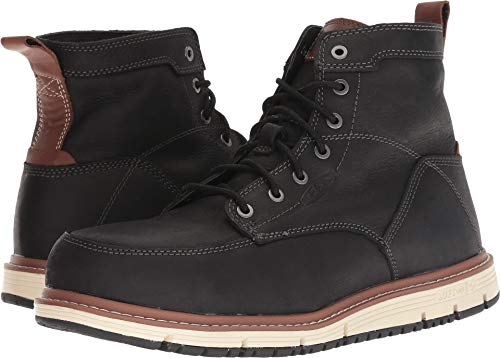
Best for: Mainstream trades workers who want ASTM certification, EH rating, waterproofing, and a genuinely wider toe box — all from a widely available US brand.
Why This Boot Stands Out
The KEEN Utility San Jose is the most accessible barefoot-friendly work boot on this list for American workers. While it isn't a zero-drop boot in the strictest sense, the flat wedge sole keeps your foot in a near-natural position — significantly flatter than the 15–20mm heel raise of most traditional work boots. Combined with KEEN's signature wide toe box, it delivers a noticeably more natural foot position than anything else at this ASTM certification level.
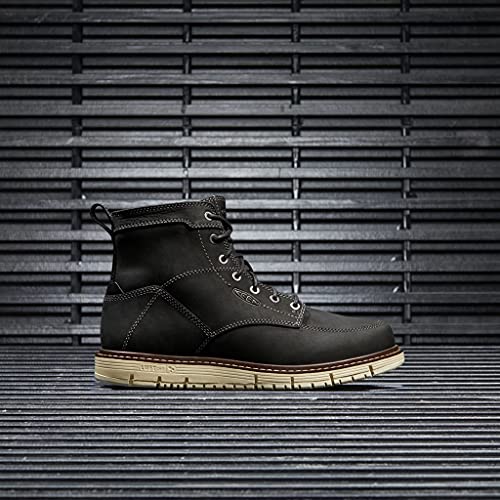
The aluminum alloy safety toe is 35% lighter than a steel toe while meeting the same ASTM F2413 impact and compression protection standards. On a 10–12 hour shift, that weight difference at the toe accumulates — it's one of the reasons KEEN's wide-toe-box design translates into real end-of-shift comfort rather than just an anatomical claim on the product page.
KEEN.DRY waterproofing and EH certification make this a complete safety package. The oil and slip-resistant outsole handles wet concrete, oily shop floors, and outdoor job site conditions effectively. Zero break-in period — the KEEN last fits comfortably from day one, which is unusual for a certified work boot.

Key Specs
- Safety rating: ASTM F2413 I/C/EH — verify current listing
- Toe type: Aluminum alloy — 35% lighter than steel, same protection
- Zero drop: Near-zero — flat wedge sole, not perfectly flat but significantly lower than standard work boots
- Toe box: Wide KEEN last — genuine room for toe splay
- Waterproof: Yes — KEEN.DRY membrane
- Construction: Cement (not resoleable)
Pros
- ASTM-certified + EH + waterproof in one boot
- Lightest safety toe option on this list
- Zero break-in — comfortable from day one
- Widely available on Amazon Prime
- KEEN's track record for wide-toe-box design is genuine
Cons
- Cement construction — not resoleable; plan to replace rather than repair
- Not true zero drop — flatter than most but still has slight heel rise
- Less ground feel than non-safety barefoot options
❌ Skip This Boot If: You want a resoleable boot for long-term investment, you need a true zero-drop design, or you work on heavy rough terrain where the Jim Green's stitch-down construction is more appropriate.
3. Gaucho Ninja Carpenter Boot — Best Premium / Custom
⚠️ Not available on Amazon — purchase directly from gauchoninja.com
Best for: The barefoot purist who has the budget and wants the most anatomically correct safety boot available.
Why This Boot Stands Out
If you want a boot that is genuinely flexible, truly zero drop, and still carries a safety toe certification, the Gaucho Ninja Carpenter is the closest thing available. These are handmade in Spain using vegetable-tanned leather on an extra-wide last specifically designed around foot anatomy — not manufacturing convenience. Goodyear welted and resoleable, they're built to last years rather than months.
Unlike traditional safety boots with a rigid shank running the length of the sole, the Carpenter uses a design that allows more natural ground feel and sole flex. The ISO 20345:2011 certification covers impact and puncture resistance — check with your site safety officer whether ISO certification satisfies your workplace requirements if ASTM is specified.
Key Specs
- Safety rating: ISO 20345:2011 — impact and puncture resistant
- Toe type: Steel or composite options available
- Zero drop: Yes — genuinely flat
- Toe box: Extra wide — designed around natural foot anatomy
- Construction: Goodyear welt — resoleable, handmade in Spain
Pros
- Most anatomically correct safety boot on this list
- Genuine zero drop and extra-wide toe box
- Goodyear welted — resoleable long-term investment
- Vegetable-tanned leather — durable and develops with wear
Cons
- Expensive (£349+) — significant premium over mainstream alternatives
- Long lead times — not available for quick delivery
- ISO certification only — verify against your site's ASTM requirements
- Not on Amazon — no Prime shipping option
❌ Skip This Boot If: You need ASTM-specific certification, you need the boot quickly, or your budget is under $200.
4. Carets Determination Boot — Best for Management & Electricians
⚠️ Not available on Amazon — purchase directly from carets.com
Best for: Site managers, electricians, and factory floor workers who need full ASTM compliance in a boot that looks professional.
Why This Boot Stands Out
The Carets Determination looks like a dress boot. It is not. It carries full ASTM F2413 certification for impact, compression, puncture resistance, and electrical hazard — one of the most complete safety spec lists on this roundup — in a silhouette that passes in professional and office environments. The "hidden zero drop" design is the engineering highlight: the heel looks raised from the outside, but your foot sits flat inside the boot. Your posture gets the zero-drop benefit without the visual aesthetic of a completely flat work boot.
The wide toe box is genuine but not extreme — it's described by users as "professional wide" rather than "barefoot wide." If you're coming from a narrow traditional work boot, you'll notice the difference immediately.
Key Specs
- Safety rating: ASTM F2413 I/C/PR/EH — full certification
- Toe type: Steel
- Zero drop: Yes — hidden zero drop design
- Toe box: Wide — professional fit, not extreme barefoot width
- Stack height: 19mm — you won't feel every pebble but you will be protected
Pros
- Full ASTM certification including PR and EH
- Professional appearance — suitable for site management and client-facing roles
- Hidden zero drop — posture benefits without visual trade-off
- Genuine wide toe box
Cons
- Not on Amazon — no Prime delivery
- Not designed for deep mud, farm, or outdoor terrain — manufacturer explicitly states "factory not farm"
- 19mm stack height — less ground feel than thinner-soled options
- Premium price point
❌ Skip This Boot If: You work outdoors, in mud, or on rough terrain. This boot is built for industrial floors and professional environments.
Category 2: Light Duty, Warehouse & Occupational
For logistics, healthcare, food service, indoor trades, and finishing work where ASTM toe protection is not required but occupational safety standards apply.
5. Birkenstock Tokio Super Grip — Best for Healthcare & Food Service
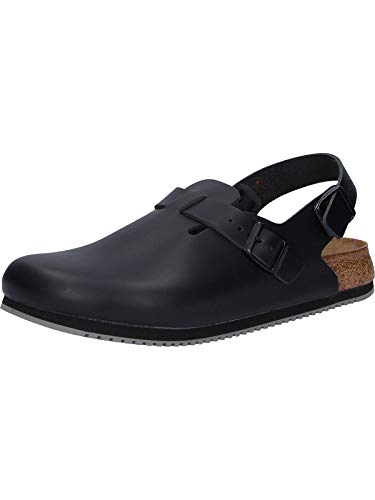
Best for: Healthcare workers, food service, and anyone who stands on hard floors all day and needs slip resistance but not impact toe protection.
Why This Boot Stands Out
Yes — the sandal company makes a work shoe. The Birkenstock Tokio Super Grip is built on Birkenstock's anatomically shaped last, which is naturally wider at the toe than most occupational footwear. The Super Grip outsole is specifically engineered for slip resistance on wet kitchen and healthcare floors, where standard work boot rubber is often inadequate.
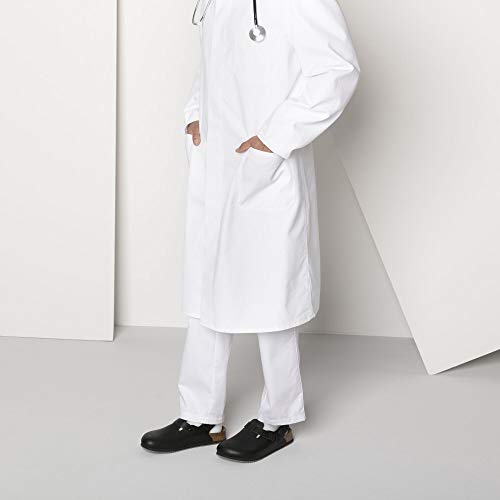
The stock cork footbed has a heel drop and arch support built in — which works against zero-drop goals. The modification is straightforward: remove the stock insole and replace it with a flat aftermarket option to convert it to true zero drop. With that swap, this becomes one of the widest, flattest occupational work shoes available at this price point.
Important clarification: this is not a safety boot with a steel toe cap. It meets EN ISO 20347 occupational footwear standards — suitable for environments where slip resistance and foot comfort are the primary requirements, but not for job sites where falling object protection is required.

Key Specs
- Safety rating: EN ISO 20347 occupational footwear — no steel/composite toe
- Toe type: None — soft toe
- Zero drop: No with stock insole / Yes with flat aftermarket insole swap
- Toe box: Wide Birkenstock last
- Outsole: Super Grip — engineered for wet kitchen/healthcare floors
Pros
- Genuinely wide Birkenstock last
- Excellent slip resistance on wet floors
- Comfortable for full-shift standing on hard floors
- Convertible to zero drop with insole swap
Cons
- No steel or composite toe — not for job sites with impact hazards
- Requires insole swap for true zero drop
- Not suitable for outdoor, rough terrain, or construction use
❌ Skip This Boot If: Your job site requires ASTM or ISO 20345 impact toe protection. This is an occupational shoe, not a safety boot.
6. Gaucho Ninja Sneaky Ninja — Best Light Industrial Sneaker
⚠️ Not available on Amazon — purchase directly from gauchoninja.com
Best for: Delivery drivers, light industrial work, and anyone who needs ISO safety certification in a sneaker form factor.
Why This Boot Stands Out
If you hate boots, these are safety sneakers. The Sneaky Ninja uses a fiberglass toe cap — lighter than steel — with a completely zero-drop, extra-wide construction. Ground feel is the best of any certified safety footwear on this list. Users consistently report feeling "significantly more mobile and agile" compared to standard safety boots, and the lightweight construction reduces fatigue on jobs involving constant movement rather than static standing.
Key Specs
- Safety rating: ISO 20345
- Toe type: Fiberglass — lighter than steel
- Zero drop: Yes — fully flat
- Toe box: Extra wide
Pros
- Best ground feel of any certified boot on this list
- Lightest safety option available
- Truly zero drop — no compromise
Cons
- ISO certification only — verify against ASTM requirements for your site
- Not on Amazon — longer lead times
- Sneaker aesthetics may not suit all work environments
Category 3: Non-Safety Soft Toe
For landscaping, farming, outdoor work, and DIY where OSHA toe protection requirements do not apply. Always confirm your specific workplace requirements before choosing a non-certified boot.
7. Vivobarefoot Tracker Leather — Best Outdoor Zero Drop
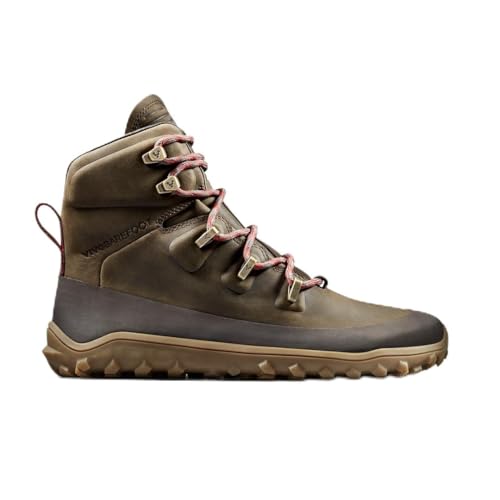
Best for: Landscapers, farmers, forestry workers, and outdoor tradespeople who work in natural terrain without job-site safety toe requirements.
Why This Boot Stands Out
Vivobarefoot builds footwear around one goal: maximum ground feel with adequate protection. The Tracker Leather delivers that in a genuinely rugged outdoor boot. The sole is thin enough to feel terrain beneath you — rocks, roots, uneven ground — while being durable enough to handle repeated use in rough outdoor conditions. The wide toe box and true zero-drop construction put this at the extreme end of the barefoot spectrum.
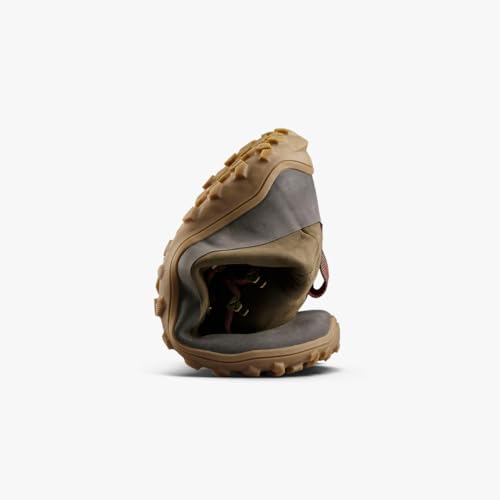
Full-grain leather upper handles wet, muddy, and cold conditions better than synthetic alternatives — the material breathes, dries more effectively after wetting, and develops a protective patina over time. For outdoor workers who cover significant ground daily, the proprietary rubber sole provides grip on loose terrain, mud, and wet surfaces.

This is a significant step up in durability from the Lems Boulder Boot for outdoor and rough terrain use. Workers who have worn through thinner barefoot boots quickly will find the Tracker Leather holds up considerably better under daily outdoor abuse.

Key Specs
- Safety rating: None — soft toe
- Toe type: None
- Zero drop: Yes — true zero drop
- Toe box: Very wide — natural foot shape
- Upper: Full-grain leather — water resistant
Pros
- True zero drop with genuine ground feel
- Most durable outdoor barefoot boot on this list
- Full-grain leather — handles tough outdoor conditions
- Excellent grip on natural terrain
Cons
- No safety toe — not for job sites with impact hazards
- Thin sole requires transition period for workers used to cushioned footwear
- Higher price point than the Lems Boulder
❌ Skip This Boot If: Your work requires ASTM toe protection or you work on urban construction sites. This is an outdoor terrain boot.
8. Jim Green African Ranger — Best Soft Toe (Farm & Outdoor)

Best for: Farm work, bush/outdoor labor, and DIY where toe protection is not required but durability and wide toe box are priorities.
Why This Boot Stands Out
The African Ranger is a cult favorite in the barefoot work boot community for one reason: it feels like a slipper but performs like a work boot. The massive toe box gives your toes complete freedom, the zero-drop construction keeps your foot flat, and the flexible rubber sole provides genuine ground feedback. It's tough enough for demanding outdoor and farm work while being comfortable enough to wear all day without the fatigue of traditional heavy work boots.
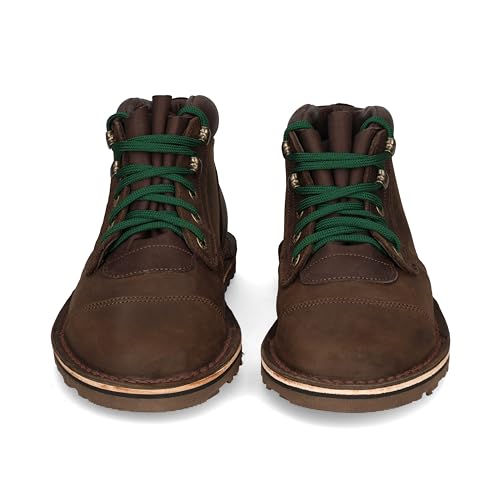
The standard version is a soft toe — no steel cap, no impact certification. For most farm, landscaping, and outdoor applications where impact toe protection is not an OSHA requirement, this is not a limitation. If you do need a safety toe, Jim Green offers a custom order option with a composite toe added, but that must be ordered directly through the brand website.
Jim Green's leather quality and construction durability are the brand's genuine strength — these are not fast-fashion outdoor shoes. Resoleable construction means this boot can be maintained for years of use rather than discarded when the sole wears down.

Key Specs
- Safety rating: None — soft toe standard version
- Toe type: None (composite available via custom order)
- Zero drop: Yes — true zero drop
- Toe box: Massive — the widest on this list
- Construction: Resoleable
Pros
- Widest toe box on this entire list
- True zero drop — complete postural benefit
- Resoleable — long-term value
- Extremely comfortable for all-day outdoor use
Cons
- No safety toe in standard version
- South African brand — shipping times vary
- Not suitable for job sites requiring ASTM certification
❌ Skip This Boot If: You need certified safety toe protection or you work in urban construction environments.
9. Under Armour Charged Valsetz Zip — Best Tactical / Lightweight Soft Toe
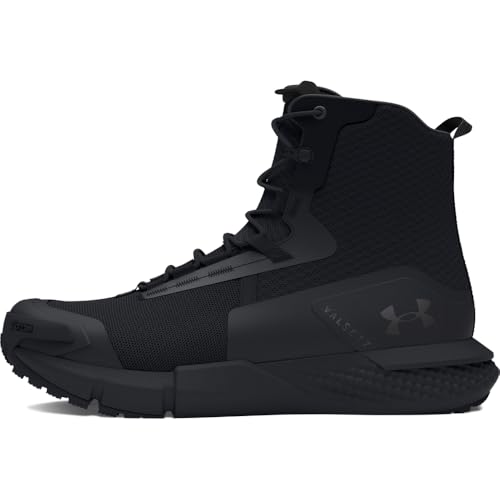
Best for: Security, military, law enforcement, light industrial, and anyone who needs a durable, wider-fit boot with all-day lightweight comfort but no safety toe requirement.
Why This Boot Stands Out
The Under Armour Charged Valsetz Zip is not a safety boot — no steel toe, no ASTM certification. It earns its place on this list as the best tactically-oriented lightweight soft toe option for workers who need protection from rough terrain, long-distance walking, and physical work without formal job-site toe protection requirements.
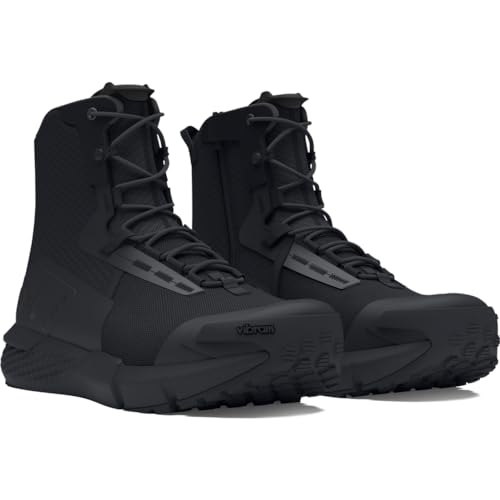
The side-zip construction makes it significantly faster to put on and take off than a laced boot — relevant for security and military workers who change footwear frequently. The Charged Cushioning midsole provides genuine energy return underfoot, and the wider-than-average UA last gives more toe room than the brand's standard athletic footwear.

Near-zero drop construction — the heel rise is minimal compared to traditional tactical boots — contributes to a more natural gait pattern on long-distance patrol or security work. The boot is noticeably lighter than any safety-certified option on this list, which matters over a 10–12 hour physical shift.

Key Specs
- Safety rating: None — no ASTM or ISO safety toe certification
- Toe type: Soft toe
- Zero drop: Near-zero — lower heel than most tactical boots
- Toe box: Medium-wide UA last
- Special feature: Side zip for fast on/off
Pros
- Lightest boot on this list by a significant margin
- Side zip — fast on/off for active duty roles
- Charged Cushioning — genuine energy return on long shifts
- Widely available on Amazon Prime
Cons
- No safety toe — not for job sites with impact hazard requirements
- Less durable than leather work boots for prolonged rough terrain use
- Not true zero drop — slightly better than most tactical boots but not flat
❌ Skip This Boot If: Your job site requires ASTM or ISO certified toe protection. This is for roles where soft-toe is acceptable.
10. Lems Boulder Boot (Grip Waterproof) — Best Minimalist Soft Toe
⚠️ Not available on Amazon — purchase directly from lemsshoes.com
Best for: Light-duty outdoor work, homesteading, and workers transitioning to barefoot footwear who want an extremely lightweight starting point.
Why This Boot Stands Out
The Lems Boulder is incredibly lightweight, genuinely flexible, and true zero drop with a wide toe box — it delivers the most "barefoot" feel of any boot on this list. The "Grip" waterproof version addresses the slippery sole issue of the original. For workers new to barefoot footwear who want to experience the feel before committing to a more durable option, this is a low-risk entry point.
Key Specs
- Safety rating: None — soft toe
- Toe type: None
- Zero drop: Yes — true zero drop
- Toe box: Very wide
- Waterproof: Yes (Grip version)
Pros
- Most flexible and lightest outdoor option on this list
- True zero drop — maximum postural benefit
- Very wide toe box
- Good for barefoot transition — closest feel to going barefoot
Cons
- Durability limitation — one homesteader reported wearing through the toe in under a year of daily use. Treat as light-duty only
- No safety toe
- Not on Amazon — direct brand purchase only
- Less durable than Jim Green or Vivobarefoot for rough daily outdoor use
❌ Skip This Boot If: You need daily heavy outdoor use durability. The Vivobarefoot Tracker Leather is significantly more durable for sustained outdoor work.
⚠️ Vital Advice Before You Switch to Barefoot Work Boots
1. The Transition Period — Don't Skip This
If you have worn heeled work boots for 10–20 years, your Achilles tendon has likely shortened and your calf muscles have adapted to a raised heel position. Switching to a zero-drop boot immediately for a 10-hour shift can lead to severe calf strain, Achilles tendinitis, or plantar fasciitis — injuries that sideline you for weeks.
The correct strategy: Wear your new boots for 2–3 hours per day during the first two weeks. Alternate with your existing boots. Gradually increase barefoot boot wear time over 4–6 weeks. Your tendons and connective tissue need time to lengthen — forcing the transition causes injury.
2. Sizing Is Different in Wide-Toe-Box Boots
Safety toes do not stretch. In a regular leather boot, the leather molds to your toes over time. A steel or composite cap has fixed geometry — if the fit is wrong, it stays wrong.
For barefoot-specific sizing: you should have approximately one thumb's width (1–1.5cm) of space in front of your toes. If you are between sizes, always size up for safety boots — for the general rules on this, see whether it's better to size up or down for boots. Width matters as much as length — many people discover they need a wider width when moving to a proper barefoot last for the first time, so it's worth checking whether wide feet can be corrected versus simply accommodated.
3. Insoles and Ground Feel
Many safety boots come with thick, cushioned insoles that raise the effective heel height and reduce ground feel. Replacing the stock insole with a thinner, flat aftermarket option is one of the fastest ways to move a standard safety boot closer to a barefoot feel. This is especially relevant for the Birkenstock Tokio and any other boot with a significant stock insole height.
Frequently Asked Questions: Barefoot Work Boots
Are barefoot work boots OSHA compliant?
It depends on the specific boot. Barefoot refers to the design philosophy — wide toe box, zero drop, thin flexible sole. It is not a safety certification. The Jim Green Razorback, KEEN Utility San Jose, Gaucho Ninja, and Carets Determination all carry safety certifications (ASTM or ISO) and are compliant where their specific certifications meet site requirements. Boots without a steel or composite toe — like the Vivobarefoot Tracker or Lems Boulder — are not OSHA-compliant for job sites requiring impact toe protection regardless of their barefoot design.
Do barefoot work boots cause foot problems?
When transitioned to correctly, barefoot boots typically reduce foot problems — bunions, hammertoes, and plantar fasciitis associated with narrow, heeled conventional footwear. The risk is in the transition: switching too quickly can cause Achilles strain and plantar fasciitis because tendons accustomed to a raised heel need time to lengthen. Follow the 4–6 week gradual transition protocol and the switch is safe for most workers.
What is the difference between zero drop and barefoot boots?
Zero drop means the heel and toe are at the same height — the foot is level. Barefoot design adds wide toe box and thin flexible sole to that flat platform. A boot can be zero drop without being wide-toe-box (not truly barefoot), and a boot can have a wide toe box without being zero drop. True barefoot boots combine all three: zero drop, wide toe box, and flexibility. Most safety boots on this list approximate two of the three — full flexibility is the hardest to achieve alongside safety certification.
Are barefoot work boots good for plantar fasciitis?
For many workers, yes — but the answer is individual. Wide toe boxes reduce toe compression that can worsen plantar fasciitis. Zero drop removes the heel elevation that can tighten the plantar fascia and Achilles. However, if you currently rely on arch support to manage plantar fasciitis symptoms, removing that support abruptly can aggravate the condition. Transition gradually and consult a podiatrist if you have an active plantar fasciitis diagnosis before switching to minimalist footwear.
Can I get barefoot work boots with a composite toe?
Yes — the KEEN Utility San Jose uses an aluminum alloy toe (lighter than steel, same protection), the Gaucho Ninja Carpenter offers a composite toe option, and the Carets Determination uses steel with a full ASTM certification. Composite toe barefoot work boots with wide toe boxes and near-zero drop are less common than steel toe options but they exist, particularly for EH-critical environments where non-metallic toes are preferred.
Are barefoot work boots good for back pain?
Frequently yes. The raised heel in traditional work boots creates anterior pelvic tilt — your pelvis tips forward and your lower back arches to compensate. Over a 10–12 hour shift, that sustained misalignment accumulates. Zero-drop boots restore neutral pelvic position, which reduces lumbar load over the course of the day. Many workers report significant lower back pain reduction after a successful transition to zero-drop footwear. The transition period matters — incorrect switching can temporarily worsen symptoms. If prolonged standing itself is the bigger issue, our guides on how many hours a day you should stand at work and how to prepare your body for standing all day cover the broader picture beyond footwear alone.
Final Verdict: Best Barefoot Work Boots for 2026
Your feet are your tools. Don't cheap out on them — and don't accept foot coffins as the price of staying safe on the job site.
| Need | Best Pick | Check Price |
|---|---|---|
| 🏗️ Heavy duty ASTM certified | Jim Green Razorback | Amazon → |
| ⭐ Best mainstream ASTM wide toe | KEEN Utility San Jose 6" | Amazon → |
| 💎 Best premium / purist | Gaucho Ninja Carpenter | Brand Site → |
| 👔 Best professional / management | Carets Determination | Brand Site → |
| 🏥 Best healthcare / food service | Birkenstock Tokio Super Grip | Amazon → |
| 🌲 Best outdoor zero drop | Vivobarefoot Tracker Leather | Amazon → |
| 🌿 Best farm / soft toe outdoor | Jim Green African Ranger | Amazon → |
| 🪖 Best tactical / lightweight | Under Armour Valsetz Zip | Amazon → |
| 🪶 Best minimalist soft toe | Lems Boulder Boot | Brand Site → |
- If you need maximum ASTM durability on rough terrain → Jim Green Razorback
- If you need ASTM certification with immediate comfort from a mainstream brand → KEEN Utility San Jose
- If you want the most anatomically correct safety boot money can buy → Gaucho Ninja Carpenter
- If you work outdoors without safety toe requirements → Vivobarefoot Tracker Leather
- If you're just starting the barefoot transition → start with the KEEN San Jose and build from there