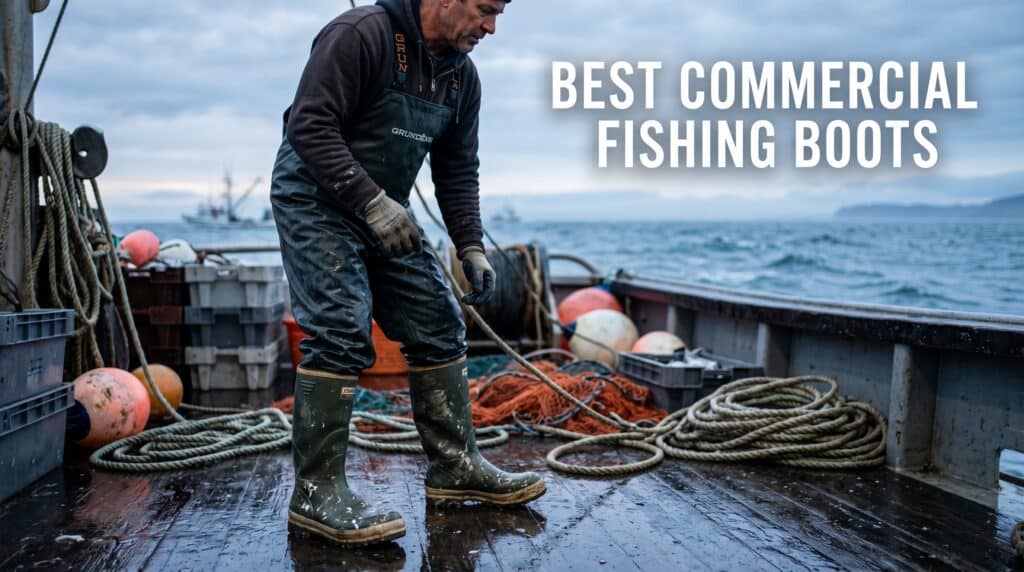

Commercial fishing is consistently ranked among the most dangerous occupations in the United States by OSHA fatality data. Slips and falls on wet decks are a leading cause of injury and death — not rough seas, not heavy equipment, not cold water. Your boots are the primary contact point between your body and the deck, and they are your first line of fall prevention. When a wave washes over the bow at 3 AM and the deck is running with fish slime, seawater, and ice, the difference between a boot with serious non-slip traction and one without it is the difference between keeping your balance and going overboard.
This guide covers nine commercial fishing boots for every fishery type — from Alaska offshore crabbers who need 15" of coverage and insulation against -20°F conditions, to Gulf Coast shrimp boat crews who want a comfortable pull-on for 16-hour hauls in August heat, to dock and processing workers with OSHA chemical resistance requirements, to women in commercial fishing who are a growing and genuinely underserved segment of the industry. We include a material comparison table (neoprene vs. rubber vs. PVC), an insulation guide specific to fishing contexts, honest durability data from fishing communities, and the section on traditional white PVC deck boots that no other guide has written for a modern audience.
⚡ Quick Picks — Best Commercial Fishing Boots 2026
| Best For | Boot | Height | Material | Price |
|---|---|---|---|---|
| Best overall / offshore Alaska | XTRATUF 15" Legacy Boot | 15" | Neoprene | ~$130 |
| Best offshore / cold water rubber | Grundens Deck-Boss 15" | 15" | Natural rubber | ~$140 |
| Best new commercial boot 2024 | Grundens Crewman Boot | Mid | Rubber | ~$140 |
| Best ankle / inshore / charter | Huk Rogue Wave | Ankle | Neoprene/rubber | ~$90 |
| Best dock / processing / inshore | XTRATUF 6" Ankle Legacy | 6" | Neoprene | ~$95 |
| Best extreme cold / watchkeeping | Muck Boot Chore Classic | 16" | Neoprene | ~$130 |
| Best insulated XTRATUF | XTRATUF Insulated Legacy | 15" | Neoprene | ~$140 |
| Best budget / entry-level | HISEA Ankle Deck Boot | Ankle | Rubber/neoprene | ~$50 |
| Best women's deck boot | XTRATUF Women's Ankle Legacy | Ankle | Neoprene | ~$95 |
Table of Contents
- Slip Resistance: The Life-or-Death Requirement
- Material Comparison: Neoprene vs. Rubber vs. PVC
- Insulation Guide by Fishery Location
- Fishery-Type Picker
- Best Overall: XTRATUF 15" Legacy
- Best Offshore Rubber: Grundens Deck-Boss 15"
- Best New Boot 2024: Grundens Crewman
- Best Ankle / Inshore: Huk Rogue Wave
- Best Dock / Processing: XTRATUF 6" Ankle
- Best Extreme Cold: Muck Boot Chore Classic
- Best Insulated XTRATUF: XTRATUF Insulated Legacy
- Best Budget: HISEA Ankle Deck Boot
- Best Women's: XTRATUF Women's Ankle Legacy
- White PVC Deck Boots: The Traditional Gulf Choice
- How Long Do Commercial Fishing Boots Last?
- Boot Care on a Working Vessel
- FAQ — 6 Questions Answered
- Final Verdict by Fishery Type
Slip Resistance: The Life-or-Death Requirement in Commercial Fishing Footwear
OSHA 29 CFR 1915 (shipyard employment) and the USCG commercial fishing vessel safety standards both carry footwear implications — and the consistent message is that slip resistance on wet decks is not a marketing claim. It is the primary occupational hazard in commercial fishing.
The surfaces that commercial fishermen navigate in a single watch include: seawater-wet deck plating, fish slime and blood, ice and frost accumulation, fish oil residue, bilge water, and the mix of all of these in rough weather. Any of these surfaces alone would challenge a standard work boot's slip resistance. In combination, they create a traction environment that only boots specifically designed for wet marine conditions can handle reliably.
The XTRATUF chevron outsole — the most trusted commercial deck boot traction pattern in the North Pacific — was developed specifically for this combination of hazards. Grundens' natural rubber outsole was developed in Scandinavia for fishing vessel decks. Huk's GripX wet traction compound was specifically formulated for wet fish and boat deck surfaces. When you see "non-slip" on a boot label, the question is non-slip on which surface. For commercial fishing, the answer must be "on wet, fish-oil-contaminated deck plating in cold weather."
⚠️ Steel Toe Boots on Fishing Vessels: What You Need to Know
Steel toe boots are generally not recommended for offshore commercial fishing — and in some vessel safety contexts are actively discouraged. If a fisherman goes overboard wearing steel-toe boots, the weight significantly impairs self-rescue swimming. Many experienced offshore fishermen and USCG safety guidelines recommend soft-toe or lightweight composite-toe deck boots specifically because they do not impair emergency water egress. For dock and processing plant work where the primary hazard is falling objects rather than overboard risk, steel toe boots may be appropriate — confirm with your employer's safety requirements.
Material Comparison: Neoprene vs. Natural Rubber vs. PVC
The three primary construction materials for commercial fishing boots perform differently in the specific chemical and environmental conditions of a working vessel. Understanding what each material does and doesn't do well is the most useful single piece of information a commercial fisherman can have before buying.
| Material | Fish Oil Resistance | Cold Flexibility | Weight | Durability | Best Fishery Use |
|---|---|---|---|---|---|
| Neoprene (XTRATUF) | ⭐⭐⭐⭐⭐ Excellent | ⭐⭐⭐⭐⭐ Stays flexible | Light | ⭐⭐⭐⭐ Very Good | Alaska, North Pacific, all fishery types. The most versatile commercial fishing material. |
| Natural rubber (Grundens) | ⭐⭐⭐⭐ Good | ⭐⭐⭐ Stiffens in extreme cold | Medium | ⭐⭐⭐⭐⭐ Excellent | Scandinavia, North Atlantic, New England. Longer service life than neoprene under extreme use. |
| PVC (white deck boots) | ⭐⭐⭐⭐ Good | ⭐⭐ Stiffens in cold | Medium-heavy | ⭐⭐⭐ Adequate | Gulf Coast, Southeast shrimp and crab. Traditional choice. White colour for food safety contamination visibility. |
The practical takeaway: For North Pacific, Alaska, and cold-water offshore fisheries, neoprene's cold flexibility and fish oil resistance makes it the standard. For North Atlantic, New England, and situations where boot longevity across multiple seasons is the primary concern, natural rubber is the professional choice. For Gulf Coast and warm-water fisheries, PVC's low cost and food-safety white colour are the traditional advantages.
Insulation Guide: Matching Your Boot to Your Fishery's Temperature
Commercial fishermen generate significant body heat from sustained physical work — hauling gear, processing catch, and moving constantly on deck. This matters for insulation selection in a way that static occupations do not: a boot insulated for 0°F standing still on a winter dock will create dangerously hot feet on a deckhand working a 16-hour halibut set in the same temperature conditions.
| Fishery / Location | Typical Conditions | Insulation Level | Correct Boot |
|---|---|---|---|
| Gulf Coast / Southeast | 50–90°F water temp, warm air | Uninsulated only | XTRATUF 15" (uninsulated), HISEA, Huk Rogue Wave |
| Pacific Northwest / New England | 40–55°F, rain, wind | Light neoprene (2–4mm) or uninsulated with thick socks | XTRATUF Legacy (uninsulated + wool socks), Grundens Deck-Boss |
| Alaska / North Pacific (active work) | 20–40°F, constant movement | Light insulation — 200–400g or uninsulated with thermal sock system | XTRATUF Insulated Legacy or uninsulated + Smartwool/Darn Tough heavy merino |
| Alaska / North Pacific (watchkeeping, standing) | 0°F to 20°F, minimal movement | Heavy insulation — 5mm neoprene or 600g+ | Muck Boot Chore Classic (-20°F rated) or heavily insulated rubber boot |
The overheating warning: Deckhands hauling king crab pots in 20°F weather are generating massive heat output. A 7mm neoprene insulated boot designed for standing still at -40°F will create wet, sweating feet in an hour of hard work — and wet feet in a cold offshore environment are a hypothermia risk, not just a comfort issue. When in doubt, choose less insulation and add a quality wool sock system (Darn Tough, Smartwool) that you can layer according to conditions.
Fishery-Type Picker: Which Boot for Your Specific Operation
| Fishery / Role | Primary Requirements | Best Pick |
|---|---|---|
| Alaska offshore / deep-sea crabbing | 15–16" height, maximum traction on wet deck, fish oil resistance, waterproof, cold-weather flex | XTRATUF 15" Legacy (standard) or XTRATUF Insulated for extreme cold |
| North Atlantic / New England trawling | Maximum durability (multi-season), cold water, heavy physical work | Grundens Deck-Boss 15" or Grundens Crewman |
| Gulf Coast shrimp / inshore | Uninsulated, comfortable for long hauls, easy on/off, moderate height | XTRATUF 15" (uninsulated) or Huk Rogue Wave |
| Dock and fish processing plant | Easy to hose down, chemical resistance to cleaning agents, non-slip on concrete, ankle height | XTRATUF 6" Ankle Legacy |
| Charter boat / captain | Mobility and comfort, professional appearance, light traction, easy on/off | Huk Rogue Wave or XTRATUF 6" Ankle |
| Alaska watchkeeping / standing cold | Maximum insulation for cold static standing, -20°F capable | Muck Boot Chore Classic |
| Entry-level / recreational crossover | Budget, adequate traction, comfortable for occasional use | HISEA Ankle Deck Boot |
Best Overall / Offshore Alaska: XTRATUF 15" Legacy Boot
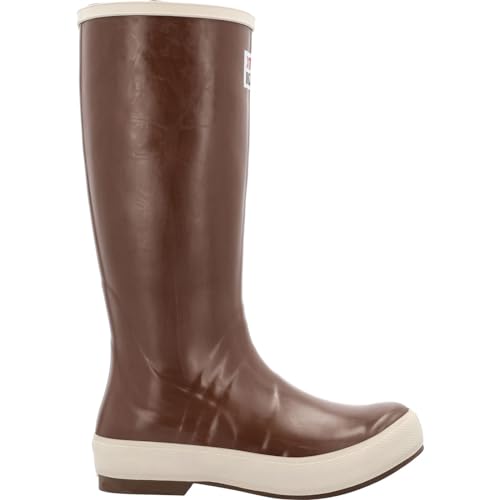
The XTRATUF 15" Legacy is the default commercial fishing boot of the North Pacific. Walk onto any working fishing vessel in Dutch Harbor, Kodiak, or Astoria and you will find XTRATUFs on the majority of the deck crew. That is not brand loyalty — it is accumulated experience from generations of Alaskan fishermen who have tested every alternative and returned to XTRATUF. The triple-dip neoprene construction creates an exceptionally durable, chemically resistant shell that handles fish oil, saltwater, fish blood, diesel, and the full chemical profile of an offshore fishing deck without degrading on the timeline that rubber alternatives often do. The neoprene's cold-temperature flexibility is the other North Pacific advantage: in sub-freezing conditions where natural rubber boots stiffen and become difficult to walk in, the XTRATUF neoprene maintains its flexibility and the boot continues to provide the ankle mobility that active deck work requires.
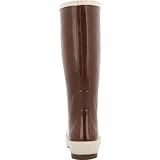
The chevron outsole pattern is the defining commercial fishing traction design. Wide-spaced chevron lugs clear fish slime, water, and ice from the tread with each step rather than packing it in — a self-cleaning mechanism that maintains traction throughout a wet, slippery watch. This is the specific design choice that makes XTRATUF the safety standard in the North Pacific: not just the traction depth but the tread pattern's ability to maintain that traction across the range of wet-deck surfaces a commercial fisherman encounters. The 15" shaft height provides protection against wave wash-over, spray, and the high-water conditions that offshore deck work regularly involves. The cushioned insole provides comfort across long watches in a boot category that is physically demanding on the feet.

This is the uninsulated version — correct for the majority of commercial fishing contexts where active work generates body heat that creates wet, overheated feet in insulated boots. For Alaska and North Pacific active deck work, the standard XTRATUF Legacy with a quality wool sock system (Darn Tough heavyweight, Smartwool Mountaineer) is the professional standard. For watchkeeping and cold static work, the XTRATUF Insulated (Pick 07) adds the thermal layer when needed. Sizing: XTRATUF Legacy runs slightly large — most experienced users recommend sizing down a half to full size, particularly for users with narrower calves.

Commercial Fishing Specs
Material: Triple-dip neoprene — fish oil resistant, cold-temp flexible | Height: 15" — offshore standard
Outsole: Chevron pattern (self-cleaning, wet deck traction) | Insulation: None — active work appropriate
Steel toe: ❌ No — correct for offshore overboard safety | Sizing: Size down 0.5–1 from normal
Service life: 2–4 seasons heavy commercial use | Fishery: All types — the universal commercial deck boot
Pros: Industry-standard commercial fishing boot — proven across generations of North Pacific fishermen; triple-dip neoprene stays flexible in extreme cold; chevron self-cleaning outsole for sustained wet deck traction; fish oil and saltwater chemical resistance; correct soft-toe design for offshore safety.
Cons: Runs large — size down; uninsulated (choose XTRATUF Insulated for cold static work); premium price justified by service life.
Best Offshore / Cold Water Rubber: Grundens Deck-Boss 15" Boot
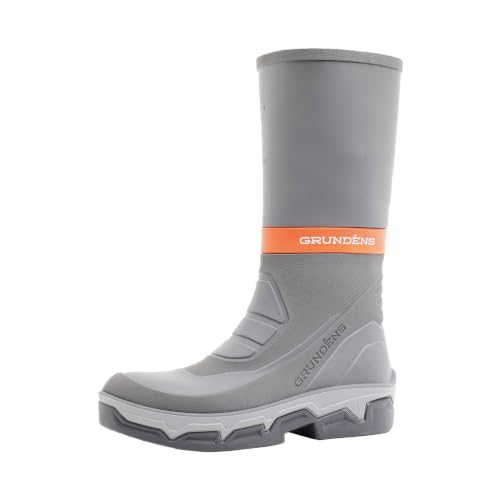
Grundens is the most respected brand in commercial fishing gear globally — their foul weather gear has outfitted professional fishermen in Scandinavia, the North Atlantic, and the North Pacific for over a century. The Deck-Boss applies this institutional knowledge to a 15" deck boot built for all-day professional use. Where XTRATUF wins on cold-temperature flexibility, Grundens wins on service life — the natural rubber construction of the Deck-Boss is more durable than neoprene under the sustained mechanical abuse of heavy commercial fishing, and the boot has a reputation for outlasting XTRATUF on working New England and Scandinavian fishing vessels. Natural rubber also provides excellent chemical resistance to the oils, fuels, and cleaning chemicals that accumulate on commercial fishing vessels.

The Deck-Boss outsole provides the non-slip traction that Grundens has refined for commercial fishing deck surfaces across their product line. The 15" shaft height is the offshore standard for the same reasons as the XTRATUF — wave protection, spray coverage, and the general wet conditions that deep-water fishing involves. The all-day comfort design reflects Grundens' understanding that commercial fishermen wear these boots for shifts that would exhaust a standard work boot: 16–18 hours, sustained physical activity, on surfaces that are wet, cold, and constantly moving. The boot is designed around professional use tolerance, not weekend use tolerance.

The honest limitation of natural rubber vs. neoprene in extreme cold: at temperatures below approximately 20°F, natural rubber begins to stiffen noticeably, reducing the ankle mobility that active deck work requires. For the majority of North Atlantic, New England, and Pacific Northwest fishing conditions — cold but not Alaska-extreme — the Deck-Boss handles the cold excellently. For Alaska king crab season conditions at -10°F to -20°F, the XTRATUF's neoprene flexibility has the advantage. The choice between XTRATUF and Grundens is often regional tradition as much as specification: New England and Scandinavia tends toward Grundens, Alaska and Pacific toward XTRATUF.

Commercial Fishing Specs
Material: Natural rubber — exceptional durability, chemical resistant | Height: 15" — offshore standard
Cold performance: ⭐⭐⭐⭐ Good to ~20°F; stiffens below that | Durability: Typically outlasts neoprene in heavy use
Steel toe: ❌ No | Fishery: New England trawling, North Atlantic, Pacific Northwest offshore
Pros: Grundens brand credibility — professional fishing gear since the 1800s; natural rubber durability typically exceeds neoprene under heavy commercial use; excellent chemical resistance; 15" offshore-appropriate height.
Cons: Natural rubber stiffens below ~20°F — XTRATUF preferred for Alaska extreme cold; heavier than neoprene alternatives.
Best New Commercial Boot 2024: Grundens Crewman Boot

National Fisherman magazine reported in April 2024 that Grundens launched the Crewman Boot after nine months of real-world field testing — in Alaska, the Canadian Maritimes, Maine, and Europe — with entirely positive feedback from professional fishermen across multiple fishery types. This is not a marketing rollout; this is the most significant new product launch in commercial fishing footwear in recent years, developed specifically by the most credible fishing-gear brand in the world with direct input from working deckhands across multiple fishing cultures. The Crewman represents Grundens' answer to the question of what a commercial fishing boot should be in 2024 — after a century of professional fishing gear development and nine months of direct fisherman feedback.

The Crewman is designed for the commercial fisherman who needs a versatile boot that works from the vessel to the dock to the processing facility — a mid-height profile that provides more mobility than a full 15" tall boot while maintaining the core requirements of commercial fishing footwear: chemical resistance to fish oil and saltwater, non-slip traction on wet deck surfaces, and the durability to withstand the sustained abuse of professional fishing work. The rubber construction brings Grundens' established material quality to a more mobile, versatile format that appeals to the growing number of commercial fishermen who find the tall 15" boot restrictive for mixed dock-and-vessel work patterns.
No products found.The real-world feedback from the nine-month testing programme — across climates from Alaska to Europe and fisheries from trawling to crabbing — validates the Crewman as a genuine professional commercial fishing boot rather than a recreational deck shoe with commercial claims. For fishermen who have found the full 15" Deck-Boss or XTRATUF Legacy appropriate for active vessel work but cumbersome for the walking and driving that make up the rest of a fishing day, the Crewman is the correct professional-grade alternative. Available on Amazon — verify current sizing and stock before ordering, as new product availability can vary.

Commercial Fishing Specs
Material: Rubber (Grundens construction) | Profile: Mid-height — versatile vessel-to-dock
Testing: 9 months field testing in Alaska, Maritimes, Maine, Europe | Brand: Grundens — 100+ year professional fishing gear heritage
Fishery: Mixed commercial use, dock-to-vessel versatility
Pros: Grundens' most extensively field-tested new product launch; real fisherman input from multiple international fisheries; mid-height versatility for mixed dock and vessel work; full Grundens rubber construction quality.
Cons: Newer product — less long-term durability data than established Deck-Boss; mid-height limits wave protection vs. 15" alternatives.
Best Ankle / Inshore / Charter: Huk Rogue Wave

Flylords magazine named the Huk Rogue Wave their top deck boot pick in March 2026 after hands-on testing across multiple conditions — and for the inshore, charter, and recreational crossover commercial fishing context, it earned that position. The GripX wet traction compound was specifically formulated for wet fish and boat deck surfaces: the rubber compound's chemistry provides maximum friction on exactly the surfaces that commercial fishing creates — fish slime, wet fibreglass, wet aluminium, and wet plating. For charter captains, inshore commercial fishermen, and recreational-to-commercial crossover fishermen who prioritise mobility and comfort alongside genuine traction, the ankle profile of the Rogue Wave provides more agility than a 15" tall boot without sacrificing the wet deck performance that matters.

The 8mm EVA footbed provides comfort for long hours on deck in a boot category that is notoriously uncomfortable for extended wear — most rubber and neoprene deck boots sacrifice cushioning for durability, and the Rogue Wave's EVA midsole is a meaningful comfort improvement for charter captains and inshore fishermen who might be on their feet for 10–12 hours but without the constant intense physical activity of an offshore deckhand. The neoprene upper adds weather resistance and warmth for cool-weather fishing without full insulation that would overheat active fishermen in warmer conditions.

The honest limitation: ankle height is the appropriate choice for inshore and charter work where wave wash-over is not a regular occurrence. For offshore and any condition where water regularly comes over the deck at height above the ankle, a 15" boot is the correct specification. The Rogue Wave is specifically wrong for Alaska offshore and any heavy weather commercial fishing context — it is specifically right for the Gulf coast shrimp boat captain, the Southeast charter guide, and the inshore commercial fisherman who works in calmer water conditions where mobility matters more than protection height.

Commercial Fishing Specs
Material: Neoprene upper + rubber outsole | Height: Ankle — inshore/charter appropriate
Outsole: GripX wet traction (specifically formulated for fish and deck surfaces) | Midsole: 8mm EVA — comfort for long charter days
Flylords testing: Top pick March 2026 | Fishery: Inshore, charter, Gulf coast, recreational crossover
Pros: GripX traction specifically formulated for wet fish deck surfaces; 8mm EVA midsole for long-day charter comfort; ankle profile for maximum mobility; Flylords top pick March 2026.
Cons: Ankle height — wrong for offshore and heavy weather; not for Alaska or any condition with regular wave wash-over above ankle height.
Best Dock / Fish Processing / Inshore: XTRATUF 6" Ankle Legacy Boot

The XTRATUF 6" Ankle Legacy brings the same triple-dip neoprene construction and chevron outsole traction of the full-height Legacy boot into an ankle profile that is specifically suited for dock work, fish processing plant environments, and inshore fishing where the full 15" height is unnecessary and restricts mobility. National Fisherman reported that the ankle XTRATUF profile is growing in popularity among professional fishermen who want the XTRATUF's trusted chemical resistance and traction in a format they can wear from the boat to the processing dock to the truck without the bulk of the tall boot. Fish processing plant environments specifically benefit from the ankle XTRATUF's easy hosing-down capability — the neoprene construction resists the cleaning chemicals and fish acids of processing plant floors in a way that standard rubber or PVC boots of comparable height often do not.

For dock workers and processing plant employees, OSHA 29 CFR 1910 general industry footwear standards apply alongside the chemical resistance requirements of seafood processing environments. The XTRATUF 6" Ankle Legacy meets these requirements with its fish oil and chemical-resistant neoprene and non-slip chevron outsole on wet concrete and wet metal grating — the two primary dock and processing plant surfaces. The ankle height also addresses the heat issue that tall neoprene boots create in the warm environments of some processing plants, particularly in Gulf Coast and Southern states where facility temperature makes tall insulated boots impractical for multi-hour indoor work.

The same XTRATUF sizing note applies here: the 6" Ankle Legacy runs large, and most experienced users recommend sizing down a half to full size from normal for a proper fit. The ankle height means there is less shaft volume to accommodate calf size variations, so the length fit is the primary sizing consideration. Available in men's and women's sizing — the women's version has a women's-specific last for better heel lockdown and ankle fit, which matters significantly in an ankle boot where the fit volume is more critical than in a tall pull-on shaft.

Commercial Fishing Specs
Material: Triple-dip neoprene (same as 15" Legacy) | Height: 6" ankle
Outsole: Chevron pattern — wet deck and wet concrete traction | Chemical resistance: Fish oil, saltwater, processing plant chemicals
Sizing: Size down 0.5–1 | Women's available: ✅ Yes
Fishery: Dock work, fish processing plants, inshore, charter
Pros: XTRATUF trusted neoprene and traction in mobile ankle format; ideal for dock and processing plant environments; growing popularity among professionals for mixed dock/vessel use; women's sizing available.
Cons: Ankle height — no wave or spray protection above ankle; runs large, size down.
Best Extreme Cold / Watchkeeping: Muck Boot Chore Classic
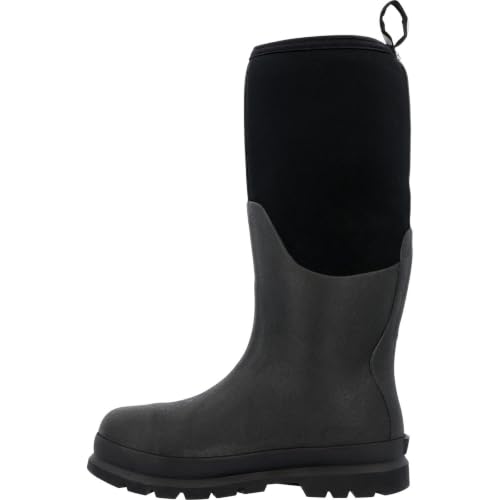
For the specific commercial fishing context of cold static watchkeeping — standing watch on a vessel at anchor, monitoring gear in cold weather, or any Alaska fishing task that involves extended periods of limited movement in sub-zero temperatures — the Muck Boot Chore Classic's 5mm neoprene insulation and 16" shaft height provides the protection level that working actively in the XTRATUF Legacy cannot. Cold watchkeeping is physically distinct from active deckwork: without the body heat generated by hauling gear and processing catch, a fisherman standing watch at -20°F has no internal heat source compensating for the boot's insulation level. The Muck Chore's neoprene insulation and full-shaft coverage addresses the sustained cold exposure that watchkeeping involves.

The Muck Boot is not a replacement for the XTRATUF Legacy for active deck work — it is the watchkeeping boot, the cold morning prep boot, and the extreme cold standby boot that Alaska fishermen keep alongside their XTRATUF for the tasks where heat generation is insufficient to manage cold without added insulation. The 16" shaft height exceeds the XTRATUF's 15" for an additional inch of spray and depth protection. The spray-clean rubber exterior is appropriate for the fish and saltwater contact of commercial fishing environments. The Muck Chore's outsole provides adequate traction for the limited movement of watchkeeping on a vessel — it is not designed for the sustained, vigorous movement traction demands of active deckwork the way the XTRATUF chevron outsole is.

The honest seasonal limitation applies here as in every context: the Muck Chore's insulation level creates overheating above approximately 40°F in active conditions. This boot belongs on the shelf from May through September in most Alaskan fishing operations and comes out in October when watchkeeping temperatures begin to require insulation management. It is not a year-round boat boot — it is a specific cold-weather tool for specific cold-weather tasks. Men's sizing; women's version also available for female crew members who share the watchkeeping role.

Commercial Fishing Specs
Material: 5mm neoprene insulation, rubber shell | Height: 16"
Temperature: Rated to -20°F (active); effective to -30°F+ (watchkeeping / static) | Seasonal use: October–April (northern climates)
Overheat warning: ⚠️ Too warm above 40°F in active work
Fishery: Alaska watchkeeping, extreme cold static tasks, cold anchor watch
Pros: Maximum insulation for cold static watchkeeping; 16" height for full coverage; spray-clean exterior; rated performance in extreme cold temperatures.
Cons: Too warm for active deck work above 40°F — specialist cold/static tool; less traction design sophistication than XTRATUF for active deck surfaces; seasonal use only.
Best Insulated XTRATUF: XTRATUF Insulated Legacy Boot

The XTRATUF Insulated Legacy is the answer for Alaska and North Pacific fishermen who want the brand's trusted neoprene construction and chevron outsole in a boot with insulation — and who understand the precise context where insulation adds value rather than creating the overheating problem. The correct context: early-morning gear preparation before the physical heat of active fishing work begins, cold transit between vessel and dock, and the shoulder seasons of fall and spring when air temperatures are cold but not extreme. The insulated XTRATUF occupies the middle ground between the uninsulated Legacy (active work standard) and the Muck Chore Classic (extreme cold watchkeeping) — adding warmth to the XTRATUF platform for conditions where some insulation helps without the heavy insulation that creates wet feet in active work.

The same triple-dip neoprene construction and chevron outsole traction that define the XTRATUF Legacy are present in the insulated version — the core commercial fishing performance is unchanged. The insulation layer adds warmth without the stiffness penalty that adds insulation to other rubber boot constructions often creates. The 15" shaft height is the offshore standard. For Alaska fishermen who have previously run the uninsulated XTRATUF and found their feet cold during pre-dawn gear prep or cold calm periods between active hauling, the insulated version is the natural upgrade — not a completely different boot, but a version of the same boot with thermal management added.

The honest guidance on the insulated vs. uninsulated choice: most experienced Alaska fishermen who have tried both report that the uninsulated XTRATUF with a Smartwool or Darn Tough heavyweight wool sock system is more versatile than the insulated version, because the sock layer can be adjusted as conditions change throughout a day. A thick merino sock in the morning when it is -15°F and lighter sock in the afternoon when the work is generating heat is a flexible system. The fixed insulation of the insulated boot cannot be adjusted. This is why many professionals choose uninsulated and manage thermally with socks — but for fishermen who prefer the simpler "one boot for the season" approach, the insulated version is the correct choice.

Commercial Fishing Specs
Material: Triple-dip neoprene + insulation layer | Height: 15"
Outsole: XTRATUF chevron — same as uninsulated Legacy | Cold range: Shoulder seasons + moderate cold active work
vs. Uninsulated: Warmer but less adjustable than sock layering system
Fishery: Alaska shoulder seasons, moderate cold offshore, gear prep and transit
Pros: XTRATUF's trusted neoprene and chevron outsole with added warmth; same 15" offshore height; appropriate for shoulder seasons and moderate cold active work; simpler than managing sock layers.
Cons: Fixed insulation less flexible than uninsulated + sock layering; can overheat in heavy active work; premium price for incremental warmth over sock system.
Best Budget / Entry-Level: HISEA Ankle Deck Boot
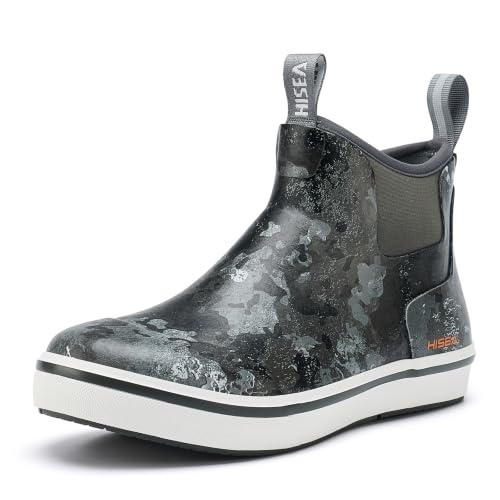
The HISEA Ankle Deck Boot is the budget answer for entry-level deck work, recreational anglers with occasional commercial-adjacent use, and charter crew members who need functional deck footwear without the professional-grade price of XTRATUF or Grundens. The 4.6/5 stars on Amazon across a significant number of reviews validates the HISEA as a functional product at its price point — the rubber and neoprene construction provides waterproofing and adequate traction for the conditions an occasional-use deckhand or recreational angler encounters, and the EVA memory foam insole provides comfort for fishing trips that don't involve the sustained 16-hour heavy-work shifts of commercial offshore fishing.

The honest framing for the HISEA: it is an entry-level product at an entry-level price. For weekend fishing trips, charter fishing as a passenger, recreational fishing from a small boat, and occasional dock work, the HISEA provides adequate traction, adequate waterproofing, and comfortable wear at a fraction of the XTRATUF price. For professional commercial fishing — multiple seasons of daily heavy use, sustained fish oil and chemical exposure, offshore wave wash-over conditions, and the demanding traction requirements of an active commercial deck — the HISEA is not the correct specification. The service life under professional commercial use is measured in months, not the 2–4 seasons that XTRATUF and Grundens deliver.

The use case where the HISEA makes the most financial sense: buying a first pair to determine whether commercial fishing boot style is the right fit before investing in the professional-grade alternatives; dock workers in warm climates who want basic waterproofing and slip resistance; recreational anglers who want a dedicated boat boot without committing to professional fishing boot pricing. Multiple colour options available. Sizing: verify current ASIN for your size and colour before ordering, as Amazon listings for this brand have multiple variants.

Commercial Fishing Specs
Material: Rubber + neoprene combination | Height: Ankle
Insole: EVA memory foam | Amazon rating: 4.6/5 stars (significant review volume)
Price: ~$40–55 | Service life: Months under heavy professional use; 1–2 seasons recreational
Fishery: Recreational, entry-level, charter passenger, light dock work
Pros: Highly affordable entry point; strong Amazon reviews; EVA memory foam comfort; adequate traction and waterproofing for recreational and entry-level use; good test purchase before professional boot investment.
Cons: Not for professional commercial fishing — service life under heavy commercial use is months; lacks the chemical resistance and traction sophistication of XTRATUF/Grundens; ankle height limits wet-deck protection.
Best Women's Deck Boot: XTRATUF Women's Ankle Legacy Boot
No products found.Women in commercial fishing are a growing segment of the industry — documented by National Fisherman as one of the clear demographic trends in US commercial fishing over the past decade. For years, the standard response to women asking about deck boots was "here are the men's boots in a smaller size." The XTRATUF Women's Ankle Legacy changes that with a genuine women's-specific last that provides proper heel lockdown and foot geometry for women's anatomy — not a scaled-down men's boot, but a boot built from the correct starting specification for women's feet. The same triple-dip neoprene construction, the same chevron outsole, the same XTRATUF chemical resistance and wet-deck traction in a boot that actually fits a woman's foot.
No products found.The ankle height profile is the correct choice for most women in commercial fishing contexts — female deckhands, processing plant workers, charter mates, and dock workers. For offshore Alaska and conditions requiring 15" coverage, XTRATUF's women's tall legacy boot is the companion product (verify current availability). The ankle profile provides the mobility and comfort for the range of tasks that women in commercial fishing typically handle, with XTRATUF's full professional-grade construction quality. The women's-specific last addresses the heel slippage problem that is the most common fit complaint from women wearing men's deck boots — the wider men's heel cup in a smaller size creates friction and blistering that a women's last heel cup prevents.
No products found.Sizing: XTRATUF Women's Ankle Legacy runs true to standard women's sizing, in contrast to the men's version which runs large. Order your standard women's shoe size. Multiple colour options available. The women's version carries the full XTRATUF quality standard — this is not a lower-spec women's version of a men's boot but the same material and construction quality in a women's-specific last geometry.
No products found.Commercial Fishing Specs
Material: Triple-dip neoprene (same as men's Legacy) | Last: Women's-specific — proper heel lockdown
Height: Ankle | Outsole: XTRATUF chevron (same wet-deck traction as men's)
Sizing: True to women's size (unlike men's version which runs large)
Fishery: All women's commercial fishing contexts — dock, processing, inshore, charter
Pros: Genuine women's last — not a men's boot in smaller sizes; same triple-dip neoprene and chevron traction as men's Legacy; true-to-size women's sizing; full XTRATUF professional quality standard; correctly addresses the growing women's commercial fishing demographic.
Cons: Ankle height — not for offshore heavy weather requiring 15" coverage; for tall coverage needs, verify XTRATUF women's tall legacy availability separately.
White PVC Deck Boots: The Traditional Gulf and Southeast Choice
No commercially-oriented fishing boot guide is complete without addressing the boot that has been on Gulf Coast shrimp boats and Southeast crab boats for over 40 years: the white PVC deck boot. Veterans with multiple decades on Gulf shrimp, stone crab, and grouper boats consistently return to white PVC — and for specific, defensible reasons that have nothing to do with tradition for its own sake.
The white colour is a functional food safety feature. On a shrimp boat preparing product for direct sale or processing, contamination — blood, fuel, bilge water, diesel — is immediately visible on a white boot surface. A fisherman with contaminated white boots knows before they step into the catch area. Dark rubber boots conceal contamination that white boots immediately reveal. For boats subject to food safety inspection, white boots can also satisfy the visible-contamination-prevention requirements that some buyers and inspectors expect.
PVC is also genuinely easier to clean than neoprene — the smooth surface wipes clean quickly, and the material does not absorb organic compounds the way textured neoprene can over multiple seasons. In warm Gulf Coast conditions where insulation is never needed and the primary requirements are clean-able, waterproof, and slip-resistant, the white PVC boot provides what the fisherman actually needs at a lower price than premium neoprene alternatives.
Where to find white PVC deck boots: White commercial-grade PVC deck boots are typically not available on Amazon — they are sourced from commercial fishing supply stores: Fishery Supply, West Marine commercial section, National Fisherman's affiliated suppliers, and local marine supply shops in Gulf Coast fishing ports. Royal Brand is the most commonly referenced commercial PVC deck boot among Gulf veterans. If you are shopping specifically for the traditional white Gulf deck boot, check these sources rather than Amazon.
How Long Do Commercial Fishing Boots Last?
Commercial fishermen are among the most demanding users of any footwear category on earth — 12–18 hour days, saltwater, fish oil, ice, cleaning chemicals, extreme temperatures, and sustained physical work on constantly moving surfaces. The durability data from professional fishing communities reflects this reality honestly.
XTRATUF Legacy (triple-dip neoprene): In active commercial fishing use on vessels where the boot is worn daily, 2–4 seasons is the range most frequently reported. The neoprene construction's primary failure mode is outsole wear — the chevron lugs wear down from the hard deck surfaces before the neoprene upper fails. The upper typically outlasts the outsole, which is not resoleable. "When the traction goes, the boot is done" is the standard XTRATUF replacement trigger. Lighter-use commercial fishermen (inshore, charter, part-time) report 4–6 seasons.
Grundens Deck-Boss (natural rubber): Most users report 2–3 seasons of heavy offshore use, with some North Atlantic fishermen reporting longer service life. Natural rubber is generally more abrasion-resistant than neoprene under sustained mechanical stress, but the stiffer material in extreme cold creates micro-cracking over multiple seasons that eventually compromises the boot's waterproof integrity.
Huk Rogue Wave (neoprene/rubber hybrid): 1–2 seasons of regular inshore or charter use. The ankle profile and lighter construction reflects a design optimised for comfort and versatility over maximum durability under the heaviest offshore use conditions.
HISEA Budget boots: Months under heavy professional commercial use. 1–2 seasons for recreational and occasional use. Budget construction materials do not withstand the chemical and mechanical demands of sustained commercial fishing in the way that triple-dip neoprene or professional-grade rubber does.
Boot Care on a Working Vessel
After every watch: Rinse boots with fresh water if available. Saltwater left to dry on neoprene and rubber accelerates the UV and ozone degradation that creates surface cracking. Fish oil left on boot surfaces penetrates rubber and neoprene seams over time. A quick freshwater rinse after a watch significantly extends service life.
Fish oil and chemical cleaning: Use a mild soap solution — dish soap and water — rather than harsh solvents or petroleum-based cleaners on rubber and neoprene boots. Solvents degrade the material compounds in both natural rubber and neoprene over time. For heavily contaminated boots, a dedicated marine boot cleaner (Xtratuf recommends their own) is the safest option.
Storage: Store boots out of direct sunlight. UV exposure degrades rubber and neoprene faster than any other single environmental factor. On a vessel, keep boots inside or under a cover when not being worn. The sun's UV in northern latitudes, reflected off water, is more intense than most users appreciate.
Outsole monitoring: The XTRATUF replacement trigger is chevron lug wear — when the chevrons are no longer clearly defined ridges with clean sharp edges, the self-cleaning traction mechanism is compromised. Run your thumb across the lugs: you should feel clear individual peaks. Rounded, worn lugs signal it is time to replace. Do not wait until a slip reminds you.
FAQ — 6 Commercial Fishing Boot Questions Answered
What boots do commercial fishermen wear?
The North Pacific and Alaska standard is XTRATUF 15" Legacy — the triple-dip neoprene boot with chevron outsole that has been the commercial fishing default for generations. In the North Atlantic and New England, Grundens Deck-Boss is equally respected. Gulf Coast and Southeast shrimp and crab boat veterans often use white PVC deck boots sourced from commercial fishing suppliers rather than Amazon. For inshore and charter work, ankle-height boots like the Huk Rogue Wave and XTRATUF 6" Ankle are increasingly popular for their mobility advantage.
Are XTRATUF boots good for commercial fishing?
Yes — XTRATUF is the dominant brand in North Pacific and Alaska commercial fishing footwear for good reasons. The triple-dip neoprene stays flexible in extreme cold when other rubber boots stiffen. The chevron outsole provides self-cleaning wet-deck traction specifically designed for fish-oil-contaminated commercial deck surfaces. The chemical resistance handles the full range of fishing vessel chemicals. The service life of 2–4 seasons under heavy commercial use is among the best in the category. Size down a half to full size from your normal size.
What are the most slip-resistant fishing boots?
For commercial fishing specifically, XTRATUF's chevron outsole and Grundens' rubber outsole are the professional standards for wet commercial deck traction. The Huk Rogue Wave's GripX compound was specifically formulated for wet fish and boat deck surfaces. The critical point: "non-slip" is not a universal rating — the specific traction performance on fish-slime-contaminated wet plating is what matters for commercial fishing, and that is a different requirement from slip resistance on polished restaurant floors or wet construction concrete.
Do commercial fishermen need steel toe boots?
Generally no — and in offshore contexts, steel toe boots may be actively discouraged for safety reasons. If a fisherman goes overboard in steel-toe boots, the weight significantly impairs swimming and self-rescue. Soft-toe and lightweight composite-toe boots are preferred on commercial fishing vessels for this reason. For dock work and fish processing plants where falling object hazards exist and overboard risk is minimal, steel or composite toe boots may be appropriate and are sometimes required by the operation's safety standards.
What is the difference between deck boots and fishing boots?
"Deck boots" refers to tall rubber or neoprene pull-on boots designed for wet marine surfaces — typically 15–16" height, non-slip outsoles, waterproof. These are the primary commercial fishing boat boots. "Fishing boots" is a broader term that includes wading boots (for fly fishing in streams), hip boots (for shore fishing), and ankle deck boots (for light boat use). For commercial fishing specifically, deck boots are the correct category.
How long do XTRATUF boots last?
In active commercial fishing use with daily wear, 2–4 seasons is the typical range. The outsole lugs wear before the neoprene upper fails — when the chevron traction is no longer clearly defined, replace the boot. Lighter-use commercial fishermen (inshore, charter, part-time) typically get 4–6 seasons. Store out of direct sunlight, rinse with fresh water after use, and clean with mild soap to maximise service life. Do not use petroleum-based solvents on neoprene.
Final Verdict: Best Commercial Fishing Boot by Fishery Type
Fishery Type → Best Boot
Alaska offshore / deep-sea crabbing / North Pacific (active work): XTRATUF 15" Legacy Boot — triple-dip neoprene, cold-flex, chevron self-cleaning traction; the North Pacific professional standard
Alaska offshore / deep-sea (extreme cold static / watchkeeping): XTRATUF Insulated Legacy for moderate cold active work; Muck Boot Chore Classic for extreme cold watchkeeping
North Atlantic / New England trawling / Scandinavia: Grundens Deck-Boss 15" — natural rubber durability, Grundens professional fishing heritage; or Grundens Crewman for versatile vessel-to-dock use
Gulf Coast shrimp / Southeast inshore (warm climate): XTRATUF 15" Legacy (uninsulated) or traditional white PVC from commercial fishing suppliers
Inshore / charter / recreational crossover: Huk Rogue Wave — GripX wet traction, 8mm EVA comfort, ankle mobility; Flylords top pick 2026
Dock work / fish processing plant: XTRATUF 6" Ankle Legacy — XTRATUF quality in ankle format for mobility and processing plant chemical resistance
Budget / entry-level / recreational first deck boot: HISEA Ankle Deck Boot — adequate for recreational and occasional use at accessible price
Women's commercial fishing (all types): XTRATUF Women's Ankle Legacy — genuine women's last, full XTRATUF quality standard, true-to-size women's sizing
Your boots are your connection to the deck. In commercial fishing, that connection is the difference between a safe watch and an emergency. Buy for your actual fishery and conditions — the Alaska deckhand and the Gulf charter captain need different boots — and buy at the quality level that the demands of professional fishing justify. The XTRATUF and Grundens premium is not brand premium; it is the cost-per-season calculation that professional fishermen have already done.