
Most work boots that pass ASTM tests still fail on the job. Not in a lab — in the exact moments pipefitters get hurt: ladder rungs, oily grating, and long shifts on concrete with 45 lbs of pipe on your shoulder.
Picture this: you’re 30 feet up on a refinery scaffold, a live electrical panel 6 feet away, oil-slicked grating underfoot, and your shift started 9 hours ago. The boots on your feet aren’t just footwear at that point — they’re the difference between a normal day and a serious injury.
Pipefitting is nearly unmatched in footwear demands. In a single shift you face metatarsal impact hazards from heavy pipe, electrical exposure near live panels, wet and chemical-treated surfaces, repeated ladder and scaffold climbing, and concrete fatigue across 10–12 hours. Most work boots are designed for one or two of those hazards. The boots on this list are built for all of them.
What separates a genuine pipefitter boot from a generic work boot:
- ASTM F2413 certifications — steel or composite toe (I/C), EH rating, met guard (M/75) where required
- Defined 90° heel geometry for secure ladder rung engagement
- Outsole compound that grips oily steel grating — not just dry concrete
- Construction that justifies the investment: Goodyear welt for resoleable longevity, or premium cement for specific use cases
ASTM Disclaimer: All certifications listed were verified at time of writing. Amazon listings can change between production runs — always confirm current ASTM labeling on the product listing before purchasing, especially for EH ratings.

Explore the best work boots for pipefitters!
⚡ Fast Answer: Best Work Boots for Pipefitters
- Best overall (flat work) → Red Wing Heritage Classic Moc Toe 875
- Best with met guard → Thorogood 804-6474 External Met Guard
- Best for EH-critical / refinery → Timberland PRO Boondock HD
- Best for ladders & scaffolding → Danner Bull Run 6″
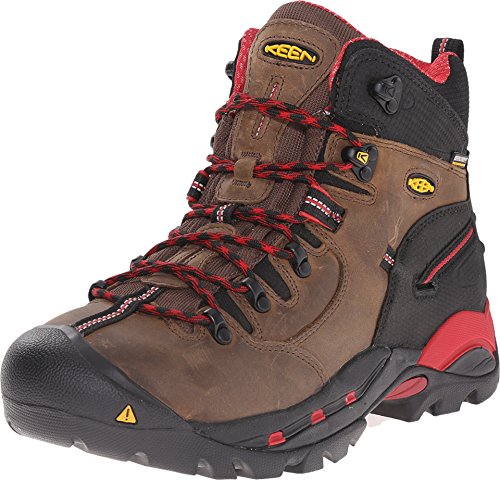
- Best lightweight → KEEN Utility Pittsburgh
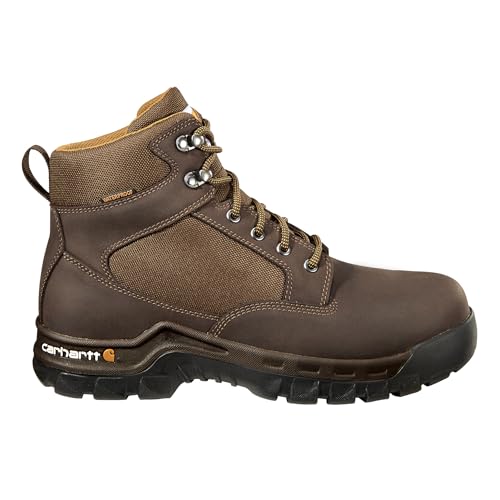
- Best wet environments → Carhartt Rugged Flex 6″ WP
- Best budget / apprentice → Wolverine Overpass 6″ Comp Toe
- Best long-term investment → Thorogood American Heritage 8″
Quick Picks — Decision Engine
| Use Case | Boot | If This Is You… | Price | Check Price |
|---|---|---|---|---|
| Best overall for pipefitters | Red Wing Heritage Moc Toe 875 | 👉 Primarily on flat plant floors | $220–$250 | Amazon → |
| Best met guard protection | Thorogood 804-6474 Met Guard | 👉 Site requires met guard PPE or large-bore pipe handling | $230–$260 | Amazon → |
| Best EH-critical / refinery | Timberland PRO Boondock HD | 👉 Near live panels, needs composite toe for plant access | $195–$215 | Amazon → |
| Best for ladder-heavy work | Danner Bull Run 6″ | 👉 Climbing ladders or scaffolding daily | $200–$230 | Amazon → |
| Best lightweight option | KEEN Utility Pittsburgh | 👉 Boot weight matters at hour 10 of a 12-hour shift | $165–$185 | Amazon → |
| Best for wet environments | Carhartt Rugged Flex 6″ WP | 👉 Standing in condensate, steam runoff, or rain regularly | $155–$175 | Amazon → |
| Best budget / apprentice | Wolverine Overpass 6″ Comp Toe | 👉 Boot allowance under $150 | $130–$150 | Amazon → |
| Best long-term investment | Thorogood American Heritage 8″ | 👉 USA-assembled, resoleable, built to last 4–5 years | $185–$215 | Amazon → |
Full Comparison Table
| Boot | Toe | Met Guard | EH | WP | Sole | Welt | Ladder Safe | Price | Check Price |
|---|---|---|---|---|---|---|---|---|---|
| Red Wing 875 | Steel | No | Yes* | Yes | Wedge | Goodyear | ⚠️ Caution | $220–$250 | Amazon → |
| Thorogood 804-6474 | Steel | External M/75 | Yes* | Yes | Defined heel | Goodyear | ✅ Yes | $230–$260 | Amazon → |
| Timberland PRO Boondock HD | Composite | No | Yes* | Yes | Defined heel | Cement | ✅ Yes | $195–$215 | Amazon → |
| Danner Bull Run 6″ | Composite | No | Yes* | Yes | Defined heel | Goodyear | ✅ Best | $200–$230 | Amazon → |
| KEEN Utility Pittsburgh | Steel | No | Yes* | No | Defined 90° | Cement | ✅ Yes | $165–$185 | Amazon → |
| Carhartt Rugged Flex 6″ | Composite | No | Yes* | Yes | Defined heel | Cement | ✅ Yes | $155–$175 | Amazon → |
| Wolverine Overpass 6″ | Composite | No | Yes* | Yes | Defined heel | Cement | ✅ Yes | $130–$150 | Amazon → |
| Thorogood Heritage 8″ | Steel | No | Yes* | No | Wedge or Heel | Goodyear | ✅ Heel version | $185–$215 | Amazon → |
*Always verify current Amazon listing — EH certifications can change between production runs.
The Truth About Work Boots for Pipefitters
1. Most “work boots” sold on Amazon are not built for pipefitters. They pass basic ASTM tests but fall apart in 8 months of real industrial use. A lab certification and a job-site certification are not the same thing.
2. Wedge soles are massively over-recommended in the trades. On a ladder rung or oily scaffold grating, a wedge sole behaves completely differently from a defined heel — and that difference has caused serious injuries. This guide addresses that directly.
3. Comfort-first boots almost always sacrifice durability. Boots that feel amazing out of the box are almost always cement-constructed. A boot that takes 2 weeks to break in but lasts 4 years is a better trade — financially and physically.
4. The met guard debate is over. Get the met guard if there’s any doubt. A metatarsal fracture takes 6–8 weeks to heal. The met guard boot costs $30–$50 more. The math is not complicated.
5. EH rating is not optional on industrial sites — and it’s not permanent. Once your outsole develops cracks or worn-through spots, your EH protection is compromised regardless of what the tag says. Inspect your outsoles regularly.
Cost of Getting It Wrong
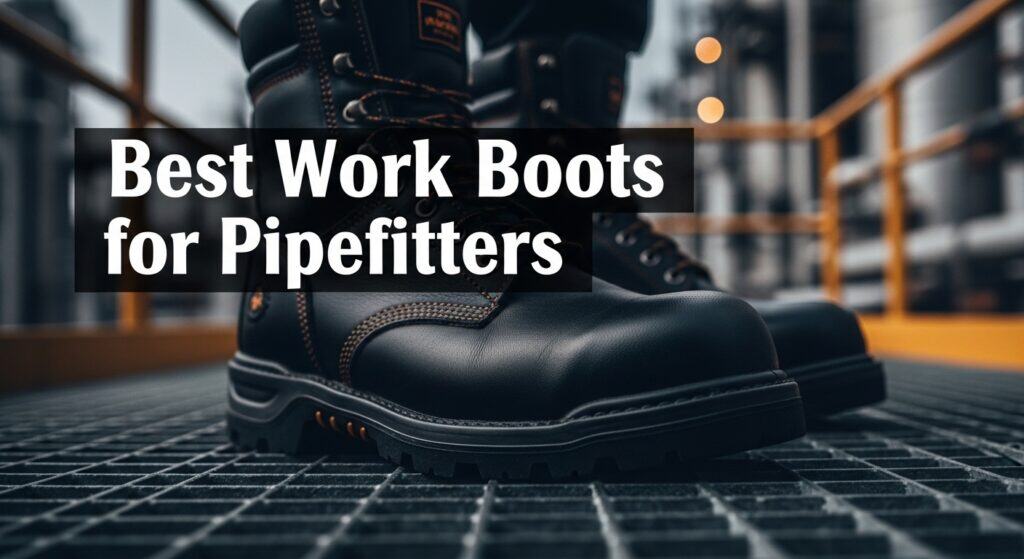
Heavy-duty work boots worn by a pipefitter in an industrial plant, showcasing safety features and rugged construction suitable for demanding pipefitting jobs.
| Wrong Choice | Real Consequence |
|---|---|
| Wedge sole on ladder or scaffold | Foot drifts forward on rung → fall risk → serious injury |
| No met guard on heavy pipe handling | Metatarsal fracture → 6–8 weeks off work → lost income |
| Cheap sole on oily industrial grating | Hydroplaning on oil film → slip → injury |
| Worn EH outsole on live-panel site | Zero electrical insulation despite the EH tag on the boot |
| Cement boot instead of Goodyear welt | Replacing boots every 12–14 months → $150–$250 extra per year |
| Comfort boot without outsole compound resistance | Outsole degrading from petroleum exposure → sole separation mid-shift |
“A $30 upgrade to met guard protection. A $50 upgrade to a Goodyear-welted boot. These are not luxury decisions — they’re safety and financial decisions. Wrong boots cost more than right ones.”
What Makes Pipefitting One of the Hardest Trades on Boots
In a single shift, a pipefitter faces a hazard profile that few other trades can match:
Metatarsal exposure — horizontal pipe handling means large-diameter pipe can roll or drop directly onto the top of the foot, an area completely unprotected by standard steel-toe boots. This is why met guards exist and why some sites mandate them.
Electrical hazard — EH certification provides 75,000V insulation under dry conditions with an intact outsole. That “dry conditions” and “intact outsole” qualification is critical. EH is a secondary line of defense, not a substitute for LOTO procedures — and a cracked or worn outsole eliminates EH protection entirely.
Defined heel requirement — a 90° heel catches and holds a ladder rung. A wedge sole has no defined edge to engage the rung — the foot continues to drift forward under body weight, especially after hours of use when fatigue affects foot positioning. This is not a minor preference difference; it’s a fall risk.
Oily grating — a flat wedge sole in contact with a thin film of oil on steel grating will hydroplane. Lug-edged outsoles with defined heel geometry cut through the oil film and make contact with the grating surface directly. This distinction doesn’t show up in ASTM ratings — it shows up in incident reports.
Midsole fatigue — at hour 11 of a 12-hour concrete shift with steel pipe on your shoulder, the quality of your midsole directly affects your lower back and knees. This is not comfort marketing — it’s the biomechanical reality of standing on hard surfaces under load for extended periods.
How We Evaluated These Boots
| Criterion | Weight | What We Checked |
|---|---|---|
| ASTM safety certifications | 25% | Steel/composite toe F2413, EH, met guard M/75 — verified per listing |
| Ladder & scaffold performance | 20% | Heel geometry, heel-rung contact area, lateral stability |
| Durability under industrial conditions | 20% | Welt construction, outsole compound, leather grade, stitching |
| All-day comfort on hard surfaces | 15% | Midsole quality, footbed, shift-length fatigue profile |
| Waterproofing & chemical resistance | 10% | Membrane type, seam sealing, outsole on wet/oily surfaces |
| Boot allowance value | 10% | Cost vs. lifespan; resoleability; total cost of ownership |
What Pipefitters Actually Complain About
“The met guard catches on ladder rungs.” External met guards overhang the toe box — the guard changes your foot geometry on the rung slightly. Practice the ladder motion before you’re 40 feet up. It becomes natural after a few shifts.
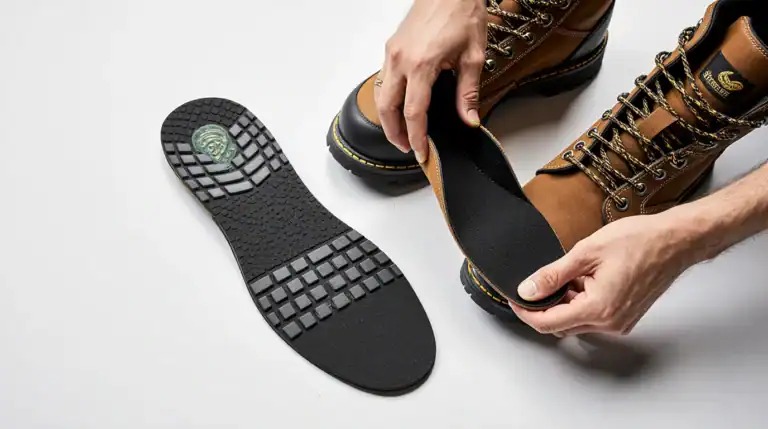
“Waterproof boots become sweat traps by hour 6.” Fix: moisture-wicking socks and a breathable aftermarket insole. The waterproofing that keeps moisture out also slows moisture escape. Manage the interior environment with your sock and insole choices.
“Wedge soles on oily grating.” Flat wedge soles hydroplane on a thin film of oil on steel grating. If your site has significant oily grating exposure, a defined heel with lug pattern is non-negotiable — not a preference.
“Composite toe cracking after heavy impact.” Steel toes deform after severe impact but remain structurally protective. A cracked composite toe has reduced subsequent protection. On sites with frequent heavy impact risk, steel toe has a practical durability advantage.
“The EH rating gave me false confidence.” EH is a secondary electrical line of defense only. LOTO (Lockout/Tagout) procedures are primary. A cracked or worn-through outsole compromises EH protection immediately — inspect your soles regularly.
“Break-in on the wrong schedule.” Goodyear-welted leather boots take 5–7 full shifts before the leather conforms to your foot. Don’t break in new welted boots on a brutal first 12-hour shift — start on shorter or lighter shifts and build up.
Best Boot by Pipefitting Scenario
| Scenario | Best Pick | Why |
|---|---|---|
| Refinery / heavy industrial (met guard required) | Thorogood 804-6474 | Only pick with external ASTM M/75 met guard + defined heel |
| Ladder-heavy (scaffolding, elevated pipe racks) | Danner Bull Run 6″ | Goodyear welt + defined heel that locks into ladder rungs |
| Wet environments (steam, condensate, outdoor) | Carhartt Rugged Flex 6″ WP | Best waterproofing value; full-grain leather handles condensate |
| All-day concrete (plant floors, slab work) | Thorogood Heritage 8″ | Wedge sole max comfort on flat surfaces; resoleable |
| EH-critical / plant access | Timberland PRO Boondock HD | Composite toe (no metal detector) + anti-fatigue midsole |
| Apprentice / boot allowance under $150 | Wolverine Overpass 6″ | Full safety spec under budget |
| Long-term investment (4–5 year boot) | Red Wing 875 or Thorogood Heritage | Goodyear welt + resoleable = best lifetime cost |
| Cold environments (winter outdoor pipe work) | Timberland Boondock or Danner Bull Run | Composite toe does not conduct cold |
Red Wing vs. Thorogood for Pipefitters
| Factor | Red Wing Heritage Classic Moc Toe 875 | Thorogood American Heritage |
|---|---|---|
| Country of assembly | USA | USA (Heritage line) |
| Sole type | Wedge | Wedge or defined heel — choose at order |
| Ladder safety | ⚠️ Wedge = poor ladder rung grip | ✅ Heel version safe for ladders |
| Waterproofing | Yes — waterproof leather | No (Storm Welt = water resistant) |
| Break-in period | 3–4 weeks | 2–3 weeks |
| Comfort at 12 hours | Excellent once broken in | Excellent once broken in |
| Resole cost | ~$80–$100 | ~$70–$90 |
| Price | $220–$250 | $185–$215 |
| Union brand preference | Very high | High |
| Met guard version | Harder to find on Amazon | Yes — 804-6474 widely available |
| Best for | Plant floor, concrete-heavy, waterproof needed | Versatile industrial, heel version for ladders |
Verdict: Primarily flat plant floors + waterproof needed → Red Wing 875. Ladder capability or met guard required → Thorogood. Mixed environment → Thorogood Heritage heel sole.
The Most Overrated Boot for Pipefitters
The pick: Wedge-sole-only boots for mixed-environment pipefitters.
The Red Wing 875 and Thorogood Heritage moc toes with wedge soles are exceptional boots — for pipefitters who work primarily on flat ground. They’re comfortable, durable, and union-preferred. Nobody is disputing that.
But recommending a wedge sole as the default pick for a trade where ladder and scaffold work is routine is genuinely bad advice. A wedge sole on a ladder rung is not the same as a defined heel on a ladder rung — the foot positioning difference becomes more significant as the shift goes on and fatigue sets in.
What to choose instead: Thorogood American Heritage with the defined heel sole (same boot, safer geometry), or Danner Bull Run 6″ for ladder-primary work. Save the wedge sole for the flat-surface days.
8 Best Work Boots for Pipefitters: Full Reviews
Discover the durability and style of work boots designed for pipefitters. Your feet deserve the best protection on the job!
Each boot below was evaluated for ASTM certifications, ladder safety, construction quality, comfort under industrial conditions, and real-world durability. Prices are approximate and fluctuate on Amazon.
1. Red Wing Heritage Classic Moc Toe 875 — Best Overall (Flat Work)
One-line verdict: The best boot on this list for pipefitters who work primarily on flat plant floors and concrete — Goodyear-welted, waterproof leather, and the only boot in this roundup that conforms to your specific foot shape after break-in.
Why This Boot Stands Out
The Red Wing 875’s defining characteristic isn’t visible in any spec table: the cork footbed beneath the insole gradually conforms to the exact contours of your foot over the first few weeks of wear. At hour 11 on a concrete plant floor with pipe on your shoulder, the difference between a boot that fits generically and one that fits your specific arch is not subtle. This is what justifies the break-in investment.
The MAXWear wedge outsole compound is genuinely superior to what most boots in this price range use. After a week on steel grating, the MAXWear compound shows less rounding than most cement boots show after a month. Compound quality matters for long-term traction — cheap rubber wears smooth, stops gripping, and creates the slip risk it was supposed to prevent.
Goodyear welt construction means this boot can be resoled when the outsole wears out. The financial math: $240 boot + $90 resole = $330 across 6–8 years. Three cement boots at $160 each = $480 for the same period. The welted boot is not a luxury — it’s the cheaper option over time.
The waterproof leather upper handles condensate, rain, and standing moisture that most pipefitters encounter in outdoor installation or steam system work. Waterproof leather maintains this protection without a separate membrane that can delaminate — it’s the most durable form of moisture protection available in work boots.
Key Specs
- Toe: Steel — ASTM F2413 I/C
- EH Rated: Yes — verify current listing
- Met Guard: No
- Waterproofing: Yes — waterproof leather upper
- Outsole: MAXWear wedge compound
- Construction: Goodyear welt — resoleable
- Shaft Height: 6″
- Ladder Safety: ⚠️ Wedge sole — caution on ladders
Watch-Outs
- Wedge sole — not recommended for heavy ladder or scaffold work; foot drifts forward on rungs
- 3–4 week break-in period — don’t wear for the first time on a brutal 12-hour shift
- Heavier than composite alternatives — factor in at hour 10
- No met guard option readily available on Amazon
❌ Skip This Boot If: You climb ladders daily, your site has significant oily grating, or you need met guard compliance.
Best for: Journeyman pipefitters primarily on flat plant floors and concrete who want a 4–5 year investment boot with waterproof leather and best-in-class concrete comfort.
2. Thorogood 804-6474 External Met Guard — Best Met Guard Protection
One-line verdict: The only boot on this list with an external ASTM M/75 met guard and a defined heel — the complete protection package for refinery, power plant, and heavy industrial pipefitters where met guard PPE is required.
Why This Boot Stands Out
When your site’s PPE assessment or union contract requires metatarsal protection, there is no substitute for a boot that carries the ASTM F2413 M/75 label. An add-on strap guard is not equivalent. A boot that “looks like it has a met guard” is not equivalent. The Thorogood 804-6474 carries the label, and it combines that protection with a defined heel that actually works on ladder rungs — a combination that eliminates the two biggest hazard gaps on heavy industrial pipefitting sites.
The external met guard’s geometry changes how your foot sits on a ladder rung — it takes one to two shifts to adapt your foot positioning. This is not a flaw; it’s a feature of external met guard design. Practice the motion consciously on low rungs before you’re 40 feet up. After a few shifts, it becomes natural.
Goodyear storm welt construction means this boot is resoleable — the met guard doesn’t change the lifespan math. The MAXWear outsole compound performs on both flat surfaces and defined-heel ladder work. USA assembly means consistent leather grade and stitching quality across production runs, which matters for a boot you’re relying on in high-hazard environments.
One practical note that veteran pipefitters learn quickly: the met guard edges are harder on laces than a standard boot. Keep a spare pair of laces in your bag. It’s a minor issue but worth knowing before your laces fail mid-shift.
Key Specs
- Toe: Steel — ASTM F2413 I/C
- EH Rated: Yes — verify current listing
- Met Guard: External — ASTM F2413 M/75
- Waterproofing: Yes — Storm Welt construction
- Outsole: Defined heel — MAXWear compound
- Construction: Goodyear storm welt — resoleable
- Shaft Height: 6″ or 8″
- Ladder Safety: ✅ Defined heel — adjusted technique required for external guard
Watch-Outs
- External guard adds bulk — requires adjusted ladder technique; practice before elevated work
- Heavier than non-met-guard alternatives — factor in for long walking shifts
- Laces fray faster from met guard edges — carry a spare pair
- Not suitable for very confined pipe spaces where guard overhang creates clearance issues
❌ Skip This Boot If: Your site doesn’t require met guard PPE, you work exclusively in very confined pipe spaces, or you need a non-metallic composite toe.
Best for: Pipefitters on refinery, power plant, or heavy industrial sites where met guard PPE is required by site policy or union contract.
3. Timberland PRO Boondock HD — Best for EH-Critical / Refinery
One-line verdict: The best composite-toe EH boot for pipefitters who work near live electrical panels and need plant access without triggering metal detectors — strong anti-fatigue midsole, seam-sealed waterproof construction, and defined heel for ladder work.
Why This Boot Stands Out
On EH-critical sites and plant access environments, composite toe is frequently preferred or required — no metal content means no metal detector interference, and composite does not conduct cold or heat the way steel does. The Timberland PRO Boondock HD delivers composite toe with verified EH certification and adds the anti-fatigue midsole technology that genuinely separates Timberland PRO from lower-tier options at long-shift performance.
The anti-fatigue technology is not marketing language. At hour 9, the difference between this boot’s midsole and a standard EVA midsole is tangible in your lower back and knees — the energy return cone system redistributes the load of standing on hard surfaces in a way that basic cushioning doesn’t achieve. For pipefitters running 10–12 hour shifts on plant concrete, that’s not a comfort preference — it’s a physical output over the full shift.
Seam-sealed waterproof construction provides reliable moisture protection in condensate environments, steam system work, and outdoor installation. The oil and slip-resistant outsole handles the wet, chemically-treated surfaces common in refinery and power plant environments.
One fit note from field experience: the toe box can feel tight during sustained kneeling work — a common position when fitting pipe at low elevations. If you spend significant time on your knees, size up half a size from your normal measurement before ordering.
Key Specs
- Toe: Composite — ASTM F2413 I/C
- EH Rated: Yes — verify current listing
- Met Guard: No
- Waterproofing: Yes — seam-sealed waterproof construction
- Outsole: Defined heel — oil/slip-resistant rubber
- Construction: Direct-attach cement (not resoleable)
- Shaft Height: 6″
- Ladder Safety: ✅ Defined heel
Watch-Outs
- Not Goodyear-welted — cannot be resoled; plan for replacement rather than repair
- Composite toe can feel tight when kneeling — size up half a size if significant kneeling work
- No met guard option in this model
❌ Skip This Boot If: You plan to resole your boots, you need a met guard, or you do heavy sustained kneeling work and can’t size up.
Best for: Pipefitters on EH-critical and plant access sites who prioritize all-day anti-fatigue comfort and composite toe non-metallic construction.
4. Danner Bull Run 6″ — Best for Ladders & Scaffolding
One-line verdict: The best ladder and scaffold boot on this list — Goodyear-welted, USA-assembled, with defined heel geometry that locks into rungs and stays locked after hours of climbing.
Why This Boot Stands Out
On a ladder rung, the heel locks in and holds position. This sounds obvious — but after 4 hours on scaffolding in a wedge-sole boot, the difference in how stable your foot position remains is significant. The Danner Bull Run’s defined heel geometry doesn’t just engage the rung at the start of the climb; it maintains that engagement as fatigue affects foot positioning through the shift. That sustained stability is what earns this boot the ladder slot on this list.
Goodyear welt construction at this price point — combined with USA assembly — means consistent build quality and a boot that can be resoled when the outsole wears down. The hybrid outsole compound performs on both steel grating and concrete, making this a versatile performer for mixed-surface pipefitting environments.
Danner Dry waterproof lining handles condensate, rain, and wet environments without the breathability sacrifice of cheaper membrane constructions. The composite toe eliminates cold conduction — a real factor on winter outdoor pipe work where steel toes transfer cold directly to the foot.
Break-in is real but shorter than full-grain heavy leather alternatives — plan for 3–4 shifts rather than the 6–7 shifts required by Red Wing welted leather. The investment in break-in time pays off in a boot that lasts 3–5 years with resoling and consistently performs on the ladder work that defines this category.
Key Specs
- Toe: Composite — ASTM F2413 I/C
- EH Rated: Yes — verify current listing
- Met Guard: No
- Waterproofing: Yes — Danner Dry waterproof lining
- Outsole: Defined heel — hybrid outsole compound
- Construction: Goodyear welt — resoleable, USA-assembled
- Shaft Height: 6″
- Ladder Safety: ✅ Best on this list
Watch-Outs
- Less cushioned for long flat-concrete shifts compared to the Timberland PRO anti-fatigue system
- Moderate break-in — 3–4 full shifts before full comfort
- No met guard option
- Higher price vs. cement alternatives without resoling benefit
❌ Skip This Boot If: You work primarily on flat concrete all day, you need met guard compliance, or you’re on a strict budget.
Best for: Pipefitters who work extensively on ladders, scaffolding, and elevated pipe racks where heel geometry and stable rung engagement is the primary safety requirement.
5. KEEN Utility Pittsburgh 6″ Steel Toe — Best Lightweight
One-line verdict: Zero break-in, the widest toe box on this list, a true 90° heel engineered for ladder rungs, and the KEEN.ReGEN midsole that delivers noticeably different long-shift comfort — the best immediate-wear comfort option for pipefitters on commercial or indoor sites.
Why This Boot Stands Out
Day one, hour one, these feel like you’ve been wearing them for a month. Every other boot on this list has a break-in period measured in shifts or weeks. The KEEN Utility Pittsburgh is the exception — the KEEN.ReGEN midsole and roomier toe box deliver usable comfort from the first hour of wear. For pipefitters who rotate between sites and need a boot that performs immediately, this matters.
The asymmetric, wider KEEN toe box is a real advantage for pipefitters who kneel frequently — more room at the toe cap means less pinching when the toe is in a flexed position. At ground-level pipe fitting, extended kneeling compresses the toe box repeatedly. The extra width in the KEEN last reduces that compression fatigue over long shifts.
The true 90° defined heel was specifically engineered for ladder rung use — KEEN built this feature into the Pittsburgh design for trade work, not as an afterthought. The oil and slip-resistant outsole handles the greasy, wet, and chemically-treated surfaces common on commercial pipefitting sites.
The limitation is the base model’s lack of waterproofing — fine for indoor and dry commercial sites, but a genuine constraint in outdoor installation, steam systems, or wet environments. If your work involves significant water exposure, the waterproof version (KEEN Utility Pittsburgh WP) resolves this, though it carries a slightly higher price point.
Key Specs
- Toe: Steel — ASTM F2413 I/C
- EH Rated: Yes — verify current listing
- Met Guard: No
- Waterproofing: No — base model (WP version available)
- Outsole: Defined 90° heel — oil/slip-resistant rubber
- Construction: Cement (not resoleable)
- Shaft Height: 6″
- Ladder Safety: ✅ Defined 90° heel — engineered for ladder use
Watch-Outs
- Base model not waterproof — significant limitation for wet environments
- Cement construction — not resoleable; plan for replacement
- No met guard option
❌ Skip This Boot If: You regularly work in water or condensate, you need a long-term resoleable boot, or you have heavy chemical exposure.
Best for: Pipefitters prioritizing immediate comfort and lighter weight on commercial or indoor work — particularly those who kneel frequently and benefit from the wider KEEN toe box.
6. Carhartt Rugged Flex 6″ Waterproof Composite Toe — Best Wet Environments
One-line verdict: The best waterproofing performance at this price point — full-grain leather handles standing condensate, steam runoff, and sustained outdoor wet exposure better than any synthetic-upper alternative in this range.
Why This Boot Stands Out
In wet environments — near steam condensate, working in rain, crossing puddles on outdoor pipe installation — the Carhartt Rugged Flex consistently outperforms everything else in this price range. The key is the full-grain leather upper: it handles moisture absorption and resistance better than synthetic uppers, which can saturate, crack at flexion points, and lose waterproofing integrity faster under repeated wet-dry cycling.
The Rugged Flex outsole provides noticeably better grip on wet concrete than flat-pattern soles — the flex grooves channel water away from the contact surface, maintaining grip on the slick wet floors common in water treatment plants, outdoor steam system work, and rain-exposed pipefitting environments.
At $155–$175, this is the value leader for pipefitters whose primary hazard is wet conditions. The composite toe is appropriate for EH-critical environments and plant access, and the defined heel handles ladder work without the wedge-sole risk. The FastDry lining manages interior moisture over long shifts in humid environments.
The honest limitation: cement construction means replacement rather than resoling. For a boot used primarily in wet environments — which accelerates outsole wear — plan for 12–18 months of heavy use before replacement. The lower initial price partially compensates for the shorter lifespan vs. a welted boot.
Key Specs
- Toe: Composite — ASTM F2413 I/C
- EH Rated: Yes — verify current listing
- Met Guard: No
- Waterproofing: Yes — waterproof full-grain leather upper
- Outsole: Defined heel — oil/slip-resistant Rugged Flex rubber
- Construction: Cement (not resoleable)
- Shaft Height: 6″
- Ladder Safety: ✅ Defined heel
Watch-Outs
- Cement construction — not resoleable
- Less cushioned for flat concrete all-day wear vs. Timberland PRO anti-fatigue system
- No met guard option
❌ Skip This Boot If: You work primarily on dry flat concrete all day, you need met guard compliance, or you want a resoleable boot.
Best for: Pipefitters regularly working in wet conditions — steam systems, water treatment, outdoor pipe installation, condensate-heavy environments.
7. Wolverine Overpass 6″ Composite Toe Waterproof — Best Budget / Apprentice
One-line verdict: The best full-spec safety boot under $150 for apprentice pipefitters or journeymen working through a limited boot allowance — composite toe, EH, waterproof, and defined heel without compromising on any required safety spec.
Why This Boot Stands Out
For an apprentice on a $140 boot allowance, the Wolverine Overpass covers every required safety specification and delivers adequate comfort for the first 12–18 months. The spec sheet reads like a mid-range boot — composite toe, ASTM F2413 certified, EH rated, waterproof membrane, defined heel — at a price point significantly below what those specifications typically cost in other brands.
The Durashocks midsole is effective early in the boot’s lifespan — noticeably cushioned on concrete for the first 6 months of use. By month 12 on heavy daily use, the midsole compression becomes visible and the cushioning benefit diminishes. This is the honest durability ceiling of a cement boot at this price point — it’s not a flaw, it’s a feature of the cost structure.
For first-year apprentices learning the trade, spending $150 on a boot that covers all required specs makes more sense than spending $250 on a premium boot while your job site preferences, boot fit requirements, and long-term brand preferences are still forming. Save the Goodyear-welted investment for when you know exactly what you need from a boot.
Widely available on Amazon Prime — availability and reliable delivery matter when you need a replacement boot quickly between shifts. The defined heel handles ladder work adequately, and the composite toe is appropriate for plant access environments where metal detectors are a factor.
Key Specs
- Toe: Composite — ASTM F2413 I/C
- EH Rated: Yes — verify current listing
- Met Guard: No
- Waterproofing: Yes — waterproof membrane
- Outsole: Defined heel — slip-resistant rubber
- Construction: Cement (not resoleable)
- Shaft Height: 6″
- Ladder Safety: ✅ Defined heel
Watch-Outs
- Cement construction — not resoleable; plan for replacement at 12–18 months
- Midsole compression visible by month 12 on heavy daily use
- Outsole wears faster on highly abrasive surfaces
- No met guard option
❌ Skip This Boot If: You want a 3–5 year resoleable boot, you work on highly abrasive surfaces daily, or met guard is required.
Best for: Apprentice pipefitters and journeymen with a sub-$150 boot allowance who need full safety spec coverage without compromise on any required certification.
8. Thorogood American Heritage 8″ Moc Toe — Best Long-Term Investment
One-line verdict: The best long-term investment boot for pipefitters who want USA assembly, Goodyear storm welt resoleability, choice of sole geometry, and 4–5 years of reliable performance from a single pair.
Why This Boot Stands Out
The 8″ shaft is not just a style choice — it adds ankle support that matters on uneven terrain, elevated pipe rack walks, and extended periods of carrying load. The coverage zone is also larger against debris, sparks, and chemical splash than a 6″ boot provides. For pipefitters on general industrial sites with varied terrain, that extra 2 inches of shaft is functional, not aesthetic.
USA assembly means consistent leather grade and stitching quality across production runs — a detail that matters for a boot you’re relying on in high-hazard environments. The leather quality variance in offshore-assembled boots can be significant between batches; Heritage line quality is more predictable.
Critical ordering note: The Thorogood Heritage is available in wedge sole and defined heel configurations. If you work on ladders or scaffolding, order the defined heel version. The wedge version is more comfortable on flat concrete but the defined heel version is more versatile across mixed pipefitting environments. Confirm your sole choice at the time of ordering — this detail is not always prominent in the listing.
Goodyear storm welt construction means resoleability — plan for a $70–$90 resole when the heel or outsole wears down. The boot allowance math: $200 boot + $80 resole = $280 across 6–8 years. Three cement alternatives at $160 = $480. The Heritage is the cheaper option across its useful lifespan, not the expensive one.
Key Specs
- Toe: Steel — ASTM F2413 I/C
- EH Rated: Yes — verify current listing
- Met Guard: No
- Waterproofing: No — Storm Welt provides water resistance, not full waterproofing
- Outsole: Wedge or defined heel — confirm at order
- Construction: Goodyear storm welt — resoleable, USA-assembled
- Shaft Height: 8″
- Ladder Safety: ✅ Heel version / ⚠️ Wedge version
Watch-Outs
- Not waterproof — water resistant only; not for sustained wet environments
- No met guard option readily available on Amazon
- 8″ shaft can restrict movement in very tight pipe spaces
- Confirm sole type (wedge vs. defined heel) at ordering — both versions exist under the same listing name
❌ Skip This Boot If: You need waterproofing, you need a met guard, or you work in very confined spaces where 8″ shaft creates restriction.
Best for: Journeyman pipefitters wanting a 4–5 year USA-made resoleable boot for general industrial work — particularly those who value ankle support and long-term investment value over lighter initial weight.
Buying Guide: How to Choose Work Boots for Pipefitting
ASTM F2413 — In Plain English
Every pipefitter boot needs to carry the right ASTM F2413 certifications for your specific site. Here’s what the labels actually mean:
- I/C (Impact/Compression): Basic safety toe — 75 ft-lbs impact, 2,500 lbs compression. Non-negotiable for any pipefitting environment.
- EH (Electrical Hazard): 75,000 volts insulation — but only under dry conditions with an intact outsole. This is a secondary line of defense, not a replacement for LOTO procedures. Any crack, worn-through spot, or moisture compromise eliminates EH protection.
- M/75 (Met Guard): Metatarsal protection tested to 75 ft-lbs. Required on sites where top-of-foot impact risk is identified — refinery, power plant, heavy pipe handling.
- PR (Puncture Resistant): Relevant on sites with rebar, metal debris, or sharp material on floors.
- WP (Waterproof): ASTM-tested waterproofing — meaningfully different from “water resistant” or “water repellent.” Only WP-labeled boots provide tested moisture exclusion.
Defined Heel vs. Wedge Sole — The Most Important Choice for Pipefitters
This is the decision most pipefitter boot guides get wrong by omission.
Wedge sole: Maximum flat-surface comfort. The flat contact area distributes pressure evenly on concrete. No defined heel edge — nothing to catch a ladder rung.
Defined 90° heel: The heel edge catches the ladder rung and holds foot position. On a scaffold at height after 6 hours of climbing, that stability is not a preference — it’s a safety requirement.
The rule: Any significant ladder or scaffold work in your regular duties → defined heel required. This is not a comfort preference or a style choice. It is a fall risk management decision.
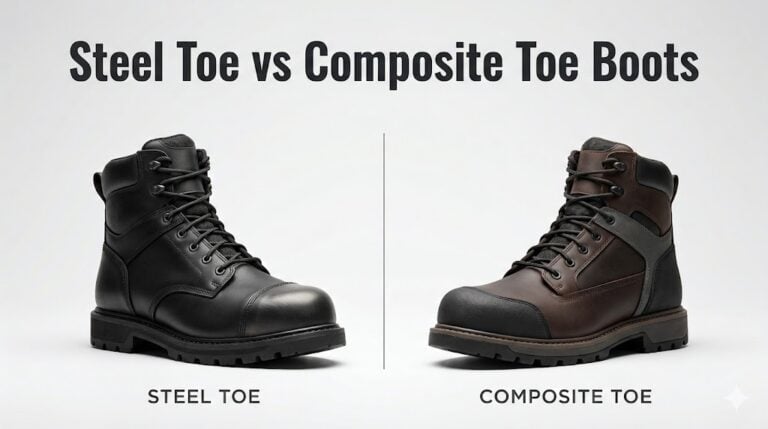
Steel Toe vs. Composite Toe
Both meet ASTM F2413 I/C equally — there is no protection difference at the certification level.
| Factor | Steel Toe | Composite Toe |
|---|---|---|
| ASTM F2413 I/C protection | ✅ Equal | ✅ Equal |
| Weight | Heavier | ~10–15% lighter |
| Cold weather | Conducts cold | Does not conduct cold or heat |
| Metal detectors | Will trigger | Will not trigger |
| After severe impact | Deforms — still protective | Can crack — reduced subsequent protection |
| EH-critical sites | Yes | Yes — preferred |
| Best for pipefitters | Mechanical sites, heavy pipe, cold not a factor | Plant access, EH-heavy sites, cold environments |
Met Guard — When Is It Required?
Met guard boots are required when: your site’s PPE hazard assessment specifies it, you work in refinery or power plant environments with top-of-foot impact risk, you handle large-diameter pipe regularly, or your union contract specifies met guard PPE.
If in doubt — get the met guard. A metatarsal fracture takes 6–8 weeks to heal. The met guard boot costs $30–$50 more. That is the entire cost-benefit analysis.
Goodyear Welt vs. Cement Construction
Goodyear welt: The sole is mechanically stitched to the upper. Resoleable at ~$70–$90. Typical lifespan: 3–5+ years with one or two resoles. Stiff initially — requires real break-in time.
Cement construction: The sole is bonded with adhesive. Not resoleable — replace when the outsole wears out. Lighter and more flexible from day one. Typical lifespan: 12–18 months on heavy daily use.
Boot allowance math: $220 Goodyear-welted boot + $85 resole = $305 across 6–8 years. Three cement boots at $160 each = $480 for the same period. The welted boot is the cheaper option over time — and the union contract boot allowance exists for exactly this reason.
Waterproofing and Chemical Resistance
Full waterproof membrane construction provides maximum moisture exclusion but reduces breathability — interior moisture management (socks, insoles) becomes more important. Full-grain leather uppers handle most pipeline chemicals and petroleum derivatives better than synthetic uppers. Outsole compound chemical resistance matters on sites with petroleum, solvents, or industrial chemicals on floor surfaces — verify outsole specs against your site’s floor hazard profile.
Sole Type Quick Reference
| Environment | Recommended Sole | Why |
|---|---|---|
| Concrete plant floors, flat slab | Wedge sole | Maximum flat-surface comfort and pressure distribution |
| Ladders, scaffolding, elevated racks | Defined 90° heel | Heel catches and holds ladder rung — fall risk reduction |
| Oily steel grating (refineries) | Defined heel + lug pattern | Lug edges grip grating; wedge can hydroplane on oil film |
| Wet concrete, standing water | Defined heel + slip-rated outsole | Stability and traction combined |
| Mixed terrain (floor + ladders) | Defined heel | Heel works everywhere; wedge works only on flat surfaces |
6 Boot Mistakes Pipefitters Make
Discover the common boot mistakes pipefitters make.
1. Buying wedge soles for ladder-heavy work. The most common and most consequential mistake. If you climb ladders, you need a defined heel. Full stop.
2. Skipping the met guard because it “feels clunky.” The external guard geometry changes in about two shifts. The metatarsal fracture recovery takes 6–8 weeks. The discomfort trade-off is not close.
3. Trusting EH rating on a worn or cracked outsole. EH protection requires an intact outsole. Inspect your soles regularly — any crack or worn-through area eliminates electrical insulation regardless of the tag on the boot.
4. Breaking in Goodyear-welted boots on a brutal first shift. Welted leather boots take 5–7 full shifts to conform to your foot. Your first 12-hour shift on a new pair of Red Wings or Thorogoods is not the break-in plan. Start shorter.
5. Buying based on online comfort reviews at week 2. Most Amazon boot reviews are written in the first two weeks. Goodyear-welted boots that score lower initially almost always score higher at 18 months — the reviewers just aren’t there yet.
6. Treating your boot allowance as a ceiling rather than a floor. Your union negotiated that allowance because boots are a tool, not a personal expense. A $220 welted boot you can resole is a better financial decision than a $140 cement boot you replace every 14 months — even before factoring in the safety and comfort difference.
Boot Care: Getting 2–3+ Years from Your Boots
- Drying: Air dry only — never near direct heat, which dries out and cracks leather and degrades adhesive
- Cleaning: Remove cutting oil, chemicals, and mud after every shift — petroleum derivatives degrade leather and outsole compounds
- Conditioning: Full-grain leather every 4–6 weeks — Obenauf’s Heavy Duty LP is the standard recommendation in the trades
- EH outsole inspection: Check regularly for cracks — any compromise eliminates EH protection regardless of the boot’s age
- Insoles: Replace factory insoles every 6 months — midsole compression compounds on a degraded insole
- Resoling: Resole Goodyear-welted boots when the heel or outsole shows significant wear — don’t wait until the upper is compromised
- Rotation: Two pairs, alternated daily — leather needs 24 hours to decompress and dry between wearings. This extends boot lifespan by 30–40%
Frequently Asked Questions: Work Boots for Pipefitters
What boots do pipefitters wear?
Most pipefitters wear Goodyear-welted leather work boots with steel or composite toe, EH rating, and a defined heel for ladder work. Top brands in the trade include Red Wing, Thorogood, Danner, and Timberland PRO. On met-guard-required sites, Thorogood’s 804-6474 external met guard boot is widely used. Boot choice depends on site hazard profile — flat plant floor work vs. ladder-heavy work requires different sole geometry.
Do pipefitters need metatarsal guards?
It depends on the site. Refinery, power plant, and heavy industrial pipefitting environments frequently require met guard PPE under site safety policies or union contracts. Workers handling large-diameter or heavy pipe on a regular basis face meaningful metatarsal impact risk. If your site’s PPE assessment identifies top-of-foot hazard, met guard boots are required — not optional. When in doubt, consult your site safety officer.
Are composite toe boots safe for pipefitters?
Yes — composite toe meets the same ASTM F2413 I/C impact and compression standards as steel toe. Composite is lighter, doesn’t conduct temperature, and doesn’t trigger metal detectors — advantages on EH-critical sites and plant access environments. The one trade-off: after a severe impact, a composite toe can crack and lose subsequent protection, while a steel toe deforms but remains protective. On sites with frequent heavy impact, steel toe may have a practical durability edge.
What ASTM ratings do pipefitters need?
At minimum: ASTM F2413 I/C (safety toe) and EH (electrical hazard) for most industrial pipefitting sites. Add M/75 (met guard) if your site requires metatarsal protection. Add WP if waterproofing is needed for your specific environment. PR (puncture resistance) is relevant on sites with significant floor debris. Always verify current certifications on the Amazon listing — ratings can change between production runs.
Are wedge sole boots safe for ladder work?
No — wedge soles do not engage ladder rungs securely. A wedge sole has no defined edge to catch the rung, and the foot continues to drift forward under body weight, especially as fatigue sets in after hours of climbing. Any pipefitter who regularly climbs ladders or works on scaffolding needs a defined 90° heel. This is not a preference — it’s a fall risk management requirement.
How long should work boots last for a pipefitter?
Cement-construction boots: 12–18 months on heavy daily industrial use. Goodyear-welted boots: 3–5 years with one or two resoles. The difference in lifespan is why Goodyear-welted boots at $200–$250 are often cheaper over time than cement boots at $140–$160. Boot care practices — conditioning, rotation, drying — significantly affect actual lifespan regardless of construction type.
Steel toe or composite toe for refinery work?
Composite toe is generally preferred for refinery work — no metal detector interference for plant access, no cold conduction in outdoor environments, and EH certification is maintained without metal in the toe box. Verify your specific site’s PPE policy, as some refinery and petrochemical sites specify toe type requirements. Both meet the same ASTM impact and compression protection standard.
Can I use my boot allowance on Amazon?
Policy varies by union local and employer. Most boot allowances can be used for direct purchases including online retailers — but confirm your specific allowance terms. Some employers require receipts for reimbursement; Amazon orders generate receipts automatically. If your allowance is a reimbursement program, purchase through your personal Amazon account and submit the receipt.
Why do EH-rated boots sometimes fail to protect?
EH protection requires two conditions: dry outsole and intact outsole. A cracked, worn-through, or wet outsole compromises electrical insulation immediately — the EH tag on the boot is no longer valid. EH is also a secondary defense only — not a substitute for LOTO procedures and proper electrical safety practices. Inspect your outsoles regularly and replace boots when outsole integrity is compromised.
Red Wing or Thorogood for pipefitters?
For primarily flat plant floor work where waterproofing matters: Red Wing 875 — better waterproof leather and exceptional flat-surface durability. For ladder work, met guard requirement, or mixed environments: Thorogood — the defined heel version handles ladders, and the 804-6474 is the most available met guard boot on Amazon. Both are Goodyear-welted, USA-assembled, union-preferred options. The deciding factors are sole geometry, waterproofing need, and met guard requirement — not brand loyalty.
Final Verdict: Best Work Boots for Pipefitters
The right boot for a pipefitter depends on where you work, what your site requires, and how long you need it to last. Here’s the final breakdown:
| Need | Best Pick | Check Price |
|---|---|---|
| 🏆 Best overall (flat work) | Red Wing Heritage Classic Moc Toe 875 | Amazon → |
| 🦺 Met guard required | Thorogood 804-6474 External Met Guard | Amazon → |
| ⚡ EH-critical / plant access | Timberland PRO Boondock HD | Amazon → |
| 🪜 Ladder-heavy work | Danner Bull Run 6″ | Amazon → |
| 🪶 Best lightweight | KEEN Utility Pittsburgh | Amazon → |
| 💧 Wet environments | Carhartt Rugged Flex 6″ WP | Amazon → |
| 💰 Budget / apprentice | Wolverine Overpass 6″ Comp Toe | Amazon → |
| 🔨 Long-term investment | Thorogood American Heritage 8″ | Amazon → |
Your union negotiated that boot allowance for a reason. Use it on a Goodyear-welted boot you can resole — not on a cement boot you’ll replace in 14 months. The right boot isn’t an expense. It’s a tool.
↑ Jump back to the Fast Answer Box to compare all picks at a glance.