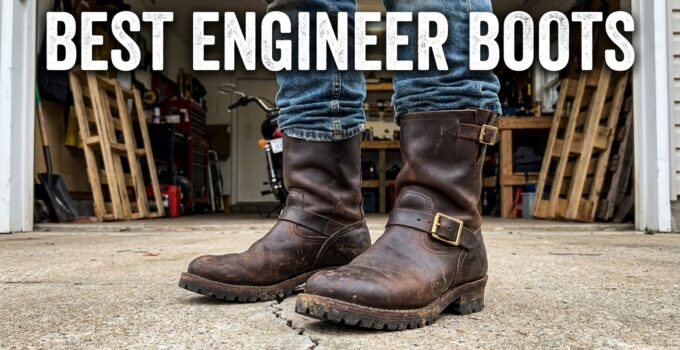
The boot designed for steam railroad firemen became the symbol of American rebellion. The engineer boot — with its straight stovepipe shaft, functional ankle buckle, and logger heel — has been worn by industrial workers, World War II pilots, 1950s greasers, punk bands, Japanese heritage enthusiasts, and every generation in between that has understood what a purposeful boot looks like. In 2026 it is having another moment, this time among women, streetwear buyers, and workwear enthusiasts who have rediscovered the design language of American industrial footwear.
The problem is that most “best engineer boots” guides treat this as a single product category with a single buyer. It is not. The heritage buyer who wants a Wesco Boss that will outlive their motorcycle has nothing in common with the fashion buyer who wants the silhouette for $100. The motorcyclist who needs genuine leather, oil-resistant outsoles, and a proper shaft for road debris protection has nothing in common with the person who wants to wear the aesthetic to a café on the weekend. And no competitor guide explains what an engineer boot actually is at the anatomy level — which means buyers routinely purchase harness boots, Chelsea boots, or fashion approximations thinking they are buying engineer boots.
This guide covers all of it: the history told correctly, the anatomy explained properly, the three audiences served honestly, and 11 verified picks from heritage tier to budget.
Last updated: May 2026.
A Brief History: From Railroad Fireboxes to Marlon Brando to Your Local Café
The engineer boot’s origin is more nuanced than the popular mythology. The commonly cited “steam locomotive fireman” origin — the idea that the boot was created specifically to protect workers stoking locomotive fireboxes from burning embers — is likely partly apocryphal, though the railroad environment and industrial spark-protection rationale are broadly correct for the era.
The authentic timeline begins in 1860 with Frye Company producing harness boots for US Cavalry featuring ankle straps and metal ring hardware — the direct design ancestor of the engineer boot’s defining elements. By 1937 to 1939, two American companies independently developed the boot now known as the engineer boot: Chippewa Shoe Manufacturing Company in Chippewa Falls, Wisconsin, and West Coast Shoe Company (Wesco) in Scappoose, Oregon. Both companies based their designs on earlier English riding boot traditions and targeted industrial workers whose environments required ankle and lower calf protection without laces — a leather boot with laces near hot equipment and sharp metal debris is a genuine hazard, and the lace-free buckle solution the engineer boot pioneered was functional, not aesthetic.
Through the 1940s, returning veterans and the growing American motorcycle culture adopted the engineer boot as the default riding boot. The lace-free design eliminated the lace-catch risk near engine and drivetrain components. The shaft height and genuine leather provided meaningful protection from road debris, heat, and abrasion. And the pull-on design allowed emergency removal that tied boots could not.
The 1950s made the engineer boot a cultural symbol rather than merely a work boot. Marlon Brando in The Wild One (1953) and James Dean’s greaser aesthetic cemented the engineer boot as the footwear of American rebellion — anti-establishment, working-class, physically capable, and visually unmistakable. The boot carried this counterculture identity through the punk movement of the 1970s and 1980s, the heavy metal and rockabilly revivals of the 1980s and 1990s, the Japanese heritage menswear movement of the 2000s and 2010s, and into the current workwear and fashion rehabilitation that has brought engineer boots into mainstream wardrobes — including, significantly, women’s fashion.
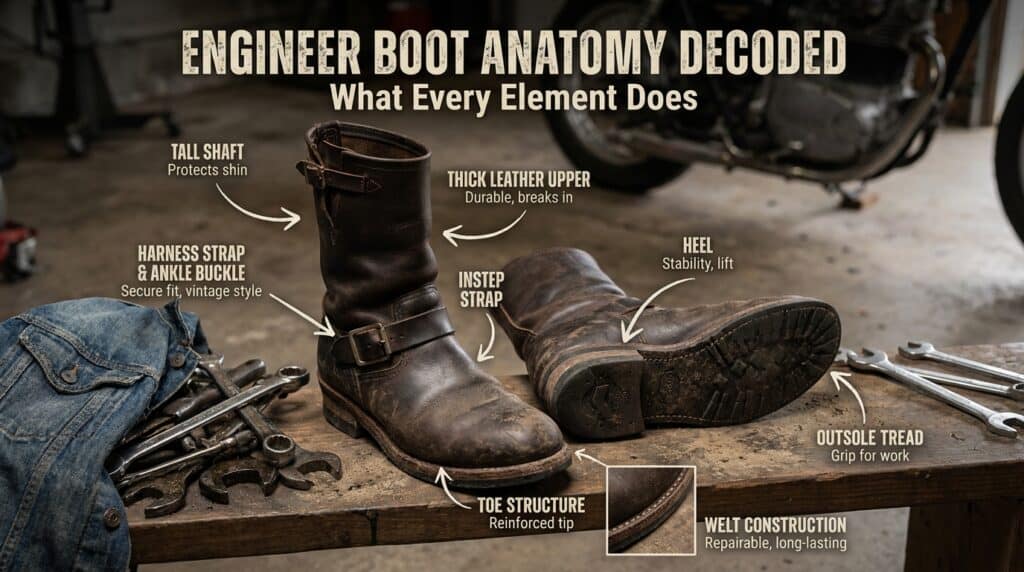
engineer boot anatomy explained 202605260805
Engineer Boot Anatomy Decoded: What Every Element Does
This is the section that every “best engineer boots” article skips — and the one that prevents buyers from purchasing the wrong boot category entirely. Understanding the anatomy identifies what a genuine engineer boot is versus what merely resembles one.
Stovepipe shaft: The straight-sided cylindrical shaft with no front-panel split — named for its visual resemblance to a stovepipe, not for any connection to stovepipe material. The absence of a front panel split (which would produce a lace-up or front-gore boot) is what creates the characteristic silhouette. Original function: protection from burning embers, hot sparks, and industrial debris. Modern function: debris exclusion and lower leg protection. Shaft height typically ranges from 10 to 16 inches depending on the model and intended use.
Ankle harness and buckle: The adjustable leather strap encircling the ankle with a metal buckle — this is the single defining element that most clearly distinguishes genuine engineer boots from fashion approximations. The buckle must be functional: it should tighten and loosen to provide genuine fit adjustment across different ankle circumferences. On quality boots, this buckle is the primary fit mechanism that replaces laces. On budget fashion boots, it is sometimes decorative and does not actually adjust. Test this before buying.
Top strap and buckle: A secondary strap at the shaft opening providing upper shaft security. Traditional models have both an ankle strap and a top strap. Some modern fashion versions omit the top strap as a cost-cutting measure — its absence is a construction quality indicator.
Backstay: A leather strip running vertically up the back seam of the shaft, covering and reinforcing the back seam. Present on quality heritage models, often absent from budget versions. Its presence is a construction quality indicator.
Logger / Cuban heel: Typically 1.75 inches in height, slightly forward-angled with concave edges on the sides of the heel. The forward slant provides the distinctive silhouette and the concave edges provide grip on equipment footholds — the “logger” application from which the heel profile takes its name. The concave edge is the design element most characteristic of an authentic engineer boot heel; a straight-sided fashion block heel is not the correct profile.
Pull loops: Leather or fabric loops at the rear top of the shaft for entry assistance — particularly useful with stiff new leather or in cold weather. Present on quality models; often absent from budget fashion versions.
Round or oval toe: The traditional engineer boot toe profile. Square toes appear in some western-influenced versions and are not historically accurate to the traditional engineer boot form.
Engineer Boots vs Harness Boots: The Most Common Buyer Confusion
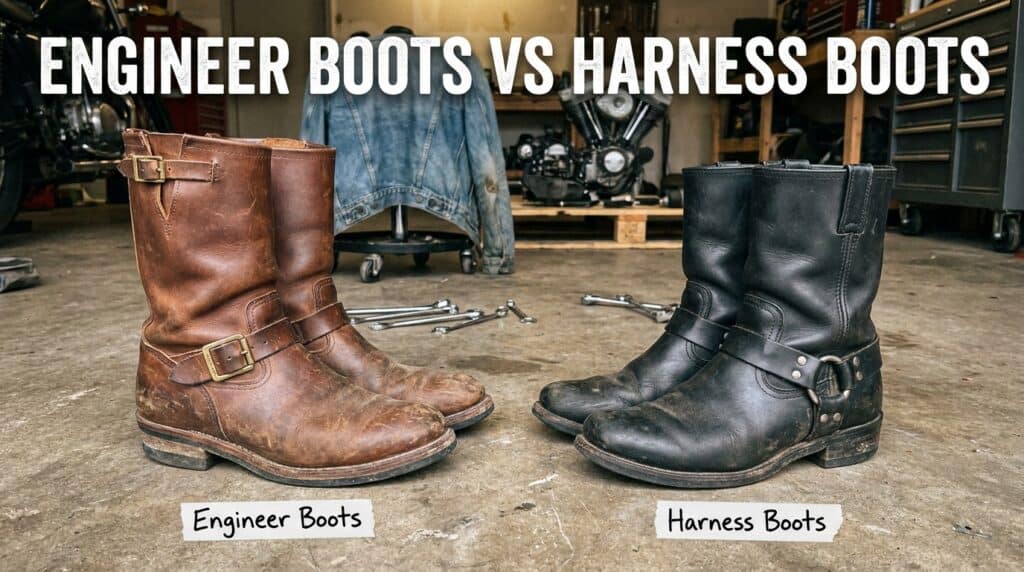
engineer boots vs harness boots 202605260807
These two boot styles are routinely confused — and the confusion goes both ways, with engineer boots sold as harness boots and harness boots marketed as engineer boots. The anatomical distinction is specific and learnable.
| Feature | Engineer Boot | Harness Boot |
|---|---|---|
| Ankle element | Adjustable buckle strap — functional fit mechanism that tightens and loosens | Fixed leather harness ring and bar — decorative in most modern versions, does not adjust |
| Over-instep element | Adjustable leather strap with functional buckle ring | Fixed leather or rubber harness that wraps over the instep — no adjustment |
| Fit customisation | Yes — the buckle provides genuine circumference adjustment | No — size is the only fit adjustment available |
| Origin | 1937–1939, Chippewa and Wesco for industrial workers | Mid-1800s US Cavalry riding boots; popularised by Frye Company |
| Toe shape | Round or oval (traditionally) | Square toe in most classic versions |
| Shaft style | Stovepipe — no panel split | Usually has a pull-on shaft with harness as the design accent |
The practical implication: if the ankle element on a boot you are considering cannot be loosened and tightened to adjust fit, it is a harness boot, not an engineer boot — regardless of what the listing calls it. Both are legitimate boot styles with their own history and appeal; they are simply different designs.
Welt Construction Guide: What Determines How Long Your Boot Lasts
The construction method of an engineer boot determines its service life, resolability, and value over time more than any other single factor. Understanding the three types changes the pricing calculus for every pick in this guide.
Goodyear welt: The upper is stitched to a leather welt strip running around the perimeter of the boot. The outsole is stitched to the welt. When the outsole wears, a cobbler can separate it from the welt and stitch on a new one — the boot continues indefinitely. This is the construction of Wesco, Whites Boot Co., and premium Chippewa models. Service life with periodic resoling: 15 to 30+ years. The slight gap between upper and outsole at the welt requires periodic welt sealing to prevent water infiltration. Cost premium: significant. Value justification: buy one pair of $450 Goodyear-welted engineer boots in your twenties and you may never need to buy another pair.
Stitch-down construction: The original engineer boot construction method. The upper is stitched directly to the outsole platform without a separate welt. More flexible than Goodyear welt. Naturally somewhat water-resistant at the seam. Also resoleable by specialist cobblers, though fewer can perform this than standard Goodyear resoling. Found in heritage reproductions and Japanese reproduction engineer boots. Service life with resoling: 10 to 20+ years.
Cement / cemented construction: The upper is glued to the midsole and outsole. No stitching connects the upper to the outsole. Not resoleable — when the sole separates or wears through, the boot is finished. Lower production cost; found in mid-tier and budget engineer boots in the $100 to $200 range. Service life: 1 to 3 years of daily wear. The specific value calculation: three pairs of $150 cemented engineer boots over five years costs $450 and involves significant inconvenience. One pair of $450 Goodyear-welted engineer boots over the same period costs $450 and at the end of five years is still performing and can be resoled for another decade. For daily wear buyers, the heritage construction cost premium is not a luxury — it is a value proposition.
Real Leather vs Faux Leather: The Honest Assessment
Several current engineer boot articles include faux leather (PU or PVC synthetic) picks without adequately explaining what buyers are purchasing. The honest assessment matters particularly for motorcyclists.
Faux leather replicates the visual surface of genuine leather but not its structural properties. In an engineer boot under ankle buckle tension and repeated shaft flexing with each step, the structural failure mode for faux leather is cracking and delamination at stress points: the ankle strap anchor points, the buckle attachment areas, and the shaft fold line where the boot bends at each stride. Full-grain leather strengthens at stress points through use — fibres tighten, surface develops patina, the boot personalises to the wearer. Faux leather weakens at stress points through use — the plastic coating cracks and separates from the substrate, beginning at the flex points and progressing outward.
For motorcycle riding specifically: genuine full-grain leather provides meaningful abrasion resistance in a slide situation — the leather sacrifices itself progressively, buying time. Faux leather provides essentially no abrasion resistance — it shreds almost immediately under road contact. A faux leather engineer boot is appropriate for fashion use and casual walking. It is not appropriate for motorcycle riding, and any article that recommends faux leather boots for motorcyclists without this disclaimer is failing those readers.
The clear labelling in this guide: every pick below specifies leather type. Faux leather picks carry an explicit fashion-only disclaimer.
Heel Height and Toe Shape: The Design Details That Matter
The traditional logger/Cuban heel runs approximately 1.75 inches at the traditional height with a slightly forward-angled profile and concave sides. This is the historically correct form. Modern engineer boots range from nearly flat profiles to fashion-elevated 2.5-inch heels. The lower heel (1 inch or less) is more comfortable for extended walking but less visually distinctive. The traditional 1.5 to 1.75-inch height provides the characteristic silhouette and reasonable all-day wearability. Heights above 2 inches are typically fashion-forward modifications less suited to functional use.
Toe shape: round or oval is historically correct. Square toe reduces historical authenticity and is considered incorrect by purists. Pointed or V-tip is a fashion modification not found in traditional engineer boot design. Shaft height for functional use: original railroad and industrial engineer boots ran tall — 12 to 16 inches — for maximum protection. Motorcycle riding is better served by 12 inches or more. Fashion and streetwear applications are comfortable in 10 to 12-inch configurations.
Who Are You Buying For? The Three-Audience Picker
The engineer boot serves three genuinely different buyers who need three genuinely different recommendations. Identifying which buyer you are before reading any product review will save considerable money and disappointment.
| Buyer Type | Priority | Construction Needed | Price Range | Best Picks |
|---|---|---|---|---|
| Heritage / workwear | Authentic construction, resolability, decades of service | Goodyear welt or stitch-down; full-grain leather | $300–$600+ | Wesco Boss (Pick 1), Chippewa 11″ (Pick 2), Red Wing 2966 (Pick 11) |
| Motorcyclist | Genuine leather (not faux), oil-resistant sole, ankle protection, pull-on ease | Goodyear welt preferred; quality cemented acceptable; NO faux leather | $150–$300 | Highway 21 Gasser (Pick 3), Chippewa (Pick 2) |
| Fashion / streetwear | Aesthetic, silhouette, hardware quality, accessible price | Quality cemented; full-grain preferred; budget faux acceptable for fashion-only | $80–$200 | Milwaukee Leather (Pick 4), GARGOYLE BELLS (Pick 8), Polar Fox (Pick 5 — with disclosure) |
| Women’s buyers | Women’s last geometry, shaft width, proportional heel | Full-grain leather preferred; women’s specific proportions | $100–$300 | Frye Veronica (Pick 6), Frye 12R (Pick 7), Polar Fox Women’s (Pick 10) |
Quick Comparison: Best Engineer Boots (2026)
| Boot | Leather | Construction | Shaft Height | Best Audience | Price |
|---|---|---|---|---|---|
| Wesco 11″ Boss | Full-grain (premium) | Goodyear welt | 11″ | Heritage / lifetime investment | $400–$600+ |
| Chippewa 11″ Engineer | Full-grain | Goodyear welt | 11″ | Heritage accessible / motorcycle | ~$200–$280 |
| Highway 21 Gasser | Full-grain | Cemented | 13″ | Motorcycle / mid-tier | ~$100–$140 |
| Milwaukee Leather 6″ | Full-grain (verify) | Cemented | 6″ | Fashion / everyday | ~$80–$120 |
| Polar Fox Wyatt | Faux — fashion only | Cemented | ~11″ | Fashion only — NOT motorcycle | ~$65–$90 |
| Frye Women’s Veronica | Full-grain | Cemented | ~12″ | Women’s premium | ~$250–$350 |
| Frye Women’s Engineer 12R | Full-grain | Cemented | 12″ | Women’s heritage/premium | ~$280–$380 |
| GARGOYLE BELLS Harness | Genuine leather | Cemented | ~10″ | Fashion / mid-budget | ~$80–$110 |
| Polar Fox Men’s Engineer | Faux — fashion only | Cemented | ~11″ | Fashion only — NOT motorcycle | ~$70–$95 |
| Red Wing 2966 Black Klondike | Full-grain (Black Klondike) | Goodyear welt | 11″ | Heritage / premium Amazon | ~$350–$430 |
| Harley-Davidson Jason St | Full-grain | Cemented | ~11″ | Motorcycle / everyday | ~$130–$175 |
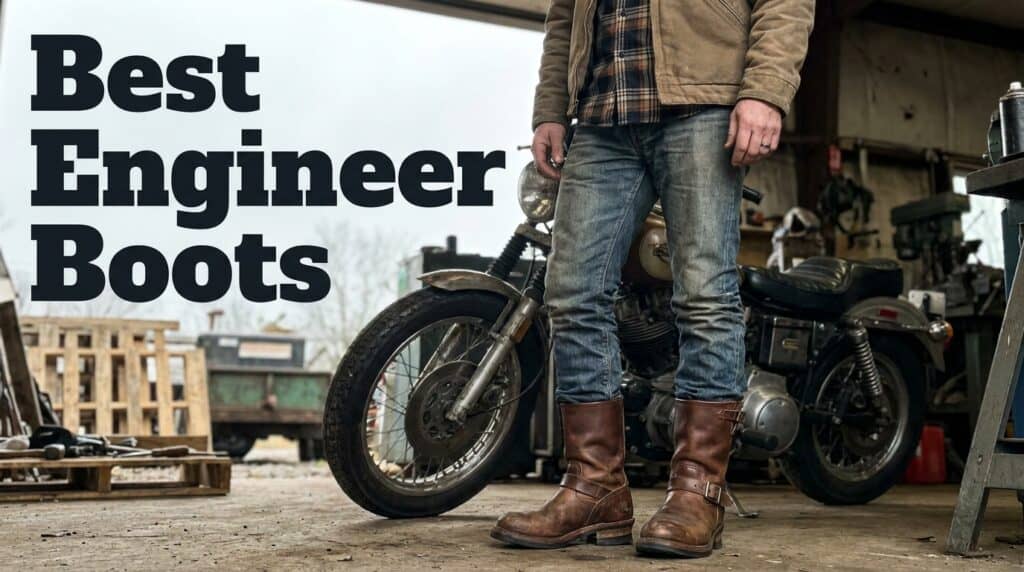
Man standing next to a vintage motorcycle wearing durable leather engineer boots, showcasing style and functionality for work and outdoor activities.
1. Wesco 11″ Boss — Best Heritage Engineer Boot (Lifetime Investment)
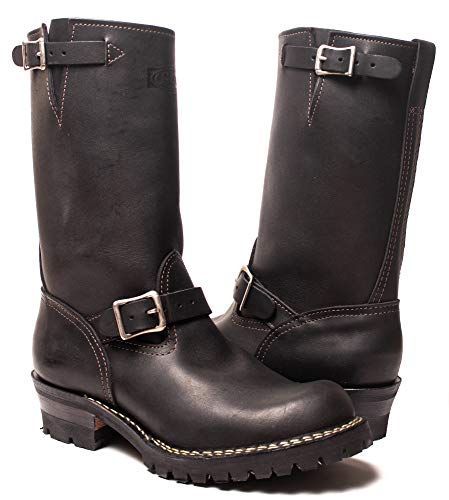
Best for: Buyers who want the reference point — the engineer boot against which all others are measured — and who are prepared to make a one-time investment in a boot that may outlast them with proper care and periodic resoling.
| ASIN | B0BQN859P5 |
| Made in USA | Yes — Scappoose, Oregon since 1939 |
| Leather | Full-grain premium leather — develops patina with age, strengthens at stress points |
| Construction | Goodyear welt — resoleable indefinitely by most quality cobblers |
| Outsole | Vibram — oil-resistant, appropriate for motorcycle use |
| Shaft height | 11 inches |
| Heel | Traditional logger/Cuban 1.75″ with concave edges — historically correct profile |
| Hardware | Functional buckle straps — both ankle and top strap — genuine adjustment mechanism |
| Expected service life | 15–30+ years with periodic resoling |
| Best audience | Heritage buyers, motorcyclists who want the correct boot, workwear enthusiasts |
| Price range | ~$400–$600+ |

Wesco (West Coast Shoe Company) is one of the two original engineer boot manufacturers — alongside Chippewa, they developed the engineer boot in 1937 to 1939 in Scappoose, Oregon, where the company remains today. The Boss is Wesco’s flagship engineer boot and the model that the heritage menswear and workwear community consistently uses as the reference standard against which other engineer boots are evaluated. Every element of its construction is correct: Goodyear welt that can be resoled for decades, premium full-grain leather that develops character rather than failing under use, Vibram outsole appropriate for both work and motorcycle applications, functional ankle buckle that genuinely adjusts, and the traditional logger heel with its concave edge profile.

The Wesco Boss requires a genuine break-in investment. This is not a boot that is comfortable on day one — the thick full-grain leather is stiff, the shaft is uncompromising in its cylindrical shape, and the heel slip of the first 15 hours is real and expected. The reward for this investment is a boot that conforms precisely to the wearer’s foot and lower leg and then maintains that custom fit for decades. Wesco offers significant customisation options: leather type, shaft height, hardware colour, and sole configuration. The price premium over budget alternatives represents construction quality, material quality, and a service life measured in decades rather than years. For a buyer who understands and accepts this, the Wesco Boss is not an expensive boot — it is the most cost-efficient boot available over a 20-year horizon.
Best for: Heritage workwear buyers, serious motorcyclists, anyone making a one-time investment in the correct engineer boot.
Pros: One of the two original engineer boot makers (1939, Scappoose Oregon), Goodyear welt for infinite resolability, premium leather develops patina rather than failing, Vibram outsole for work and riding, fully functional hardware throughout, Made in USA.
Cons: Premium price. Significant break-in required — not for buyers who want immediate comfort. Amazon availability is limited — verify current listing or purchase directly via wescoboots.com for full customisation options.
2. Chippewa Men’s 11″ Engineer Boot — Best Heritage Accessible
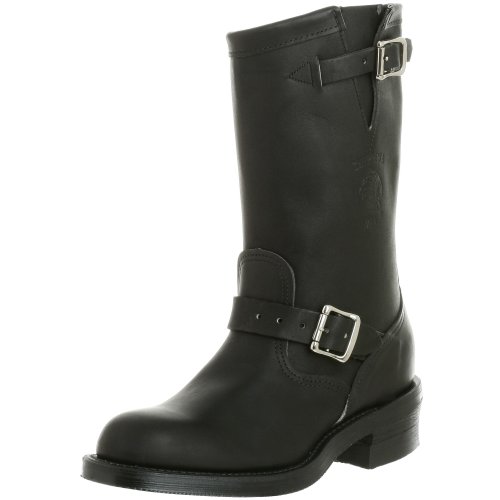
Best for: Buyers who want genuine American heritage engineer boot credentials — Chippewa is the other original engineer boot maker alongside Wesco — at a more accessible price point, and for motorcyclists who want a quality leather pull-on with historical authenticity.
| ASIN | B000WKHHKO |
| Heritage | One of the original 1937–1939 engineer boot makers — Chippewa Falls, Wisconsin |
| Leather | Full-grain leather upper |
| Construction | Goodyear welt — resoleable for extended service life |
| Shaft height | 11 inches — traditional engineer boot height |
| Outsole | Vibram — oil-resistant, appropriate for motorcycle use |
| Hardware | Functional ankle buckle and top strap |
| Expected service life | 8–15+ years with resoling |
| Best audience | Heritage buyers, motorcyclists, serious fashion buyers who want genuine construction |
| Price range | ~$200–$280 |

Chippewa is not merely a heritage brand in the marketing sense — it is one of the two companies that invented the engineer boot category in 1937 to 1939. The Chippewa 11-inch Engineer Boot carries this provenance into a Goodyear-welted, full-grain leather package that is available on Amazon at a price point substantially below Wesco, making it the most accessible genuine heritage engineer boot available. The Goodyear welt construction means this boot can be resoled when the outsole wears — a cobbler can give it a new sole and heel and it continues. The full-grain leather upper will develop patina and conform to the wearer’s foot over the break-in period rather than cracking at stress points.

For motorcyclists specifically, the Chippewa 11-inch is the correct choice in the accessible tier: genuine full-grain leather (not faux), Vibram oil-resistant outsole, functional buckle hardware, 11-inch shaft height providing calf and lower leg protection from road debris and heat, and Goodyear welt construction that a cobbler can resole when needed. The full-grain leather provides genuine abrasion resistance in a slide situation that no faux leather alternative can match. The break-in period is real — plan for 15 to 20 hours of progressive wear before committing to a full day. Condition with leather oil on receipt and wear for 2-hour sessions for the first week.
Best for: Heritage buyers and motorcyclists wanting Goodyear welt, full-grain leather, and Chippewa’s 1937 engineer boot heritage at an accessible price.
Pros: One of the original engineer boot makers (1937 Chippewa Falls WI), Goodyear welt for resolability, full-grain leather, Vibram oil-resistant outsole, functional hardware, genuine heritage credentials on Amazon.
Cons: Break-in required — 15–20 hours. More expensive than mid-tier options. Current Amazon availability varies — verify listing before purchase.
3. Highway 21 Men’s Gasser Motorcycle Engineer Boot — Best for Motorcycle Riding

Best for: Motorcyclists who want the engineer boot silhouette with motorcycle-specific features — Hipora waterproof membrane, oil-resistant outsole, genuine full-grain leather, and a 13-inch shaft height that provides serious calf protection from road debris and heat.
| ASIN | B011JEY6P0 |
| Leather | Full-grain leather — genuine abrasion resistance for motorcycle use |
| Construction | Cemented — not resoleable, 2–4 year service life with regular use |
| Waterproofing | Hipora waterproof membrane — keeps feet dry in rain |
| Outsole | Oil-resistant rubber — correct specification for motorcycle use |
| Shaft height | 13 inches — excellent calf protection for riding |
| Hardware | Functional buckle straps at ankle and top |
| Motorcycle suitability | Yes — full-grain leather, oil-resistant sole, pull-on, shaft protection |
| Best audience | Motorcyclists, riders who want waterproof feature, mid-tier buyers |
| Price range | ~$100–$140 |

The Highway 21 Gasser is the mid-tier motorcycle engineer boot that most riders should actually buy. It checks the critical motorcycle-use criteria that budget faux leather alternatives cannot: genuine full-grain leather upper (providing real abrasion resistance in a slide), oil-resistant rubber outsole (essential for motorcycles that leak or for fuel station contact), and a 13-inch shaft height that covers the calf thoroughly against road debris, exhaust heat, and the engine heat that shorter boots expose. The Hipora waterproof membrane addresses the practical motorcycle reality that rain arrives without warning and wet feet on a long ride are genuinely miserable. The functional ankle and top strap buckles provide a secure, lace-free fit that is the appropriate mechanism for motorcycle footwear.

The honest caveat: cemented construction means this boot cannot be resoled. When the sole wears — typically at 2 to 4 years of regular riding use — the boot is finished. For a rider who is comfortable replacing boots on this cycle at this price point, the Highway 21 Gasser is the correct motorcycle-specific recommendation. For a rider who wants a boot they will resole and wear for a decade, the Chippewa 11-inch or Wesco Boss are the correct alternatives at higher price points. The Gasser’s Hipora membrane adds waterproofing without sacrificing the full-grain leather upper quality — this is a considered motorcycle boot, not a fashion boot with a motorcycle brand’s name on it.
Best for: Motorcyclists who want full-grain leather and oil-resistant outsole at an accessible price, with waterproofing for all-weather riding.
⚠️ Motorcycle use confirmation: Full-grain leather — appropriate for motorcycle riding. NOT faux leather.
Pros: Full-grain leather for genuine abrasion resistance, oil-resistant outsole essential for motorcycles, Hipora waterproof for all-weather riding, 13-inch shaft for calf protection, functional buckle hardware, mid-tier price.
Cons: Cemented construction — not resoleable. Service life 2–4 years of regular riding. Not a heritage construction boot — correct expectations required.
4. Milwaukee Leather Men’s 6″ Premium Engineer Boot — Best Mid-Tier Everyday Wear

Best for: Fashion and streetwear buyers who want the engineer boot aesthetic in a shorter, more versatile 6-inch silhouette for daily wear — and who want genuine leather construction without the heritage price premium.
| ASIN | B00VAISVJI |
| Leather | Full-grain leather (premium model — verify on listing) |
| Construction | Cemented |
| Shaft height | 6 inches — shorter than traditional, more versatile for daily wear |
| Hardware | Functional buckle at ankle |
| Best audience | Fashion / streetwear / everyday casual |
| Price range | ~$80–$120 |

The Milwaukee Leather 6-inch sits at the accessible end of genuine leather engineer boots — shorter than the traditional 11-inch profile, more versatile for daily fashion and streetwear use, and priced within reach of buyers who want real leather rather than the faux alternatives that dominate the sub-$100 category. The 6-inch shaft makes this a genuinely different boot than a traditional engineer boot in silhouette terms — it is closer to a dress boot or a fashion pull-on than to the tall-shafted industrial boot of the 1930s — but for buyers who want the ankle buckle aesthetic and genuine leather construction in a less visually demanding profile, it fills this niche well. Footwind notes Milwaukee Leather as better quality than the budget faux options that compete at the same price.

The critical purchase protocol for Milwaukee Leather: verify the specific listing is the full-grain leather version before ordering. Milwaukee Leather produces boots across a range of leather grades, and the quality difference between their full-grain and lower-grade models is significant. Look for “full grain” or “premium leather” explicitly in the listing title and description, not just “genuine leather” which is the lowest grade of real leather. For motorcycle riding: the 6-inch shaft height provides insufficient calf coverage for motorcycle use, and the cemented construction does not provide the structural integrity of welt construction. This boot is correctly categorised as a fashion and streetwear option, not a motorcycle boot.
Best for: Fashion and streetwear buyers who want genuine leather in a shorter, more versatile daily-wear silhouette at accessible price.
Pros: Genuine leather construction (verify full-grain model), functional ankle buckle hardware, accessible price for real leather, versatile 6-inch height for fashion use, Milwaukee Leather mid-tier quality above budget faux alternatives.
Cons: 6-inch shaft not traditional engineer boot height and insufficient for motorcycle riding. Cemented — not resoleable. Verify full-grain vs lower-grade leather on specific listing before purchase.
5. Polar Fox Men’s Wyatt MPX608005 — Best Budget Fashion Engineer Boot
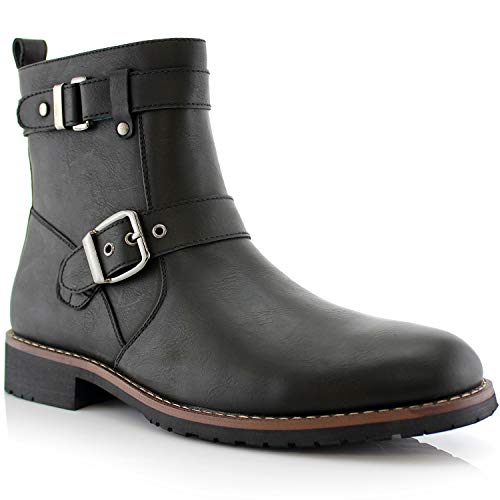
Best for: Fashion and aesthetic buyers who want the engineer boot silhouette at the lowest accessible price point and understand — and accept — that faux leather is a fashion material, not a protective one.
| ASIN | B01N78S4TE |
| Leather | Faux leather (synthetic PU) — fashion only |
| Construction | Cemented |
| Shaft height | ~11 inches |
| Hardware | Buckle straps — may be partially decorative |
| Service life | 1–2 years of casual fashion use |
| Best audience | Fashion only — costumes, casual aesthetic, entry-level buyers exploring the style |
| Price range | ~$65–$90 |

The Polar Fox Wyatt is included in this guide with full transparency about what it is: a faux leather fashion engineer boot at the lowest accessible price point in the category. It delivers the visual aesthetic of an engineer boot — the stovepipe shaft profile, the ankle buckle hardware, the logger heel silhouette — in a synthetic material that looks convincing in photographs and provides acceptable fashion-use longevity for casual wear. For buyers who want to explore the engineer boot aesthetic before committing to genuine leather, for costume applications, or for buyers who prioritise budget over material quality and understand the trade-off, the Polar Fox Wyatt delivers the silhouette at a price that makes experimentation practical.

The required disclaimer that every article including this boot owes its readers: faux leather is a fashion material. It will crack at stress points — the ankle buckle attachment areas, the shaft fold line, and the toe crease — within 1 to 2 years of regular casual wear. It provides no abrasion resistance in a slide situation and is specifically not appropriate for motorcycle riding, outdoor work, or any application where genuine leather’s structural properties are needed. The Polar Fox Wyatt also includes a side zipper for easy entry — a feature absent from traditional engineer boots but convenient for buyers who find pull-on entry difficult. Footwind’s honest assessment applies: “best suited for fashion or light-duty use.”
⚠️ Fashion only: Faux leather — NOT appropriate for motorcycle riding, outdoor work, or any application requiring genuine leather’s abrasion resistance and structural durability.
Best for: Fashion buyers exploring the aesthetic, costume applications, budget entry into the engineer boot silhouette with full awareness of material limitations.
Pros: Lowest price point for engineer boot aesthetic, side zipper for easy entry, bold silhouette, accessible for style experimentation.
Cons: Faux leather — will crack at stress points within 1–2 years of regular casual wear. Cannot be used for motorcycle riding. Not resoleable. Buckle hardware may be partially decorative rather than fully functional.
6. Frye Women’s Veronica Engineer Boot — Best Women’s Premium Engineer Boot
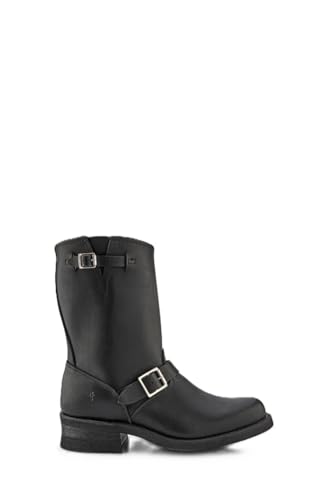
Best for: Women who want a premium genuine leather engineer boot with Frye’s 150+ year American boot heritage, women’s-specific last geometry, and the quality to develop patina and last with proper care.
| ASIN | B0013EVG14 |
| Leather | Full-grain leather — genuine quality |
| Last | Women’s specific — adjusted heel cup, arch, and shaft proportions |
| Construction | Cemented |
| Heritage | Frye Company — founded 1863, one of the oldest American boot makers |
| Hardware | Functional buckle hardware |
| Best audience | Women wanting premium leather, heritage brand, long service life |
| Price range | ~$250–$350 |

Frye is not merely a brand name on a fashion boot — it is the oldest continuously operating American boot company, founded in 1863, and its cavalry harness boots of the 1860s are the direct design ancestors of the engineer boot’s ankle strap and hardware elements. The Women’s Veronica is Frye’s flagship women’s engineer boot, built on a women’s-specific last that addresses the anatomical differences that make men’s boots in smaller sizes fail for women: narrower heel cup, adjusted arch position for women’s more forward arch placement, and shaft proportions designed for women’s narrower calf geometry. Full-grain leather provides genuine durability and patina development with proper care and conditioning.

The women’s engineer boot market has expanded significantly since the 2010s, driven by the contrast aesthetic — a substantial, traditionally masculine boot worn with feminine silhouettes. The Frye Veronica delivers this contrast with genuinely quality materials and construction heritage behind the visual statement. Cemented construction means it is not resoleable — when the sole eventually wears, the boot is at its end. This is the appropriate trade-off at this price point between Frye’s product positioning and the premium welt construction of heritage men’s alternatives. For women who want the most durable possible engineer boot and do not mind a higher price, Wesco offers women’s sizing on custom order from their Oregon factory.
Best for: Women wanting premium genuine leather, Frye heritage, women’s-specific last geometry, and a quality boot that ages well with conditioning.
Pros: Frye’s 150+ year American boot heritage, full-grain leather for genuine quality and patina, women’s specific last geometry, iconic heritage engineer boot aesthetic for women.
Cons: Cemented construction — not resoleable. Premium price for cemented construction. Break-in required for stiff full-grain leather.
7. Frye Women’s Engineer 12R Boot — Best Women’s Tall Shaft Heritage Engineer Boot
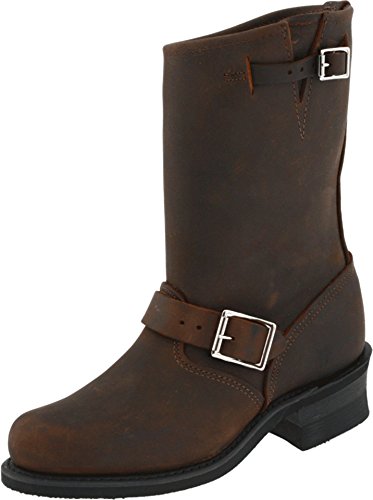
Best for: Women who want the full traditional 12-inch engineer boot silhouette — the tall stovepipe shaft showing above the ankle — rather than a shorter ankle boot interpretation, and who want Frye’s heritage construction quality in the traditional proportions.
| ASIN | B0013ENDSS |
| Leather | Full-grain leather |
| Last | Women’s specific — proportioned for women’s calf geometry |
| Shaft height | 12 inches — traditional tall engineer boot profile |
| Construction | Cemented |
| Heritage | Frye Company — founded 1863 |
| Best audience | Women wanting the full traditional tall shaft silhouette |
| Price range | ~$280–$380 |

Where the Frye Veronica is the versatile women’s engineer boot, the Frye Engineer 12R is the traditional women’s engineer boot — the 12-inch shaft delivers the full stovepipe silhouette that the style originated with. For women who want to make a visual statement with the boot’s full shaft visible above the calf, or who wear the boot with midi skirts, wide-leg trousers, or other silhouettes that frame the full boot height, the 12R provides the proportions to do this. The women’s-specific last addresses the calf width that makes standard men’s engineer boot shafts too wide for most women’s calves — the shaft is engineered to the narrower calf geometry of a women’s last rather than simply being a men’s boot with a smaller size number.

The full-grain leather and Frye’s construction quality apply equally to the 12R as to the Veronica. Condition the leather on receipt and plan for the break-in period of a stiff leather boot — the 12-inch shaft requires more break-in area than the shorter Veronica, and the calf portion of the shaft specifically needs to conform to the individual calf shape, which takes 10 to 15 hours of wear. The vamp will crease — this is a sign of genuine leather, not a defect. A deep, clean crease across the vamp of a broken-in Frye is a quality indicator that faux leather cannot replicate without cracking.
Best for: Women wanting the full 12-inch traditional engineer boot silhouette with Frye heritage quality and women’s-specific shaft proportions.
Pros: Full traditional 12-inch shaft for complete engineer boot silhouette, full-grain leather, women’s-specific last for calf proportions, Frye heritage quality and brand reputation, versatile across multiple styling contexts.
Cons: Cemented construction. More expensive than mid-tier options. Longer break-in for full-shaft leather than shorter models.
8. GARGOYLE BELLS Harness Straps Motorcycle Leather Boots — Best Mid-Budget Genuine Leather

Best for: Buyers who want genuine leather engineer-adjacent styling at a mid-budget price — a real leather alternative to the faux leather picks in this category, with motorcycle-adjacent design language and functional hardware.
| ASIN | B0BDLQ2XNV |
| Leather | Genuine leather — verify grade on current listing |
| Construction | Cemented |
| Shaft height | ~10 inches |
| Hardware | Harness ring and strap detail — motorcycle-adjacent styling |
| Style note | This is technically closer to a harness boot style than a pure engineer boot — the harness element is the defining feature rather than the purely functional buckle of a traditional engineer boot |
| Best audience | Fashion / mid-budget buyers wanting genuine leather; motorcycle-aesthetic buyers |
| Price range | ~$80–$110 |

The GARGOYLE BELLS boots occupy the space between the budget faux leather picks and the mid-tier genuine leather options — real leather at an accessible price for buyers who want to avoid the quality ceiling of synthetic alternatives. It is worth noting the style distinction: the GARGOYLE BELLS design leans toward harness boot styling (harness ring detail is the primary visual element) rather than the pure engineer boot aesthetic (functional adjustable buckle as the primary fit mechanism). For buyers who distinguish between these styles, this distinction matters. For buyers who want the general biker boot aesthetic in genuine leather at this price tier, the distinction is academic — the boot delivers the visual language they are seeking.

Verify the leather grade on the current listing before purchasing — “genuine leather” is the lowest grade of real leather (layers bonded together), while “full-grain” and “top-grain” indicate higher quality. For this price point, top-grain is the reasonable expectation; full-grain would be a significant value at this price. The cemented construction places this in the 1–3 year service life category for regular wear. For buyers who cycle through boots at this interval and prefer the accessible entry price, this is the appropriate trade-off. Not recommended for motorcycle riding as the primary use case — the Highway 21 Gasser at a similar price point provides more clearly motorcycle-specific features.
Best for: Fashion / mid-budget buyers wanting genuine leather motorcycle-adjacent styling at accessible price.
Style note: Harness boot-adjacent styling rather than pure engineer boot — verify this distinction matters to you before purchasing.
Pros: Genuine leather construction above the faux leather floor, motorcycle aesthetic styling, accessible price for real leather, functional hardware.
Cons: Cemented — not resoleable. Verify leather grade on current listing. Harness styling is distinct from pure engineer boot — not the correct choice if authentic engineer boot anatomy is the priority.
9. Polar Fox Men’s Engineer Boot — Best Budget Tall-Shaft Fashion Boot
Best for: Budget fashion buyers who want the full tall-shaft engineer boot aesthetic at the lowest possible price and understand — and accept — the faux leather material limitations.
| ASIN | B01NCAV8UN |
| Leather | Faux leather (synthetic) — fashion only |
| Construction | Cemented |
| Shaft height | ~11 inches |
| Hardware | Buckle straps — may be partially decorative |
| Service life | 1–2 years casual fashion use before cracking at stress points |
| Best audience | Fashion only — casual aesthetic, costume, budget entry into the engineer boot silhouette |
| Price range | ~$70–$95 |
The Polar Fox Men’s Engineer Boot is the second Polar Fox model in this guide — where the Wyatt (Pick 5) offers a side zipper entry and bolder styling, this model is a more traditional-looking tall-shaft engineer boot silhouette at the same budget price tier. Both are faux leather fashion boots, and both carry the same complete disclaimer: faux leather is appropriate for casual fashion wear and is not appropriate for motorcycle riding, outdoor work, or any application where genuine leather’s structural and abrasion-resistance properties are needed. Within its intended use case — fashion and aesthetic wear for buyers who want the engineer boot look at the lowest accessible price — the Polar Fox provides a convincing silhouette that photographs well and presents acceptably in casual settings.
The honest durability expectation: faux leather will show cracking at the ankle buckle attachment points, the vamp crease line, and the shaft fold area within 1 to 2 years of regular casual wear. This is the structural failure mode of PU synthetic materials under repeated flex stress — not a defect in this specific product but an inherent property of the material category. Buyers who want a boot that will age gracefully and last many years should invest in genuine leather alternatives. Buyers who want the aesthetic at an accessible price and accept periodic replacement should find the Polar Fox a reasonable fashion proposition within its intended use case.
⚠️ Fashion only: Faux leather — NOT appropriate for motorcycle riding, outdoor work, or any protective application.
Best for: Budget fashion buyers wanting the full tall-shaft silhouette with full awareness of faux leather material limitations.
Pros: Lowest accessible price for tall-shaft engineer boot aesthetic, traditional-looking silhouette, easy entry without side zipper modification.
Cons: Faux leather — cracking at stress points within 1–2 years. Not resoleable. Not for motorcycle riding or outdoor work. Hardware may be partially decorative.
10. Red Wing Men’s Engineer 2966 Black Klondike Leather — Best Heritage Premium on Amazon
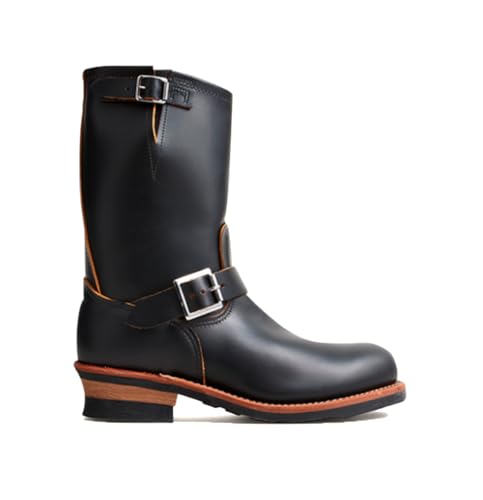
Best for: Heritage buyers who want a premium American boot brand available directly on Amazon — Red Wing brings Minnesota boot-making heritage dating to 1905 into an engineer boot format with Black Klondike leather, Goodyear welt construction, and the brand’s characteristic commitment to long-service American footwear.
| ASIN | B0FTFTS92C |
| Leather | Black Klondike — Red Wing’s premium pull-up leather, matte black with distinctive character development |
| Construction | Goodyear welt — resoleable for extended service life |
| Heritage | Red Wing Shoe Company — Red Wing, Minnesota, founded 1905 |
| Shaft height | 11 inches |
| Expected service life | 10–25+ years with resoling |
| Best audience | Heritage buyers wanting premium American construction and distinctive leather character |
| Price range | ~$350–$430 |

Red Wing’s engineer boot occupies the premium heritage tier alongside Wesco, bringing Minnesota’s boot-making tradition (the Red Wing Shoe Company has been producing boots in Red Wing, Minnesota since 1905) into an engineer boot format with their Black Klondike leather — a distinctive pull-up leather that shows lighter areas where the surface is flexed and handled, developing a personal character specific to each wearer’s use patterns. The Goodyear welt construction means the boot can be resoled when the outsole wears — Red Wing’s own network of specialty stores performs this service, and most quality cobblers familiar with Goodyear welt can resole it as well. The result is a boot designed for the same heritage buyer philosophy as the Wesco Boss: invest once, maintain properly, resole periodically, and the boot serves for decades.

Black Klondike leather is a distinctive Red Wing material that rewards conditioning and use differently from conventional smooth leather. The pull-up character — the way light areas develop where the leather is flexed or handled — creates a dynamic surface that evolves with the wearer. This is the visual language of heritage leather goods: a boot that looks more interesting, more personal, and more characterful after two years of daily wear than it did when purchased. The break-in period for Red Wing engineer boots is real — plan for 15 to 25 hours of progressive wear before the Goodyear-welted leather structure conforms to the foot and the heel slip resolves. Apply Neatsfoot Oil or Red Wing’s own leather conditioner on receipt.
Best for: Heritage buyers who want Goodyear welt, American manufacturing, and Black Klondike leather’s distinctive character development — available with Amazon’s purchasing convenience.
Pros: Red Wing’s 1905 Minnesota heritage, Goodyear welt for resolability and multi-decade service, Black Klondike leather develops distinctive personal character, premium American construction available on Amazon.
Cons: Premium price. Break-in of 15–25 hours required. Black Klondike’s pull-up character requires understanding — it is a feature, not a defect, but buyers expecting conventional smooth leather should be aware.
11. Harley-Davidson Men’s Jason St Engineer Boot — Best Motorcycle Brand Engineer Boot
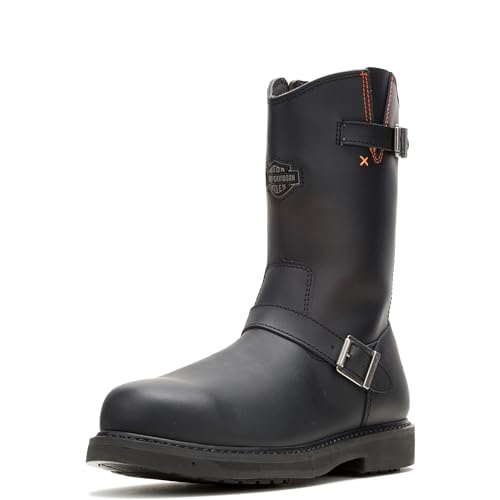
Best for: Motorcyclists and Harley-Davidson enthusiasts who want the engineer boot silhouette from the brand most associated with American motorcycle culture — a full-grain leather mid-tier option with the H-D brand identity built in.
| ASIN | B00CPKHOUC |
| Leather | Full-grain leather |
| Construction | Cemented |
| Brand | Harley-Davidson Footwear — established motorcycle brand identity |
| Hardware | Functional buckle straps with H-D branding details |
| Motorcycle suitability | Full-grain leather — appropriate for motorcycle riding as a genuine leather boot |
| Best audience | Motorcyclists / Harley-Davidson brand buyers / fashion buyers |
| Price range | ~$130–$175 |

Harley-Davidson Footwear’s Jason St Engineer Boot bridges the motorcycle-specific and fashion-buyer audiences through brand recognition — the H-D name carries significant cultural weight in the motorcycle community and among buyers who want the American biker aesthetic without necessarily being daily riders. The full-grain leather upper provides genuine leather’s structural advantages over faux alternatives: real abrasion resistance that makes this an appropriate boot for motorcycle riding (unlike the faux leather picks in this guide), aging character that develops with use, and the conditioning responsiveness that extends leather service life. The functional buckle hardware delivers the genuine fit adjustment mechanism of a true engineer boot rather than the decorative elements of cheaper alternatives.

The cemented construction places the Jason St in the mid-tier category — not resoleable, service life of 2 to 4 years with regular daily use, but built from materials and with hardware quality that justifies a step above the budget faux tier. For a motorcyclist who wants brand recognition alongside functional leather construction, or a fashion buyer who wants the H-D identity in a genuine leather engineer boot, the Jason St serves both audiences competently. The H-D branding details on the hardware are visible without being overwhelming — the boot reads as an engineer boot first and as Harley-Davidson branding second, which is the correct proportion for a boot designed to be worn rather than merely displayed.
Best for: Motorcyclists and H-D brand buyers who want full-grain leather engineer boot with Harley-Davidson identity; fashion buyers who want the motorcycle brand aesthetic in genuine leather.
Pros: Full-grain leather for genuine motorcycle riding suitability, functional buckle hardware, Harley-Davidson brand recognition, mid-tier quality above budget faux options, genuine leather aging character.
Cons: Cemented construction — not resoleable. H-D branding premium built into price. Not the heritage construction quality of Wesco or Red Wing at the premium tier.
Breaking In Engineer Boots: The Specific Protocol
Breaking in leather engineer boots presents challenges specific to the pull-on design and stiff full-grain leather that lace-up work boots do not share. No competitor article addresses this specifically, and the consequences of not understanding it — returning a boot that would have been perfect after proper break-in, or developing painful blisters by wearing new boots for a full day — are common and avoidable.
The ankle buckle adjustment is the first variable. Set it firm but not tight on initial wear — the leather will stretch and soften with use, and a buckle that is correctly tight on day one will become too tight by day ten. Err toward looser than you think you need initially.
Heel slip is universal in new engineer boots and is not a fit defect. Full-grain leather engineer boots almost always slip at the heel during the first 10 to 15 hours of wear as the insole compresses and the heel counter conforms to the individual foot shape. This resolves as the leather conforms. Do not return a boot for heel slip in the first 15 hours — try it for 15 hours first.
The vamp will crease. A deep crease line across the vamp (front of the boot) where the foot bends at the ball is correct and expected in genuine leather. It is the sign that you have real leather — faux leather does not crease cleanly, it cracks. A broken-in engineer boot’s vamp crease is a quality indicator, not a defect.
The protocol for breaking in quality leather engineer boots: apply a light leather conditioner or boot oil (Neatsfoot Oil, Sno-Seal, or the brand’s recommended product) before the first wear. For the first three to five wears, limit sessions to one to two hours on mixed terrain — do not start with a full day. Expect and accept heel slip through the first 15 hours. Condition again after 20 hours of total wear. The stiff cylindrical shaft will soften and begin to conform to the individual calf shape — this process takes 20 to 30 hours for thick full-grain leather and cannot be rushed. The result of this investment is a boot that feels like it was made for you, because it has been physically shaped to you through use.
How to Wear Engineer Boots: Three Contexts, Three Approaches
Heritage and workwear context: Raw selvedge denim or work trousers worn over the shaft, revealing the boot’s full silhouette and hardware. Chambray or flannel shirts, wool or denim outerwear. The boot is the focal point — it should not be hidden under wide trousers. Cuffed denim that reveals the shaft and buckle hardware is the canonical heritage workwear pairing. The key rule: engineer boots create visual weight at the foot — the silhouette above the boot should be fitted and relatively simple to balance this weight.
Motorcycle and biker context: Leather or textile riding jacket, fitted denim or riding pants, the boot displayed intentionally as both protection and aesthetic. The Marlon Brando reference from The Wild One is the visual template. The shaft height and hardware should be visible — this is a context where the boot announces itself rather than supporting a quieter outfit.
Modern streetwear and fashion context: Slim or tapered trousers showing the full boot, wide-leg cropped trousers where the boot is framed by the hem, or occasionally unexpected pairings with tailored separates. Women’s contexts: straight-leg or wide-leg jeans, midi skirts, mini skirts, loose trousers where the contrast between the substantial boot and the softer upper silhouette is the intentional design statement. The engineer boot’s recent fashion moment has been driven specifically by women wearing these historically masculine boots in contexts that subvert the expected associations — the contrast is the point.
Women’s Engineer Boots: A Genuine and Growing Audience
The women’s engineer boot market has expanded significantly since the early 2010s, driven by fashion rehabilitation of heritage workwear aesthetics and the specific appeal of contrasting a substantial, visually authoritative boot with feminine clothing silhouettes. No current competitor engineer boot guide addresses women’s specific considerations with any depth. The actual considerations differ from simply offering women’s sizing.
Calf fit is the primary engineering consideration. The stovepipe shaft is sized for a specific calf circumference — standard men’s engineer boots are proportioned for men’s typical calf widths, which are generally larger than women’s. Women wearing men’s engineer boots often find the shaft too wide, causing the stovepipe to sit loose around the calf and creating a shapeless rather than cylindrical profile. Women’s-specific models (Frye Veronica, Frye 12R) address this with narrower shaft profiles appropriate for women’s calf geometry.
Shaft height relative to body proportions is different for women than men. A 16-inch shaft on a tall man creates the classic tall boot silhouette. The same shaft height on a shorter woman may reach closer to the knee, changing the proportion and wearability entirely. The Frye 12R’s 12-inch shaft and the Veronica’s proportions are designed with women’s leg lengths in mind.
Women who want heritage-tier engineer boots with custom specifications — Wesco offers women’s sizing on custom order from their Scappoose, Oregon factory. The process takes 3 to 6 months and is a genuine investment in bespoke footwear. For women who want the Wesco quality and are willing to wait, this is the option that exists.
Boot Care for Engineer Boots
Full-grain leather engineer boots reward conditioning with extended service life and improved appearance. The care protocol: clean with a damp cloth after each significant use, removing surface dirt before it abrades the leather. Apply leather conditioner (Bick 4, Neatsfoot Oil, or the brand’s recommended product) every 3 to 4 weeks of regular use and before seasonal storage. Wax-based products (Sno-Seal, Obenauf’s Heavy Duty LP) provide water resistance alongside conditioning. Store in a cool, dry location away from direct sunlight and heat sources — UV exposure and heat both dry and crack leather.
Metal hardware: the buckle and ring hardware will develop patina with age. Silver-toned hardware dulls to a pewter tone; brass tones deepen. This is correct and desirable — polished new hardware on a well-worn leather boot is aesthetically incorrect. Allow the hardware to age alongside the leather.
Goodyear-welted boots should have the welt sealed periodically with welt seal or leather wax to prevent water infiltration at the upper-to-outsole junction. When the outsole shows significant wear, have the boot resoled rather than waiting for complete sole failure — attempting a resole on a boot with worn-through outsoles is harder than resoling while the construction is still intact.
Frequently Asked Questions
What is an engineer boot?
An engineer boot is a pull-on leather boot with a straight-sided cylindrical shaft (the “stovepipe”), a functional adjustable ankle buckle strap, typically a secondary top strap, and a logger or Cuban heel with concave edges. Originally developed in 1937 to 1939 by Chippewa and Wesco for industrial workers, the design became associated with American motorcycle and counterculture through the 1950s and has been rehabilitated as a fashion and heritage boot since the 2010s.
What is the difference between engineer boots and harness boots?
Engineer boots use a functional adjustable buckle strap at the ankle that genuinely tightens and loosens to provide fit adjustment. Harness boots use a fixed leather harness ring and bar over the instep that is primarily decorative in most modern versions and does not adjust. The ankle element is the primary distinguishing feature — if it can be loosened and tightened, it is an engineer boot mechanism. If it is fixed, it is a harness boot mechanism.
Are engineer boots good for motorcycle riding?
Full-grain leather engineer boots with oil-resistant outsoles are genuinely appropriate for motorcycle riding — the leather provides abrasion resistance, the shaft protects the calf from debris and heat, and the pull-on design allows emergency removal without untying laces. Faux leather engineer boots are NOT appropriate for motorcycle riding — synthetic materials provide no meaningful abrasion resistance in a slide situation. The Highway 21 Gasser, Chippewa 11-inch, and Harley-Davidson Jason St (all full-grain leather) are appropriate for motorcycle use. The Polar Fox models (faux leather) are fashion boots only.
Why are engineer boots so expensive?
Heritage engineer boots (Wesco $400–$600, Red Wing $350–$430) are expensive because Goodyear welt construction and premium full-grain leather are expensive to produce correctly. The cost premium over $100 budget boots buys: a construction that can be resoled indefinitely (the $500 boot can become a $600 boot over 20 years with one resole rather than a $1,000 investment in five replacement budget boots); leather that ages and improves rather than cracking; and American manufacturing with wages and standards that cemented overseas production cannot match at the same price point.
How do you break in engineer boots?
Apply leather conditioner before first wear. Wear for 1–2 hour sessions only in the first week. Expect and accept heel slip for the first 15 hours — it resolves as the leather conforms. The vamp will crease — this is correct for genuine leather, not a defect. Condition again after 20 hours of total wear. Full break-in for thick full-grain leather takes 20–30 hours and cannot be rushed.
What should I wear with engineer boots?
Heritage context: cuffed selvedge denim showing the shaft and hardware, chambray or flannel shirts, simple wool or denim outerwear. Motorcycle context: leather jacket, fitted denim or riding trousers, display the boot intentionally. Streetwear: slim or cropped trousers that frame the boot, or wide-leg trousers where the boot provides visual anchor. Women’s styling: straight-leg jeans, midi skirts, wide-leg trousers — the contrast between the substantial boot and feminine silhouettes is intentional and effective.
Who made the first engineer boots?
Chippewa Shoe Manufacturing Company (Chippewa Falls, Wisconsin) and West Coast Shoe Company/Wesco (Scappoose, Oregon) independently developed the engineer boot in 1937 to 1939, drawing on English riding boot traditions. Both companies remain operational and continue producing engineer boots — Chippewa under various corporate owners, Wesco as an independent American manufacturer.
Are faux leather engineer boots worth buying?
For fashion and casual aesthetic use only — yes, if the price makes experimentation accessible and the buyer understands the material limitations. For motorcycle riding, outdoor work, or any application requiring genuine leather’s abrasion resistance and structural durability — no. Faux leather cracks at stress points within 1–2 years of regular use and provides no meaningful protective function in a slide or impact situation. The distinction is not about quality — it is about appropriate use case matching.
Final Verdict: The Right Engineer Boot for Your Purpose
For the lifetime heritage investment — one pair of correctly made American engineer boots that outlasts the need to buy another: Wesco 11″ Boss or Red Wing 2966 Black Klondike. Both Goodyear welted, both full-grain premium leather, both built for decades of service with periodic resoling. The Wesco is the original; the Red Wing is available with Amazon’s purchasing convenience.
For heritage credentials at a more accessible price: Chippewa Men’s 11″ Engineer Boot — one of the original 1937 engineer boot makers, Goodyear welt, full-grain leather, available on Amazon.
For motorcyclists who want proper protection: Highway 21 Gasser — full-grain leather, oil-resistant outsole, Hipora waterproof, 13-inch shaft. Also appropriate: Harley-Davidson Jason St for the H-D brand identity in genuine leather.
For fashion and everyday streetwear in genuine leather: Milwaukee Leather 6″ Premium or GARGOYLE BELLS — real leather at accessible price, fashion use appropriate.
For budget fashion buyers who understand faux leather limitations: Polar Fox Wyatt or Polar Fox Men’s Engineer Boot — the aesthetic at the lowest accessible price, fashion use only.
For women who want premium genuine leather: Frye Women’s Engineer 12R for the full traditional shaft, Frye Women’s Veronica for the versatile heritage option. Both on genuine women’s lasts with Frye’s 150+ year American boot heritage.