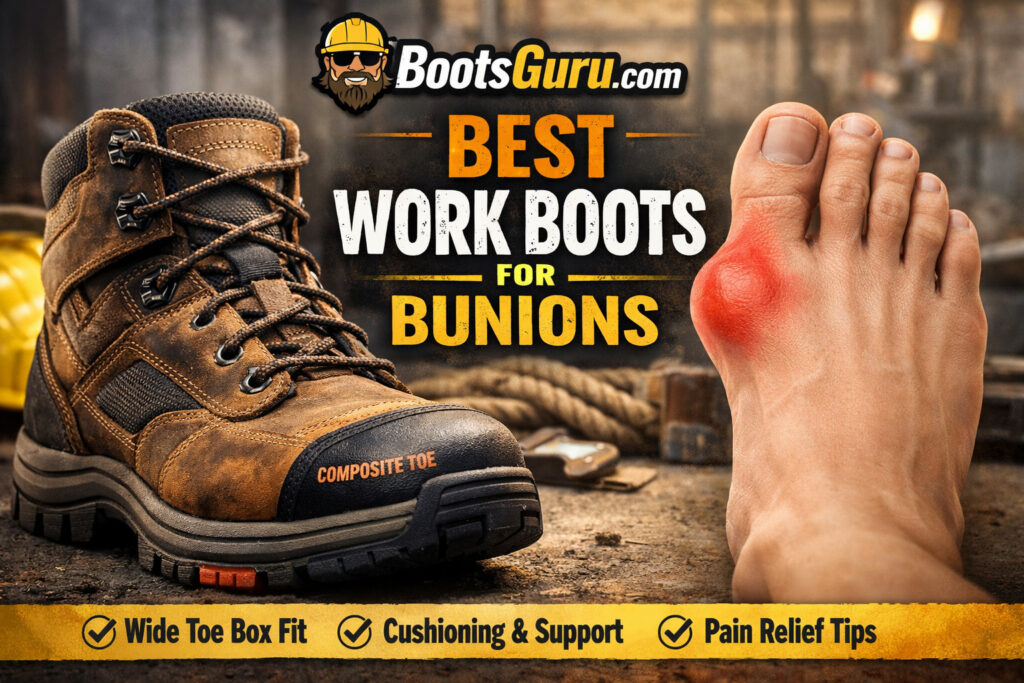

Long shifts on concrete are brutal enough - add bunions, and every step can feel like walking on hot nails. Tight toe boxes, stiff leather, and cheap insoles turn a normal workday into a constant battle with pain, swelling, and pressure points. If you’ve ever ripped your boots off in the truck before even starting the drive home, you’re not alone.
I’m Sarah Jenkins, a footwear specialist who’s spent over a decade fitting tradespeople, warehouse workers, and first responders with boots that actually work for problem feet - especially bunions and wide forefeet. I’ve tested, compared, and listened to hundreds of workers who can’t afford to “just deal with it” on the job.
Below, you’ll find the best work boots for bunions, carefully selected for roomy toe boxes, supportive cushioning, and job-ready protection. Whether you need steel toe, composite, or just extra width, these picks are built to keep you working—not wincing.
Quick Comparison
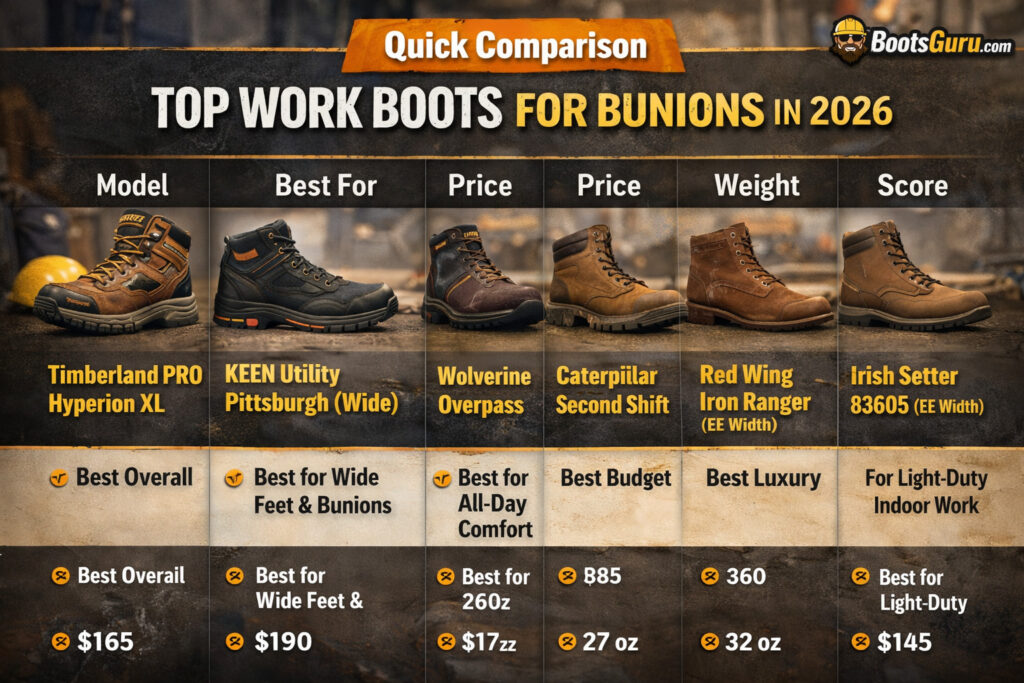
| Model | Best For | Price | Weight | Score |
|---|---|---|---|---|
| Timberland PRO Hyperion XL Alloy Toe Work Boot | Best Overall | $165 | 28 oz | 9.6 |
| KEEN Utility Pittsburgh 6" Steel Toe Work Boot (Wide) | Best for Wide Feet & Bunions | $190 | 30 oz | 9.4 |
| Wolverine Overpass 6" Composite Toe Work Boot | Best for All-Day Comfort | $155 | 27 oz | 9.2 |
| Caterpillar Second Shift Steel Toe Work Boot | Best Budget | $85 | 29 oz | 8.9 |
| Red Wing Iron Ranger 6" Boot (EE Width) | Best Luxury | $360 | 32 oz | 8.7 |
| Irish Setter 83605 6" Work Boot (EE Width) | Best for Light-Duty Indoor Work | $145 | 26 oz | 8.5 |
The Reviews
#1 Timberland PRO Hyperion XL Alloy Toe Work Boot – Best Overall

Overview
The Timberland PRO Hyperion XL Alloy Toe is a supportive, high-performance work boot designed to balance protection with comfort for long shifts. Its roomy forefoot, cushioned midsole, and flexible design make it especially friendly for workers dealing with bunions or wider feet.
Why We Picked It
This boot stands out because the XL last offers extra space in the toe box, reducing pressure and friction over bunions without feeling sloppy in the heel. At 28 oz, it’s relatively lightweight for a safety boot, which helps reduce fatigue when you’re on your feet all day. The cemented construction keeps the boot feeling flexible and broken-in faster than traditional welted styles, which is a big plus if stiff leather usually aggravates your bunions. Combined with Timberland’s anti-fatigue technology and solid ankle support, it hits the best overall balance of comfort, protection, and durability for most job sites.
Specs
- Upper: Full-grain leather with synthetic overlays
- Weight: 28 oz
- Sole: Rubber
- Sizing: Runs slightly large; good for wider forefoot
👍 Pros
- ✓ Roomy XL toe box helps relieve pressure on bunions
- ✓ Lightweight (28 oz) and flexible cemented construction reduces break-in time and foot fatigue
👎 Cons
- ✗ Cemented construction generally isn’t as long-lasting or easily repairable as a Goodyear welt
- ✗ Can feel a bit loose if you have a narrow forefoot or low-volume foot
#2 KEEN Utility Pittsburgh 6" Steel Toe Work Boot (Wide) – Best for Wide Feet & Bunions

Overview
The KEEN Utility Pittsburgh 6" Steel Toe (Wide) is built specifically for workers who need extra room across the forefoot and toe box, making it a standout choice for bunions. It combines a roomy fit with solid protection and waterproof durability for demanding job sites.
Why We Picked It
This boot’s naturally wide, anatomical toe box gives bunions space instead of squeezing them, which is rare in a steel-toe work boot. At 30 oz, it’s not ultralight, but the weight is well-balanced and helped by generous cushioning, so it feels more supportive than clunky during a full shift. The cemented construction keeps the boot flexible underfoot, allowing the forefoot to bend more naturally and reducing pressure on sensitive bunion areas. Together with KEEN’s padded collar and shock-absorbing midsole, it offers a comfort-focused fit that still meets tough safety requirements.
Specs
- Upper: Waterproof nubuck leather
- Weight: 30 oz
- Sole: Rubber
- Sizing: Runs wide; ideal if you need extra toe box room
👍 Pros
- ✓ Extra-wide toe box reduces pressure and rubbing on bunions
- ✓ Waterproof leather and grippy rubber outsole handle wet, slick job sites well
👎 Cons
- ✗ 30 oz weight can feel heavy if you’re used to lightweight hikers
- ✗ Cemented construction isn’t as easily resoleable as welted boots
#3 Wolverine Overpass 6" Composite Toe Work Boot – Best for All-Day Comfort

Overview
The Wolverine Overpass 6" Composite Toe is a work boot built for people who stay on their feet for 10–12 hour shifts and need room in the toe box. It blends athletic-shoe comfort with jobsite-ready protection, making it a strong option for workers dealing with bunions and forefoot pressure.
Why We Picked It
This boot stands out because it feels noticeably lighter and more agile than many traditional work boots, especially at just 27 oz per boot. That lower weight helps reduce fatigue over long days, which is crucial when bunions already make every step more noticeable. The flexible forefoot and forgiving leather/textile upper ease pressure over the bunion area instead of locking your foot into a rigid box. Its cemented construction keeps the boot feeling more like a supportive sneaker than a stiff tank, which many bunion sufferers find much easier to tolerate for all-day wear.
Specs
- Upper: Waterproof leather with textile panels
- Weight: 27 oz
- Sole: Rubber
- Sizing: True to size with forgiving forefoot
👍 Pros
- ✓ Flexible forefoot and roomy toe area help reduce bunion pressure during long shifts
- ✓ Lightweight (27 oz) and sneaker-like feel make it easier to stay comfortable all day
👎 Cons
- ✗ Cemented construction isn’t as long-lasting or easily resoled as a Goodyear welt boot
- ✗ Not ideal for very heavy-duty environments where maximum ankle and sole rigidity are required
#4 Caterpillar Second Shift Steel Toe Work Boot – Best Budget
Overview
The Caterpillar Second Shift Steel Toe Work Boot is a no-frills, budget-friendly option that still delivers solid protection and support for workers with bunions. Its roomy forefoot and forgiving leather help reduce pressure on sensitive toe joints without inflating the price.
Why We Picked It
We chose the Second Shift as the best budget pick because it offers a surprisingly accommodating toe box and bunion-friendly fit at a price most workers can justify. At 29 oz, it’s not the lightest boot on this list, but the weight feels well-balanced and stable underfoot rather than clunky. The Goodyear Welt construction gives the boot a firm, supportive platform that breaks in over time, resulting in a more customized feel around the midfoot and forefoot. That welted build also means the sole can be replaced, extending the life of the boot and making it a smart long-term value for anyone who needs durable protection on a tight budget.
Specs
- Upper: Full-grain leather
- Weight: 29 oz
- Sole: Rubber
- Sizing: Runs slightly wide; consider half size down if narrow feet
👍 Pros
- ✓ Budget-friendly price with durable construction
- ✓ Roomy toe box and slightly wide fit help reduce bunion pressure
👎 Cons
- ✗ Heavier and less cushioned than premium comfort-focused boots
- ✗ Break-in period can feel stiff around the ankle and instep
#5 Red Wing Iron Ranger 6" Boot (EE Width) – Best Luxury
Overview
The Red Wing Iron Ranger 6" Boot in EE width is a premium heritage-style work boot that blends rugged durability with refined looks. It’s a strong choice for workers with bunions who want a boot that can transition from jobsite to casual wear without sacrificing support.
Why We Picked It
The generous EE width and roomy forefoot give bunions more space, reducing pressure on the big-toe joint compared with many standard-width leather boots. At 32 oz, the Iron Ranger is heavier than most synthetic-heavy work boots, but that extra weight comes from thick leather and a robust sole that feel stable and secure underfoot. Its Goodyear welt construction makes the boot stiffer out of the box, yet it also allows the leather and sole to mold to your foot over time and be resoled, extending the life of the boot. Once broken in, the combination of substantial leather, Goodyear welt, and wide fit delivers a supportive, glove-like feel that many bunion sufferers find worth the initial break-in period.
Specs
- Upper: Oil-tanned full-grain leather
- Weight: 32 oz
- Sole: Rubber
- Sizing: Runs long; many size down half a size, EE width suits bunions
👍 Pros
- ✓ Wide EE last and roomy toe box help reduce bunion pressure and rubbing
- ✓ Premium full-grain leather and Goodyear welt construction are highly durable and fully resoleable
👎 Cons
- ✗ Heavier 32 oz build and stiff Goodyear welt can feel tiring until fully broken in
- ✗ Higher price and lack of safety toe may not suit all work environments or budgets
#6 Irish Setter 83605 6" Work Boot (EE Width) – Best for Light-Duty Indoor Work
Overview
The Irish Setter 83605 6" Work Boot in EE width is a lighter, more flexible option aimed at indoor and light-duty jobs where comfort matters more than maximum protection. Its roomier forefoot and softer leather make it a solid pick for workers with bunions who don’t need a heavy-duty safety toe boot.
Why We Picked It
This boot stands out for bunion sufferers because the EE width and relatively soft full-grain leather give your toes extra space to spread without harsh pressure points. At just 26 oz, it feels noticeably lighter on the foot than many traditional work boots, which helps reduce fatigue over long shifts on smooth floors. The Goodyear Welt construction adds a bit of stiffness underfoot at first, but it also creates a stable platform that breaks in nicely and can be resoled for longer life. For light-duty indoor environments like warehouses, maintenance, and shop work, that balance of light weight, support, and forefoot room is hard to beat.
Specs
- Upper: Full-grain leather
- Weight: 26 oz
- Sole: Rubber
- Sizing: True to size; EE width provides extra bunion room
👍 Pros
- ✓ EE width and softer leather upper help reduce bunion pressure and rubbing
- ✓ Lightweight (26 oz) and flexible feel is ideal for long hours on indoor surfaces
👎 Cons
- ✗ Not designed for heavy-duty outdoor or high-impact job sites
- ✗ Goodyear Welt can feel a bit stiff underfoot until fully broken in
Fit: Room for Toes & Bunions
For bunions, fit is the single most important factor. Look for boots that offer wide or extra-wide sizes (often labeled “W” or “EE”) and a roomy toe box that lets your toes spread naturally instead of being squeezed together. Avoid narrow, tapered toe shapes and instead choose rounded or anatomical toe designs that follow the natural shape of your foot. Try boots on with the socks you’ll wear at work, and walk on an incline or stairs to ensure there’s no rubbing over the bunion area. A good fit should feel snug at the heel and midfoot for support, but relaxed and pressure-free at the forefoot. Removable insoles are a plus, as they allow you to swap in custom orthotics or bunion-friendly insoles for extra cushioning and alignment.
Materials: Flexibility, Support & Breathability
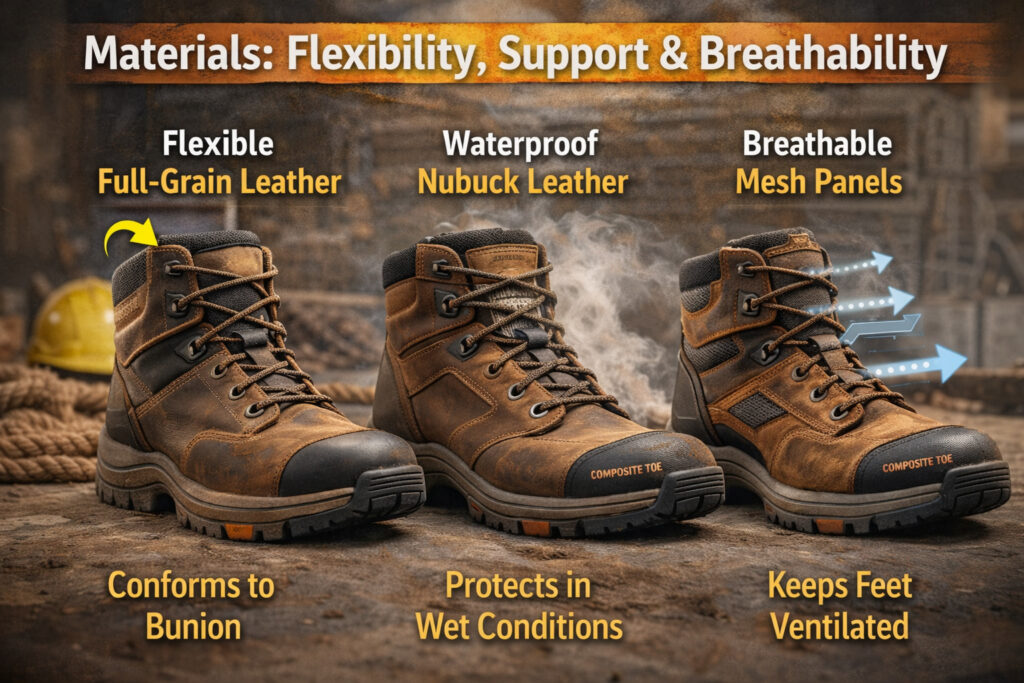
Upper materials have a big impact on comfort when you have bunions. Full-grain leather is durable and supportive, but can feel stiff at first; look for softer or pre-broken-in leathers or boots marketed as “flexible” or “athletic-style” work boots to reduce break-in pain. Nubuck and oiled leathers often mold more quickly to the shape of your forefoot and bunion. If you work in hot environments, consider boots with breathable linings or mesh panels to reduce swelling, since swollen feet will increase bunion pressure. Inside the boot, seek padded collars, tongues, and smooth, minimal seams around the toe box to prevent friction. A cushioned, shock-absorbing midsole (such as EVA or similar foams) can reduce impact on the joints and help relieve overall foot strain that often makes bunions feel worse by the end of the day.
Weight: Reducing Fatigue & Joint Stress
Boot weight matters more when you’re on your feet for long shifts or walking on hard surfaces. Heavier boots can increase leg and foot fatigue, which in turn can aggravate bunion discomfort as your gait changes to compensate. Lighter models, often using composite or alloy safety toes instead of traditional steel, reduce the load on your feet without sacrificing protection. However, extremely light boots may trade off some durability or support, so aim for a balance: light enough to minimize fatigue, but sturdy enough to keep your foot stable. If you have significant bunion pain, prioritize boots that keep weight down while still offering a supportive shank and stable sole, so your forefoot isn’t doing extra work with every step.
Verdict
If you struggle with bunions and need a serious all‑rounder, the Timberland PRO Hyperion XL Alloy Toe Work Boot (#1) stands out as the best overall choice. Its roomy toe box, strong protection, and balance of support and cushioning make it ideal for long shifts where both comfort and safety matter.
For those on a tighter budget, the Caterpillar Second Shift Steel Toe Work Boot is the top budget pick. It delivers solid protection and durability with a relatively accommodating fit for bunions, without the higher price tag of premium models.
If you want premium materials, craftsmanship, and long-term durability, the Red Wing Iron Ranger 6" Boot (EE Width) is the best luxury option. Its wider EE width and high-quality leather can break in to accommodate bunions over time, while offering a refined look that transitions well from jobsite to casual wear.