
Last Updated: May 2026
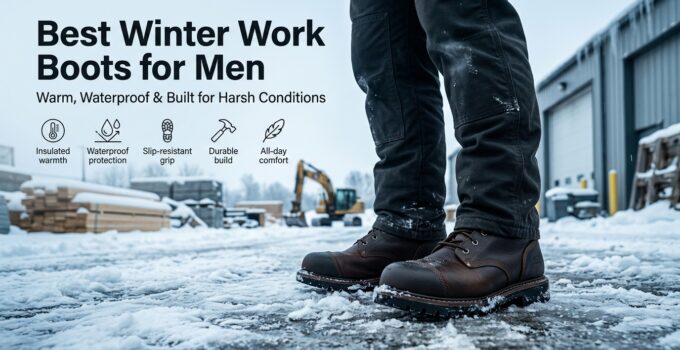
The best winter work boots for men in 2026 are the Timberland PRO Boondock HD for job site use, the Baffin Impact for extreme cold, and the Muck Boot Arctic Sport for wet and slushy conditions. Here are the top picks:
- Best Overall: Timberland PRO Boondock HD
- Best for Extreme Cold: Baffin Impact
- Best for Wet / Slush: Muck Boot Arctic Sport
- Best Traction on Ice: Korkers Men’s Polar Vortex 1200
- Best Premium: Salomon Quest Winter GTX
- Best Budget: Kamik Greenbay 4
- Best Mid-Range: Kamik Canuck
Most men buy their winter work boots wrong. They pick a boot based on insulation rating alone, then wonder why their feet are still cold — or soaked — by hour three. Warmth, waterproofing, and traction are three separate problems, and the boot that solves all three for a construction worker in Minnesota is a completely different animal than what a delivery driver in Seattle needs.
This guide cuts through the noise. Every boot below was selected based on verified owner review patterns, insulation type and rating, waterproofing construction, outsole traction testing, and real-world cold-weather performance — not manufacturer marketing copy.
Best Winter Work Boots for Men — Quick Comparison
| Boot | Insulation | Waterproof | Best Temp Range | Safety Toe | Price Tier | Link |
|---|---|---|---|---|---|---|
| Timberland PRO Boondock HD | 400g Primaloft | Yes | -20°F to 32°F | Composite | Premium | Check Price on Amazon |
| Baffin Impact | Polywool + B-Tech | Yes | -40°C / -40°F | Steel | Premium | Check Price on Amazon |
| Muck Boot Arctic Sport | 5mm Neoprene | 100% Rubber | -40°F | No | Mid | Check Price on Amazon |
| Korkers Polar Vortex 1200 | 1200g Thinsulate | Yes | -40°F | No | Mid | Check Price on Amazon |
| Salomon Quest Winter GTX | 100g Synthetic | Gore-Tex | 14°F to 32°F | No | Premium | Check Price on Amazon |
| Kamik Greenbay 4 | 200g Thinsulate | Yes | -25°F | No | Budget | Check Price on Amazon |
| Kamik Canuck | Thermal Guard Liner | Yes | -40°F | No | Mid | Check Price on Amazon |
1. Timberland PRO Boondock HD — Best Overall Winter Work Boot
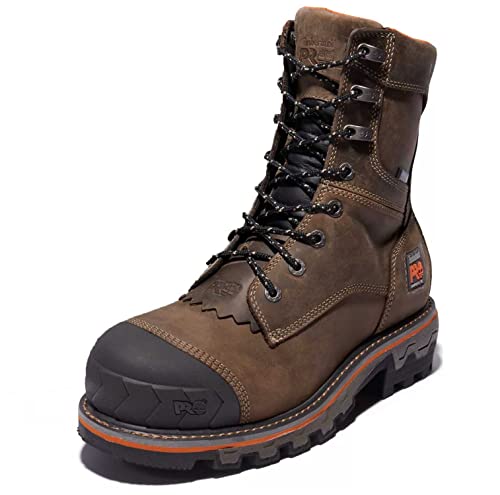
If you work outdoors in winter — construction, utility work, landscaping, road crews — the Timberland PRO Boondock HD is the most complete package on this list. It combines 400g PrimaLoft Gold insulation with a fully waterproof full-grain leather and nylon upper, composite safety toe, and a lug outsole built for frozen ground and wet surfaces. This is not a casual winter boot dressed up with a safety label. It’s a legitimate job-site boot engineered for sustained cold-weather performance.

The PrimaLoft Gold insulation is worth singling out — it retains heat even when wet, which matters when you’re sweating inside the boot and stepping into slush. Most insulation loses effectiveness as moisture builds up inside the boot. PrimaLoft holds about 96% of its thermal performance when wet. Pair that with the anti-fatigue midsole technology and the boot handles 10-hour outdoor winter shifts better than anything else at this price point.

The composite toe means it won’t conduct cold the way a steel toe does — a real advantage in sub-zero temperatures where steel toe caps can become uncomfortable fast. The outsole bites well on compacted snow and frozen mud. On clear ice it’s not a specialist, but real-world traction in typical winter job site conditions is excellent. Break-in is 5–7 days for the leather upper.

Best for: Construction workers, utility crews, road workers — anyone with sustained outdoor exposure in cold, wet winter conditions who needs a safety-certified boot.
Not ideal for: Extreme cold below -20°F, or anyone who needs maximum traction on sheet ice.
2. Baffin Impact — Best for Extreme Cold

When temperature drops below -20°F and you need a steel toe boot that’s still wearable, the list gets very short very fast. The Baffin Impact is the most serious cold-weather work boot available at a non-industrial price point. It’s rated to -40°C / -40°F using Baffin’s B-Tech multi-layer insulation system — an inner boot of Polywool fleece wrapped in an outer shell designed to trap and circulate heat regardless of external temperature. Verified owner reviews from workers in Northern Canada, Alaska, and Scandinavia consistently report warm feet at temperatures most boots fail completely.

The steel safety toe meets ASTM F2413 standards. The rubber outsole handles compacted snow and frozen terrain well. The pull-on design means no lace failures in extreme cold — a practical advantage that cold-climate workers appreciate. The boot is waterproof and the seams are fully sealed.

The trade-off is bulk and weight. The Baffin Impact is a substantial boot — it is not nimble and it is not meant to be. If you’re working in a confined space or need fine footwork on a job site, that’s a real consideration. It’s also overkill for anything above 15°F — at moderate winter temperatures you’ll overheat. This is a boot for workers in genuinely extreme cold environments, not a general-purpose winter pick. For more on insulation ratings, read our guide on best insulation for winter boots.

Best for: Workers in extreme cold climates — Alaska, Northern Canada, Scandinavia, or anyone regularly working below -20°F.
Not ideal for: Moderate winter temperatures, confined workspaces, or anyone prioritizing lightweight comfort.
3. Muck Boot Arctic Sport — Best for Wet and Slushy Conditions
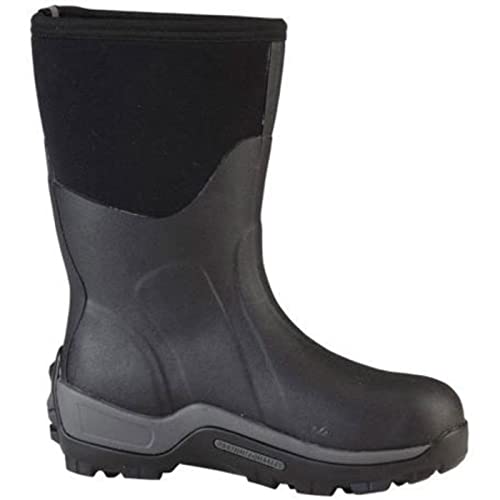
Snow and slush are two different problems. Snow compresses and can be managed with most waterproof boots. Slush — the wet, semi-liquid mix of snow, water, road salt, and ice melt that covers city sidewalks and job sites from December through March — penetrates seams, soaks liners, and defeats most traditional waterproof construction within a week. The Muck Boot Arctic Sport eliminates the problem entirely with a 100% rubber upper. There are no seams to fail. There is no leather to saturate. It is a single-piece waterproof shell with 5mm of neoprene lining and an Arctic Sport outsole that grips in slush, mud, and wet snow.

It’s rated to -40°F and the neoprene construction insulates effectively even after the boot exterior has been submerged. Farm workers, fishermen, utility workers in flooded conditions, and anyone standing in wet environments for hours consistently rate this as the only boot that keeps their feet reliably dry across a full winter season. The stretch-fit top keeps snow and slush out even when walking through deeper accumulation.

The honest weakness: it has no safety toe certification. If your job site mandates ASTM-certified safety footwear, this boot won’t pass a compliance check. It’s also not designed for precision footwork on uneven terrain — the rubber construction sacrifices the ankle support and ground feel you’d get from a leather or nylon boot. Use it where waterproofing is the primary mission. Read our full guide on best waterproof work boots if safety certification is also required.
Best for: Farmers, utility workers, anyone in deep slush, standing water, or flooded conditions where total waterproofing beats all other concerns.
Not ideal for: Job sites with mandatory safety toe requirements, technical terrain, or situations requiring precise footwork.
4. Korkers Men’s Polar Vortex 1200 — Best Traction on Ice

Ice is the problem most winter work boots quietly fail at. Rubber outsoles grip in snow. They grip in slush. On compacted clear ice — parking lots, dock ramps, loading areas — they become ice skates. The Korkers Polar Vortex 1200 solves this differently from any other boot on this list: it uses an interchangeable OmniTrax outsole system that lets you swap between different traction configurations depending on what’s underfoot. The included IceTrekker Diamond Flex outsole has aggressive tungsten carbide studs that bite into clear ice like nothing else in this category.

The 1200g Thinsulate insulation rating means genuine warmth in very cold conditions — rated to -40°F. The upper is waterproof and the boot seals well. For workers whose biggest winter hazard is ice — loading dock workers, delivery drivers, anyone who crosses parking lots and ramps repeatedly in sub-freezing conditions — the interchangeable outsole gives a level of confidence that fixed-sole boots simply cannot match.

It has no safety toe rating, which limits it for regulated job sites. The outsole swap system adds a small layer of complexity — you’ll want to keep the alternate outsole accessible, not buried in your truck. But for ice-specific traction risk, nothing on this list comes close. Pair with our guide on best boots for ice if traction is your primary concern.
Best for: Workers who cross icy surfaces regularly — loading docks, delivery routes, parking lots, frozen job sites.
Not ideal for: Regulated job sites requiring safety toe certification, or anyone who wants a simple fixed-sole boot.
5. Salomon Quest Winter GTX — Best Premium Winter Boot
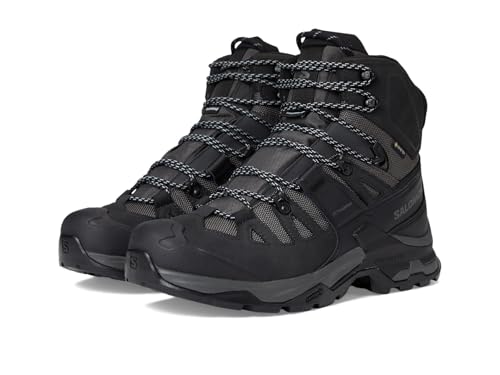
If your winter work involves varied terrain — hiking to remote job sites, working in mountain environments, or any situation where you need winter warmth combined with trail-grade performance — the Salomon Quest Winter GTX is in a different class from everything else on this list. The Gore-Tex membrane is the real deal: fully waterproof, breathable, and backed by a warranty that most membrane systems can’t match. The Contagrip outsole is engineered for mixed terrain — wet rock, compacted snow, frozen dirt — and outperforms basic lug soles in real-world use.

The 100g synthetic insulation rating seems modest compared to the Baffin or Korkers, but it’s calibrated for active use — Salomon designs for movement, and the boot manages heat output differently than a heavy static boot. For workers who are constantly moving in moderate cold (14°F to 32°F), it performs better than a heavily insulated boot that overheats under exertion. The high ankle collar and lacing system give excellent support on uneven ground.

The Salomon Quest Winter GTX has no safety toe certification and is not the right choice for regulated construction or industrial job sites. It’s also overkill — price-wise — if you’re mostly walking to and from a vehicle. But for active outdoor workers in mixed terrain winter environments, it’s the highest-performing boot on this list. Check our best winter hiking boots guide for more options in this category.
Best for: Active outdoor workers in varied terrain — mountain environments, remote job sites, anyone prioritizing mobility and Gore-Tex performance over raw insulation mass.
Not ideal for: Regulated job sites, extreme cold below 14°F, or budget-conscious buyers.
6. Kamik Greenbay 4 — Best Budget Winter Boot
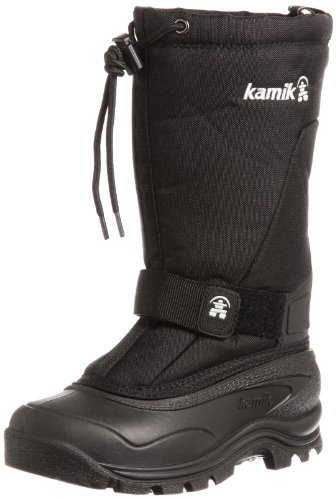
Under $80 and rated to -25°F — the Kamik Greenbay 4 is the honest budget answer for men who need reliable cold-weather protection without the premium price tag. Kamik is a Canadian boot company that has been making cold-weather footwear for over a century. The Greenbay 4 uses 200g Thinsulate insulation in a waterproof rubber and nylon upper with a removable thermal inner boot. That removable liner is the feature that separates it from similarly priced competitors — you can pull it out and dry it separately overnight, which dramatically extends the boot’s effective warmth across consecutive cold days.

The outsole handles snow, light slush, and compacted ice reasonably well. It’s not a specialist ice traction boot and it won’t survive the kind of daily abuse a Timberland PRO or Baffin takes — but for workers who need occasional winter protection, seasonal outdoor exposure, or a second pair of boots to rotate with a leather work boot, the Greenbay 4 is one of the best value propositions in this entire category.

Best for: Budget buyers, occasional cold-weather exposure, seasonal workers, or anyone needing a reliable second pair for rotation.
Not ideal for: Daily hard use, job sites requiring safety certification, or temperatures below -25°F.
7. Kamik Canuck — Best Mid-Range Winter Boot
No products found.The Kamik Canuck fills the gap between the budget Greenbay and the premium tier with a Thermal Guard liner system rated to -40°F in a waterproof vulcanized rubber shell. Like the Greenbay 4, the liner is removable and can be dried separately. Unlike the Greenbay 4, the Canuck’s liner is significantly thicker and uses a more aggressive heat-retention construction — the result is noticeably warmer performance in the -20°F to -40°F range where the Greenbay starts to lose effectiveness.
No products found.The traction outsole handles snow and moderate ice well. The pull-on shaft design is a practical advantage in extreme cold when hand dexterity is limited. Men in Northern Canada and the Upper Midwest consistently rate the Canuck as a reliable daily driver for cold-weather commutes, outdoor chores, and general winter work where total waterproofing and genuine cold protection matter more than safety certification or athletic performance.
No products found.Best for: General cold-weather work and outdoor use in the -20°F to -40°F range — farm work, property maintenance, cold-climate commuting.
Not ideal for: Job sites with safety toe requirements, technical terrain, or high-output active work.
How to Choose the Right Winter Work Boot — Buyer’s Guide
What Most Men Get Wrong
The most common mistake is chasing insulation grams without thinking about use case. A 1200g Thinsulate boot is the wrong choice for a construction worker who generates body heat while moving all day — they’ll be sweating by 8am and have cold, wet feet by noon. A 200g insulated boot is the wrong choice for a security guard standing still at an outdoor post in -15°F. Match your insulation weight to your activity level and temperature range, not just the coldest day on the forecast.
Insulation Types Explained
- Thinsulate (3M): Thin, lightweight, effective — best for active use. Measured in grams: 200g for mild cold, 400g for moderate, 800g–1200g for static or extreme cold
- PrimaLoft: Synthetic down alternative — retains warmth when wet, excellent for wet winter conditions
- Neoprene: Rubber-based insulation used in Muck Boot style boots — waterproof by design, excellent for submerged or slush conditions
- B-Tech / Polywool (Baffin): Multi-layer system designed for extreme cold — the standard for -40°F and below
- Removable liners (Kamik): Best value cold-weather system — allows drying between uses, extends effective warmth
Waterproofing: What Actually Works
- Gore-Tex membrane: Gold standard — waterproof and breathable, seam-sealed, backed by lifetime guarantee
- Rubber shell (Muck Boot style): Fully waterproof, no seam failure possible — best for standing water and slush
- Waterproof leather with treatment: Effective when maintained — needs re-treating every 3–6 months in heavy use
- “Water-resistant”: Not waterproof — will saturate in sustained wet conditions
Traction in Winter Conditions
Traction requirements vary significantly by surface. Compacted snow responds well to standard lug outsoles. Wet ice and frozen parking lots require either aggressive multidirectional studs or a specialist ice traction system like the Korkers OmniTrax. If you regularly cross icy surfaces, a fixed-sole boot — no matter the lug depth — will eventually let you down. For specific guidance, see our full article on best boots for ice traction.
Safety Toe in Cold Weather: Steel vs. Composite
Steel toe conducts cold — at temperatures below 0°F, the steel cap becomes uncomfortable and can accelerate heat loss from your toes. Composite toe (fiberglass or carbon fiber) does not conduct temperature in either direction, making it a meaningfully better choice for winter work boot applications. If you need safety certification in winter, prioritize composite over steel wherever possible. For a full breakdown, read our steel toe vs composite toe comparison.
Insulation Rating vs. Temperature — Quick Reference
| Insulation Weight | Comfortable Temp Range | Best Use Case |
|---|---|---|
| 200g Thinsulate | 20°F to 32°F | Mild winter, active use |
| 400g Thinsulate / PrimaLoft | 0°F to 20°F | Moderate cold, mixed activity |
| 800g Thinsulate | -10°F to 10°F | Cold climate, semi-active |
| 1200g Thinsulate | -20°F to 0°F | Very cold, low activity / static |
| Baffin B-Tech / Neoprene | -40°F and below | Extreme cold, static or outdoor work |
Pro tip: If you run hot or work at high output, drop down one insulation tier from what the temperature suggests. Sweaty feet in an over-insulated boot get cold faster than feet in the right insulation tier.
Frequently Asked Questions
What is the warmest work boot for men?
The Baffin Impact is the warmest work boot with a safety toe on this list, rated to -40°C / -40°F using a multi-layer B-Tech insulation system. For non-safety-toe warmth, the Kamik Canuck and Korkers Polar Vortex 1200 also reach -40°F rating. Warmth depends on both insulation type and fit — a well-fitted boot retains heat better than a loose boot regardless of insulation rating.
Are insulated work boots worth it?
Yes — for anyone working outdoors in temperatures below 32°F for more than two hours at a stretch. Cold feet cause distraction, reduce fine motor control, and in extreme cases lead to frostbite. The productivity and safety cost of cold feet far outweighs the price difference between an insulated and non-insulated boot. The question is not whether to insulate — it’s which insulation type matches your conditions.
Can you wear steel toe boots in the winter?
Yes, but steel toe conducts cold and can become uncomfortable in sub-zero temperatures. Composite toe is a better choice for winter work — same protection level, no thermal conductivity. If you already own steel toe work boots, thick wool socks and a good insole can mitigate the cold transfer effect in moderate winter temperatures. Read our guide on insulated work boots for winter weather for more options with safety toe.
How do I keep my feet warm in work boots?
Three factors matter most: insulation rating matched to your activity level, moisture management (wet feet get cold fast regardless of insulation), and fit. A boot that’s too tight restricts blood circulation and makes feet colder faster. Wear moisture-wicking wool socks, not cotton. Use a boot dryer between shifts if possible. And if your current boots don’t have a removable liner, consider adding an insulating aftermarket insole as a baseline upgrade.
What is the difference between waterproof and water-resistant boots?
Waterproof boots — using Gore-Tex membranes, rubber shells, or fully sealed leather construction — prevent water entry under sustained exposure. Water-resistant boots repel light moisture and brief contact but saturate over time. In real winter conditions involving slush, snow melt, and puddles, water-resistant is not sufficient for an all-day work boot. Invest in fully waterproof construction for any serious winter use.
How long do winter work boots last?
Quality insulated work boots last 2–4 years under daily use, depending on construction and maintenance. Rubber boots like the Muck Boot Arctic Sport can last 5+ years with proper storage. Insulation compresses over time — if a boot that was once warm is no longer performing, the insulation has likely degraded and it’s time to replace it, even if the upper looks fine. See our wiki on do work boots have a shelf life for more detail.
Final Verdict
For most men who work outdoors in winter, the Timberland PRO Boondock HD is the right answer — it covers the widest range of conditions, carries composite safety toe certification, and performs consistently across the 0°F to 32°F range that represents the majority of North American winters. If you’re in genuinely extreme cold below -20°F, step up to the Baffin Impact. Working in slush and wet conditions daily? The Muck Boot Arctic Sport is the only reliable answer. On a budget? The Kamik Greenbay 4 delivers honest cold-weather protection at a price that won’t hurt. And if ice is your primary hazard, the Korkers Polar Vortex 1200’s interchangeable outsole system is the most practical solution available.
Your feet are the foundation of every hour you spend on the job. In winter, the wrong boots don’t just make you uncomfortable — they make you slower, less focused, and at risk. Pick the right tool for your conditions.
Check Prices — All 7 Picks
- Timberland PRO Boondock HD (Best Overall): Check Price on Amazon
- Baffin Impact (Best Extreme Cold): Check Price on Amazon
- Muck Boot Arctic Sport (Best for Wet / Slush): Check Price on Amazon
- Korkers Polar Vortex 1200 (Best Ice Traction): Check Price on Amazon
- Salomon Quest Winter GTX (Best Premium): Check Price on Amazon
- Kamik Greenbay 4 (Best Budget): Check Price on Amazon
- Kamik Canuck (Best Mid-Range): Check Price on Amazon