
There is a difference between a man who knows farm boots and a man who just bought them at the farm supply store. The man who knows picks up a boot, turns it over, looks at the lug spacing, and knows immediately whether it will pack with mud in the first fifty steps or shed it clean. He can tell from the shaft height whether it was designed for a man who works on concrete or one who wades through spring pasture mud at dawn. He has already burned through a pair of standard work boots in six months because nobody told him that barnyard ammonia eats standard leather from the outside in.
This guide is written for both men — the one who already knows, and the one who is buying his first serious pair. Ten picks covering every men’s farm role from dairy barn to grain operation, from January calving checks at -20°F to July fieldwork in 95°F heat. The outsole style decision, shaft height science, the self-cleaning lug explained, the PTO safety reason experienced farmers overwhelmingly choose pull-on, and the six-point test for knowing exactly when your current pair is done.
⚡ Quick Picks — Best Farm Boots for Men 2026
| Best For | Boot | Sole Type | Shaft | Price |
|---|---|---|---|---|
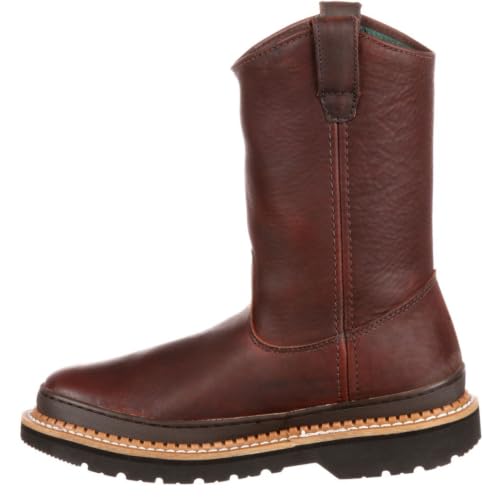
| Best overall / mixed farm | Georgia Boot Farm Ranch 11″ | Deep lug | 11″ | ~$160 |
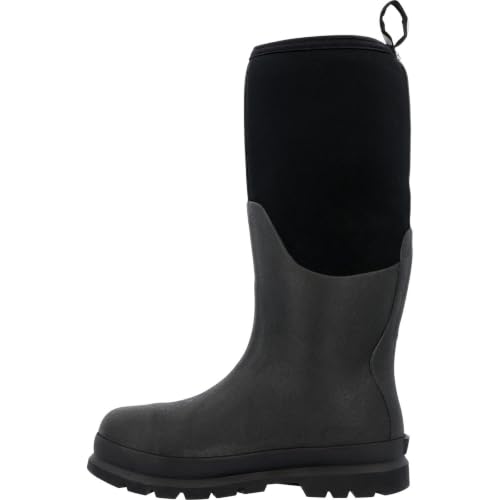
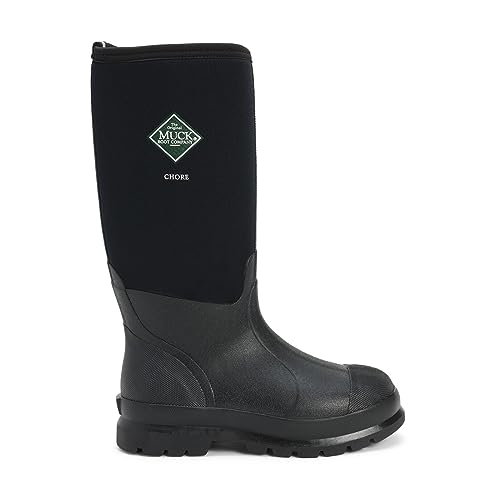
| Best wet barn / dairy rubber | Muck Boot Men’s Chore Classic | Self-cleaning rubber | 16″ | ~$130 |
| Best winter / cold farm | Bogs Men’s Classic High | Rubber lug | 14″ | ~$130 |
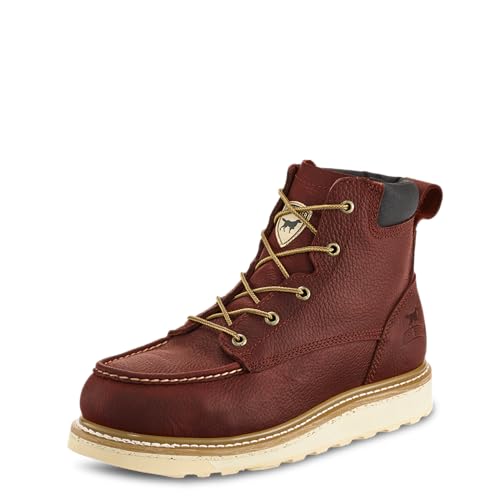
| Best resoleable / crop farm | Irish Setter Men’s Ashby 6″ | Deep lug | 6″ | ~$200 |
| Best western pull-on / ranch | Ariat WorkHog 8″ ST WP | Duratread lug | 8″ | ~$185 |
| Best budget under $70 | NORTIV 8 Bronco Stormrider ST | Lug | 6″ | ~$65 |
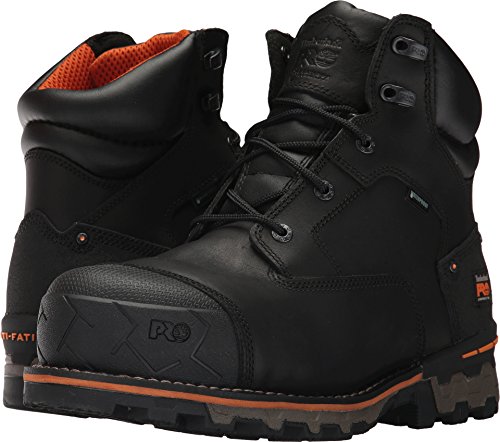
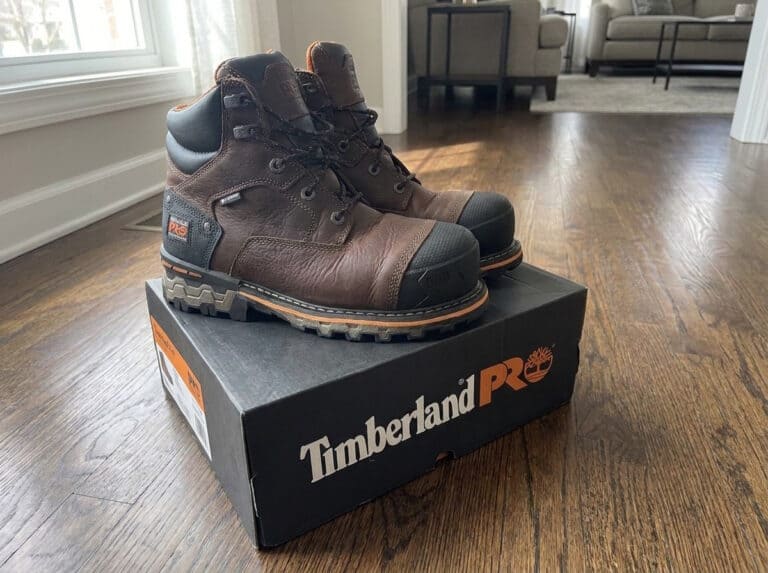
| Best warm season / lightweight | Timberland PRO Boondock 6″ CT | Lug | 6″ | ~$185 |
| Best wide feet / square toe | Ariat WorkHog XT WP CT | Duratread lug | 10.5″ | ~$220 |
| Best HRO / welding / grain | Irish Setter Marshall 8″ HRO | HRO deep lug | 8″ | ~$230 |
| Best traditional western / roper | Justin Boots Temple 10″ Roper | Roper low heel | 10″ | ~$130 |
Table of Contents
- Outsole Style Guide: Lug, Wedge, and Roper
- The Self-Cleaning Lug: What It Is and Why It Matters
- Shaft Height Guide: 6″ to 16″
- Pull-On vs. Lace-Up: The PTO Safety Reason
- What Barnyard Chemistry Does to Ordinary Boots
- The 6-Point Farm Boot Replacement Test
- Best Overall: Georgia Boot Farm Ranch 11″
- Best Wet Barn: Muck Boot Men’s Chore Classic
- Best Winter: Bogs Men’s Classic High
- Best Resoleable: Irish Setter Men’s Ashby 6″
- Best Western Pull-On: Ariat WorkHog 8″ ST WP
- Best Budget: NORTIV 8 Bronco Stormrider
- Best Warm Season: Timberland PRO Boondock 6″
- Best Wide Feet: Ariat WorkHog XT WP CT
- Best HRO / Welding: Irish Setter Marshall 8″
- Best Traditional Western: Justin Boots Temple 10″
- Break-In Guide by Construction Type
- Seasonal Rotation: Temperature Triggers
- Wide Feet on the Farm: The Afternoon Swelling Problem
- Boot Care: Barnyard-Specific Maintenance
- FAQ — 8 Men’s Farm Boot Questions
- Final Verdict by Farm Role
The Outsole Style Decision: Lug vs. Wedge vs. Roper — Which Farm Task Needs Which Sole
farm boot soles comparison guide 202605211003
The outsole is the most consequential specification on a farm boot, and the most consistently misunderstood. Men buying their first serious farm boots instinctively reach for the most aggressive-looking lug pattern, under the reasonable assumption that more traction means better performance. The experienced farmer knows this is frequently wrong — and that the wrong outsole for the wrong surface makes the boot worse than a cheaper alternative with the correct sole design.
Deep Lug / Mud Tread
Designed for soft terrain: mud, wet grass, loose soil, manure-covered barn floors, wet pastures in spring. The critical specification here is not lug height but lug spacing — and this leads directly to the self-cleaning lug discussion below. Deep lugs on a tightly-packed tread pattern pack with mud in seconds and become a flat, slippery surface. Deep lugs with wide-spaced channels shed mud with each step and maintain traction throughout a wet day’s work. Best for: dairy farmers, livestock operations with outdoor paddocks, spring fieldwork, wet-weather farm checks.
Wedge Sole
A flat, broad contact surface with no raised heel — distributes the foot’s load across the maximum contact area. This design specifically reduces pressure points during sustained standing on hard surfaces, making it measurably more comfortable for men who spend their farm day primarily on concrete barn floors, milking parlours, workshop floors, or any flat hard surface. Wedge soles are lighter than lug soles and provide excellent grip on smooth hard surfaces through shear rubber contact rather than mechanical lug penetration. Best for: farmers who work primarily indoors or on hard-surface yards, livestock farmers with covered concrete facilities, equipment mechanics and farm shop workers.
Roper Heel (Low 1″ Heel)
The classic western working boot heel — stable for riding, climbing equipment, and ground work. The roper heel specifically measures approximately 1 inch, in contrast to the traditional cowboy boot’s 1.75–2 inch riding heel. The distinction matters: the riding heel is designed to catch in a stirrup and prevent the foot sliding through; on the ground for dismounted farm work, that tall heel concentrates impact at the heel strike, causing lower back fatigue over a 10-hour day. The roper heel provides the slight elevation that western boot culture expects while maintaining the stability of a nearly-flat sole for walking. Best for: horsemen and livestock handlers who split time between riding and dismounted work, any man who wants the classic western farm boot silhouette without the riding-specific heel height.
HRO (Heat-Resistant Outsole)
A specific ASTM certification — the outsole compound has been tested to resist softening and deformation at 300°C (572°F) for 1 minute. Relevant on farms for: grain drying equipment (metal platforms and gratings near dryers reach temperatures that soften standard rubber outsoles), farm welding operations (hot metal shavings and welding slag on shop floors), and extreme summer concrete heat in southern climates. Most farmers never need HRO. Grain farmers with dryer operations and farm fabricators and welders should specify it.
The Self-Cleaning Lug: The Specification Experienced Farmers Always Check First
Turn a farm boot over. Look at the lug pattern. Are the channels between the lugs as wide as the lugs themselves — or are the lugs packed closely together with minimal space between them?
Closely-packed lug patterns look aggressive and provide excellent grip on dry, hard terrain. In mud, wet manure, and soft soil — the surfaces where a farm boot actually needs its traction — those narrow channels fill with material on the first few steps and become a solid flat sole. The boot that looked like the most capable mud boot on the shelf is now a flat rubber platform with a weight penalty from the tread that no longer functions.
A self-cleaning lug pattern has wide-spaced channels that allow accumulated soil and manure to be expelled by the mechanical action of the foot striking and lifting. As the boot compresses against the ground, material is forced into the open channels; as it lifts, the expansion of the rubber channel expels that material. Each step clears the previous step’s accumulation. The boot maintains functional traction throughout a wet and muddy day.
How to identify a self-cleaning lug pattern on a product listing: look for “wide-spaced lugs,” “mud-shedding tread,” or “self-cleaning outsole” in the product description. In the product photos, the test is simple — the channels between lugs should be clearly visible and as wide as the lugs themselves. The Georgia Boot Farm Ranch, Muck Chore Classic, and Irish Setter Ashby all carry this specification. If a product photo makes the sole look like a smooth, densely-gridded surface, it is not a self-cleaning lug design.
Shaft Height Guide: What 6″, 8″, 11″, and 16″ Actually Protect You From
farm boots shaft height comparison 202605211005
Shaft height is the measurement from the bottom of the boot to the top of the collar. It determines what farm hazards the boot protects against above the ankle — and the wrong height for your primary conditions is either leaving you vulnerable or adding unnecessary weight and heat.
| Shaft Height | What It Protects | Best For | Not For |
|---|---|---|---|
| 6″ | Ankle and lower ankle only. No protection from debris or splash above ankle height. | Crop farming, equipment operation, general property work on mostly dry terrain | Wet barn work, muddy pastures, spring flood conditions |
| 8″ | Lower calf. Keeps debris and light splash out above ankle. Good all-season protection. | General mixed-farm work, livestock handling, tractor operation, field walks | Deep muck, daily wet barn entry, spring mud above ankle depth |
| 11″ | Full lower calf coverage. The traditional farm pull-on height — designed for mounting tractors and working in moderately wet conditions. | Daily all-around farm work, livestock operations, equipment access, general barn use | Full boot submersion in deep mud; still limited for flooded pasture work |
| 14–16″ | Full calf. Maximum depth protection. The specialist wet-condition boot. | Deep muck, flooded pastures, high-pressure hosing, calving season mud, deep snow | All-day general farm walking — too tall for comfortable extended walking on dry ground |
The practical implication: men who do daily wet barn chores (dairy, hog, poultry) need the 14–16″ rubber boot for barn entry and the 8–11″ leather boot for everything outside the barn. This is the foundation of the two-boot system that experienced farmers run instinctively.
Pull-On vs. Lace-Up: The PTO Safety Reason Experienced Men Choose Pull-On
Every experienced farmer has a version of the same conversation: a younger man asks why the old-timers all wear pull-on boots, expecting the answer to be about convenience or tradition. The real answer is safety.
PTO (power take-off) shafts are the rotating drives on tractors that power implements — they operate at 540 or 1,000 RPM. An auger, grain conveyor, hay baler, or any implement driven by PTO rotation presents the same hazard. A lace — any loose material near these shafts — can be caught and wound in under half a second. The entire foot follows. This is one of the leading categories of catastrophic farm injury and amputation documented in OSHA’s agricultural fatality records.
Pull-on boots have no laces. Nothing to catch. This is not convenience — it is the specific reason that experienced men who work daily around rotating farm equipment have worn pull-on western-style farm boots for generations. The Muck Chore Classic, the Georgia Boot Farm Ranch, and the Ariat WorkHog are all pull-on designs. This is not coincidence or tradition; it is accumulated practical wisdom from a working culture that has buried too many men who learned the lesson the wrong way.
⚠️ When Lace-Up Is the Right Choice
Lace-up boots (Irish Setter Ashby, Timberland PRO Boondock) provide superior ankle lockdown for terrain that demands it: steep grades, loose rock, uneven pasture walking with heavy loads, ladder-intensive work. On farms where PTO exposure is limited and ankle support on difficult terrain is the primary concern, a lace-up work boot is the correct choice. The PTO risk applies specifically to work within arm’s reach of rotating equipment. Know your daily hazard profile — ankle support or PTO proximity — and choose accordingly.
What Barnyard Chemistry Does to Ordinary Leather Boots — and What Survives
Standard leather work boots fail on farms within 6–12 months not from wear — but from chemistry. This is the information that the hardware store doesn’t put on the shelf tag.
Manure contains ammonium hydroxide (pH 9–11 as it decomposes over 24 hours), uric acid, lactic acid, and enzymatic compounds. Fertilisers add ammonium nitrate, potassium phosphate, and calcium hydroxide to the chemical profile of the average farm yard. Barn disinfectants — routinely applied to livestock facilities — are sodium hydroxide-based. Together, these chemicals attack the peptide bonds in standard chrome-tanned leather every day the boot is worn on the farm.
The result: the leather stiffens, becomes brittle, and the stitching thread degrades at the upper-to-sole junction — the point of highest chemical concentration — before the leather or rubber shows visible failure. The boot looks fine until it does not, and then it fails structurally in the field.
What survives barnyard chemistry: SPR (Standard Process Resistance) leather — Georgia Boot’s triple-tanning and oil-impregnation process that creates chemically-resistant cross-linked protein chains. 100% rubber/neoprene construction (Muck, Bogs) — chemically inert, unaffected by organic acids and bases. Full-grain leather with regular oil treatment — not immune, but significantly slower to degrade with proper maintenance. The practical rule: if a boot description does not specifically mention chemical resistance or SPR leather, assume it is standard chrome-tanned leather and plan for 12-month service life on an active livestock farm.
The 6-Point Farm Boot Replacement Test
Men keep farm boots too long. The boot that got you through last year’s calving season may not be protecting you the same way this year. This six-point test takes three minutes and tells you definitively whether your current pair needs replacing.
Test 1 — Sole compression: Press your thumb firmly into the rubber heel of the outsole and hold for three seconds. If the material does not spring back within two seconds of releasing, the cushioning is gone — every step is transmitting impact directly to your joints without absorption. Replace the boot.
Test 2 — Lug depth: Run your thumb across the lug ridges perpendicular to the tread direction. If the ridges feel rounded or you can’t feel clear individual lug peaks, the lugs are below 3mm — the self-cleaning traction is compromised. The boot will pack with mud.
Test 3 — Chemical integrity: After cleaning the boot, look for surface pitting, cracking, or areas where the leather surface has become dull, soft, or slightly sticky. This is chemical degradation from barnyard acids. The leather’s chemical barrier has been compromised. Replace within 30 days.
Test 4 — Stitching integrity: Run your fingernail firmly along the upper-to-sole stitching line on the outside of the boot. If the thread has whitened, if your nail cuts through it easily, or if individual stitches have separated, structural failure is imminent. The boot is unsafe for farm work.
Test 5 — Waterproof function: Apply a few drops of water to the cleaned, dry upper leather. Water should bead and roll off immediately. If water soaks into the leather surface, apply a waterproofing treatment; if it still soaks in 24 hours after treatment, the membrane or leather waterproofing has failed permanently. The boot will not protect against barnyard fluids.
Test 6 — Pain location test: If your feet hurt in a way they didn’t hurt six months ago on the same farm tasks, the insole has compressed below useful cushioning. Replace the insole first — if the pain resolves, the boot has more service life. If the pain persists after two weeks on a new insole, the midsole has compressed and the boot needs replacing.
A man on a farm wearing sturdy, waterproof farm boots, highlighting the importance of durable footwear for farm work and outdoor tasks.
Best Overall / Mixed Farm: Georgia Boot Farm and Ranch 11″ Pull-On
The Georgia Boot Farm and Ranch is the default recommendation from every experienced farm boots source for a reason — not because it wins any single specification category, but because it is the most consistently capable boot across the full range of daily men’s farm work. The 11″ shaft hits the sweet spot of farm boot height: tall enough to keep debris and moderate splash out when climbing into a tractor cab or walking wet barn lanes, short enough to wear comfortably for a full day of walking on varied terrain. The SPR leather — Georgia Boot’s triple-tanning and oil-impregnation process, independently tested at 3 times the tensile strength and 2.5 times the abrasion resistance of standard leather — is the specific chemical-resistance specification that makes this boot a multi-year farm tool rather than a 12-month consumable.
The dual-density polyurethane Suspension outsole combines a wide-channel lug tread pattern with a PU cushioning layer. The PU midsole provides shock absorption for men working on concrete barn floors and hard-packed gravel yards, while the outsole tread pattern handles the mud, wet grass, and wet concrete that constitute the majority of men’s daily livestock farm terrain. The steel shank provides torsional stability across uneven ground — preventing the twisting fatigue that builds across a full day of walking on rough farm surfaces. ComfortCore insole with cushioning and moisture-wicking properties keeps feet drier than a standard foam insole throughout a long shift. No safety toe on the base model — steel toe options are available for farms requiring ASTM certification.
The pull-on design is the correct choice for men who work around PTO equipment, tractors, and rotating farm machinery. Georgia Boot’s pull-on tab is well-positioned for entry even when wearing gloves in cold conditions. The 11″ shaft provides good calf coverage but is not a full wellington replacement for deep mud or wet barn floor work — that role belongs to the Muck Chore Classic (Pick 02) in the two-boot system. Sizing: Georgia Boot Farm Ranch runs true to size in length but wide in the square toe box — men with narrow feet may find excess volume in the forefoot. The square toe design specifically accommodates the afternoon forefoot swelling that active farm work generates.
Farm Specs
Leather: SPR (barnyard chemical resistant — lab verified) | Sole: Deep lug, wide-channel (self-cleaning capable)
Shaft height: 11″ — all-around farm height | Construction: Pull-on | Toe: Soft toe base (steel toe option available)
Waterproof: DRYShield / leather DWR | Service life: 2–3 years on active livestock farm (SPR leather)
Two-boot system role: Field boot / general farm boot | PTO safe: ✅ Pull-on (no laces)
✅ Best for: Daily mixed-farm work · Livestock operations · Tractor mounting · General farm all-rounder
Pros: SPR leather — barnyard chemical resistant across the full chemical profile of livestock operations; 11″ shaft height ideal for all-around farm use; pull-on for PTO safety; dual-density PU Suspension midsole for all-day comfort; proven multi-year service life.
Cons: Not a full wellington replacement for wet barn floor work (that’s the two-boot system role); square toe runs wide — not for narrow feet; no safety toe on base model.
Best Wet Barn / Dairy Rubber Boot: Muck Boot Men’s Chore Classic
The Muck Boot Chore Classic is the barn door boot. It lives at the barn door. It goes on when you cross the threshold into the milking parlour, the stall barn, the hog house, the poultry building — any livestock facility where manure, urine, and washing water are daily constants. It comes off when you leave. This is the rubber half of the two-boot system, and no boot fulfils this role better for men in active dairy and livestock operations. The 100% waterproof neoprene and rubber construction is chemically inert — the barnyard acid and urea that attack standard leather have no mechanism to degrade rubber or neoprene. The self-cleaning outsole sheds manure and mud with each step rather than packing and building up into a slipping hazard.
The 16″ shaft height is the feature that defines the Chore Classic’s role: tall enough to keep manure splash, hosing spray, and deep wet barn debris out, with enough calf coverage to handle walking through flooded barn lanes and spring mud in livestock paddocks. The light neoprene insulation — 5mm — provides warmth for shoulder-season barn work (above approximately 20°F) without creating the thermal overheating problem of the heavier Bogs insulation in warm months. The spray-clean exterior is the operational advantage that no leather boot can replicate: when the milking session is finished, a quick hosing of the exterior and the boots are clean. The bacteria and organic acids from manure that would be working their way into leather overnight are washed off the Chore Classic’s surface in 30 seconds.
The honest seasonal limitation: above approximately 40°F in active barn work, the neoprene insulation creates a warm foot environment. In July and August, the Chore Classic makes feet hot and sweaty during morning milking — this is physics, not a product defect. For summer dairy farmers, a non-insulated rubber option for wet barn work addresses this. For three-season dairy farming in northern climates, the Chore Classic’s light insulation is the correct choice from September through May. In January and February below -10°F, the Chore Classic’s 5mm neoprene is insufficient — switch to the Bogs Classic High (Pick 03). Sizing: Muck Boot men’s sizing runs slightly large; consider sizing down a half step if between sizes.
Farm Specs
Construction: 100% rubber/neoprene — chemically inert, barnyard-proof | Sole: Self-cleaning rubber outsole
Shaft height: 16″ — maximum depth protection | Insulation: 5mm neoprene (light — shoulder season)
Waterproof: ✅ 100% inherent | Spray-clean: ✅ Yes
Temperature range: 20°F to 65°F active use | Service life: 2–3 years (mechanical failure not chemical)
Two-boot system role: Barn boot — on at barn entry, off at barn exit
✅ Best for: Daily dairy barn work · Milking parlour · Livestock facility · Spring mud season
Pros: 100% waterproof rubber — barnyard chemistry cannot degrade it; 16″ shaft for deep wet barn conditions; self-cleaning outsole; spray-clean exterior; light neoprene for three-season comfort.
Cons: Too warm above 40°F in active farm work — summer dairy work needs a non-insulated alternative; no safety toe; not for all-day general farm walking — specialist wet-barn role.
Best Winter / Cold-Climate Farm: Bogs Men’s Classic High Waterproof Winter Boot
When January calving starts at 3 AM and the thermometer reads -20°F, the Muck Chore Classic is not enough. The Bogs Classic High with 7mm Neo-Tech insulation and a tested rating to -40°F is what you wear for extreme cold farm work — the boot that keeps a northern-climate dairy farmer’s feet functional during the most punishing livestock work conditions on the calendar. The 7mm neoprene insulation compared to the Muck Chore Classic’s 5mm is not a marginal difference at -20°F: it is the difference between feet that maintain circulation and productive function, and feet that go numb within 20 minutes in a cold barn. The -40°F tested rating is for active use — livestock chore movement, not static standing.
The 14″ shaft provides substantial calf coverage for deep winter mud, snowpack, and the ice-edged muck of late winter barn yards. Hand-lasted rubber construction with no stitched seams — the entire boot shell is a single seamless piece, eliminating the seam-failure risk that standard boots develop as chemical degradation works on stitching thread. The four-way stretch inner bootie accommodates wider calves without requiring specific sizing, and adjusts to the range of sock thickness that winter farm work demands (thin liner sock plus thick merino wool outer sock for extreme cold vs. single medium sock for milder winter days). DuraFresh anti-odour treatment maintains boot hygiene across a winter season of daily livestock work.
The critical honest limitation that every experienced farmer already knows but this article must state explicitly: any boot with 7mm neoprene insulation is too warm above approximately 35–40°F during active farm work. The thermal mass that maintains foot warmth at -40°F creates a heat-retention problem at temperatures above freezing during active movement. A northern-climate dairy farmer should have a clear seasonal trigger — typically when overnight lows consistently stay above 25°F — for switching from the Bogs Classic High to the Muck Chore Classic. Wearing the Bogs in April and May creates the same overheating problem that wearing the Chore Classic in January creates the cold problem. Seasonal rotation is a system, not an afterthought.
Farm Specs
Construction: Seamless hand-lasted rubber — no seams to fail | Insulation: 7mm Neo-Tech neoprene
Temperature rating: -40°F (active use) | Shaft height: 14″
Waterproof: ✅ 100% inherent | Seasonal range: November–March (northern climates)
Overheat warning: ⚠️ Too warm above 40°F in active farm work
Two-boot system role: Winter barn boot — November to March replacement for Muck Chore
✅ Best for: Extreme cold dairy and livestock farm work · January calving · Below-zero barn chores
Pros: -40°F tested for extreme cold farm work; seamless construction — no seam failure from chemical exposure; 14″ shaft for deep winter conditions; four-way stretch inner for wide calves.
Cons: Too warm above 40°F — winter-specific use only; no safety toe; heavier than warm-season rubber alternatives; replace with Muck Chore Classic when spring arrives.
Best Resoleable / Crop Farm / Equipment Operation: Irish Setter Men’s Ashby 6″ Waterproof Steel Toe
Crop farmers and men who spend the majority of their farm day operating equipment — tractors, combines, grain handling systems — have different boot requirements from livestock farmers doing daily barn chores. The primary needs are: ankle support and lockdown for extended tractor seat operation and field walking on varied terrain; waterproofing for early-morning field work in dew and spring field conditions; and safety toe protection for equipment maintenance where heavy components are handled. The Irish Setter Ashby addresses all three, and adds the specification that distinguishes it from every other boot in this guide: Goodyear welt construction that makes the boot resoleable — when the outsole wears, a cobbler replaces only the sole for $70–$90, and the premium leather upper and waterproof lining continue for another 1.5–2 years of service.
The UltraDry waterproof system keeps feet dry through morning dew, early field walks, and the occasional wet equipment maintenance session where a man’s feet end up in places he didn’t plan. The steel toe is ASTM F2413 certified — impact and compression protection for equipment maintenance where hydraulic components, PTO housings, and heavy steel parts are handled. The 6″ shaft height is correct for crop farming’s primary terrain: maintained farm roads, field edges, and equipment yards where the primary hazard is ankle twist on uneven ground rather than deep mud or manure splash. The RPM insole system provides comfort across the long days that harvest season demands.
The lace-up construction provides the ankle lockdown that the Irish Setter Ashby’s crop-farming and equipment-operation role requires — the same lace-up that creates PTO risk for men working near rotating machinery also provides the ankle stability that matters on the uneven terrain of farm field edges and equipment yards. Crop farmers whose work keeps them clear of PTO zones for the majority of the day benefit from lace-up’s ankle support. The Goodyear welt resoling advantage for a crop farmer doing 200+ farm days per year: Irish Setter Ashby at $200 with two resoles ($160 total) over 5 years = $360 / 5 years = $72/year. A comparable cemented boot at $180 replaced annually = $180/year. The long-term economics strongly favour the welted construction for frequent wearers.
Farm Specs
Construction: Goodyear welt — resoleable | Leather: Full-grain leather (DWR treated)
Shaft height: 6″ — correct for crop/equipment operation | Toe: Steel — ASTM F2413
Waterproof: ✅ UltraDry | Service life: 3–5 years with resoling
Service life cost: ~$72/year for daily wear vs. $180+/year for cemented alternatives
✅ Best for: Crop farming · Equipment operation · Farm shop maintenance · Harvest season
Pros: Goodyear welt — resoleable for best long-term cost-per-year; UltraDry waterproof; steel toe ASTM certified; ankle lockdown for equipment operation; best longevity farm boot in guide.
Cons: Lace-up — PTO proximity requires care; 6″ shaft insufficient for deep mud or wet barn work; break-in 15–25 hours for full-grain leather.
Best Western Pull-On / Ranch: Ariat Men’s WorkHog 8″ Steel Toe Waterproof
BootSpy’s reviewer called the WorkHog “the most comfortable work boot I’ve ever worn” — and repeated the assessment after testing it against dozens of alternatives. The specific reason is Ariat’s ATS (Advanced Torque Stability) platform: a fibreglass shank for torsional stability combined with an Energy Max insole system for shock absorption. For ranch and livestock farmers who walk varied terrain all day — gravel, pasture, barn lanes, field edges — this combination of stability and cushioning reduces the fatigue accumulation that standard foam midsoles allow to build across a 12-hour work day. The weatherproof-treated full-grain leather upper provides the all-season durability that a man who wears boots every working day needs from a leather farm boot.
The 8″ shaft hits a useful position in the farm boot shaft hierarchy: shorter than the 11″ Georgia Farm Ranch for all-day walking comfort, taller than a 6″ work boot for the modest debris and splash protection that general ranch work requires. The steel toe is ASTM F2413 I/75 C/75 certified — impact and compression protection for livestock handling where animals kick, gates swing, and feed bins are moved. The Duratread outsole provides oil resistance (critical near tractors and farm equipment), slip resistance on wet surfaces, and the puncture resistance that EH-rated farm environments require. Goodyear welt construction on the WorkHog means the boot is resoleable — Ariat’s own resoling service accepts mailed WorkHog boots when the outsole wears.
The western pull-on silhouette is the culturally correct farm boot style for ranch and livestock operations across the American West and Midwest — showing up to a working cattle ranch in tactical black lace-up work boots reads incorrectly in that environment. The WorkHog’s western styling meets the ranch cultural expectation while delivering the full safety and durability specification of a serious work boot. Sizing: the WorkHog runs true to length but wide in volume — men with narrow feet may experience heel slippage in the pull-on; a thicker merino wool sock helps with fit volume management.
Farm Specs
Technology: Ariat ATS (anti-fatigue, torsional stability) | Construction: Goodyear welt — resoleable
Shaft height: 8″ pull-on | Toe: Steel — ASTM F2413 I/75 C/75
Waterproof: ✅ Weatherproof leather | Outsole: Duratread (oil, slip, puncture resistant)
PTO safe: ✅ Pull-on (no laces) | Service life: 3–5 years with resoling
✅ Best for: Ranch work · Livestock operations · Mixed terrain daily wear · Western cultural context
Pros: ATS anti-fatigue platform — “most comfortable work boot” endorsement; Goodyear welt resoleable; pull-on PTO safety; western styling appropriate for ranch culture; Duratread outsole.
Cons: Runs wide — not for narrow-footed men; steel toe conducts cold in extreme winter; steel triggers metal detectors (use WorkHog XT composite if needed).
Best Budget Under $70: NORTIV 8 Men’s Bronco Stormrider Steel Toe
No products found.The honest budget answer for men who are not yet sure how often they will use farm boots — or who need a dedicated pair for specific farm tasks without committing to a premium investment. The NORTIV 8 Bronco Stormrider’s most notable feature at its price point is Goodyear welt construction — an unusual specification for a boot in this price tier where cement construction is the standard. The welt construction provides better structural integrity than cemented alternatives at this budget and, technically, resoling capability — though at this price the cost calculation of resoling vs. replacement is worth considering. Steel toe ASTM F2413 certified. Full-grain leather upper. Waterproof construction.
No products found.The appropriate framing for this boot: it punches above its price class on structural specification, but it is not a substitute for SPR leather in a daily livestock operation. Standard chrome-tanned leather at a budget price point will degrade from barnyard chemical exposure on the standard 6–12 month timeline for men doing daily barn and livestock work. For hobby farmers, part-time farm workers, and men who need a capable farm boot for occasional use, the NORTIV 8 provides genuine full-grain leather and steel toe protection at an accessible entry point. For full-time dairy and livestock farmers wearing boots 250+ days per year in chemical-heavy environments, the budget saved on the NORTIV 8 vs. the Georgia Boot Farm Ranch will be spent replacing them within a year.
No products found.Break-in for the Goodyear welt construction at this tier: plan 15–20 hours before full comfort on a demanding farm day. The leather and welt construction requires wearing in, and budget-tier leather tanning means slightly stiffer initial material than premium leather equivalents. Start with shorter outings before your first full field day. Lace-up construction — observe PTO awareness if working near rotating equipment. Sizing runs true to standard men’s sizing.
No products found.Farm Specs
Leather: Full-grain (standard chrome-tanned — not SPR, 6–12 months on active livestock farm) | Construction: Goodyear welt (unusual at this price)
Shaft height: 6″ | Toe: Steel — ASTM F2413
Waterproof: ✅ Yes | Price: Under $70 | Break-in: 15–20 hours
✅ Best for: Hobby farmers · Occasional farm use · First farm boot purchase before committing to premium
Pros: Goodyear welt construction at budget price — rare; steel toe ASTM certified; full-grain leather; waterproof; genuine entry-level value for occasional farm use.
Cons: Standard leather (not SPR) — 6–12 months service life in daily chemical farm exposure; not for full-time livestock operations; 15–20 hour break-in for welt construction.
Best Warm Season / Lightweight: Timberland PRO Men’s Boondock 6″ Composite Toe WP
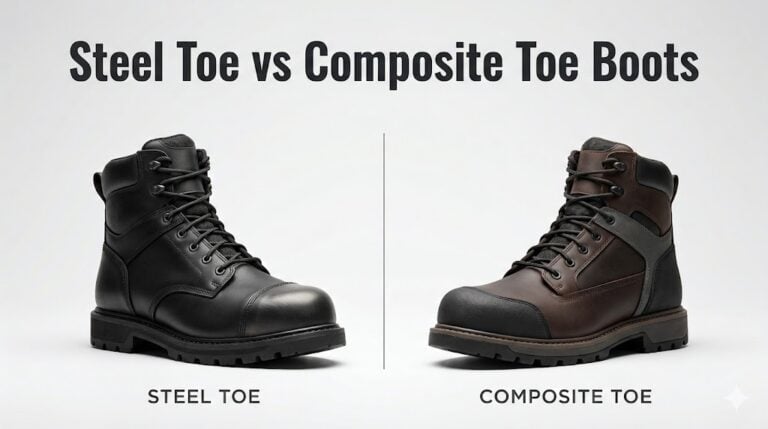
The Timberland PRO Boondock is the warm-weather fieldwork answer — specifically for spring through fall crop farming, mixed farm field work, and equipment operation in the months when the winter rubber boot is too warm and the traditional heavy leather pull-on adds unnecessary heat. The composite toe is the summer-specific technical advantage: unlike steel, composite does not absorb and conduct ambient heat from hot concrete pads, equipment metal, and direct sun exposure in 90°F+ field conditions. The Anti-Fatigue Technology midsole — Timberland PRO’s specific anti-fatigue platform — provides the energy return and cushioning that all-day fieldwork demands without the weight of a heavier traditional construction.
The composite toe is also non-metallic — it passes metal detectors at grain elevators, feed mills, and any facility with detector access control. For crop farmers who move between their own operation and commercial facilities during harvest season, this eliminates the access control delay that steel-toe boots create. ASTM F2413 certified for impact and compression. EH rated. The Boondock 6 waterproof construction handles early-morning field work in dew, spring field walks in wet conditions, and occasional equipment maintenance in wet environments without the full wellington-level waterproofing of rubber alternatives.
The 6″ shaft is the correct height for the Boondock’s primary terrain — maintained farm roads, field edges, and equipment yards where ankle support matters but deep mud is not the daily condition. Lace-up construction: the Boondock is the book for farm workers who prioritise ankle support on uneven field terrain and whose daily work keeps them clear of PTO proximity for most of the day. The lace-up also enables the heel-lock lacing technique — threading the top two eyelets in a loop — that provides superior ankle stability on rough terrain without a taller shaft. Break-in is moderate — the synthetic and leather hybrid upper requires 5–10 hours compared to full leather’s 20+ hours.
Farm Specs
Toe: Composite — ASTM F2413 (non-metallic, passes detectors, thermally non-conductive) | EH Rated: ✅ Yes
Midsole: Anti-Fatigue Technology | Shaft height: 6″ lace-up | Waterproof: ✅ Yes
Seasonal use: Spring–Fall optimal (composite thermal advantage in summer)
✅ Best for: Crop farming · Field work spring–fall · Equipment operation · Grain elevator access
Pros: Composite toe — thermally non-conductive in summer heat; passes metal detectors at commercial facilities; Anti-Fatigue Technology midsole; EH rated; lighter than traditional full-grain alternatives.
Cons: Standard leather/synthetic upper (not SPR) — suitable for crop farming with lower chemical exposure, not daily livestock barn work; lace-up requires PTO awareness.
Best Wide Feet / Square Toe: Ariat Men’s WorkHog XT Waterproof Composite Toe
The WorkHog XT is Ariat’s top-tier farm boot — the ATS Max platform sits above the standard ATS of the WorkHog 8″ and provides full lateral-to-medial stability through both a forefoot stabiliser and a heel stabiliser working together. For men who have experienced knee and lower back fatigue on long farm days, the ATS Max’s comprehensive stability system addresses the micro-instabilities that accumulate into joint fatigue over thousands of daily steps on uneven farm terrain. The composite toe — non-metallic ASTM F2413 certified — provides the summer thermal insulation advantage over steel for hot-weather farm work, and passes metal detectors at commercial and government facilities.
The WorkHog XT specifically earns its “best wide feet” designation through the combination of a wide square toe box geometry (significantly more forefoot room than rounded or pointed alternatives) and the U-Turn® Entry System — a flexible elastic panel in the rear shaft that accommodates high arches and wide foot volume during entry. Men who have struggled with narrow toe boxes causing afternoon forefoot cramping consistently find the WorkHog XT’s square toe geometry accommodates the foot expansion that active farm work generates across a full shift. The 10.5″ pull-on shaft provides good coverage without the full bulk of an 11″ boot. EH rated.
The Goodyear welt construction means the WorkHog XT is resoleable — the premium price becomes a multi-year investment rather than an annual replacement. For men on their feet 250+ days per year in demanding farm conditions, the cost-per-year calculation on a resoleable $220 boot is significantly better than annual replacement of $130–$150 cemented alternatives. Pull-on design for PTO safety. The ATS Max anti-fatigue system is worth the premium price for any man who has noticed that his current farm boots are leaving him significantly more fatigued by end of day than they did six months ago — that progression is midsole compression, and ATS Max resists it longer than standard platforms.
Farm Specs
Technology: ATS Max (highest Ariat comfort tier) | Construction: Goodyear welt — resoleable
Toe box: Wide square — best forefoot room for afternoon swelling | Toe: Composite ASTM F2413 (non-metallic)
EH Rated: ✅ Yes | Waterproof: ✅ Yes | Shaft: 10.5″ pull-on | U-Turn® Entry: ✅ Yes
PTO safe: ✅ Pull-on | ✅ Best for: Wide-footed men · Full-time farm workers · Premium investment buyers
Pros: ATS Max — best Ariat comfort for long farm days; wide square toe box for wide feet and afternoon swelling; U-Turn® Entry for high arches; composite non-metallic; Goodyear welt resoleable; pull-on PTO safety.
Cons: Premium price; runs wide — not for narrow feet; break-in 3–5 days (short for construction type).
Best HRO / Welding / Grain Handling: Irish Setter Men’s Marshall 8″ Waterproof HRO Steel Toe
The Irish Setter Marshall is the only boot in this guide with HRO (Heat-Resistant Outsole) certification — tested to resist softening and deformation at 300°C (572°F). For grain farmers operating dryers, farmers who fabricate and weld their own equipment repairs, and anyone who works in proximity to heat-generating farm machinery, this certification matters in a way that most farm boot buyers never think to look for until their outsole has softened on a hot metal platform. The Marshall is also fully resoleable via Goodyear welt construction — Footwind’s farm boot review calls it “the only boot here that’s fully resoleable, waterproof, and HRO-rated with a steel toe” and the premium price reflects the full-certification stack it carries.
Steel toe ASTM F2413 certified. Waterproof. 8″ shaft. Full-grain leather upper with genuine durability for the demanding mixed terrain that grain and mixed-crop operations involve. The combination of HRO certification, steel toe, waterproofing, and Goodyear welt resolability in a single boot is unusual at any price — the Marshall earns its “future-proof craftsmanship” description by covering every major certification category simultaneously. For men who operate at the more hazardous end of farm work — near rotating grain handling equipment, PTO-driven conveyors, grain dryers and their hot platforms — the Marshall’s complete safety specification stack is the correct professional-grade specification.
The honest buyer assessment: the Marshall’s HRO certification is genuinely useful for the specific farm buyer who faces hot-surface conditions regularly. For the general livestock or row-crop farmer who does not work near grain drying equipment or do regular welding, HRO adds cost without addressing a daily hazard. If your farm operation includes a grain dryer, a farm shop where you weld, or hot-metal handling, the Marshall is the correct specification. If it does not, the Irish Setter Ashby (Pick 04) provides similar resolability and waterproofing at a lower price point without the HRO premium. Break-in: 20–30 hours for full-grain leather Goodyear welt construction.
Farm Specs
Construction: Goodyear welt — resoleable | Outsole: HRO (heat resistant to 300°C / 572°F — ASTM tested)
Toe: Steel — ASTM F2413 | Waterproof: ✅ Yes | Shaft: 8″ lace-up
Service life: 4–6 years with resoling | Break-in: 20–30 hours
✅ Best for: Grain dryer operations · Farm welding · Hot-surface equipment · Full safety specification stack
Pros: Only HRO-rated boot in guide; Goodyear welt resoleable for maximum longevity; steel toe + waterproof + HRO full stack; best suited for grain and fabrication farm operations.
Cons: Premium price only justified if HRO hazard is present; lace-up — PTO awareness required; 20–30 hour break-in for full leather welt construction.
Best Traditional Western / Roper: Justin Boots Men’s Temple 10″ Roper Cowboy Boot
Justin Boots has been making western farm boots since 1879. The Temple 10″ Roper is the traditional American ranch boot that has been on working farms and ranches since before any other boot in this guide existed as a brand. The roper-style low heel — approximately 1 inch, broad based — is specifically designed for dismounted ground work: stable for climbing fence posts, walking in soft ground, and operating farm equipment, with the slight heel elevation that western tradition and boot culture expect. The round toe provides room for riding while maintaining enough forefoot space for full-day walking comfort. Traditional cowhide upper with the break-in characteristics of premium leather that forms to the individual foot over time.
The honest note that any knowledgeable reviewer must include: the Justin Temple is water-resistant, not fully waterproof. This is not a defect — it is a design choice consistent with traditional western boot construction, which uses premium oiled leather that sheds light moisture without a sealed waterproof membrane. In light rain, morning dew, and normal farm moisture exposure, the Temple handles moisture adequately. In sustained wet conditions, standing water, or daily barn work with active water contact, you will eventually have wet feet. For men who need full waterproofing in a western-style boot, the Ariat WorkHog 8″ (Pick 05) or WorkHog XT (Pick 08) provides waterproofed leather in a pull-on western design.
The Justin Temple’s correct buyer is the horseman and traditional rancher who values the aesthetic and construction heritage of American western farm boots alongside their functional performance — and who splits time between mounted work (where the round toe and slight heel serve their traditional purpose) and dismounted ground work (where the roper-style low heel provides the flat stability that tall riding heels lack). No safety toe — appropriate for men whose farm PPE requirements permit soft toe footwear. The triple-density insole provides genuine all-day cushioning in a traditional construction that does not rely on modern athletic foam technologies. Break-in: 15–25 hours for traditional cowhide.
Farm Specs
Construction: Traditional western, leather welt | Heel: Roper (1″ low — dismounted stability)
Shaft height: 10″ | Toe: Round — soft toe (no safety cap)
Waterproof: ⚠️ Water-resistant (not waterproof — limited wet exposure) | Insole: Triple-density
Heritage: Justin Boots since 1879 | Break-in: 15–25 hours
✅ Best for: Horsemen · Traditional ranchers · Mixed riding and ground work · Western cultural context
Pros: Justin Boots 140+ year farm/ranch heritage; roper heel for dismounted stability; round toe for riding versatility; triple-density insole; traditional cowhide construction that forms to the foot.
Cons: Water-resistant only — not for sustained wet conditions; no safety toe; 15–25 hour break-in for traditional cowhide.
Break-In Guide: By Boot Construction Type and Farm Conditions
Farm conditions interact with break-in differently from construction site conditions. The chemical environment and varied terrain of farm work can accelerate break-in in useful ways — if managed correctly.
Rubber boots (Muck Chore, Bogs Classic): Zero break-in. Wear immediately. The only adaptation is calf width — if the tall shaft is tight on a muscular calf, it will loosen within 3–4 days of wear as the rubber accommodates the shape. No moleskin, no conditioning, no planned sessions.
Goodyear welt leather (Georgia Farm Ranch, Irish Setter Ashby, Marshall, Ariat WorkHog): 15–30 hours depending on leather quality. Never wear new welted leather boots on your first demanding farm day — a full spring planting day or calving season check in brand-new leather boots produces the blisters that define the negative farm boot experience. Break-in sequence: Days 1–3, 2-hour sessions on mixed terrain. Days 4–7, 3–4 hours. Day 8 onward, increasing to full use. Apply leather conditioner to the collar and tongue pressure points before day one.
The farm-specific break-in accelerator: Early morning wet grass and dew during the first week of wearing new leather farm boots softens the leather faster than dry conditions. Use your first week’s morning chores — before the heat of the day stiffens leather back — as the primary break-in sessions. The combination of moisture and foot-shaped pressure is more effective than wearing boots on dry hard surfaces alone.
What not to do: Do not apply direct heat to new boots to try to soften them faster. Barn heaters, radiators, and boot dryers degrade leather and adhesive bonds and crack the collar at exactly the points that need to soften gradually. Slow and natural is always correct for leather break-in.
Seasonal Rotation: The Temperature Triggers That Tell You When to Switch
The most common farm boot mistake is not choosing the wrong boot — it is wearing the right boot in the wrong season. The rubber winter boot worn through May and June creates the overheating and sweat problems that make men blame the boot. The summer leather boot worn through October in a northern-climate dairy operation leaves feet cold before the real winter even begins.
| Season / Condition | Switch Trigger | Barn Boot | Field Boot |
|---|---|---|---|
| Deep winter (northern) | Overnight temps consistently below 20°F | Bogs Classic High | Insulated leather or heavy rubber |
| Shoulder winter / early spring | Overnight lows 20–35°F; mud season onset | Muck Chore Classic | Georgia Boot Farm Ranch / WorkHog |
| Spring / mud season | Field thaw, mud depth 4″+ in barn yard | Muck Chore Classic (16″ shaft) | Georgia Boot Farm Ranch (11″ shaft) |
| Summer / warm season | Consistent daytime temps above 75°F | Non-insulated rubber or Muck Chore (hot) | Timberland PRO Boondock CT (composite, breathable) |
| Fall transition | Overnight lows return below 35°F; mud returns | Muck Chore Classic | Georgia Boot Farm Ranch / WorkHog |
Wide Feet on the Farm: The Afternoon Swelling Problem
Men’s feet — particularly in the farming demographic where decades of physical work have spread the forefoot — are frequently wider than D standard width accommodates after a full farm day. This is especially pronounced in men who have worn western boots for years (the broad western toe box allows the forefoot to spread over time) and in men over 50.
The afternoon swelling problem: feet expand 6–12% in volume during active farm work, primarily at the forefoot. A boot that fits correctly at 7 AM may be cramping the forefoot against the safety toe cap by 2 PM. The resolution: try farm boots on in the afternoon or after a walk — not first thing in the morning. Choose square toe geometry (Georgia Boot Farm Ranch, Ariat WorkHog) over round or pointed toe in any safety-toe farm boot, as the square toe provides significantly more forefoot room. For men who have confirmed wide forefeet, specify EE/2E width options (Ariat WorkHog Wide, some Georgia Boot variants). If afternoon cramping in existing boots persists with size corrections, the toe box geometry is wrong — not the size.
Boot Care: Barnyard-Specific Maintenance That Extends Service Life
Evening rinse — non-negotiable for leather farm boots: Fresh manure is relatively neutral (pH 7–8) but becomes highly alkaline (pH 9–11) within 24 hours of decomposition as ammonia is produced. Leaving manure on leather boots overnight allows this increasingly alkaline chemistry to begin degrading the leather by morning. Rinse farm boots every evening — not once a week. A 30-second hose down of the exterior prevents the single most common cause of premature leather farm boot failure.
Conditioning frequency on farms: Standard leather conditioning advice is every 6–8 weeks. On active livestock farms with daily chemical exposure, condition leather farm boots every 2–3 weeks. The chemicals draw moisture from the leather faster than standard work environments. Use mink oil, Sno-Seal, or a lanolin-based conditioner appropriate for the boot’s waterproof treatment — not oil-based conditioners if the boot has a sealed waterproof membrane.
Rubber boot storage: Rubber boots degrade from UV exposure and ozone in the atmosphere even when not being worn. Store rubber farm boots away from direct sunlight and away from electric motors (which generate ozone). Stand them upright or hang them to prevent shaft creasing — a crease that forms under a stored boot becomes a crack under wear stress. Replace when rubber shows hairline surface cracking regardless of apparent functional condition — those surface cracks will become structural failures during a demanding farm task.
Stitching inspection: Once a month, run your thumbnail along the upper-to-sole stitching line. Whitened, softened, or broken stitching is the first sign of chemical degradation working from the outside in. Catching it at this stage — before the stitching fully fails — allows you to resole (welted boots) or plan replacement before the boot fails in the field.
FAQ — 8 Men’s Farm Boot Questions Answered
What are the best farm boots for men overall?
For mixed-farm men’s use: the Georgia Boot Farm Ranch 11″ Pull-On is the most consistently recommended by experienced sources across dairy, livestock, and mixed operations — SPR leather, 11″ shaft, self-cleaning outsole, pull-on PTO safety. For the rubber half of the two-boot system: Muck Boot Chore Classic. Together, these two boots cover the full range of daily men’s farm work more reliably than any single boot can.
Should I choose lug sole or wedge sole for farm work?
Deep lug if your primary surface is soft terrain — mud, wet pasture, loose soil, manure-covered barn floors. Ensure the lug pattern is self-cleaning (wide-spaced channels). Wedge sole if your primary surface is concrete and hard-pack — barn floors, milking parlours, workshop floors. The wrong outsole type for your primary surface makes the boot dramatically less effective regardless of its other quality.
What is a self-cleaning lug and why does it matter?
A self-cleaning lug pattern has wide-spaced channels between lugs that allow mud and manure to be expelled by the mechanical action of walking — each step clears the previous step’s accumulation. Tightly-packed lug patterns fill with material in minutes on wet farm terrain and become a slippery flat sole. In product photos, the channels between lugs should be as wide as the lugs themselves. If the outsole looks like a dense grid, it is not self-cleaning.
Why do experienced farmers prefer pull-on boots?
The primary reason is PTO safety. Power take-off shafts operate at 540–1,000 RPM; a lace caught on a PTO shaft or any rotating farm equipment can pull the entire foot in under half a second. Pull-on boots have no laces. This is one of the leading categories of catastrophic farm amputation in OSHA agricultural records. The convenience of pull-on is a secondary benefit — the safety reason is primary.
When should I replace my farm boots?
Use the 6-point test: sole compression (no spring-back = replace), lug depth (under 3mm = traction gone), chemical integrity (pitting or cracking = barrier compromised), stitching integrity (fingernail test — frayed or cuts easily = structural failure imminent), waterproof function (water soaks in after treatment = membrane failed), pain location (new pain on familiar tasks = midsole compressed — replace insole first, boot second).
Are Muck Boots worth it for farming?
Yes — for their specific role. The Muck Chore Classic is the correct wet barn boot for dairy and livestock operations: 100% waterproof, chemically inert (immune to barnyard chemical degradation that destroys leather), self-cleaning outsole, spray-clean in seconds. The limitation is overheating above 40°F and no safety toe. As the rubber half of the two-boot system alongside a leather field boot, Muck Boots are among the most cost-effective farm footwear investments available.
What height shaft do I need for farm boots?
6″ for crop farming and equipment operation on mostly dry terrain; 8″ for general mixed-farm livestock handling and field work; 11″ for the traditional all-around livestock farm pull-on; 14–16″ for deep muck, flooded barn yards, and high-pressure barn hosing. Most active livestock farmers benefit from having both an 11″ leather boot and a 16″ rubber wellington to cover the range of daily farm conditions.
What is the difference between rubber farm boots and leather farm boots?
Rubber/neoprene boots (Muck, Bogs) are chemically inert — barnyard ammonia, acids, and disinfectants cannot degrade them. They fail mechanically (UV cracking, flex fatigue) on a 2–3 year timeline. Fully waterproof, spray-clean, instant-on. Best for wet barn and extreme wet conditions. Leather boots (Georgia Farm Ranch, Ariat WorkHog) provide ankle support, all-day walking comfort, and safety toe options — better for varied terrain, equipment operation, and extended field work. SPR leather extends barn chemical service life to 2–3 years. Most serious livestock farmers use both in the two-boot rotation system.
Final Verdict: Best Farm Boot by Men’s Farm Role
Farm Role → Best Men’s Boot
Mixed / all-around farm work (the single-boot default): Georgia Boot Farm Ranch 11″ — SPR leather, 11″ shaft, pull-on, self-cleaning lug
Wet barn / daily dairy chores (rubber half of two-boot system): Muck Boot Men’s Chore Classic — barn door boot, 16″ shaft, 100% waterproof, spray-clean
Winter / extreme cold (November–March replacement for Muck): Bogs Men’s Classic High — -40°F tested, seamless rubber, 7mm neoprene
Crop farming / equipment operation / best longevity: Irish Setter Men’s Ashby 6″ — Goodyear welt resoleable, $72/year service life, UltraDry waterproof
Ranch / livestock / western pull-on: Ariat WorkHog 8″ ST WP — ATS platform, Goodyear welt, pull-on PTO safety, “most comfortable work boot”
Budget / occasional use / first farm boot: NORTIV 8 Bronco Stormrider — Goodyear welt at under $70, steel toe ASTM certified
Warm season / spring–fall fieldwork / composite toe: Timberland PRO Boondock 6″ CT — composite thermal advantage, Anti-Fatigue Technology, passes metal detectors
Wide feet / full-time premium investment: Ariat WorkHog XT WP CT — ATS Max, wide square toe box, composite, Goodyear welt, U-Turn Entry
Grain handling / welding / HRO: Irish Setter Marshall 8″ HRO — only HRO-rated boot in guide, full safety stack, resoleable
Horsemen / traditional ranchers: Justin Boots Temple 10″ Roper — 140+ year farm heritage, roper low heel, round toe for riding and ground work
The man who knows farm boots has two pairs by the barn door — rubber for the wet and the muck, leather for the field and the equipment. He knows the lug channels on his field boots well enough to recognise when they have worn too shallow to self-clean in spring mud. He replaces his boots before they fail, not after. The ten boots in this guide cover every variation of that knowledge — from the first-time buyer’s budget entry to the grain farmer who has finally found a reason to care about what HRO means on an outsole specification sheet.