
Last Updated: May 2026
The best work boots for standing on concrete all day in 2026 are the Thorogood American Heritage 6" Moc Toe for most workers, the KEEN Utility Milwaukee 6" for wide feet, and the Merrell Work Moab 3 Mid WP for anyone dealing with foot pain or plantar fasciitis. Here are the top 7 picks:
- Best Overall: Thorogood American Heritage 6" Moc Toe
- Best for Wide Feet: KEEN Utility Milwaukee 6" Steel Toe
- Best for Construction Concrete: Timberland PRO Pit Boss Steel Toe
- Best Lightweight / Athletic Feel: Reebok Sublite Cushion Work
- Best All-Day Flexibility: Carhartt Rugged Flex 6"
- Best for Foot Pain / Plantar Fasciitis: Merrell Work Moab 3 Mid WP
- Best Budget Comfort: Skechers Work Arch Fit SR
Concrete is the hardest surface a human foot can stand on for eight to twelve hours straight — harder than asphalt, harder than wood, harder than compacted dirt. It has zero give. Every pound of body weight that transfers down through your legs and into that surface comes back up as impact vibration with nothing absorbed along the way. Over a full shift, that repetitive shock accumulates in the knees, hips, lower back, and feet — and the wrong boots accelerate that damage significantly.
The boots that perform on concrete are not necessarily the toughest-looking or the most heavily marketed. They are the ones engineered with the right sole geometry, the right midsole cushioning compound, and the right internal support architecture. This guide identifies exactly which boots get that combination right — and why each one works for a specific type of worker on concrete.
Best Work Boots for Concrete — Quick Comparison
| Boot | Sole Type | Toe Protection | EH Rated | Best For | Price Tier | Link |
|---|---|---|---|---|---|---|
| Thorogood American Heritage 6" Moc Toe | Wedge (MAXWear) | Soft Toe | No | All trades, all-day comfort | Mid ($160–$200) | Check Price |
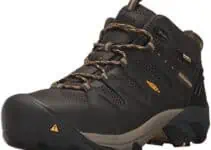
| KEEN Utility Milwaukee 6" | Lug outsole + metatomical footbed | Steel Toe | Yes | Wide feet, certified sites | Mid ($140–$170) | Check Price |
| Timberland PRO Pit Boss | Slip-resistant rubber + anti-fatigue | Steel Toe | No | Outdoor concrete, construction | Mid ($130–$160) | Check Price |
| Reebok Sublite Cushion Work | Athletic EVA midsole | Steel Toe | Yes | Lightweight, warehouse, high movement | Mid ($110–$140) | Check Price |
| Carhartt Rugged Flex 6" | Flexible rubber + cushion insole | Composite Toe | Yes | Mixed surfaces, flexibility | Mid ($130–$160) | Check Price |
| Merrell Work Moab 3 Mid WP | Vibram TC5+ + Kinetic Fit Base | Composite Toe | Yes | Foot pain, plantar fasciitis, arch issues | Mid ($140–$165) | Check Price |
| Skechers Work Arch Fit SR | Arch Fit insole + slip-resistant outsole | Steel Toe | No | Budget comfort, light industrial | Budget ($80–$100) | Check Price |
1. Thorogood American Heritage 6" Moc Toe — Best Overall for Concrete

Ask any veteran carpenter, finish electrician, or plumber what boot they wear on concrete job sites and "Thorogood Moc Toe" comes up more than any other answer. The reason is the wedge sole — and specifically, Thorogood's MAXWear wedge compound. A wedge sole distributes your body weight across the entire contact area of the foot rather than concentrating it at the heel. On concrete, that means dramatically less impact per square inch on every surface your foot contacts. After an eight-hour shift on concrete, the difference between a wedge sole and a conventional heel-and-toe sole is felt in your knees and lower back, not just your feet.

The Goodyear welt construction on a Union-made Vibram-compound sole gives this boot a level of structural integrity that glued or direct-attach competitors can't match. The full-grain leather upper breaks in over 10–14 days and then conforms to the exact shape of your foot — a fit that gets better with every week of wear, not worse. The moc toe design gives the forefoot generous room so toes don't compress against each other under load, which is a major fatigue accelerator on long concrete shifts.

It's a soft toe boot — no ASTM safety certification. Sites that mandate protective footwear compliance won't accept it. It's also not waterproof from the factory, though the full-grain leather responds very well to quality waterproofing treatments. If your site requires safety toe, jump to the KEEN Milwaukee or Timberland PRO Pit Boss below. But for any trade worker on concrete who has the freedom to choose comfort first, this is the benchmark everything else gets measured against. Full review: Thorogood American Heritage review.

Best for: Carpenters, finish tradespeople, electricians, plumbers — any worker on indoor or outdoor concrete where safety toe isn't mandated.
Not ideal for: Sites requiring ASTM safety toe certification, wet environments without prior waterproofing treatment, or workers who can't tolerate a 2-week break-in period.
2. KEEN Utility Milwaukee 6" Steel Toe — Best for Wide Feet on Concrete

Foot width is the hidden variable in concrete comfort that most guides ignore. A narrow toe box compresses the forefoot, restricts circulation, and causes the toes to push against each other under load — creating a fatigue loop that no amount of insole cushioning can fix. KEEN builds on the widest, most anatomically generous last in the work boot market, and the Milwaukee 6" is the best expression of that approach. The asymmetrical steel toe cap follows the natural shape of the foot rather than pinching it into a narrowed box — and that difference alone makes the Milwaukee feel comfortable from day one rather than after two painful weeks of break-in.

The metatomical dual-density footbed provides contoured arch support that genuinely reduces fatigue on hard floors — not the vague "ergonomic" marketing language that most brands use, but a measurable support system that targets the metatarsal arch (the transverse arch across the ball of the foot) that collapses first under sustained concrete standing. EH rated, waterproof, and ASTM F2413 certified — it delivers full safety compliance without sacrificing the comfort architecture that makes it exceptional on concrete. Workers with bunions, wide forefoot, or anyone who has given up finding a comfortable steel toe boot should start here. More options in our best work boots for wide feet guide.

Best for: Men with wide feet, bunions, or forefoot pain; warehouse workers, concrete finishers, any certified site requiring EH + steel toe + waterproof.
Not ideal for: Workers who prioritize lightweight boots — the Milwaukee is on the heavier end of the mid tier.
3. Timberland PRO Pit Boss Steel Toe — Best for Outdoor Concrete and Construction
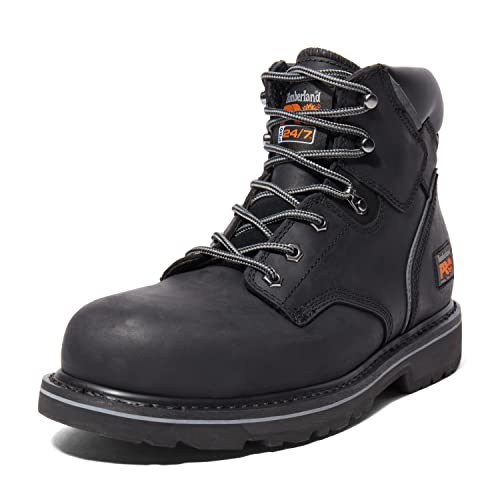
Indoor warehouse concrete and outdoor construction concrete are different problems. Outdoor construction concrete is wet, gritty, covered in debris, and often sits at an angle — it demands a boot with serious outsole traction and structural durability alongside cushioning. The Timberland PRO Pit Boss handles that environment better than almost any other boot at its price point. The slip-resistant rubber outsole bites into wet concrete reliably. The anti-fatigue midsole — Timberland PRO's proprietary cone-shaped energy return technology — compresses under load and pushes energy back into the foot on each step, reducing fatigue accumulation over a full shift in a way that flat foam midsoles don't.

Thousands of construction workers rate the Pit Boss as the point where they stopped having sore feet after their shift — not because it's the softest boot, but because the anti-fatigue technology works. It's a steel toe boot that meets ASTM F2413 and holds up under the kind of daily abuse that construction sites deliver. Full-grain leather resists the abrasion, scuffs, and chemical exposure that outdoor concrete work involves. Break-in runs 1–2 weeks but the post-break-in experience is well worth it. For the complete brand lineup, see our best Timberland PRO work boots guide.

Best for: Construction workers, concrete finishers, road workers — outdoor concrete environments with debris, moisture, and uneven surfaces.
Not ideal for: EH-rated environments, workers who need immediate out-of-box comfort, or anyone prioritizing lightweight construction.
4. Reebok Sublite Cushion Work — Best Lightweight Boot for Concrete
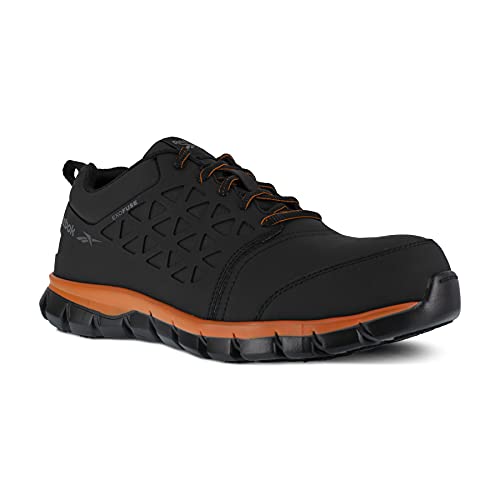
There's a counterintuitive truth about concrete comfort: sometimes the lighter the boot, the less fatigue you accumulate. Every ounce on your foot multiplies into pounds of effort over thousands of steps across a shift. The Reebok Sublite Cushion Work weighs significantly less than traditional leather work boots — the Sublite EVA midsole foam is borrowed from Reebok's athletic running line, which means it's engineered to absorb impact and return energy in a way that conventional work boot midsoles aren't. It feels like wearing a running shoe with a steel toe, and for workers who are on their feet moving constantly rather than standing stationary, that athletic feel translates directly to reduced end-of-day fatigue.

EH rated and ASTM F2413 certified — it meets full safety compliance requirements. The memory tech footbed provides solid arch support. The mesh-and-leather upper breathes far better than full-grain leather, which matters enormously for warehouse workers in heated facilities who deal with foot sweating as a comfort problem independent of impact fatigue. Break-in is minimal — most workers describe it as comfortable within the first day or two. It's waterproof enough for light moisture but not sealed for wet outdoor environments — it's an indoor and light-industrial concrete boot, not a rain-and-mud construction boot.

Best for: Warehouse workers, distribution center employees, light industrial — anyone who moves constantly on concrete in a heated indoor environment and prioritizes lightweight comfort over maximum durability.
Not ideal for: Heavy outdoor construction, wet environments, workers who need maximum leather durability for 3+ year lifespan.
5. Carhartt Rugged Flex 6" — Best All-Day Flexibility on Concrete

Standing still on concrete is one problem. Moving constantly across concrete — climbing stairs, bending into crawlspaces, squatting to reach low connections — is a different problem that a rigid boot makes significantly worse. A stiff boot that resists natural foot movement forces your foot muscles to work harder on every flex, creating a fatigue tax on every step that adds up across a full shift. The Carhartt Rugged Flex 6" uses a specially engineered outsole compound and upper construction that flexes with the natural movement of the foot rather than against it — and that distinction matters enormously for tradespeople who move through varied positions all day on concrete.

The FastDry moisture management lining pulls sweat away from the foot, which addresses the secondary concrete comfort problem — foot sweating that leads to skin breakdown and blisters during long shifts. Composite safety toe meets ASTM F2413 standards. EH rated. Waterproof. Break-in is fast — typically 3–4 days — making it one of the most immediately wearable boots on this list. HVAC techs, plumbers, and electricians who spend their day transitioning between crawling, kneeling, standing, and walking consistently rate the Rugged Flex as the most comfortable boot they've owned for that specific movement pattern. More in our best work boots for HVAC guide.

Best for: HVAC technicians, plumbers, electricians, anyone moving through varied positions on concrete all day — the flexibility advantage is most pronounced for high-movement trades.
Not ideal for: Heavy static standing in extreme environments, or workers who prefer a stiff traditional boot structure.
6. Merrell Work Moab 3 Mid WP — Best for Foot Pain and Plantar Fasciitis

Plantar fasciitis — the stabbing heel pain caused by inflammation of the plantar fascia ligament — is one of the most common occupational injuries among workers who stand on hard floors. It develops when sustained concrete standing repeatedly stretches the fascia without adequate arch support to distribute the load. The Merrell Work Moab 3 Mid WP is the boot on this list most specifically engineered to address that problem. The Kinetic Fit Base contoured insole targets arch support with a precision that flat insoles don't — it's shaped to cradle the foot's arch in its natural loaded position rather than leaving it to drop under body weight. The Vibram TC5+ outsole provides the shock absorption layer that concrete completely lacks.
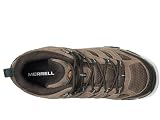
Composite safety toe meets ASTM F2413 standards. EH rated. Fully waterproof with a sealed membrane. The mid-height cut provides meaningful ankle support that reduces the lateral ankle rolling that contributes to plantar fascia stress on uneven concrete surfaces. Workers who have tried multiple boots for plantar fasciitis without success consistently report that the Moab 3's arch support architecture is qualitatively different from other boots — it actually works because it's derived from Merrell's trail running technology where foot strike absorption is a primary engineering objective, not an afterthought. For more solutions, see our complete guide on best work boots for plantar fasciitis.

Best for: Workers with plantar fasciitis, heel pain, flat feet, or high arches — anyone whose concrete pain is rooted in arch support failure rather than just cushioning.
Not ideal for: Heavy construction abuse environments, workers who prefer a traditional stiff leather boot, or those who need maximum upper durability over cushioning performance.
7. Skechers Work Arch Fit SR — Best Budget Boot for Concrete Comfort
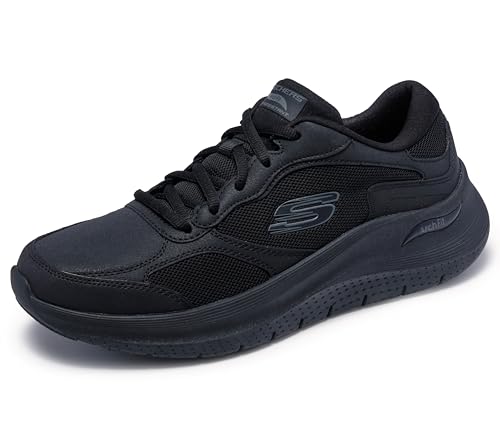
Most budget work boots on concrete are a disappointment — thin insoles, flat outsoles, and hard footbeds that make concrete feel even more punishing than it already is. The Skechers Work Arch Fit SR is a genuine exception. The Arch Fit insole system was developed with input from podiatrists and is designed specifically to support the plantar arch under sustained load — which is exactly the mechanism that fails during long concrete shifts. For a boot under $100, that level of insole engineering is remarkable and it's the reason Skechers has become a serious option for warehouse workers, retail workers, and anyone standing on hard floors all day.

The slip-resistant outsole handles wet concrete reliably. The steel toe meets ASTM F2413 certification. The upper construction is lighter and less durable than leather — expect 12–18 months under hard daily use before sole separation or upper breakdown becomes an issue. It's not EH rated and not designed for harsh outdoor construction environments. But for budget-constrained workers in warehouse, retail, light manufacturing, or any indoor concrete environment, it delivers far more concrete comfort than anything else at this price point. Upgrade the longevity by adding a quality aftermarket insole — see our best insoles for work boots guide.

Best for: Budget buyers in warehouse, retail, light industrial — any indoor concrete environment where you need real arch support without spending $150+.
Not ideal for: Outdoor construction, EH-rated environments, or workers who need 2+ year boot lifespan under hard use.
Why Concrete Is So Hard on Feet — The Science
Concrete has a hardness rating of approximately 3,000–5,000 PSI — essentially zero compression under the forces generated by human body weight. Compare that to asphalt, which has meaningful elasticity and absorbs 3–5% of impact force, or natural earth, which absorbs significantly more. Every step on concrete returns close to 100% of impact force back through your foot, ankle, knee, hip, and lower back. Over 10,000–12,000 steps per shift, that adds up to a cumulative mechanical load that damages soft tissue, accelerates joint wear, and creates the chronic foot pain that ends careers.
The four mechanical factors that boots can address on concrete:
- Midsole cushioning: Absorbs impact energy before it reaches the foot — EVA foam, PU foam, and gel compounds all perform differently; athletic-derived EVA (Reebok Sublite) absorbs more than traditional boot PU
- Arch support: Distributes load across the full plantar arch rather than concentrating it at the heel and ball — the primary mechanism behind plantar fasciitis prevention
- Sole geometry: Wedge soles (Thorogood) spread weight across the full foot surface; conventional heel-toe soles concentrate load at two points
- Toe box volume: Adequate room prevents forefoot compression that restricts circulation and causes metatarsal stress — KEEN's wide last is the industry leader here
How to Make Any Work Boot Better on Concrete
Even the best boot benefits from an aftermarket insole upgrade on concrete. The stock insoles in most work boots — including premium models — are designed as a compromise between fit, weight, and cost. A purpose-built insole for hard floor standing targets the arch support and cushioning profile more precisely than anything in the boot from the factory. Our full guide covers the top options: best insoles for work boots.
Other concrete-specific practices that reduce fatigue:
- Rotate two pairs: Midsole foam takes 24 hours to fully decompress after a shift — alternating pairs means each boot is always performing at full cushioning capacity
- Anti-fatigue mats: Where your site allows them, floor mats reduce concrete impact force by 30–50% at the point of standing — stackable savings with boot cushioning
- Wool socks: Merino wool provides natural cushioning and moisture management that synthetic socks don't — a meaningful upgrade for concrete workers
- Condition leather uppers monthly: Supple leather flexes with the foot more naturally than dried-out leather, reducing the energy cost of each step
If your budget is tight, see our best work boots under $100, including wedge-sole options for concrete.
Frequently Asked Questions
What type of sole is best for standing on concrete?
Wedge soles are the gold standard for concrete — they distribute weight across the full foot surface rather than concentrating it at the heel and ball. Thorogood's MAXWear wedge is the most widely recommended design in the trades. For boots with conventional sole geometry, a thick cushioned EVA midsole (like Reebok Sublite) significantly reduces concrete impact. The worst soles on concrete are thin rubber direct-attach constructions with no midsole cushioning — they transmit nearly all impact directly to the foot.
Are steel toe boots bad for standing on concrete?
The steel toe cap itself doesn't make standing on concrete worse — the midsole, insole, and sole geometry are what matter. However, some steel toe boots prioritize protection rigidity over comfort engineering, resulting in stiff, heavy constructions that fatigue faster on hard floors. Composite toe boots tend to be lighter (reducing leg fatigue) and are often paired with more comfort-focused midsole technology. If you need safety certification on concrete, composite toe is generally the better choice for all-day standing. See our steel toe vs composite toe comparison.
How do I stop my feet from hurting on concrete?
Four things make the biggest difference: 1) Switch to a boot with genuine arch support and a cushioned midsole — the wrong boot is often the entire problem. 2) Add a quality aftermarket insole designed for hard floor standing. 3) Rotate two pairs of boots so the midsole foam fully recovers between shifts. 4) Use anti-fatigue floor mats at your work station where possible. If foot pain persists with good boots and proper insoles, see a podiatrist — you may have an underlying issue that requires orthotic support beyond what standard boots provide.
Can work boots cause plantar fasciitis?
Yes — work boots with inadequate arch support are a leading contributor to occupational plantar fasciitis. When the plantar fascia (the ligament that runs along the bottom of the foot) isn't supported under sustained load, it stretches repeatedly and develops micro-tears that cause the stabbing heel pain characteristic of plantar fasciitis. Boots with flat insoles and no arch contour force the fascia to absorb load it should be sharing with the arch — and on concrete, that damage accumulates fast. Switching to a boot with genuine arch support (KEEN Milwaukee, Merrell Moab 3) eliminates this risk for most workers. Read our full guide: best work boots for plantar fasciitis.
How often should I replace work boots for standing on concrete?
The midsole foam in most boots compresses and loses cushioning effectiveness before the upper shows visible wear — meaning a boot can look fine and feel broken down at the same time. As a rule: if a boot that used to feel comfortable now makes your feet hurt by midday, the midsole is likely spent even if the leather looks intact. Under daily concrete use: budget boots 12–18 months, mid-tier boots 18–30 months, premium Goodyear welt boots 3–5 years with resoling. The insole typically needs replacing every 6–12 months regardless of the boot's overall condition.
What work boots are best for concrete for workers with flat feet?
Flat feet (low or no arch) are especially vulnerable on concrete because the plantar arch that should distribute load across the foot has collapsed, concentrating all impact at the heel and ball. The Merrell Work Moab 3 Mid WP and KEEN Utility Milwaukee are the strongest choices for flat-footed workers — both provide structured arch support that does the work the foot's natural arch cannot. In many cases, a custom or semi-custom orthotic insole provides the most precise fit for flat-footed workers. Full guide: best work boots for flat feet.
Final Verdict
For most workers on concrete without a mandatory safety toe requirement, the Thorogood American Heritage Moc Toe is the answer — its wedge sole is the single best concrete comfort technology available in a work boot, and nothing at any price point beats it for all-day standing comfort once it's broken in. If your site requires steel toe certification, the KEEN Utility Milwaukee is the most comfortable compliant option — especially for wide feet. Workers dealing with existing foot pain or plantar fasciitis should make the Merrell Work Moab 3 their first choice. For high-movement trades where flexibility matters more than static cushioning, the Carhartt Rugged Flex wins. And for anyone who needs real concrete comfort on a budget, the Skechers Work Arch Fit SR delivers far more than its price suggests.
Your feet carry your entire career. On concrete, the boot you choose is the only thing standing between that surface and your joints — choose deliberately.
Check Prices — All 7 Picks
- Thorogood American Heritage 6" Moc Toe (Best Overall): Check Price on Amazon
- KEEN Utility Milwaukee 6" (Best Wide Feet): Check Price on Amazon
- Timberland PRO Pit Boss (Best Construction Concrete): Check Price on Amazon
- Reebok Sublite Cushion Work (Best Lightweight): Check Price on Amazon
- Carhartt Rugged Flex 6" (Best Flexibility): Check Price on Amazon
- Merrell Work Moab 3 Mid WP (Best for Foot Pain): Check Price on Amazon
- Skechers Work Arch Fit SR (Best Budget): Check Price on Amazon