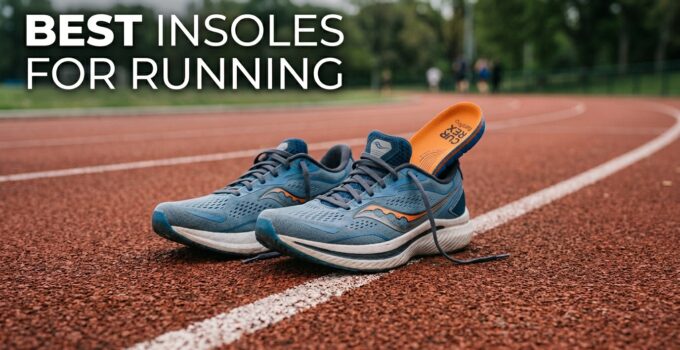

Most running shoes ship with a thin foam liner. It's there for step-in comfort, not to hold your arch or heel in place. A running insole replaces that liner with a heel cup and an arch shape, which changes how your foot sits in the shoe.
The right insole depends on three things: your arch height, whether your foot rolls inward (overpronation), and how much room your shoe has inside. This guide sorts five insoles by those needs. Specs come from each brand's product page, and we note where independent testers agree. We haven't lab-tested these ourselves.
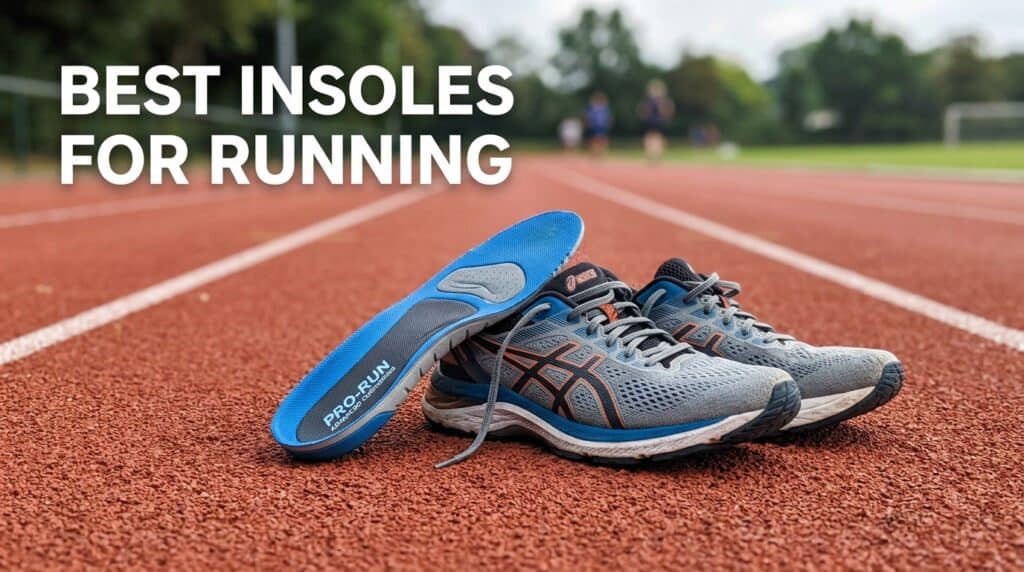
Aftermarket insoles replace the thin foam liner that ships with most running shoes.
Quick Picks
| Pick | Insole | Support | Best for |
|---|---|---|---|
| Best overall | Currex RunPro | Flexible, 3 arch heights | Most runners, neutral to mild pronation |
| Best for overpronation | PowerStep Pinnacle Maxx | Firm, 2° medial heel post | Flat feet, moderate to severe overpronation |
| Best firm support | Superfeet Run Support Low Arch | Carbon fiber stabilizer cap | Low arches that want structure |
| Best cushioned | Superfeet Run Cushion Medium Arch | Soft, flexible | Long, easy miles and recovery runs |
| Best for heavier runners | VALSOLE Heavy Duty 220+ lbs | Rigid TPU arch, high arch | Runners over 220 lbs, roomy shoes |
How to Choose a Running Insole
Match the arch height to your foot
An insole that's too high pushes into your arch. One that's too low does nothing. Brands like Currex and Superfeet sell the same insole in low, medium and high arch versions for this reason. A simple check: wet your foot and step on a paper bag. A full footprint with little inward curve suggests a low arch. A thin band between heel and forefoot suggests a high arch.
Flexible or firm support
Flexible insoles, like the Currex RunPro, bend with your foot and keep the feel of your shoe. Firm insoles, like the PowerStep Pinnacle Maxx, hold your foot in one position and resist the inward roll of overpronation. If your shoes wear heavily on the inside edge and your arches ache after runs, start with firm. If you just want a better fit and feel, start with flexible.
Check the volume
Running shoes are snug. A thick insole takes up room, pushes your foot up and can leave your toes cramped or your heel slipping. All five insoles here replace your stock liner, so always take the original out first. The Superfeet Run lines are made for "roomy to moderate fitting" running shoes, according to Superfeet. The Currex RunPro is 4mm thick.
Replace them on schedule
Foam and shells wear out even when the insole still looks fine. Currex rates the RunPro for 400 to 600 miles. A good rule is to replace your insoles when you replace your running shoes, or sooner if the arch stops springing back when you press it.
The 5 Best Running Insoles: Reviews
1. Currex RunPro: Best Overall

The Currex RunPro was the testing team's favorite in iRunFar's running insole guide (iRunFar, updated 2026-05-18). The reason is Currex's Dynamic Arch shell. It supports the arch but flexes with your stride, so the insole doesn't make your shoe feel stiff.
It comes in low, medium and high arch versions, sizes XS to 2XL, and it's 4mm thick. It has a deep, decoupled heel cup, dual-layer cushioning and a moisture-wicking top cover. Currex lists it at $59.95 and rates it for 400 to 600 miles (Currex, retrieved 2026-09-24).
Skip it if you have significant overpronation or flat feet. A flexible shell doesn't resist inward roll as firmly as the PowerStep Pinnacle Maxx.
Note: the Amazon link above opens one arch height and size. Choose your arch height and size on the listing before you order.
Check the current price of the Currex RunPro on Amazon
2. PowerStep Pinnacle Maxx: Best for Overpronation and Flat Feet

The Pinnacle Maxx is the firmest insole in PowerStep's Pinnacle line. It uses a polypropylene shell with a built-in 2° medial heel post. That post tilts the inside of your heel up slightly, which counters the inward roll of overpronation. PowerStep lists it for moderate to severe overpronation, flat feet and plantar fasciitis, and says the product is accepted by the American Podiatric Medical Association. The list price is $57.95 (PowerStep, retrieved 2026-09-24).
It has dual-layer EVA cushioning and a deep heel cradle, and it's made in the USA.
Skip it if you're a neutral runner. The medial post is designed to change how your foot lands. If your foot doesn't roll inward, that correction can feel wrong. Neutral runners should start with the Currex RunPro.
Check the current price of the PowerStep Pinnacle Maxx on Amazon
3. Superfeet Run Support Low Arch: Best Firm Support
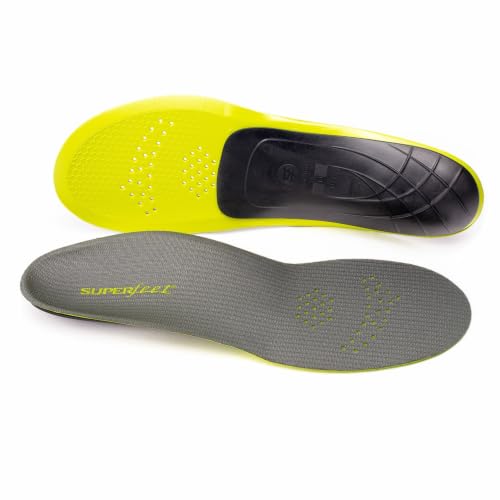
Superfeet's Run Support line uses an EVOLYTE carbon fiber stabilizer cap under a two-layer Aerospring foam. The carbon cap gives firm, light support, and the sculpted heel cup holds the heel in place. The Low Arch version suits runners with lower arches who still want structure. Superfeet lists it at $59.99 (Superfeet, retrieved 2026-09-24). iRunFar also includes Superfeet Run Support in its running insole guide.
Superfeet describes it as best in roomy to moderate running shoes, so it isn't the pick for a tight racing flat.
Skip it if you have a medium or high arch. Choose the Run Support Medium or High Arch version instead. Also skip it if you want soft cushioning. The Run Cushion below is softer.
Check the current price of the Superfeet Run Support Low Arch on Amazon
4. Superfeet Run Cushion Medium Arch: Best Cushioned

Where Run Support is firm, Run Cushion is soft. It uses Superfeet's Aerolyte dual comfort foam and what Superfeet calls Adaptive Comfort Technology, which flexes with your foot. An Energizing Heel Cushion softens heel strike. Superfeet lists it at $59.99 (Superfeet, retrieved 2026-09-24).
This is the insole for runners whose shoes feel harsh or flat underfoot, and for long, easy miles where comfort matters more than correction.
Skip it if you need to control overpronation. A soft, flexible insole won't resist inward roll. Choose the PowerStep Pinnacle Maxx instead.
Check the current price of the Superfeet Run Cushion on Amazon
5. VALSOLE Heavy Duty 220+ lbs: Best for Heavier Runners
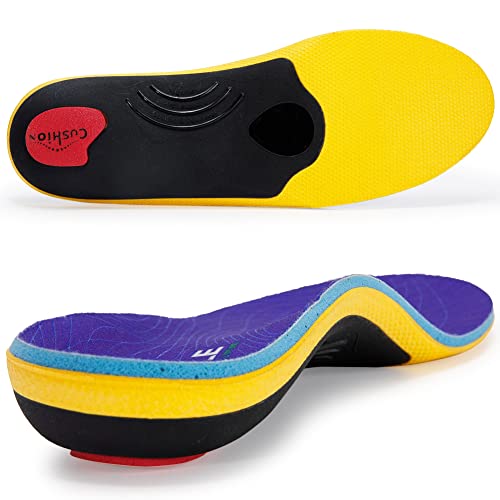
VALSOLE builds this orthotic for people over 220 lbs. It has a rigid black TPU arch shell that wraps the heel, a Poron heel pad for shock absorption and a high arch. It costs less than the other picks here, and it's trimmable.
It isn't a running-specific design. It's marketed for work boots and everyday shoes as well, and the rigid, high arch is aggressive. It suits heavier runners in roomy, neutral trainers who have found softer insoles flatten out too quickly.
Skip it if you have a low arch or wear snug shoes. The high, rigid arch can press uncomfortably, and the build takes up more room than a running insole.
Check the current price of the VALSOLE Heavy Duty on Amazon
Which Insole Fits Your Situation?
| Your situation | Start with |
|---|---|
| Neutral runner, want a better fit and feel | Currex RunPro |
| Flat feet, shoes wear on the inside edge | PowerStep Pinnacle Maxx |
| Low arch, want firm support | Superfeet Run Support Low Arch |
| Shoes feel harsh, want more cushion | Superfeet Run Cushion |
| Over 220 lbs, roomy trainers | VALSOLE Heavy Duty |
How to Install and Break In Running Insoles
- Take the stock liner out. Never stack a new insole on top of the old one. It fills the shoe and cramps your toes.
- Trim to fit. Lay the old liner on the new insole with the heels lined up. Trim only the toe end to match.
- Check the fit. Lace up and stand. Your toes need room, your heel shouldn't lift, and the insole should lie flat.
- Build up slowly. Wear them for an hour or two around the house first, then a short run. Add distance over one to two weeks. Firm insoles often feel hard under the arch at first.
Frequently Asked Questions
Can insoles help with shin splints?
They can help when foot mechanics are part of the problem, for example if your arches collapse and your feet roll inward. Shin splints have several causes, including increasing mileage too fast, so an insole is one tool, not a cure. If pain continues or gets worse, see a physical therapist or podiatrist.
Which insole is best for plantar fasciitis when running?
PowerStep lists the Pinnacle Maxx for plantar fasciitis, and firm arch support with a deep heel cup is the usual starting point. Plantar fasciitis needs a proper diagnosis, so use an insole alongside advice from a professional. For hiking, see our hiking boots for plantar fasciitis guide.
My new insoles feel hard. Is that normal?
With firm insoles, yes, for the first week or two. If you still have arch pain after two weeks of gradual use, the arch height is probably wrong for your foot.
How long do running insoles last?
Currex rates the RunPro for 400 to 600 miles. Replace insoles when you replace your shoes, or when the arch stops springing back.
Can I use running insoles in other shoes?
Yes, if the shoe has a removable liner and enough room. For work boots, where you need more cushion and a different fit, see our best insoles for work boots. For walking and hiking shoes, see our insoles for long walks and hiking.
Do minimalist or zero-drop shoes need insoles?
Usually not. Minimalist shoes are built around a thin, flat footbed on purpose. If you want support, a lower-drop cushioned shoe may suit you better than an insole. Our zero-drop running shoes guide explains the trade-offs.
The Bottom Line
For most runners, the Currex RunPro is the safest first pick: it comes in three arch heights and adds support without making your shoe feel stiff. If your feet roll inward or you have flat feet, start with the PowerStep Pinnacle Maxx. If your shoes just feel harsh, the Superfeet Run Cushion adds comfort without much correction.