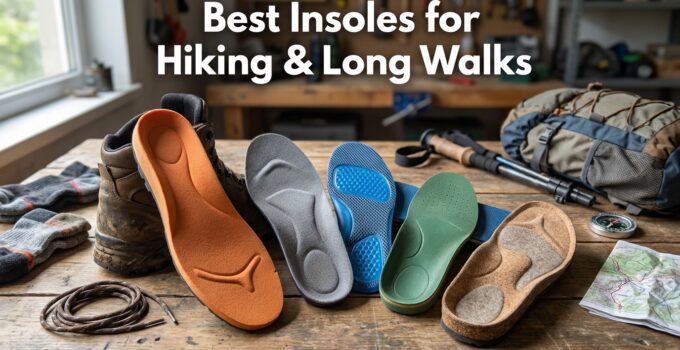
If your feet are aching by mile six even though your boots fit fine, the stock insole that came in the box is usually the real problem, not the boot itself. That thin factory foam is designed to feel soft on the showroom floor, not to hold up through thousands of foot-strikes over uneven ground. Swapping it for a proper insole is often the cheapest, fastest fix for hiking fatigue, and it can extend the life of boots you already own and like.
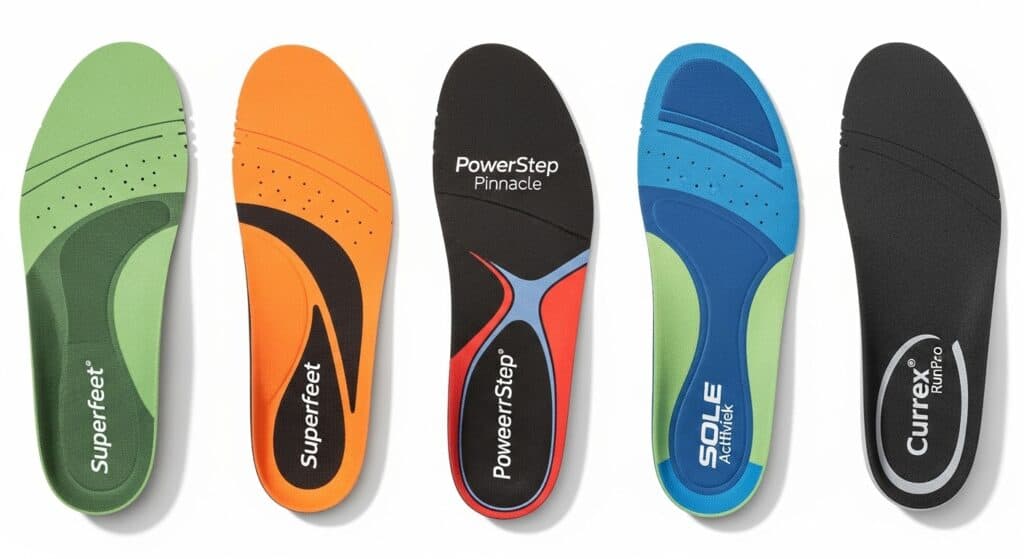
This guide covers how to find the right insole for your foot, and 7 verified options across the situations that actually come up on trail: long-distance comfort, flat feet, plantar fasciitis, heavy pack support, hot weather, and budget. For insole guidance on the jobsite instead of the trail, see our Best Insoles for Work Boots guide, the underlying principles overlap, but hiking puts different demands on an insole than a warehouse floor does.
Quick Picks: Best Hiking Insoles for Long Walks 2026
| Best For | Model |
|---|---|
| Best overall for long distance | CURREX SupportSTP |
| Best for plantar fasciitis | Superfeet Casual Pain Relief |
| Best for flat feet | Superfeet All-Purpose Medium Arch |
| Best for heavy packs | PowerStep Pinnacle Maxx |
| Most budget-friendly | Timberland PRO Anti-Fatigue |
Find Your Arch Type: The Wet Test
The type of arch you have determines the support you actually need, and picking the wrong one can make things worse, not better. The quickest way to find out: step out of the shower onto a piece of cardboard or a brown paper bag and look at the footprint you leave.
Flat feet / low arch: you’ll see nearly your entire foot impression. Look for low-to-medium support designed to prevent overpronation, the inward roll that flat feet are prone to.
Normal / medium arch: you’ll see a noticeable curve along the inside of the print. Most standard insoles are built around this arch type.
High arch: you’ll see very little of your midfoot in the print. You need insoles with strong, structured arch support to prevent the foot from collapsing inward under load, especially on long descents.
Foam vs. Gel vs. Cork
Foam (PU or EVA) is the most common insole material. Polyurethane is heavier but more durable over hundreds of miles; EVA is lighter but compresses faster, a real consideration for anyone doing serious mileage rather than occasional day hikes.
Gel delivers immediate, targeted shock absorption, genuinely good for pressure relief under the heel and ball of the foot, but it generally lacks the rigid structure needed for correcting arch collapse or overpronation.
Cork molds to your foot’s shape over time, giving a increasingly custom fit with real structural support, though it doesn’t have foam’s immediate bounce.
Why Hiking Insoles Are a Different Problem Than All-Day-Standing Insoles
An insole built for standing still on concrete all day and one built for hiking are solving genuinely different problems, even though they look similar on a shelf. Standing fatigue comes from static load, the same pressure points bearing weight in the same spots for hours. Hiking fatigue comes from dynamic, repetitive impact, thousands of foot-strikes over uneven terrain, each one loading the foot slightly differently depending on the ground.
That difference matters for what to prioritize. Moisture management is a much bigger deal on trail than in a warehouse: sweat, creek crossings, and rain are routine, and a top cover that traps moisture invites blisters in a way that simply doesn’t happen standing on a dry factory floor. Volume also interacts differently with a hiking boot’s shape than a work boot’s steel-toe-constrained toe box, a high-volume insole that fits fine in a roomy pull-on work boot can crowd the toes in a snugger hiking boot built around a narrower forefoot.
Quick Comparison: All 7 Options
| Model | Arch Type | Best For |
|---|---|---|
| CURREX SupportSTP | High arch | Long-distance hiking, airflow and cushioning |
| Superfeet Casual Pain Relief | High arch | Plantar fasciitis, structural correction |
| Superfeet All-Purpose Medium Arch | Low/medium arch | Flat feet, overpronation |
| PowerStep Pinnacle Maxx | Medium arch | Heavy packs, maximum stability |
| Sof Sole AIRR Orthotic | Medium arch | Hot weather, moisture management |
| PowerStep Pinnacle Work Insoles | Medium arch | Budget-friendly structured support |
| Timberland PRO Anti-Fatigue | Medium arch | Value, general-purpose comfort |
1. Best Overall for Long-Distance Hiking: CURREX SupportSTP
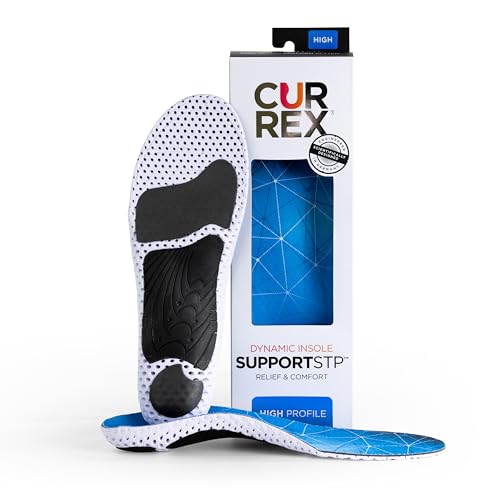
CURREX built the SupportSTP with a heavy-duty structured shell paired with genuine airflow channels, a combination aimed directly at the two things that matter most over a long day on trail: reducing fatigue-driving flex in the arch and managing the moisture buildup that leads to blisters and hot spots.

It’s built for high arches specifically, and the superior cushioning is genuinely noticeable compared to a standard foam insole once you’re several miles into a hike.
Specs
Arch type: High | Shell: Heavy duty, structured | Airflow: Yes
Best for: Long-distance hikers wanting reduced fatigue and moisture control
Skip this insole if: you have flat or low arches. This is built specifically for high-arch support.
2. Best for Plantar Fasciitis: Superfeet Casual Pain Relief
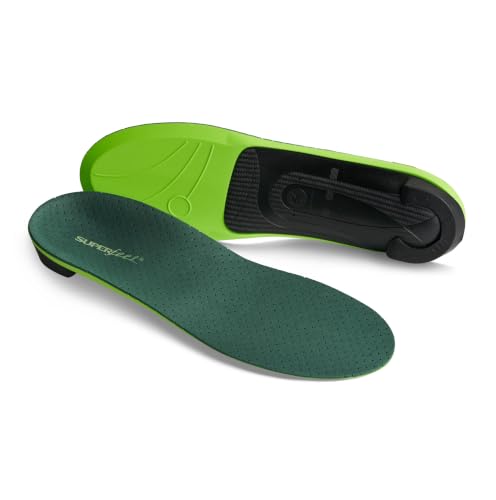
These are not designed to feel soft, and that’s the point. Superfeet’s structured plastic base and deep heel cup physically prevent the foot from collapsing inward, which is often the root mechanical cause of the stabbing heel and arch pain associated with plantar fasciitis.
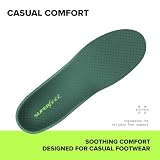
Expect a genuine break-in period, several days of shorter wear before these feel natural rather than rigid, standard for any structured orthotic insole and worth planning around before a big hike rather than switching the morning of.
Specs
Arch type: High | Structure: Rigid plastic base, deep heel cup | Break-in: 3-5 days
Best for: Plantar fasciitis, structural heel and arch correction
Skip this insole if: you want immediate out-of-the-box softness. Plan for a real break-in period.
3. Best for Flat Feet: Superfeet All-Purpose Medium Arch
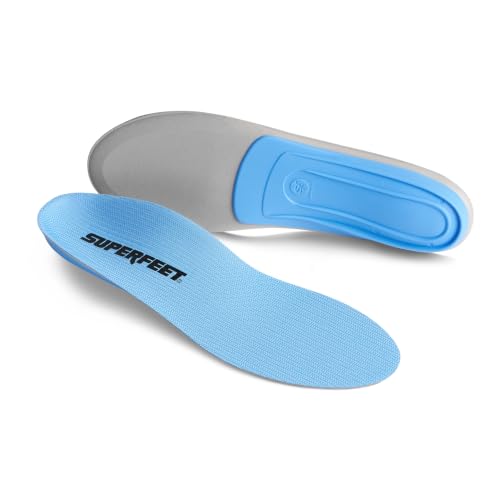
Flat or low-arch feet still need real support, just not the aggressive rigidity built for high arches. This version threads that needle, a structured plastic base and deep heel cup that controls overpronation without cramming an oversized arch bump where a flatter foot doesn’t need one.

It’s a less aggressive arch height than Superfeet’s high-arch version, making it more comfortable out of the box for anyone whose foot doesn’t need maximum correction.
Specs
Arch type: Low/medium | Structure: Plastic base, deep heel cup | Best for: Flat feet, overpronation control
Skip this insole if: you have high arches. The Casual Pain Relief version above is built for that shape.
4. Best for Heavy Packs: PowerStep Pinnacle Maxx

Carrying real pack weight over rough terrain means an insole needs to resist bottoming out under repeated heavy impact, exactly what the Pinnacle Maxx’s firm, semi-rigid arch and angled heel are built for. It won’t flatten out the way a standard foam insole does under sustained load.

The dual-layer cushioning handles heel-to-toe comfort across a full day, and it’s a genuine step up for anyone doing backpacking-level mileage with a loaded pack rather than an unloaded day hike.
Specs
Arch type: Medium | Structure: Firm semi-rigid, angled heel | Best for: Heavy pack loads, backpacking, resisting compression under weight
Skip this insole if: you’re doing light, unloaded day hikes. This level of firmness is built for real pack weight.
5. Best for Hot Weather: Sof Sole AIRR Orthotic

Moisture management matters more on trail than almost anywhere else, sweat, humidity, and the occasional creek crossing all show up routinely, and a top cover that traps that moisture is a direct path to blisters. The AIRR’s design prioritizes airflow and breathability alongside genuine orthotic support.

It’s a solid middle ground, real structural support without the rigidity of a maximum-correction orthotic, for hikers whose main concern is staying dry and comfortable rather than correcting a specific foot condition.
Specs
Arch type: Medium | Focus: Airflow, moisture management | Best for: Hot weather, humid climates, blister prevention
Skip this insole if: you need maximum structural correction for a diagnosed foot condition. Choose the Superfeet options above for that.
6. Best Budget Structured Support: PowerStep Pinnacle Work Insoles

A genuine structured arch and real plantar fasciitis relief at a more accessible price point than the premium options above, a reasonable middle step for anyone who wants more than basic foam cushioning without paying for maximum-duty construction.

Made in the USA, and a solid entry point for hikers who aren’t sure yet how much structured support they actually need before committing to a pricier option.
Specs
Arch type: Medium | Structure: Arch support, pronation control | Best for: Budget-conscious hikers wanting real structure over basic foam
Skip this insole if: you’re carrying heavy pack weight regularly. Step up to the Pinnacle Maxx above for that.
7. Best Value: Timberland PRO Anti-Fatigue
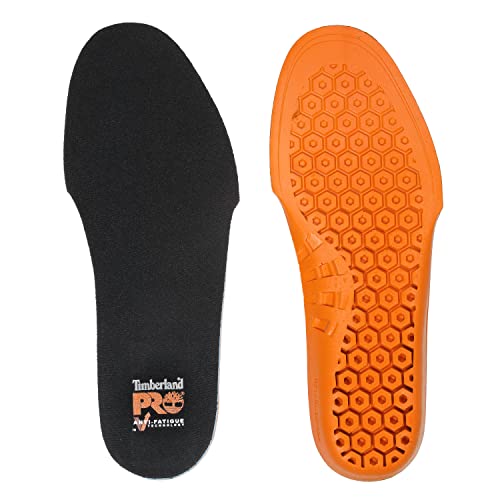
The inverted-cone foam technology absorbs impact and returns energy with each step, a noticeable upgrade over stock insoles for general-purpose hiking comfort without the price or rigidity of a full orthotic.

It’s a reasonable all-purpose choice for hikers without a specific diagnosed condition who just want a genuine comfort upgrade from whatever came stock in their boots.
Specs
Arch type: Medium | Technology: Inverted-cone energy-return foam | Best for: General-purpose comfort upgrade, best price-to-performance
Skip this insole if: you have a specific diagnosed arch or heel condition. The Superfeet or PowerStep options above target those more directly.
Installation: Why You Should Never Stack Insoles
Always remove the old insole completely before installing a new one, never stack a new insole on top of the factory one. Stacking eats up internal volume, crowds the toes, and throws your foot into an unnatural position inside the boot, which causes blisters and pain rather than solving them.
To size correctly: place the old insole on top of the new one with the heels lined up, trace the toe shape with a marker, and trim along that line, cutting slightly outside it first since you can always remove more material but can’t add it back. Once installed, expect a real adjustment period if you’ve chosen a structured, supportive insole: start with 2-3 hours of wear on day one and build up gradually rather than heading straight into a long hike.
When to See a Podiatrist Instead
For most hikers, a quality off-the-shelf insole solves the problem entirely. But if you’ve been dealing with diagnosed plantar fasciitis that hasn’t improved after 6-8 weeks of a good insole, have a significant leg length discrepancy, or have diagnosed structural overpronation or supination a podiatrist has already flagged, custom orthotics are likely the better investment. They cost considerably more, but they’re molded precisely to your foot and can last for years.
Frequently Asked Questions
How often should hiking insoles be replaced?
A reasonable rule of thumb is every 6 to 12 months for regular hikers, faster if you’re doing serious mileage or carrying heavy pack weight regularly. The clearest sign it’s time: fatigue or pain returning at the same point in a hike where you used to feel fine.
Can I use work boot insoles for hiking?
You can, but it’s not ideal. Work boot insoles are often built around a wider, roomier toe box and different volume expectations than a hiking boot’s narrower forefoot, and hiking-specific insoles prioritize moisture management more heavily than most work boot options do.
Do insoles help with blisters?
Yes, indirectly but meaningfully. An insole that locks the heel in place and manages moisture well reduces the friction and slippage that causes most blisters in the first place. It’s not a direct blister treatment, but the right insole prevents a lot of the conditions that lead to them.
Final Verdict: The Right Insole for Your Hike
Need → Best Pick
Long-distance comfort and airflow: CURREX SupportSTP
Plantar fasciitis relief: Superfeet Casual Pain Relief
Flat feet, overpronation: Superfeet All-Purpose Medium Arch
Heavy pack, backpacking: PowerStep Pinnacle Maxx
Hot weather, moisture control: Sof Sole AIRR Orthotic
Budget structured support: PowerStep Pinnacle Work Insoles
Best overall value: Timberland PRO Anti-Fatigue
An insole upgrade is one of the cheapest, fastest fixes available for hiking fatigue, often more effective than buying new boots entirely. Match it to your actual arch type using the wet test above, not just whichever one has the best marketing copy, and give a structured insole a real break-in period before judging it on a short walk.