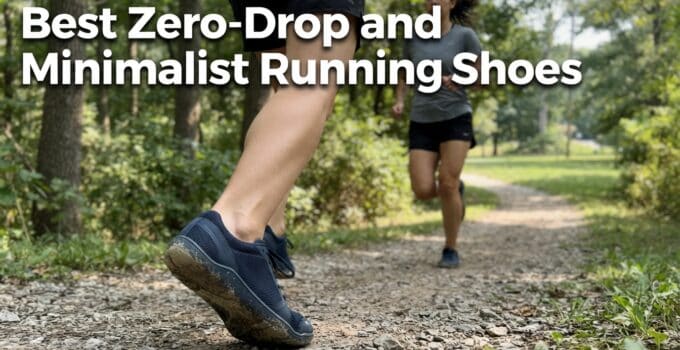
Zero drop and minimalist get used as if they are the same thing, and that mix-up sends a lot of runners into the wrong shoe. Zero drop only means your heel and forefoot sit at the same height. Minimalist means the whole shoe is stripped down: thin stack, flexible sole, little structure, wide toe box. A shoe can check the zero-drop box and still be a fully cushioned daily trainer, and a shoe can be minimalist without being zero drop at all. An Altra Torin feels nothing like a Xero HFS II on your foot, even though both are zero drop.
This guide splits the category the way it actually works: cushioned zero-drop trainers for people who want the flat platform without giving up padding, true minimalist shoes for people who want real ground feel, and one low-drop shoe for people who aren’t ready to commit to either yet. Eight picks, road and trail, organized by who each one actually suits.
⚡ Quick Picks — Best Zero-Drop & Minimalist Running Shoes
| Best For | Shoe | Drop | Stack | Price |
|---|---|---|---|---|
| Best cushioned zero-drop road | Altra Torin 8 | 0mm | High | ~$140 |
| Best flexible zero-drop road | Altra Escalante 4 | 0mm | Moderate | ~$130 |
| Best daily minimalist road | Xero HFS II | 0mm | Very low | ~$100 |
| Best minimalist speed shoe | Xero Speed Force II | 0mm | Very low | ~$110 |
| Best zero-drop trail | Altra Lone Peak 9 | 0mm | Moderate (25mm) | ~$145 |
| Best minimalist trail | Xero TerraFlex II | 0mm | Low | ~$120 |
| Best rugged minimalist trail | Vivobarefoot Magna Trail II FG | 0mm | Very low | ~$170 |
| Best transition alternative (not zero drop) | Topo Athletic Ultraventure 3 | 5mm | High | ~$150 |
Table of Contents
- Zero Drop vs. Minimalist vs. Barefoot: The Difference
- Choose Your Category First
- Altra Torin 8 — Best Cushioned Zero-Drop Road Shoe
- Altra Escalante 4 — Best Flexible Zero-Drop Road Shoe
- Xero HFS II — Best Daily Minimalist Road Shoe
- Xero Speed Force II — Best Minimalist Speed Shoe
- Altra Lone Peak 9 — Best Zero-Drop Trail Shoe
- Xero TerraFlex II — Best Minimalist Trail Shoe
- Vivobarefoot Magna Trail II FG — Best Rugged Minimalist Trail Shoe
- Topo Athletic Ultraventure 3 — Best Transition Alternative
- How to Transition Safely
- Who Should Be Cautious
- How to Fit Zero-Drop and Minimalist Shoes
- Common Mistakes
- FAQ
- Final Verdict
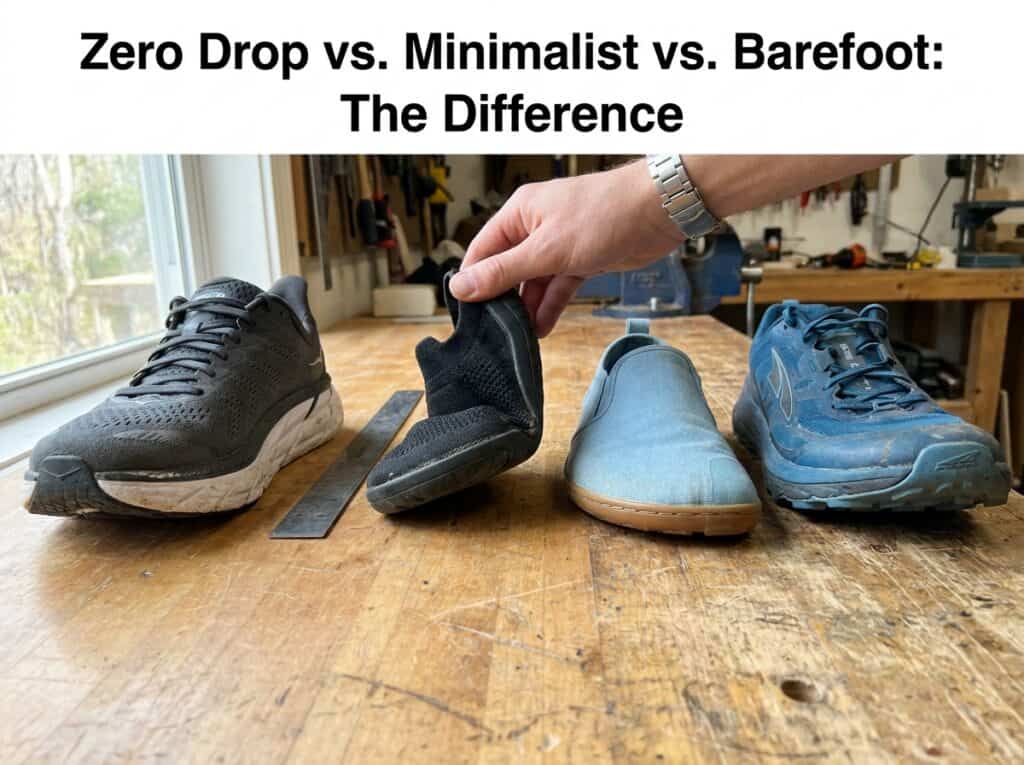
Zero Drop vs. Minimalist vs. Barefoot: The Difference
shoes on wooden workbench 20260918154206
This is the one distinction that matters most before you buy anything on this list. A lot of buyers search “minimalist running shoe” when what they actually want is a cushioned zero-drop trainer with a wider toe box, and a lot of buyers search “zero drop” without realizing some zero-drop shoes have as much foam as a normal trainer.
| Term | What It Means | What It Doesn’t Mean | Example |
|---|---|---|---|
| Zero drop | Heel and forefoot sit at the same height | Thin sole or low cushioning | Altra Torin 8 |
| Minimalist | Low stack, flexible sole, little structure, usually zero drop | Automatically ready for full weekly mileage | Xero HFS II |
| Barefoot-style | The most extreme end of minimalist, built for maximum ground feel | Enough protection for every surface | Xero TerraFlex II |
| Low drop | Reduced heel-to-toe offset, typically 3 to 6mm | Zero drop | Topo Ultraventure 3 |
Choose Your Category First
| If You Want… | Better Category | Start With |
|---|---|---|
| Zero drop with daily-trainer cushioning | Cushioned zero-drop road shoe | Altra Torin 8 |
| Zero drop, more flexible, less structure | Flexible zero-drop road shoe | Altra Escalante 4 |
| Real ground feel for daily miles | Daily minimalist road shoe | Xero HFS II |
| Lightest possible shoe for tempo or speed work | Minimalist speed shoe | Xero Speed Force II |
| Wide toe room for trail with real protection | Cushioned zero-drop trail shoe | Altra Lone Peak 9 |
| Barefoot-style trail feel with real lugs | Minimalist trail shoe | Xero TerraFlex II or Vivobarefoot Magna Trail II FG |
| Toe room without going all the way to zero drop | Low-drop transition shoe | Topo Ultraventure 3 |
1. Altra Torin 8 — Best Cushioned Zero-Drop Road Shoe
No products found.
Best for: Runners who want the zero-drop platform and the wide, foot-shaped toe box, but aren’t looking for a barefoot sensation.
- Drop: 0mm
- Platform: Altra FootShape toe box, daily-trainer-level cushioning
- Best surface: Road
- Main strength: The most forgiving entry point into zero drop
- Main caveat: Not a minimalist shoe, still has real stack under the foot
The Torin 8 is for runners who want the flat, zero-drop platform without giving up the cushion they’re used to from a conventional daily trainer. It’s the shoe to start with if you’re curious about zero drop but not ready to feel every crack in the pavement. The toe box is genuinely roomy, which also makes it a common recommendation for runners dealing with bunions or forefoot crowding in narrower shoes, though it’s not marketed or built as a corrective product.
Who should skip it: Anyone specifically looking for ground feel or a thinner sole. This shoe won’t deliver that.
Check current price on Amazon →
2. Altra Escalante 4 — Best Flexible Zero-Drop Road Shoe
No products found.
Best for: Runners who want something between the Torin’s cushioning and a true minimalist shoe.
- Drop: 0mm
- Platform: Lower profile and more flexible than the Torin, moderate cushioning
- Best surface: Road, also works for walking and gym use
- Main strength: A genuine middle ground, not a marketing label
- Main caveat: Less protective on high-mileage days than a max-cushion shoe
Think of the Escalante as the bridge between a cushioned daily trainer and a true barefoot shoe. It’s still zero drop and still has a foot-shaped toe box, but the ride is noticeably lower and more flexible than the Torin. It works well for easy runs, walking, and casual wear, and it’s a reasonable next step for someone who’s spent a few months in the Torin and wants slightly more ground feel.
Who should skip it: Runners who want maximum cushion for long mileage. Stay with the Torin or a similar max-cushion zero-drop shoe instead.
Check current price on Amazon →
3. Xero HFS II — Best Daily Minimalist Road Shoe

Best for: Runners who have already spent time in a zero-drop shoe and want to add real minimalist mileage.
- Drop: 0mm
- Platform: Low stack, flexible outsole, wide toe box
- Best surface: Road
- Main strength: True minimalist ride without the price of a boutique barefoot brand
- Main caveat: Not a drop-in swap for a cushioned trainer, needs a gradual buildup
This is where the article moves from “zero drop with cushioning” to actually minimalist. The HFS II has a genuinely thin, flexible sole and gives real ground feel, which is the point, but it also means it asks more of your calves and feet than anything above it on this list. Treat it as a shoe you build into over weeks, not a shoe you run your usual long run in on day one.
Who should skip it: Anyone jumping straight from a high-stack, high-drop trainer who wants to keep their current weekly mileage unchanged. Read the transition section below first.
Check current price on Amazon →
4. Xero Speed Force II — Best Minimalist Speed Shoe

Best for: Experienced minimalist runners who want a lighter, quicker shoe for tempo runs, strides, or short races.
- Drop: 0mm
- Platform: Very low stack, built lighter than the HFS II
- Best surface: Road, also handles light trail and workouts
- Main strength: Genuinely fast-feeling minimalist shoe, not just a lighter version of a daily trainer
- Main caveat: Even less forgiving than the HFS II, not a first minimalist shoe
The Speed Force II fills a gap the HFS II doesn’t cover: a minimalist shoe built for turnover rather than daily comfort. It’s noticeably lighter and lower-profile, which makes it a natural pick for a fartlek session, a 5K, or a workout day once you’ve already built up minimalist mileage elsewhere. It’s not a shoe to introduce yourself to zero drop with.
Who should skip it: Anyone new to minimalist running. Start with the HFS II or the Torin and work up to this one.
Check current price on Amazon →
5. Altra Lone Peak 9 — Best Zero-Drop Trail Shoe
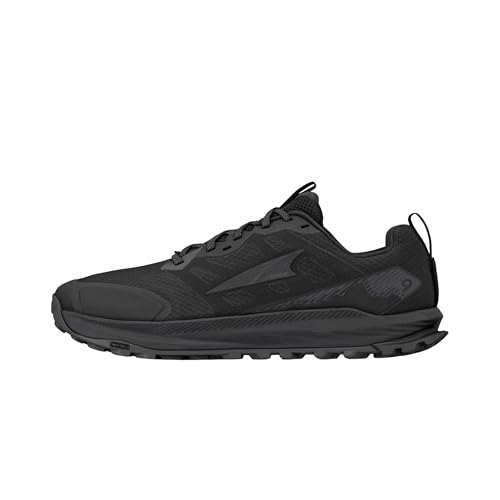
Best for: Trail runners and fast hikers who want zero drop, real toe splay room, and enough underfoot protection for mixed terrain.
- Drop: 0mm
- Platform: Original FootShape toe box, 25mm stack, trail-specific outsole
- Best surface: Trail and mixed terrain
- Main strength: Zero drop without giving up trail protection
- Main caveat: Not a thin, minimalist-feeling shoe despite the flat platform
The Lone Peak 9 is the trail equivalent of the Torin: zero drop, wide toe box, but a real 25mm stack under the foot rather than a barefoot-thin sole. That combination is why it’s become one of the most recommended crossover shoes for trail running and fast hiking. If you already know our Lone Peak 8 review, the 9 keeps the same core geometry with updated cushioning and outsole.
Who should skip it: Runners chasing a true barefoot trail feel. Look at the TerraFlex II or Magna Trail II FG instead.
Check current price on Amazon →
6. Xero TerraFlex II — Best Minimalist Trail Shoe

Best for: Runners who want a true barefoot-style trail shoe without a boutique price tag.
- Drop: 0mm
- Platform: Low stack, flexible sole, lugged outsole
- Best surface: Dry-to-moderate trail
- Main strength: More trail-specific grip than a road minimalist shoe at a lower price than most barefoot trail brands
- Main caveat: Not built for long, sharp, rocky mountain terrain
The TerraFlex II gives you a genuinely thin, flexible minimalist sole with a real lugged outsole underneath it, which most road-minimalist shoes don’t bother with. It’s a good route into minimalist trail running for someone who already runs comfortably in the HFS II and wants to take that same ground feel onto dirt.
Who should skip it: Anyone doing regular high-mileage runs on sharp, rocky, technical trails. You’ll want more underfoot protection than this shoe is built to provide.
Check current price on Amazon →
7. Vivobarefoot Magna Trail II FG — Best Rugged Minimalist Trail Shoe

Best for: Experienced minimalist trail runners who want the most rugged, technical-terrain-capable barefoot trail shoe on this list.
- Drop: 0mm
- Platform: Very low stack, firm-ground lugged outsole, reinforced upper
- Best surface: Rugged, mixed, and wet trail
- Main strength: The most durable and protective true-minimalist trail option here
- Main caveat: Price and stiffness of the upper take some getting used to
Where the TerraFlex II is the accessible entry into minimalist trail running, the Magna Trail II FG is built for people who already know they want that feel on rougher ground. The firm-ground outsole and more reinforced upper hold up better on technical, root-heavy, or wet trail than a road-oriented minimalist shoe, without adding the kind of stack that would defeat the purpose.
Who should skip it: Anyone new to minimalist running, or anyone who just wants a light trail shoe rather than a true barefoot one. The TerraFlex II or Lone Peak 9 are more forgiving starting points.
Check current price on Amazon →
8. Topo Athletic Ultraventure 3 — Best Transition Alternative (Not Zero Drop)
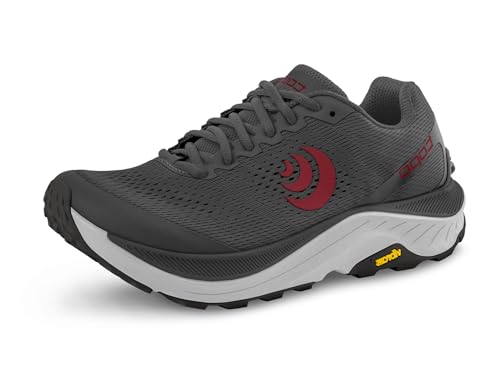
Best for: Runners who want a wide toe box and more cushioning without committing to zero drop yet.
- Drop: 5mm
- Platform: Wide toe box, high cushioning, trail outsole
- Best surface: Trail, handles road reasonably well too
- Main strength: A less abrupt loading change than a true zero-drop shoe
- Main caveat: Not zero drop, so it doesn’t belong in a strict zero-drop comparison
You don’t have to choose between a conventional 10-12mm-drop shoe and a zero-drop barefoot shoe on day one. The Ultraventure 3 gives you the roomy forefoot and cushion a lot of runners want, at a 5mm drop that’s a smaller step down from a standard trainer than jumping straight to zero. It’s a sensible shoe to wear while you build up tolerance in one of the zero-drop picks above on shorter runs.
Who should skip it: Anyone who already runs comfortably in a zero-drop shoe. There’s no reason to step back to 5mm at that point.
Check current price on Amazon →
How to Transition Safely
Moving into zero-drop or minimalist shoes changes how load moves through your feet, calves, and Achilles tendon. Doing it gradually is the difference between a shoe that becomes part of your rotation and one that puts you on the sidelines for a few weeks.
| Phase | Approximate Duration | What to Do |
|---|---|---|
| Familiarization | Weeks 1-2 | Wear the new shoes for short walks and daily activity. Don’t move your running mileage into them yet. |
| Short run exposure | Weeks 3-4 | Add short, easy runs or strides. Keep most of your weekly mileage in your current shoes. |
| Progressive adaptation | Weeks 5-8 | Increase exposure slowly, and only if your calves, Achilles, and feet stay comfortable. |
| Selective use | Weeks 9-16+ | Use the shoes for easy runs, drills, or trail as tolerated. There’s no rule you have to move to 100%. |
Keep your regular cushioned shoes in rotation through all of this. Stop and reassess if you notice focal bone pain, persistent Achilles soreness, swelling, or a change in your gait, and don’t switch shoes as a reaction to an existing injury without talking to a sports medicine professional first.
runner wearing minimalist runnin… 20260918154145
Who Should Be Cautious
- Runners switching abruptly from high-stack, high-drop shoes
- Runners currently dealing with foot, ankle, calf, or Achilles discomfort
- Runners with a history of stress fractures
- High-mileage runners planning to change every run at once instead of phasing in
- Anyone who hasn’t tested the shoes through walking and short runs first
How to Fit Zero-Drop and Minimalist Shoes
- Width and toe-box shape aren’t the same thing. Check both.
- Leave roughly a thumb-width of space in front of your longest toe.
- The heel should be secure without the forefoot feeling crushed.
- Don’t size down just to make a wide toe box feel snug.
- Try shoes on later in the day, when your feet are at their largest.
- Wear the socks you actually run in when trying them on.
- On trail shoes, check for toe contact on descents, not just on flat ground.
Common Mistakes
- Treating zero drop and barefoot as interchangeable terms.
- Moving all weekly mileage into a thin shoe immediately.
- Buying a wide toe box, then sizing down until it isn’t wide anymore.
- Choosing a minimalist road shoe for rocky or muddy trail use.
- Assuming a zero-drop shoe automatically helps with plantar fasciitis or Achilles pain.
- Replacing every shoe in rotation instead of phasing one in.
- Ignoring calf tightness or unusual soreness in the first few weeks.
FAQ
Are zero-drop running shoes the same as minimalist shoes?
No. Zero drop only describes the heel-to-toe height difference. Minimalist also requires a low stack, flexible sole, and minimal structure. A shoe can be zero drop and still heavily cushioned.
Are Altra shoes minimalist?
Altra shoes are zero drop with a foot-shaped toe box, but most models, including the Torin and Lone Peak, carry real cushioning rather than a true minimalist platform.
What’s the best zero-drop shoe for beginners?
The Altra Torin 8 is the most forgiving starting point because it keeps daily-trainer cushioning while introducing the flat, zero-drop platform.
What’s the best minimalist running shoe for road running?
The Xero HFS II for daily mileage, or the Xero Speed Force II once you want a lighter shoe for faster efforts.
What’s the best zero-drop trail running shoe?
The Altra Lone Peak 9, for runners who want zero drop with real trail protection rather than a thin, minimal sole.
Can I run long distances in zero-drop shoes?
Cushioned zero-drop shoes like the Torin or Lone Peak 9 handle long mileage reasonably well once you’ve adapted to the platform. True minimalist shoes are better suited to shorter distances until you’ve built up specific tolerance.
How long does it take to adapt to minimalist running shoes?
Most runners need at least 8 to 16 weeks of gradual, phased exposure. Rushing it is the most common reason people give up on minimalist shoes.
Are zero-drop shoes better for wide feet?
The wide, foot-shaped toe box common in Altra and Topo models helps runners with wide feet or forefoot crowding, though that’s a function of the toe box shape, not the zero drop itself.
Are minimalist shoes good for plantar fasciitis?
There’s no universal answer here. Some runners find a wider, more natural toe box helpful, while others find the reduced cushioning aggravates existing symptoms. Talk to a podiatrist or physical therapist before using shoe changes to manage an existing injury.
Are barefoot-style running shoes safe for trail running?
On dry, moderate trail, yes, for runners who’ve already adapted to minimalist footwear. On long, sharp, rocky, or technical terrain, a shoe with more underfoot protection is the safer choice.
Is a 5mm drop considered zero drop?
No. Zero drop means 0mm. A 5mm shoe like the Topo Ultraventure 3 is a low-drop shoe, which is a useful middle step but a different category.
Should I wear minimalist shoes every day?
Not necessarily, and not right away. Many runners keep minimalist shoes for shorter runs or specific training days rather than every run, even after fully adapting.
Final Verdict
If you’re just curious about zero drop, start with the Altra Torin 8. If you want real ground feel on the road, the Xero HFS II is the honest minimalist choice, with the Speed Force II waiting once you want a faster shoe. On trail, the Lone Peak 9 is the zero-drop pick with real protection, while the TerraFlex II and Magna Trail II FG are the true barefoot-style trail options. And if you’re not ready for zero drop yet, the Topo Ultraventure 3 is a legitimate stepping stone, not a compromise.