
The Salomon Speedcross 6 is the most recognisable trail running shoe on the market. It has been for two decades. The question for anyone considering a pair in 2026 isn't "is it popular?" — it's "is it right for my running?"
The answer depends entirely on where and how you run. The Speedcross 6 is the best mud and soft-terrain trail shoe available at this price point. It is also a genuinely poor choice for summer running, forefoot strikers, and ultra distances. Understanding exactly where the line falls is what this review is for.
We've synthesised data from lab testing (durometer scores, breathability measurements, stack heights), extensive field testing across hundreds of miles by multiple testers, and real buyer feedback from REI, Zappos, and Running Warehouse to give you the most complete picture available — including the things other reviews consistently avoid saying clearly.
Quick Verdict
| Buy the Speedcross 6 if you... | Skip it if you... |
|---|---|
| Run on mud, wet grass, soft dirt, or snow | Run primarily in summer or hot climates |
| Need the best traction available at any price | Are a forefoot striker seeking cushioning |
| Run technical singletrack in cool/cold conditions | Need a shoe for 20+ mile efforts regularly |
| Want a glove-like, secure fit from day one | Have high-volume feet (tall toe box needed) |
| Prefer ground feel over plush cushioning | Need a road-to-trail crossover shoe |
Overall rating: 4.4/5 — exceptional for its designed purpose; limited outside it.
→ Check current price on Amazon
Salomon Speedcross 6: Key Specs at a Glance
| Spec | Value |
|---|---|
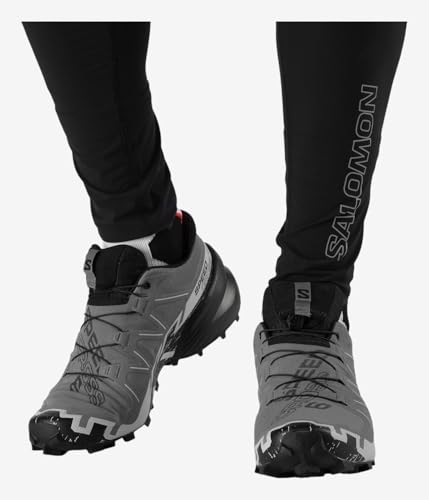
| Weight (men's size 9) | 10.4 oz / 295g — lightest Speedcross ever, first under 300g |
| Weight (women's) | ~9.2 oz / 260g |
| Stack height (heel / forefoot) | 32–36.5mm heel / 22.4mm forefoot |
| Heel-to-toe drop | 10mm (measured 14.1mm in lab testing) |
| Lug depth | 5mm (reduced from 6mm on Speedcross 5) |
| Outsole rubber | Contagrip MA/TA Mud — soft compound for grip, faster lug wear |
| Midsole | EnergyCell+ EVA — firm (32.4 HA durometer), high energy return |
| Rock plate | None — thick rubber layer provides adequate ground protection |
| Lacing | Salomon QuickLace + Sensifit upper |
| Breathability (lab score) | 1/5 — one of the least breathable trail shoes tested |
| Toe box width / height | 95.3mm wide / 23.8mm tall — mid-width, very low vertical clearance |
| Price | ~$130–160 (standard); GTX version ~$180–200 |
| Versions available | Standard + Gore-Tex (GTX); regular and wide widths; men's and women's |
Speedcross 6 vs Speedcross 5: What Actually Changed?
If you currently own a pair of Speedcross 5s, this is the section you came for. The short answer: the improvements are real but modest. Here's the full comparison.
| Feature | Speedcross 5 | Speedcross 6 | Change |
|---|---|---|---|
| Weight (men's sz 9) | ~10.9 oz / 309g | 10.4 oz / 295g | −14g — meaningful improvement |
| Lug depth | 6mm | 5mm | Reduced depth, wider spacing — faster mud evacuation |
| Lug shape | Chevron pattern | Tapered-tail chevrons | Improved rock transition, better braking control |
| Upper material | Synthetic mesh | Anti-debris mesh + Ripstop fabric | More durable, better debris exclusion |
| Lacing slit adjustment | Standard | Revised — less pressure on foot | Reduced hotspots, improved comfort |
| Heel geometry | Standard | Updated for stability | Cleaner heel strike, increased stability |
| Midsole | EnergyCell+ | EnergyCell+ | Unchanged |
| Drop | 10mm | 10mm | Unchanged |
Verdict for SC5 owners: Only upgrade if your current pair is worn out. The SC6 is lighter, more comfortable in the upper, and better at mud evacuation — but the core identity of the shoe is identical. If your SC5 still has usable tread, there's no compelling reason to replace it mid-lifecycle.
Technology Breakdown: What Makes the Speedcross 6 Different
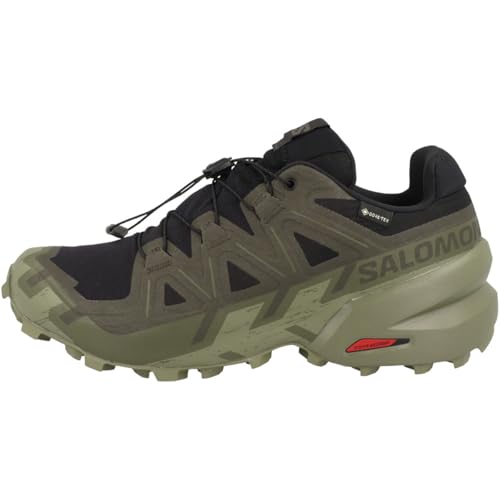
Contagrip MA/TA Mud outsole — the defining feature
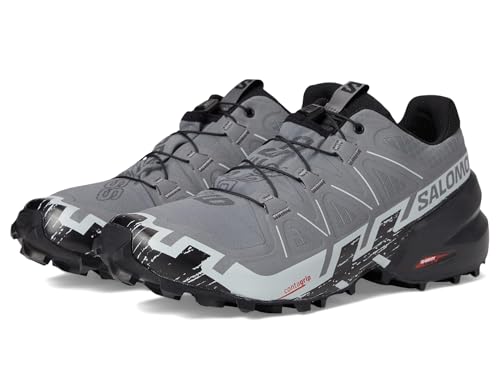
The Contagrip Mud outsole is the reason this shoe exists. Salomon uses a deliberately softer rubber compound than competitors — softer rubber deforms more easily against irregular surfaces, creating more contact area and more grip in wet, muddy, and loose conditions. The deep 5mm chevron-shaped lugs are positioned to maximise traction in both uphill and downhill directions, and the wider lug spacing on the 6 versus the 5 allows mud to be shed more efficiently between strides.
The trade-off is durability. Softer rubber wears faster, particularly on abrasive rocky terrain. Field testing data (see durability section below) puts peak traction at 200–300 miles on abrasive trails. The upside: on soft terrain — the Speedcross's designed environment — 400+ miles is achievable before the tread becomes noticeably flat. Compared to Vibram Megagrip (used by Saucony Peregrine), the Contagrip compound grips significantly better on wet mud and soft soil but wears faster on granite and shale. This is a deliberate engineering trade-off, not a quality shortcut.
EnergyCell+ EVA midsole — firm by design
The EnergyCell+ foam registers at 32.4 HA on a durometer — very firm by current trail shoe standards. This is a design decision: the Speedcross is built for runners who want ground feel, responsiveness, and connection to the trail beneath them, not a cushioned, bouncy ride. The midsole flares slightly at the heel for stability, and the high-rebound compound returns energy efficiently without feeling springy or unstable.
If you've run in a Hoka Speedgoat or any maximalist cushioned trail shoe and loved the soft, protective feel — the Speedcross 6 will feel like a different category of shoe. The foam is firm enough that on hard surfaces or long efforts, the lack of cushioning becomes noticeable. Beyond approximately 20 miles in a single effort, most runners find the SC6's midsole insufficiently protective for the sustained impact of an ultra-distance run.
Sensifit + QuickLace — the lockdown system
Sensifit is Salomon's upper construction system that wraps the foot from all sides rather than simply cinching from the top lace point. Combined with QuickLace — a single-pull bungee system that tightens the entire shoe in one motion — the result is an exceptionally secure, glove-like lockdown that most traditional laced shoes can't replicate. Multiple field testers across hundreds of miles report zero heel slippage, zero hot spots from lace pressure, and a secure feel on technical terrain that directly inspires confidence.
The known weakness: the QuickLace bungee loops dangle out of the top of the shoe and can catch on roots, protruding rocks, and undergrowth during trail running. The fix is simple — tuck them into the lace garage on the tongue before each run — but the garage can be finicky and loops sometimes fall back out. You will develop a pre-run habit of tucking them in; most experienced Speedcross users treat it as muscle memory. One further note: QuickLace cannot be replaced with traditional laces, so if you prefer to customise your lacing pattern for different foot volumes or conditions, this system doesn't accommodate that flexibility.
Anti-debris mesh + Ripstop upper
The SC6 upper uses a tightly knit anti-debris mesh that actively prevents grit, seeds, small stones, and trail debris from entering the shoe between the upper and the footbed. This is a meaningful practical improvement over open-mesh trail uppers — particularly for desert running, early-season conditions with plant debris, and any terrain where loose material is present. The Ripstop fabric reinforcement resists tearing from sharp rocks and undergrowth, and the welded overlays move with the foot naturally rather than creating pressure points during foot expansion.
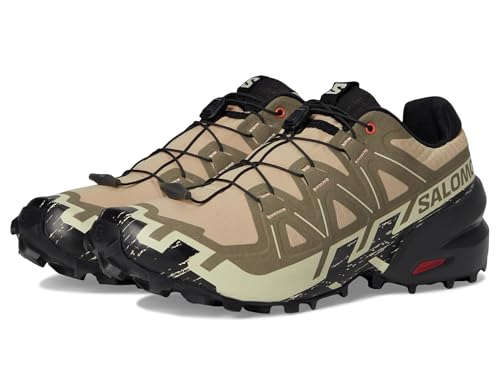
The protective rubber toe cap adds a layer of durability at the most impact-prone point of the shoe, and the mud guard at the heel prevents significant debris ingress from behind. The upshot: these are exceptionally clean-running shoes on trails where open-mesh uppers would fill with debris within a mile.
The downside of this closed construction is minimal breathability. Lab testing scores the SC6 at 1/5 for breathability — matching Gore-Tex models in airflow restriction. The mesh provides essentially no ventilation, which keeps feet warm in cold conditions (a genuine advantage) but causes significant overheating in temperatures above roughly 15°C / 60°F. This is not a hot-weather shoe.

→ Check current price and colorways on Amazon
Terrain-by-Terrain Performance: Where the Speedcross 6 Excels and Where It Doesn't
| Terrain | Performance | Rating |
|---|---|---|
| Mud and wet soft soil | Best in class — lugs evacuate mud efficiently and bite deep into soft surfaces. No other shoe at this price matches the grip in sustained muddy conditions. | ★★★★★ |
| Wet grass and steep slopes | Outstanding. The multi-directional chevron pattern extends to the shoe edges, improving braking control on steep descents and lateral traction on traverses. Off-camber alpine sidehill terrain is a particular strength. | ★★★★★ |
| Snow and early-season conditions | Excellent. The lugs bite into snowpack reliably. The closed upper keeps the foot dry and insulated. One of the top picks for early-season trail running where snow, mud, and frozen ground mix. | ★★★★½ |
| Loose sand and gravel | Very good. The aggressive lugs dig into loose material, and the anti-debris mesh prevents infill. A genuine strength on sandy mountain gullies and desert singletrack. | ★★★★ |
| Rocky technical singletrack (soft rock) | Good. The tapered-tail lugs on the SC6 (an improvement over the SC5) cushion the strike over rock surfaces more smoothly. On sandstone and softer rock, the tacky outsole rubber provides reliable grip. | ★★★★ |
| Rocky technical singletrack (hard/abrasive rock) | Adequate. The Contagrip rubber grips on granite and basalt in the short term, but the soft compound wears significantly faster on abrasive surfaces than harder-compound alternatives (Vibram Megagrip). Acceptable performance, but not the shoe's strength. | ★★★ |
| Dry hardpack dirt | Below average. On firm, dry surfaces the 5mm lugs create a disconnected "cleat-like" sensation, reducing ground feel and efficiency. Effective grip but an uncomfortable, disconnected sensation that feels unnatural on this terrain. | ★★ |
| Road crossover / pavement | Poor. The soft outsole compound degrades rapidly on pavement. Running significant road miles in the SC6 directly shortens the shoe's tread life. Not a road shoe in any meaningful sense. | ★ |
Comfort, Fit, and Feel
Upper fit — the glove that earned the reputation
The Speedcross 6's upper fit is the most frequently praised feature across all the real-world buyer feedback we reviewed. The Sensifit construction wraps the foot from all sides, creating a cradled, second-skin feel that most trail shoes don't achieve. Multiple reviewers describe putting the shoe on for the first time and feeling immediately locked in — no sliding, no gaps, no pressure points. The plush heel padding cradles the back of the foot, and the defined arch support keeps fatigue at bay across extended efforts.
The upper fit improved meaningfully from the SC5: revised lacing slits reduce the pressure that some SC5 owners experienced across the top of the foot under tight QuickLace tension. The SC6 can be cinched down firmly without creating the hotspots that led some runners to size up unnecessarily in the previous version.
The important caveat is toe box volume. The internal width at 95.3mm is adequate for average to slightly wide feet. The internal height at just 23.8mm is where the SC6 becomes genuinely narrow — it is a very low toe box. Runners with high-volume feet, prominent toe knuckles, or who experience toe nail bruising on descents should seriously consider the wide version or try the shoe before committing to a full purchase. The wide version is available and provides meaningful additional room without compromising the Sensifit lockdown.
Midsole feel — firm, responsive, ground-connected
The EnergyCell+ foam provides a run that feels distinctly different from the maximalist trail shoes that have dominated the market in recent years. This is not a plush shoe. The firm foam keeps you close to the trail surface — you feel the terrain beneath you rather than being insulated from it. For shorter efforts on technical terrain (3–15 miles), this is a genuine performance advantage: you can feel the ground and adjust your foot strike dynamically in a way that deep-cushioned shoes don't allow.
For longer efforts — particularly 20+ miles — the firm midsole becomes a liability. Without sufficient foam to absorb sustained repetitive impact, most runners begin to feel it in their joints from around the 20-mile mark. The SC6 is a short-to-mid distance trail performance shoe; it is not designed for ultramarathon use, and using it for sustained long efforts in hard conditions is genuinely not what the shoe was built for.
Break-in period
Minimal. Most reviewers report the SC6 comfortable from the first run — approximately 10 miles is sufficient to dial in the Sensifit to your specific foot shape. The anti-debris mesh upper is pliable rather than stiff. A REI reviewer who used the shoe to race a stage event shortly after receiving them reported a "maybe 10 miles" break-in period. This is meaningfully faster than most leather or structured trail boots.
Durability: How Long Will the Speedcross 6 Actually Last?
This is the section that separates honest reviews from promotional ones. The Speedcross 6 has a genuine durability weakness on abrasive terrain — and understanding it upfront lets you plan and budget appropriately.
The lug wear data
The most detailed durability field testing we found came from a tester who logged 400+ miles on a single pair including 50+ Rocky Mountain summits above 13,000 feet, covering a mix of muddy trails, loose scree, sand, and hard alpine rock. The findings were consistent with other long-term testers: lug degradation begins around 200 miles on abrasive rocky terrain. By 300 miles on this type of surface, the outsole was wearing nearly flat and the traction had noticeably declined. On softer terrain — mud, forest trails, compacted soil — the same tester was confident of 400+ miles of good traction.
A separate tester who ran primarily on softer trails reported minimal wear through 400+ miles of testing, including continued use through 2026. Real buyer reviews on Running Warehouse include a report of outsole peeling beginning around 100 trail miles on one pair — an outlier, but worth noting as a potential quality variation.
Upper durability
The upper holds up well under normal trail conditions. The Ripstop fabric resists tearing, the welded overlays don't peel under sustained use, and the rubber toe cap protects against the abrasion that destroys less-reinforced uppers on rocky terrain. The known failure point — confirmed by a real buyer in the Zappos review dataset — is the eyestay (the fabric loops through which the lace threads). One buyer reported eyestay failure on the right foot at around 300 miles. This isn't a universal failure, but it's worth monitoring if you're running heavy mileage.
What this means for your budget
| Terrain type | Expected tread life | Annual cost (at 30 miles/week) |
|---|---|---|
| Soft / muddy trails (primary use) | 400–500 miles | ~1 pair per 1.5 years (~$90–105/year) |
| Mixed soft and rocky trails | 250–350 miles | ~1.5 pairs per year (~$195–240/year) |
| Primarily rocky/abrasive trails | 200–300 miles | ~2 pairs per year (~$260–320/year) |
If you run primarily on rocky or abrasive terrain, the Saucony Peregrine 16 with its Vibram Megagrip outsole will outlast the Speedcross by 100–150 miles per pair on the same surface. The trade-off: the Peregrine won't match the SC6's mud and wet terrain performance. Choose based on what terrain dominates your running.
Speedcross 6 GTX vs Standard: Which Version Should You Buy?
This is one of the most searched sub-questions for this shoe and the one most reviews skip over. Here's the full breakdown.
| Feature | Standard SC6 | SC6 Gore-Tex (GTX) |
|---|---|---|
| Waterproofing | Water-resistant upper, not waterproof | Full Gore-Tex membrane — genuinely waterproof |
| Breathability | 1/5 (very low) | Effectively 0/5 — Gore-Tex eliminates remaining airflow |
| Weight | 10.4 oz / 295g | ~10.6–10.8 oz / ~300–310g |
| Price premium | Base (~$130–160) | +$20–30 over standard |
| Performance in wet conditions | Good for short wet exposure, feet wet in sustained puddles | Excellent — feet stay dry in river crossings and sustained rain |
| Performance in hot/summer conditions | Already poor (1/5) — uncomfortable in heat | Very poor — actively uncomfortable in temperatures above 10°C / 50°F |
Choose the GTX version if:
- You run year-round in a wet climate (Pacific Northwest, UK, Northern Europe, wet mountain regions)
- You run in winter conditions where keeping feet dry is a performance and safety priority
- You regularly encounter river crossings, stream runs, or sustained puddle conditions
- You also use the shoe for hiking and cold/wet conditions where foot warmth matters more than breathability
Choose the standard version if:
- You run in spring, summer, or autumn in temperate conditions
- You run in hot climates — the GTX will make already poor breathability completely untenable
- You're budget-conscious — the standard upper handles light rain and brief puddle crossings adequately due to its tight anti-debris mesh construction
- You want the best possible breathability within the SC6 family (a relative statement — neither version breathes well)
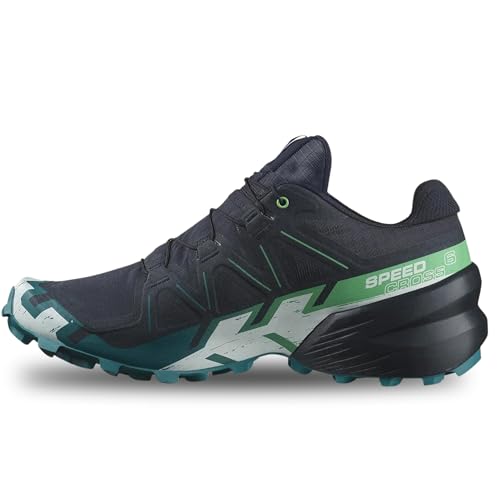
The key insight: the standard SC6's tightly knit anti-debris mesh naturally repels light rain and light splashing without a Gore-Tex membrane — it's not waterproof, but it handles conditions that aren't sustained downpours reasonably well. The GTX is specifically for runners who regularly get their feet genuinely submerged or soaked over extended periods.
→ Check current price and colors on Amazon
Is the Salomon Speedcross 6 Good for Hiking?
Yes — with specific conditions. The SC6 is frequently used as a hiking shoe, particularly by trail runners who want to move quickly on technical day hikes without switching footwear categories. Here's where it works and where it doesn't.
Where it excels for hiking
The SC6 handles steep, muddy, and technically demanding day hiking terrain better than most dedicated hiking shoes. The lug pattern bites into wet, soft surfaces on descents where traditional hiking boot outsoles struggle for grip. The Sensifit lockdown keeps the foot stable on exposed, technical terrain — a genuine advantage over hiking shoes with more spacious fits. The longitudinal flex (the shoe bends relatively easily along its length) makes it more comfortable for walking gaits than many rigid trail running shoes. Lab testing confirmed it needs only 24.1N of force to bend to 90 degrees — comparable to a hiking shoe in flexibility.
Where it falls short for hiking
The low toe box height (23.8mm) becomes noticeable on sustained long descents when toes press forward with each step — a common cause of toenail bruising on big descent days. The firm EnergyCell+ midsole also becomes fatiguing on efforts beyond 15 miles carrying any significant pack weight. There is no ankle support — this is a low-profile running shoe, not a hiking boot — and on genuinely rough mountain terrain with heavy loads, the lack of ankle structure increases fatigue and injury risk compared to a mid-height hiking boot. For lightweight day hiking on technical terrain, the SC6 works well. For multi-day backpacking with a heavy pack, it's not appropriate footwear.
Sizing Guide: How to Buy the Right Fit
The Speedcross 6 sizing is more nuanced than most reviews acknowledge. The right size depends on how you plan to use the shoe.
For performance trail running and racing
Buy half a size smaller than your regular running shoe size. This sounds counterintuitive, but the Sensifit upper's wrapping construction means a slightly smaller shoe creates a more precise, technical fit — your foot feels the trail through the upper more directly, and the shoe responds to foot movement more responsively. Think of it similarly to buying bouldering shoes: the goal is conforming contact, not comfort space. Multiple experienced trail runners and reviewers confirm this approach transforms the shoe's technical performance on rocky and technical terrain.
For hiking, casual use, or first-time purchase
Buy true to your normal running shoe size. For most buyers who aren't using the shoe specifically for technical racing performance, true to size provides a comfortable fit without the pressure that a half-size-down creates on longer efforts.
For wide feet
Choose the wide version regardless of whether you're buying for running or hiking. The standard width toe box (95.3mm wide, 23.8mm tall) is not accommodating for above-average foot widths or high-volume feet. The wide version provides meaningful additional room without compromising the Sensifit upper's security. Note that some buyers who previously wore the Speedcross 5 in their regular size have found the SC6 runs slightly larger — check the current size chart for your specific colorway before ordering.
Alternatives: When the Speedcross 6 Isn't the Right Shoe
The SC6 is the best trail shoe available for its specific purpose. But that purpose is narrow. Here's what to consider if the shoe's limitations are dealbreakers for your running.
If you want more cushioning for long distances: Hoka Speedgoat 5 (~$155)
The Speedgoat is the maximalist answer to the SC6's firm minimalism. Dramatically more foam, a softer ride, significantly better for 20+ mile efforts and ultra distances. The trade-off: it's heavier, less technically precise on steep terrain, and the outsole won't match the SC6 in mud or soft-ground grip. If your runs regularly extend beyond 20 miles, the Speedgoat's cushioning advantage outweighs the SC6's traction advantage for most runners.
If you want better breathability: Brooks Cascadia 17 (~$160)
The Cascadia rates 4/5 on breathability — a meaningful improvement over the SC6's 1/5. On warm-weather runs or in hot climates where the SC6 becomes uncomfortably warm, the Cascadia provides similar all-round trail performance with far better ventilation. The outsole doesn't match the SC6 in pure mud grip, but the Cascadia is a genuinely more versatile shoe for mixed conditions and seasons.
If you want a more durable outsole on rocky terrain: Saucony Peregrine 16 (~$140)
The Peregrine uses a Vibram Megagrip outsole — harder compound, lasts 100–150 miles longer than Contagrip on abrasive rock. For runners who spend most of their time on granite, schist, or hard-packed rocky trails, the Peregrine's durability advantage makes it the more cost-effective choice over a full season. The SC6 still outperforms the Peregrine in mud and wet-ground traction.
If you want zero drop and a wide toe box: Altra Lone Peak 9 (~$130)
A fundamentally different shoe philosophy — zero drop (flat from heel to toe), wide toe box, foot-shaped design. For forefoot strikers or runners transitioning to natural running form, the Altra is the better platform. The SC6's 10mm drop and narrow toe box are optimised for heel-striking efficiency on technical terrain, not natural foot mechanics.
Final Verdict: Is the Salomon Speedcross 6 Worth It in 2026?
Yes — if it's the right shoe for you. The Speedcross 6 remains the best trail shoe available for mud, soft terrain, early-season conditions, and technical singletrack in cool or cold weather. Nothing else at this price point matches its traction in the conditions it was designed for. The SC6 has earned its legendary status.
The honest caveat: it's a specialist shoe, not an all-rounder. The 1/5 breathability makes it a poor choice for summer running. The firm midsole limits it to short-to-mid distances for most runners. The lug wear on abrasive terrain means budgeting for regular replacement if rocky trails are your primary surface. And the low toe box (23.8mm height) excludes high-volume feet entirely.
If mud, technical trails, snow, and cold-weather running are what your training looks like — buy the Speedcross 6 with confidence. If your running spans hot weather, ultras, and road crossover — consider a more versatile option.
The Speedcross 6 earns a 4.4/5 overall. It would score higher if it breathed better and lasted longer on rock. It would score lower if it weren't so comprehensively dominant in its designed conditions.
→ Check current price and colorways on Amazon
Frequently Asked Questions
Is the Salomon Speedcross 6 good for hiking?
Yes, for technical muddy and soft-terrain day hiking. The lug pattern handles steep, wet slopes exceptionally well, and the Sensifit upper provides secure footing on technical descents. Not ideal for very rocky terrain, and not appropriate for backpacking with heavy loads due to the lack of ankle support and firm midsole.
Speedcross 6 vs Speedcross 5 — should I upgrade?
Only if your SC5 is worn out. The SC6 is lighter (−14g), has improved upper comfort with revised lacing slits, and sheds mud slightly faster with wider lug spacing. The core identity — firm midsole, aggressive Contagrip outsole, Sensifit lockdown — is unchanged. Not a dramatic step-change that warrants replacing a functional pair.
Is the Speedcross 6 GTX worth the extra cost?
Worth it if you run year-round in a consistently wet climate or in cold winter conditions where waterproofing is a genuine priority. Not worth it for summer running — the Gore-Tex membrane takes the already-poor breathability to zero. The standard version handles light rain adequately due to its tight anti-debris mesh construction.
How long do Salomon Speedcross 6 last?
200–300 miles of peak traction on abrasive rocky terrain; 400+ miles on soft trails. The soft Contagrip rubber compound wears faster than harder-compound competitors (such as Vibram Megagrip) on granite and abrasive surfaces. This is by design — the softness is what provides the exceptional grip. Budget accordingly.
Are the Salomon Speedcross 6 true to size?
For hiking and casual use: yes, true to size. For performance trail running: buy half a size smaller — the tighter fit significantly improves technical lockdown and responsiveness on challenging terrain. Wide feet: choose the wide version regardless of size.
Is the Speedcross 6 good for wide feet?
The standard version has a 95.3mm internal width and only 23.8mm of vertical toe box height — not suitable for wider or higher-volume feet. The wide version is available and recommended for anyone with above-average foot width. Do not rely on sizing up in length to compensate for width — it changes the shoe's fit dynamics without resolving the toe box pressure.
Can you use the Speedcross 6 on roads?
Occasionally, but not regularly. The soft Contagrip rubber degrades rapidly on pavement, and significant road mileage directly shortens the shoe's usable tread life. For road-to-trail crossover running, a shoe with a harder-compound outsole (such as the Saucony Peregrine) is better suited.