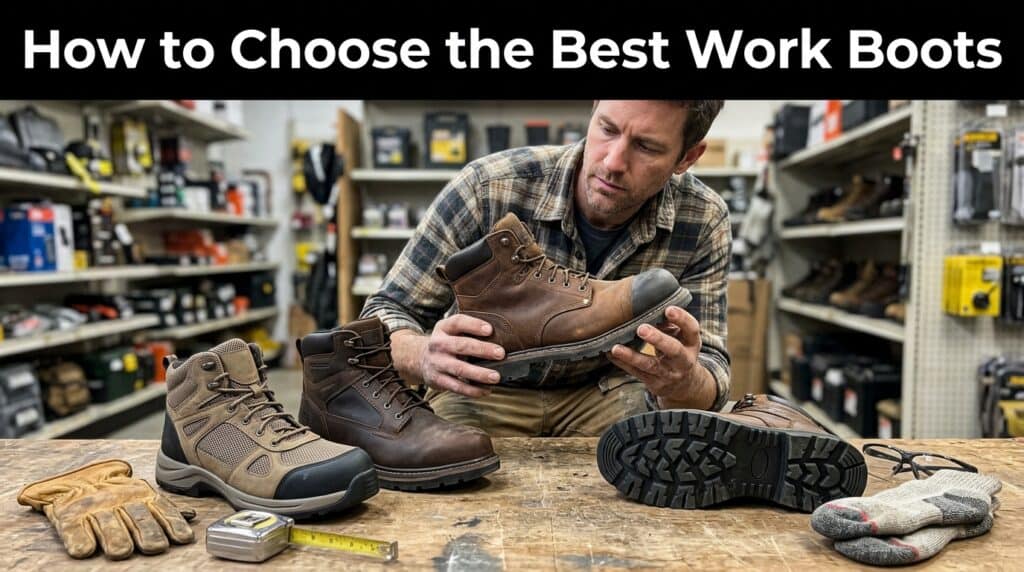

One pair of work boots doesn't fit every job, and assuming your last pair's brand or style will automatically work for your next job is one of the most common mistakes buyers make. The right boot depends entirely on your specific hazards: what's on the ground, what's in the air, what temperature you're working in, and what your job actually requires you to be certified for.
This guide walks through every real factor that should shape your decision, with links to the full, detailed breakdown on each one where it matters most.
Safety Toe Type
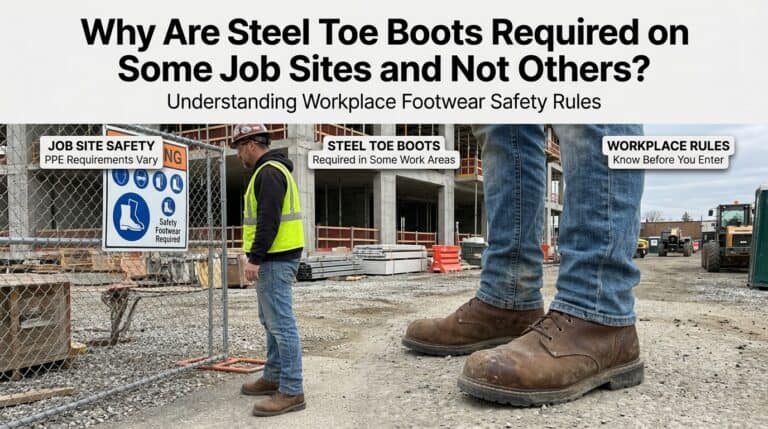
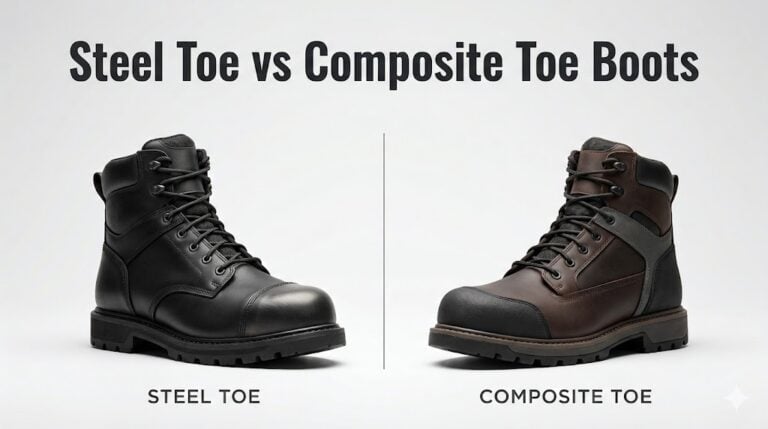
Not every job needs a safety toe at all, and when one is required, the material matters more than most buyers realize. Steel offers strong impact protection at a lower cost but conducts heat and cold and can trigger metal detectors. Composite is lighter and non-conductive, useful for electrical work or cold environments, but usually costs more. Neither is universally "safer," the right choice depends on your specific hazard. Our full breakdown of when steel toe is actually required and our steel vs. composite comparison cover this decision in depth.
Sole Construction and Traction
How a boot's sole is built affects flexibility, weight, and long-term repairability. Cement construction glues the upper directly to the sole, producing a lighter, more flexible boot that molds to your foot faster but can't be resoled once it wears out. Goodyear welt construction stitches the upper to the sole through a welt strip, producing a more durable, resoleable boot at the cost of extra weight and a longer break-in period.
Traction matters just as much as construction. If nails, screws, or sharp debris are a real hazard on your job, a puncture-resistant sole matters more than almost anything else on this list, our puncture-resistant work boots guide covers that category directly.
Fit
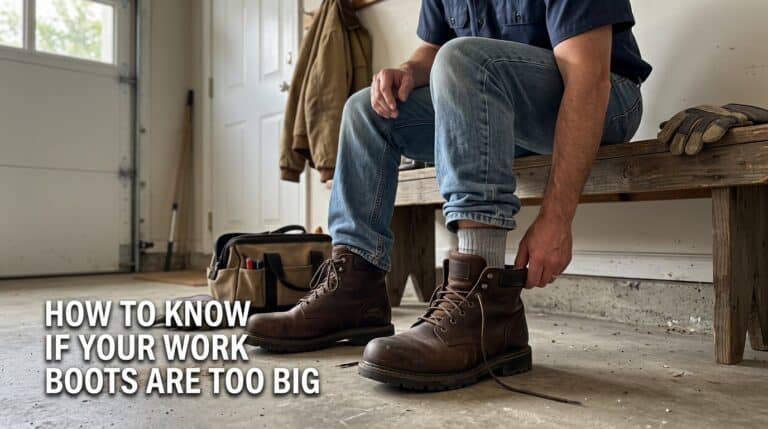
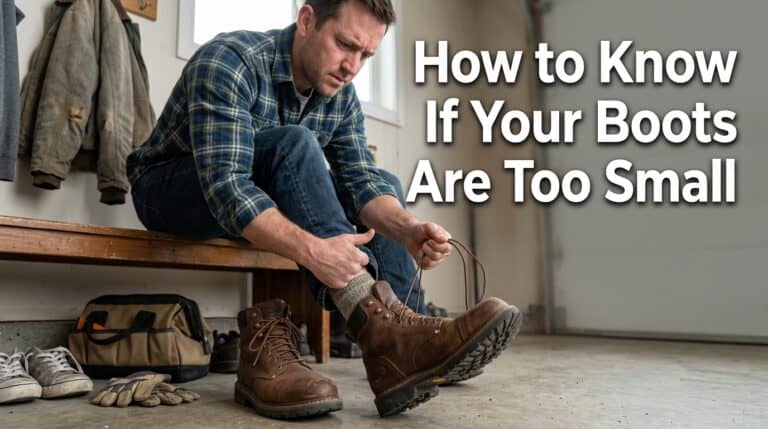
A boot that's too tight causes real pain and circulation issues. A boot that's too loose lets your foot slide, which is a genuine safety concern in a certified safety-toe boot specifically, since your toes can shift out of alignment with the protective cap inside. If you're not sure which problem you're dealing with, our guides on boots that are too big and boots that are too small walk through the specific signs of each, and our store fit-test guide covers how to check fit correctly before you buy.
Weight
Every extra ounce in a boot is weight your legs and hips lift with every single step, and that adds up significantly across a full shift. If your job involves a lot of walking or standing rather than heavy, static work, a lighter boot genuinely reduces fatigue, worth prioritizing over maximum ruggedness if your hazards don't call for it.
Waterproofing and Insulation
These are two separate decisions, not one. Waterproofing keeps water out regardless of temperature, useful for wet grass, mud, or rain. Insulation is about warmth, measured in grams of Thinsulate, and more isn't automatically better, overinsulating for a job with a lot of indoor time or moderate activity leads to sweat, which then makes you colder once you're actually outside. Our winter work boots guide covers insulation weight selection by activity level and climate in full.
Electrical Hazard (EH) Rating
If your job involves any exposure to electrical hazards, an EH rating is a real, separate certification from basic toe protection, not an automatic feature of every safety boot. EH-rated boots are built to prevent current from passing through the sole. Check this specifically rather than assuming any certified safety-toe boot automatically includes it.
Comfort and Long-Term Wear
Comfort isn't a luxury add-on, it's a real factor in whether you actually wear the correct protective footwear consistently rather than switching to something inappropriate because your boots hurt. A quality insole can meaningfully improve comfort in an otherwise solid boot without needing to replace the whole thing, worth considering before assuming discomfort means you need a new pair entirely.
Frequently Asked Questions
Do I need a safety toe for every work boot?
No. Whether a safety toe is required depends on your employer's hazard assessment for your specific job. Many roles, light warehouse work, retail, some maintenance jobs, don't carry a genuine crush or impact hazard and don't require one.
Is a more expensive work boot always better?
Not automatically. Price often reflects construction quality (Goodyear welt vs. cement), materials, and brand reputation, but the right boot is the one that matches your actual job hazards, not necessarily the most expensive option available.
How do I know if I need waterproof boots, insulated boots, or both?
Waterproofing addresses wet conditions regardless of temperature. Insulation addresses cold specifically, and the right amount depends on how much time you spend outdoors and how active you are while there. Many jobs need one, not necessarily both.
What's the single most important factor when choosing work boots?
There isn't one universal answer, it depends entirely on your specific job's hazards. A construction worker's priority (impact protection) is completely different from a landscaper's (traction and breathability) or an electrician's (EH rating and non-conductive materials).
Bottom Line
Match the boot to your actual job, not to habit or brand loyalty. Start with the real hazards you face, impact, puncture, electrical, wet, cold, then work through fit and comfort last, since even the right boot on paper fails if it doesn't fit correctly. The linked guides throughout this page cover each factor in the depth it deserves.