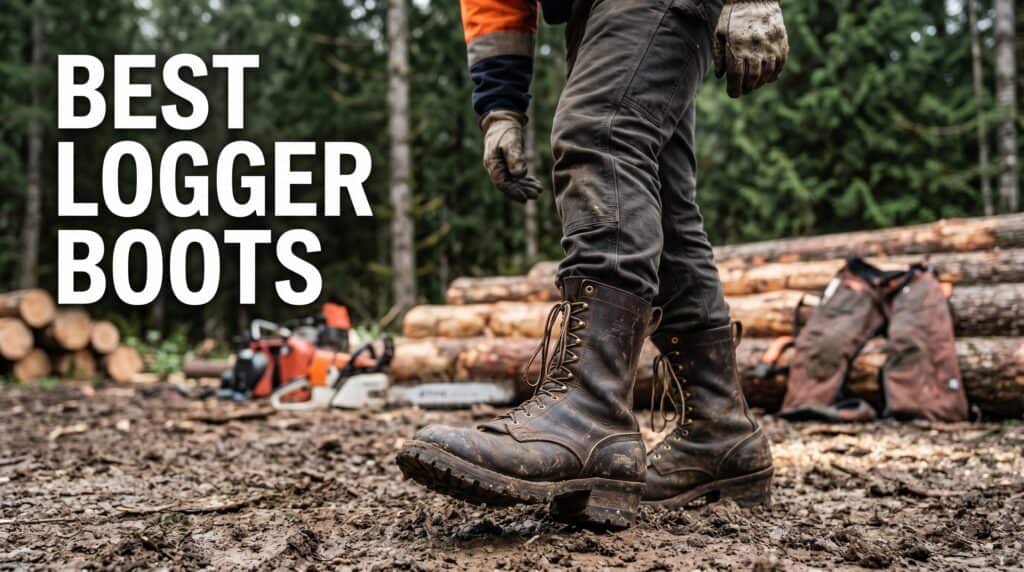

Logging is the most dangerous profession in the United States according to OSHA — and the boots you wear are one of the few pieces of PPE standing between you and a serious injury. The problem is that most buying guides treat logger boots like generic work boots with a tall heel. They're not. The heel height, shank stiffness, outsole pattern, and waterproofing system all matter differently depending on whether you're felling timber, climbing steel, walking railroad ballast, or managing livestock on uneven terrain.
We've cut through the noise. Below are the 5 best logger boots of 2026, matched by trade and use case — plus an honest buying guide that tells you what most guides get wrong.
Best Logger Boots at a Glance
| Boot | Best For | Toe Type | Waterproof | EH Rated | Made in USA | Price |
|---|---|---|---|---|---|---|
| Georgia Boot Men's 8" | Best Overall / General Logging | Steel | Yes (Gore-Tex) | No | Yes | ~$165 |
| AdTec High Tech 9" | Best Budget Logger Boot | Steel | Yes (membrane) | No | No | ~$100 |
| Chippewa 9" Insulated EH | Best for Cold Weather / Electricians | Steel | Yes (Chip-A-Tex) | Yes | Yes | ~$230 |
| Carhartt 8" Composite Toe Logger | Best Waterproofing / EH-Rated | Composite | Yes (Storm Defender) | Yes | No | ~$175 |
| Thorogood 1957 Series 8" | Best Made in USA / Resolable | Steel | Yes | Yes (18,000V) | Yes | ~$210 |
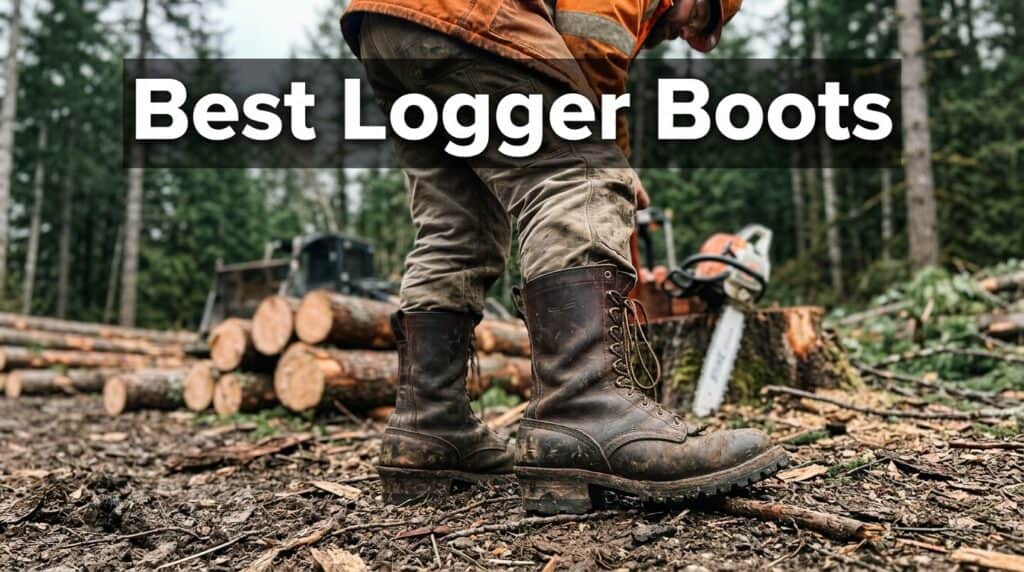
1. Georgia Boot Men's 8" — Best Overall Logger Boot
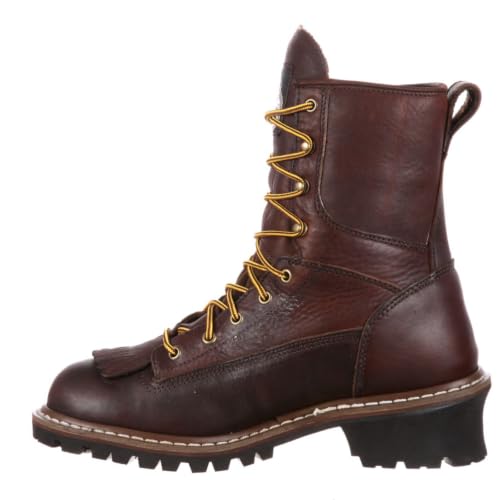
The Georgia Boot Men's 8" has earned its reputation as the go-to logger boot for good reason: it combines Gore-Tex waterproofing, Goodyear welt construction, a steel safety toe, and a full-grain leather upper that can take years of punishment — at a price point most professionals find reasonable. The two-inch logger heel gives you the clearance you need over fallen branches, wet logs, and muddy terrain, while the deep-lug abrasion-resistant outsole grips reliably without clogging on soft ground.

The three-layer Comfort Core System footbed includes memory foam that shapes to your foot — a feature that matters more than most buyers expect once you've clocked 10-plus-hour days in the field. The steel shank running through the heel adds torsional rigidity that prevents your arch from fatiguing on uneven terrain. Goodyear welt means this boot is resolable, which brings the real cost-per-wear significantly below its initial price: at roughly $165 and a 2–3 year lifespan before a resole is needed, you're at under $6/month.

The honest downside: these take time to break in. The full-grain leather upper is stiff from day one, and most wearers need 2–3 weeks before the boot truly conforms to their foot. Plan for thick socks and short shifts in week one. Also note: this boot is not EH rated, so it's not the right choice if you're working around live electrical circuits — go to the Chippewa or Thorogood for that. For the range of other tough-terrain jobs that don't require EH compliance, the Georgia Boot is hard to beat.
Best for: Professional loggers, arborists, ranchers, construction workers on rough terrain
Not for: Electricians or linemen requiring EH rating, workers needing composite toe for metal detector clearance
2. AdTec High Tech 9" — Best Budget Logger Boot

Not every logger needs to drop $200+ on their first pair of work boots, and the AdTec High Tech 9" is the most honest budget answer in this category. It delivers the core features you actually need — full-grain oil-tanned leather upper, Goodyear welt construction, waterproof membrane, steel safety toe, and an aggressive lug outsole — at a price that doesn't require a second thought. At roughly $100, it's the right entry point for weekend loggers, woodland managers, or newer tradespeople still figuring out what they need in a work boot.

The 9" shaft height provides solid ankle support and keeps debris out better than the 8" Georgia Boot — a meaningful advantage when you're walking through dense brush or knee-high wet vegetation. The waterproofing works in light to moderate wet conditions, and the break-in period is quicker than premium leather logger boots because the AdTec's construction is slightly more flexible from the start.

Here's what you're giving up: there's no steel shank through the arch, no moisture-wicking liner, and no insulation. The interior is basic compared to the Georgia Boot or Chippewa. Owner reviews consistently note the boots are comfortable but not exceptional on very long shifts, and the outsole wears faster than premium models under heavy daily use. At this price, that's expected and fair — but if you're going to wear these 5 days a week year-round, budget for a replacement in 12–14 months rather than 24. For more budget-focused comparisons across all brands, see our best work boots under $100 guide.
Best for: Part-time loggers, budget-conscious buyers, woodland work where heavy daily abuse is not the norm
Not for: Full-time professional logging, very cold conditions (no insulation), workers needing EH rating
3. Chippewa 9" Waterproof Insulated Steel Toe EH — Best for Cold Weather & Electricians
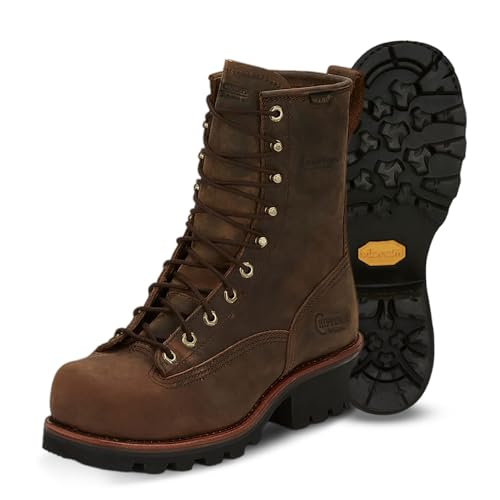
Chippewa has been making logger boots since 1901, and the 9" Waterproof Insulated EH boot represents the brand at its best. It's the most comprehensively protected logger boot in this roundup — and the only one that combines three layers of interior protection: a Dri-Lex moisture-wicking lining, a breathable Chip-A-Tex waterproof membrane, and 3M Thinsulate Ultra insulation. If you work in genuinely cold, wet conditions and your feet have ever gone numb or damp in a lesser boot, this is what you've been looking for.
The EH rating makes this boot the correct choice for linemen and electricians who work in forested terrain or any outdoor environment with electrical exposure. The Vibram outsole — made by the Italian specialist and widely regarded as the benchmark for outdoor work boot traction — handles wet rock, mud, ice, and log surfaces better than the proprietary rubber compounds on competing models. The 2.25-inch logger heel is the tallest in this comparison, providing maximum clearance over obstacles.
The trade-offs are weight and price. Chippewa doesn't pretend these are light boots — the brand calls them "hefty," and they are. If you're covering long distances on flat terrain, the extra weight will be felt by the end of a full shift. At around $230, these are a premium investment. But the combination of American manufacturing, resolable Goodyear welt construction, and the Vibram outsole means a well-maintained pair can realistically last 3–4 years with professional use — bringing the monthly cost to under $6.
Best for: Linemen, loggers in cold wet climates, workers needing EH rating in rugged outdoor terrain, ironworkers — see our work boots for ironworkers guide for comparison
Not for: Workers prioritizing lightweight boots, warm-climate logging
4. Carhartt 8" Composite Toe Logger — Best Waterproofing System
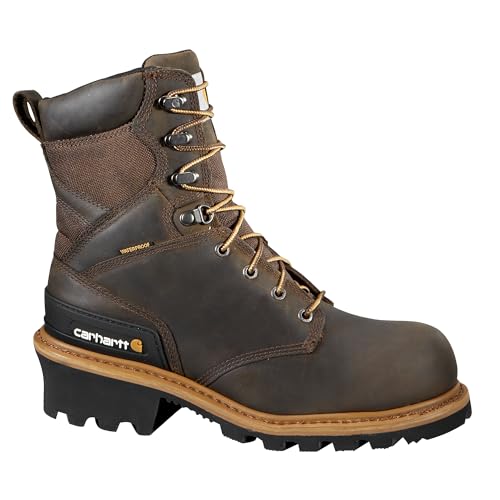
When waterproofing is your single most important criterion, the Carhartt 8" Logger stands alone. Carhartt's Storm Defender breathable membrane is one of the few waterproofing systems that genuinely rivals Gore-Tex in sustained wet conditions, and the composite toe construction makes this the only EH-rated logger boot in the comparison that also clears metal detectors — relevant for workers at secure facilities, airports, or nuclear sites who still need a logger-style boot for outdoor terrain work.

The heel stabilizer — a thermoplastic polyurethane (TPU) insert at the heel counter — adds a layer of protection and stability that most logger boots at this price skip. Triple-stitched full-grain leather, 3M Thinsulate lining for mild cold-weather warmth, and an oil-, slip-, and chemical-resistant lug outsole round out a boot that handles sustained abuse without demanding excessive maintenance. The padded insole is comfortable but not as sophisticated as the memory foam system in the Georgia Boot — on very long shifts, consider adding an aftermarket insole. See our best insoles for work boots guide for options.

One important note your research should flag: the Carhartt 8" Logger is not made in the USA. Some older guides list it alongside Georgia Boot and Thorogood as American-made — that is incorrect. If country of manufacture is a priority for you, the Chippewa or Thorogood are the verified domestic options. The Carhartt's strength is its waterproofing and EH compliance, not its provenance. Also note that sizing starts at 8 — if you wear a 7 or smaller, this model won't work.
Best for: Workers in sustained wet environments, those needing EH + composite toe + metal detector clearance, delivery drivers in rough terrain
Not for: Buyers prioritizing American manufacturing, workers needing very small sizes
5. Thorogood 1957 Series 8" Steel Toe — Best Made in USA / Best Resolable Logger Boot

Thorogood has been building work boots in Wisconsin for over 130 years, and the 1957 Series 8" is the brand at its most honest: hand-crafted full-grain saddle leather, Goodyear Stormwelt construction (with an additional moisture-seal layer between the upper and sole), and Thorogood's own Maxwear 90 polyurethane outsole that the brand claims lasts 30% longer than comparable rubber soles. The EH rating holds to 18,000 volts in dry conditions — the highest specification in this comparison.

The removable dual-density Ultimate Shock Absorption footbed is genuinely one of the better stock footbeds in the work boot market — it provides cushioning and energy return that holds up over months of wear without compressing into a flat slab. The slip-resistant outsole meets OSHA-recognized ASTM standards, and the steel shank provides the arch support needed for all-day work on uneven terrain. These are resolable by any competent cobbler, and well-maintained pairs are regularly reported to be still in service after 5+ years.

The two honest limitations: the heel height is lower than traditional logger boots at ¾ inch, which means it's technically a heavy-duty work boot with logger-grade construction rather than a pure logger boot. For actual forestry work with frequent log-walking, the Georgia Boot's 2-inch heel provides more practical obstacle clearance. Also, sizes start at 8 and top out at 14 — no smaller or very large sizes are available. For workers who fit the size range and want the most durable, resolable, American-made boot in the category, the Thorogood 1957 is the strongest long-term investment here.
Best for: Workers who want American-made quality, resolable construction, maximum electrical hazard rating, and plan to keep their boots for 5+ years
Not for: True forestry/log-walking work requiring a tall heel, workers outside size 8–14
What Makes a Logger Boot Different From a Regular Work Boot?
Logger boots are not just tall work boots. Several design elements are specific to the demands of forestry, rough terrain, and high-hazard outdoor trades:
Tall heel (1.75–2.5 inches):
-
- Elevates the arch above the mud line, clears fallen branches and logs underfoot, and creates a natural ankle-locking effect that prevents side-roll on uneven terrain — this is the single most defining feature of a true logger boot
8–10 inch shaft height: Keeps debris, water, and brush out better than 6-inch work boots; provides ankle support during the lateral movement that flat construction boots aren't designed for
Steel shank through the arch: Prevents the foot from fatiguing when standing on logs, rocks, or uneven ground for extended periods — not all logger boots include this, and it's worth checking
Aggressive lug outsole: Deeper and wider lug spacing than standard work boots to handle mud, bark, wet leaves, and soft ground without clogging
Resolable Goodyear welt construction: Logger boots take more abuse than almost any other footwear; the ability to resole instead of replace is both economically and practically important in this category
Caulk (Spike) Soles vs Lug Soles — What Real Loggers Use
This is the distinction most mainstream buying guides skip entirely. All five boots in this roundup use lug-pattern rubber or polyurethane outsoles — they are "logger-style" boots. Professional forestry workers often use caulk boots (also spelled "calk"), which have metal spikes or removable calks embedded in the sole for grip when walking on wet logs, steep slopes, and cut timber.
Caulk/spike sole:
-
- Required for some professional logging environments per employer safety requirements; provides superior grip on cut logs and steep wet terrain; destroys concrete and hard floors; not practical for mixed indoor/outdoor use
Lug sole (all boots in this guide): Suitable for the vast majority of outdoor trades including construction, railroad, ironwork, ranching, farming, and moderate forestry; practical on all surfaces including hard floors
OSHA's logging standard (1910.266) requires waterproof, ankle-supporting boots — caulk soles are permitted where the employer determines they're necessary for terrain, timber type, and conditions, but they are not universally mandated. If you work for a logging operation, ask your employer before buying.
Which Logger Boot Is Right for Your Trade?
| Trade / Role | Recommended Boot | Key Reason |
|---|---|---|
| Professional Logger / Arborist | Georgia Boot Men's 8" | 2" logger heel, Gore-Tex, Goodyear welt, resolable — purpose-built |
| Lineman / Electrician (outdoor) | Chippewa 9" EH or Thorogood 1957 | EH rated; Chippewa adds Thinsulate for cold weather; Thorogood for max EH voltage rating |
| Ironworker / Railroad Worker | Georgia Boot or Chippewa 9" | Tall heel, ankle support, resolable — see our work boots for railroad workers guide |
| Rancher / Farmer (rough terrain) | Georgia Boot Men's 8" | Steel toe for livestock compression risk, tall heel for muddy terrain, resolable |
| Construction (rough outdoor) | Carhartt 8" or Georgia Boot | Carhartt adds composite toe + EH; Georgia Boot for pure terrain grip and USA manufacturing |
| Budget / Part-Time Outdoor Work | AdTec High Tech 9" | All core features at ~$100; honest entry point before committing to premium tier |
| Cold Weather (below 20°F) | Chippewa 9" Insulated | Only boot in this list with Thinsulate Ultra insulation — three-layer interior system |
What Most Logger Boot Buyers Get Wrong
The single most common mistake is buying a boot labeled "logger" without checking the heel height. A lot of work boots use the logger label because they have an 8" shaft and a lug sole — but the heel is only ¾ to 1 inch. That's a work boot. A true logger boot heel is 1.75 to 2.5 inches. If the heel height isn't listed in the specs, ask. It's the difference between a boot that clears a log underfoot and one that catches on it.
The second mistake is assuming "waterproof" means the same thing across all boots. Gore-Tex and Storm Defender are bonded membranes — they block water under sustained immersion. Generic "waterproof membrane construction" (like AdTec) works in light rain and wet grass but will soak through with prolonged standing water exposure. Match the waterproofing system to your actual work environment, not the marketing label. For a deeper breakdown of keeping feet dry at work, see our guide on how to keep feet dry in work boots.
How Long Should Logger Boots Last?
Logger boots are built for hard use, but lifespan varies significantly by construction and maintenance:
AdTec (cement-lasted, no shank):
-
- 12–14 months of daily professional use — not resolable
Georgia Boot (Goodyear welt): 2–3 years before resole; 4–5 years total with a $60–80 resole
Chippewa 9" (Goodyear welt + Vibram): 3–4 years before resole; Vibram outsole wears slower than standard rubber
Carhartt 8": 2–3 years of daily outdoor use; not resolable in most constructions
Thorogood 1957 (Goodyear Stormwelt + Maxwear 90): 4–5 years before resole; 6–8 years total with maintenance — best long-term value
Rotating between two pairs extends lifespan by 30–40% by allowing the midsole to recover overnight. It's the single highest-leverage maintenance habit in any work boot category. For full care guidance, see our guide to cleaning and maintaining work boots.
Frequently Asked Questions
What makes a boot a true logger boot?
A true logger boot has a heel of 1.75 to 2.5 inches (which elevates the arch above mud and provides log-walking stability), an 8–10 inch shaft for ankle support and debris exclusion, a Goodyear welt construction for resolability, a steel shank for arch rigidity on uneven terrain, and an aggressive lug outsole. Many boots use the "logger" label but lack the heel height — check the specs before buying.
Are logger boots good for everyday use?
Yes, for outdoor trades and rough terrain work. Construction workers, ironworkers, ranchers, railroad workers, and linemen commonly wear logger-style boots as their primary work footwear. The tall heel and rigid shank make them less comfortable for standing at a flat workstation all day compared to a wedge-sole boot.
Why do logger boots have such a tall heel?
The tall heel serves two functions: it elevates your foot above the mud line to keep the boot body drier longer, and it provides clearance when stepping over logs, branches, and debris — preventing the common catch-and-roll ankle injury that causes most forestry falls. It also creates a natural arch-locking effect when standing on uneven surfaces.
Do logger boots need to be EH rated?
Only if you work around live electrical circuits. The Chippewa 9", Carhartt 8", and Thorogood 1957 in this guide are EH rated. The Georgia Boot and AdTec are not. If your site requires EH compliance, the Chippewa or Thorogood are your best options in this logger category.
Can logger boots be resoled?
All Goodyear welt models in this guide — Georgia Boot, Chippewa, and Thorogood — can be resoled by a professional cobbler. The Carhartt 8" and AdTec use construction methods that are generally not practically resolable. Resolability is the most important factor in long-term value: a $60–80 resole on a $200 boot adds 2–3 more years of life.
What's the difference between caulk boots and logger boots?
Caulk boots (also called calk boots) have metal spikes embedded in the outsole for grip on wet logs and steep forestry terrain — used by professional loggers in true timber-felling environments. Logger-style boots (like the ones in this guide) have lug-pattern rubber outsoles suitable for the vast majority of outdoor trades and moderate forestry work. Caulk boots are not practical on hard floors or mixed indoor/outdoor environments.
Are logger boots good for hiking?
Logger boots work well for rugged, off-trail terrain where ankle support and outsole grip are priorities. They are heavier and stiffer than purpose-built hiking boots, which reduces efficiency on long-distance flat trails. For sustained backcountry hiking, a dedicated waterproof hiking boot is a better fit. For short hikes in rough terrain close to work environments, logger boots perform well.
How do I clean and maintain logger boots?
Brush off dry debris with a stiff brush after each use. For wet mud, allow to dry first before brushing — never force-dry near heat sources, which cracks leather. Wipe down with a damp cloth, apply a quality leather conditioner every 4–6 weeks (Obenauf's Heavy Duty LP is the standard for full-grain logger leather), and reapply a waterproofing treatment every 3 months. For a full protocol, see our work boot cleaning guide.
Can logger boots be worn in cold weather?
Only insulated models. The Chippewa 9" with Thinsulate Ultra is the only boot in this guide rated for genuinely cold conditions. The Georgia Boot, Carhartt, and Thorogood are rated for moderate cold but will not keep feet warm below 20°F on a static outdoor shift. Pair any non-insulated logger boot with quality wool work socks for improved cold-weather performance.
Final Verdict
For most buyers, the Georgia Boot Men's 8" remains the most complete overall logger boot — Gore-Tex waterproofing, American manufacturing, resolable Goodyear welt, and a proper 2-inch logger heel at a fair price. If you work in cold or electrical hazard environments, upgrade to the Chippewa 9" EH — it's the most protection you can buy in a mainstream Amazon-available logger boot. If longevity and USA craftsmanship are your top priorities and you want the absolute best long-term value, the Thorogood 1957 Series earns its premium. And if budget is the primary constraint, the AdTec High Tech 9" gives you a solid foundation at a price that doesn't require overthinking.