

Last Updated: March 2026 | Tested By: The BootsGuru
Most "best work boots" lists are written for construction workers. Maybe welders. Sometimes electricians. But truck drivers? Almost never — and that's a problem, because trucking puts demands on footwear that no other trade matches.
Your workday has three completely different physical modes, often switching between them dozens of times per shift. Mode 1 is in the cab — sitting for hours with your feet working pedals constantly. A stiff, oversized, or overly rigid boot makes precise pedal operation uncomfortable and, in some situations, genuinely dangerous. Mode 2 is on the dock and yard — climbing in and out of a high cab, walking loading dock surfaces, stepping down from elevation onto oily or wet concrete. Slip resistance and shock absorption are critical here. Mode 3 is freight and deliveries — handling cargo in rain, heat, cold, or whatever the loading environment throws at you.
A boot optimized purely for construction fails a truck driver. A boot optimized purely for driving comfort leaves your feet unprotected on a loading dock. This list was built specifically around the demands of trucking — not repurposed from a generic roundup.
Quick Picks: Best Work Boots for Truck Drivers at a Glance
| Category | Boot | Why It Wins |
|---|---|---|
| 🏆 Best Overall | Timberland PRO Boondock HD | Full waterproof, comp toe, Anti-Fatigue tech, EH rated |
| 💰 Best Budget | CAT Second Shift Steel Toe | Goodyear welt (resoleable), EH rated, best price-to-longevity |
| 👟 Best Pull-On | Blundstone 510/990 | Zero lacing, SPS Max cushioning, steel toe, on/off in seconds |
| 💧 Best Lightweight Waterproof | Wolverine Overpass 6" Comp Toe WP | Full WP membrane, comp toe, lighter than steel alternatives |
| 😌 Best All-Day Comfort | KEEN Utility Cincinnati 6" | Anatomical toe cap, zero break-in, KEEN.DRY waterproof |
| 🏗️ Best for Concrete | Thorogood Heritage 6" Moc Toe | MAXWear wedge, Poron insole, Made in USA, resoleable |
| ⚡ Best Side-Zip | Bates GX-8 GORE-TEX Side-Zip | GORE-TEX, side-zip speed, EH rated, non-metallic hardware |
Buyer's Guide: What Truck Drivers Actually Need in a Work Boot
Before jumping to the reviews, it's worth understanding the specific features that matter for trucking — and why they're different from what a carpenter or electrician prioritizes. Skip this section if you already know exactly what you need. If you're still figuring out what to look for, this will save you from buying the wrong boot.
Driving Comfort: The Feature Most Lists Ignore
The feature that almost no work boot roundup addresses is how the boot performs while you're driving. After hours of pedal work, a stiff toe box or excessively rigid sole makes accurate throttle, brake, and clutch operation noticeably harder — and more tiring. Composite toe boots are generally the better driving choice over steel: they're lighter, they don't conduct heat or cold (cold feet in January, heat transfer on summer asphalt), and they give slightly more pedal sensitivity. Boot weight compounds across a long shift too — lighter boots (under approximately 4 lbs per pair) accumulate less leg fatigue than heavier options. Most safety toe work boots fall in the 3.5–4.8 lb range; prioritize the lighter end when all other specs are equal. A rounded or slightly beveled heel also helps — it allows the foot to pivot naturally on the pedal rather than rocking the whole boot.
Slip Resistance: Your Life at Every Stop
Oily loading docks, fuel station forecourts, and wet truck cab steps are the surfaces that send drivers to the emergency room. Slip-and-fall is consistently one of the leading causes of trucking workplace injuries, and it's almost entirely preventable with the right outsole. Look for boots with ASTM F3445-21 or ASTM F2892-18 SR certified outsoles — these are independently tested against slip-resistance standards, not just marketing claims. For terrain: lug outsoles grip better on wet, oily, and uneven surfaces; flat wedge outsoles are superior on hard flat concrete. Most drivers benefit more from a lug or hybrid outsole unless their work is exclusively on warehouse floors.
Waterproofing vs Water Resistance: The Real Difference
Water-resistant means the leather has been treated to repel light rain and damp surfaces — it will soak through in sustained rain or standing water. Waterproof means an internal membrane (GORE-TEX, proprietary equivalents) blocks water penetration regardless of immersion duration. For OTR drivers crossing multiple regions, full waterproofing is near-essential — you don't always know what the loading dock looks like before you arrive. For local delivery in mild climates, water resistance may be adequate. One trade-off worth knowing: waterproof membranes reduce breathability. In hot weather, pair waterproof boots with merino wool or moisture-wicking synthetic socks — never cotton, which holds moisture against skin and accelerates blisters.
Safety Toe: Steel vs Composite vs Soft
Footwear requirements vary significantly by carrier and route type:
- Most carriers: safety toe (steel or composite) + oil/slip resistance
- HazMat routes: may require chemical-resistant boot materials — check the SDS for your loads
- Some distribution terminals: specifically require steel toe, not composite
- Schneider Van Truckload/Intermodal: slip/oil resistance required, no safety toe mandated
- Airport/secured facility routes: composite toe preferred — passes metal detectors
Confirm your requirement before spending money on the wrong boot.
Steel toe delivers maximum protection, but it sets off metal detectors, conducts temperature (cold feet in winter, hot in summer), and adds weight. Composite toe offers the same ASTM F2413-18 impact and compression rating at 15% less weight, with zero temperature conduction and no metal detector issues — the best default for most truck drivers. Soft toe maximizes flexibility and driving comfort, but provides no impact protection — only appropriate where your carrier's PPE policy specifically permits it.
Entry and Exit Speed: Underrated but Real
Truck drivers climb in and out of the cab dozens of times every shift. Fumbling with laces at every fuel stop, rest area, or delivery is a real quality-of-life drain that adds up across a full week of driving. Your options ranked fastest to slowest: pull-on Chelsea (Blundstone — on in 5 seconds) → side-zip (Bates GX-8 — on in 10 seconds) → speed hooks → traditional lace eyelets. Side-zip boots give you the ankle support and structure of a laced boot with near-pull-on speed — the best of both worlds for most drivers.
Cushioning and Fatigue Management
Two things matter most for all-day cushioning: midsole material and insole replaceability. Polyurethane (PU) midsoles retain their cushioning profile roughly three times longer than EVA foam under daily compression — EVA compresses permanently, PU springs back. Anti-fatigue geometry (Timberland PRO's inverted-cone design, KEEN's metatomical footbed) actively returns energy through the stride rather than just passively absorbing impact. On insoles: virtually every mid-tier boot insole compresses significantly at the 6-month mark. When that happens, replace the insole ($20–30), not the boot. Superfeet Green, Timberland PRO Anti-Fatigue replacement, and Spenco Total Support are all excellent drop-in upgrades.
Insulation: A Quick Guide
None of the 7 boots on this list are insulated — they're selected for year-round versatility. If your routes include sustained cold weather work: 200g insulation handles most shoulder-season and mild-winter conditions; 400g minimum for northern routes in deep winter. For severe cold dock work, check the Baffin Impact or Muck Boot Arctic Sport separately. For warm-climate drivers, skip insulation entirely and prioritize breathability — a well-ventilated mesh lining does more good than a thermal layer in the South.
All 7 Boots Side by Side
| Boot | Toe | Waterproof | Entry | Construction | EH | Best For |
|---|---|---|---|---|---|---|
| Timberland PRO Boondock HD | Composite | ✅ Full | Lace-up | ¾ Goodyear | ✅ | OTR, all-rounder |
| Wolverine Overpass 6" WP | Composite | ✅ Full | Lace-up | Cemented | ✅ | Lightweight WP |
| KEEN Utility Cincinnati 6" | Steel | ✅ Full | Lace-up | Cemented | ✅ | All-day comfort |
| CAT Second Shift Steel Toe | Steel | ❌ Resistant | Lace-up | Goodyear Welt | ✅ | Budget/longevity |
| Blundstone 510/990 | Steel | ❌ Resistant | Pull-on | Cemented | ❌ | High-stop routes |
| Bates GX-8 GORE-TEX | Steel | ✅ GORE-TEX | Side-zip | Cemented | ✅ | Flatbed/wet routes |
| Thorogood Heritage Moc Toe | Soft toe* | ❌ Resistant | Lace-up | Storm Welt | ✅ | Concrete comfort |
* Soft toe shown — steel toe version (model 804-4200) available separately. Verify carrier PPE policy.
1. Timberland PRO Boondock HD — Best Overall
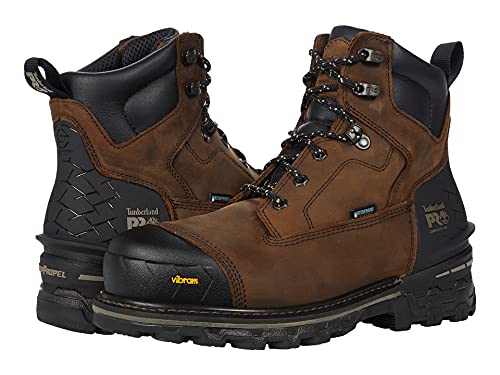
If you need one boot that handles every scenario trucking throws at it — long cab hours, wet loading docks, cold morning yards, oily forecourts — the Timberland PRO Boondock HD is the answer. It's the most comprehensively spec'd boot in this roundup and the one we'd recommend to most OTR and regional drivers without hesitation.
The "HD" (Heavy Duty) designation matters — this is the reinforced version of the already-popular standard Boondock, with additional durability upgrades over the base model. The full waterproof construction keeps feet dry through sustained rain and dock puddles. The composite safety toe meets ASTM F2413-18 while being 15% lighter than steel and non-conductive — critical for driving comfort and temperature management on long hauls. The Anti-Fatigue Technology midsole uses geometric inverted-cone geometry to transfer energy from heel strike back through the forefoot, measurably reducing leg fatigue over a driving shift compared to passive foam midsoles.
Two features specifically address truck driver safety during cab entry and exit: a molded rubber toe protector that adds a physical protection layer on cab steps and dock ledges, and a rigid external heel counter that prevents ankle roll during the twisting movements of climbing in and out. The fiberglass shank provides arch support without steel weight. The ReBOTL moisture-wicking antimicrobial lining manages heat and odor through long shifts. EH rated under ASTM F2892-18.
One honest caveat: the stock insole compresses at approximately 6 months for heavy daily users. When that happens, replace the insole — not the boot. The Timberland PRO Anti-Fatigue replacement insole is a direct fit and restores performance fully. The construction is ¾ Goodyear welt (more durable than pure cement, but not as fully resoleable as a complete welt like the CAT Second Shift). Runs slightly narrow in standard width — if you're between sizes or have a wider forefoot, size up or try the wide option.
- Full waterproof membrane
- Composite toe — lighter, non-conductive, no metal detector issues
- Anti-Fatigue inverted-cone midsole
- Molded rubber toe protector for cab steps
- Rigid heel counter — prevents ankle roll
- EH rated (ASTM F2892-18)
- Stock insole flattens at ~6 months of heavy use
- ¾ welt only — not fully resoleable
- Runs slightly narrow
→ Want lighter weight? Wolverine Overpass #2
→ Want pull-on speed? Blundstone #5
→ Want budget + resoleable? CAT Second Shift #4
2. Wolverine Overpass 6" Composite Toe Waterproof — Best Lightweight Waterproof

The Wolverine Overpass answers the question that a lot of OTR and warm-climate drivers ask: is there a fully waterproof, composite toe boot that doesn't feel like wearing ankle weights? The Overpass is noticeably lighter than the Boondock HD while keeping a full waterproof membrane — and that weight saving is genuinely felt on long driving shifts where every ounce counts toward leg fatigue.
The composite toe meets ASTM F2413-18 impact and compression standards, with the same advantages for truck drivers as on the Boondock: lighter than steel, non-conductive (no temperature transfer in cold winters or hot summers), and metal-detector friendly for drivers working at secured distribution centers or government facilities. The full waterproof construction handles sustained rain and dock water without soaking through.

The DuraShocks® SR technology absorbs heel strike impact through midsole geometry — a feature that matters for drivers who step down from a high cab dozens of times per day. The mesh lining is meaningfully more breathable than solid leather linings, which makes a real difference for drivers in warm climates where a fully waterproof boot can otherwise run hot. The contoured EVA footbed provides good all-day comfort with virtually no break-in period required. EH rated under ASTM F2892-18.
What to know before buying: the EVA midsole will compress faster than a PU alternative over 12+ months of heavy daily use — plan to replace the insole at the 6-month mark rather than assuming the boot has worn out. The cemented construction means eventual sole separation is possible with very hard use; the boot is not resoleable. For drivers who prioritize long-term resoleable durability over weight, the CAT Second Shift is the better call.
- Lightweight — less leg fatigue on driving shifts
- Full waterproof membrane
- Composite toe — non-conductive, metal detector friendly
- DuraShocks® SR heel absorption
- Breathable mesh lining — better in warm climates
- EH rated (ASTM F2892-18)
- EVA compresses with heavy use — replace insole at 6 months
- Cemented construction — not resoleable
- Less arch support than Boondock HD or Thorogood
→ Want more fatigue tech? Timberland PRO Boondock HD #1
→ Want resoleable durability? CAT Second Shift #4
→ Want all-day comfort focus? KEEN Utility Cincinnati #3
3. KEEN Utility Cincinnati 6" Waterproof — Best All-Day Comfort
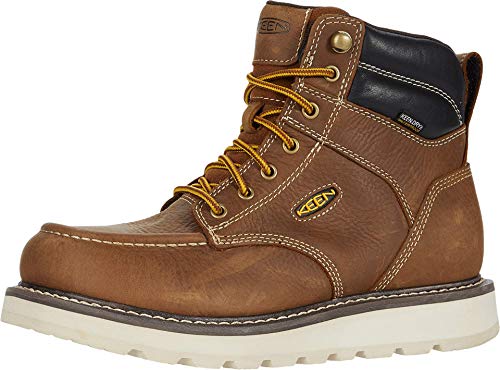
If you've been through multiple pairs of work boots and your feet are still killing you by shift's end, the KEEN Utility Cincinnati is the most likely solution. KEEN builds their work boots on a foot-shaped last with a wider, more anatomically correct toe cap — and the difference compared to standard steel toe boxes is immediately noticeable the moment you put them on.
The asymmetrical steel toe follows the natural contour of the foot rather than forcing the toes into a symmetrical cap. This gives genuine room for toes to spread naturally during long driving hours — which reduces the toe compression and numbness that many drivers experience in traditional steel toe boots during long hauls. Pair that with KEEN's metatomical dual-density EVA footbed (contoured specifically to the natural foot shape) and you have a boot that requires virtually zero break-in for the majority of wearers.

The KEEN.DRY waterproof breathable membrane keeps water out while allowing moisture vapor to escape — meaningfully better breathability than many competing membranes. For drivers doing deliveries to hospitals, schools, or polished warehouse floors, the non-marking outsole is a practical feature that prevents the scuff marks that can be a real issue on clean facility floors. The removable dual-density EVA insole is designed to accept aftermarket orthotics — a significant benefit for drivers with custom arch support needs. EH rated under ASTM F2892-18.
Be aware: the steel toe conducts temperature — cold feet in deep winter, warmth transfer in summer. Drivers on extreme-temperature routes may find the composite toe options (Boondock HD, Wolverine Overpass) more comfortable season-round. The steel toe also sets off metal detectors. The KEEN last runs slightly wide — narrow-footed buyers may want to try before buying or consult the sizing guide carefully.
- Asymmetrical toe cap — natural toe spread, zero toe compression
- Virtually zero break-in period
- KEEN.DRY waterproof breathable membrane
- Non-marking outsole — hospital, school, clean facility friendly
- Removable insole — orthotic compatible
- EH rated (ASTM F2892-18)
- Steel toe conducts temperature in extremes
- Sets off metal detectors
- Runs slightly wide — narrow-footed buyers should check sizing
→ Want composite toe instead? Timberland PRO Boondock HD #1
→ Want pull-on convenience? Blundstone #5
→ Want budget price? CAT Second Shift #4
4. CAT Footwear Second Shift Steel Toe — Best Budget
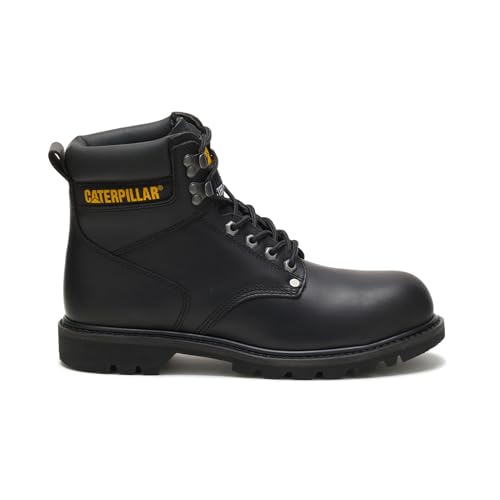
The CAT Second Shift is the best value-per-year-of-ownership boot on this entire list — not because it's the cheapest up front, but because Goodyear welt construction makes it resoleable. When the sole eventually wears down, you take it to a cobbler and have a new sole stitched on for a fraction of replacement cost. Two resoles over five years still costs less than buying replacement cemented boots on a budget cycle. For owner-operators and cost-conscious drivers who run hard miles year-round, this math matters.
The full protection stack is there at the lowest price on this list: ASTM F2413-18 steel toe (I/75 C/75 — 75 ft-lb impact, 2,500 lb compression resistance) plus EH rated under ASTM F2892-18. The T3 rubber lug outsole is oil and slip resistant with aggressive enough lugs to grip loading dock surfaces, gravel yards, and wet fuel forecourt pavement reliably — better traction on variable surfaces than wedge-sole alternatives. The full grain oiled leather upper handles weather, mud, and daily abuse without requiring special treatment. A steel shank through the midsole provides arch support and torsional stability important for uneven terrain around the truck.

The CAT Second Shift has a genuine devoted following among truckers specifically because it doesn't try to be everything — it's a straightforward, durable, protection-first boot that gets more comfortable over time and can be maintained indefinitely rather than discarded. If you're on your third pair of budget boots in three years and want to stop the cycle, this is the boot that breaks it.
The honest trade-offs: real break-in period of 1–2 weeks — do not buy these the day before a long haul. Noticeably heavier than the composite-construction boots on this list, which adds leg fatigue on pure driving shifts. Not waterproof (water-resistant leather only). Steel toe sets off metal detectors. Runs narrow — if you have wide feet or are between sizes, order the Wide (W) version. There's no break-in fix for a boot that's simply too narrow in a steel toe box.
👉 Read our full CAT Second Shift review →
- Goodyear welt — resoleable, best long-term value
- ASTM F2413-18 steel toe + EH rated
- T3 lug outsole — excellent variable terrain grip
- Full grain oiled leather — handles abuse without special care
- Steel shank arch support
- Lowest price on this list
- 1–2 week break-in period
- Heavier than composite alternatives
- Not waterproof — water-resistant only
- Runs narrow — order Wide if in doubt
→ Want full waterproof? Timberland PRO Boondock HD #1
→ Want instant comfort? KEEN Utility Cincinnati #3
→ Want pull-on speed? Blundstone #5
5. Blundstone 510/990 — Best Pull-On
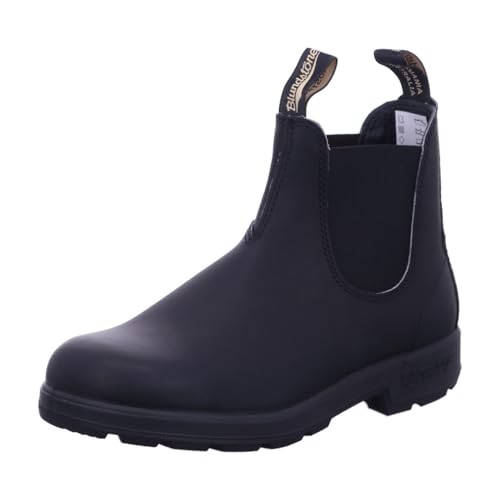
There are two types of truck drivers who discover the Blundstone: those who try them for the first time and immediately wonder why they spent years fighting with laces, and those who already own a pair and won't go back. The Chelsea/pull-on elastic construction means this boot is on your foot in 5 seconds and off in 5 seconds. No lacing, no fumbling, no sitting on the running board at every fuel stop. For drivers making 20 to 40 stops per shift, that adds up to genuine time and energy saved across a full week of driving.
The SPS Max (Shock Protection System) uses dual-density polyurethane foam specifically under the heel and ball of the foot — the two strike zones that absorb the most impact when stepping down from a high cab repeatedly. This is not a flimsy single-layer insole; it's an engineered cushioning system that makes Blundstone one of the most comfortable pull-on safety boots on the market. The steel toe meets ASTM F2413-18 for impact and compression. The TPU outsole is oil, acid, and slip resistant, rated to 140°C heat resistance. The boot is remarkably light for a steel toe safety boot — a meaningful advantage for driving comfort and pedal sensitivity.
One practical detail worth mentioning: the no-lace design also means there's nothing to catch on cab step hardware, dock edge lips, or cargo straps — a minor but real safety advantage that lace-up boot wearers occasionally discover the hard way.
What to know before buying: the Blundstone uses cemented sole construction, not Goodyear welt — it's not resoleable, and some users have reported sole separation with very heavy daily use. Inspect the sole bond periodically and address any separation early. The boot is water-resistant rather than fully waterproof — it handles light rain and damp docks well but will soak through in standing water or sustained rain. For drivers who need guaranteed waterproofing, the Boondock HD or Bates GX-8 are the better choices. The pull-on construction also provides less ankle lock than a laced 6" boot — drivers handling heavy freight regularly may prefer more ankle support.
- Zero lacing — on/off in seconds, every stop
- Lightweight for a steel toe safety boot
- SPS Max dual-density cushioning at heel and ball
- ASTM F2413-18 steel toe
- Oil/acid/slip resistant — 140°C heat rated outsole
- No lace catch hazard on hardware or straps
- Cemented construction — not resoleable
- Water-resistant, not waterproof
- Less ankle lock than laced 6" boots
- No EH rating on standard models
→ Want full waterproof? Wolverine Overpass #2
→ Want resoleable durability? CAT Second Shift #4
→ Want ankle support + quick entry? Bates GX-8 Side-Zip #6
6. Bates GX-8 GORE-TEX Side-Zip — Best Side-Zip

The Bates GX-8 solves a problem a lot of drivers don't know they have until someone offers them a solution: you don't actually have to choose between ankle support and fast boot entry. The side-zip construction gives you the full structure and ankle lock of a laced 8" boot — with the ability to zip in or out in about 10 seconds. For flatbed drivers and anyone handling heavy freight who needs genuine ankle support but also makes frequent stops, this is the best of both designs.
The GORE-TEX waterproof breathable membrane is the industry gold standard. Where many proprietary membranes compromise between waterproof performance and breathability, GORE-TEX consistently delivers both — keeping water out in sustained rain and standing water while allowing moisture vapor to escape through the membrane. For OTR drivers crossing multiple climate zones or flatbed drivers working in variable weather, this is a meaningfully better waterproof solution than most alternatives. The DuraShocks® cushioning system absorbs impact through midsole geometry, which matters for an 8" boot where the additional ankle coverage adds weight that the cushioning system needs to compensate for.

A detail specifically useful for drivers working at secured facilities: non-metallic shank and hardware throughout. The Bates GX-8 passes metal detectors even at airport cargo facilities, government distribution centers, and secure terminals where metal hardware triggers screening. The EH rating covers electrical hazard environments at powered docks. The slip-resistant outsole performs well on smooth and wet surfaces.
Know before buying: the 8" height provides the ankle support that makes this boot worth having — but it also restricts ankle mobility more than a 6" boot. Drivers who spend most of their shift in the cab and are not accustomed to taller boots may find the restricted range of ankle motion noticeable on long driving legs. It is heavier than all 6" options on this list. The styling is tactical/uniform-oriented — it fits naturally in environments where that look is standard, but may feel out of place in some casual delivery contexts.
- GORE-TEX — best waterproof breathability on this list
- Side-zip — fast entry with full ankle support
- Non-metallic hardware — passes all metal detectors
- EH rated for powered dock environments
- 8" height — maximum ankle support for freight handling
- DuraShocks® cushioning system
- 8" restricts ankle mobility — adjustment for long driving legs
- Heavier than all 6" options on this list
- Tactical styling not suited to all environments
→ Want 6" height instead? Timberland PRO Boondock HD #1
→ Want pull-on instead of zip? Blundstone #5
→ Want budget waterproof? Wolverine Overpass #2
7. Thorogood American Heritage 6" Moc Toe — Best for Concrete

If a significant portion of your shift is spent on concrete — warehouse floors, distribution center docks, terminal buildings — no boot on this list will take better care of your feet than the Thorogood American Heritage Moc Toe. It's the boot that drivers coming from hard-floor environments consistently describe as "feeling like slippers" after a full 10-hour shift, and that description isn't an exaggeration.
The MAXWear Wedge™ outsole (meeting ASTM F3445-21 slip resistance standards) uses a completely flat wedge profile rather than a heel and lug design. This distributes pressure evenly across the entire foot rather than loading the heel, which is the specific mechanism behind the Thorogood's legendary concrete comfort. Your foot contacts the ground as a single flat platform, eliminating the heel-loading that causes arch and lower back fatigue during long hours of standing. The dual-density Poron® cushion insole uses a medical-grade polyurethane foam that returns to its original thickness after compression — unlike EVA, which compresses permanently over time. The boot that feels supportive on day one still feels the same on day 300.

The oil-tanned full-grain American leather is supple out of the box — the oil-tanning process saturates the leather fibers during production, producing leather that requires virtually no break-in time. The Goodyear Storm Welt construction makes the boot fully resoleable, and the leather upper, properly conditioned, can realistically last a decade. Made in USA, Union Made — the quality story here is genuine, not just a label. EH rated under ASTM F2892-18. The fiberglass shank provides lightweight arch support without adding steel weight that affects driving pedal feel.
Critical limitations for truck drivers to understand: this boot is specifically engineered for flat hard surfaces. On wet ramps, gravel yards, or any sloped surface, the flat wedge sole grips significantly worse than a lug outsole. Drivers whose routes include outdoor yard work, variable terrain, or wet inclines should choose a lug-sole boot instead. The standard Moc Toe is also a soft toe — it does not provide ASTM F2413-18 safety toe protection. If your carrier requires a safety toe, check the steel toe version (model 804-4200) — it uses the same comfort system with an ASTM-rated steel cap. Also: sizes run approximately half a size long and narrow in the standard D width. Order a half-size down and go Wide (EE) if your feet are at all wide.
👉 Read our full Thorogood American Heritage Moc Toe review →
- Best flat-surface/concrete comfort on this list
- Dual-density Poron insole — holds cushioning long-term
- Goodyear Storm Welt — resoleable
- Full-grain American leather — supple out of box
- Fiberglass shank — lightweight arch support
- Made in USA / Union Made
- EH rated (ASTM F2892-18)
- Not waterproof — water-resistant only
- Wedge sole poor on wet ramps, gravel, loose terrain
- Soft toe (this ASIN) — verify carrier PPE policy
- Runs half a size long and narrow — size down
→ Want waterproof + concrete comfort? Timberland PRO Boondock HD #1
→ Want safety toe + comfort? KEEN Utility Cincinnati #3
→ Want pull-on convenience? Blundstone #5
Which Boot Is Right for Your Route? Quick Decision Guide
Answer the question that matches your situation:
Are you OTR or regional, crossing multiple climates?
→ You need waterproof + comp toe + anti-fatigue: Timberland PRO Boondock HD #1
Are you a local delivery driver making 20–40 stops per shift?
→ You need fastest on/off + cushioning: Blundstone 510/990 #5
Do you want fast entry but need more ankle support than a pull-on?
→ Side-zip + GORE-TEX waterproof: Bates GX-8 #6
Do you spend most of your shift on concrete warehouse or dock floors?
→ Flat-surface comfort king: Thorogood Heritage Moc Toe #7
Do your feet hurt and you've tried multiple boots without success?
→ Anatomical last, zero break-in, foot-shaped toe cap: KEEN Utility Cincinnati #3
Are you budget-focused but want a boot that genuinely lasts years?
→ Goodyear welt, resoleable, best long-term cost: CAT Second Shift #4
Do you need composite toe (metal detectors or carrier policy)?
→ Timberland PRO Boondock HD #1 or Wolverine Overpass #2
Do you have wide feet or feet that swell on long hauls?
→ Widest anatomical toe box: KEEN Utility Cincinnati #3
→ Or order CAT Second Shift in Wide (W) #4
5 Things Truck Drivers Should Know About Their Boots (That Most Reviews Never Cover)
1. Replace Your Insole at 6 Months — Not Your Boot
Most mid-tier boot discomfort that develops after 6 months of daily use is a compressed insole, not a dead boot. EVA foam compresses permanently under repeated impact loading. When the boot that felt great in January starts feeling flat by July, the solution is a $20–30 aftermarket insole — not a new pair of boots. Superfeet Green, Timberland PRO Anti-Fatigue replacement, and Spenco Total Support are all excellent drop-in upgrades that restore cushioning and add arch support. Every boot on this list accepts standard aftermarket insoles without modification.
2. Manage the Waterproof Trade-Off in Summer
A fully waterproof membrane keeps water out — but it also limits breathability. In hot weather or on warm-climate routes, this creates significant foot heat and sweat buildup inside the boot. The solution isn't to stop wearing waterproof boots; it's to pair them with the right sock. Merino wool (Darn Tough, Smartwool) or moisture-wicking synthetic socks actively pull sweat away from the skin. Never wear cotton socks in a waterproof boot — cotton holds moisture against the skin and is the primary cause of hot-spot blisters on long hauls.
3. Boot Weight Matters More Than Most Drivers Realize
The difference between a 3.5 lb boot and a 4.5 lb boot feels trivial for the first hour. After a 10-hour driving shift with continuous pedal adjustment, the heavier boot creates cumulative leg and hip fatigue that many drivers attribute to the seat, the route, or just "getting older." If your legs are tired before you've even started unloading, check your boot weight. The lightest options from this list: Blundstone, Wolverine Overpass, KEEN Cincinnati. All three are meaningfully lighter than the CAT Second Shift and Bates GX-8 while still providing ASTM-rated safety toe protection.
4. Consider Two Pairs in the Cab
Experienced OTR drivers frequently run two pairs: one fully waterproof, safety-rated boot for dock work and wet weather, and one lighter comfort boot for long driving legs. This isn't an indulgence — it extends the life of both pairs significantly (neither boot takes the full beating every day), and your feet genuinely perform better when the boot is matched to the task. If your budget allows for it, the investment in a second pair pays for itself in extended boot life within 12 months.
5. Check Your Carrier's Footwear Policy Before Buying
This one sounds obvious but trips up a surprising number of drivers. Footwear PPE policies vary significantly by carrier, cargo type, and terminal. Most carriers require a safety toe and oil/slip resistance. HazMat loads may specify chemical-resistant boot materials. Some terminals require steel toe specifically (not composite). Airport cargo facilities and secured government sites often require non-metallic footwear. And some Van carriers (Schneider Van Truckload, for example) only require slip resistance with no safety toe mandate. Confirm your specific requirement with your dispatcher or carrier safety handbook before spending money on the wrong boot.
Frequently Asked Questions
Do truck drivers have to wear steel toe boots?
It depends on your carrier and route type. Most carriers require a safety toe (steel or composite) plus oil and slip resistance. Some Van carriers (such as Schneider Van Truckload) only require slip resistance with no safety toe mandate. HazMat routes may carry additional PPE requirements. Always verify with your specific carrier's safety handbook or dispatcher before buying — policy details vary and are updated periodically.
Are composite toe boots better than steel toe for truck drivers?
For most truck drivers, yes. Composite toe is approximately 15% lighter than steel (less leg fatigue over a long driving shift), does not conduct heat or cold (comfortable in temperature extremes without insulation), and passes all metal detectors at secured facilities. The ASTM F2413-18 protection rating is identical to steel. The only scenario where steel wins outright is if your specific carrier or terminal requires steel toe rather than composite — confirm before buying.
What's the best pull-on work boot for truck drivers?
The Blundstone 510/990 is our top pick for pull-on boots — steel toe, SPS Max dual-density cushioning, oil and slip resistant, genuinely on and off in under 10 seconds. It's particularly well-suited to local delivery drivers and LTL drivers who make frequent stops throughout the shift. The main trade-off is that it's water-resistant rather than fully waterproof, and the cemented construction is not resoleable.
Are wedge sole boots good for truck drivers?
Yes — specifically for concrete and flat-surface dock work. The Thorogood Moc Toe's flat wedge distributes pressure evenly across the foot, which is why it's so effective for drivers spending hours on hard warehouse floors. However, wedge soles grip poorly on wet ramps, gravel, loose surface aggregate, or any sloped terrain. If your route includes outdoor yard work, variable terrain, or wet inclines, a lug outsole (Timberland PRO Boondock HD, CAT Second Shift) is the better choice.
How often should truck drivers replace their work boots?
For cemented construction boots: typically 12–18 months of daily heavy use. For Goodyear welt boots (CAT Second Shift, Thorogood Moc Toe): the upper can last 5+ years with proper leather maintenance — replace the insole at 6 months and resole when the outsole wears through. A quality welted boot maintained properly costs significantly less over 5 years than cycling through cemented boots annually. Most drivers should also replace their insole at the 6-month mark regardless of construction type — a flat insole often feels like a dead boot but isn't.
What boot features specifically help with cab entry and exit safety?
The most important features for cab entry/exit are: a slip-resistant outsole certified to ASTM standards (the cab step is frequently wet or oily), a defined heel for grip on the step edge, ankle support to prevent rolling on the step, and a rubber toe cap if available. The Timberland PRO Boondock HD's molded rubber toe protector specifically addresses cab step traction. For entry speed, the Blundstone pull-on or Bates GX-8 side-zip eliminate lacing fumble at the cab door — a practical safety improvement for drivers making dozens of entries and exits per shift.
Final Verdict: Which Boot Should You Buy?
After testing against the specific demands of trucking — not just construction, not just walking, but the actual three-mode reality of a driver's shift — our recommendations come down to this:
For most OTR and regional drivers, the Timberland PRO Boondock HD is the right answer. Full waterproof, composite toe, Anti-Fatigue midsole, EH rated — it covers the widest range of trucking scenarios without meaningful compromise in any direction.
For high-frequency stop-and-go routes where you're in and out of the cab constantly, the Blundstone 510/990 wins on pure practicality — no lacing, ever.
For budget-focused drivers who want a boot that lasts, the CAT Second Shift offers the best price-to-longevity ratio of any boot on this list thanks to its resoleable Goodyear welt construction.
For drivers whose feet have been chronically sore through multiple pairs of boots, the KEEN Utility Cincinnati and its anatomical, foot-shaped last is the most likely solution you haven't tried yet.
Whatever your route, whatever your cargo, the right boot is out there — and it makes more difference to how you feel at the end of a 12-hour shift than most drivers give footwear credit for. Choose well, replace the insole at 6 months, and you'll stop thinking about your feet and start thinking about the road.