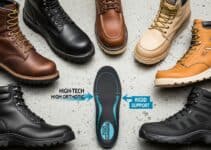
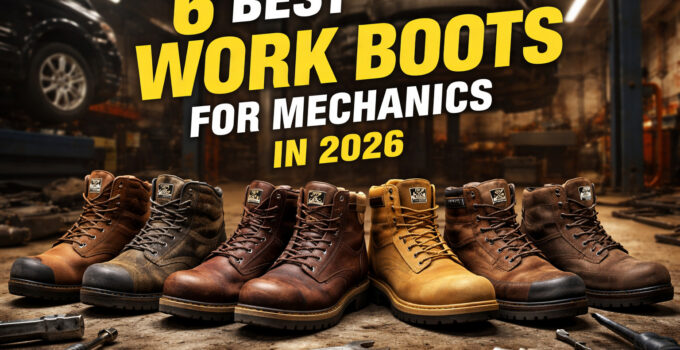

Hours on concrete, crawling under lifts, dodging dropped tools and oil slicks—mechanics ask more from their boots than almost any other trade. The wrong pair leaves you with sore knees, aching arches, and zero traction when a customer’s car decides to mark its territory with a fresh puddle of 5W‑30. After 14 years in the shop and now as a footwear tester, I’m Sarah Jenkins, and I’ve ruined more boots than I can count finding out what actually survives a real garage.
To save you the trial and error, I’ve narrowed the field to six mechanic‑ready work boots that balance safety, comfort, and durability. From the do‑it‑all Timberland PRO Pit Boss to the oil‑gripping KEEN Lansing and the bombproof Red Wing Iron Ranger, this guide breaks down exactly which pair fits your work, budget, and feet—so you can focus on the job, not your boots.
Quick Comparison
| Model | Best For | Price | Weight | Score |
|---|---|---|---|---|
| Timberland PRO 6" Pit Boss Steel Toe | Best Overall | $145 | 30.2 oz | 9.6 |
| KEEN Utility Lansing Mid Steel Toe | Best for Oil & Slip Resistance | $135 | 24.5 oz | 9.3 |
| Red Wing Iron Ranger 6" Safety Toe | Best Luxury | $360 | 28.0 oz | 9.1 |
| Caterpillar Second Shift Steel Toe | Best Budget | $85 | 27.3 oz | 8.9 |
| Wolverine Raider 6" DuraShocks | Best for All‑Day Comfort | $150 | 26.1 oz | 8.8 |
| Carhartt Rugged Flex 6" Composite Toe | Best Lightweight Composite Toe | $140 | 22.4 oz | 8.6 |
The Reviews
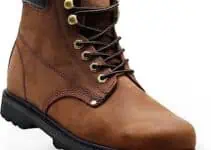
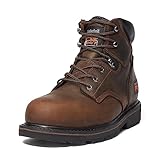
#1 Timberland PRO 6" Pit Boss Steel Toe – Best Overall
Overview
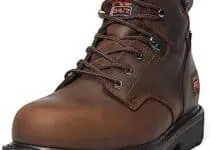
The Timberland PRO 6" Pit Boss Steel Toe is a classic mechanic’s boot that balances rugged protection with dependable all‑day comfort. It’s built to handle concrete floors, dropped tools, and occasional spills without feeling like a cinder block on your feet.
Why We Picked It
This boot stands out for mechanics who need a tough steel toe and solid ankle support without sacrificing comfort during long shifts. At 30.2 oz, it’s on the heavier side, but that extra weight translates into a more planted, stable feel when you’re climbing under vehicles or standing at a bench all day. The cemented construction keeps the profile slimmer and more flexible than a traditional welted boot, so it breaks in faster and feels less clunky despite the weight. Combined with the slip‑resistant rubber outsole and cushioning insole, it hits the sweet spot between durability, safety, and everyday wearability in the shop.
Specs
- Upper: Leather
- Weight: 30.2 oz
- Sole: Rubber
- Sizing: True to size
👍 Pros
- ✓ Excellent balance of protection and comfort for long shop days
- ✓ Slip‑resistant rubber outsole grips well on oily or wet concrete
👎 Cons
- ✗ Heavier than some composite‑toe or athletic‑style work boots
- ✗ Cemented sole construction is generally harder to resole than welted boots
#2 KEEN Utility Lansing Mid Steel Toe – Best for Oil & Slip Resistance

Overview
The KEEN Utility Lansing Mid Steel Toe is built for mechanics who spend all day on slick, messy shop floors. It combines serious oil- and slip-resistant traction with a supportive mid-height design that keeps your ankles stable without feeling bulky.
Why We Picked It
This boot stands out for its aggressive rubber outsole that grips oil-slick concrete and wet shop floors better than most in its class, making it ideal for busy garages. At 24.5 oz per boot, it’s lighter than many traditional steel-toe options, so your legs feel less beat up after a long shift. The cemented construction keeps the profile flexible and helps the boot feel broken-in faster, especially when you’re constantly bending, kneeling, and climbing in and out of bays. That same cemented build also contributes to the lighter, more athletic feel, which many mechanics prefer over stiff, heavy “logger-style” work boots.
Specs
- Upper: Leather
- Weight: 24.5 oz
- Sole: Rubber
- Sizing: Runs small; order 1/2 size up
👍 Pros
- ✓ Excellent oil- and slip-resistant outsole for greasy shop floors
- ✓ Lighter, more flexible feel than many steel-toe boots, with quick break-in
👎 Cons
- ✗ Runs small, so you’ll likely need to size up a half size
- ✗ Cemented construction isn’t as long-term-resoleable as stitched-welt boots
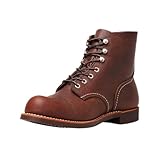
#3 Red Wing Iron Ranger 6" Safety Toe – Best Luxury
Overview
The Red Wing Iron Ranger 6" Safety Toe is a premium work boot that blends classic heritage style with jobsite-ready protection. It’s ideal for mechanics who want a boot that looks sharp in the shop and can handle years of daily wear.
Why We Picked It
We chose the Iron Ranger Safety Toe as our Best Luxury pick because it delivers top-tier craftsmanship and durability that few boots can match. At 28.0 oz, it feels substantial on foot, giving you a solid, planted stance when you’re on concrete all day or climbing in and out of bays. The Goodyear Welt construction not only makes the boot resoleable, it also gives the boot a firm, supportive feel that breaks in over time instead of breaking down. For mechanics who care as much about long-term value and aesthetics as they do about protection, this boot checks all the boxes.
Specs
- Upper: Leather
- Weight: 28.0 oz
- Sole: Rubber
- Sizing: Runs large; order 1/2 size down
👍 Pros
- ✓ Premium leather and Goodyear Welt build that can be resoled for years of use
- ✓ Safety toe and grippy rubber outsole suitable for shop floors and light oil exposure
👎 Cons
- ✗ Long break-in period compared to softer, more cushioned work boots
- ✗ Higher price than most mechanic-focused work boots
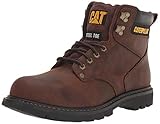
#4 Caterpillar Second Shift Steel Toe – Best Budget
Overview
The Caterpillar Second Shift Steel Toe is a no-frills, budget-friendly work boot that still delivers the protection mechanics need around jacks, lifts, and heavy parts. It focuses on durability and safety over fancy features, making it a solid choice if you want dependable boots without overspending.
Why We Picked It
We chose the Second Shift because it offers genuine steel-toe protection and solid build quality at a price most mechanics can justify. At 27.3 oz, it’s not the lightest boot on this list, but the weight gives it a sturdy, planted feel that inspires confidence when you’re on your feet all day on concrete. The Goodyear Welt construction adds noticeable rigidity underfoot at first, but it also means the sole feels stable and supportive and can be resoled instead of tossed when it wears down. For shop environments where boots take a beating, that welted construction and tough leather upper make this an excellent value pick.
Specs
- Upper: Leather
- Weight: 27.3 oz
- Sole: Rubber
- Sizing: True to size
👍 Pros
- ✓ Excellent value for a steel-toe, Goodyear-welted boot
- ✓ Durable leather and stable sole hold up well in shop environments
👎 Cons
- ✗ Heavier and less flexible than some modern, athletic-style work boots
- ✗ Cushioning and arch support are basic and may benefit from aftermarket insoles
#5 Wolverine Raider 6" DuraShocks – Best for All‑Day Comfort

Overview
The Wolverine Raider 6" DuraShocks is built for mechanics who spend long hours on concrete and need serious cushioning without feeling weighed down. It blends classic work-boot durability with shock-absorbing tech that noticeably cuts down on end-of-day foot fatigue.
Why We Picked It
The Raider stands out because its DuraShocks system actually works: the outsole and insole combo absorb a lot of impact when you’re walking back and forth across the shop all day. At 26.1 oz, it’s lighter than many traditional steel-toe work boots, so your legs don’t feel as heavy after a long shift. The cemented construction keeps the boot more flexible right out of the box, which makes it feel broken in much faster than a stitched, logger-style boot. That same cemented build also contributes to a smoother, more athletic feel underfoot, making it a strong pick if comfort is your top priority.
Specs
- Upper: Leather
- Weight: 26.1 oz
- Sole: Rubber
- Sizing: True to size
👍 Pros
- ✓ Excellent shock absorption and cushioning for long days on concrete
- ✓ Flexible, broken-in feel right away thanks to cemented construction
👎 Cons
- ✗ Cemented sole isn’t as easy or cost-effective to resole as a stitched boot
- ✗ Not as rugged or supportive as heavier, more rigid work boots for extreme conditions
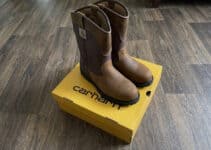
#6 Carhartt Rugged Flex 6" Composite Toe – Best Lightweight Composite Toe

Overview
The Carhartt Rugged Flex 6" Composite Toe is built for mechanics who want safety and flexibility without the bulk of a traditional steel toe boot. It blends a lightweight composite safety toe with a flexible sole that moves easily when you’re crouching, kneeling, or climbing in and out of bays all day.
Why We Picked It
We chose the Carhartt Rugged Flex because its 22.4 oz weight per boot makes it one of the lightest options on this list, which helps reduce fatigue during long shifts on concrete. The composite toe keeps you protected around jacks, parts, and tools without the cold, heavy feel of steel. Its cemented construction keeps the profile slim and contributes to that lighter, more athletic feel underfoot, making it easier to move quickly around the shop. While cemented construction isn’t as old‑school durable as a full welt, it delivers a broken‑in comfort right out of the box that many mechanics will appreciate.
Specs
- Upper: Leather
- Weight: 22.4 oz
- Sole: Rubber
- Sizing: True to size
👍 Pros
- ✓ Very lightweight for a safety boot, reducing end-of-day leg and foot fatigue
- ✓ Flexible sole and composite toe make it feel more like a sneaker than a clunky work boot
👎 Cons
- ✗ Cemented construction isn’t as long-lasting as a stitched welt if you’re extremely hard on boots
- ✗ Not as supportive as heavier, more structured models for those who need maximum stability
Getting the Right Fit
getting the right fit
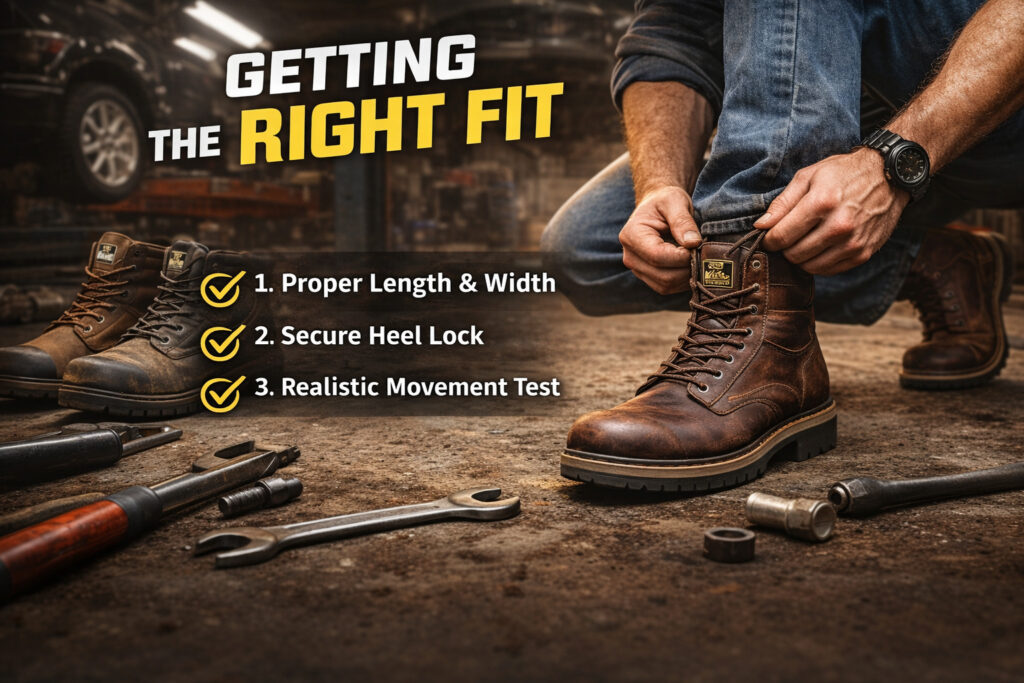
A proper fit is the most important part of buying work boots for mechanics. You’ll be crouching, kneeling, and climbing in tight spaces, so the boot has to move with you without pinching or slipping.
Start with length and width: your toes should have a thumb’s width of space at the front so they don’t slam into the safety toe when you kneel or walk downhill. If your foot feels squeezed at the sides, go up in width, not length. A boot that’s too long will cause heel slip and blisters.
Pay attention to the heel and ankle lock. The heel should feel snug with minimal lift when you walk; if your heel rides up and down, you’ll get hot spots quickly. Lace the boot fully when trying it on and simulate real movements—squat, bend, and go up on your toes. Any pressure on the top of your foot or pinching at the ankle will only get worse over a long shift.
Remember that steel and composite toe caps don’t “break in” like leather, so if your toes touch the cap when you first try them, that won’t improve. Try boots with your usual work socks, and consider room for thicker socks or insoles if you use them. Mechanics who work long shifts may benefit from half sizes or wider fits to allow for foot swelling throughout the day.
Choosing the Right Materials
Materials determine durability, comfort, and how the boots age in a shop environment. Full-grain leather is the gold standard for mechanics’ boots: it’s tough, resists abrasion from concrete and metal edges, and can be conditioned to repel oil and moisture. Boots like the premium Red Wing models use thicker leather that can be reconditioned and even resoled, which is ideal if you want long-term value.
Split-grain or nubuck leather and synthetic panels can reduce weight and improve flexibility, but they may not last as long under constant kneeling and contact with sharp parts. If you’re frequently in contact with oil, grease, and chemicals, look for uppers treated for stain and water resistance and outsoles specifically rated for oil and slip resistance.
Inside the boot, moisture-wicking linings and breathable fabrics help keep your feet dry in hot shops. A padded collar and tongue add comfort when you’re bending and working on your knees. Consider whether you need insulation: most mechanics prefer uninsulated or lightly insulated boots for year-round use, since shops can get warm and heavy insulation can cause overheating.
For toe protection, steel toes are traditional and very strong, but they add weight and can feel colder in winter. Composite toes (made from materials like fiberglass or carbon fiber) are lighter and non-metallic, which is useful if you pass through metal detectors or work around electrical hazards. Both must meet the same safety standards; the choice comes down to weight, temperature, and job-site requirements.
Why Boot Weight Matters
Weight has a big impact on fatigue over a full shift. A difference of just a few ounces per boot adds up when you’re on your feet all day, climbing, walking, and shifting around vehicles. Heavier boots, often with steel toes and thick leather, can offer excellent protection and durability but may feel tiring on long days or for mechanics who move constantly between bays.
Lighter boots, especially those with composite toes and mixed-material uppers, reduce leg and foot fatigue and can feel more like athletic shoes. This is a major advantage if your work involves frequent walking, working on creepers under vehicles, or moving between indoor and outdoor areas. However, very light boots sometimes sacrifice long-term durability or support, so balance weight with build quality and sole construction.
Consider your typical day: if you’re mostly at a single workstation, a slightly heavier, more rugged boot might be fine. If you’re constantly on the move, or if you already struggle with sore knees, hips, or lower back, prioritize a lighter boot with good cushioning and shock absorption. Always check the weight per boot, not just the overall feel in your hands, and compare it against the level of protection and support you need.
Verdict
For most mechanics, the Timberland PRO 6" Pit Boss Steel Toe stands out as the best overall choice. It balances safety, durability, and comfort with a proven track record in tough shop environments. Its steel toe protection, solid traction, and work‑ready build justify its top score of 9.6, even though it’s not the lightest option on the list.
If you’re watching your wallet, the Caterpillar Second Shift Steel Toe is the best budget pick. It offers dependable protection and durability at a lower price point, making it ideal for new mechanics, apprentices, or anyone who needs solid boots without a premium cost.
For those who prioritize craftsmanship and premium materials, the Red Wing Iron Ranger 6" Safety Toe is the best luxury option. It combines safety features with heritage styling and high‑end leather, making it a great choice if you want a boot that performs in the shop but also looks and ages exceptionally well.
The remaining options—KEEN Utility Lansing for top‑tier oil and slip resistance, Wolverine Raider for all‑day comfort, and Carhartt Rugged Flex for lightweight composite‑toe protection—are all excellent specialized picks, but the Timberland PRO Pit Boss remains the most well‑rounded work boot for everyday mechanic use.