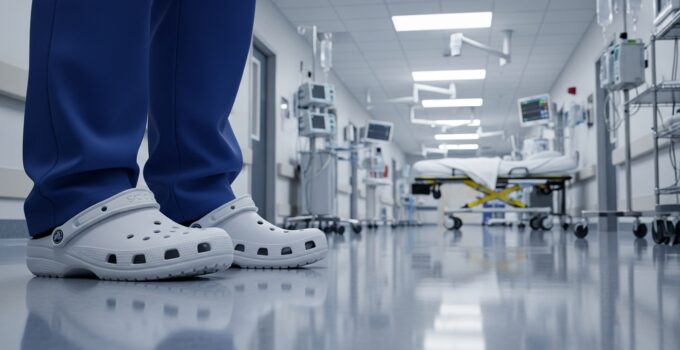

Walk into any Emergency Room or ICU, and you will see a sea of rubber clogs. For over a decade, Crocs have been the unofficial uniform of nurses and doctors worldwide.
But are they actually good for your feet, or are they just convenient? There is a massive divide in the medical community: Nurses love them for the comfort and ease of cleaning, while many podiatrists warn against them due to a lack of stability.
If you are facing a 12-hour shift and debating between Crocs, Danskos, or running shoes, this guide breaks down the medical reality of wearing foam clogs on the job.

- Fit Note: Runs large—size down if between sizes for a secure, stay-put fit during long shifts
- Slip Resistant Confidence: Crocs Lock tread is designed for slick kitchen and hospital floors, helping you stay steady when spills happen
- Easy Clean: The fully molded enclosed‑toe construction helps prevent dirt and spills from settling in, allowing the footwear to be quickly cleaned with just soap and water—ideal for busy work environments.
- All Day Comfort At Work: Designed with Iconic Crocs Comfort, a lightweight and flexible cushioning system that wraps the foot in 360‑degree support. The soft, responsive feel helps maintain comfort through extended wear, making it ideal for long shifts and active environments.
- Workplace-Certified Performance: Tested and certified to meet demanding industry standards (ASTM F2913-24, ASTM F3445-24, CE, EN ISO 20347:2012 OB, SRC) so you can focus on the job, not your footwear

- Fit Note: Runs large—size down if between sizes for a secure, stay-put fit during long shifts
- Slip Resistant Confidence: Crocs Lock tread is designed for slick kitchen and hospital floors, helping you stay steady when spills happen
- Spill Proof: Designed with a fully enclosed toe and an enhanced metatarsal area to guard against liquids and debris, offering dependable protection during busy shifts. The material cleans up easily, allowing you to quickly wipe away spills as soon as they occur.
- All Day Comfort At Work: Designed with Iconic Crocs Comfort, a lightweight and flexible cushioning system that wraps the foot in 360‑degree support. The soft, responsive feel helps maintain comfort through extended wear, making it ideal for long shifts and active environments.
- Workplace-Certified Performance: Tested and certified to meet demanding industry standards (ASTM F2913-24, ASTM F3445-24, CE, EN ISO 20347:2012 OB, SRC) so you can focus on the job, not your footwear
Why Do Healthcare Workers Love Crocs? (The Pros)
There is a reason you see them everywhere. For the specific environment of a hospital, Crocs offer three distinct advantages that sneakers can't match.
1. The "Biological Hazard" Shield
Hospitals are messy. Blood, vomit, chemicals, and bodily fluids are a daily reality.
The Pro: Crocs are made of a closed-cell resin called Croslite™. It is non-porous. If you spill fluids on a mesh running shoe, it soaks into your sock. If you spill it on a solid Croc, you can wipe it off with a bleach wipe in 10 seconds.
2. Accommodating "Shift Swell"
After 10 hours on your feet, your feet naturally swell.
The Pro: Crocs have a notoriously wide toe box. Unlike tight leather shoes, they allow your feet to expand naturally without pinching nerves or causing blisters.
3. Ventilation & Weight
They are incredibly lightweight. When you are walking 15,000 steps a shift, every ounce matters. The standard models also offer ventilation, preventing the "swamp foot" feeling common with heavy leather boots.

are crocs good for healthcare workers
The Doctor's Warning: Why Podiatrists Hate Crocs
Despite their popularity, many foot specialists advise against wearing them for 12 hours straight. Here is the medical downside.
1. The "Toe Grip" Issue (Tendinitis Risk)
Because Crocs have an open back (or a loose strap), your heel is not locked in.
The Risk: To keep the shoe from flying off, your toes subconsciously "claw" or grip the bottom of the sole with every step. Dr. Megan Leahy (Illinois Bone and Joint Institute) warns that this long-term gripping leads to Tendinitis, worsening of Hammer Toes, and severe calluses.
2. Lack of Arch Support
Crocs are soft, but softness is not the same as support. The squishy rubber collapses under weight. If you have flat feet or plantar fasciitis, the lack of a rigid shank means your arch collapses with every step, leading to long-term pain.
3. The "Needle Drop" Hazard
Standard Crocs have 13 holes on top. In a hospital setting, this is a risk. Dropped scalpels, needles, or hot fluids can pass right through the holes and injure your foot.
Critical Distinction: Classic vs. "Crocs At Work"
If you are going to wear them, you must buy the right model. Not all Crocs are hospital-safe.
| Feature | Classic Clog (The Beach Shoe) | Bistro / Specialist II (The Work Shoe) |
|---|---|---|
| Top Design | Holes (Ventilated) | Enclosed (Protects from spills/sharps) |
| Heel | Low / Loose Strap | Higher Heel Cup / Secure Strap |
| Tread | Standard (Slippery on wet floors) | Crocs Lock™ (Slip-Resistant) |
| Verdict | ❌ UNSAFE for Labs/OR | ✅ Safe for Hospital Use |
The Showdown: Crocs vs. Dansko vs. Sneakers
Crocs (Bistro Line)
- Best For: ER/OR Nurses, Scrub Techs.
- Why: Easiest to clean blood/fluids off. Cheapest option.
- Weakness: Least amount of structural support.
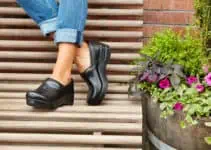
Dansko Clogs
- Best For: Pharmacists, Doctors standing in one spot.
- Why: Incredible arch support helps posture. Rocker bottom helps walking.
- Weakness: "Ankle Roll" risk. They are high off the ground and unstable if you have to run.
Running Shoes (Hoka/Brooks)
- Best For: Ward Nurses walking high mileage.
- Why: Maximum cushioning and secure heel lock.
- Weakness: The mesh soaks up fluids. Hard to sanitize.
FAQ: Common Questions from Medical Staff
Q: Do Crocs look professional?
A: In a sterile environment like the OR or ER (worn with scrubs), yes, they are accepted. In a clinic setting or front-of-house medical role, they are often considered too casual.
Q: Do they cause foot fungus?
A: Rubber does not breathe. If you wear the "Enclosed" work versions without socks, sweat will pool, creating a breeding ground for fungus. Always wear moisture-wicking socks with Crocs.
Q: Are they OSHA approved?
A: OSHA does not ban specific brands, but they require protection against hazards. The Crocs Classic (with holes) may violate facility safety codes regarding "closed-toe/heel" requirements and sharps protection. The Crocs Bistro usually complies.
Final Verdict: Should You Wear Them?
YES, IF: You buy the "Crocs At Work" line (Bistro or Neria Pro). They are excellent for high-fluid environments (ER/Trauma) where being able to bleach your shoes is mandatory.
NO, IF: You have plantar fasciitis, flat feet, or need to sprint to codes. The lack of stability can cause long-term injury. If you have foot pain, stick to Hoka or Brooks running shoes.