

Last Updated: November 19, 2025
1. The "Was That a Branch?" Moment
You’re in tall grass, and something scrapes your leg. Was it a branch, or was that a strike?
That's why you're here. You're asking, "How effective are snake boots, really?"
The market is full of confusing claims. "Snake-proof." "Snake-resistant." What’s the difference? Can a big rattler actually bite through a thick rubber boot?
We’ll cut through the marketing fluff. This guide explains what actually stops fangs, which materials work, and whether you’re better off with boots or gaiters. This isn’t about fear—it's about getting an honest answer so you can stay safe.
2. The 30-Second Answer: Are Snake Boots 100% "Snake Proof"?
Short answer: No. No piece of gear is 100% "snake-proof." A huge, determined rattlesnake striking a weak spot could potentially get through.
That said, a high-quality, certified snake boot or gaiter is extremely effective. It’s designed to stop a strike from the vast majority of North American vipers (rattlesnakes, copperheads, cottonmouths).
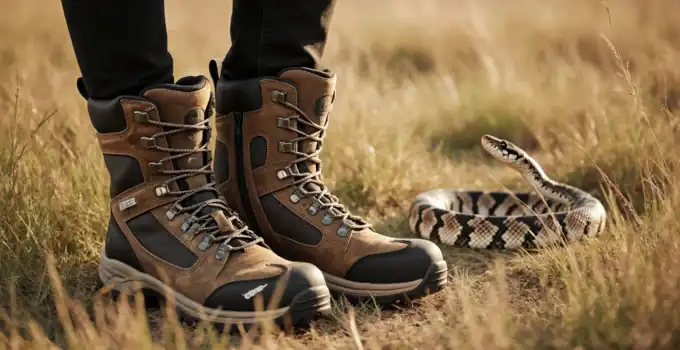
The goal: A proper snake boot turns a potentially life-altering bite into a "whoa" moment, a scrape on your boot, and a good story later. And at that, they work very well.
3. How a Bite Works (And How Your Boots Stop It)
To pick the right gear, you need to know what you're up against.
The Bite
Viper fangs are like curved, hollow needles. They're designed to pierce and inject venom. Your gear has to do two jobs:
- Stop the puncture: The material must be too tough for the fang tip to break through.
- Stop the venom: Even if the fang pricks the outer layer, it can't be allowed to go deep enough to inject venom into your leg.
Why Your Regular Boots Will Fail
Don't make this mistake: Your standard hiking boot is not snake protection.
We've seen people risk it. A guy thinks his thick leather work boots are tough enough. But a big rattlesnake's fangs can be over half an inch long. They can punch right through most work boots, hiking boots, or cheap rubber boots like they're not even there.
4. The "Big 3" Snake-Proof Materials (What to Look For)
-
Nylon / Synthetic Weaves (The "Ballistic" Armor)
What it is: This is that super-dense Cordura® or ballistic-grade nylon, often layered up.
How it works: The weave is so tight, the fang can't separate the fibers. Think of it like a tiny needle trying to pierce a Kevlar vest.
Pros: Lightweight, flexible, and breathes better than other options. Great for hot-weather hiking.
Cons: Can be noisy. You'll hear that "swish-swish" sound when you walk, which some hunters hate.
-
Thick, Layered Leather (The "Classic")
What it is: Good old-fashioned thick leather. But it's not just one layer—snake boots usually have extra layers built into the shaft.
How it works: It's a simple game of thickness. The leather is thicker than the fangs are long. The fang just can't reach your skin.
Pros: Very quiet, durable, and looks traditional. A favorite for hunters.
Cons: Heavy, hot, and needs to be broken in.
-
"Snake-Certified" Rubber (The "Swamp" Boot)
What it is: A rubber boot with a special snake-resistant lining inside it.
How it works: A hidden shield of snake-proof material is laminated to the rubber/neoprene.
Pros: 100% waterproof. Perfect for swamps, marshes, and wet, muddy terrain. Easy to clean.
Cons: The hottest, least breathable option. And be careful: your plain Muck boot is NOT a snake boot. You must buy a model specifically certified for snake protection.
5. The Big Debate: Snake Boots vs. Snake Gaiters
Snake Boots (All-in-One)
- Pros: No gaps, knee-to-ankle coverage, simple to slip on for constant exposure.
- Cons: Heavy, hot, and you're stuck wearing them all day.
Snake Gaiters (Modular)
- Pros: Wear your favorite, comfortable boots and add protection only when needed. Lighter and cooler.
- Cons: Must be fitted properly. If you're sloppy with the straps, you can create gaps.
Which One Should You Get?
This is the question we get most. Here’s our honest take:
For most hikers, hunters, or occasional use: Get the gaiters. They're way more versatile. You can wear your favorite, most comfortable hiking boots and just pull the gaiters on when you get to the trailhead or a sketchy area. They're lighter and not as hot.
For dedicated field work or swamp use: Get the boots. If you're a ranch hand, surveyor, or a hunter who's always in wet, snakey country, a dedicated boot is just easier. You slip them on, and you're covered—no fussing with straps or worrying about gaps.
6. What to Do If You're Bitten (The REAL First-Aid)
The single most important rule: GET TO A HOSPITAL. Antivenom is the only cure.
DO
- Move at least 20 feet away from the snake.
- Stay as calm and still as possible — keep your heart rate low.
- Call 911 or emergency medical services immediately. Tell them: “venomous snake bite” and your location.
- Keep the bite area at or below heart level.
- Remove rings, watches, or tight clothing near the bite before swelling starts.
DO NOT
- ❌ Do not use "snake-bite kits," suction devices, or try to suck the venom out. (They don't work and can cause more damage).
- ❌ Do not apply a tourniquet.
- ❌ Do not cut the wound or try to bleed it.
- ❌ Do not apply ice, heat, alcohol, or caffeine.
- ❌ Do not try to catch or kill the snake. (Just try to remember its color/pattern).
The Bottom Line: Your job isn't to treat the bite. Your job is to get yourself (or the victim) to the hospital and the antivenom as fast and as calmly as possible. Let the doctors do the rest.
7. Frequently Asked Questions (FAQ)
Can snakes bite through leather cowboy boots?
We wouldn't risk it. A large rattlesnake’s fangs can be half an inch or longer and can punch through the thin leather shafts on many cowboy boots. The foot part is tougher, but the shaft is a gamble. They aren't certified for a reason—don't rely on them for protection.
Can snakes bite through regular rubber Muck boots?
Yes, absolutely. This is a common and dangerous mistake. Standard rubber/neoprene boots offer almost no protection from a direct strike. You must buy a model specifically sold and certified as a "snake boot." They have an extra internal lining that regular ones lack.
Where do snakes bite most?
Over 85% of bites happen on hands, feet, and ankles—most often between the ankle and the knee. This is exactly why snake boots and gaiters are 16"–18" tall: they cover the primary strike zone.
Do I really need snake boots?
It’s all about risk. On clear, wide, maintained trails? Probably not. But if you're hiking off-trail, hunting, fishing, or working in brush, tall grass, or rocky areas in snake country... yes. They provide real, practical peace of mind.
8. Conclusion: Your Best Defense is Awareness
So, here's the bottom line: a high-quality, certified snake boot or a properly-fitted gaiter will stop the vast majority of venomous strikes. They aren't magic, but they work, and they turn a potential disaster into a non-issue.
But remember, your gear is your last line of defense. Your brain is your first.
Be smart out there. Watch where you step, don't put your hands where you can't see, and give snakes plenty of space. Stay aware, and let your boots handle the one-in-a-million "surprise" you didn't see.
Ready to choose? Check out our specific tests and recommendations: