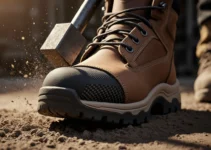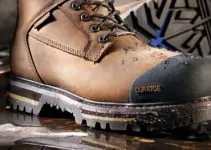
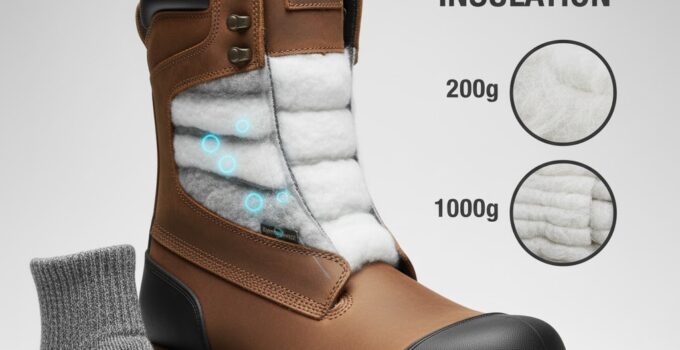

Winter boot tags say "200g Thinsulate," "400g" or even "1200g," and it's easy to assume more is always better. It isn't. The right amount of insulation depends mostly on how active you'll be, not just on the temperature. A 1000g boot on an active job can leave your feet sweaty, and damp feet get cold fast when you stop moving.
This guide explains what the gram numbers mean, what boot makers recommend for each level, and how to pick the right one for your job or hunt. The recommendations below come from 3M and from insulation guides published by LaCrosse, Danner and Rocky.
Quick Answer: How Much Insulation Do You Need?
| Insulation | Best for | What boot makers say |
|---|---|---|
| None | Mild weather, or active use above freezing | Fine if you run warm and keep moving |
| 200g | Cool weather, or cold weather if you keep moving | Rocky: great for cool weather at lower activity, can work in colder weather if you stay active |
| 400g | All-round winter work with stop-and-go activity | Rocky: good for cooler weather at low activity, fairly cold weather if active |
| 600g to 800g | Cold days with low to moderate activity | Rocky: 800g is popular with deer stand hunters |
| 1000g and up | Sitting still at or below freezing | LaCrosse and Danner: 1000g+ recommended for stationary use at 32°F or below |
Sources: Rocky Insulation Guide, LaCrosse and Danner "How much insulation do I need?" guides (retrieved 2026-09-25).
Rule of thumb: choose for the least active part of your day. If you'll be standing on a cold slab or sitting in a stand for hours, go warmer. If you're moving the whole time, go lighter. Jump to boot picks for each insulation level.
What Do the Grams Mean?
The gram number is the weight of the insulation per square meter of fabric, not its thickness and not a temperature rating. 3M lists its footwear insulation, Thinsulate Type B, in weights of 100, 200, 400 and 600 grams per square meter (3M, retrieved 2026-09-25). More grams means more insulating material around your foot, so it's warmer and a little bulkier.
That's why 400g isn't exactly "twice as warm" as 200g, and why two boots with the same rating can feel different. Fit, sock choice, the boot's waterproof membrane, the sole and how much you move all matter too.
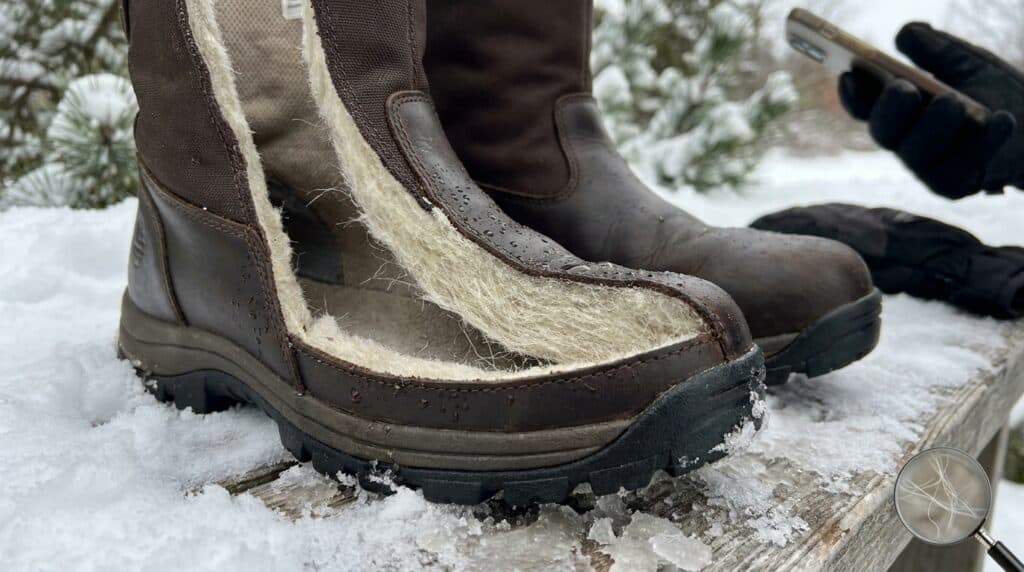
Thinsulate
What Is Thinsulate?
Thinsulate is 3M's synthetic insulation made from very fine fibers that trap warm air in a thin layer. For boots, 3M makes a pre-compressed version, Type B, which it describes as its most water-resistant insulation and says keeps working when wet (3M, retrieved 2026-09-25). That matters in boots, where snow, slush and sweat are constant.
You'll also see other synthetic insulations such as PrimaLoft and Thermolite. They're rated in grams the same way, so the guidance below applies to them too.
Insulation by Gram Level
Is 200g insulation warm enough?
200g is the lightest common winter level. Rocky describes it as great for cool weather at lower activity levels and able to handle colder weather if you keep moving. LaCrosse and Danner suggest 200g for people who run warm in moderate conditions around 32°F to 60°F. It's a good fit for active outdoor work, hiking and fall hunting, but not for standing still in real cold.
What temperature is 400g insulation good for?
Boot makers don't publish a single temperature rating for 400g, because it depends on how active you are. Rocky calls 400g good for cooler weather at low activity and for fairly cold weather if you're active. For most people doing stop-and-go winter work, 400g is the usual middle ground. LaCrosse and Danner suggest 400g to 800g for people whose feet tend to get cold.
Is 800g insulation warm?
Yes. Rocky says 800g keeps you warm at low to moderate activity levels in colder weather and notes it's popular with deer stand hunters. It's a good choice for long periods standing in cold weather. For hard physical work, it can be too warm.
What does 1000g Thinsulate mean, and is it too much?
1000g means a heavy layer of insulation, built for long periods of sitting or standing still. LaCrosse and Danner both recommend 1000g or more for stationary activities like tree stands, blinds and stationary field work at 32°F or below. Rocky adds that 1000g suits really cold conditions and is especially useful around snow or cold water. For active work, it's usually too much.
What about 1200g and above?
Rocky describes 1200g as for the coldest environments, and 1400g for when you need as much warmth as you can get. These are specialist boots for ice fishing, late-season stand hunting and similar still, very cold use.
Other Things That Keep Your Feet Warm
- Socks. Wool or synthetic, never cotton. Bring a dry pair for long days.
- Room for circulation. A boot that's too tight with thick socks will feel colder. Leave some toe room.
- A composite safety toe if you need one, since steel conducts cold. See steel toe vs composite toe.
- A waterproof membrane to keep outside water out. Insulation keeps you warm, a membrane keeps you dry, and good winter boots have both. See GORE-TEX vs waterproof leather.
- More tips in how to make your boots warmer.
When insulation alone isn't enough, such as sitting still in a tree stand, add heat. See our best heated socks and heated insoles.
Thinsulate vs Other Insulation
- Thinsulate vs PrimaLoft: both are synthetic insulations rated in grams and both are designed to keep insulating when damp. In boots, the gram rating and the boot's build matter more than the brand of insulation.
- Thinsulate vs down: down is rarely used in boots, because it loses most of its warmth when it gets wet.
- Thinsulate vs wool or shearling linings: natural linings are warm and comfortable but usually bulkier for the same warmth.
For a broader comparison, see best insulation for winter boots.
Best Boots by Insulation Level
These picks come from our winter and hunting roundups. We checked each listing on Amazon on 2026-09-30 and 2026-10-01. Insulation amounts come from the Amazon listing or the brand. Prices change by size, so check yours.
200g: Active Work and Everyday Winter Wear

Timberland PRO Direct Attach 6" Insulated Steel Toe - Timberland lists 200g of insulation in this waterproof steel toe work boot with EH protection. It has 4.4 stars from 4,338 ratings. Pick it if you move around all shift in the cold. It's our winter pick in the best steel toe boots guide.

Columbia Bugaboot III - A waterproof snow boot with 200g of insulation and 4.5 stars from 1,606 ratings, for shoveling, commuting and weekend snow days. Ethan wore it for a full winter. Read his Bugaboot III review. The budget option at the same level is the NORTIV 8 Waterproof Snow Boots (200g, 4.5 stars from 13,820 ratings), and for women, the Columbia Ice Maiden II (200g).
400g: All-Round Winter Work

Timberland PRO Boondock 6" Composite Toe Insulated - 400g of insulation, a waterproof membrane and a composite toe, which doesn't conduct cold like steel. It has 4.6 stars from 1,178 ratings. Pick it for stop-and-go winter work outside.

The North Face Chilkat V 400 - 400g of Heatseeker insulation in a waterproof leather and suede snow boot, with 4.4 stars from 211 ratings. Pick it for colder days in town and on trails.
800g: Long Periods Standing in the Cold

Danner Pronghorn 800g - An 8-inch waterproof hunting boot with 800g of insulation, about $200 on Amazon, with 4.4 stars from 130 ratings. This is the level Rocky calls popular with deer stand hunters. For women, the Danner Women's Wayfinder 8" 800G sells for about $120 and has 4.6 stars from 49 ratings. More options in our best insulated hunting boots guide.
1000g to 1200g: Sitting Still at or Below Freezing

ROCKY Blizzard Stalker Steel Toe 1200g - 1200g in a 9-inch waterproof steel toe boot with EH protection, usually under $100. It has 4.2 stars from 459 ratings. It's warm enough for standing still in deep cold, but too warm if you go in and out of heated buildings.
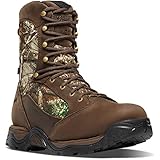
Danner Pronghorn 8" 1200G - The 1200g version of the Pronghorn, about $330, with 4.5 stars from 123 ratings. For late-season stands and long cold sits.
We couldn't find a well-reviewed boot listed at exactly 1000g on Amazon when we checked. If LaCrosse and Danner's 1000g advice fits your use, step up to one of these 1200g picks.
1600g and Beyond: Extreme Cold

LaCrosse Alphaburly Pro 18" 1600g - A waterproof rubber hunting boot with 1600G Thinsulate Ultra, about $200, with 4.6 stars from more than 1,700 ratings. For waterfowl, snow and very cold, still days.
Some of the warmest boots don't use a gram rating at all. The Baffin Impact uses a removable multi-layer liner, and Baffin rates it for roughly -49°F to -76°F. Our author Ethan Walker has worn it for more than 40 hours across two winters at around -25°C, and calls it the warmest boot he's worn for standing still. Read his Baffin Impact review.
Full Winter Roundups
- Best men's winter boots and best women's winter boots, with a "which boot for your winter" table
- Best winter work boots, with safety toe and pac boot picks
- Best insulated hunting boots, by hunt type
Frequently Asked Questions
Is 400g better than 200g?
It's warmer, not better. 400g suits colder weather or less activity. 200g suits cool weather or active use.
Do insulated boots have a temperature rating?
Some brands list one, but there's no single industry standard, and LaCrosse and Danner both note that needs vary from person to person. Use gram levels and your activity as the main guide.
Can insulated boots be too warm?
Yes. Too much insulation for your activity makes your feet sweat, and damp socks lose warmth quickly when you stop.
Is Thinsulate warm when wet?
3M says its Type B footwear insulation keeps performing when wet, but dry feet are always warmer. A waterproof membrane and dry socks help most.
The Bottom Line
Match insulation to your activity: 200g for active use, 400g for all-round winter work, 600g to 800g for long periods standing in the cold, and 1000g or more for sitting still in freezing weather.