Every year, over 60,000 American workers suffer foot injuries serious enough to require time off work. In construction, manufacturing, and warehousing, the wrong boot isn’t just uncomfortable — it can mean the difference between going home on your own two feet and not going home at all.
The steel toe vs composite toe debate has run for decades. Steel toe has been the trusted default since the 1930s. Composite toe has surged in adoption through 2025 and into 2026 as material science advanced and workers demanded lighter, smarter protection.
So which is actually safer?
The short answer: If both boots carry valid ASTM F2413 certification, they meet the same baseline impact and compression protection standards. Neither is automatically safer than the other. The real difference — and the real safety decision — comes down to your specific job hazard, work environment, and how long you spend on your feet each day.
This guide breaks down everything you need to make the right call for your job in 2026: safety standards, materials, weight, temperature performance, electrical hazards, and a job-by-job recommendation table.
Steel Toe vs Composite Toe — What’s Actually Inside the Boot?
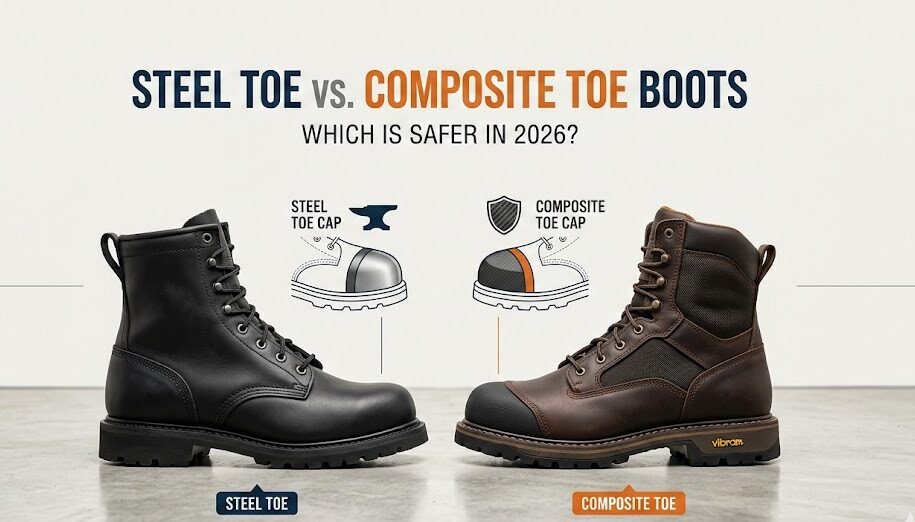
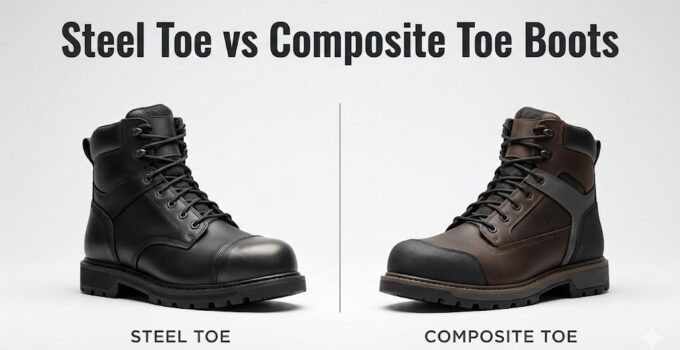
A side-by-side comparison of steel toe and composite toe work boots, emphasizing safety, durability, and protection features for workers in 2026.
Before comparing safety, it helps to know what you’re actually dealing with inside the toe box.
Steel Toe Boots
A steel toe boot contains a reinforced steel cap pressed into the toe box of the boot. Steel has been used as a protective toe material since the 1930s and remains the most widely used safety cap material in heavy industry. Steel is dense and strong, which allows for a thinner cap profile — meaning a steel toe boot often has slightly more interior room in the toe box compared to some early composite designs. Steel caps are proven, durable, and consistently affordable.
Composite Toe Boots
Composite toe boots replace the steel cap with a non-metallic toe cap made from one or more of the following materials: Kevlar, carbon fiber, fiberglass, or reinforced plastic polymers. Composite toe technology gained serious traction in the early 2000s and has advanced significantly by 2025–2026. Modern composite caps are slimmer, lighter, and more thermally neutral than early versions. The critical advantage is what they lack: no metal means no electrical conductivity, no temperature transfer, and no interference with metal detectors.
Do Steel and Composite Toe Boots Meet the Same Safety Standards?
This is where most articles get lazy — and where most workers get confused. Let’s clear it up properly.
What OSHA Actually Requires
OSHA regulation 29 CFR 1910.136 requires employers to provide protective footwear in workplaces where there is a danger of foot injuries from falling or rolling objects, objects piercing the sole, or electrical hazards. Critically, OSHA does not mandate steel specifically. Steel, composite, aluminum, and carbon fiber toe caps can all satisfy OSHA requirements — as long as the footwear passes the required certified performance standards.
The Governing Standard: ASTM F2413
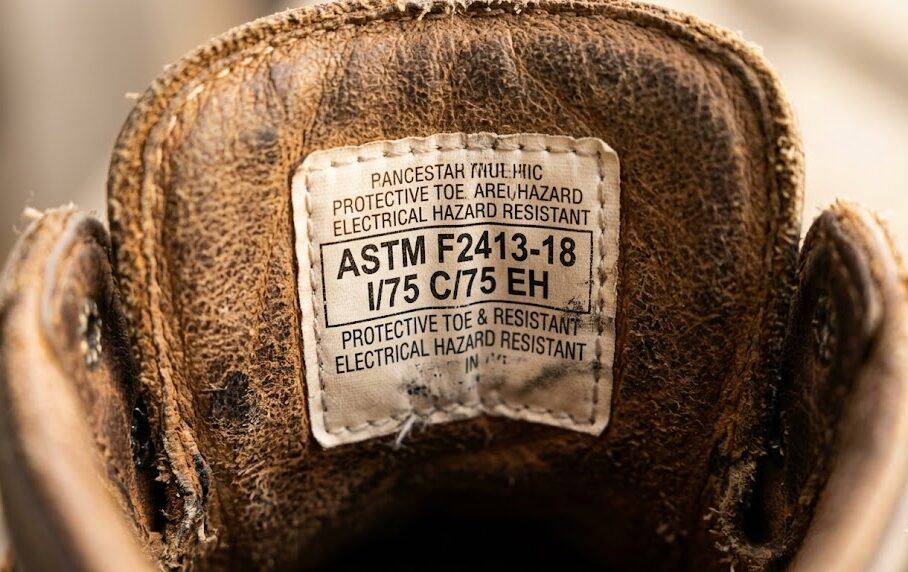
astm certification
The real certification you’re looking for on any safety toe boot is ASTM F2413 (performance specifications) combined with ASTM F2412 (test methods). Both steel and composite toe boots must pass the same tests to earn this certification.
| Rating Code | What It Means | Who Needs It |
|---|---|---|
| I/75 | Withstands 75 ft-lb impact to the toe | All safety environments |
| C/75 | Withstands 2,500 lb compression | All safety environments |
| EH | Electrical hazard protection (open circuit) | Electricians, lineworkers |
| PR | Puncture resistance in the sole | Construction, roofing |
| MT/75 | Metatarsal guard protection | Foundry, heavy machinery |
The critical clarification: If two boots both carry ASTM I/75 C/75 certification, they have passed identical minimum protection tests — regardless of whether the cap is steel or composite. The protection floor is the same.
Look at the inner label or tongue of the boot. It should display the ASTM F2413 designation followed by the applicable rating codes (e.g., ASTM F2413-18 I/75 C/75 EH). If you don’t see this label, the boot is not certified — regardless of how it’s marketed.
Steel Toe vs Composite Toe — Side-by-Side Safety Breakdown
Now let’s get into the actual differences that matter on the job site.
| Safety Factor | Steel Toe | Composite Toe |
|---|---|---|
| ASTM Impact (I/75) | ✅ Meets standard | ✅ Meets standard |
| ASTM Compression (C/75) | ✅ Meets standard | ✅ Meets standard |
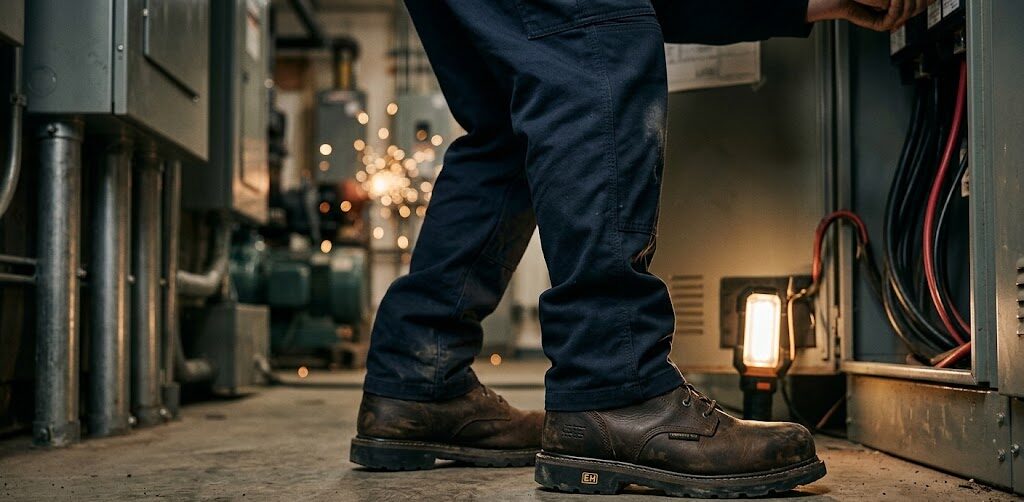
| Electrical conductivity | ❌ Conducts electricity | ✅ Non-conductive |
| Cold weather performance | ❌ Transfers cold to foot | ✅ Thermally insulating |
| Hot environment performance | ❌ Transfers heat to foot | ✅ More thermally neutral |
| Weight | ❌ Heavier | ✅ Measurably lighter |
| Metal detector clearance | ❌ Triggers alarms | ✅ Metal-free, clears detectors |
| Post-impact behavior | Deforms but typically holds shape under repeated impact | May crack on severe single impact (varies by material) |
| Durability over time | ✅ Highly durable in abusive environments | ⚠️ Material-dependent |
| Cost | ✅ Generally more affordable | ⚠️ Slightly higher price point |
The takeaway from this table is important: neither type is universally stronger if both are certified. The meaningful differences appear in electrical hazard exposure, climate extremes, worker fatigue, and environmental requirements. Choosing by material alone — without considering your job hazard — is how workers end up in the wrong boot.
electrical conductivity
Does Boot Weight Actually Affect Safety? (Most Guides Skip This)
This section is the one most safety footwear comparisons ignore entirely — and it’s one of the most practically important factors for anyone working an 8 to 12-hour shift.
Steel toe boots are measurably heavier than composite toe equivalents. The difference varies by brand and construction, but it’s real and cumulative. Over a full work shift, you might take 8,000 to 12,000 steps. Every additional ounce per boot adds up to significant muscular load by the end of the day.
Why does this matter for safety? Because fatigue directly impacts:
- Balance and coordination — tired legs are slower to recover from stumbles
- Trip and slip risk — workers lift their feet less precisely when fatigued
- Reaction time — end-of-shift exhaustion reduces the split-second responses that prevent injuries
- Long-term musculoskeletal health — knee, hip, and lower back strain accumulate over months of heavier boots
For workers in warehouses, large distribution centers, airport operations, or any role requiring constant movement across large sites, composite toe’s weight advantage is an indirect but real safety benefit.
If your job involves sustained walking over long shifts and you’re not in a heavy falling-object environment, a lighter composite toe boot can genuinely reduce your injury risk through fatigue reduction — even if the ASTM protection rating is identical to a steel toe.
Top Steel Toe Boots for Heavy-Duty Jobs (2026)


Cold Weather, Hot Sites, and Extreme Environments
Temperature performance is another area where composite toe has a clear, measurable advantage — and where steel toe creates a real (if underappreciated) hazard.
Steel Toe in Cold Weather
Metal is an excellent conductor of thermal energy. In sub-zero temperatures, a steel toe cap will conduct ambient cold directly into the toe box, accelerating heat loss from the foot. This isn’t just discomfort — in genuinely cold conditions, it can contribute to reduced dexterity and, in extreme cases, frostbite risk in the toes. Workers on pipeline construction, outdoor winterization crews, or cold-climate job sites in northern states and Canada are particularly exposed to this effect.
Steel Toe in Hot Environments
The same conductivity works in reverse. In high-heat industrial settings — foundry floors, summer construction on heat-absorbing surfaces, or warehouses without climate control in summer — steel toe caps absorb and transfer ambient heat into the toe box. Workers standing on hot concrete or asphalt for hours feel this directly.
Composite Toe in Extreme Climates
Composite materials — carbon fiber, Kevlar, fiberglass — are thermal insulators. They do not conduct cold or heat at the same rate as steel. In practical terms, composite toe boots are more thermally neutral, meaning your toes are better buffered from what’s happening outside the boot.
⚠️ Real-world note: Thermal insulation in a safety toe cap is only one factor in cold weather protection. If you’re working in extreme cold, you also need appropriate boot insulation (measured in grams of Thinsulate or equivalent), waterproofing, and a boot designed for cold weather use. The composite toe alone doesn’t make a boot winter-rated.
Jobs and Environments Where Steel Toe Is the Better Choice
Steel toe boots remain the right call for a specific category of work — environments where heavy objects are the primary hazard, where boots take sustained mechanical abuse, and where electrical and temperature hazards are not factors.
Steel toe performs best in:
- Heavy construction and civil engineering sites
- Foundries and metal fabrication plants
- Manufacturing facilities with heavy machinery
- Logging and forestry operations
- Oil and gas extraction sites (non-electrical environments)
- Demolition and excavation work
- High-abuse environments where boots take regular physical punishment
In these settings, steel’s durability advantage under sustained, repeated mechanical stress — and its lower cost for high-wear environments requiring more frequent replacement — makes it the practical choice. A composite cap may technically meet the same ASTM standard, but steel’s post-impact performance under repeated abuse has more real-world track record in the heaviest industrial settings.
Best Steel Toe Boots for Heavy Industry


Jobs and Environments Where Composite Toe Is the Better Choice
Composite toe earns its place — and often has a genuine safety advantage — in a specific set of working conditions where steel’s properties become liabilities rather than assets.
Composite toe performs best for:
- Electricians and electrical lineworkers (EH-rated composite is non-conductive)
- Airport ground crew, TSA, and security checkpoint staff (metal-free)
- Cold-climate outdoor workers (pipeline, utilities, winter construction)
- Warehouse workers and delivery drivers on long walking shifts (weight advantage)
- Any job that requires metal-free footwear by site policy
- Workers who spend extended time outdoors in temperature extremes
⚠️ Critical safety note for electricians: If you work in environments with live electrical hazards, you should be in a composite or alloy toe boot with an EH (Electrical Hazard) rating. A steel toe boot in an EH-rated environment is a potential shock hazard. This is not a preference — it is a safety requirement.
Top Composite Toe Boots to Consider (2026)


Steel Toe vs Composite Toe — Safety Myths Still Circulating in 2026
There is a surprising amount of misinformation about safety toe boots — some of it genuinely leading workers to make less safe choices. Here are the four myths worth addressing directly.
❌ Myth #1
“A steel toe cap will cut off your toes if something heavy enough falls on it.”
Reality: This myth has persisted for decades and has genuinely caused workers to avoid certified steel toe protection — which is far more dangerous than wearing it. Modern ASTM-certified steel toe caps are engineered to deform and absorb impact energy under extreme loads. The cap compresses before it could fold backward. Without a steel toe, the same falling object crushes your foot directly. The myth causes more harm than the boots ever have.
❌ Myth #2
“Composite toe isn’t as strong as steel toe — it’s a cost-cutting compromise.”
Reality: Both must pass identical ASTM F2413 impact (I/75) and compression (C/75) tests to earn safety certification. A composite toe boot with ASTM F2413 has been tested to exactly the same protection threshold as a steel toe boot with the same certification. The materials are different; the certified protection floor is not.
❌ Myth #3
“OSHA recommends steel toe — it’s the official standard.”
Reality: OSHA does not recommend or mandate steel specifically. OSHA’s 29 CFR 1910.136 requires hazard-appropriate protective footwear — and lists steel, alloy, reinforced rubber/plastic, and leather as acceptable materials, depending on the hazard. Composite toe boots satisfy OSHA requirements in virtually all settings where steel toe would, and they are the correct choice (not a compromise) in electrical hazard environments.
❌ Myth #4
“Composite toe boots are single-use — one hard impact and they’re trash.”
Reality: This concern is real but overstated and often misattributed. Some early nano-composite toe caps can crack under severe impact, making inspection after a significant incident essential. However, thicker carbon fiber and Kevlar composite designs are considerably more resilient. The broader truth: both steel and composite toe boots should be replaced after any significant impact event that may have compromised the cap — this applies equally to both types.
What’s New in Safety Toe Technology for 2026?
The safety footwear market has moved meaningfully in the past 18 months. Here’s what’s actually different in 2026 compared to even a few years ago:
- Carbon fiber composite designs are getting slimmer. The gap between composite and steel toe profile has narrowed significantly. Carbon fiber caps now rival steel in profile thinness while maintaining the weight and conductivity advantages of composite construction.
- Nano-composite is maturing — with better user education. Manufacturers are doing a better job communicating the single-incident replacement requirement on nano-composite caps, addressing the biggest legitimate concern about composite toe durability.
- Hybrid EH + waterproof composite models are expanding. The combination of electrical hazard rating, waterproofing, and composite toe in a single boot is becoming more accessible and affordable — previously a premium configuration.
- Women’s-specific safety toe builds are improving. Narrower lasts, better weight distribution, and last shapes designed for women’s foot anatomy are finally getting proper attention from major safety footwear brands.
- Lightweight steel alloys are closing the weight gap. Steel toe manufacturers are responding to composite’s weight advantage with thinner, lighter alloy cap compositions — reducing the fatigue gap without sacrificing the material’s traditional durability advantages.
- RFID-tracked PPE programs are beginning to appear in large enterprise safety programs, with boot replacement cycles and compliance tracked automatically. Early adoption is in industrial and oil/gas sectors.
Steel Toe or Composite Toe? Quick Guide by Job Type
Use this table as a starting point. Your employer’s workplace hazard assessment (required by OSHA) should be the final word on your specific site.
| Job / Role | Recommended Toe | Primary Reason |
|---|---|---|
| Heavy construction | Steel Toe | Repeated heavy falling objects, durability under abuse |
| Warehouse / forklift operator | Composite Toe | Weight reduction over long shifts, rolling load protection |
| Electrician / lineworker | Composite Toe (EH) | Non-conductive — essential in live electrical environments |
| Airport ground crew / security | Composite Toe | Metal-free, clears security checkpoints |
| Cold climate outdoor work | Composite Toe | Thermal insulation, no cold transfer to toes |
| Manufacturing (heavy machinery) | Steel Toe | Durability, sustained mechanical stress resistance |
| Logging / forestry | Steel Toe | High-impact hazards, chainsaw environments |
| Oil and gas (non-electrical) | Steel Toe | Heavy equipment, puncture hazards, durability |
| Landscaping / groundskeeping | Composite Toe | Lighter build, adequate protection for moderate hazards |
| Delivery / long walking routes | Composite Toe | Weight and fatigue reduction across high step-count shifts |
| Foundry / metalworking | Steel Toe | Maximum impact resistance, metatarsal guard recommended |
Under heavy use, safety toe boots should be replaced every 6–12 months. Replace immediately after any significant impact event that may have compromised the toe cap — even if the boot appears undamaged externally. A deformed or cracked cap offers reduced protection.
Steel Toe vs Composite Toe — The 2026 Verdict
After breaking down the standards, the science, and the real-world job performance, here’s where things actually land in 2026:
Both are equally safe at the ASTM certification baseline. A certified steel toe and a certified composite toe have both passed the same I/75 and C/75 impact and compression tests. Neither is categorically safer than the other on a certified vs certified basis.
Steel toe wins in heavy industrial abuse, logging, foundry work, and high-replacement environments where durability and cost efficiency matter most.
Composite toe wins in electrical hazard environments, extreme temperatures, metal-free worksites, and any job where long-shift fatigue is a real safety factor.
The safest boot is the one correctly matched to your job hazard — and properly ASTM-certified. The cap material is secondary to that decision.
Frequently Asked Questions
Is composite toe OSHA approved?
Yes. OSHA’s 29 CFR 1910.136 requires certified protective footwear in hazard environments but does not mandate steel specifically. Composite toe boots that carry ASTM F2413 certification fully satisfy OSHA requirements in virtually all safety footwear applications, including the majority of construction and industrial environments.
Are steel toe boots stronger than composite toe boots?
At the ASTM certification level, both types are tested to the same minimum impact (I/75) and compression (C/75) standards. Steel toe has an advantage in sustained durability under repeated mechanical abuse in the heaviest industrial environments. Composite toe meets the same certified protection threshold in a lighter, non-conductive package.
Can steel toe boots freeze your feet in cold weather?
Steel conducts cold, which means a steel toe cap transfers ambient cold temperature to the toe box faster than a composite cap. In sub-zero working conditions, this is a genuine comfort and safety consideration. Composite toe boots are thermally insulating and do not conduct cold to the foot at the same rate, making them the better choice for cold climate outdoor work.
How long do safety toe boots last?
Under heavy daily use in demanding environments, safety toe boots should be replaced every 6 to 12 months. Boots used in lighter conditions may last longer. Regardless of age or appearance, both steel and composite toe boots should be replaced immediately after any significant impact event that may have compromised the protective cap.
Are composite toe boots lighter than steel toe boots?
Yes, measurably so. Composite toe caps made from Kevlar, carbon fiber, or fiberglass are significantly lighter than steel caps of equivalent protection rating. For workers on long walking shifts, this weight difference reduces fatigue-related injury risk over the course of an 8 to 12-hour workday.
Do all safety toe boots meet ASTM standards?
No — and this is important. Many boots are marketed with safety-sounding language without carrying legitimate ASTM F2413 certification. Always check the inner label or tongue of the boot for the ASTM F2413 designation and the applicable rating codes (I/75, C/75, EH, etc.). If the label is absent, the boot has not been tested to the standard and should not be used as certified safety footwear.
Can I wear composite toe boots as an electrician?
Yes — and for electrical hazard environments, composite toe with an EH (Electrical Hazard) rating is the correct choice. Steel toe boots conduct electricity and should not be used in environments with live electrical hazard exposure. Look for boots rated ASTM F2413 with both the composite or alloy toe and EH designation on the inner label.